

How is an eSIM different from a physical SIM card?
Both eSIMs and physical SIMs do the same job: connect your phone to a mobile network so you can make calls, send messages, and use mobile data. The difference is in how they're built - and that difference matters a lot when you're traveling.
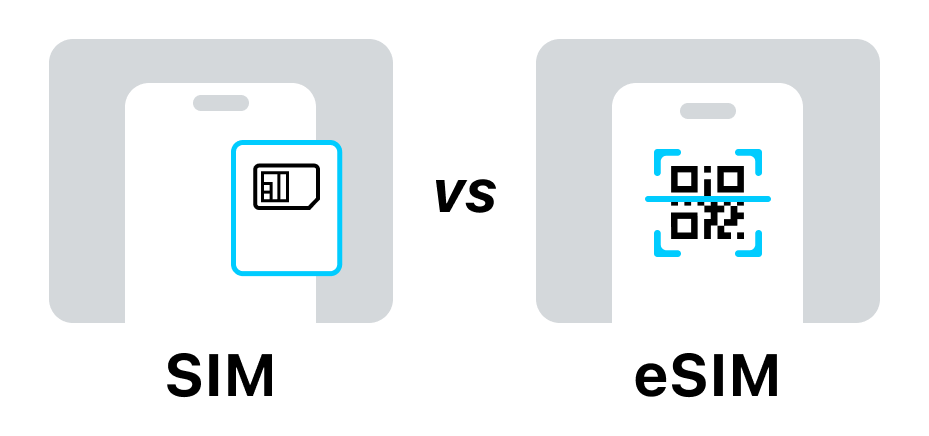
| Physical SIM | eSIM | |
|---|---|---|
| Form | Removable plastic card | Chip built into your device |
| Setup | Visit a store, insert card | Buy online, scan QR code |
| Switching plans | Swap the card physically | Done through phone settings |
| Risk of loss | Can be lost or damaged | Cannot be removed or stolen |
| Travel | Need to find a local store abroad | Buy and activate from anywhere |
For travelers, the biggest advantage of an eSIM is convenience - you can buy a local data plan before you even board your flight, without touching your physical SIM or losing your home number.
One thing to note: Activating an eSIM requires a Wi-Fi or mobile data connection. Make sure you're connected before you start the setup process.
Not sure if your device supports eSIM? Check out our Device Compatibility guide to find out.