

Travel Balkan Countries: A Practical Guide for First-Time Multi-Country Trips

Introduction: Why So Many Travelers Are Looking at the Balkans in 2026
In 2026, more travelers are looking beyond Western Europe.
Rising prices in Italy and France.
Overcrowded city centers in Barcelona and Amsterdam.
Long lines at major landmarks.
Many first-time Europe visitors are now searching for something different. They want authentic experiences. They want dramatic landscapes. They want coastal towns that still feel local. This shift has pushed a new phrase into travel planning conversations: travel Balkan countries.
The Balkans offer medieval cities, Adriatic beaches, mountain national parks, Ottoman-era towns, and lively café culture. Social media has amplified destinations like Albania’s Riviera, Montenegro’s Bay of Kotor, and Bosnia’s Mostar Bridge. At the same time, flexible remote work has made longer multi-country trips more realistic.
But there is a hidden truth.
Planning a trip across multiple Balkan countries is not as simple as booking one Schengen itinerary. Borders differ. Currencies change. Transport systems vary. Connectivity works differently across countries.
For first-time visitors, this can feel confusing. This guide explains what to expect and how to plan realistically.
TL;DR
Balkan countries are trending in 2026 as travelers look for less crowded and more affordable alternatives to Western Europe.
The region includes both EU and non-EU countries, which means border rules, currencies, and roaming policies are not uniform.
Multi-country trips across the Balkans require more planning than a standard Schengen itinerary.
Mountain roads, seasonal transport changes, and rural signal gaps can affect travel time and connectivity.
With realistic pacing and clear logistics preparation, a Balkan multi-country trip can be smooth and highly rewarding.
Why the Balkan Countries Are Trending in 2026
Several trends are driving interest in the region:
1. Overtourism fatigue
Major European hubs are facing crowd management issues. Travelers are actively searching for less crowded alternatives.
2. Budget-conscious planning
Accommodation, food, and transport in parts of the Balkans often cost less than Western Europe.
3. Multi-country slow travel
Instead of flying between capitals, travelers are choosing road trips and overland routes.
4. Scenic diversity in a compact region
Within a few hours, you can move from Adriatic coastline to mountain ranges.
However, increased interest does not eliminate complexity. In fact, because the Balkans are not politically uniform, logistics require more attention.
How Many Balkan Countries Are There?
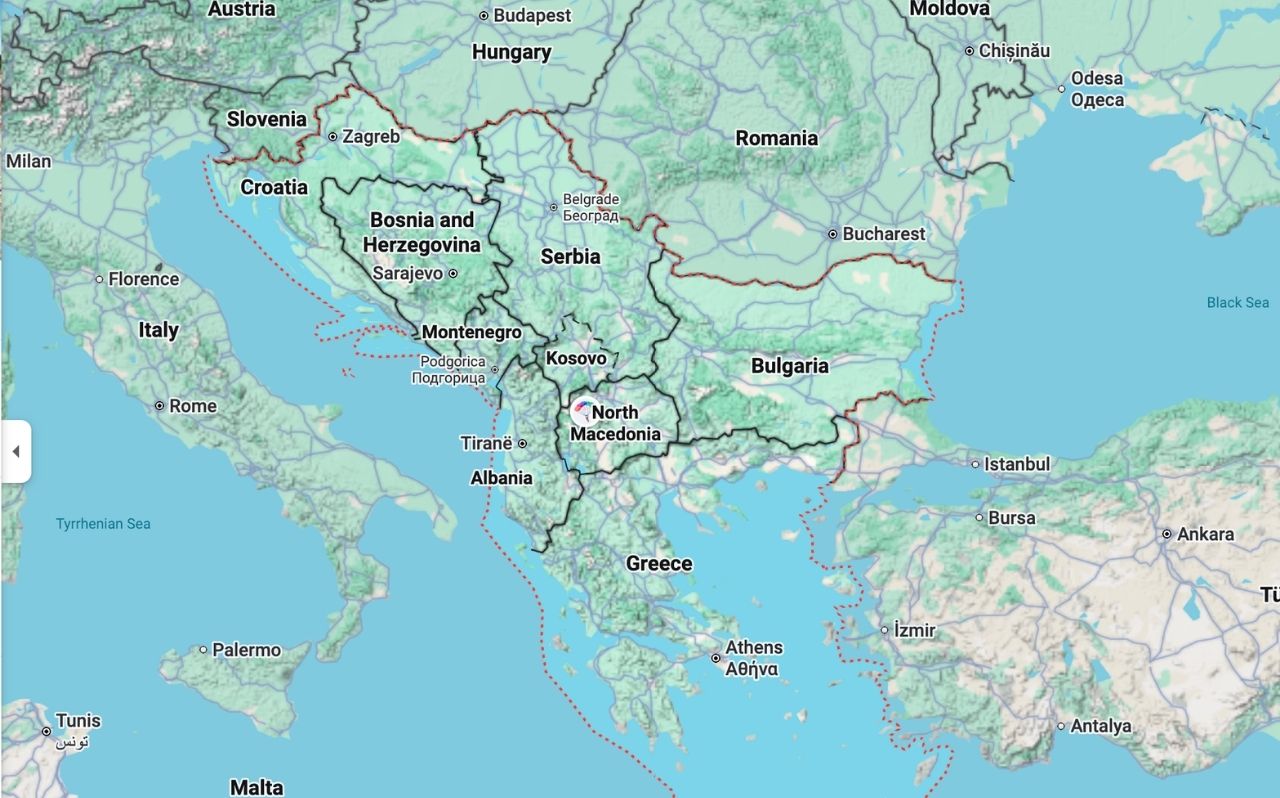
There is no single official list.
Most commonly included countries are:
Bosnia and Herzegovina Bulgaria. Explore our Bosnia and Herzegovina countryside guide for practical tips on rural routes, national parks, and what to expect with WiFi and mobile signal beyond the main cities.
Some of these are EU members. Some are not. Some are in the Schengen Area. Some are not.
This matters for:
Border controls
Roaming rules
Visa requirements
Currency usage
For example, Croatia is part of the EU and Schengen. Bosnia is not. Albania is not. Serbia is not.
Travelers often assume that once inside Europe, movement is uniform. In the Balkans, that assumption can lead to small but stressful surprises.
Why Planning a Multi-Country Balkan Trip Feels Confusing
The region looks geographically compact. On a map, distances seem short.
In practice, the experience can feel more layered.
Different currencies
Croatia uses the Euro.
Bosnia uses the Convertible Mark.
Serbia uses the Serbian Dinar.
Albania uses the Lek.
Card payments are common in cities. In rural areas, cash may still be necessary.
Border crossings
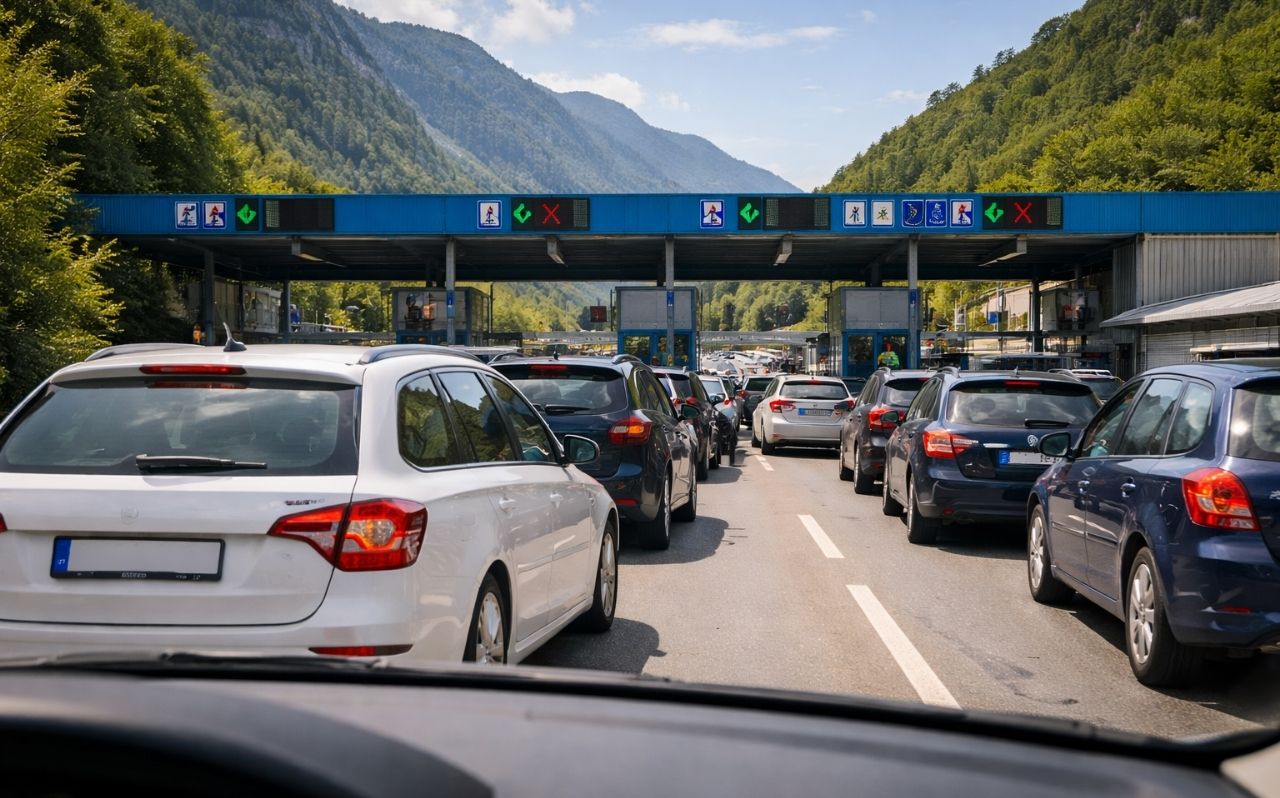
Even when countries are neighbors, border checks may involve passport control. In peak summer months, waits can extend.
Official guidance for entry requirements should always be checked via government sources such as the European Union’s travel portal or individual country tourism boards like the National Tourism Organisation of Montenegro.
Transport inconsistency
Bus schedules vary by season. Train networks are limited in certain areas. Mountain roads slow travel time.
A two-hour drive on a map can take much longer in reality.
Choosing the Right Route for Your First Balkan Trip
For first-time visitors, less is usually more.
Trying to cover six countries in ten days often leads to fatigue.
7–10 Days: Adriatic Focus
Croatia (Dubrovnik or Split)
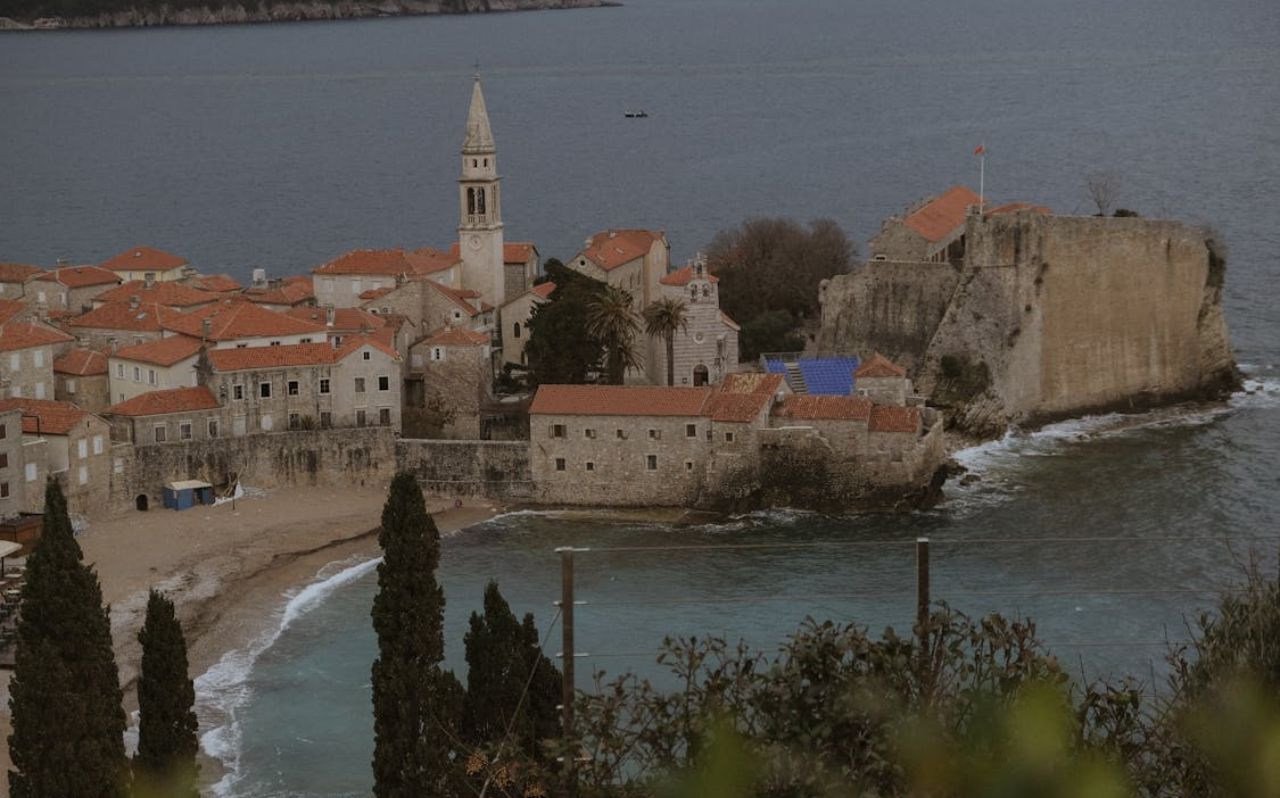
Montenegro (Kotor, Budva)
Bosnia (Mostar)
This route balances coast and culture.
10–14 Days: Expanding South
Croatia
Montenegro
Albania
North Macedonia
This introduces more diverse landscapes and fewer cruise crowds.
2–3 Weeks: Full Loop
Add Serbia or Bulgaria. Possibly Romania if heading north.
The key is pacing. Mountain regions such as Durmitor National Park in Montenegro or the Albanian Alps require slower travel. Official park information can be found via Montenegro National Parks.
Best Time to Travel Balkan Countries
Season matters more than many expect.
Spring
Mild temperatures
Fewer crowds
Better road conditions than winter
Summer
Adriatic coast becomes busy
Ferry schedules fill quickly
Border waits increase
Autumn
Comfortable weather
Less coastal congestion
Ideal for road trips
Winter
Coastal towns quiet
Mountain snow impacts driving
Some transport routes reduced
For first-time visitors, late spring or early autumn often provides balance.
Border Crossings in the Balkans: What to Expect
Not all borders are equal.
Between two Schengen countries, there may be minimal control. Between an EU and non-EU state, passport checks are standard.
In peak season:
Allow buffer time
Keep passports accessible
Confirm car rental cross-border permission
Bus travelers should expect short stops for document inspection.
It is helpful to review country-specific entry rules via official government sites before departure.
Balkan Road Trips vs Public Transport
Road Trips
Advantages:
Flexibility
Access to rural monasteries and mountain viewpoints
Easier luggage handling
Challenges:
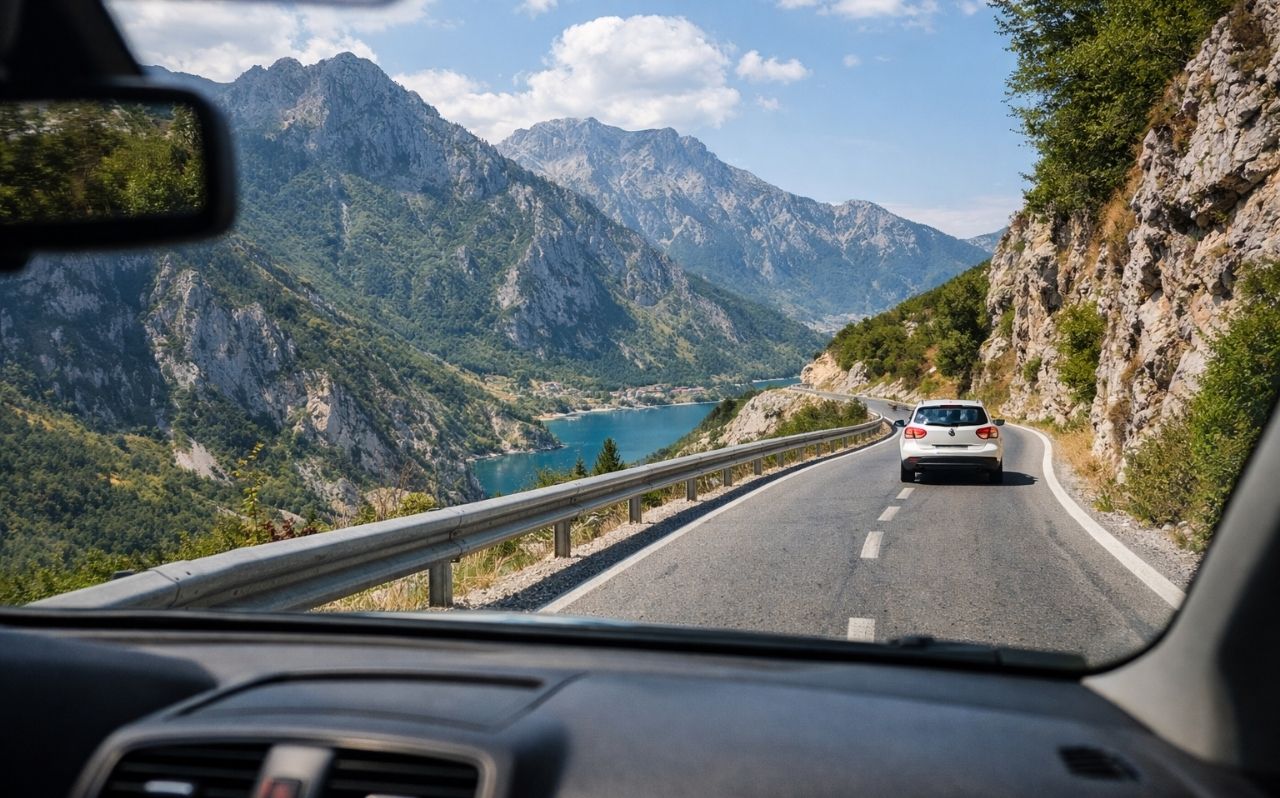
Mountain driving
Variable road quality in remote areas
Cross-border insurance considerations
Public Transport
Advantages:
Affordable
No parking stress
Social experience
Challenges:
Limited rural reach
Seasonal schedule changes
Language barriers at smaller stations
First-time visitors often mix both approaches.
Practical Connectivity Reality Across the Balkan Countries
Connectivity is rarely the first thing travelers plan.
In practice, it becomes essential.
When Mobile Data Becomes Important
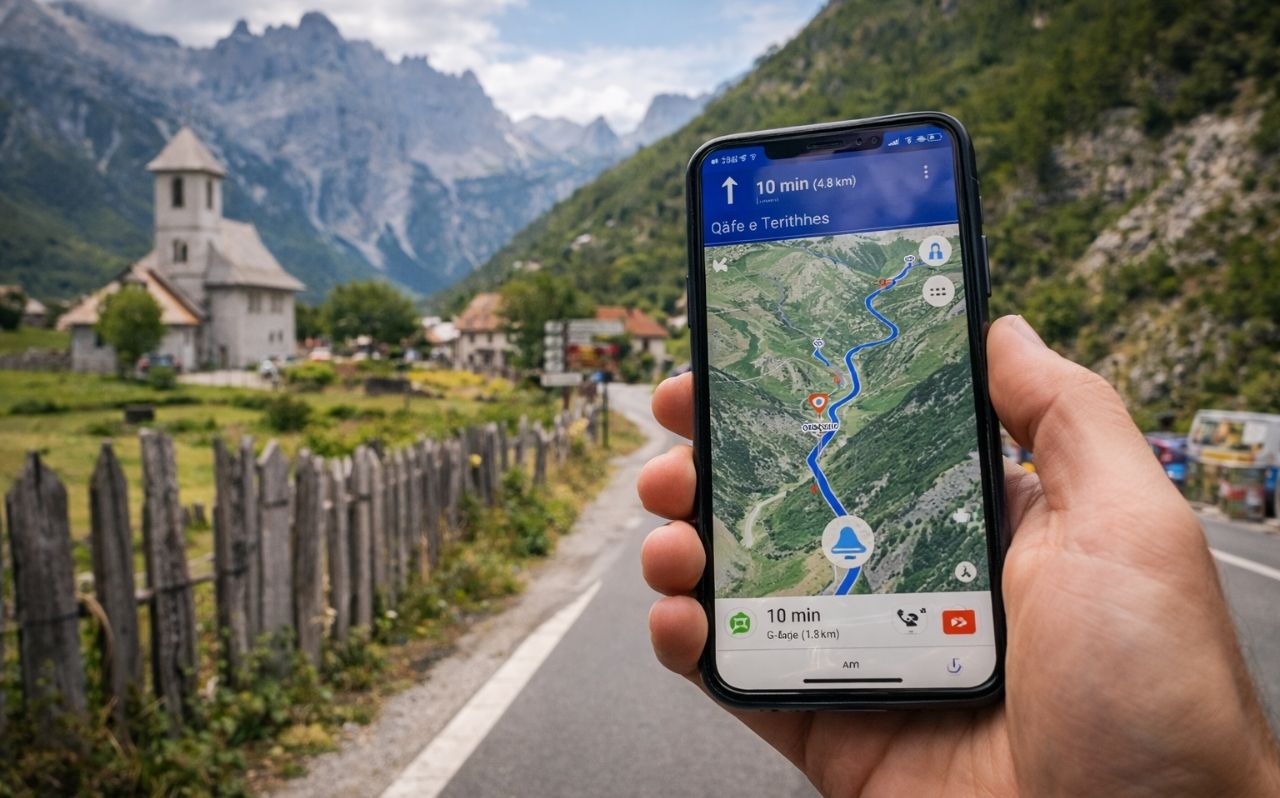
Navigating border detours
Booking last-minute buses
Translating menus in rural towns
Accessing digital tickets
Calling ride-hailing services in cities
In coastal Croatia, public WiFi is common. In mountainous northern Albania, it may not be.
Where WiFi Is Less Reliable
Border checkpoints
Remote villages
Smaller bus stations
Mountain national parks
Hotels in cities typically provide stable connections. Smaller guesthouses may not.
What Commonly Goes Wrong
Roaming assumptions across non-EU borders
Weak signal in mountainous areas
Late-night airport arrivals without working data
Data-heavy map usage draining limited plans
For example, a traveler may start in Croatia and assume their roaming setup continues seamlessly in Bosnia. Roaming rules differ once outside the EU framework.
Official carrier coverage maps, such as those from Telekom Srbija or Vodafone Albania, show that rural coverage varies significantly.
Planning for consistent connectivity reduces small daily friction.
Is It Safe to Travel the Balkan Countries?
Safety perceptions often lag behind reality.
Most Balkan capitals are considered safe for tourists. Petty theft exists, as in any urban area. Rural regions are generally calm.
Driving requires attention due to winding mountain roads. Infrastructure quality varies.
Travelers should:
Follow standard city safety practices
Respect local driving norms
Monitor weather forecasts in mountainous areas
Official tourism boards such as the Albania National Tourism Agency provide updated visitor information.
When to Consider a More Reliable Setup for Multi-Country Travel
Multi-country trips increase logistical complexity.
If your itinerary includes:
Crossing multiple non-Schengen borders
Mountain navigation
Late arrivals in unfamiliar cities
Remote coastal villages
Remote work responsibilities
Then connectivity planning deserves attention.
In situations like this, having a reliable travel eSIM for Albania can reduce stress and help travelers stay connected as they move between borders.
This approach supports smoother navigation, digital ticket access, and communication during unexpected schedule changes.
FAQ: Travel Balkan Countries
Do Balkan countries use the same currency?
No. Some use the Euro. Others use national currencies such as the Serbian Dinar or Albanian Lek. Always check before crossing borders.
Is EU roaming valid in all Balkan countries?
No. EU roaming rules apply only to EU member states. Non-EU Balkan countries follow separate agreements.
Are border crossings slow in summer?
They can be. Peak tourist months often lead to longer waits, especially at popular coastal crossings.
Is it easy to road trip across Balkan countries?
Yes, but planning is important. Confirm insurance coverage and cross-border permissions with rental companies.
How long should a first Balkan trip be?
Ten to fourteen days allows for three or four countries at a comfortable pace.
Final Thoughts
The Balkans are rising in popularity for good reason.
The region offers diversity, authenticity, and relative affordability compared to Western Europe. It rewards travelers who prefer scenic roads over crowded boulevards.
At the same time, it requires thoughtful planning.
Different borders. Different currencies. Different infrastructure levels.
First-time visitors who approach the region with realistic expectations often leave deeply impressed. Careful pacing, practical route choices, and stable connectivity all contribute to a smoother experience.
Traveling across Balkan countries is not complicated. It simply requires awareness.
With the right preparation, the journey feels less uncertain and far more rewarding.

Hi! Mình là Lala Wren, một content creator yêu xê dịch và đam mê chia sẻ trải nghiệm thực tế cho cộng đồng Gohub. Trong nhiều năm qua, mình đã đặt chân đến Thái Lan, Hàn Quốc, Nhật Bản, Singapore, Malaysia, Bali và nhiều điểm đến thú vị khác trên khắp châu Á. Cùng mình tìm hiểu tất tần tật từ khâu chuẩn bị eSIM, Visa, lịch trình và địa điểm nổi bật cho chuyến đi sắp tới của bạn nhé!
View all articles →Related articles
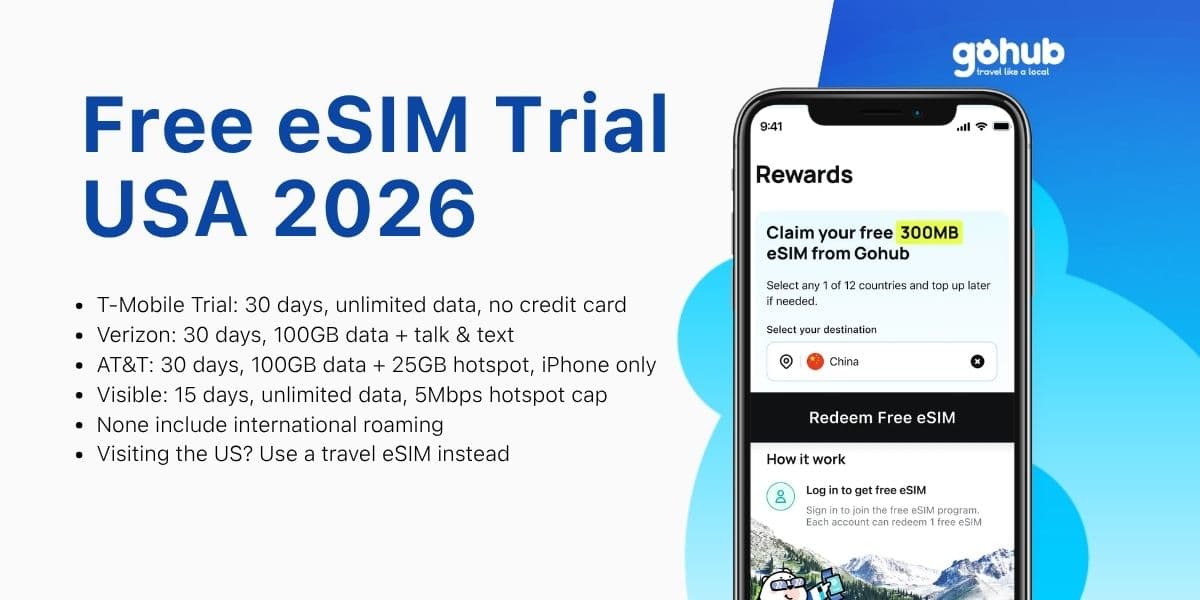
Free eSIM Trial USA 2026: T-Mobile vs Verizon vs AT&T vs Visible
Compare every free eSIM trial from US carriers in 2026 — T-Mobile 30 days, Verizon 100GB, AT&T 25GB hotspot, Visible 15 days. Plus: what travelers visiting the US should use instead.
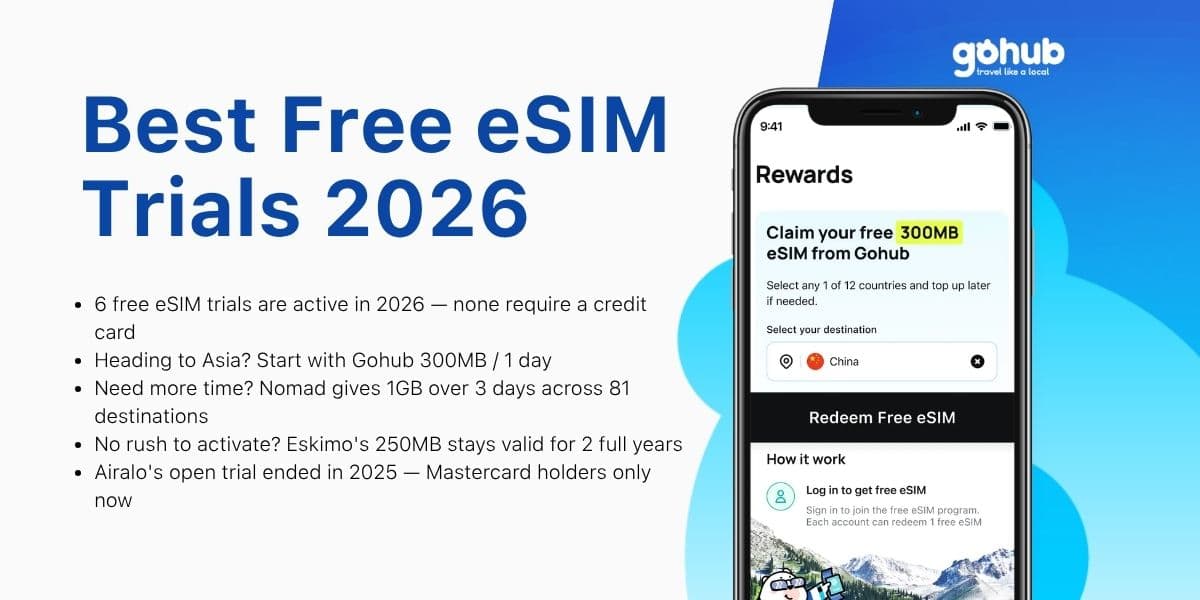
Best Free eSIM Trials in 2026: Every Active Offer Compared (No Credit Card)
Looking for a free eSIM trial in 2026? Compare all active offers — Gohub 300MB, Nomad 1GB, GigSky 100MB, Eskimo 250MB, SimLocal 500MB — no credit card needed. Updated March 2026.
Things to Do in Almaty: City Highlights, Mountain Escapes & Best Day Trips (1–3 Days)
Things to do in Almaty: top city highlights, mountain escapes, best day trips, food spots, and winter ideas—plus 1–3 day itineraries for first-timers.
Things to Do in Kyrgyzstan: Horse Trekking, Horseback Tours, Skiing, Yurts, & Epic Nature Spots
Things to do in Kyrgyzstan: Song-Köl horse treks, yurt stays, Karakol skiing, Ala Archa day hikes, plus seasons, safety, and booking tips.
Serbia Travel Guide for First-Time Visitors (2026 Update)
A practical Serbia travel guide covering safety, transport, regions, and real connectivity tips for first-time visitors in 2026.
Serbia Itinerary for 7 Days: How to Plan Cities and Nature Without Rushing
Plan a realistic Serbia itinerary for 7 days, covering Belgrade, Novi Sad, Tara National Park, and the Danube Gorge with practical travel advice.