
Chicago Itinerary Summer: The Perfect 3-Day Guide for First-Time Visitors

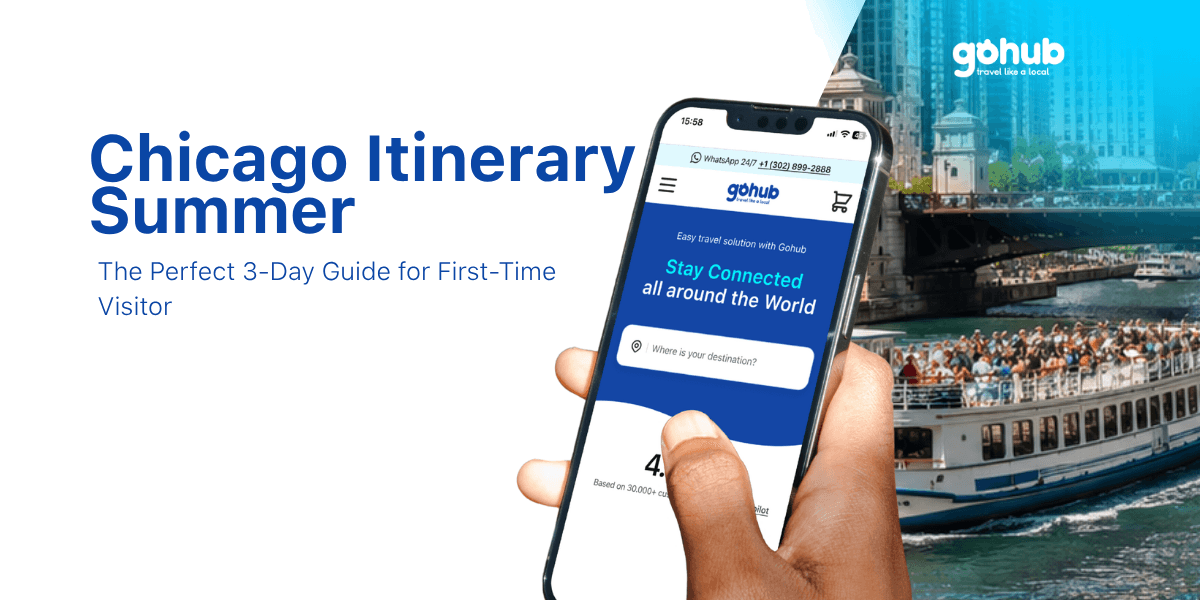
Chicago in summer is the city at its best. The skyline looks sharper, Lake Michigan feels alive, patios spill onto the sidewalks, and there is almost always a festival, concert, beach day, boat tour, or food event happening somewhere in the city.
But here is the catch: Chicago is bigger than many first-time visitors expect. If you try to squeeze every famous attraction, museum, beach, neighborhood, pizza spot, rooftop, and festival into one trip, you may spend more time moving across the city than enjoying it.
That is why this Chicago itinerary summer guide is built around a simple idea: group your days by area, keep the route realistic, and leave enough space for those summer moments that make Chicago special, from lakefront walks to rooftop sunsets and Navy Pier fireworks.
If you are planning 3 days in Chicago and want a practical Chicago summer travel guide, this route covers the classic highlights without turning your trip into a checklist. You will visit Millennium Park, The Bean, Chicago Riverwalk, an architecture cruise, Lakefront Trail, museums, Wicker Park, The 606, Navy Pier, and a few food-focused stops along the way.
Before you go, make sure your phone is ready for maps, rideshare apps, mobile tickets, restaurant bookings, and last-minute event updates. A USA travel eSIM from Gohub can help you stay connected from the airport to the lakefront without depending on public WiFi.
TL;DR: 3-Day Chicago Summer Itinerary
Day | Theme | Main Stops |
|---|---|---|
Day 1 | Downtown icons and architecture | Millennium Park, The Bean, Chicago Riverwalk, architecture cruise, 360 Chicago |
Day 2 | Museums and lakefront | Art Institute or Museum Campus, deep-dish pizza, Lakefront Trail, North Avenue Beach, Lincoln Park Zoo |
Day 3 | Neighborhoods and waterfront | Wicker Park, Bucktown, The 606, Chinatown or local food route, Navy Pier, summer fireworks |
Best for: First-time visitors
Best months: June to August
Don’t miss: Architecture river cruise, Lakefront Trail, Navy Pier fireworks
Good to know: Book popular tours early and check festival dates before choosing hotel dates.
Why This Route Works
This itinerary keeps each day grouped by area, so you do not waste time crossing the city back and forth.
Day 1 stays around downtown, the river, and the skyline. Day 2 focuses on museums, Lake Michigan, and Lincoln Park. Day 3 gives you a more local neighborhood feel before ending at Navy Pier.
That makes the route easier to follow, especially if this is your first time visiting Chicago in summer.
Quick Overview: 3 Days in Chicago in Summer for First-Time Visitors
Is 3 Days Enough for Chicago?
Yes, 3 days is enough for a strong first-time Chicago itinerary, especially in summer.
You will not see everything, but you can cover the city’s biggest highlights without feeling completely rushed. With 3 days, you can enjoy downtown architecture, Lake Michigan, museums, food neighborhoods, parks, and one great evening activity.
The key is not to jump randomly across the city. Instead, plan each day around a clear area:
Day 1 for downtown and architecture
Day 2 for museums, the lakefront, and Lincoln Park
Day 3 for neighborhoods and Navy Pier
This gives your trip a better rhythm and makes the itinerary easier to follow.
Best Time to Visit Chicago in Summer
Chicago’s main summer travel season runs from June through August.
June is great if you want summer energy with slightly fewer peak-season crowds. July is busy, warm, and packed with major events. August is excellent for lakefront walks, beach time, patios, and end-of-summer festivals.
If you are planning around events, check official schedules before booking flights and hotels. Major festivals can make the city more exciting, but they can also push hotel prices higher.
3-Day Chicago Summer Itinerary at a Glance
If this is your first visit, this route gives you the best balance of iconic sights and local flavor:
Day 1: Start with Millennium Park, The Bean, the Riverwalk, an architecture cruise, and a skyline view from 360 Chicago.
Day 2: Choose the Art Institute or Museum Campus, then spend the afternoon along Lakefront Trail and North Avenue Beach.
Day 3: Explore Wicker Park, Bucktown, and The 606, then finish at Navy Pier.
Day 1: Downtown Chicago, Riverwalk & Skyline Views
Your first day is all about Chicago’s classic downtown experience: public art, skyline views, architecture, riverfront walking, and a big city sunset.
Morning: Millennium Park, The Bean & Grant Park
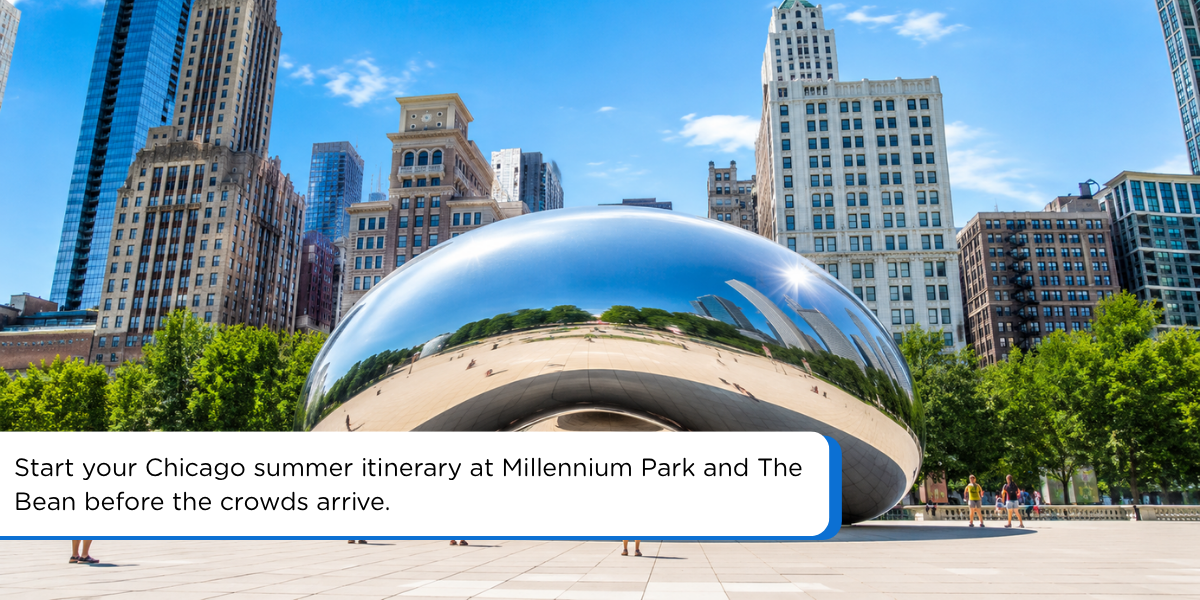
Start early at Millennium Park, especially if you want photos before the crowds arrive. The most famous stop here is Cloud Gate, better known as The Bean. It is one of Chicago’s most recognizable landmarks and a natural first stop for first-time visitors.
After taking photos, slow down and walk through Lurie Garden. This small garden adds a calmer moment to the morning and gives you a nice contrast to the surrounding skyscrapers.
If you still have time, continue toward Grant Park and Buckingham Fountain. The area is easy to explore on foot and works well as a soft start before a busier afternoon.
Suggested morning flow:
Millennium Park
Cloud Gate, The Bean
Lurie Garden
Grant Park
Buckingham Fountain, if time allows
Travel tip: Go early in the morning if you want cleaner photos. The Bean gets busy fast in summer, especially on weekends.
Afternoon: Chicago Riverwalk & Architecture River Cruise
From Millennium Park, walk toward the Chicago Riverwalk. This is one of the best places to understand why Chicago is such a special architecture city.
You can grab lunch near the river, then join an architecture boat tour. The Chicago Architecture Center River Cruise aboard First Lady is a popular choice, and the official tour runs for about 90 minutes along the river. The cruise is one of the easiest ways to learn about Chicago’s skyline while seeing the city from the water. (Chicago Architecture Center)
This is one of the smartest Day 1 activities because it gives you skyline views, local history, and a sense of the city’s layout all at once. Instead of just looking up at buildings from the street, you see the city from a better angle.
Suggested afternoon flow:
Walk along Chicago Riverwalk
Have lunch by the river
Take an architecture river cruise
Continue exploring the Riverwalk after the cruise
Booking tip: Book in advance if you want a weekend, late afternoon, golden hour, or sunset cruise. Summer slots can fill quickly.
Evening: 360 Chicago & River North Dinner
For your first evening, head to 360 Chicago Observation Deck at 875 N Michigan Avenue. It sits on the 94th floor and is one of the easiest places to get a wide view of the city, Lake Michigan, and the skyline. (360 Chicago)
Many travelers still recognize the building by its former John Hancock Center name, but the visitor attraction is now best referred to as 360 Chicago at 875 N Michigan Avenue.
After the observation deck, stay around River North, Magnificent Mile, or Streeterville for dinner. These areas are convenient, central, and full of restaurants.
If you want a classic summer ending, choose a rooftop or patio dinner. On a clear summer evening, this is one of the easiest ways to enjoy Chicago’s skyline without adding another complicated stop to your route.
Day 2: Museums, Lakefront Trail & Lincoln Park
Day 2 gives you two flexible museum options, then moves into the lakefront side of Chicago. This day is especially good if you want a mix of culture, walking, beach views, and a relaxed evening.
Morning Option A: Art Institute of Chicago
If you love art, start your second day at the Art Institute of Chicago.
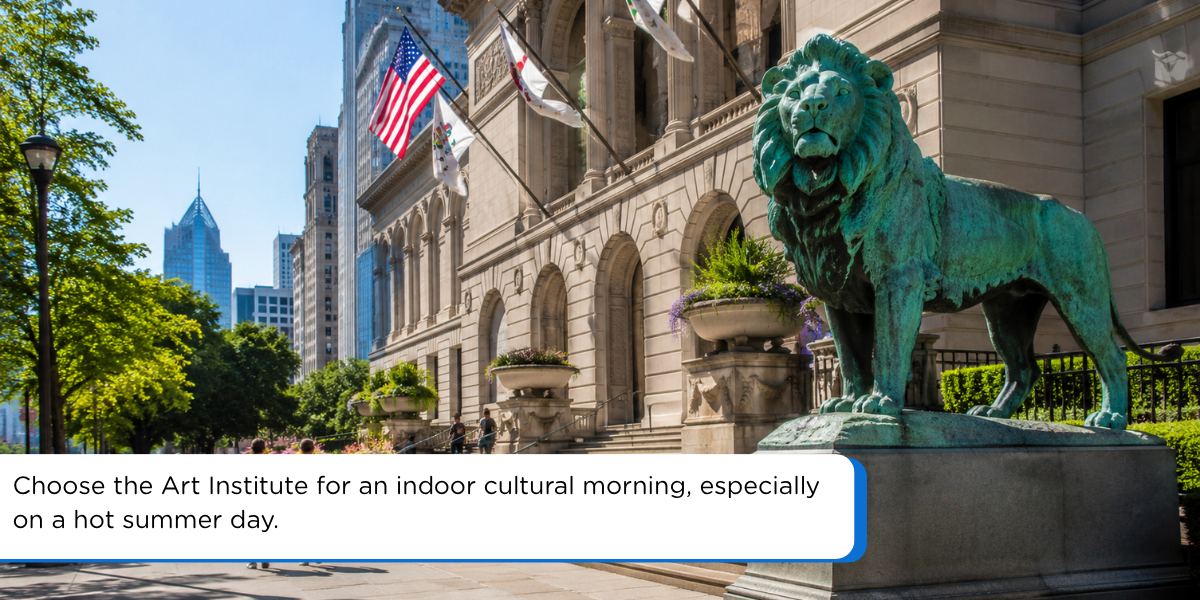
This is the best option if you want a slower indoor morning, especially when the summer heat gets intense. It also works well logistically because the museum is close to Millennium Park and easy to reach from most downtown hotels.
Choose this option if you like:
Art museums
Classic paintings
Indoor activities
A slower cultural morning
Do not try to combine a long Art Institute visit with multiple museums on the same morning. Pick one main cultural stop and enjoy it properly.
Morning Option B: Museum Campus
If you are traveling with kids, love science, or prefer natural history and aquariums, choose Museum Campus instead.
This area includes major attractions like the Field Museum, Shedd Aquarium, and Adler Planetarium viewpoint. You do not need to visit all of them in one day. Choose one main museum, then use the lakefront area nearby for views and photos.
This option is best for:
Families
Science lovers
Aquarium fans
Travelers who want skyline views from the lakefront
The Adler Planetarium area also offers one of the best skyline viewpoints in the city, so even if you do not go inside, it can be worth adding as a short photo stop.
Afternoon: Deep-Dish Pizza & Lakefront Trail
After your museum morning, it is time for a Chicago food classic: deep-dish pizza.
Lou Malnati’s and Giordano’s are two famous names visitors often consider. Locals may debate which one is best, so the safest way to write about it is to say they are popular choices, not the only correct options.
After lunch, shift into lakefront mode.
Walk or bike along the Lakefront Trail, one of the best summer experiences in Chicago. You get Lake Michigan on one side and the skyline on the other, which makes even a simple walk feel memorable.
If you only walk one section, the stretch around North Avenue Beach is one of the easiest for skyline views. This is a great place for photos, people-watching, and a short break by the water.
Suggested afternoon flow:
Deep-dish pizza lunch
Lakefront Trail walk or bike ride
North Avenue Beach stop
Optional coffee or snack near Lincoln Park
Summer tip: Bring water, sunscreen, and comfortable shoes. The lakefront is beautiful, but the sun can feel strong in July and August.
Evening: Lincoln Park Zoo or Jazz/Blues Night
For a relaxed evening, visit Lincoln Park Zoo. It is free, easy to pair with the park, and a nice change of pace after downtown and museum time.
After that, you can have dinner in Lincoln Park or Old Town. These neighborhoods feel more local than the downtown core and are good for a slower evening.
If you want something more classic Chicago, swap the zoo for a jazz or blues club. This works especially well for couples, solo travelers, or friends who want a stronger nightlife experience.
A Cubs game in Wrigleyville can also be a fun option, but only add it if you are interested in baseball or if the schedule fits naturally. Otherwise, it makes the day feel too packed.
Day 3: Wicker Park, The 606 & Navy Pier
Day 3 takes you beyond the main downtown attractions. You will see a more local, creative side of Chicago before ending the trip back on the water.
Morning: Wicker Park & Bucktown
Start your final day in Wicker Park and Bucktown.
These neighborhoods are great for cafés, brunch, boutiques, vintage shops, murals, and a more casual local feel. After two days of major attractions, this is a nice way to slow down and see another side of the city.
You do not need a strict plan here. Pick a café, walk around, browse a few shops, and enjoy the neighborhood.
This is a good area for:
Brunch
Coffee
Street photography
Record shops
Vintage stores
Boutique shopping
Local neighborhood atmosphere
Late Morning: Walk or Bike The 606
From Wicker Park or Bucktown, continue to The 606, an elevated trail built on a former rail line. It is a good summer walk and fits naturally with this part of the city.
The 606 is not as famous as Millennium Park or Navy Pier, but that is part of the appeal. It gives your 3 day Chicago itinerary summer route a more local feel and breaks up the tourist-heavy stops.
You can walk a short section or rent a bike if you want to cover more ground. Either way, keep it relaxed. This is a good place to enjoy Chicago without rushing.
Afternoon: Choose a Food Route
For the afternoon, choose one of two routes depending on your travel style.
Option A: Stay Around Wicker Park
This is the easier route. Stay in the area for lunch, coffee, shopping, and a slower afternoon.
Choose this if you want:
Less transit
A relaxed final day
More neighborhood time
A simple route back downtown later
This option works well if you are tired from the first two days or if your evening plan is Navy Pier.
Option B: Chinatown Food Stop
If food is a major reason you travel, head to Chinatown for dim sum or a casual Chinese meal.
This adds more movement to the day, but it can be worth it if you want a stronger food-focused itinerary. After lunch, head back toward downtown and continue to Navy Pier for the evening.
Choose this if you want:
A food-focused stop
Dim sum or casual Chinese restaurants
A different cultural neighborhood
A more active final day
To keep the route realistic, do not try to do Wicker Park, The 606, Chinatown, and multiple downtown stops all in one afternoon. Pick your priority and leave some breathing room.
Evening: Navy Pier, Centennial Wheel & Summer Fireworks
End your Chicago summer itinerary at Navy Pier.
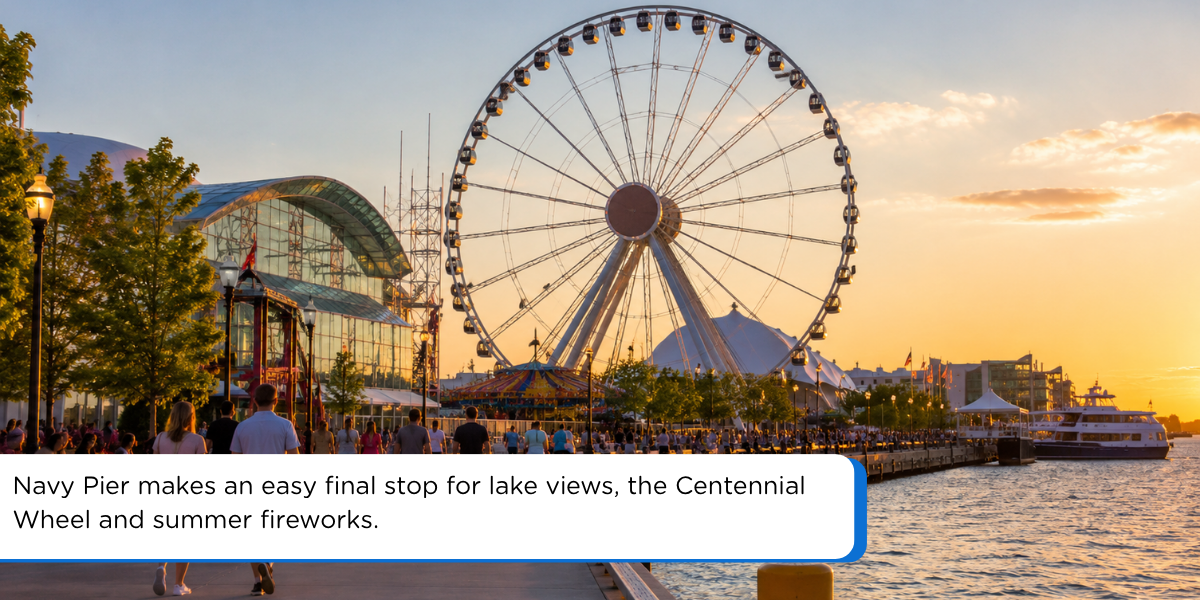
Arrive before sunset if you can. Walk along the pier, enjoy the lake views, and ride the Centennial Wheel if you want a classic tourist moment. While Navy Pier is one of Chicago’s more touristy stops, it still makes a fun and easy finale for a first-time summer trip.
If you are visiting on the right night, stay for the fireworks. Navy Pier’s summer fireworks are scheduled every Wednesday at 9 PM and Saturday at 10 PM from May 23 to September 5. Always check the official Navy Pier summer fireworks schedule before you go, since weather and special events can affect timing. (Navy Pier)
Best Chicago Summer Festivals to Plan Around
Chicago summer is not just about sightseeing. It is also festival season.
If your dates are flexible, you can build your trip around one of the city’s major summer events. Just remember that festival weekends can make hotels more expensive and popular areas more crowded.
Festival | 2026 Date | Location | Best For |
|---|---|---|---|
Chicago Blues Festival | June 4–7, 2026 | Ramova Theatre on June 4; Millennium Park from June 5–7 | Music, culture, free summer events |
Taste of Chicago | July 8–12, 2026 | Grant Park | Food, local restaurants, families |
Taste of River North | July 17–18, 2026 | River North | Food, drinks, nightlife |
Lollapalooza | July 30–August 2, 2026 | Grant Park | Music festival, big-event travelers |
The Chicago Blues Festival is scheduled for June 4–7, 2026, with June 4 at Ramova Theatre and June 5–7 at Millennium Park, according to the City of Chicago. The Taste of Chicago returns to Grant Park from July 8–12, 2026. Lollapalooza is scheduled for July 30–August 2, 2026 at Grant Park. (City of Chicago)
If you love music or food, these dates can make your trip more exciting. But if you prefer lower crowds and easier hotel booking, avoid major festival weekends, especially Lollapalooza.
Where to Stay for a 3-Day Chicago Summer Trip
Choosing the right area matters because Chicago is spread out. For a first-time 3-day trip, these neighborhoods are the easiest.
The Loop
The Loop is best if you want to stay close to Millennium Park, Grant Park, the Art Institute, and public transit.
It is practical, central, and easy for sightseeing. The main downside is that some parts can feel quieter at night compared with River North or West Loop.
Best for:
First-time visitors
Museum access
Downtown sightseeing
Short trips
River North
River North is one of the best areas for restaurants, nightlife, rooftops, and central access.
It works especially well for couples, friend groups, and travelers who want to be near good dinner options after sightseeing.
Best for:
Restaurants
Nightlife
Rooftop bars
Easy access to downtown and the Riverwalk
Magnificent Mile / Streeterville
This area is convenient for shopping, Navy Pier, 360 Chicago, and lakefront access.
It is tourist-friendly and easy to navigate, making it a solid choice for first-time visitors who want a polished downtown stay.
Best for:
Shopping
Lakefront access
Navy Pier
Classic downtown hotels
Lincoln Park
Lincoln Park is better if you want a quieter, more neighborhood-style stay.
You will be farther from some downtown attractions, but you get parks, local restaurants, and a more residential feel.
Best for:
Longer stays
Families
Repeat visitors
Travelers who prefer a local neighborhood base
Practical Tips for Visiting Chicago in Summer
Chicago is very visitor-friendly in summer, but a few simple tips can make the trip smoother.
Book Popular Activities in Advance
Book your architecture cruise early, especially for weekends and sunset times. Summer is peak season, and the best time slots can sell out.
Start Outdoor Days Early
Millennium Park, the Riverwalk, and Lakefront Trail are better earlier in the day. You will avoid some crowds and reduce the chance of walking during the hottest part of the afternoon.
Use Public Transit and Rideshare
Most first-time visitors do not need a car. Parking can be expensive, and traffic can slow you down. Walking, CTA trains, buses, and rideshare are usually easier for this itinerary.
Pack for Heat and Lake Breezes
Bring light clothes, comfortable shoes, sunscreen, sunglasses, and a refillable water bottle. At the same time, pack a light layer for evenings near Lake Michigan, where breezes can feel cooler.
Check Event Dates Before Booking Hotels
Festival weekends can affect hotel prices and availability. This is especially true around Lollapalooza, Taste of Chicago, and major holiday weekends.
Keep Mobile Data Ready
You will use your phone constantly in Chicago for:
Google Maps
CTA routes
Uber or Lyft
Digital tickets
Restaurant bookings
Festival updates
Weather checks
Emergency contact
Public WiFi is not something you should rely on while moving around the city. If your phone supports eSIM, setting up a travel eSIM for the United States before arrival can make the first day much easier.
How to Stay Connected During Your Chicago Trip
A Chicago summer trip is much easier when your phone works the moment you land.
You may need mobile data to get from the airport to your hotel, check train routes, call a rideshare, open digital tickets, book restaurants, and adjust plans around weather or festival crowds.
That is where a travel eSIM can help. Instead of looking for a physical SIM card or relying on airport WiFi, you can set up your mobile data before or during arrival.
With a Gohub travel eSIM, you can stay connected from the airport to downtown, from the Riverwalk to Navy Pier, and from your hotel to every last-minute food stop on your list.
It is a small travel detail, but it can save a lot of stress, especially in a city where you will depend on maps, transit, and mobile bookings throughout the day.
CTA:
Planning a summer trip to Chicago? Set up your Gohub USA travel eSIM before you fly, so you can use maps, rideshare apps, digital tickets, and restaurant bookings as soon as you land.
FAQ About Visiting Chicago in Summer
Is Chicago worth visiting in summer?
Yes. Summer is one of the best times to visit Chicago because the city comes alive with lakefront activities, outdoor dining, beaches, architecture cruises, fireworks, and festivals.
Is 3 days enough for Chicago?
Yes, 3 days is enough for a first-time Chicago itinerary. You can cover downtown, an architecture cruise, museums, the lakefront, a few neighborhoods, and one evening event.
How many days do you need in Chicago in summer?
For first-time visitors, 3 days is enough to see the main highlights. If you want more museums, food neighborhoods, beaches, and day trips, 4 to 5 days will feel more comfortable.
What is the best month to visit Chicago?
June, July, and August are all good. June is often slightly easier for crowds, July has major festivals and peak summer energy, and August is great for lakefront and beach activities.
Do I need a car in Chicago?
Most visitors do not need a car for a 3-day Chicago itinerary. Walking, CTA trains, buses, and rideshare are usually easier than driving and parking downtown.
Where should I stay for a 3-day Chicago itinerary?
The Loop, River North, Magnificent Mile, and Streeterville are the easiest areas for first-time visitors. Lincoln Park is a good option if you want a quieter neighborhood base.
What should I not miss on a first trip to Chicago?
Do not miss Millennium Park, The Bean, the Chicago Riverwalk, an architecture cruise, Lakefront Trail, and one skyline viewpoint such as 360 Chicago.
What should I wear in Chicago in summer?
Wear light clothing, comfortable walking shoes, sunglasses, and sunscreen. Bring a light layer for evenings near Lake Michigan.
When are Navy Pier fireworks in summer?
Navy Pier’s summer fireworks are scheduled on Wednesdays at 9 PM and Saturdays at 10 PM from May 23 to September 5. Check the official schedule before visiting because timing can change due to weather or events. (Navy Pier)
What are the best Chicago summer festivals?
Popular Chicago summer festivals include Chicago Blues Festival, Taste of Chicago, Taste of River North, and Lollapalooza.
Should I book the architecture cruise in advance?
Yes. The Chicago architecture cruise is one of the most popular summer activities, so advance booking is recommended, especially for weekends and sunset times.
Is Chicago good for a first-time US city trip?
Yes. Chicago is a great first-time US city trip because it combines architecture, food, museums, lakefront scenery, neighborhoods, and reliable public transit.
Final Thoughts: How to Make the Most of 3 Days in Chicago
The best Chicago summer itinerary is not the one with the longest list of attractions. It is the one that gives you enough time to actually enjoy the city.
With 3 days, you can see the downtown icons, cruise the river, walk by Lake Michigan, visit a world-class museum, explore local neighborhoods, try deep-dish pizza, and end your trip with fireworks over the water.
Use Day 1 for downtown and architecture. Save Day 2 for museums and the lakefront. Spend Day 3 exploring neighborhoods before closing the trip at Navy Pier.
And before you fly, make sure your phone is ready for maps, transit, tickets, restaurants, and rideshare. A Gohub travel eSIM helps you stay connected throughout your Chicago summer trip, so you can focus less on finding WiFi and more on enjoying the city.
Sources and Official References
Related Posts

Hi! Mình là Lala Wren, một content creator yêu xê dịch và đam mê chia sẻ trải nghiệm thực tế cho cộng đồng Gohub. Trong nhiều năm qua, mình đã đặt chân đến Thái Lan, Hàn Quốc, Nhật Bản, Singapore, Malaysia, Bali và nhiều điểm đến thú vị khác trên khắp châu Á. Cùng mình tìm hiểu tất tần tật từ khâu chuẩn bị eSIM, Visa, lịch trình và địa điểm nổi bật cho chuyến đi sắp tới của bạn nhé!
View all articles →Related articles
Attractions in Orlando Florida for Free: 15 Budget-Friendly Places to Visit in 2026
Discover the best attractions in Orlando Florida for free – from Disney Springs and Lake Eola Park to artsy districts and gardens. Plan your budget trip with Gohub eSIM for easy navigation.
Best Time to Visit Niagara Falls: A Simple Seasonal Guide for First-Time Visitors
Best time to visit Niagara Falls by season, weather, crowds, boat tours, fireworks, hotel prices, and travel tips for first-time visitors.
Best US Nature & National Parks Destinations in 2026: Where to Go, When to Visit & Travel Tips
Explore the best US nature and national park destinations in 2026, from Yellowstone and Yosemite to Death Valley, Zion, Glacier, and hidden scenic escapes—plus the best time to visit, entry tips, and eSIM travel advice.

Best US Cities to Visit in 2026 for First-Time Visitors
Plan your first trip to the USA in 2026 with iconic US cities like New York, Boston, Washington, D.C., and New Orleans during World Cup 2026 and America’s 250th anniversary.
Yellowstone & Grand Teton Itinerary 2026: 3, 5 and 7 Days
Plan your perfect Yellowstone and Grand Teton itinerary with our 3, 5, and 7-day guides — geysers, wildlife, hikes, and expert tips included.