Loading page, please wait...
WhatsApp 24/7:+1 (302) 899-2888
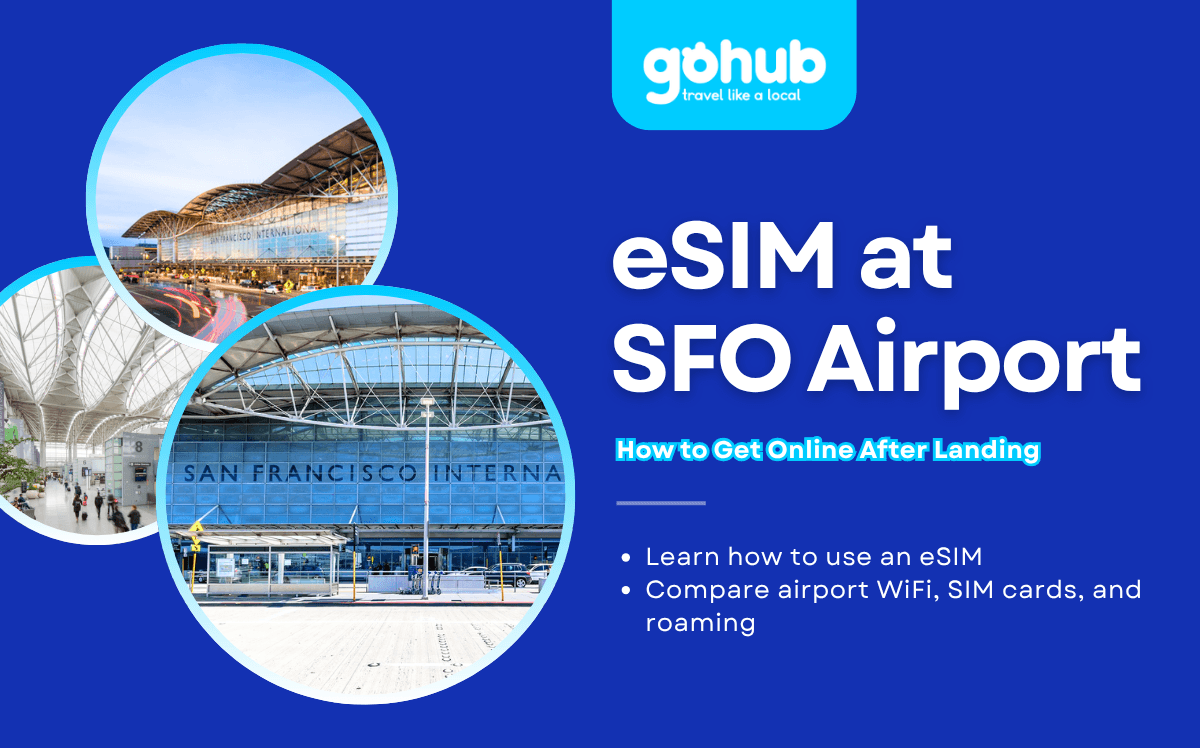
Arriving at San Francisco International Airport, commonly known as SFO, is often the first step of a trip to San Francisco, Silicon Valley, Northern California, or another U.S. destination. Whether you are visiting for tourism, business, study, or a connecting journey, mobile data can make your arrival much easier.
An eSIM lets you connect to mobile data without swapping a physical SIM card, waiting at an airport counter, or relying only on public WiFi.
Yes, you can use an eSIM at SFO Airport shortly after landing if your phone supports eSIM and your plan has been installed before departure.
Once you arrive, turn off airplane mode, enable your travel eSIM, select it for mobile data, and turn on data roaming if your provider requires it. Activation speed may vary depending on your provider, device settings, network partner, terminal location, and local congestion.
SFO provides free WiFi in all terminals. According to SFO’s official WiFi page, travelers can connect by selecting the network named “#SFO FREE WIFI” and launching a web browser. Airport WiFi is useful as a backup, but a travel eSIM is usually more convenient once you leave the airport.
Topic | Quick Answer |
|---|---|
Can I use an eSIM at SFO Airport? | Yes, if your device and plan support it. |
Should I install it before flying? | Yes, installation is easier with stable WiFi. |
Does SFO Airport have free WiFi? | Yes, free WiFi is available in all terminals. |
Can I buy a SIM card at SFO? | Yes, SFO lists mobile services and SIM cards in the International Terminal. |
Is eSIM cheaper than roaming? | Often, but it depends on your home carrier. |
Can I keep my home number? | Usually yes on dual-SIM devices. |
Can I use it across the U.S.? | Generally yes, depending on provider and network partner. |
Many international travelers need internet access before leaving the airport.
Common arrival tasks include:
Booking rideshare or airport transportation.
Contacting hotels, hosts, or colleagues.
Accessing reservation confirmations.
Using Google Maps or Apple Maps.
Checking BART, taxi, shuttle, or rental car information.
Messaging family or travel companions.
Accessing banking, travel, and airline apps.
Using translation tools or digital travel documents.
Airport WiFi can help during your first few minutes in the terminal. However, mobile data is more useful once you move toward baggage claim, customs exit, rideshare pickup, BART, taxi areas, rental cars, or your accommodation.
If the United States is your main destination, reviewing USA eSIM plans before departure can help you avoid setup delays after landing.

Traveler using an eSIM after arriving at SFO Airport.
Yes. Most travelers can use an eSIM at SFO Airport shortly after arrival if the eSIM has already been installed and the plan includes U.S. coverage.
The typical process is:
Purchase your USA eSIM before travel.
Install the eSIM profile on your phone using stable WiFi.
Arrive at SFO Airport.
Turn off airplane mode.
Enable the travel eSIM if required.
Select the eSIM as your mobile data line.
Turn on data roaming if your provider requires it.
Wait for network registration.
Activation is usually quick, but it is not guaranteed to be instant for every traveler. Performance depends on your eSIM provider, device compatibility, phone settings, network partner, airport location, and temporary congestion.
Before traveling, verify your device using this guide to eSIM-compatible phones.
Yes. SFO lists mobile services in the International Terminal Arrivals Lobby. According to SFO’s Mobile Services page, TripTel offers mobile services, hotspots, WiFi devices, phone accessories, calling cards, SIM cards, internet access, and related services.
Buying a SIM card at the airport may be useful if:
Your phone does not support eSIM.
You forgot to arrange mobile data before departure.
You prefer in-person assistance.
You need a physical SIM card.
You want help setting up connectivity after arrival.
However, airport purchases can involve queues, limited product options, or store-hour restrictions. For travelers who want mobile data shortly after landing, installing an eSIM before departure is usually the smoother option.
Feature | eSIM | Airport WiFi | Local SIM | International Roaming |
|---|---|---|---|---|
Works shortly after landing | Yes | Yes, inside airport areas | After purchase/setup | Yes |
Requires physical SIM | No | No | Yes | No |
Works outside airport | Yes | No | Yes | Yes |
Keeps home number | Usually | Yes | Usually no | Yes |
Setup before travel | Yes | No | No | Usually no |
Cost predictability | Generally good | Free | Medium | Varies by carrier |
Airport WiFi is useful for quick messages or troubleshooting. A local SIM can work well for longer stays, but it requires purchase and setup after arrival. International roaming is convenient, but costs vary significantly by home carrier and plan.
For a deeper cost comparison, see international roaming vs eSIM.
Traveler Type | Recommended Data |
|---|---|
Airport layover | 1GB–3GB |
Weekend visitor | 5GB–10GB |
One-week U.S. trip | 10GB–20GB |
Business traveler | 10GB–20GB |
Road trip traveler | 20GB+ |
Digital nomad | 20GB+ |
Most travelers use data for maps, messaging, rideshare, public transit, email, travel apps, and booking confirmations. Streaming video, hotspot use, and video calls can use much more data, so choose a larger plan if you expect heavy usage.
For travelers visiting San Francisco, Los Angeles, Las Vegas, New York, or other U.S. destinations, USA eSIM plans can help provide connectivity throughout the country, depending on provider coverage and network partners.
Before departure:
Confirm your device supports eSIM.
Check that your phone is carrier-unlocked.
Install the eSIM profile using stable WiFi.
Save activation instructions offline.
Update your phone software if needed.
Check whether data roaming must be enabled.
Keep a copy of your QR code or manual setup details.
Download offline maps as a backup.
Save your hotel address and transport details.
Charge your device before arrival.
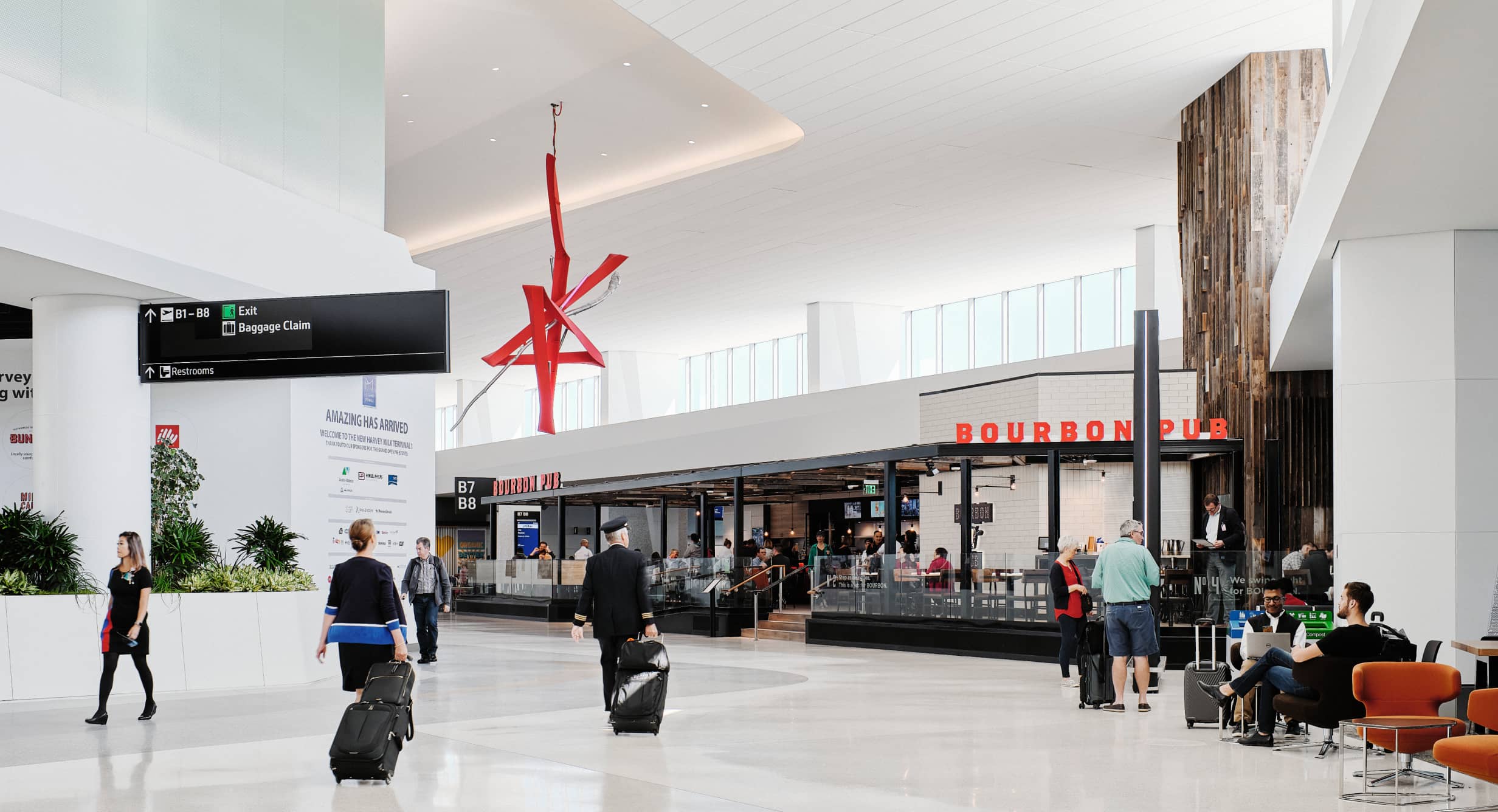
Installing a USA eSIM before flying to SFO Airport.
Once you arrive at SFO Airport:
Turn off airplane mode.
Enable your installed eSIM.
Assign mobile data to the eSIM line.
Enable data roaming if required by your provider.
Wait for network registration.
Test internet access.
Open maps, messaging, or rideshare apps to confirm connectivity.
If activation does not work immediately, restart your device, check that the correct data line is selected, and confirm any APN instructions from your eSIM provider. Use SFO airport WiFi as a backup if you need to access setup instructions or customer support.
This article focuses on connectivity, not transportation planning. Still, mobile data becomes useful immediately when you need to check routes into San Francisco or the Bay Area.
Popular options include:
BART.
Taxis.
Rideshare services.
Hotel shuttles.
Rental cars.
Private transfers.
SFO’s official ground transportation guide explains airport options including taxis and rideshare pickup information. BART also states that trains depart from the SFO International Terminal and connect the airport with downtown San Francisco, downtown Oakland, and other Bay Area destinations through the official BART airport connections guide.
With mobile data active, you can compare routes, check BART departures, book rideshare, contact your hotel, and share your arrival time.

Traveler using mobile data after leaving SFO Airport.
Entry requirements vary by nationality, passport, trip duration, and travel purpose. This article is not a visa guide, so keep this step simple: before flying, review U.S. Customs and Border Protection information for international visitors or check with the nearest U.S. embassy or consulate.
SFO also explains that most international arriving passengers must complete U.S. Customs and Border Protection entry procedures in the Federal Inspection Area, except passengers arriving from pre-cleared countries, on its International Arrivals page.
Before leaving the airport:
Confirm mobile data is active.
Verify that the eSIM has signal.
Test Google Maps or your preferred navigation app.
Open your hotel reservation.
Check BART, taxi, shuttle, rental car, or rideshare apps.
Save important addresses offline.
Turn off unwanted roaming on your home SIM if needed.
Keep airport WiFi as a backup option.
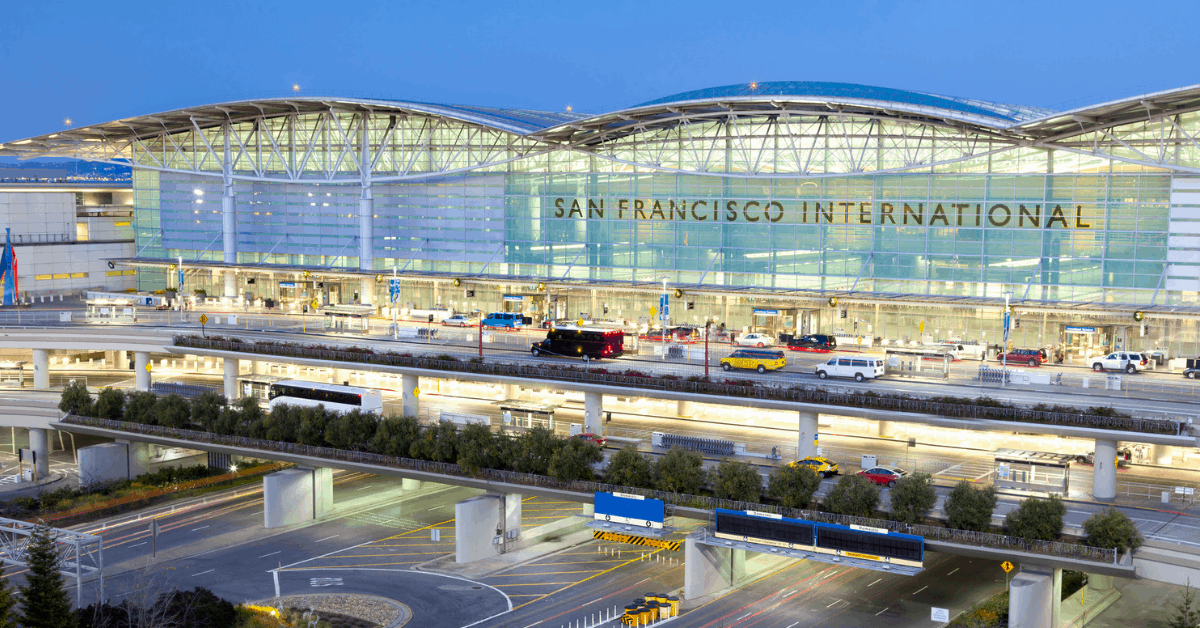
The Ultimate Guide to San Francisco Airport (SFO)
If you prefer to avoid airport SIM counters and reduce reliance on public WiFi, reviewing USA eSIM plans before departure can help you get connected more smoothly after landing at SFO Airport.
Using an eSIM at SFO Airport is one of the simplest ways to access mobile data shortly after arriving in the United States.
Rather than searching for a SIM card counter or relying only on airport WiFi, travelers can install an eSIM before departure and activate it after landing. Whether you are visiting San Francisco for a few days, traveling around California, or continuing across the United States, mobile connectivity can make your arrival more efficient and less stressful.
Yes. Most travelers can connect shortly after landing if the eSIM has been installed before departure and the plan includes U.S. coverage.
SFO lists mobile services and SIM cards in the International Terminal Arrivals Lobby. eSIM-specific availability may vary by provider, product, and operating hours, so installing an eSIM before travel is usually more convenient.
Yes. SFO offers free WiFi in all terminals through the “#SFO FREE WIFI” network.
Yes. Installing your eSIM before departure is usually easier because you can use stable WiFi and save setup instructions before flying.
Airport WiFi can help inside the terminal, but it will not provide continuous connectivity after you leave the airport. A travel eSIM is more practical for maps, transport, and hotel communication.
Generally yes, if your eSIM plan includes U.S. coverage. Actual performance depends on provider, device, network partner, location, and congestion.
Often, but not always. It depends on your home carrier’s roaming rates, your travel duration, and how much data you need.
Common causes include airplane mode still being enabled, the wrong data line selected, data roaming disabled, delayed activation, APN settings, or device compatibility issues.
Yes. Many dual-SIM phones allow you to keep your primary SIM active for calls or texts while using the eSIM for mobile data.
Generally, mobile coverage is available along major Bay Area routes, but signal and speed can vary depending on your provider, network partner, route section, and congestion.
Airport services, WiFi availability, mobile service vendors, transportation options, operating hours, entry requirements, and connectivity policies may change. Travelers should verify the latest information through SFO, official transport operators, U.S. government sources, and their eSIM provider before departure.
Visiting Bali? Learn how to choose an eSIM for maps, ride-hailing, messaging, bookings, and mobile data without relying only on WiFi.

Visiting Bangkok? Learn how to choose an eSIM for maps, BTS/MRT, Grab, messaging, and mobile data without relying only on roaming or WiFi.
Landing at Taipei Taoyuan Airport? Learn how to use an eSIM, compare airport WiFi, SIM cards, and roaming, and get online after arrival.