

Loading page, please wait...
Seven days in Japan sounds short. In practice, it is enough time to stand inside the world's busiest pedestrian crossing, walk through a tunnel of ten thousand red torii gates, eat sushi at a 6 AM fish market, soak in a volcanic onsen with views of Mount Fuji, and still make it to Osaka in time for takoyaki by the canal. The key is not cramming in more cities. It is choosing the right route and moving through it with intention.
This japan itinerary 7 days guide takes you from Tokyo through Hakone to Kyoto, with a day trip to Nara and a final night in Osaka. Every day is planned to minimize transit time and maximize the experiences that actually stay with you.
Before you go: This route spans four destinations across Honshu. You will need Google Maps constantly — for train connections, temple navigation, and finding the ramen shop hidden down the back alley. Activate a Gohub eSIM for Japan before your flight so you land connected and ready.
Day | Destination | Highlights |
|---|---|---|
Day 1 | Arrive Tokyo | Haneda or Narita, Shinjuku orientation, Omoide Yokocho |
Day 2 | Tokyo | Asakusa, Tsukiji, Harajuku, Shibuya Crossing |
Day 3 | Tokyo | Akihabara or Yanaka, TeamLab Planets, Shimokitazawa |
Day 4 | Hakone | Lake Ashi, Mt Fuji views, Owakudani, optional onsen |
Day 5 | Kyoto | Fushimi Inari (early), Arashiyama, Gion at night |
Day 6 | Kyoto + Nara | Kinkaku-ji, Nishiki Market, Nara deer park |
Day 7 | Osaka | Kuromon Market, Dotonbori, fly out KIX |
The honest answer is yes — with the right expectations. Travelers planning one week in Japan often worry they are trying to fit too much into too little time. Seven days gives you enough time to cover Tokyo, a mountain escape, Kyoto's historic core, and Osaka's food scene without feeling like you are only passing through. What it does not leave room for is side trips to Hiroshima, days in Hokkaido, or a deep dive into rural Japan.
For first-time visitors, the Tokyo to Osaka route is widely considered the ideal introduction. The cities contrast sharply: Tokyo is fast, dense, and electric; Kyoto is measured, ceremonial, and ancient; Osaka is loud, warm, and centered entirely around food. Together, they give you a full picture of what modern Japan actually feels like.
One practical tip worth noting early: fly into Tokyo and out of Osaka (Kansai International Airport). This open-jaw routing eliminates backtracking and saves roughly half a day of unnecessary Shinkansen travel.
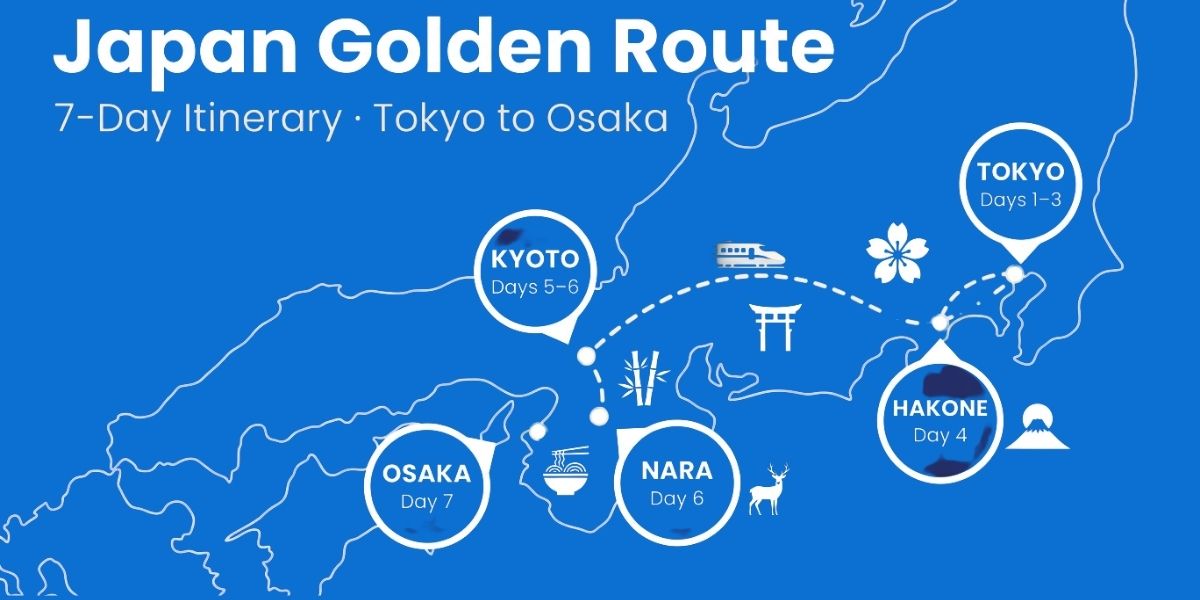
The classic Golden Route: Tokyo (3 days) → Hakone (1 day) → Kyoto (2 days) → Osaka (1 day) — the most efficient introduction to Japan for first-time visitors.
Before getting into the day-by-day breakdown, understanding transport will save you money and stress throughout the week.
JR Pass (7-Day): A 7-day JR Pass costs approximately ¥50,000 and covers all Shinkansen Hikari and Sakura trains, the Narita Express, and most JR local lines. For this itinerary, it pays for itself across the Tokyo to Kyoto Shinkansen alone, plus the Narita Express and Kyoto to Osaka leg. Purchase your JR Pass before leaving home — it cannot be bought inside Japan.
IC Card (Suica or Pasmo): Pick up a Suica card at any JR station on arrival. It works on Tokyo Metro, Osaka subway, Kyoto buses, and doubles as contactless payment at convenience stores, vending machines, and many restaurants. Keep it topped up throughout the trip.
Key routes and costs:
Route | Train | Duration | Cost (no JR Pass) |
|---|---|---|---|
Narita → Tokyo | N'EX | 60 min | ¥3,070 |
Haneda → Shibuya | Keikyu/Tokyu | 30 min | ¥740 |
Tokyo → Hakone | Romancecar (Odakyu) | 85 min | ¥2,200 |
Tokyo → Kyoto | Shinkansen Hikari | 2h20 | ¥13,870 (non-reserved) |
Kyoto → Nara | JR Yamato-ji Line | 45 min | ¥720 |
Kyoto → Osaka | JR Shinkaisoku | 30 min | ¥580 |
Kyoto → Osaka | Hankyu/Keihan | ~45 min | ¥400–¥500 (Best if staying near Gion) |
Most international flights land at Narita (NRT) or Haneda (HND). Haneda is closer to central Tokyo at around 30 minutes by Keikyu Line to Shinagawa. Narita requires roughly 60 to 90 minutes via the Narita Express (N'EX), which is covered by the JR Pass.
Collect your Suica card at the airport, activate your eSIM if you have not already done so, and head to your hotel. Shinjuku and Shibuya are the most practical base areas for this itinerary — well connected to every train line you will need.
Resist the urge to do too much on day one. Jet lag is real, and burning out on the first evening will cost you later in the week. Instead, use the evening to explore the immediate area around Shinjuku Station.
Omoide Yokocho (Memory Lane) is a narrow alley behind the station's west exit packed with tiny yakitori stalls that seat six to eight people. Smoke rises, orders are shouted, and grilled skewers arrive fast. It is one of the most atmospheric places to eat in all of Tokyo and costs almost nothing.
After dinner, walk through Kabukicho — Tokyo's entertainment district — to get a sense of the city's nighttime energy before calling it an early night.
Start day two on the traditional side of the city. Senso-ji Temple in Asakusa is Tokyo's oldest temple and one of its most visited. Arrive before 8 AM to walk the Nakamise-dori shopping street and Kaminarimon Gate without shoulder-to-shoulder crowds. The early morning light through the incense smoke is worth the early alarm.
From Asakusa, head south to Tsukiji Outer Market for a late breakfast. Even though the inner wholesale market relocated to Toyosu, the outer market retains dozens of stalls selling fresh sushi, tamagoyaki, and grilled seafood. Eat as you walk — this is the best breakfast in Tokyo.
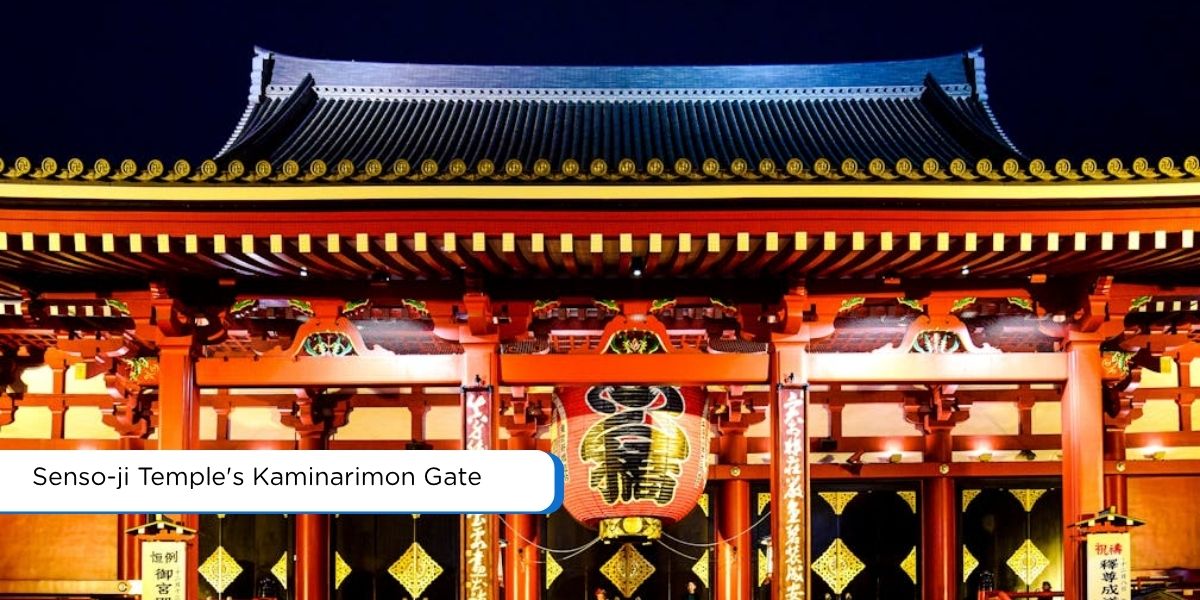
Senso-ji Temple's Kaminarimon Gate before 8 AM — incense smoke, empty Nakamise-dori, and morning light make this Tokyo's most atmospheric early start.
After lunch, shift to the western neighborhoods. Harajuku's Takeshita Street runs a few hundred meters of cosplay boutiques, oversized cotton candy, rainbow crepes, and streetwear unlike anything outside Japan. One stop south, Meiji Jingu Shrine offers the opposite experience — forested silence five minutes from one of the world's most chaotic intersections.
Finish the afternoon at Shibuya Scramble Crossing. The best time to experience it is between 5 PM and 8 PM on a weekday, when the intersection fills with thousands of pedestrians every time the lights change. Head upstairs to the Starbucks overlooking the crossing or go all the way up to Shibuya Sky Observatory for a panoramic view of the city at golden hour.
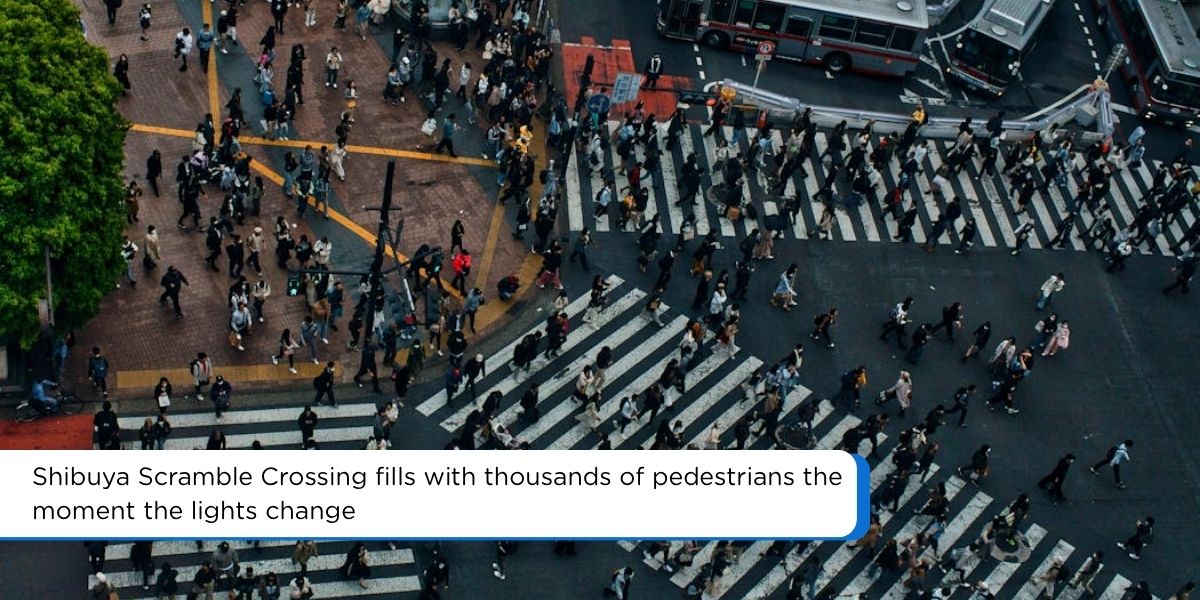
Shibuya Scramble Crossing is the world's busiest pedestrian intersection — best experienced between 5 PM and 8 PM on a weekday when thousands of people cross simultaneously from every direction.
Day three is intentionally flexible. Tokyo is large enough that two people visiting at the same time can have completely different experiences. Two strong options:
Akihabara is the global center of anime, manga, retro gaming, and electronics. Multi-floor arcades, capsule machine corridors, and maid cafes line every street. It is overwhelming in the best possible way.
In the afternoon, head to TeamLab Planets in Toyosu — a digital art museum where you wade through water, walk through infinity mirror rooms, and interact with light installations that respond to your movement. Tickets sell out regularly, so book online in advance.
For a slower day, Yanaka is Tokyo's best-preserved pre-war neighborhood, full of narrow streets, independent craft shops, Buddhist temples, and stray cats. The Yanaka Ginza shopping street feels like a small-town market dropped into the middle of a megalopolis.
From Yanaka, the train ride to Shimokitazawa takes about 20 minutes. This neighborhood runs on vintage clothing, live music, and independent coffee. Spend the late afternoon browsing and the evening at one of its small standing bars.
The Odakyu Romancecar train from Shinjuku reaches Hakone-Yumoto in about 85 minutes. Reserve a seat in advance — the large panoramic windows make the journey worth watching. Alternatively, the JR Pass covers the route as far as Odawara, where you transfer to the Hakone Tozan Railway.
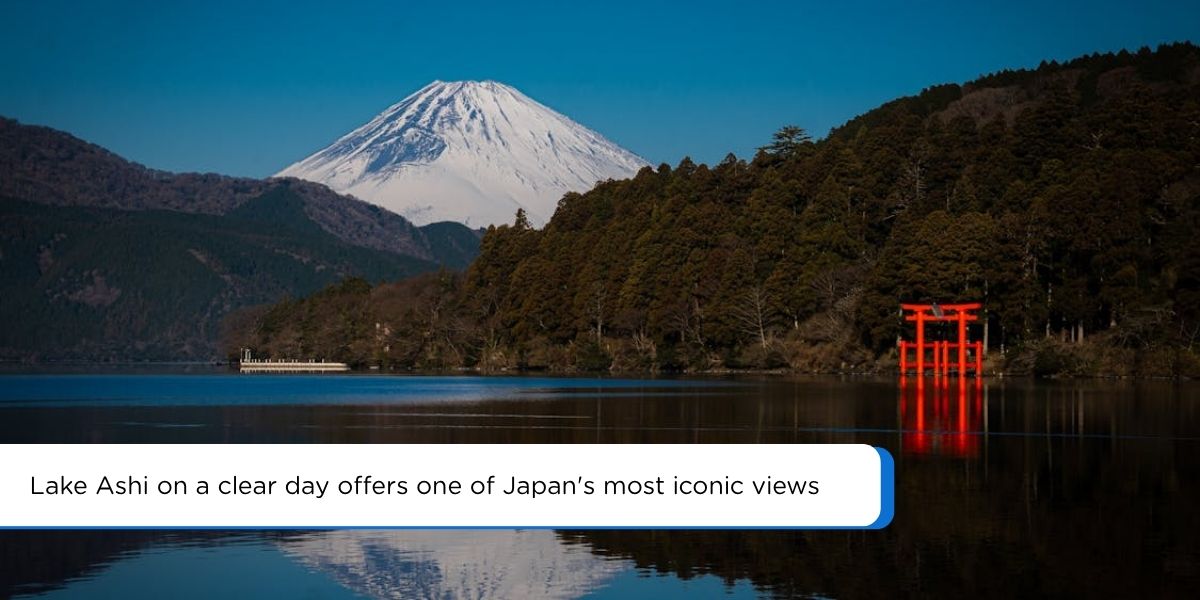
Lake Ashi on a clear day offers one of Japan's most iconic views — Mount Fuji rising behind the water, with the red torii gate of Hakone Shrine emerging from the lake's edge.
Lake Ashi is the centerpiece of the Hakone region. On a clear day, Mount Fuji rises directly behind the lake's southern shore, and a pirate ship cruise crosses the water every 30 to 40 minutes. The Hakone Shrine sits at the lake's edge, with a red torii gate standing partially in the water — one of the most iconic photographs in Japan.
Further into the mountains, Owakudani is an active volcanic area where sulphurous steam rises from the hillside. The local specialty is kuro tamago — eggs boiled in the volcanic water until the shells turn black. Legend holds that each one extends your life by seven years.
Hakone Open Air Museum combines outdoor sculpture with an indoor Picasso pavilion and an onsen foot bath where you can soak your feet while looking at art. It is one of Japan's best museums and rarely crowded on weekdays.
Overnight option: Staying one night in a Hakone ryokan (traditional inn) with an onsen is one of the most distinctly Japanese experiences possible. Several ryokan serve multi-course kaiseki dinners and have private outdoor baths. If the budget allows, this is worth building into the itinerary. Otherwise, return to Tokyo by evening and take the Shinkansen to Kyoto the following morning.
The Shinkansen Hikari from Tokyo Station reaches Kyoto in approximately 2 hours and 53 minutes. If you are not using a JR Pass, the faster Nozomi cuts that to 2 hours and 30 minutes for roughly the same fare. It is one of the most efficient train journeys in the world. Sit on the right side of the train (facing toward Kyoto) for the best views of Mount Fuji roughly 40 minutes after departure.
The single most important timing tip for this entire itinerary: arrive at Fushimi Inari before 7 AM. The thousands of vermillion torii gates that wind up the mountain are Japan's most photographed subject, and by 9 AM they are packed with tour groups. In the early morning, the path through the gates is quiet, the light filters low through the forest, and the experience feels genuinely sacred rather than performative.
You do not need to hike the full two to four hours to the summit. The lower section, which takes around 30 minutes each way, captures the most photographically iconic corridors of gates.
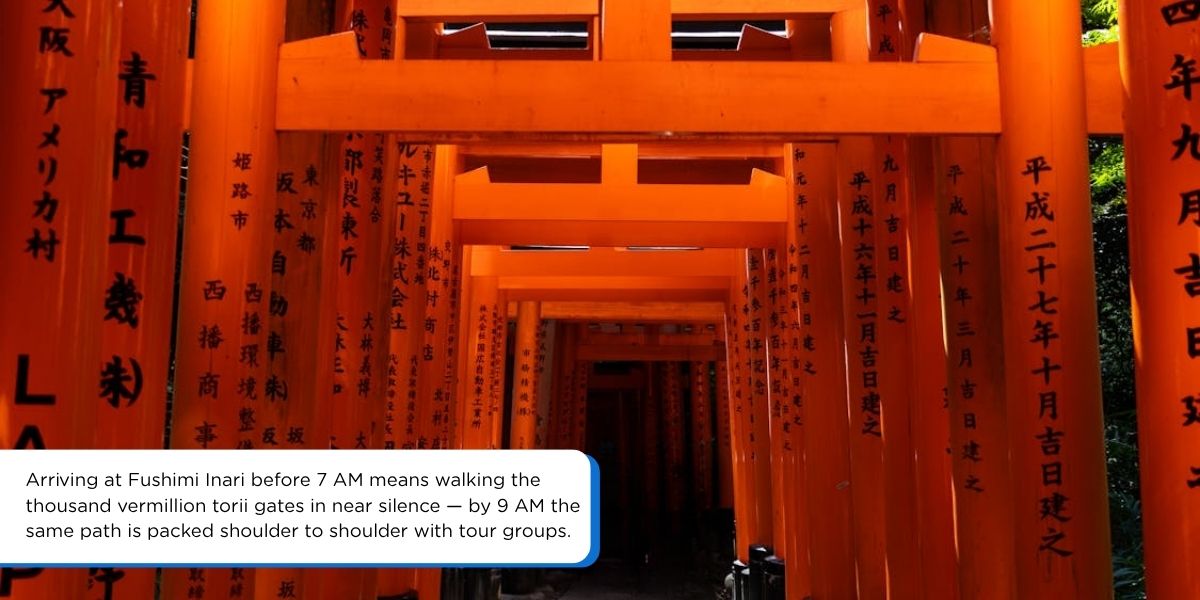
Arriving at Fushimi Inari before 7 AM means walking the thousand vermillion torii gates in near silence — by 9 AM the same path is packed shoulder to shoulder with tour groups.
After Fushimi Inari, take the train west to Arashiyama. The bamboo grove here is short — ten minutes to walk through end to end — but the scale and density of the stalks creates a genuinely otherworldly atmosphere. Arrive in the late afternoon when the light turns golden.
From the bamboo grove, walk to Tenryu-ji Temple, a UNESCO World Heritage site with a pond garden considered one of Japan's finest. Cross the Togetsukyo Bridge at sunset for a view of the bamboo-covered mountains reflected in the Katsura River.
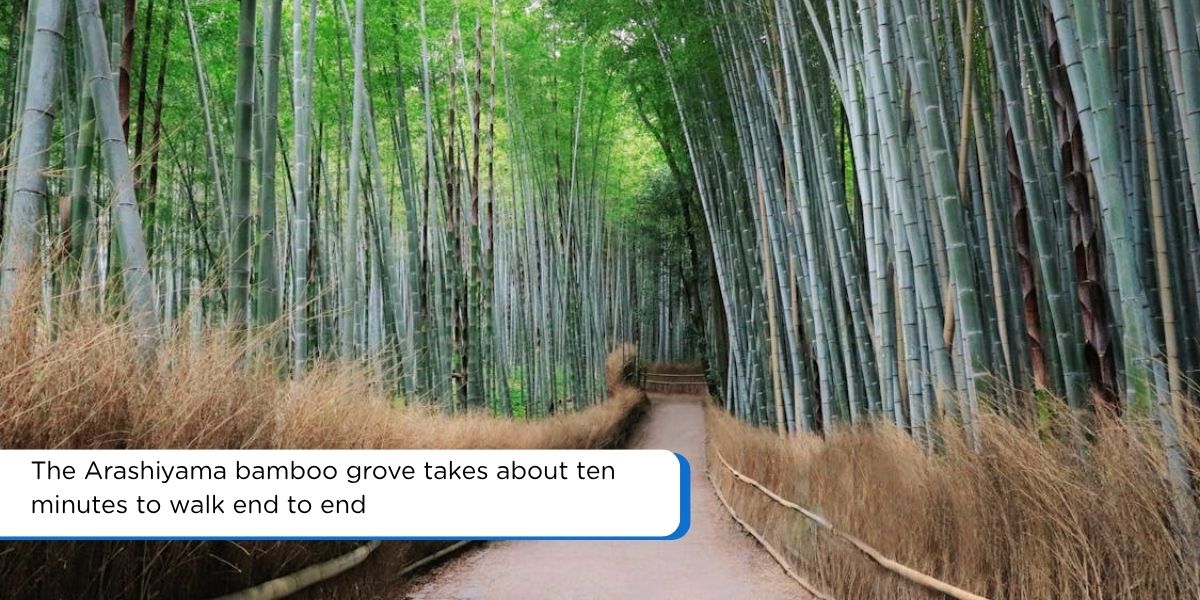
The Arashiyama bamboo grove takes about ten minutes to walk end to end — but the scale and density of the stalks, especially in late afternoon light, creates an atmosphere unlike anywhere else in Japan.
End the day in Gion, Kyoto's preserved geisha district. The wooden machiya townhouses along Hanamikoji Street are lit by paper lanterns, and if you walk quietly enough in the early evening, you may see a maiko (apprentice geisha) moving between appointments. Eat at one of the small izakayas tucked into the side streets and take your time.
Start early at Kinkaku-ji (the Golden Pavilion). The temple's top two floors are covered in gold leaf and reflect perfectly in the surrounding pond. Like Fushimi Inari, the earlier you arrive the better — crowds build quickly after 9 AM.
Next, walk through Nishiki Market, a covered food street running 400 meters through central Kyoto. More than 100 vendors sell pickled vegetables, fresh tofu, grilled fish on skewers, sweet bean paste confections, and matcha everything. This is where Kyoto's restaurant chefs actually shop, and the quality reflects it.
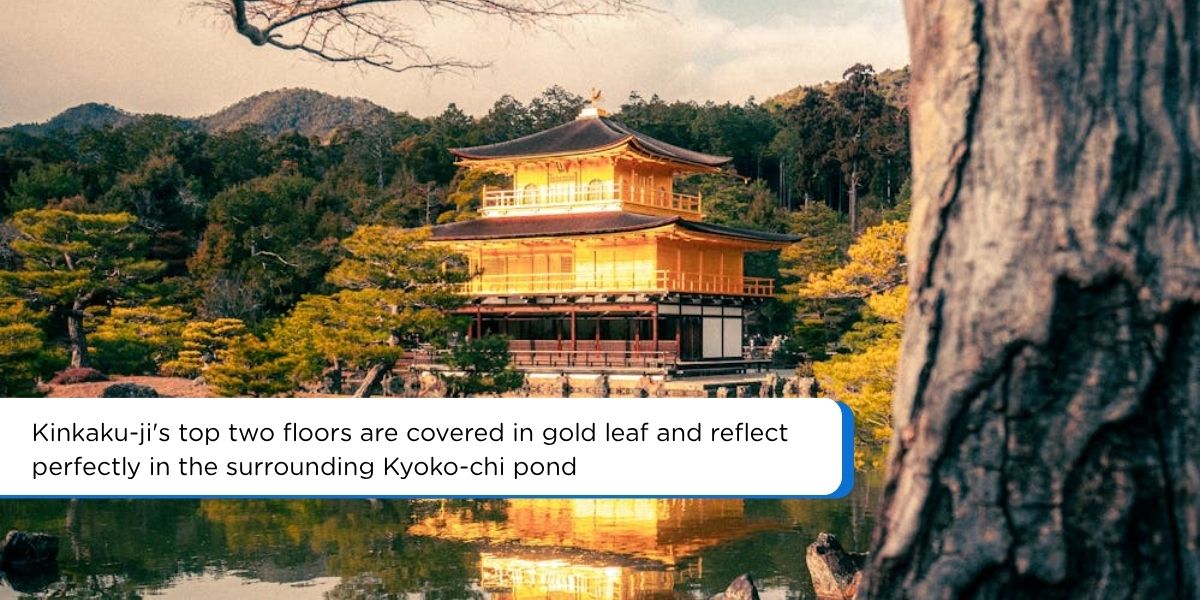
Kinkaku-ji's top two floors are covered in gold leaf and reflect perfectly in the surrounding Kyoko-chi pond — arrive before 9 AM to photograph it before the crowds arrive.
A 45-minute JR train ride from Kyoto brings you to one of Japan's most unusual destinations. Nara Park is home to over 1,000 sika deer that roam freely through the grounds, approach visitors without hesitation, and bow their heads in exchange for shika senbei (deer crackers sold at every entrance). The deer are considered sacred messengers of the gods and have been protected since the 8th century.
Within the park, Todaiji Temple houses Japan's largest bronze Buddha statue at 15 meters tall, sitting inside the world's largest wooden building. Kasuga Taisha Shrine lines its approach path with hundreds of stone and bronze lanterns, all lit twice a year during lantern festivals.
Return to Kyoto for dinner, or continue directly to Osaka by taking the JR train from Nara to Osaka (about 50 minutes).

Nara Park's 1,000-plus sika deer have roamed free since the 8th century. They bow their heads in exchange for shika senbei crackers and have been considered sacred messengers of the gods for over 1,200 years.
Arrive in Osaka early if coming from Kyoto — the JR Shinkaisoku covers the 30-minute journey frequently throughout the day. Drop your bags at a luggage locker at Osaka Station or Namba Station and head straight to Kuromon Ichiba Market.
The morning hours are when Kuromon is at its best. Vendors shuck oysters to order, grill scallops in butter and soy, and slice tuna belly into manageable pieces. Walk the full 580 meters and eat as you go. This is the most concentrated food experience in a city that takes food very seriously.
From Kuromon, the walk to Osaka Castle takes about 20 minutes. The park surrounding the castle is worth at least an hour, and the museum inside traces the history of Toyotomi Hideyoshi's unification of feudal Japan.
The Shinsekai neighborhood around Tsutenkaku Tower is old Osaka in its most authentic form. Retro game arcades, kushikatsu restaurants with handwritten menus, and izakayas that have not updated their decor in thirty years line streets that feel completely outside the tourist circuit.
Spend the late afternoon browsing Shinsaibashi-suji, Osaka's 600-meter covered shopping arcade. Head into Amerika-Mura for vintage clothing and local streetwear before circling back toward Dotonbori for the evening.
Dotonbori is the concentrated essence of everything Osaka does well: neon signs, canal reflections, mechanical crabs spinning above restaurant doors, and more takoyaki, okonomiyaki, and kushikatsu per block than any city has a right to contain. Walk the Ebisubashi bridge, photograph the Glico Running Man, and eat everything you have not managed to eat yet.
Most international flights from Kansai International Airport (KIX) depart in the late evening or early morning. The airport is roughly 75 minutes from Namba Station by the Nankai Rapid Express (¥930). Give yourself at least two hours before departure.
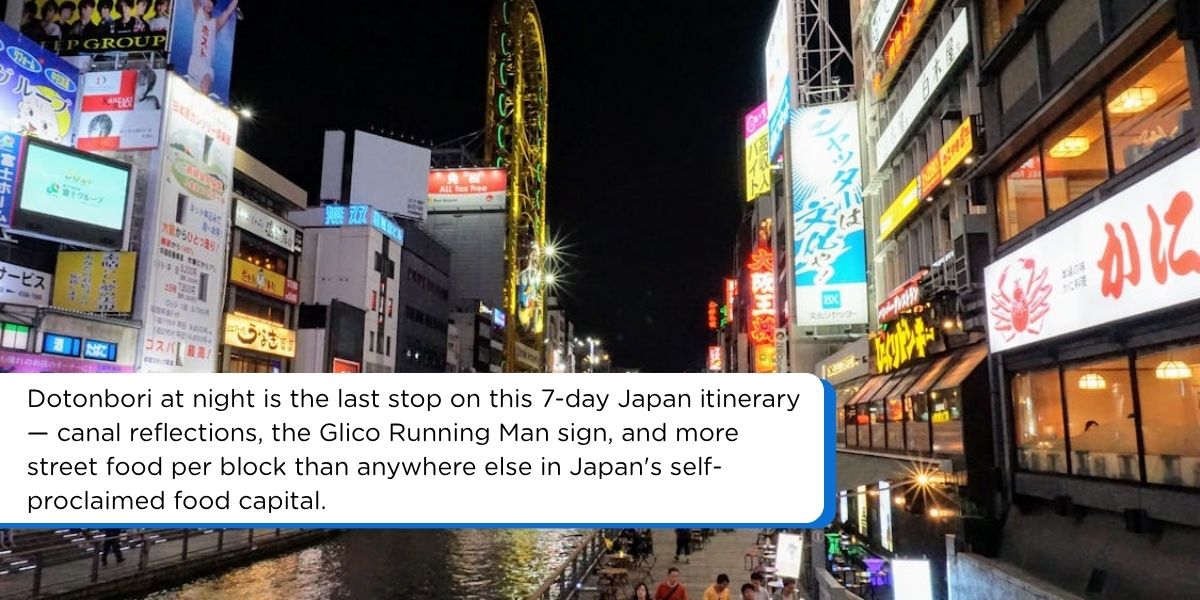
Dotonbori at night is the last stop on this 7-day Japan itinerary — canal reflections, the Glico Running Man sign, and more street food per block than anywhere else in Japan's self-proclaimed food capital.
This itinerary spans four cities, multiple train lines, and dozens of restaurants that do not have English menus. Throughout the week, you will use Google Maps to navigate Kyoto's bus system, Google Translate's camera mode to read kushikatsu menus in Shinsekai, the Tabelog app to find the best ramen counter near your hotel, and real-time Shinkansen schedules to catch the right platform.
None of that works without mobile data. A Gohub eSIM for Japan activates digitally before you leave home, connects automatically when you land at Haneda or Narita, and stays active across every city on this route. Coverage runs on NTT Docomo, au (KDDI), and SoftBank networks. Plans start from $3.99 with no physical SIM card required.
Get your Japan eSIM from Gohub and travel the full 7 days connected.
Booking ahead: Reserve Shibuya Sky tickets, TeamLab Planets, and any Hakone ryokan at least two weeks in advance. These sell out regularly, particularly on weekends.
Cash: Despite Japan's growing card acceptance, many temples, market stalls, and traditional restaurants remain cash only. Keep ¥10,000 to ¥15,000 on hand at all times and top up at 7-Eleven or Japan Post ATMs, which reliably accept foreign cards.
Shoes: You will remove your footwear at most temples, traditional restaurants, and ryokan. Slip-on shoes save time and frustration across multiple daily stops.
Convenience stores: Lawson, 7-Eleven, and FamilyMart in Japan are genuinely good. Onigiri, egg salad sandos, mochi, and hot coffee are daily staples for most local commuters. Do not overlook them.
Tipping: There is no tipping culture in Japan. Leaving money on the table or handing over extra at a register can cause confusion and is not expected.
Language: English signage is widespread in Tokyo, Kyoto Station, and Osaka's main tourist areas. Outside those zones, Google Translate's camera mode handles menus and signs accurately enough to get by.
IC card top-ups: Top up your Suica card at any ticket machine in any station. Keep at least ¥2,000 loaded to avoid being stuck at a turnstile during peak hour.
Season | Months | What to Expect |
|---|---|---|
Spring | Late Mar–early Apr | Cherry blossom season — the most popular and most beautiful time |
Early Summer | May–Jun | Green foliage, fewer crowds, rainy season starts mid-June |
Autumn | Oct–Nov | Red and gold maple leaves, second most popular season |
Winter | Dec–Feb | Fewest tourists, lowest prices, clearest Mt Fuji views |
Spring cherry blossoms and autumn foliage are the peak seasons for this itinerary. If you are visiting in late March or early April, book flights, hotels, and popular restaurants three to six months in advance. Winter travel, by contrast, offers the clearest views of Mount Fuji from Hakone and significantly fewer crowds at Fushimi Inari.
Is 7 days enough for Japan?
Yes, if you focus on the core route. Tokyo, Hakone, Kyoto, Nara, and Osaka in seven days is ambitious but very manageable with the right planning. Avoid adding extra cities and instead spend more time in fewer places.
Do I need a JR Pass for a 7-day Japan itinerary?
For this specific route, a 7-day JR Pass is generally worth the cost. It covers the Tokyo to Kyoto Shinkansen, Narita Express, and several local JR lines along the way. Calculate your individual journeys before purchasing to confirm it makes sense for your exact routing.
What is the best route for 7 days in Japan?
The most efficient route for first-time visitors is Tokyo (3 days) → Hakone (1 day) → Kyoto (2 days) → Osaka (1 day), flying in through Tokyo and out through Kansai International Airport.
What is the best time to visit Japan for the first time?
Autumn (October to November) offers a balance of good weather, beautiful scenery, and slightly fewer crowds than spring cherry blossom season. Spring is more spectacular but requires much earlier booking for accommodation.
What is the best way to get internet in Japan?
A travel eSIM is the most convenient option. Gohub eSIM for Japan activates before your trip and connects automatically on landing, with no queuing at the airport and no physical SIM card to manage. It works across the full 7-day route from Tokyo to Osaka.
Planning more of your Japan trip? Read next: Things to Do in Tokyo Shibuya | Things to Do in Osaka Japan | Day Trips from Tokyo
Một chiếc eSIM, dùng data ở hơn 200 điểm đến. Kích hoạt trong vài phút.
Mã áp dụng cho đơn hàng đầu tiên.