Loading page, please wait...
WhatsApp 24/7:+1 (302) 899-2888
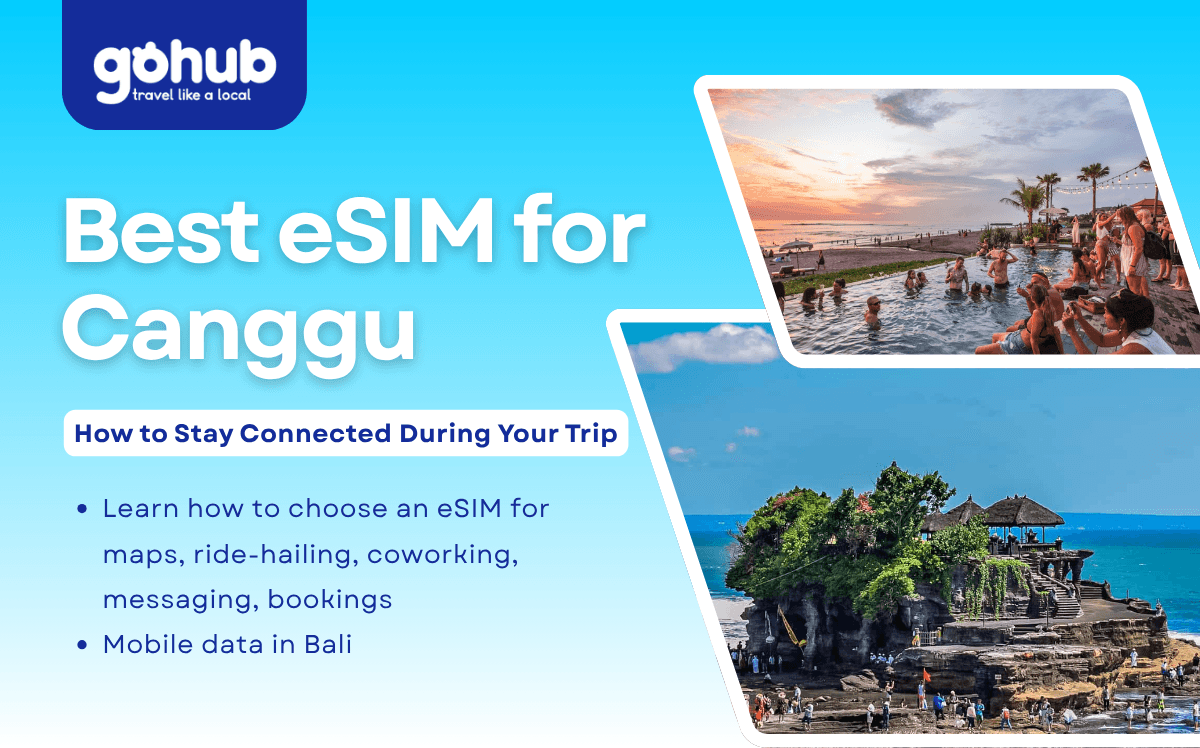
Looking for the best eSIM for Canggu usually means one thing: you want reliable mobile data for maps, ride-hailing, messaging, villa check-in, coworking, bookings, and day trips without relying only on café WiFi or expensive roaming.
Canggu is one of Bali’s most popular areas for surfers, digital nomads, café-hoppers, remote workers, and long-stay travelers. You may move between Batu Bolong, Berawa, Echo Beach, Pererenan, Seminyak, Ubud, Uluwatu, and nearby beach areas, so mobile data can make your trip much easier.
An eSIM is one of the simplest ways to stay connected in Canggu because you can install it before travel and activate mobile data after arrival without swapping a physical SIM card.
Yes, you can use an eSIM in Canggu if your phone supports eSIM and your plan includes Indonesia coverage.
For most international travelers, the best eSIM for Canggu is one that gives enough data for maps, ride-hailing, messaging, villa communication, coworking, social media, video calls, and day trips around Bali. If your trip continues beyond Canggu to Ubud, Uluwatu, Seminyak, Sanur, Nusa Dua, or other parts of Indonesia, choose a plan that supports Indonesia-wide coverage.
Activation and performance can vary depending on your provider, device, network partner, location, building type, weather, and congestion. For a smoother arrival, install your eSIM before departure and activate it after landing.
If Indonesia is your main destination, reviewing Indonesia eSIM plans before travel can help you stay connected in Canggu without relying only on public WiFi.
Question | Quick Answer |
|---|---|
Can I use an eSIM in Canggu? | Yes, if your phone supports eSIM and your plan includes Indonesia. |
Should I install it before arrival? | Yes, installation is easier on stable WiFi before flying. |
Is public WiFi enough in Canggu? | Useful as backup, but not ideal for full-trip connectivity. |
Can I buy a SIM card in Canggu? | Yes, but registration, queues, and setup time can vary. |
Does eSIM work for maps and ride-hailing? | Generally yes, depending on coverage and network conditions. |
Can I use the same eSIM across Bali? | Generally yes, if your plan includes Indonesia coverage. |
Is eSIM better than roaming? | Often more predictable, but it depends on your home carrier. |
Best for which traveler? | Tourists, surfers, remote workers, digital nomads, and Bali multi-area travelers. |
Mobile data is useful in Canggu because travelers often move between beach areas, villas, cafés, coworking spaces, restaurants, gyms, markets, and nearby destinations.
Common reasons travelers need mobile data in Canggu include:
Using Google Maps or Apple Maps.
Booking ride-hailing, taxis, or private drivers.
Contacting villas, hotels, hosts, or surf instructors.
Checking coworking space details.
Accessing restaurant reservations.
Translating menus, signs, and local messages.
Opening booking confirmations and digital tickets.
Checking surf, weather, and traffic conditions.
Messaging family, friends, or travel companions.
Using banking, payment, and travel apps.
Planning day trips to Tanah Lot, Ubud, Uluwatu, Sanur, or Nusa Penida.
Indonesia Travel’s official Canggu Beach guide describes Canggu as a beach area in North Kuta, Badung, known for its surf, rice fields, cafés, restaurants, hotels, and villas. When moving between these areas, mobile data helps you navigate routes, confirm bookings, and adjust plans in real time.

Traveler using an eSIM while exploring Canggu.
Yes. Travelers can use an eSIM in Canggu as long as their phone is eSIM-compatible, carrier-unlocked, and the chosen plan supports Indonesia.
The typical process is simple:
Choose an Indonesia eSIM plan before travel.
Install the eSIM profile using stable WiFi.
Arrive in Bali.
Turn off airplane mode.
Enable the eSIM as your mobile data line.
Turn on data roaming if required by your provider.
Wait for the phone to register on a local network.
Most travelers use eSIM data for maps, ride-hailing, messaging, email, social media, coworking, food delivery, restaurant searches, and booking confirmations. Speeds and signal quality may vary depending on your provider, device, network partner, location, indoor coverage, and congestion.
Before purchasing a plan, use Gohub’s Check compatible device tool to confirm that your phone supports eSIM.
Public WiFi can be useful in Canggu, especially in villas, hotels, cafés, restaurants, coworking spaces, gyms, and beach clubs.
However, public WiFi is not always enough for a full Canggu trip because:
WiFi quality can vary from one villa, café, or coworking space to another.
You may lose connection while moving between beaches, cafés, and accommodation.
Some venues may require passwords, purchases, or login pages.
It may not be available on the road, at beaches, or during day trips.
It may not be convenient for ride-hailing, navigation, or urgent messages.
Public networks may be less convenient for sensitive tasks.
WiFi is best treated as a backup. For daily navigation, transport, messaging, bookings, and remote work backup, mobile data is usually more practical.
Yes, travelers can buy local SIM cards in Bali at airport shops, mobile carrier stores, malls, and some local retail locations. In Canggu, SIM availability may depend on the shop, area, registration process, and store hours.
Buying a local SIM card may involve:
Finding a store or counter.
Showing your passport for registration.
Choosing a package.
Waiting in line.
Swapping your physical SIM card.
Checking whether your phone is unlocked.
Asking staff to help with setup.
For travelers who prefer in-person support, a local SIM can be a reasonable option. But if you want to avoid queues and get connected more smoothly, installing an eSIM before arrival is usually more convenient.
Feature | eSIM | Public WiFi | Local SIM | International Roaming |
|---|---|---|---|---|
Setup before travel | Yes | No | No | Usually no |
Requires physical SIM | No | No | Yes | No |
Works around Canggu | Yes | Limited | Yes | Yes |
Works across Bali | Generally yes | No | Yes | Yes |
Works across Indonesia | Generally yes | No | Yes | Yes |
Keeps home number active | Usually yes | Yes | Usually no | Yes |
Cost predictability | Generally good | Free | Medium | Varies by carrier |
Queue required | No | No | Often | No |
Best for | Most travelers | Backup use | Long stays or in-person setup | Convenience with home carrier |
Public WiFi is useful as a backup. Local SIM cards can work well for longer stays but require purchase and setup after arrival. International roaming is convenient, but costs and limits depend heavily on your home carrier.
For a deeper comparison, read international roaming vs eSIM.
Traveler Type | Recommended Data |
|---|---|
Light traveler | 3GB–5GB |
Weekend visitor | 5GB–10GB |
One-week Canggu trip | 10GB–20GB |
Surfer or beach traveler | 10GB–20GB |
Remote worker | 20GB+ |
Digital nomad | 20GB+ |
Content creator | 20GB+ |
Bali multi-area traveler | 20GB+ |
Southeast Asia multi-country traveler | 20GB+ or regional plan |
A light traveler who mainly uses maps and messaging may be fine with 3GB–5GB. A typical Canggu visitor using maps, ride-hailing, restaurant searches, social media, messaging, and booking apps may prefer 10GB–20GB for a week.
Heavy users who rely on hotspot, video calls, cloud uploads, reels, TikTok, YouTube, remote work tools, or frequent coworking backup should consider larger data allowances.
For travelers staying in Canggu and continuing to Ubud, Uluwatu, Seminyak, Sanur, Nusa Dua, Nusa Penida, or other destinations, Indonesia eSIM plans can help keep mobile data active across supported areas, depending on provider coverage and network partners.
The best eSIM for Canggu is not just about the amount of data. It should support the way you actually spend your time around Bali.
Useful eSIM use cases in Canggu include:
Navigating between Batu Bolong, Berawa, Echo Beach, and Pererenan.
Booking ride-hailing, taxis, or private drivers.
Messaging villa hosts or hotel staff.
Checking coworking space directions and access details.
Translating menus, signs, and messages.
Accessing digital tickets, tour bookings, or surf lessons.
Checking surf, weather, or traffic conditions.
Looking up cafés, gyms, beach clubs, and restaurants.
Sharing live location with travel companions.
Using banking, payment, or booking apps when needed.
Mobile data is especially useful because Canggu travel often involves short trips between different areas rather than staying in one central zone.
Before you travel:
Confirm your phone supports eSIM.
Use Gohub’s Check compatible device tool before purchasing a plan.
Make sure your device is carrier-unlocked.
Buy your eSIM before departure.
Install the eSIM while connected to stable WiFi.
Save the QR code or manual setup details offline.
Save activation instructions offline.
Check whether data roaming must be enabled.
Download offline maps of Canggu and Bali.
Save your villa, hotel, or coworking address.
Keep airport, villa, or café WiFi as a backup option.

Traveler setting up an eSIM before a Canggu trip.
After arriving in Bali:
Turn off airplane mode.
Open your phone’s mobile network settings.
Enable the installed eSIM.
Set the eSIM as your mobile data line.
Turn on data roaming if your provider requires it.
Wait for network registration.
Test mobile data with maps or messaging apps.
Restart your phone if the connection does not appear.
Check APN settings if your provider provides manual setup details.
Activation is usually straightforward, but it may not be instant for every traveler. Device settings, provider activation rules, and local network conditions can affect the process.
This article is not a Canggu transport guide, but mobile data is very useful for getting around.
Canggu travelers commonly use:
Airport transfers.
Taxis.
Ride-hailing apps.
Private drivers.
Hotel or villa drivers.
Scooter rental where appropriate and legal.
Boat or transfer services for nearby islands.
Walking routes for short distances where safe.
I Gusti Ngurah Rai International Airport provides official airport transport information through its transportation and parking page. Indonesia Travel’s Canggu guide also notes that Canggu can be reached by car from Bali’s Ngurah Rai International Airport, making mobile data useful for contacting drivers, checking pickup points, and following your route after arrival.

Traveler using mobile data for navigation in Canggu.
Mobile data coverage is generally strong in popular Canggu areas such as Batu Bolong, Berawa, Echo Beach, Pererenan, and nearby resort or café zones.
However, performance may vary in:
Villas with thick walls.
Remote roads or rice field areas.
Beachfront spots.
Crowded cafés or coworking spaces.
Busy nightlife areas.
Bad weather.
Road congestion periods.
Nearby islands or boat trips.
Rural day-trip destinations.
Coverage and speed depend on your provider, device, network partner, location, and congestion. No eSIM provider can guarantee perfect performance everywhere, so it is helpful to keep offline maps, villa details, driver contacts, and emergency contacts saved as a backup.
If your trip continues beyond Canggu to destinations such as Ubud, Uluwatu, Seminyak, Sanur, Nusa Dua, Nusa Penida, Lombok, Jakarta, or Yogyakarta, reviewing Indonesia eSIM plans before departure can help you keep mobile data active across supported areas without relying only on public WiFi.
For travelers visiting multiple countries in the region, such as Indonesia, Singapore, Malaysia, Thailand, Vietnam, or Cambodia, Asia eSIM plans may be useful for broader regional coverage across supported destinations.
Entry requirements vary by nationality, passport, trip length, and travel purpose. This article is not a visa guide, but travelers should check current requirements before departure through Indonesia’s official eVisa website or the Directorate General of Immigration.
Travelers visiting Bali should also check the provincial government’s Love Bali platform for official information related to the Bali foreign tourist levy.
Yes. You can use an eSIM in Canggu if your phone supports eSIM, your device is unlocked, and your plan includes Indonesia coverage.
The best eSIM for Canggu is one that fits your data needs, supports Indonesia coverage, works with your device, and can be installed before arrival. Avoid choosing based only on price.
Yes. Installing your eSIM before arrival is usually easier because you can use stable WiFi and save setup instructions before your trip.
Public WiFi can help in villas, hotels, cafés, coworking spaces, restaurants, and beach clubs, but it is not ideal as your only connection. Mobile data is more useful for maps, ride-hailing, bookings, messaging, and remote work backup.
Yes. SIM cards may be available in Bali through airport shops, telecom stores, malls, and some local retail locations. Availability, registration requirements, packages, and store hours can vary.
Generally yes. An eSIM with Indonesia coverage should work for maps, ride-hailing, messaging, and travel apps, depending on provider, device, network partner, location, and congestion.
Generally yes, if your eSIM plan includes Indonesia coverage. Performance may vary by island, city, indoor location, rural area, or network partner.
Often, but not always. It depends on your home carrier’s roaming rates, trip length, and data usage.
Common causes include airplane mode still being enabled, the wrong data line selected, roaming disabled, delayed activation, APN settings, weak indoor signal, or device compatibility issues.
Yes. Many dual-SIM phones let you keep your home SIM active for calls or texts while using the eSIM for mobile data.
Choose an Indonesia eSIM if your trip is mainly in Canggu, Bali, or elsewhere in Indonesia. Choose an Asia eSIM if your itinerary includes multiple supported countries in the region.
Public WiFi, transport services, SIM card availability, store hours, entry requirements, tourist levy rules, and mobile network performance may change. Travelers should verify details through official tourism, transport, airport, immigration, government, and eSIM provider sources before departure.
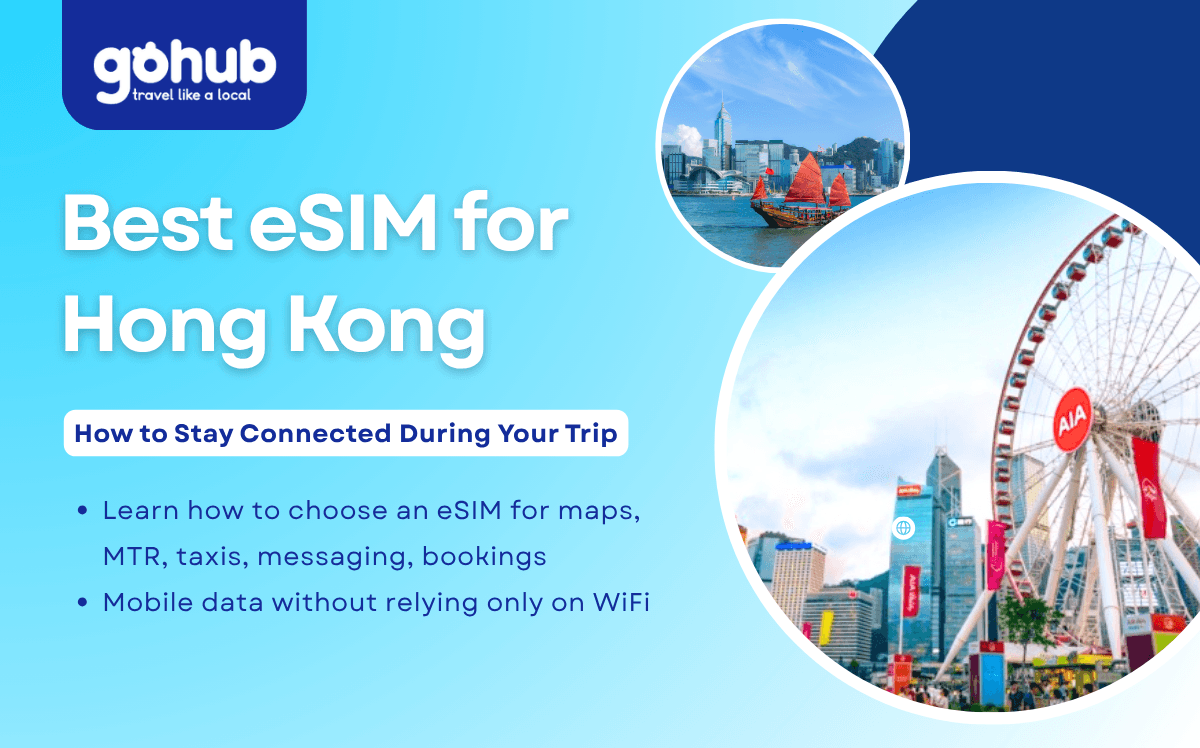
Visiting Hong Kong? Learn how to choose an eSIM for maps, MTR, taxis, messaging, bookings, and mobile data without relying only on WiFi.
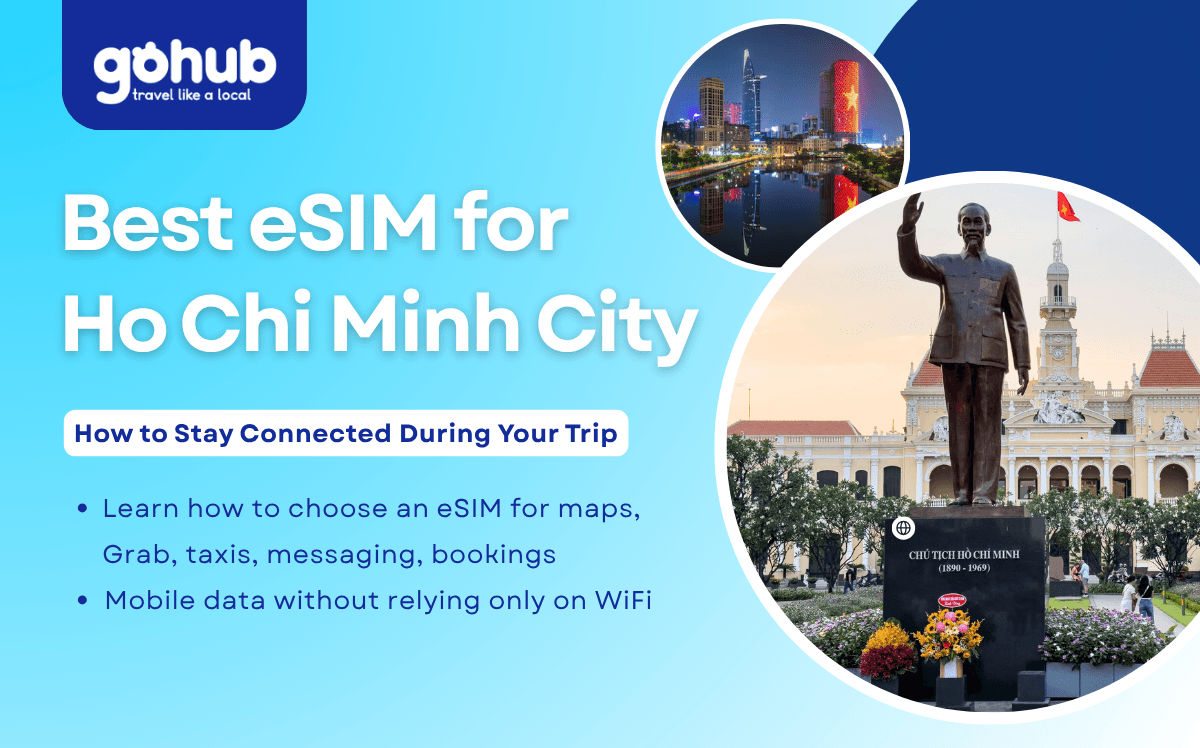
Visiting Ho Chi Minh City? Learn how to choose an eSIM for maps, Grab, taxis, messaging, bookings, and mobile data in Vietnam.
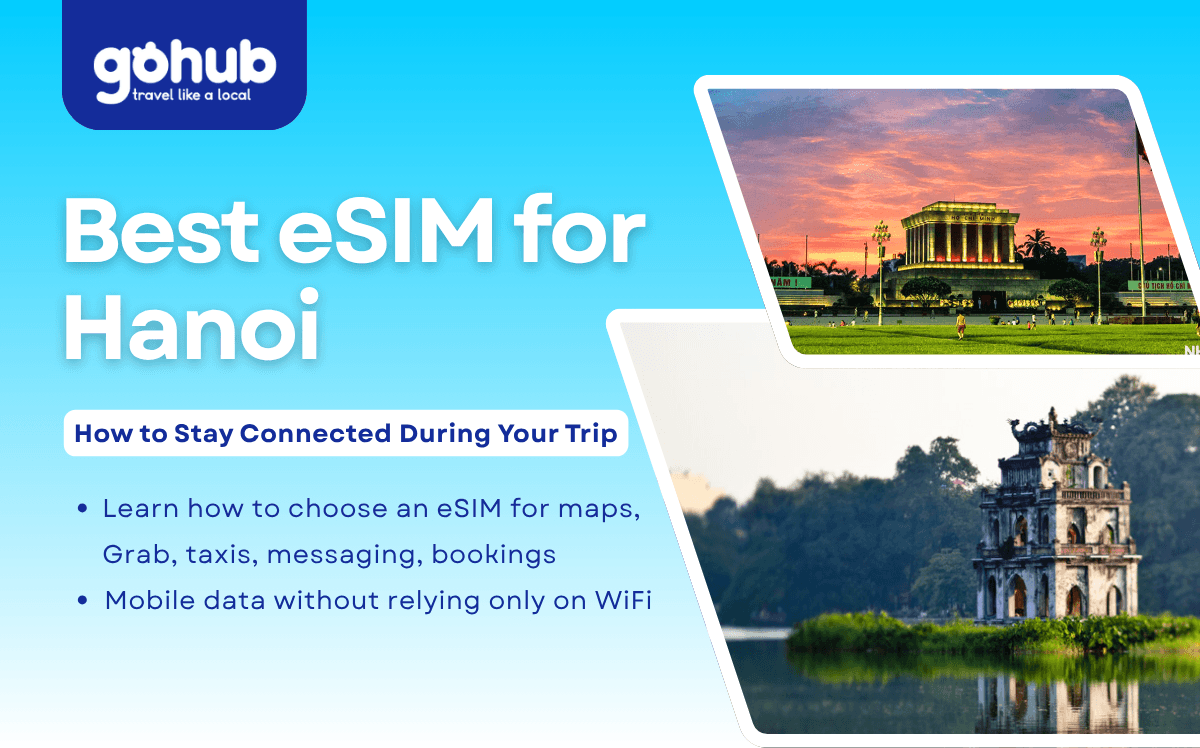
Visiting Hanoi? Learn how to choose an eSIM for maps, Grab, taxis, messaging, bookings, and mobile data without relying only on WiFi.