

eSIM vs Local Physical SIM: Which Is Cheaper for Stays Over 30 Days?

Cost questions around mobile connectivity often sound simple. In practice, they are not.
For slow travelers staying abroad longer than 30 days, the question is rarely “Which option is cheaper?” It is “Which option stays cheaper once real usage, friction, and mistakes are included.”
This is where most comparisons fall apart.
Many articles compare eSIMs vs. local physical SIM cards using short trip logic. They focus on price per gigabyte, promotional rates, or first week convenience. That approach works for vacations. It does not work for long stays.
When you are living abroad for one, two, or three months, costs behave differently. You top up more often. You discover limits that were not obvious at purchase. You spend time dealing with registration, support, or replacements. You lose hours when something breaks. All of these have a cost, even if it is not listed on a pricing page.
Slow travel changes the math.
A local SIM that looks cheap on paper can become expensive once setup time, language barriers, and recovery issues are factored in. An eSIM that seems costly at first may reduce friction and downtime during the most unstable part of a long stay.
This guide compares eSIMs and local physical SIMs through a long stay lens. It looks at cost over 30, 60, and 90 days, including hidden expenses that travelers usually notice too late.
The goal is not to declare a winner.
The goal is to help you understand which option is actually cheaper for your situation, not just on day one, but over time.
Why “Cheaper” Depends on Time, Not Just Price
Most people decide between an eSIM and a local physical SIM by looking at the price tag on day one. That is the wrong starting point for a stay longer than 30 days.
Short trip logic assumes three things. First, that setup happens once. Second, that usage is predictable. Third, that nothing goes wrong. None of these hold true for slow travel.
When you stay longer, cost becomes cumulative.

A plan that is cheap for the first seven or fourteen days may require frequent top ups. A setup that is easy once may become frustrating when repeated. A small issue that costs one hour to fix on a short trip can cost an entire workday when it happens three weeks in.
This is why price per gigabyte is a weak metric on its own.
What actually matters is how costs behave over time. This includes not only money spent, but also time lost, effort required, and risk exposure.
Think of connectivity costs in layers.
The first layer is visible cost. This is what you pay at checkout for the SIM or eSIM.
The second layer is usage cost. This includes top-ups, renewals, and data overages once normal daily use begins.
The third layer is operational cost. This includes store visits, registration steps, language barriers, customer support delays, and recovery when something breaks.
For slow travelers, the third layer often outweighs the first.
A local SIM may cost less per month but require in-person renewals or re-registration. An eSIM may cost more per gigabyte but allow instant top-ups and remote recovery. Over 60 or 90 days, these differences compound.
This is why asking “Which is cheaper?” without defining a time horizon leads to misleading answers.
In the next section, we will break down the specific cost components that matter for long stays, so you can compare eSIMs and local SIMs using the same framework.
What Costs Actually Matter for Long Stays
To compare eSIMs and local physical SIMs fairly, you need to look beyond the headline price. Long stays introduce cost categories that short trips rarely reveal.
Here are the cost components that actually matter after the first month.
Upfront purchase and setup costs
This is the most visible cost, but also the least important over time.
For eSIMs, this usually means paying online and installing the profile in minutes. There are no travel delays, store visits, or paperwork.
For local SIMs, upfront cost may include the SIM itself, an initial data bundle, and sometimes activation fees. In many countries, this also involves visiting a physical store, waiting in line, and completing registration.
On day one, a local SIM may look cheaper. Over time, the setup friction becomes part of the cost.
Monthly data costs and top ups
This is where long stay costs start to diverge.
eSIM plans are often sold in fixed durations. Once the plan expires, you either top up at the same rate or install a new plan. The pricing is predictable, but rarely decreases over time.
Local SIMs often offer larger monthly bundles at lower prices. However, renewals may require using a local app, navigating language barriers, or visiting a store. Some plans reset benefits each month, while others quietly change terms.
The key question is not which option is cheaper per month, but which one is easier to maintain without disruption.
Time, effort, and friction as real costs
Time has value, especially for remote workers.
If a local SIM requires one hour to set up, another hour to resolve an issue, and additional time for renewals, those hours add up. Over a 90 day stay, the total effort can exceed the price difference between options.
eSIMs reduce this friction by design. Top ups are usually online. Support is remote. Replacement does not depend on physical access.
This is why many slow travelers accept a higher data price in exchange for lower maintenance.
Replacement and recovery costs
This cost is often ignored until it happens.
If your phone is lost or damaged, replacing a local SIM may require another store visit and another registration process. In some countries, this is not possible without proper documentation.
With many travel eSIMs, replacement can be handled remotely. While not guaranteed, the recovery path is usually faster and more predictable.
For long stays, the cost of being offline for a day or two can exceed the monthly savings of a cheaper SIM.
Now that we have defined the cost components that matter, we can apply this framework to eSIMs first. In the next section, we will examine how eSIM costs behave over 30, 60, and 90 days in real slow travel scenarios.
eSIM Costs Over Time (30, 60, and 90 Days)
eSIM pricing is usually straightforward. That simplicity is both its strength and its weakness for long stays.
To understand whether an eSIM is cheaper, you need to look at how its cost behaves as time passes, not just what it costs at the start.
Typical eSIM pricing structure
Most travel eSIMs are sold as fixed duration plans. Common options are 7 days, 15 days, or 30 days with a set amount of data. Some providers allow top ups, while others require installing a new plan when the current one expires.
The key characteristics of eSIM pricing are:
Prices are transparent upfront
Costs do not decrease over time
Data allowances are clearly defined
Renewal usually happens at the same rate
This makes budgeting easy, but it also means there are few long term discounts.
Cost behavior at 30 days
At the 30 day mark, eSIMs often look competitive.
For many slow travelers, especially in the first month, the total cost of an eSIM is close to or only slightly higher than a local SIM. When you include avoided store visits, faster setup, and easier troubleshooting, the overall cost can feel lower in practice.
This is why eSIMs are commonly used for arrival and the first month of a long stay.
Cost behavior at 60 days
By the second month, the gap usually starts to widen.
Because most eSIM plans renew at the same price, the total cost increases linearly. You pay roughly the same amount again for the second 30 day period. There are no loyalty discounts, and data prices rarely improve.
At this point, a local SIM with a monthly bundle often becomes cheaper in pure monetary terms, especially in countries with competitive mobile markets.
However, this assumes that:
Registration was smooth
Renewals are easy
Network quality is consistent
If any of those assumptions fail, the cost advantage can shrink quickly.
Cost behavior at 90 days
Over 90 days, eSIMs are usually the more expensive option on paper.
Three consecutive eSIM plans often cost significantly more than three months of local service. This is where many comparisons stop and declare a clear winner.
What those comparisons often ignore is the operational side. If a local SIM requires repeated effort to maintain, or if issues cause downtime, the financial savings may come at the cost of reliability.
For travelers who value predictability or who move between cities, some still choose eSIMs despite the higher price.
When eSIMs still make financial sense
eSIMs can still be the cheaper option in practice when:
Your stay is close to 30 days
You move frequently within or between countries
You rely on your connection for work
You want to avoid registration and support friction
You value fast replacement and recovery
In these cases, the extra cost buys stability during a period when instability is expensive.
In the next section, we will apply the same framework to local physical SIMs and examine how their costs evolve over 30, 60, and 90 days.
Local Physical SIM Costs Over Time (30, 60, and 90 Days)
Local physical SIMs are often seen as the cheapest option for long stays. In many cases, that is true. The key is understanding when the savings are real and when they come with hidden trade offs.
Typical local SIM pricing structure
Local SIMs are usually sold by national carriers or their resellers. They often include large data bundles at prices that undercut travel eSIMs, especially after the first month.
Common characteristics include:
Lower cost per GB
Monthly or multi month bundles
Access to local network priority
Optional voice and SMS packages
On paper, this makes local SIMs look like the obvious winner for long stays.
Cost behavior at 30 days
During the first month, local SIMs can be deceptively expensive.
You may pay for:
SIM card purchase
Initial activation or registration
A starter bundle that is not optimized for heavy use
Time spent finding a store and completing setup
If registration requires a passport, local address, or biometric data, setup can take longer than expected. For travelers arriving tired or on a tight schedule, this initial friction has a real cost.
This is why many slow travelers do not switch to a local SIM immediately.
Cost behavior at 60 days
At the 60 day mark, local SIMs often start to show their advantage.
Monthly renewals tend to be cheaper than renewing an eSIM. Data allowances may increase. Some carriers offer loyalty bonuses or rollover benefits after the first cycle.
If setup was smooth and renewals are easy, the total cost by month two is usually lower than an equivalent eSIM setup.
This is the point where many long stay travelers decide to switch.
Cost behavior at 90 days
Over 90 days, local SIMs are usually the cheapest option in pure monetary terms.
Three months of local service often costs significantly less than three months of eSIM renewals. For travelers staying in one country with stable routines, this savings is real.
However, this assumes stability.
If you change cities often, face language barriers, or encounter account issues, the ongoing management cost can reduce the benefit. Replacing a lost SIM, resolving billing errors, or re registering can quickly consume the savings.
Hidden limitations and risks
Local SIMs are not risk free.
Common issues include:
Mandatory re registration after a certain period
Benefits tied to local apps only
Support limited to physical stores
Difficulty replacing SIMs without documentation
These are manageable, but they matter more over time.
Cost Comparison by Duration (eSIM vs Local Physical SIM)
The table below summarizes how costs typically compare once real-world friction is included.
Duration | eSIM Cost Behavior | Local SIM Cost Behavior | Which Is Usually Cheaper in Practice |
|---|---|---|---|
30 days | Fixed, predictable pricing. No setup friction or registration. Easy top-ups or renewal. | Lower data price on paper, but setup time, registration, and possible store visits add friction. | eSIM for most slow travelers during the first month |
60 days | Costs scale linearly with renewal. No long-term discounts. Still low maintenance. | Monthly bundles usually cheaper. Renewals often easier after first setup. | Local SIM, if setup and renewals are smooth |
90 days | Repeated renewals become expensive compared to local plans. | Significantly cheaper monthly cost in most countries. | Local SIM, for single-country long stays |
How to Read This Table Correctly
This table does not measure price alone. It reflects real cost in practice, including setup effort, renewal friction, and downtime risk.
At 30 days, convenience often makes eSIMs cheaper overall.
At 60 days, the outcome depends on how easy the local SIM is to maintain.
At 90 days, local SIMs usually win on price, but only if nothing goes wrong.
For slow travelers and remote workers, the cheapest option is the one that stays stable over time, not the one with the lowest sticker price.
Cost Scenarios That Change the Outcome
The break even points above describe what usually happens. Real travel, however, is rarely average. Certain situations can push the cost balance strongly in one direction.
Understanding these scenarios helps you avoid making a decision that looks right on paper but fails in practice.
Heavy data and remote work usage
If you work remotely and rely on daily video calls, cloud storage, and large file transfers, your data usage will be higher and more consistent.
In this case:
eSIM costs increase quickly because renewals stack at the same rate
Local SIMs with large monthly bundles often become cheaper sooner
Network priority matters more than raw coverage
For full time remote work in one country, a local SIM often becomes the cheaper option after the first month, assuming the network is reliable.
Hotspot and tethering needs
Many travelers discover too late that their plan limits hotspot use.

Some eSIM plans restrict or throttle tethering, especially on unlimited plans. Local SIMs often allow hotspot usage more freely, especially on prepaid bundles designed for residents.
If you depend on tethering a laptop or tablet daily, a local SIM can be cheaper in practice because it avoids forced plan upgrades or repeated purchases.
Frequent border crossings
Border crossings change the cost equation immediately.
With eSIMs, especially regional plans, crossing borders usually requires no action. The plan continues to work, and there is no setup delay.
With local SIMs, crossing borders often means:
Losing service
Buying a new SIM
Repeating registration
Paying another activation cost
For travelers moving between countries every few weeks, eSIMs are often cheaper overall despite higher per day pricing.
Single country long stays
If you stay in one country for two or three months without moving, local SIMs almost always become cheaper.
You benefit from:
Lower monthly pricing
Larger data allowances
Fewer renewals once set up
This scenario favors local SIMs strongly, as long as you are comfortable managing them.
Phone loss or damage
This scenario is rare but expensive.
Replacing a local SIM may require another store visit and another registration process. In some countries, this is not possible without the original documents.
Many travel eSIMs can be reissued remotely, reducing downtime. For remote workers, avoiding even one lost workday can outweigh months of SIM savings.
These scenarios explain why travelers with similar trip lengths often make different choices. Cost is not only about duration. It is about how much disruption you can tolerate.
In the next section, we will look at non monetary costs that quietly influence which option feels cheaper over time.
Non Monetary Costs That Affect What Feels “Cheaper”
Even when two options cost the same on paper, they can feel very different over time. For slow travelers, these non monetary costs often decide which setup is actually cheaper in real life.
Language barriers and store visits
Local SIMs often require interacting with staff, reading contracts, or using apps in a local language. This is manageable once, but frustrating when repeated.
If you need to visit a store to renew, troubleshoot, or replace a SIM, the cost is not just time. It is mental energy, scheduling, and sometimes missed work or travel plans.
eSIMs remove most of this friction by keeping everything online and remote.
SIM registration and compliance risk
In some countries, SIM registration rules are strict and change over time.
A local SIM that works today may require re registration later. If rules are enforced suddenly or inconsistently, service can be suspended without warning. Resolving this may require documents or in person visits.
Travel eSIMs are usually insulated from local consumer registration systems, which reduces this risk during long stays.
Downtime when something breaks
Every connectivity issue has a cost.
If your connection fails for an hour during a short trip, it is an inconvenience. During a long stay, especially when working remotely, downtime can mean missed calls, delayed deliveries, or lost income.
eSIMs tend to recover faster because support and reinstallation are remote. Local SIM issues often depend on store access and business hours.
Stress and decision fatigue
Slow travel already involves many decisions. Housing, visas, banking, transport, and work routines all demand attention.
When connectivity requires constant monitoring, renewals, or troubleshooting, it adds ongoing stress. This has a real cost over weeks and months.
Many travelers accept slightly higher data prices in exchange for fewer decisions and fewer points of failure.
These non monetary costs explain why two travelers with the same budget and destination can reach different conclusions and both be correct.
In the next section, we will highlight the most common cost mistakes travelers make when comparing eSIMs and local SIMs for long stays and how to avoid them.
Common Cost Mistakes Travelers Make
Most cost mistakes are not caused by bad math. They come from applying short trip thinking to long stays. Here are the most common errors that make an option look cheaper than it really is.
Comparing price per GB only
Price per gigabyte is easy to compare and easy to misunderstand.
A local SIM may offer cheaper data per GB, but if you need to visit a store to activate, renew, or troubleshoot, the real cost increases. An eSIM with a higher per GB price may still cost less overall once time and effort are included.
For long stays, per month cost and maintenance effort matter more than per GB pricing.
Ignoring top up behavior
Many travelers assume they will buy one plan and be done.
In reality, long stays require multiple renewals or top ups. Some plans have awkward renewal cycles, limited payment methods, or require installing a new profile each time.
If renewing a plan is inconvenient, you are more likely to overpay for emergency data or waste unused days. These small inefficiencies add up over time.
Underestimating time and effort
Time is often treated as free. For remote workers, it is not.
Spending hours dealing with SIM issues, apps, or customer support has a real cost. Even for non working travelers, this time could be spent exploring, resting, or planning the next move.
A setup that saves a few dollars but costs repeated effort may not be cheaper in practice.
Assuming unlimited plans behave the same
Unlimited plans vary widely.
Some allow high speed data throughout the month. Others throttle after a daily or monthly threshold. Some restrict hotspot use entirely.
Choosing an unlimited plan without understanding its fair usage policy often leads to unexpected slowdowns and forced upgrades, which increase cost.
Switching too early or too late
Another common mistake is switching strategies at the wrong time.
Switching to a local SIM immediately on arrival can create unnecessary friction during the most unstable part of a trip. Waiting too long to switch can result in paying premium eSIM prices longer than needed.
The cheapest approach often involves timing, not loyalty to one option.
Avoiding these mistakes does not require perfect planning. It requires revisiting your setup as your stay evolves.
In the next section, we will bring everything together into a practical decision framework that helps you choose the cheaper option based on your actual travel and usage patterns.
A Practical Cost Decision Framework
After looking at pricing, time horizons, and hidden costs, the question becomes practical. How do you decide which option is cheaper for you, not in theory, but in your actual trip?
This framework helps you make that decision without overthinking it.
When an eSIM is cheaper in practice
An eSIM is often the cheaper option when:
You are staying around 30 days or slightly longer
You want to be connected immediately on arrival
You rely on your phone for work, banking, or two factor authentication
You move between cities or countries
You want predictable costs with minimal maintenance
In these cases, the extra money paid for data often saves time, stress, and downtime. For many slow travelers, that trade off is worth it, especially during the first month.
When a local physical SIM is cheaper in practice
A local SIM usually becomes cheaper when:
You stay in one country for more than 60 days
You are comfortable with registration and local apps
You want the lowest possible monthly data cost
You use large amounts of data or hotspot daily
You do not expect to move often
Here, the lower monthly pricing compounds in your favor. As long as the SIM is easy to maintain, the savings are real and sustainable.
When a hybrid setup costs less overall
For many long stays, the cheapest option is not either or.
A hybrid setup often looks like this:
An eSIM for the first 30 days
A local SIM for daily use after settling in
The eSIM kept as a backup or for border crossings
This approach limits early friction, reduces long term data cost, and provides redundancy if something goes wrong. While it may not be the cheapest on paper, it often costs less in practice over 90 days.
A simple decision shortcut
If you want a fast rule to follow:
For the first month, eSIMs usually cost less in real life.
After two months in one country, local SIMs usually cost less in money.
If your travel is unstable or work is critical, pay for reliability first.
This framework shifts the decision from “Which is cheaper?” to “Which will cost me less over time, including mistakes?”
In the final section, we will connect this cost decision back to slow travel strategy and explain how reviewing your setup at the right moments can prevent unnecessary spending later on.
Ready to slow travel smarter?
Start with the most flexible eSIM for your first 30 days — and switch smart when you're ready.
👉 Explore Gohub eSIM Plans for your next destination.
No roaming. No stress. Just smooth, connected travel.
How This Cost Decision Fits Into Slow Travel
The biggest mistake slow travelers make is treating connectivity as a one time decision. In reality, the cheapest setup is often the one you adjust at the right moments.
Slow travel is dynamic. Your location stabilizes. Your data usage changes. Your tolerance for friction drops or increases. A setup that made sense in week one may no longer be the cheapest option by week eight.
This is why cost decisions should follow phases, not assumptions.
The arrival phase
During the first days or weeks in a new country, stability matters more than savings.
You are setting up housing, transport, banking access, and daily routines. Internet problems during this phase are expensive in terms of stress and lost time. This is where eSIMs often win, even if they cost more on paper.
Paying slightly more to remove early friction is usually cheaper in the long run.
The settling phase
Once you are settled, your usage patterns become clearer.
You know how much data you actually use. You know whether hotspot is essential. You know how often you move. This is the right moment to reassess costs.
If you plan to stay longer, this is when a local SIM often becomes the cheaper option. Switching too early or without this clarity often leads to wasted effort.
The long stay phase
After two or three months, cost efficiency matters more.
At this stage, local SIMs usually offer better value if you are staying put. However, reliability still matters. Keeping a backup option or retaining an eSIM profile can prevent costly downtime if something goes wrong.
The cheapest setup at this stage is often one that minimizes risk, not just monthly fees.
Revisiting the decision
A good slow travel habit is to reassess your connectivity every 30 to 45 days.
Ask yourself:
Has my location stabilized
Has my data usage increased or decreased
Have I spent time troubleshooting or renewing
Has connectivity caused stress or interruptions
If the answers change, your setup should change too.
Want a plan that adapts with your journey?
Gohub’s travel eSIMs are designed for slow travelers who value flexibility, time, and peace of mind.
Instant setup. Coverage in 100+ countries. Real human support.
👉 Find the best eSIM for your route now
(Start with your first 30 days — switch later if needed. We’ll still be here.)
The real takeaway
There is no single cheapest option that works for every long stay.
eSIMs tend to be cheaper when time, flexibility, and stability matter most.
Local SIMs tend to be cheaper when duration, volume, and routine dominate.
Slow travel rewards adaptability. The travelers who spend the least on connectivity are usually not those who chose perfectly on day one, but those who adjusted at the right time.
This is the mindset that keeps costs low without sacrificing reliability over long stays.

Hi! Mình là Lala Wren, một content creator yêu xê dịch và đam mê chia sẻ trải nghiệm thực tế cho cộng đồng Gohub. Trong nhiều năm qua, mình đã đặt chân đến Thái Lan, Hàn Quốc, Nhật Bản, Singapore, Malaysia, Bali và nhiều điểm đến thú vị khác trên khắp châu Á. Cùng mình tìm hiểu tất tần tật từ khâu chuẩn bị eSIM, Visa, lịch trình và địa điểm nổi bật cho chuyến đi sắp tới của bạn nhé!
View all articles →Related articles
Free eSIM Asia 2026: Best Trial for Japan, Korea, Thailand and Singapore
Traveling to Japan, Korea, Thailand, or Singapore? Compare free eSIM trials by destination, trip length, and KYC requirements — find the right option for your Asia itinerary.
12 Signs of a Free eSIM Scam and How to Protect Yourself (2026)
Fake QR codes, "free unlimited" traps, SIM swap attacks — learn the 12 warning signs of a free eSIM scam and how to verify any provider before you install. Updated March 2026.
How to Get Gohub Free eSIM Trial (300MB/1 Day for Asia)
Get a Gohub free eSIM trial with 300MB for 1 day across Asia. Learn how to activate, use data efficiently, and avoid common setup issues.
Free eSIM Explained: Is a Free eSIM Trial Really Free? (2026)
What is a free eSIM? Learn the difference between eSIM trials, freemium eSIMs, and carrier network trials before you use one for travel.
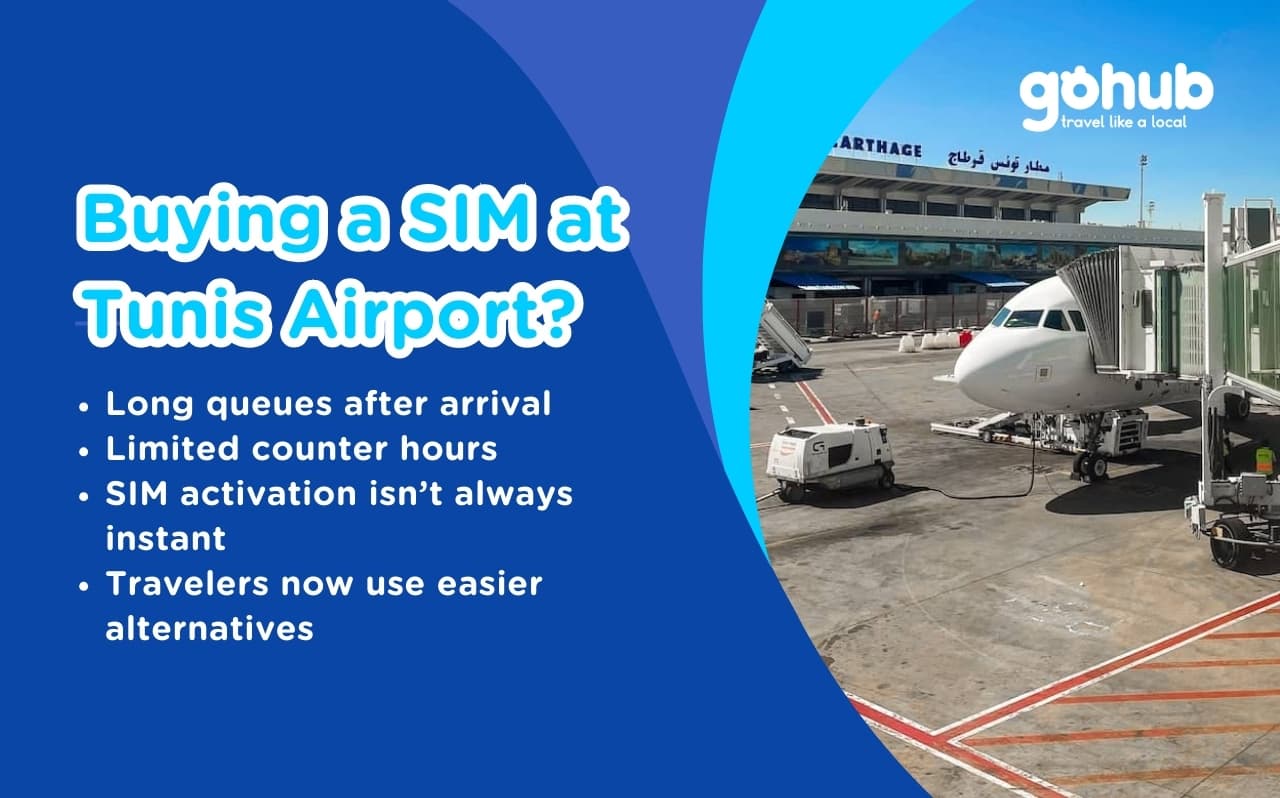
Tunis Airport SIM vs eSIM (2026): How to Get Internet Fast After Landing
Avoid long queues and SIM activation problems at Tunis Airport. Discover better connectivity options for travelers to Tunisia in 2026.
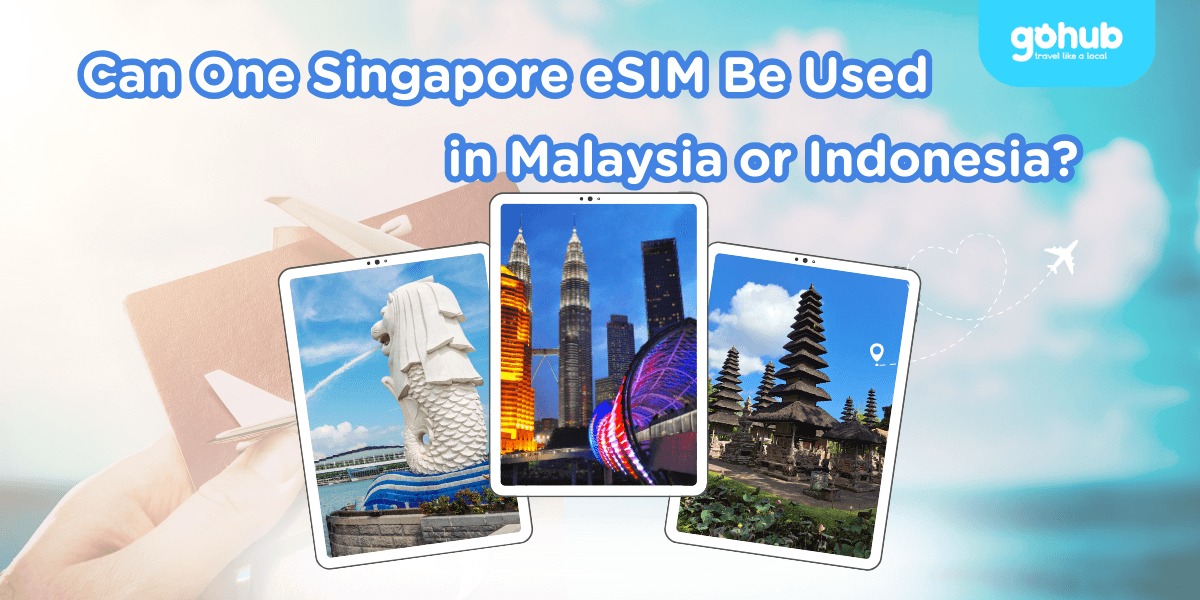
Can One Singapore eSIM Be Used in Malaysia or Indonesia? Coverage & Data Explained
Singapore eSIM Malaysia Indonesia: learn when one regional eSIM covers all three countries, how data limits work, and when separate plans make sense.