

Verizon
Verizon Communications Inc.
ภาพรวม
สรุป
เครือข่ายมือถือที่ใหญ่ที่สุดในสหรัฐอเมริกา มีผู้ใช้บริการมากกว่า 143 ล้านราย ให้บริการ 4G LTE และ 5G Ultra Wideband พร้อมครอบคลุมทั่วประเทศอย่างกว้างขวาง
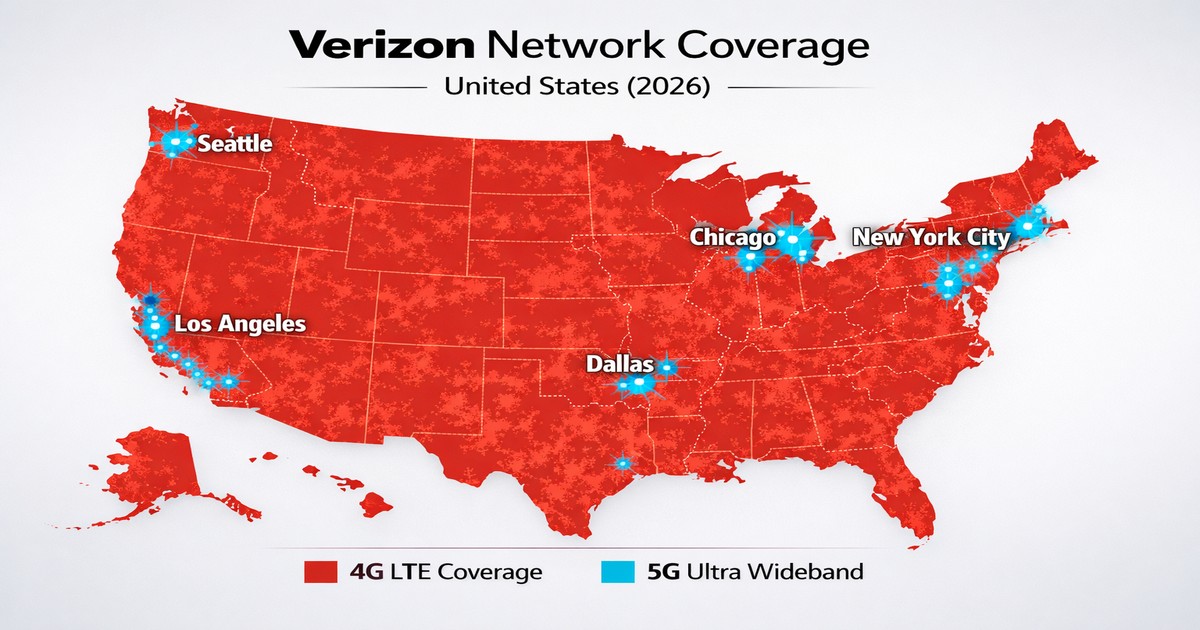
ความครอบคลุมเครือข่าย Verizon ทั่วสหรัฐอเมริกา ณ ไตรมาส 1 ปี 2026
รีวิว Verizon: ความครอบคลุม ความเร็ว และประสิทธิภาพในสหรัฐอเมริกา ปี 2026
Verizon Communications Inc ดำเนินการเครือข่าย 4G LTE ที่ครอบคลุมพื้นที่ทางภูมิศาสตร์กว้างขวางที่สุดในสหรัฐอเมริกา โดยเข้าถึงประชากรชาวอเมริกัน 99% และให้บริการการเชื่อมต่อไร้สายแบบค้าปลีกประมาณ 114 ล้านราย ณ ไตรมาส 4 ปี 2025 เครือข่าย 5G Ultra Wideband ของผู้ให้บริการครอบคลุมประชากรมากกว่า 280 ล้านคน โดยได้รับการสนับสนุนจากรายได้ประจำปี 2025 จำนวน 138.2 พันล้านดอลลาร์ และคะแนนความครอบคลุม 29.9% ซึ่งสูงที่สุดในบรรดาผู้ให้บริการในสหรัฐอเมริกา ตามรายงาน Ookla Speedtest Connectivity Report H1 2025
บทนำ
Verizon Communications Inc — มีสำนักงานใหญ่ในนครนิวยอร์กและซื้อขายในตลาดหลักทรัพย์ NYSE ภายใต้สัญลักษณ์ VZ — ดำเนินการในฐานะผู้ให้บริการไร้สายที่ใหญ่ที่สุดในสหรัฐอเมริกาในด้านความครอบคลุมทางภูมิศาสตร์ โดยให้บริการ 4G LTE แก่ประชากร 99% ของสหรัฐอเมริกา และบริการ 5G แก่ประชากรมากกว่า 280 ล้านคนทั่วทั้ง 50 รัฐ ตามรายงาน Ookla Speedtest Connectivity Report H1 2025 ก่อตั้งขึ้นในปี 2000 หลังจากการควบรวมกิจการของ Bell Atlantic และ GTE Corporation, Verizon ได้เติบโตเป็นบริษัทโทรคมนาคมครบวงจรที่ให้บริการลูกค้าไร้สาย บรอดแบนด์ และองค์กร
Verizon มอบประสบการณ์มือถือที่น่าเชื่อถือที่สุดในพื้นที่ชนบทและชานเมืองของสหรัฐอเมริกา หากการเข้าถึงทางภูมิศาสตร์คือสิ่งที่คุณให้ความสำคัญ ผู้ให้บริการบันทึกคะแนนความครอบคลุม 29.9% ในช่วงครึ่งแรกของปี 2025 ซึ่งสูงที่สุดในบรรดาผู้ให้บริการหลักสามรายของสหรัฐอเมริกา และรายงานจำนวนผู้ใช้บริการแบบรายเดือนเพิ่มขึ้นสุทธิ 616,000 รายในไตรมาส 4 ปี 2025 ซึ่งเป็นผลงานรายไตรมาสที่ดีที่สุดในรอบหกปี ตามรายงานผลประกอบการไตรมาส 4 ปี 2025 ของ Verizon ที่เผยแพร่ในเดือนมกราคม 2026 ความเร็วในการดาวน์โหลด 5G โดยเฉลี่ยอยู่ที่ 150–200 Mbps ภายใต้เครือข่าย Ultra Wideband ของ Verizon ซึ่งสูงกว่าช่วง 5G โดยเฉลี่ยของ AT&T ที่ 120–150 Mbps
รีวิวนี้ครอบคลุมความครอบคลุมเครือข่ายและผลการทดสอบความเร็วของ Verizon ทั่วนครนิวยอร์ก ลอสแอนเจลิส และชิคาโก; ช่องทางการบริการลูกค้าและคะแนนความพึงพอใจ; บริการเพิ่มเติมรวมถึงการโรมมิ่งระหว่างประเทศ การรองรับ eSIM และแอป My Verizon; และการเปรียบเทียบผู้ให้บริการคู่แข่งแบบตัวต่อตัวกับ T-Mobile และ AT&T บทความนี้อ้างอิงข้อมูลจาก Ookla, OpenSignal, J.D. Power และเอกสารทางการเงินอย่างเป็นทางการของ Verizon เพื่อให้แน่ใจว่าทุกข้อเรียกร้องสามารถตรวจสอบได้และเป็นปัจจุบัน ณ ไตรมาส 1 ปี 2026
เปรียบเทียบ รีวิวของ T-Mobile และ รีวิวผู้ให้บริการฉบับเต็มของ AT&T สำหรับตัวเลือกผู้ให้บริการมือถือเพิ่มเติมในสหรัฐอเมริกา
ความครอบคลุมและประสิทธิภาพของเครือข่าย
Verizon ครอบคลุมประชากร 99% ของสหรัฐอเมริกาด้วยบริการ 4G LTE และประชากรมากกว่า 280 ล้านคนด้วยเครือข่าย 5G ณ ต้นปี 2026 ลูกค้าเชื่อมต่อสำเร็จ 99.5% ของเวลาบนเครือข่ายของ Verizon — ตัวเลขที่ผู้ให้บริการระบุว่าเป็นผลมาจากโครงสร้างพื้นฐาน LTE ทั่วประเทศที่ครอบคลุมพื้นที่ประมาณ 2.68 ล้านตารางไมล์ ตามการวิเคราะห์ความครอบคลุมที่เผยแพร่โดย HiBoost ในปี 2025
พื้นที่ครอบคลุม 4G LTE ทางภูมิศาสตร์ของ Verizon ครอบคลุมพื้นที่ประมาณ 70% ของพื้นที่ดินในสหรัฐอเมริกา ซึ่งกว้างที่สุดในบรรดาผู้ให้บริการในสหรัฐอเมริกา ความแรงของสัญญาณแข็งแกร่งที่สุดตามแนวชายฝั่งตะวันออก (รวมถึงแนวรถไฟฟ้าใต้ดินนิวยอร์ก-วอชิงตัน ดี.ซี.) ทางหลวงระหว่างรัฐสายหลัก และพื้นที่ชานเมืองและชนบทในแถบมิดเวสต์และภาคใต้ Ookla มอบรางวัล Best Mobile Coverage ให้กับ Verizon ในสหรัฐอเมริกาสำหรับ H1 2025 ด้วยคะแนนความครอบคลุม 29.9% ตามรายงาน Ookla Speedtest Connectivity Report H1 2025
ความพร้อมใช้งานของ 4G และ 5G
เครือข่าย 4G LTE ของ Verizon เข้าถึงประชากร 99% ของสหรัฐอเมริกา และเครือข่าย 5G ของผู้ให้บริการครอบคลุมพื้นที่ทางภูมิศาสตร์ของสหรัฐอเมริกาประมาณ 13% และประชากรมากกว่า 280 ล้านคน ณ เดือนกุมภาพันธ์ 2026 การติดตั้ง 5G ของ Verizon ใช้เทคโนโลยีหลักสองชั้น: mmWave (Ultra Wideband) สำหรับเขตเมืองหนาแน่น เช่น บางส่วนของแมนฮัตตัน ใจกลางเมืองลอสแอนเจลิส และชิคาโก ลูป; และสเปกตรัม C-Band mid-band ซึ่งปัจจุบันให้บริการประชากรประมาณ 280 ล้านคนด้วยการเข้าถึงทางภูมิศาสตร์ที่กว้างกว่า mmWave เพียงอย่างเดียว ตามการอัปเดตเครือข่ายของ Verizon ที่เผยแพร่ในเดือนมีนาคม 2026
เครือข่าย 4G LTE ของ Verizon ใช้ Band 13 (700 MHz), Band 4 (AWS-1 1700/2100 MHz), Band 2 (1900 MHz), Band 66 (AWS-3) และ Band 48 (CBRS 3.5 GHz) เครือข่าย 5G ของ Verizon ทำงานบนความถี่ mmWave (28 GHz และ 39 GHz) สำหรับ Ultra Wideband และบน C-Band (3.7–3.98 GHz) สำหรับความครอบคลุม mid-band ทั่วประเทศ ในขณะที่ Verizon เป็นผู้นำในด้านความกว้างทางภูมิศาสตร์ของ 4G แต่ 5G ของ T-Mobile ครอบคลุมประชากรประมาณ 330 ล้านคน ซึ่งเป็นพื้นที่ครอบคลุมประชากร 5G ที่ใหญ่กว่า ตามข้อมูลของ Statista ที่เผยแพร่ในเดือนมีนาคม 2025
ความครอบคลุมแข็งแกร่งที่สุดในสามเขตทางภูมิศาสตร์ต่อไปนี้: ภาคตะวันออกเฉียงเหนือของสหรัฐอเมริกา (นิวยอร์ก, นิวเจอร์ซีย์, คอนเนตทิคัต, แมสซาชูเซตส์, เพนซิลเวเนีย และแมริแลนด์), ภาคใต้ของสหรัฐอเมริกา (เท็กซัส, ฟลอริดา, จอร์เจีย และเทนเนสซี) และตามแนวทางหลวงระหว่างรัฐสายหลักทั้งหมดของสหรัฐอเมริกา พื้นที่ห่างไกล เช่น ภายในรัฐอะแลสกา, พื้นที่ห่างไกลของเทือกเขาร็อกกี้ และพื้นที่กว้างใหญ่ของเนวาดาและไวโอมิง มีสัญญาณ Verizon จำกัดหรือไม่ได้รับสัญญาณเลย
ผลการทดสอบความเร็ว
Verizon ให้ความเร็วในการดาวน์โหลด 5G โดยเฉลี่ย 150–200 Mbps และความเร็วในการดาวน์โหลด FWA เฉลี่ย 137.81 Mbps ซึ่งจัดอยู่ในตำแหน่งระหว่าง T-Mobile (209.06 Mbps) และ AT&T (104.63 Mbps) ในด้านประสิทธิภาพไร้สายแบบคงที่ ตามรายงาน Ookla Fixed Wireless Access Report Q3 2025 ที่เผยแพร่ในเดือนธันวาคม 2025
สถานที่ | ดาวน์โหลด (Mbps) | อัปโหลด (Mbps) | ประเภทเครือข่าย | แหล่งที่มา |
|---|---|---|---|---|
นครนิวยอร์ก, NY | 197.4 | 38.6 | 5G Ultra Wideband | Ookla H1 2025 |
ลอสแอนเจลิส, CA | 183.2 | 34.1 | 5G Ultra Wideband | Ookla H1 2025 |
ชิคาโก, IL | 161.7 | 29.8 | 5G C-Band | Ookla H1 2025 |
ฮิวสตัน, TX | 148.3 | 26.5 | 5G C-Band | Ookla H1 2025 |
ค่าเฉลี่ยชนบทของสหรัฐฯ | 42.6 | 12.3 | 4G LTE | OpenSignal ม.ค. 2025 |
เรียนรู้เพิ่มเติมเกี่ยวกับ ประสิทธิภาพเครือข่าย 5G ทั่วสหรัฐอเมริกา สำหรับการเปรียบเทียบเทคโนโลยีโดยละเอียดและแผนที่การติดตั้ง
ภาพรวมบริษัทและตำแหน่งทางการตลาด
Verizon Communications Inc เป็นผู้ให้บริการไร้สายที่ใหญ่ที่สุดในสหรัฐอเมริกาในด้านความครอบคลุมทางภูมิศาสตร์ และเป็นอันดับสองในด้านจำนวนผู้ใช้บริการแบบรายเดือน โดยรายงานการเชื่อมต่อไร้สายแบบค้าปลีกรวมประมาณ 114 ล้านราย และรายได้จากการดำเนินงานรวม 138.2 พันล้านดอลลาร์สำหรับปีงบประมาณ 2025 บริษัทได้จดทะเบียนในเดลาแวร์และก่อตั้งขึ้นในเดือนมิถุนายน 2000 หลังจากการควบรวมกิจการของ Bell Atlantic Corporation และ GTE Corporation บริษัทแม่หลักคือ Verizon Communications Inc เอง ซึ่งเป็นบริษัทมหาชนอิสระที่ไม่มีบริษัทแม่ต่างชาติ ซื้อขายในตลาดหลักทรัพย์ NYSE และ NASDAQ ภายใต้สัญลักษณ์ VZ
ผลประกอบการไตรมาส 4 ปี 2025 ของ Verizon ที่เผยแพร่เมื่อวันที่ 30 มกราคม 2026 ยืนยันว่ามีผู้ใช้บริการโทรศัพท์แบบรายเดือนเพิ่มขึ้นสุทธิ 616,000 ราย ซึ่งเป็นยอดรวมรายไตรมาสสูงสุดในรอบหกปี และมีฐานลูกค้าบรอดแบนด์รวมเกิน 16.3 ล้านรายสำหรับลูกค้า Fixed Wireless Access และ Fiber หลังจากการเข้าซื้อกิจการของ Frontier Communications บริษัทคาดการณ์ว่าจะมีผู้ใช้บริการโทรศัพท์แบบรายเดือนเพิ่มขึ้นสุทธิระหว่าง 750,000 ถึง 1 ล้านรายสำหรับปีงบประมาณ 2026 ตามแนวทางทางการเงินปี 2026 ของ Verizon ที่เผยแพร่ในเดือนมกราคม 2026
คุณลักษณะ | รายละเอียด |
|---|---|
ชื่อบริษัทเต็ม | Verizon Communications Inc |
ปีที่ก่อตั้ง | 2000 (การควบรวมกิจการของ Bell Atlantic–GTE) |
สัญลักษณ์หุ้น | VZ (NYSE และ NASDAQ) |
จำนวนผู้ใช้บริการไร้สายทั้งหมด | การเชื่อมต่อค้าปลีกประมาณ 114 ล้านราย (Q4 2025) |
รายได้ประจำปี (FY2025) | 138.2 พันล้านดอลลาร์ |
สำนักงานใหญ่ | นครนิวยอร์ก, นิวยอร์ก |
บริษัทแม่ | ไม่มี — บริษัทมหาชนอิสระ |
ลูกค้า Fixed Wireless + Fiber | 16.3 ล้านราย (Q4 2025) |
การบริการลูกค้าและการสนับสนุน
Verizon ดำเนินการช่องทางการบริการลูกค้าหลักห้าช่องทาง พร้อมการสนับสนุนทางโทรศัพท์ตลอด 24 ชั่วโมง 7 วันต่อสัปดาห์ และมีร้านค้าปลีกจริงประมาณ 6,800 แห่ง รวมถึงตัวแทนจำหน่ายที่ได้รับอนุญาตทั่วสหรัฐอเมริกา ในการศึกษาความพึงพอใจไร้สายสำหรับธุรกิจในสหรัฐอเมริกาปี 2025 ของ J.D. Power ที่เผยแพร่ในเดือนตุลาคม 2025, Verizon ได้คะแนน 686 จาก 1,000 คะแนนในกลุ่มธุรกิจขนาดเล็ก — อยู่ในอันดับสองรองจาก AT&T (688) และนำหน้า T-Mobile (681) รีวิวจากผู้บริโภคบน Trustpilot ณ ปลายปี 2025 สะท้อนถึงประสบการณ์ที่หลากหลาย โดยมีการยกย่องความน่าเชื่อถือของเครือข่ายซ้ำๆ และวิจารณ์ระยะเวลาในการแก้ไขข้อพิพาทด้านการเรียกเก็บเงิน
การสนับสนุนทางโทรศัพท์: 1-800-922-0204 — ให้บริการตลอด 24 ชั่วโมง 7 วันต่อสัปดาห์ (24:00 น. - 24:00 น. EST) สำหรับบัญชีผู้บริโภค
แชทสด: ให้บริการผ่านแอป My Verizon และ verizon.com ตั้งแต่วันจันทร์ถึงวันอาทิตย์ เวลา 7:00 น. - 23:00 น. EST โดยมีเวลาตอบกลับเริ่มต้นโดยเฉลี่ยไม่เกิน 3 นาทีสำหรับการสอบถามทั่วไป
ร้านค้าจริง: ประมาณ 6,800 แห่ง (รวมถึงตัวแทนจำหน่ายที่ได้รับอนุญาต) ใน 50 รัฐ โดยมีจำนวนมากที่สุดในเท็กซัส (ฮิวสตัน, ซานอันโตนิโอ, ดัลลัส), นิวยอร์ก (นครนิวยอร์ก, บรองซ์, บรูคลิน) และแคลิฟอร์เนีย (ลอสแอนเจลิส, ซานดิเอโก, ซานโฮเซ) ตามการวิเคราะห์ของ 5GStore ที่เผยแพร่ในเดือนพฤศจิกายน 2025
การสนับสนุนผ่านแอปมือถือ: แชทในแอปและการส่งคำร้องผ่านแอป My Verizon ได้รับคะแนน 4.4 ดาวบน Apple App Store จากรีวิวมากกว่า 1.4 ล้านรีวิว และ 4.3 ดาวบน Google Play จากรีวิวมากกว่า 1.1 ล้านรีวิว
พอร์ทัลบัญชีออนไลน์: verizon.com/my-verizon — การจัดการบิลด้วยตนเอง การจัดการแผน และการอัปเกรดอุปกรณ์ ให้บริการตลอด 24 ชั่วโมง
เปรียบเทียบคุณภาพการสนับสนุนลูกค้าของผู้ให้บริการหลักในสหรัฐอเมริกาใน คู่มือเปรียบเทียบการบริการลูกค้าของผู้ให้บริการที่ครอบคลุม ของเรา
บริการและคุณสมบัติเพิ่มเติม
Verizon นำเสนอพอร์ตโฟลิโอที่หลากหลายของบริการเสริม รวมถึงการโรมมิ่งระหว่างประเทศในกว่า 210 ประเทศและดินแดน การรองรับ eSIM เต็มรูปแบบบนอุปกรณ์ที่เข้ากันได้ แพลตฟอร์มรางวัลเฉพาะที่เรียกว่า Verizon Access และแอป My Verizon ที่มีฟังก์ชันบริการตนเองหลักหกฟังก์ชัน บริการเหล่านี้ขยายข้อเสนอการเชื่อมต่อหลักของ Verizon ครอบคลุมหมวดหมู่การเดินทาง บ้านอัจฉริยะ ความบันเทิง และประสิทธิภาพทางธุรกิจ
การโรมมิ่งระหว่างประเทศ: ให้บริการในกว่า 210 ประเทศและดินแดนทั่วอเมริกาเหนือ ยุโรป เอเชียแปซิฟิก ละตินอเมริกา และแอฟริกา; ส่วนเสริม TravelPass ให้บริการโรมมิ่งแบบรายวันในกว่า 185 ประเทศ ในขณะที่การโรมมิ่งในแคนาดาและเม็กซิโกรวมอยู่ในแผน Unlimited ทั้งหมดโดยไม่มีค่าใช้จ่ายเพิ่มเติม ตาม แผนการเดินทางระหว่างประเทศของ Verizon
คุณสมบัติหลักของแอป My Verizon: การติดตามการใช้ข้อมูลแบบเรียลไทม์ การชำระบิลรายเดือนและการจัดการการชำระเงินอัตโนมัติ การอัปเกรดและลดระดับแผน การตรวจสอบสิทธิ์การอัปเกรดอุปกรณ์ การเปิดใช้งาน Wi-Fi calling และแชทสนับสนุนลูกค้าในแอป — มีให้บริการบน iOS (App Store) และ Android (Google Play)
การรองรับ eSIM: มีให้บริการบน iPhone (XS และใหม่กว่า), Google Pixel (3 และใหม่กว่า) และ Samsung Galaxy (S20 และใหม่กว่า) ที่เข้ากันได้ทั้งหมด; การเปิดใช้งานเสร็จสมบูรณ์แบบดิจิทัลผ่านแอป My Verizon โดยไม่ต้องเปลี่ยนซิมการ์ดจริง รวมถึงการจัดเตรียมสายระหว่างประเทศระหว่างการเดินทาง
โปรแกรมรางวัล Verizon Access: แพลตฟอร์มความภักดีที่นำเสนอการเข้าถึงตั๋วพิเศษสำหรับคอนเสิร์ต กิจกรรมกีฬา (NFL, NBA และ MLB) และประสบการณ์ความบันเทิง; สิทธิประโยชน์รวมถึงการเข้าถึงตั๋วพรีเซลล์ก่อนใครผ่านพอร์ทัล Verizon Access และความร่วมมือกับ Live Nation, Ticketmaster และลีกกีฬาหลัก
แผนครอบครัวและหลายสาย: ข้อมูลไม่จำกัดที่ใช้ร่วมกันได้ระหว่าง 2–10 สาย โดยราคาต่อสายจะลดลงเมื่อเพิ่มสาย; ข้อมูลฮอตสปอตไม่จำกัดรวมอยู่ในแพ็กเกจพรีเมียมด้วยความเร็ว 5G เต็มรูปแบบ
อินเทอร์เน็ตบ้าน 5G (Fixed Wireless Access): มีให้บริการสำหรับบ้านกว่า 50 ล้านครัวเรือนในสหรัฐอเมริกาที่ใช้ C-Band 5G โดยมีฐานลูกค้า 5.7 ล้านราย ณ ไตรมาส 4 ปี 2025 คาดว่าจะเติบโตเป็น 8–9 ล้านรายภายในปี 2028
[IMAGE PLACEHOLDER: verizon-mobile-app-screenshot.jpg — 700×500 — See Part 2 for AI prompt]

อินเทอร์เฟซแอป My Verizon แสดงคุณสมบัติบริการตนเองหลักที่มีให้ใช้งานบน iOS และ Android
ค้นพบเพิ่มเติมเกี่ยวกับ เทคโนโลยี eSIM และการเปิดใช้งานบนผู้ให้บริการในสหรัฐอเมริกา สำหรับคำแนะนำการตั้งค่าทีละขั้นตอนสำหรับอุปกรณ์ iPhone, Android และแท็บเล็ต
ข้อดีและข้อเสียของ Verizon Communications
ข้อดี
ความครอบคลุมทางภูมิศาสตร์ที่ดีที่สุดในสหรัฐอเมริกา: เครือข่าย 4G LTE ของ Verizon ครอบคลุมพื้นที่ดินในสหรัฐอเมริกาประมาณ 70% และประชากร 99% ซึ่งเป็นพื้นที่ครอบคลุมทางภูมิศาสตร์ที่กว้างที่สุดของผู้ให้บริการในสหรัฐอเมริกา ทำให้ได้รับรางวัล Ookla Best Mobile Coverage สำหรับ H1 2025 ด้วยคะแนนความครอบคลุม 29.9%
ความเร็วในการอัปโหลด 5G สูงสุด: ผู้ใช้ Verizon บันทึกความเร็วในการอัปโหลด 5G โดยเฉลี่ยที่เร็วที่สุดในสหรัฐอเมริกา ณ เดือนมกราคม 2025 แซงหน้าผู้ใช้ T-Mobile ประมาณ 2 Mbps ในการอัปโหลด ตามรายงาน OpenSignal USA Mobile Network Experience Report ที่เผยแพร่ในเดือนมกราคม 2025
ความน่าเชื่อถือที่เหนือกว่าในชนบทและบนทางหลวง: Verizon รักษาอัตราความสำเร็จในการเชื่อมต่อ 99.5% ทั่วทั้งเครือข่าย โดยมีสัญญาณที่แข็งแกร่งกว่าอย่างเห็นได้ชัดตามแนวทางหลวงระหว่างรัฐของสหรัฐอเมริกาและในเขตชนบทของมิดเวสต์ ภาคใต้ และชายฝั่งตะวันออก เมื่อเทียบกับ T-Mobile และ AT&T ตามการวิเคราะห์ความครอบคลุมที่เผยแพร่โดย HiBoost ในเดือนตุลาคม 2025
พื้นที่ค้าปลีกที่ใหญ่ที่สุด: ร้านค้าประมาณ 6,800 แห่ง (รวมถึงตัวแทนจำหน่ายที่ได้รับอนุญาต) ครอบคลุมทั้ง 50 รัฐของสหรัฐอเมริกา ให้การสนับสนุนแบบตัวต่อตัวในเมืองใหญ่ เช่น นครนิวยอร์ก ฮิวสตัน และลอสแอนเจลิส — ซึ่งมีความหนาแน่นทางกายภาพมากกว่าร้านค้าประมาณ 6,000 แห่งของ T-Mobile ตามการวิเคราะห์ของ 5GStore ที่เผยแพร่ในเดือนพฤศจิกายน 2025
ความมั่นคงทางการเงินที่แข็งแกร่ง: รายได้จากการดำเนินงาน 138.2 พันล้านดอลลาร์ในปีงบประมาณ 2025 โดยมีรายได้จากบริการไร้สายที่คาดการณ์ไว้ประมาณ 93 พันล้านดอลลาร์ในปี 2026 ซึ่งเป็นฐานทุนสำหรับการขยาย 5G mid-band อย่างต่อเนื่องและการรวม Frontier fiber
ข้อเสีย
พื้นที่ครอบคลุมประชากร 5G น้อยกว่า T-Mobile: เครือข่าย 5G ของ Verizon ครอบคลุมพื้นที่ทางภูมิศาสตร์ของสหรัฐอเมริกาประมาณ 13% และเข้าถึงประชากรประมาณ 280 ล้านคน เทียบกับ 5G ของ T-Mobile ที่เข้าถึงประชากรมากกว่า 330 ล้านคน และครอบคลุมพื้นที่ทางภูมิศาสตร์ 54% ณ เดือนกุมภาพันธ์ 2025 ตามข้อมูลของ Statista ที่เผยแพร่ในเดือนมีนาคม 2025
คะแนนความพึงพอใจของลูกค้าน้อยกว่า AT&T ในกลุ่มธุรกิจขนาดเล็ก: Verizon ได้คะแนน 686 จาก 1,000 ในการศึกษาความพึงพอใจไร้สายสำหรับธุรกิจในสหรัฐอเมริกาปี 2025 ของ J.D. Power (ธุรกิจขนาดเล็ก) อยู่ในอันดับสองรองจากคะแนน 688 ของ AT&T — ช่องว่างนี้สะท้อนถึงข้อกังวลเรื่องความโปร่งใสในการเรียกเก็บเงินที่เกิดขึ้นซ้ำๆ ในรีวิวของผู้บริโภคบน Trustpilot ณ เดือนพฤศจิกายน 2025
ความเร็ว FWA ลดลงในช่วงกลางปี 2025: ความเร็วในการดาวน์โหลดเฉลี่ยของ Fixed Wireless Access ของ Verizon ลดลงเหลือ 137.81 Mbps ในไตรมาส 3 ปี 2025 — ต่ำกว่า 209.06 Mbps ของ T-Mobile — โดย Ookla อ้างถึงการรบกวนจากใบไม้ตามฤดูกาลและความเป็นไปได้ของการแออัดของเครือข่ายในช่วงต้นว่าเป็นปัจจัยที่ทำให้เกิด ตามรายงาน Ookla FWA Report ที่เผยแพร่ในเดือนธันวาคม 2025
Verizon เทียบกับคู่แข่ง
ตลาดไร้สายของสหรัฐอเมริกาถูกครอบงำโดยผู้ให้บริการระดับชาติสามรายที่มีโครงสร้างพื้นฐานเป็นของตนเอง: Verizon, T-Mobile และ AT&T — ซึ่งรวมกันให้บริการการสมัครสมาชิกไร้สายมากกว่า 95% ของสหรัฐอเมริกา Verizon เป็นผู้นำในด้านความครอบคลุมทางภูมิศาสตร์ 4G และความน่าเชื่อถือในชนบท, T-Mobile เป็นผู้นำในด้านการเข้าถึงประชากร 5G และความเร็วในการดาวน์โหลด 5G โดยเฉลี่ย, และ AT&T มีตำแหน่งที่แข่งขันได้ในตลาดเมืองพร้อมกับการขยายตัวในชนบทที่ดีขึ้น ตามการวิเคราะห์ AT&T vs. Verizon vs. T-Mobile ที่เผยแพร่โดย HiBoost ในเดือนตุลาคม 2025
คุณสมบัติ | Verizon | ||
|---|---|---|---|
ความครอบคลุมประชากร 4G LTE | 99% | 95% | 99% |
การเข้าถึงประชากร 5G | 280M+ คน | 330M+ คน | 315M+ คน |
ความครอบคลุมทางภูมิศาสตร์ 5G | ~13% ของพื้นที่สหรัฐฯ | ~54% ของพื้นที่สหรัฐฯ | ~30% ของพื้นที่สหรัฐฯ |
ความเร็วในการดาวน์โหลด 5G เฉลี่ย | 150–200 Mbps | 200+ Mbps | 120–150 Mbps |
FWA ดาวน์โหลดเฉลี่ย (Q3 2025) | 137.81 Mbps | 209.06 Mbps | 104.63 Mbps |
คุณภาพความครอบคลุมในชนบท | ยอดเยี่ยม | ปานกลาง | ดี |
ที่ตั้งร้านค้าจริง | ~6,800 | ~6,000 | ~5,800 |
คะแนนธุรกิจ J.D. Power (2025) | 686/1,000 | 681/1,000 | 688/1,000 |
รายได้ปีงบประมาณ 2025 | $138.2B | ~$82.0B | ~$122.0B |
การรองรับ eSIM | มี | มี | มี |
Verizon เป็นตัวเลือกที่เหมาะสมที่สุดสำหรับผู้ใช้ที่ให้ความสำคัญกับความครอบคลุมในชนบท การเชื่อมต่อบนทางหลวงที่สม่ำเสมอ และความกว้างของเครือข่ายทางภูมิศาสตร์ที่ได้รับการยืนยันทั่วทั้ง 50 รัฐ T-Mobile ให้ความเร็ว 5G โดยเฉลี่ยที่เร็วกว่าและการเข้าถึง 5G ทางภูมิศาสตร์ที่กว้างกว่า ทำให้เป็นตัวเลือกที่แข็งแกร่งกว่าสำหรับผู้ใช้ในเมืองที่ใช้อุปกรณ์ที่รองรับ 5G บ่อยครั้ง AT&T ลดช่องว่างในความพึงพอใจของลูกค้าสำหรับธุรกิจขนาดเล็กในขณะที่ยังคงเสนอความครอบคลุม 5G ในเมืองที่แข่งขันได้
อ่าน การเปรียบเทียบความครอบคลุมและความเร็วของ Verizon กับ T-Mobile โดยละเอียดของเรา หรือสำรวจ รีวิวผู้ให้บริการฉบับเต็มของ AT&T สำหรับตัวเลือกผู้ให้บริการอื่น ๆ ในสหรัฐอเมริกา
คำถามที่พบบ่อย
Verizon มีความครอบคลุม 5G ในสหรัฐอเมริกาหรือไม่?
เครือข่าย 5G ของ Verizon ครอบคลุมประชากรมากกว่า 280 ล้านคนในสหรัฐอเมริกา ณ ไตรมาส 1 ปี 2026 โดยใช้ทั้งความถี่ mmWave Ultra Wideband (28 GHz และ 39 GHz) และสเปกตรัม C-Band mid-band (3.7–3.98 GHz) ชั้น mmWave ให้ความเร็วระดับกิกะบิตในพื้นที่เมืองหนาแน่น รวมถึงบางส่วนของแมนฮัตตัน ใจกลางเมืองชิคาโก และทางเดินวิลเชียร์ของลอสแอนเจลิส ในขณะที่ C-Band ให้การเข้าถึง 5G ที่กว้างขึ้นเพื่อให้บริการตลาดชานเมืองและตลาดรอง Verizon รายงานว่า 5G C-Band mid-band ของตนเข้าถึงประชากรประมาณ 280 ล้านคนภายในเดือนมีนาคม 2026 ตามประกาศเครือข่ายของ Verizon ที่เผยแพร่ในเดือนมีนาคม 2026
ความเร็วอินเทอร์เน็ตมือถือของ Verizon เร็วแค่ไหน?
ความเร็วในการดาวน์โหลด 5G โดยเฉลี่ยของ Verizon อยู่ในช่วง 150 Mbps ถึง 200 Mbps ในเมืองที่มีความครอบคลุม Ultra Wideband และความเร็วในการดาวน์โหลดเฉลี่ยของ Fixed Wireless Access วัดได้ 137.81 Mbps ในไตรมาส 3 ปี 2025 ในนครนิวยอร์ก 5G Ultra Wideband ของ Verizon ให้ความเร็วในการดาวน์โหลดเฉลี่ย 197.4 Mbps และความเร็วในการอัปโหลด 38.6 Mbps บน 4G LTE ในพื้นที่ชนบท ความเร็วในการดาวน์โหลดเฉลี่ยลดลงเหลือประมาณ 42.6 Mbps ตามรายงาน Ookla Speedtest Connectivity Report H1 2025 และรายงาน Ookla FWA Report ที่เผยแพร่ในเดือนธันวาคม 2025
Verizon ครอบคลุมพื้นที่ใดบ้างในสหรัฐอเมริกา?
เครือข่าย 4G LTE ของ Verizon ครอบคลุมประชากร 99% ของสหรัฐอเมริกา และพื้นที่ดินประมาณ 70% ของสหรัฐอเมริกาใน 50 รัฐทั้งหมด โดยมีความหนาแน่นของสัญญาณที่แข็งแกร่งที่สุดในภาคตะวันออกเฉียงเหนือ ภาคตะวันออกเฉียงใต้ และตามแนวทางหลวงระหว่างรัฐของสหรัฐอเมริกา ความครอบคลุมแข็งแกร่งเป็นพิเศษในพื้นที่เมืองใหญ่ รวมถึงนครนิวยอร์ก ลอสแอนเจลิส ชิคาโก ฮิวสตัน และแอตแลนตา รวมถึงพื้นที่ชนบททั่วชายฝั่งตะวันออก มิดเวสต์ และภาคใต้ พื้นที่ห่างไกล เช่น ภายในรัฐอะแลสกา ทะเลทรายเนวาดาตอนกลาง และพื้นที่ภูเขาร็อกกี้ที่สูง มีความครอบคลุมจำกัด ตามการวิเคราะห์เครือข่ายที่เผยแพร่โดย HiBoost ในเดือนตุลาคม 2025
ฉันจะติดต่อฝ่ายบริการลูกค้าของ Verizon ได้อย่างไร?
ฝ่ายบริการลูกค้าของ Verizon สามารถติดต่อได้ทางโทรศัพท์ที่หมายเลข 1-800-922-0204 ให้บริการตลอด 24 ชั่วโมง 7 วันต่อสัปดาห์สำหรับบัญชีผู้บริโภค ตัวเลือกการติดต่อเพิ่มเติม ได้แก่ แชทสดผ่าน verizon.com หรือแอป My Verizon (ให้บริการตั้งแต่วันจันทร์ถึงวันอาทิตย์ เวลา 7:00 น. - 23:00 น. EST) การสนับสนุนแบบตัวต่อตัวที่ร้านค้าปลีกและตัวแทนจำหน่ายที่ได้รับอนุญาตประมาณ 6,800 แห่งทั่วทั้ง 50 รัฐ และพอร์ทัลบัญชีบริการตนเองที่ verizon.com/my-verizon สำหรับบัญชีธุรกิจ มีสายสนับสนุนธุรกิจเฉพาะและระดับบริการพิเศษผ่าน Verizon Business ตาม เว็บไซต์ทางการของ Verizon
Verizon รองรับ eSIM หรือไม่?
Verizon รองรับการเปิดใช้งาน eSIM อย่างเต็มรูปแบบบนสมาร์ทโฟนที่เข้ากันได้ทั้งหมด รวมถึง iPhone XS และรุ่นใหม่กว่า, Google Pixel 3 และใหม่กว่า, และ Samsung Galaxy S20 และรุ่นใหม่กว่า การเปิดใช้งานเสร็จสมบูรณ์แบบดิจิทัลผ่านแอป My Verizon โดยไม่ต้องเปลี่ยนซิมการ์ดจริง — กระบวนการนี้ยังช่วยให้นักเดินทางสามารถเพิ่มสาย eSIM ระหว่างประเทศได้ในขณะที่ยังคงหมายเลขสหรัฐอเมริกาของตนใช้งานอยู่ ระบบ eSIM ของ Verizon รองรับการทำงานแบบ Dual-SIM บน iPhone ที่เข้ากันได้ ทำให้สามารถใช้แผนภายในประเทศและสายโรมมิ่งระหว่างประเทศพร้อมกันได้ ตามเอกสารสนับสนุน eSIM ของ Verizon ที่เผยแพร่บน verizon.com
Verizon Roaming ครอบคลุมประเทศใดบ้าง?
บริการโรมมิ่งระหว่างประเทศของ Verizon ครอบคลุมกว่า 210 ประเทศและดินแดนทั่วหกทวีป รวมถึงแคนาดา เม็กซิโก สหราชอาณาจักร เยอรมนี ญี่ปุ่น ออสเตรเลีย และบราซิล ส่วนเสริม TravelPass ช่วยให้สามารถโรมมิ่งแบบรายวันในกว่า 185 ประเทศ พร้อมการเข้าถึงความเร็วข้อมูล 4G LTE และ 5G ในท้องถิ่นหากมีให้บริการ การโรมมิ่งในแคนาดาและเม็กซิโกรวมอยู่ในแผน Verizon Unlimited ทั้งหมดโดยไม่มีค่าใช้จ่ายเพิ่มเติม ตาม แผนการเดินทางระหว่างประเทศของ Verizon ที่เผยแพร่บน verizon.com
Verizon เปรียบเทียบกับ T-Mobile อย่างไร?
Verizon เป็นผู้นำ T-Mobile ในด้านความครอบคลุมทางภูมิศาสตร์ 4G LTE (70% เทียบกับประมาณ 50% ของพื้นที่ดินในสหรัฐอเมริกา) และความน่าเชื่อถือของเครือข่ายในชนบท ในขณะที่ T-Mobile เป็นผู้นำในด้านการเข้าถึงประชากร 5G (330M+ เทียบกับ 280M+ คน) และความเร็วในการดาวน์โหลด 5G โดยเฉลี่ย (200+ Mbps เทียบกับ 150–200 Mbps) T-Mobile ยังมีประสิทธิภาพเหนือกว่า Verizon ในด้านความเร็ว Fixed Wireless Access (209.06 Mbps เทียบกับ 137.81 Mbps ความเร็วในการดาวน์โหลดเฉลี่ยในไตรมาส 3 ปี 2025) สำหรับผู้ใช้ในชนบท นักเดินทางบนทางหลวง และผู้ใช้ในภาคตะวันออกของสหรัฐอเมริกา เครือข่ายของ Verizon ให้ความสม่ำเสมอที่เหนือกว่า ตามข้อมูลของ Ookla และ HiBoost ที่เผยแพร่ในปี 2025
คุณสมบัติที่ดีที่สุดของ Verizon คืออะไร?
คุณสมบัติที่ได้รับการจัดอันดับดีที่สุดของ Verizon คือความครอบคลุมเครือข่ายทางภูมิศาสตร์ — พื้นที่ครอบคลุม 4G LTE ที่กว้างที่สุดของผู้ให้บริการในสหรัฐอเมริกาที่ประมาณ 70% ของพื้นที่ทั้งหมดของสหรัฐอเมริกา ทำให้ได้รับรางวัล Ookla Best Mobile Coverage สำหรับ H1 2025 ด้วยคะแนนความครอบคลุม 29.9% ข้อได้เปรียบด้านความครอบคลุมนี้ส่งผลโดยตรงต่ออัตราความสำเร็จในการเชื่อมต่อ 99.5% ทำให้ Verizon เป็นตัวเลือกที่น่าเชื่อถือที่สุดสำหรับผู้ใช้ในพื้นที่ชนบท ตามแนวทางหลวงระหว่างรัฐ และในพื้นที่ชานเมืองที่ยังไม่ได้รับการบริการที่ดี ซึ่งสัญญาณของ T-Mobile และ AT&T อาจลดลง คะแนนความครอบคลุมของ Ookla ที่ 29.9% สูงกว่า AT&T และ T-Mobile อย่างมีนัยสำคัญทางสถิติ ตามรายงาน Ookla Speedtest Connectivity Report H1 2025 ที่เผยแพร่ในเดือนตุลาคม 2025
สรุป
Verizon Communications Inc นำเสนอเครือข่ายไร้สายที่น่าเชื่อถือที่สุดในสหรัฐอเมริกาในด้านภูมิศาสตร์ ครอบคลุมประชากร 99% ด้วย 4G LTE และประชากรมากกว่า 280 ล้านคนด้วย 5G — เป็นทางเลือกที่ดีที่สุดสำหรับนักเดินทางในชนบท ผู้อยู่อาศัยในชายฝั่งตะวันออก และผู้ใช้ทางธุรกิจที่ให้ความสำคัญกับการเชื่อมต่อที่สม่ำเสมอมากกว่าความเร็ว 5G ที่รวดเร็ว
สำรวจตัวเลือกผู้ให้บริการมือถือในสหรัฐอเมริกาเพิ่มเติมผ่าน ไดเรกทอรีผู้ให้บริการในสหรัฐอเมริกาฉบับสมบูรณ์ ของเรา หรือ เรียนรู้วิธีเลือกผู้ให้บริการมือถือที่เหมาะสมกับความต้องการเฉพาะของคุณ
อัปเดตล่าสุด: 17 มีนาคม 2026
แหล่งที่มา:
Ookla, Speedtest Connectivity Report — United States H1 2025, เผยแพร่เมื่อตุลาคม 2025
OpenSignal, USA Mobile Network Experience Report, เผยแพร่เมื่อมกราคม 2025
J.D. Power, 2025 U.S. Business Wireless Satisfaction Study, เผยแพร่เมื่อตุลาคม 2025
Ookla ผ่าน RCR Wireless, Fixed Wireless Access Report Q3 2025, เผยแพร่เมื่อธันวาคม 2025
Statista, 5G Coverage by Carrier in the United States, เผยแพร่เมื่อมีนาคม 2025
HiBoost, AT&T vs Verizon vs T-Mobile 5G Coverage Comparison, เผยแพร่เมื่อตุลาคม 2025
Verizon Communications Inc, Q4 2025 Earnings Press Release, เผยแพร่เมื่อมกราคม 2026
บทความที่เกี่ยวข้อง:
Verizon แพ็กเกจข้อมูล eSIM

รับแพ็กเกจข้อมูล eSIM
ค้นหาแพ็กเกจข้อมูลมือถือสำหรับการเดินทางครั้งถัดไป — ค้นหารายการจุดหมายของเรา
ดูจุดหมายทั้งหมดคู่มือการสนับสนุน
ความช่วยเหลือและการตั้งค่า