在 App Store 下載應用程式Download Gohub App on the App Store
AsiaThailand eSIM

How to Visit Yi Peng Lantern Festival in 2027: Dates, Access and Where to Stay

  • Nov 13 – 14, 2027 (expected, full moon Nov 14)
  • Thailand (Chiang Mai)
  • Last updated: 2026年10月9日

Yi Peng Lantern Festival 2027

Overview

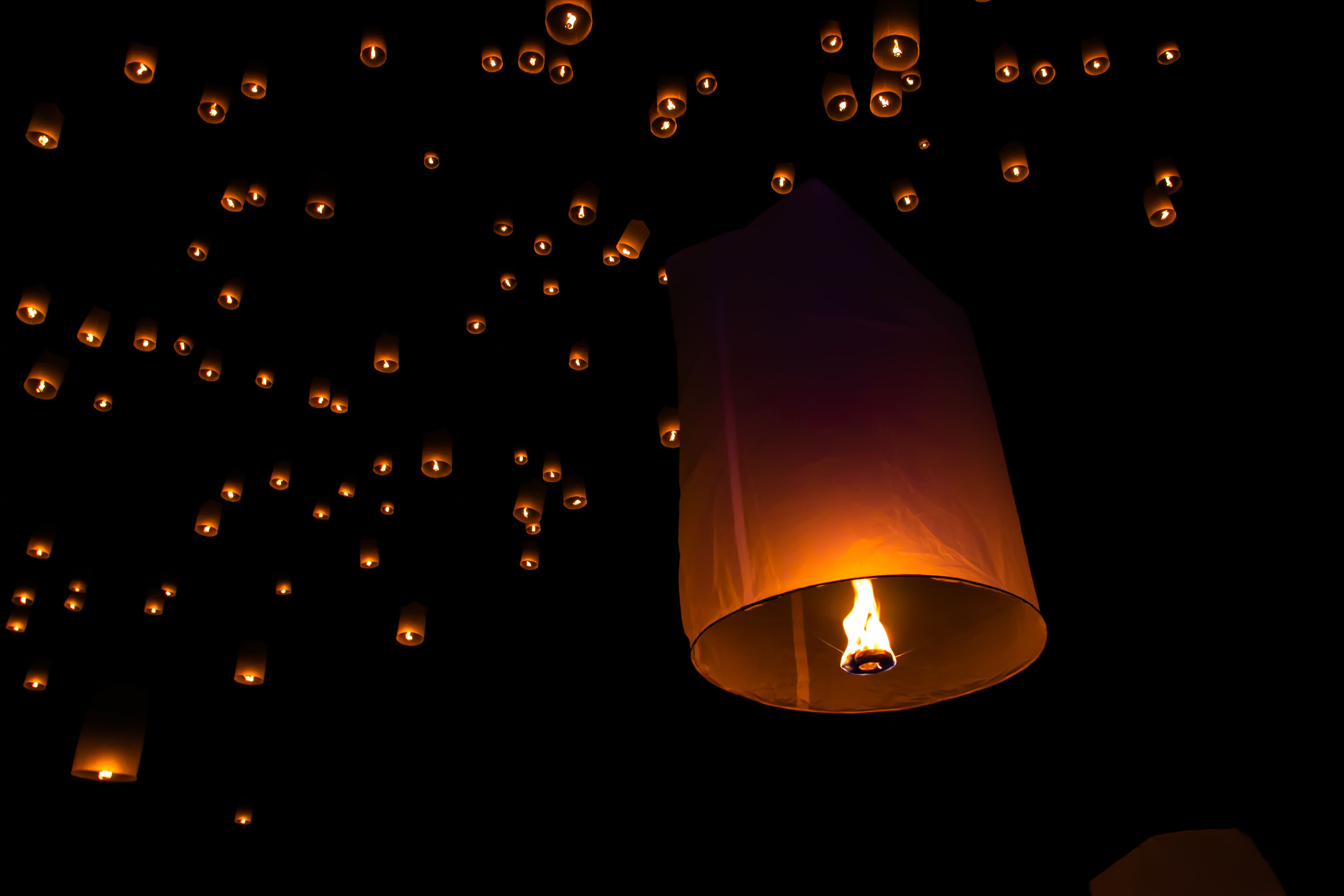
Yi Peng is the Lanna lantern festival of northern Thailand, celebrated in Chiang Mai on the full moon of the twelfth lunar month, the same night as Loy Krathong. In 2027 that falls on 13 and 14 November, with 14 November the full-moon peak; dates follow the lunar calendar and are confirmed by the city in the preceding months. Expect lantern-decorated temples and gates, krathongs floating on the Ping River, parades, and ticketed mass sky lantern releases outside the city.

Highlights

  • Expected 13 to 14 November 2027, with the full moon on 14 November
  • Same night as Loy Krathong: sky lanterns in Chiang Mai, krathongs on the river
  • City streets, temples and the Ping River are free to enjoy
  • Mass sky lantern releases are ticketed events outside the city, from 4,900 THB in 2026
  • Sky lanterns are banned inside Chiang Mai city for airport safety
  • Cool-season weather: around 30°C by day, 18°C at night, little rain

Good to know

Dates
Expected Sat 13 to Sun 14 Nov 2027 (full moon 14 Nov); Loy Krathong nationwide the same night; 2026 edition was 24 to 25 Nov
Opening hours
City events from late afternoon to around midnight; CAD mass release shuttles from 13:00, ceremony 19:00, release 20:15 (2026 pattern)
Venue
Chiang Mai old city and Tha Phae Gate (about 18.787 N, 98.993 E), Ping River at Nawarat Bridge; CAD Cultural Centre, Mae On, about 40 minutes east
Entry
City festival free; CAD Khomloy 4,900 THB standard, 6,900 VIP, 8,900 premium in 2026, including transport and dinner
Getting there
Fly to Chiang Mai International Airport, 15 minutes to the old city by taxi; mass release events run shuttles from the city
Recommended eSIM
Thailand eSIM

A lantern night that happens in three places at once

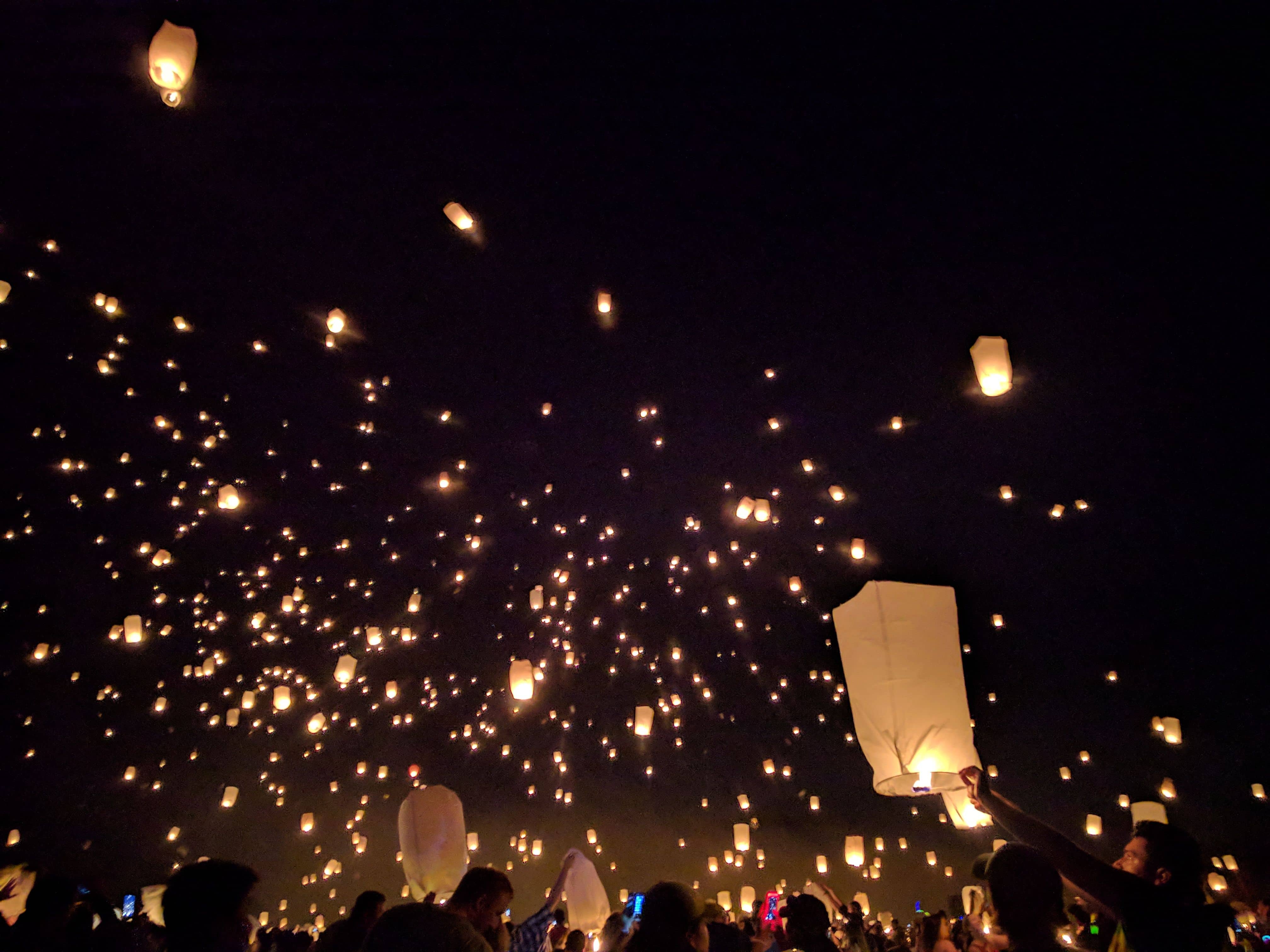
Yi Peng is the festival of the Lanna kingdom that once ruled northern Thailand, held on the full moon of the second Lanna month to make merit, let go of misfortune and honour the Buddha. In Chiang Mai it lands on the same night as Loy Krathong, so the city does both: temples and gates hung with paper lanterns, parades of lantern floats through the old city, families floating candle-lit krathongs on the Ping River, and the famous sky lanterns, khom loi, rising by the thousand. The pictures you have seen of a sky full of lanterns are real, but they are from ticketed mass releases held outside the city, because sky lanterns have been banned inside Chiang Mai since 2015 for the safety of flights at the airport.

That split is why your phone matters. The city festival is free and spread across streets and temples that are hard to navigate when the roads close; the mass release is a dated e-ticket with a shuttle pick-up point and a time; the river gets packed; taxis and ride-hailing vanish after the parades; and the Ping River bank, Tha Phae Gate and the rural release fields have no usable public Wi-Fi. A Thailand eSIM installed before you fly keeps the ticket on your screen, the map live and the group chat working on the one night the whole of Chiang Mai is outdoors.

A lantern night that happens in three places at once

Shuttle pick-up points and e-tickets

Mass release tickets come as a QR code with an assigned shuttle pick-up point and departure window in the city. The organiser's updates, the pick-up map and the ticket itself all live in your email and a Thai booking app, and the venue is 40 minutes from your hotel; a dead connection at 13:00 means a missed bus and a non-refundable ticket.

Road closures around the old city

On the two festival nights, the roads around Tha Phae Gate and along the river close for the lantern parades, and the open routes change hour by hour. A live map and a ride-hailing app with a precise pin are the only way to get a driver to the right corner, and later to get back to a hotel outside the moat.

Finding each other on the riverbank

The Ping River at Nawarat Bridge on the full-moon night is a single slow-moving crowd in the dark. Live location sharing in a group chat is how a family that stopped to buy a krathong finds the others, and it only works if every phone has its own data.

Reading what you are being handed

Krathong vendors, lantern rules at temples, parade route notices and the menu at the night market are in Thai. Camera translation reads them instantly with data, including the sign that says this temple does not permit sky lanterns.

Paying and getting home late

Krathongs, lanterns, street food and tuk-tuks run on cash and Thai QR payment; your bank card works in a payment app only with a live connection. After midnight, ride-hailing is the realistic way back from the river, and it runs on your data.

Install your eSIM before you fly and be online when you land — see matching plans

The complete guide

When Is Yi Peng Lantern Festival in 2027?

Yi Peng 2027 is expected on Saturday 13 and Sunday 14 November 2027, with the full moon, and the peak of the festival, on 14 November. The dates are not fixed in the Western calendar: Yi Peng falls on the full moon of the second month of the Lanna lunar calendar, which is the twelfth month of the Thai lunar calendar, the same full moon that brings Loy Krathong across the whole of Thailand. That puts the festival somewhere between early and late November each year; the 2026 edition fell on 24 and 25 November, and 2025's on 5 and 6 November. Chiang Mai's municipality confirms the official programme a few months ahead [TO VERIFY 2027 dates and programme].

The festival in practice spans two or three days:

  • The night before the full moon: the first night of the big ticketed mass sky lantern releases outside the city, and lantern displays already lit at temples and Tha Phae Gate

  • Full moon night, expected 14 November 2027: the Yi Peng and Loy Krathong peak in the city, with the krathong floating on the Ping River, the main lantern parade and temple ceremonies; the second night of the mass releases

  • The following day: the Loy Krathong parade of large krathong floats and the beauty pageant in some years, and a smaller final night on the river

The two festivals are distinct but inseparable in Chiang Mai. Loy Krathong, nationwide, floats small banana-leaf baskets with a candle and flowers on the water to thank the river goddess and let go of bad luck. Yi Peng, only in the north, sends paper lanterns into the sky as an offering and a release. Visitors who come for the sky lanterns and find the city celebrating on the water are not in the wrong place; they are in the only city that does both.

Tip: Book flights and hotels for 12 to 15 November 2027 now and treat the exact night as flexible by a day until the municipality publishes the programme; the mass release organisers fix their nights to the full moon and sell out months ahead.
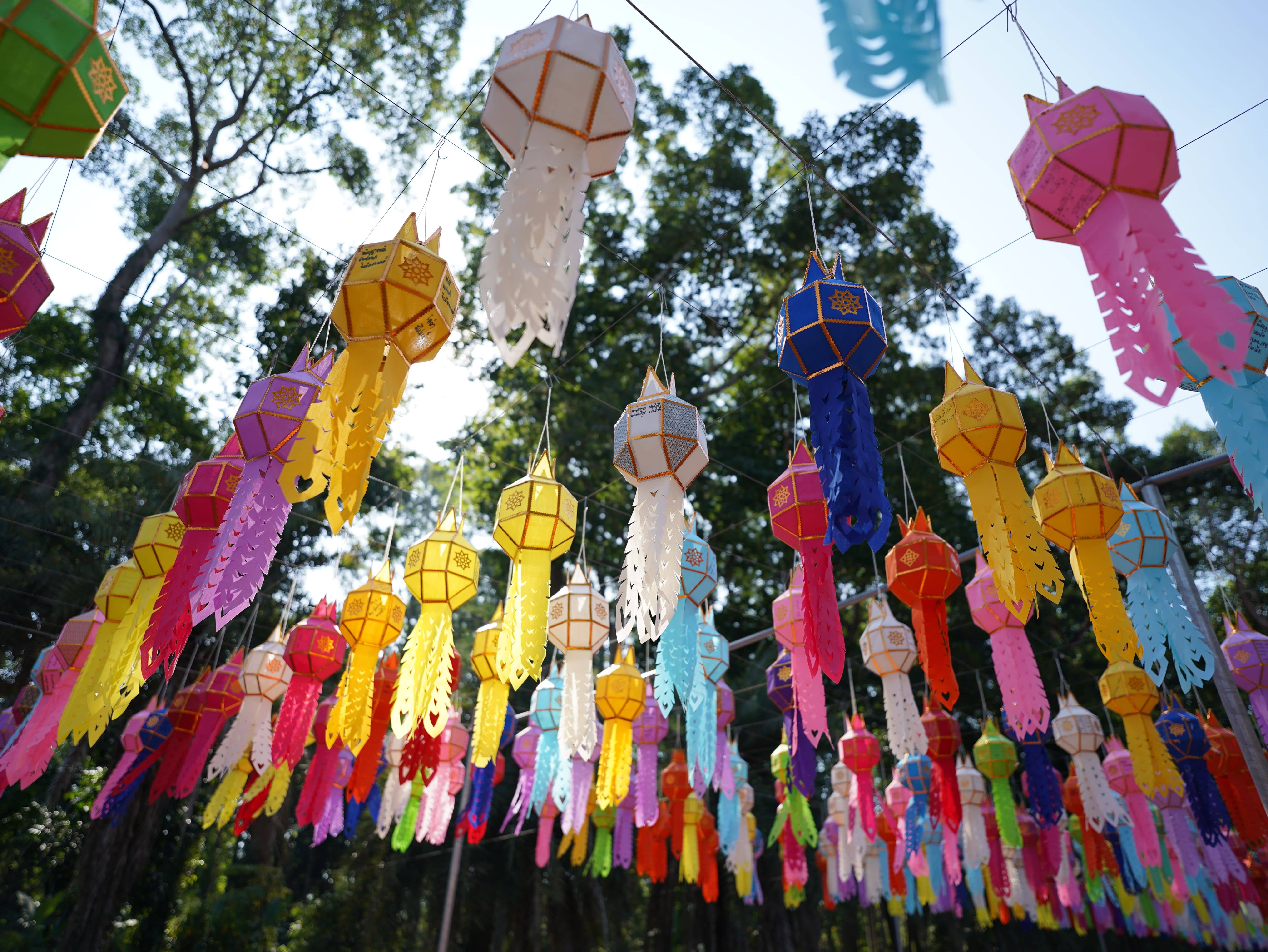
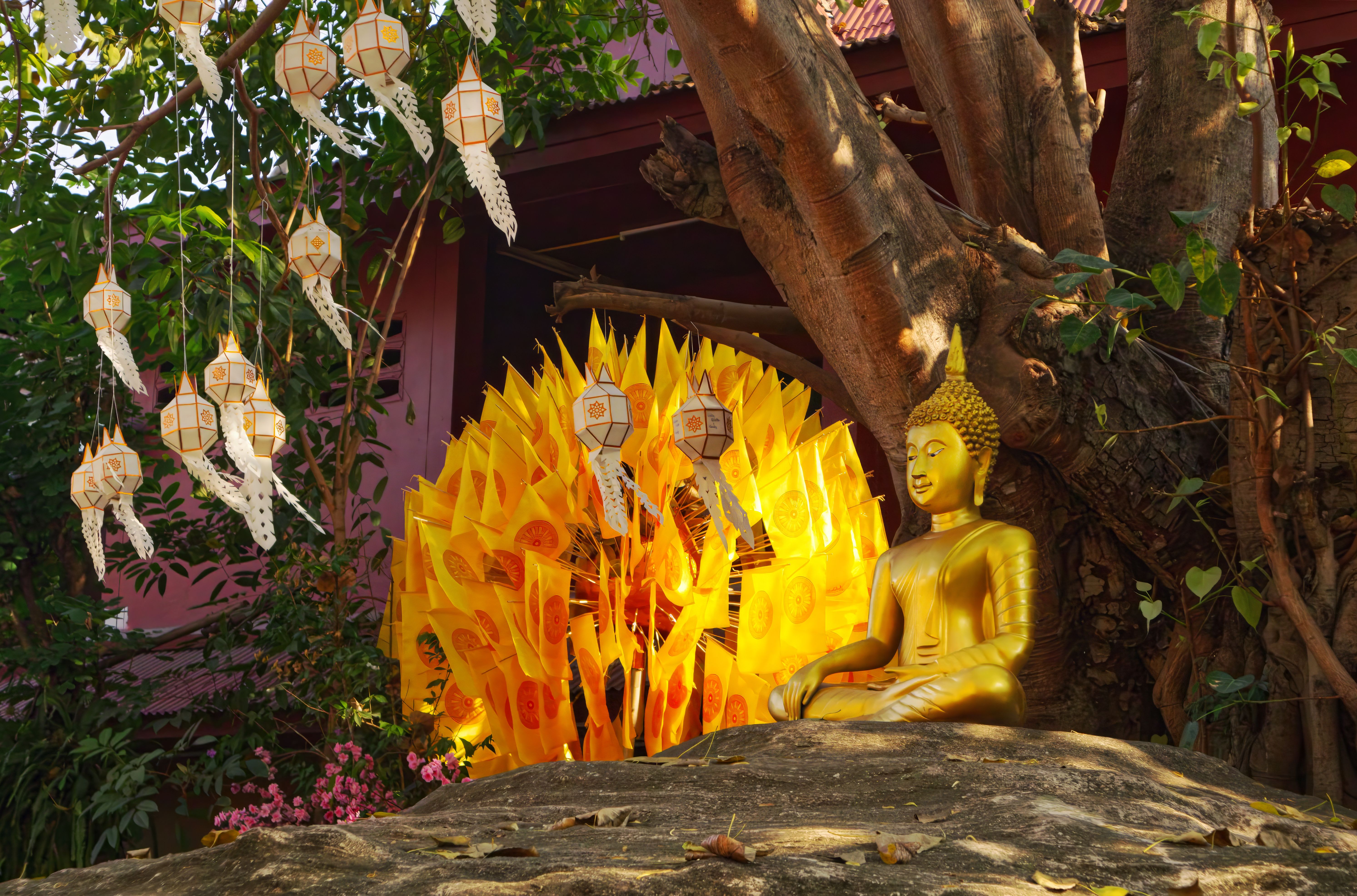
A full moon over Chiang Mai with paper lanterns hung along the old city moat and Tha Phae Gate lit for Yi Peng

Do You Need a Ticket, and What Does It Cost?

No ticket is needed for Yi Peng in the city. The lantern-decorated temples, Tha Phae Gate, the moat, the parades and the krathong floating on the Ping River are all free, and that is where most of Chiang Mai actually celebrates. Tickets are needed only for the organised mass sky lantern releases held outside the city limits, and those are the events behind the famous photographs.

The mass releases, at 2026 prices at the latest officially confirmed prices:

  • CAD Khomloy Sky Lantern Festival, at the CAD Cultural Centre Lanna in Mae On district, about 40 minutes east of the city: the largest event, around 22,000 attendees across its nights, with standard tickets at 4,900 THB, VIP at 6,900 THB and premium at 8,900 THB, sold through the organiser's official site. The price includes return shuttle transport from Chiang Mai, dinner, lanterns and a krathong

  • The Yee Peng Lanna event near Mae Jo in San Sai district, about 15 km north of the city, the original mass release at Lanna Dhutanka temple grounds, now a ticketed event sold through its official site at roughly 3,500 to 7,000 THB

  • Smaller organised releases at resorts and cultural centres around Doi Saket and the Mae Rim valley, often bundled with a Lanna dinner and dance, start from about 3,000 to 4,500 THB.

What the ticket buys: a seat in a field or amphitheatre, a Buddhist ceremony and monks' chanting, a Lanna cultural show, the simultaneous release of thousands of lanterns at a set moment, your own lanterns to release, and the bus back. Standard seats are at the back; VIP and premium bring you closer to the centre for photographs.

Note: Since 2015, releasing sky lanterns inside Chiang Mai municipality has been banned for flight safety, and the airport reroutes or cancels flights during the official release windows. Do not buy lanterns from street vendors to release in the city; police fine offenders and the lanterns land on temples and houses.

Where to buy: only from the organisers' official sites or their named ticketing partners. Resellers and tour desks mark up heavily and sometimes sell for cancelled or imaginary events. Tickets for the full-moon night typically sell out by August or September; the night before holds out a little longer.

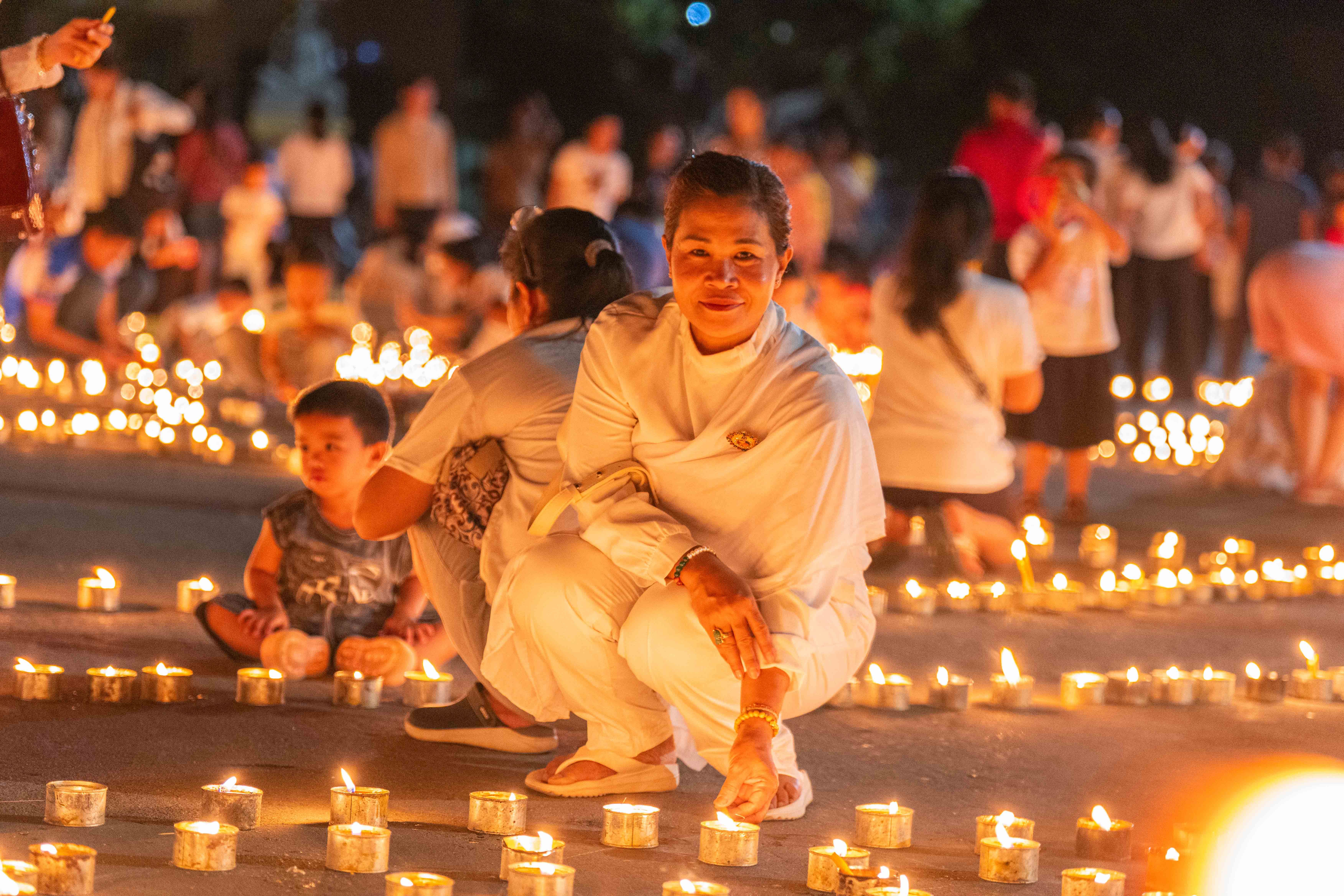
Free alternatives for the lantern experience: the hanging lantern displays at temples such as Wat Phan Tao and Wat Lok Moli, the lantern parade along Tha Phae Road, krathong floating at Nawarat Bridge (a krathong costs about 50 THB from a riverside vendor), and a few temples outside the city that permit limited lantern release at the monks' discretion.

Need a steady connection for transit and maps?See eSIM plans

Where It Happens and How to Get There

Yi Peng happens in Chiang Mai, the capital of northern Thailand, with the free city festival inside and around the old walled city and along the Ping River, and the ticketed mass releases in the countryside to the east and north.

The city venues:

  • Tha Phae Gate and the east moat (about 18.787 N, 98.993 E: the lantern parades start here, the gate is hung with lanterns, and Tha Phae Road leads east to the river

  • The old city temples: Wat Phan Tao with its lantern-lit teak hall and candle ceremony, Wat Lok Moli, Wat Chedi Luang and Wat Phra Singh, all within a 15-minute walk of each other inside the moat

  • The Ping River at Nawarat Bridge and the riverside between the bridges: krathong floating, fireworks and the Loy Krathong stage; the municipal office area and the Night Bazaar side are the main banks

  • The Three Kings Monument square: the ceremonial opening and cultural performances

The mass release venues: the CAD Cultural Centre Lanna in Mae On district, about 40 minutes east by road, and the Mae Jo area in San Sai district, about 15 km north; both are reached only by the organisers' shuttles from city pick-up points or by pre-arranged private transfer, as public transport does not go there and the roads are controlled on the night.

Getting to Chiang Mai: Chiang Mai International Airport (CNX) has direct flights from Bangkok (about an hour), from across Thailand and from several Asian cities; it is 3 km from the old city, about 15 minutes by metered taxi or ride-hail for roughly 100 to 160 THB. Overnight trains from Bangkok's Krung Thep Aphiwat station take about about 12 to 13 hours and sell out for festival dates; buses take 9 to 10 hours.

Getting around the city: songthaews (shared red trucks) and tuk-tuks for short hops, ride-hailing apps for fixed-price trips, and your feet inside the moat, where everything is within 20 minutes' walk. Rent a bicycle or scooter only if you are confident in Thai traffic; on festival nights the roads inside the moat and along the river close to vehicles from the afternoon.

Tip: Stay inside or just outside the east moat, between Tha Phae Gate and the river, and you walk to everything on festival night and skip the transport problem entirely.

Getting back late: after the river fireworks around midnight, tuk-tuks and songthaews charge whatever they like and ride-hailing waits run to 30 minutes or more. Walk to the edge of the closure zone before you book, or stay within walking distance.

Tha Phae Gate in Chiang Mai at night decorated with hanging lanterns and crowds gathered for the Yi Peng parade

What Actually Happens, Hour by Hour

The festival builds through the afternoon and peaks around 20:00 to 22:00 on both nights, with the mass releases timed to the same window outside the city. The schedule below follows the officially confirmed timetables for the 2027 edition based on the Lanna lunar calendar

The night before the full moon, expected 13 November 2027:

  • From 13:00: shuttles to the CAD mass release leave the city pick-up points; arrive early for seat allocation and the cultural fair on site

  • Late afternoon: lanterns lit at Tha Phae Gate and the temples; Wat Phan Tao's candle ceremony fills the courtyard

  • Evening: the opening ceremony at the Three Kings Monument and the first lantern parade along Tha Phae Road

  • 19:00: ceremony and monks' chanting at the mass release venue; 20:15: the simultaneous release, the moment of the festival

  • Around 22:00: shuttles return to the city; the river is already busy with early krathongs

Full-moon night, expected 14 November 2027:

  • Afternoon: krathong vendors line the riverbanks and the moat; buy one made of banana leaf and flowers, never foam

  • Around 18:00: the Loy Krathong parade of giant krathong floats and lantern floats leaves Tha Phae Gate for the river, with dancers and drummers

  • Evening: temples hold candle ceremonies; the Ping River between the bridges fills with floating krathongs and families, and the municipal stage runs shows and the beauty contest

  • Around 20:00 to 21:00: fireworks over the river; the second night of the mass releases outside the city

  • Late: the riverbanks and the Night Bazaar stay lively past midnight

Best viewing spots: Nawarat Bridge and the river steps below the municipal office for the krathongs and fireworks; the Tha Phae Gate square for the parade start; Wat Phan Tao for the most photographed candle scene; and, for the sky, only the ticketed fields.

Tip: Float your krathong from the river steps rather than the bridge, light the candle and incense at the water, and make your wish; locals often clip a lock of hair or a nail into the basket as the thing they let go.

Best Time to Arrive and What the Weather Is Like

Arrive in Chiang Mai by 12 November 2027, two days before the full moon, and stay until the 15th; that gives you the ticketed release on the first night, the river and the parades on the full-moon night, and a slow morning after. If you can only do one night, the full moon is the city's night; if your priority is the sky-full-of-lanterns photograph, the first night of the mass release is calmer and sells out later.

Crowd levels on a scale of 1 to 5:

  • 10 to 11 November: level 2 to 3; lanterns going up, hotels filling, normal traffic

  • 12 November: level 3; early events, parades rehearsing, restaurants busy

  • 13 November (first festival night): level 4 in the old city, level 5 at the mass release venues

  • 14 November (full moon): level 5 at the river and Tha Phae Gate from 18:00; road closures throughout the centre

  • 15 November: level 3, easing through the day as visitors leave

The weather is the best Chiang Mai offers. November opens the cool, dry season: average highs around 30°C, lows around 18°C, about 35 mm of rain across the month and only a handful of rainy days; evenings on the river are warm and still, and the full moon is usually clear. The main weather risk is a late tail of the rainy season in early November, which can bring an evening shower, and in some years smoke from early agricultural burning towards the end of the month.

Planning around it:

  • Festival evenings are T-shirt weather; a light layer helps on the river after 22:00 and at the open-air mass release fields in the hills

  • Dress for temples during the day: shoulders and knees covered, shoes easy to remove

  • Sunscreen and a hat for daytime temple visits; mosquito repellent for the riverbank at dusk

  • Mass release events go ahead in light rain and pause for heavy rain or wind; check the organiser's social accounts in the afternoon

Note: Chiang Mai's airport schedules around the lantern windows on both nights, and some evening flights are moved or cancelled. Do not book a departure for the evening of 13 or 14 November.

Where to Stay and When to Book

For prime access to the lanterns and cultural parades, aim to stay in Old City or along the Ping River. Booking your room at least 3 to 5 months in advance ensures you secure walkable access to festivities, eliminating the stress of navigating closed roads and heavy traffic on festival night

Staying Connected During the Festival

Public Wi-Fi is not a plan at Yi Peng. The riverbank, Tha Phae Gate and the temples have no usable network for the crowd, café Wi-Fi inside the moat wants a login and closes early on festival night, and the mass release fields in Mae On and San Sai are rural, with no Wi-Fi at all. Your hotel's connection stays at the hotel. Your phone needs its own data, and a Thailand eSIM installed before you fly is the simplest way to get it.

What you use data for at Yi Peng:

  • The mass release e-ticket, the shuttle pick-up map and the organiser's updates on timing and weather
  • Live maps and ride-hailing with a precise pin when the roads inside the moat close
  • A group chat with live location for regrouping on the riverbank and after the parade
  • Camera translation of krathong prices, temple rules and parade notices
  • Thai QR payments through a payment app linked to your card, and the exchange rate when a tuk-tuk quotes a festival price
  • The municipality's and organisers' social accounts for programme changes
  • Photos, video and calls home from the river, which is the call everyone makes

Set-up: check your phone is unlocked and supports eSIM (most phones from the last five years do), buy the plan, scan the QR code while you still have a good connection at home, and switch the line on when you land. Thai networks are strong in Chiang Mai city and along the main roads; at the mass release venues the signal is good on arrival and slows badly at the moment of release when thousands of people upload the same sky.

How much data: 1 to 2 GB a day covers maps, tickets, translation, messaging and payments. Video is the variable; a night of filming lanterns and sending clips home can double it. For a five-day Chiang Mai trip, 10 GB is comfortable, and 20 GB suits heavy social media use or a longer Thailand itinerary with Bangkok or the islands. GoHub's Thailand plans are listed on the eSIM for Thailand page.

Tip: Screenshot your release ticket, pick-up point and hotel address in Thai before you leave the hotel, and carry a power bank; the release moment is the one time you want the phone at full charge and the network is at its slowest.

Keep your home SIM active for SMS so bank verification codes arrive, set the eSIM as your data line, and turn off data roaming on the home SIM.

What to Eat, Drink and Buy

Eat northern Thai food, which is its own cuisine: milder, more herbal and more pork-based than the central Thai dishes most visitors know, and at its best in the cool season when the night markets are busiest.

Dishes to look for:

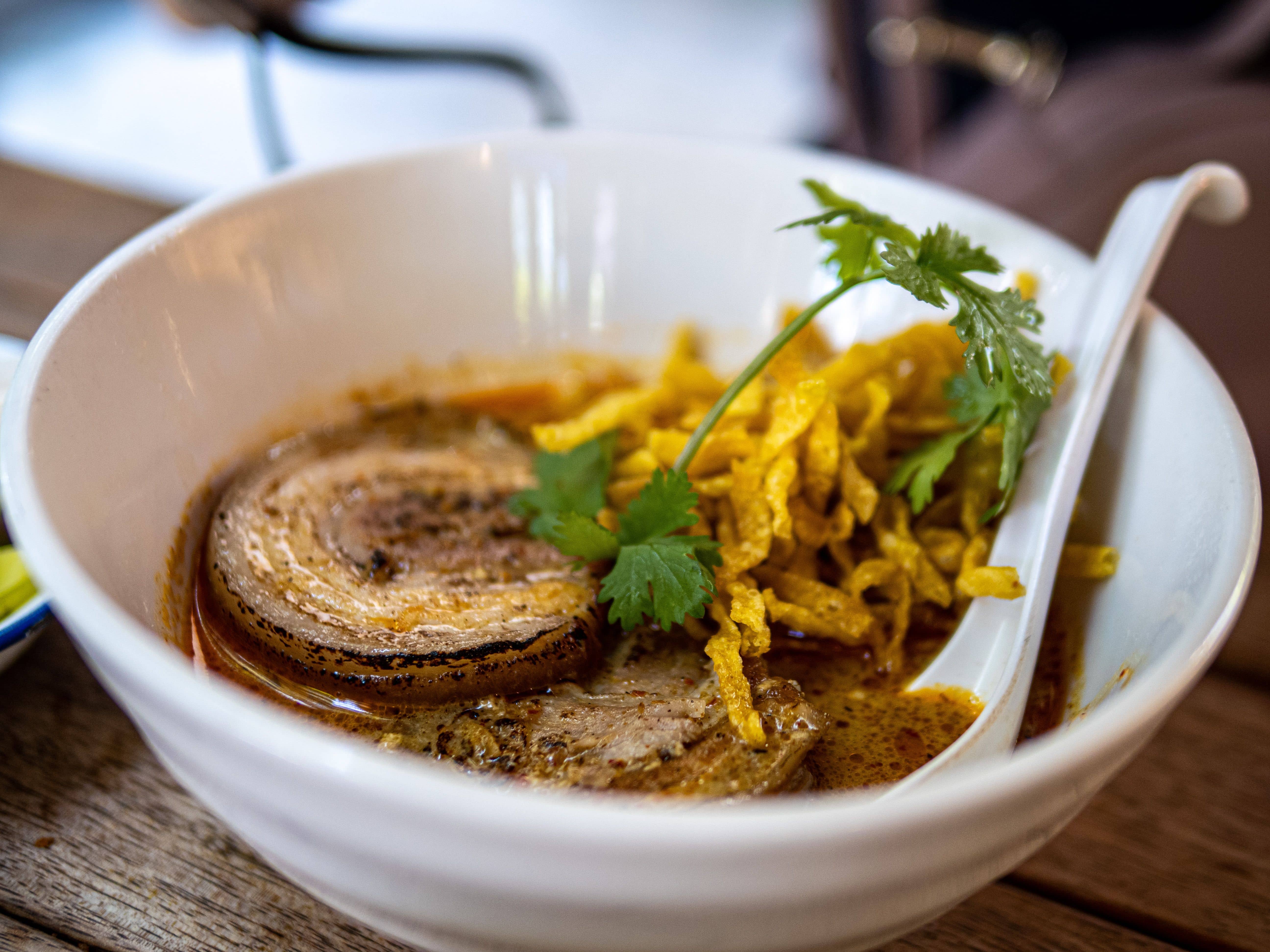
  • Khao soi: egg noodles in a coconut curry broth with chicken or beef, topped with crispy noodles, pickled mustard greens, shallots and lime; the city's signature lunch
  • Sai ua: the herb-packed northern sausage, grilled at every market
  • Nam prik ong and nam prik num: pork-and-tomato and roasted-chilli dips, eaten with vegetables and pork crackling
  • Gaeng hang lay: a Burmese-influenced pork belly curry with ginger and tamarind
  • Khanom jeen nam ngiao: rice noodles in a tomato and pork-blood broth, a Shan dish
  • Grilled meats, sticky rice and papaya salad from the night market stalls
  • Festival sweets: khanom krok coconut pancakes, roti with condensed milk, mango with sticky rice while it lasts

Where: the Chiang Mai Gate and Chang Phueak night markets for cheap, excellent local food; the Night Bazaar and the riverside for a sit-down dinner on festival night, booked ahead; Nimmanhaemin for cafés and modern Thai; and the old city's khao soi houses for lunch. On the two festival nights, restaurants near the river fill by 18:00 and many run a set menu; eat early or eat at the stalls.

Tip: Lunch on khao soi, then eat the festival from the stalls: a krathong in one hand and a skewer of sai ua in the other is how Chiang Mai does the river.

What to buy: a krathong (banana-leaf only, about 50 THB), hanging paper lanterns and Lanna-style khom kwaen for home, hill-tribe textiles and silver from the Night Bazaar and the Sunday Walking Street, Lanna ceramics, and coffee and tea from the northern hills. Do not buy sky lanterns to release in the city, however insistently the vendor says it is allowed.

A bowl of khao soi curry noodles with crispy noodles, pickled mustard greens and lime at a Chiang Mai restaurant

Money, Etiquette, Family and Safety

Chiang Mai is inexpensive except for the mass release ticket and the festival hotel. Street food is 50 to 100 THB a dish, a krathong about 50 THB, tuk-tuks and songthaews a few dozen baht on a normal night and whatever they can get on festival night. Budget per day excluding flights, hotel and any release ticket: a modest day with market food, temples and a songthaew about 600 to 1,000 THB; a comfortable day with restaurant meals, a massage, a cooking class or elephant sanctuary visit and ride-hailing about 2,500 to 4,500 THB. Cash still rules at markets, temples and with drivers; ATMs are everywhere but charge a foreign-card fee (typically 220 THB per withdrawal), so withdraw larger amounts less often. Cards work at hotels, malls and restaurants; Thai QR payments work through a payment app linked to your card. Tipping is modest and appreciated, not expected..

Etiquette that matters at Yi Peng:

  • Do not release sky lanterns inside the city; it is illegal, dangerous for aircraft and hated by locals whose roofs catch fire

  • Buy banana-leaf krathongs, not foam; the river is cleaned by volunteers the next morning

  • Dress modestly at temples (shoulders and knees), remove shoes, and do not pose with your back to Buddha images

  • Step aside for the parade and for monks; do not touch a monk if you are a woman

  • Ask before photographing people at the river; many are performing a private ritual

  • Do not light your krathong's candle on the bridge and drop it; float it from the steps

  • Keep voices down in temple courtyards during the candle ceremonies

Going with young children: the city festival is wonderful for kids before 21:00 and crowded after. Float a krathong from the river steps early in the evening, see the lanterns at Tha Phae Gate and one temple, and leave the river before the fireworks if the noise bothers them. Mass releases involve open flames in a packed field; most organisers admit children, but keep them close and consider the first, quieter night.

Going with older relatives: the mass release venues involve a long bus ride, walking on grass in the dark and sitting outdoors for hours; the VIP and premium tiers have better seating. In the city, a riverside hotel terrace or a temple courtyard early in the evening gives the atmosphere without the crush.

Safety and health: the risks are fire, crowds and traffic. Keep hair and loose clothing away from candles and lanterns, watch children near the water, and cross roads carefully when the closures lift. Emergency numbers in Thailand are 1669 for ambulance, 191 for police and 1155 for the tourist police, who speak English.

Note: Burns and fireworks injuries are the festival's recurring problems; the mass release organisers brief the crowd for a reason, and the river fireworks are best watched from a distance.

Side Trips and Combining Your Trip

Yi Peng falls at the start of the north's best season, so build days around it rather than flying in and out for the festival alone.

In and around Chiang Mai:

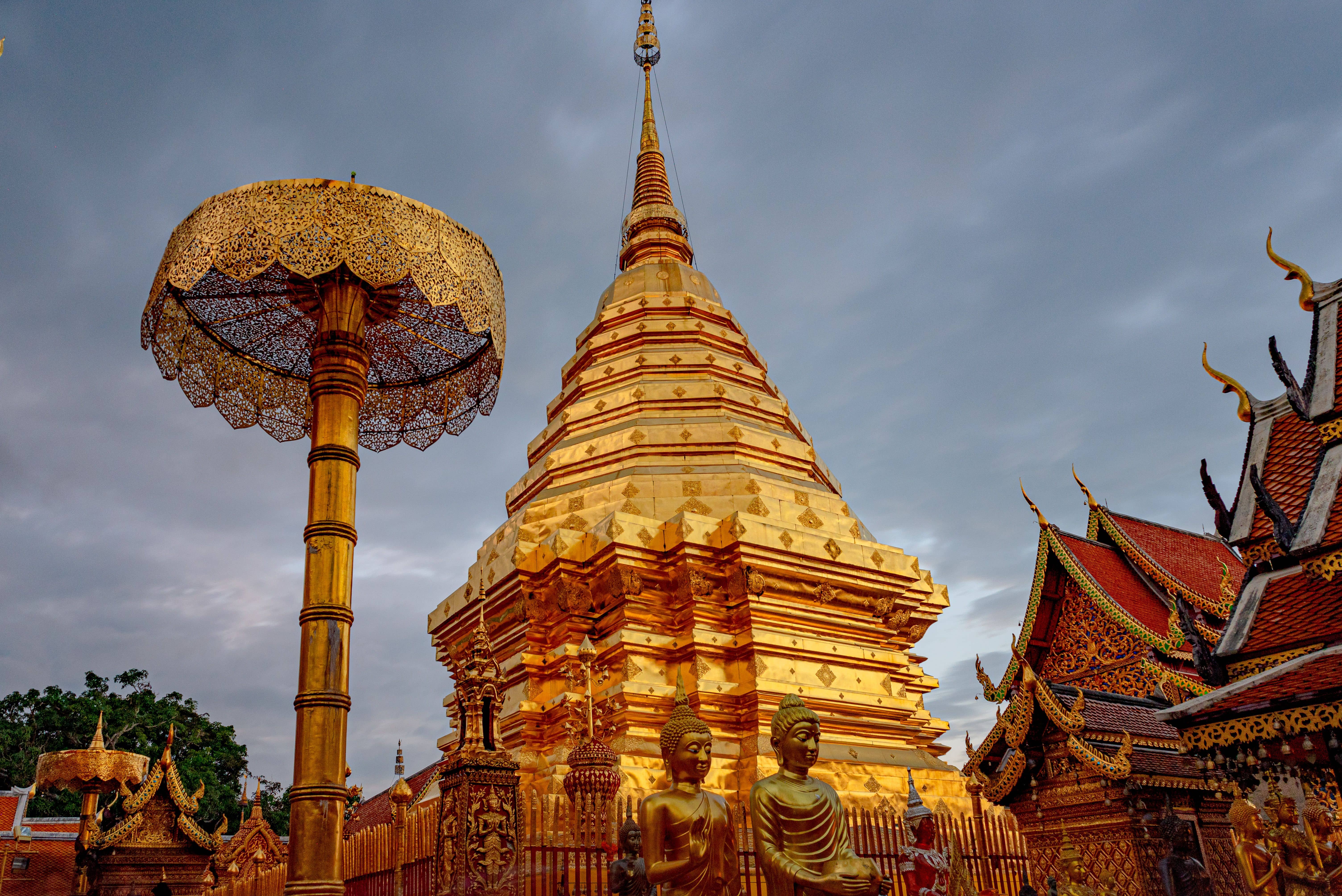
  • Wat Phra That Doi Suthep on the mountain above the city, at dawn before the tour buses, for the view and the chedi
  • An ethical elephant sanctuary in the Mae Taeng or Mae Wang valleys, a full day, booked ahead for festival week
  • A Lanna cooking class, the standard half-day in the city that tastes better in khao soi season
  • The Sunday Walking Street on Ratchadamnoen if your dates include a Sunday, and the Saturday market on Wualai
  • Doi Inthanon, Thailand's highest mountain, for cool air, waterfalls and the twin chedis, a day trip
  • Mae Kampong, a hill village east of the city near the CAD venue, for homestays and forest walks

Further afield:

  • Chiang Rai, about three hours by bus, for the White Temple, the Blue Temple and the Golden Triangle
  • Pai, three winding hours north-west, for the mountain-town backpacker scene and hot springs
  • Sukhothai, about five hours south, whose historical park holds its own Loy Krathong with lanterns and fireworks among the ruins, the festival's legendary birthplace
  • Bangkok and the islands, by a one-hour flight, to pair the cool north with the beaches

Tip: If you want both festivals at their most atmospheric, do Loy Krathong in Sukhothai's ruins one year and Yi Peng in Chiang Mai the next; trying to do both in the same lunar week means missing the full moon in one of them.

Bring any side trip back into Chiang Mai by the afternoon of 13 November; traffic into the city on festival days is slow, and the mass release shuttles do not wait.

The golden chedi of Wat Phra That Doi Suthep above Chiang Mai with the city visible far below

Suggested itinerary

Day 1 · 12 November, arrival and the old city

  1. Around midday
    Chiang Mai Airport to the old city15 minutes by metered taxi; check in near Tha Phae Gate
  2. Afternoon
    Wat Phra Singh and Wat Chedi LuangThe great old-city temples, already hung with lanterns
  3. Around 17:00
    Three Kings Monument squareEarly ceremonies and stalls setting up for the festival
  4. Evening
    Chiang Mai Gate night marketKhao soi, sai ua and sticky rice at local prices
  5. Late evening
    Tha Phae GateSee the lantern displays lit before the crowds arrive

Day 2 · 13 November, first festival night and mass release

  1. Morning
    Doi Suthep at dawnThe mountain temple before the heat and the buses
  2. Around 11:00
    Back to the city, khao soi lunchRest at the hotel; the afternoon is a long one
  3. Around 13:00
    Shuttle to the CAD mass releaseBe at the pick-up point early with ticket screenshots and a charged phone
  4. Around 19:00
    Ceremony and cultural showMonks' chanting, Lanna dance and dinner before the release
  5. 20:15
    Mass lantern releaseThe moment; film the first wave, then put the phone down for the second
  6. Around 22:00
    Shuttle back and the Night BazaarA late snack and the first krathongs on the river

Day 3 · 14 November, full moon

  1. Morning
    Slow start and a massageSave energy for the night; the old city is quiet in the morning
  2. Afternoon
    Wat Phan Tao and Wat Lok MoliThe lantern-lit teak hall and candle ceremony; buy a banana-leaf krathong on the way
  3. Around 18:00
    Tha Phae GateThe Loy Krathong parade of giant floats and dancers sets off for the river
  4. Around 19:30
    Nawarat Bridge river stepsFloat your krathong, make a wish; the crowd peaks here
  5. Around 21:00
    Riverside fireworksWatch from the municipal office bank or a riverside terrace
  6. Late
    Walk back to the old citySkip the taxi queue; the lanterns are still lit on the moat

Day 4 · 15 November, departure or onward

  1. Morning
    Riverside breakfastWatch the volunteers clearing the krathongs; the city exhales
  2. Late morning
    Wualai Road silver templeWat Sri Suphan and the silversmiths' street
  3. Afternoon
    Flight out or bus to Chiang Rai or PaiAvoid evening departures on festival nights; the morning after is clear
Tip: Arrive two days before the full moon, do the ticketed mass release on the first festival night and the free river and parades on the full-moon night, and stay within walking distance of Tha Phae Gate.

Recommended eSIM plans

Pick by trip length. Visiting several countries? Choose a regional plan.

Selected: eSIM Thailand 35GB 7 Days

Set up your eSIM in 3 steps

  1. Order and get your QR codeThe QR code arrives by email right after payment.
  2. Scan before you flySettings → Cellular → Add eSIM, while you still have Wi-Fi.
  3. Turn on data when you landSet the eSIM as your data line and enable data roaming.

Frequently asked questions

Yes, for the atmosphere of a whole city lit by lanterns and candles on a warm November night, and for the mass sky lantern release if you buy a ticket. Be clear about which you are coming for: the free city festival is about temples, parades and krathongs on the river; the sky full of lanterns from the photographs is a ticketed event outside the city, costing from about 4,900 THB in 2026. Do both over two nights and it is one of Asia's great festivals.

Not inside the city. Releasing sky lanterns within Chiang Mai municipality has been banned since 2015 for the safety of flights at the airport, which reschedules departures around the official release windows; police enforce it and fine offenders. You can release lanterns at the ticketed mass release events in Mae On and San Sai, outside the city limits, which include lanterns in the ticket price, and at a few temples outside the city at the monks' discretion.

Loy Krathong is the nationwide Thai festival of floating small banana-leaf baskets with candles on rivers and lakes, held on the full moon of the twelfth lunar month. Yi Peng is the northern Lanna festival of sky lanterns, held on the same full moon in Chiang Mai and the north. In Chiang Mai the two coincide, so the river fills with krathongs and the sky, outside the city, with lanterns, on the same nights. 2027's full moon is expected on 14 November.

It depends on your passport. Thailand grants visa-free entry for short tourist stays to many nationalities, and the permitted length and any online arrival registration requirements change from time to time [TO VERIFY current rules for your nationality]. Check the Thai embassy or consulate site for your country before booking. Carry your passport, or a copy, in Chiang Mai; hotels need it at check-in.

Plan on 1 to 2 GB a day for maps, ride-hailing, e-tickets, translation, messaging and payments, and more if you upload a lot of video from the river and the mass release. A 10 GB eSIM plan comfortably covers a five-day Chiang Mai trip; take 20 GB for heavy social media use or a longer Thailand itinerary. Install the eSIM before you fly so it works the moment you land, and carry a power bank for the long festival nights.

The main organisers usually open sales in spring or early summer for the November dates, once the full-moon date is fixed, and the full-moon night sells out first, often by August or September; the night before typically lasts a few weeks longer. Buy only from the organisers' official websites or their named partners. Prices in 2026 ran from 4,900 THB for a standard seat to 8,900 THB for premium at the largest event, including transport, dinner and lanterns [TO VERIFY 2027 sale dates and prices].