在 App Store 下載應用程式Download Gohub App on the App Store
AsiaJapan eSIM

Japanese Cherry Blossom Festival 2027 Travel Guide: When to Go and What to Expect

  • Late Mar – early Apr 2027 (Tokyo peak ~Mar 31)
  • Japan (Tokyo, Kyoto, Osaka)
  • Last updated: 2026年10月12日

Japanese Cherry Blossom Festival 2027

Overview

The Japanese cherry blossom festival is not one event but a season: for about two weeks in late March and early April the Somei Yoshino trees bloom across Tokyo, Kyoto and Osaka, and every park becomes a party. In an average year Tokyo's blossoms open around 24 March and peak around 31 March; the 2027 forecast arrives in January. Viewing is free, the festivals at Ueno, Chidorigafuchi and the Meguro River add lanterns, stalls and night illuminations.

Highlights

  • Tokyo average: first blossoms 24 March, full bloom 31 March; 2027 forecast due January
  • 2026 ran early: Tokyo opened 19 March and peaked around 26 to 28 March
  • Ueno Sakura Matsuri: 800 trees, 800 lanterns, stalls, mid-March to early April
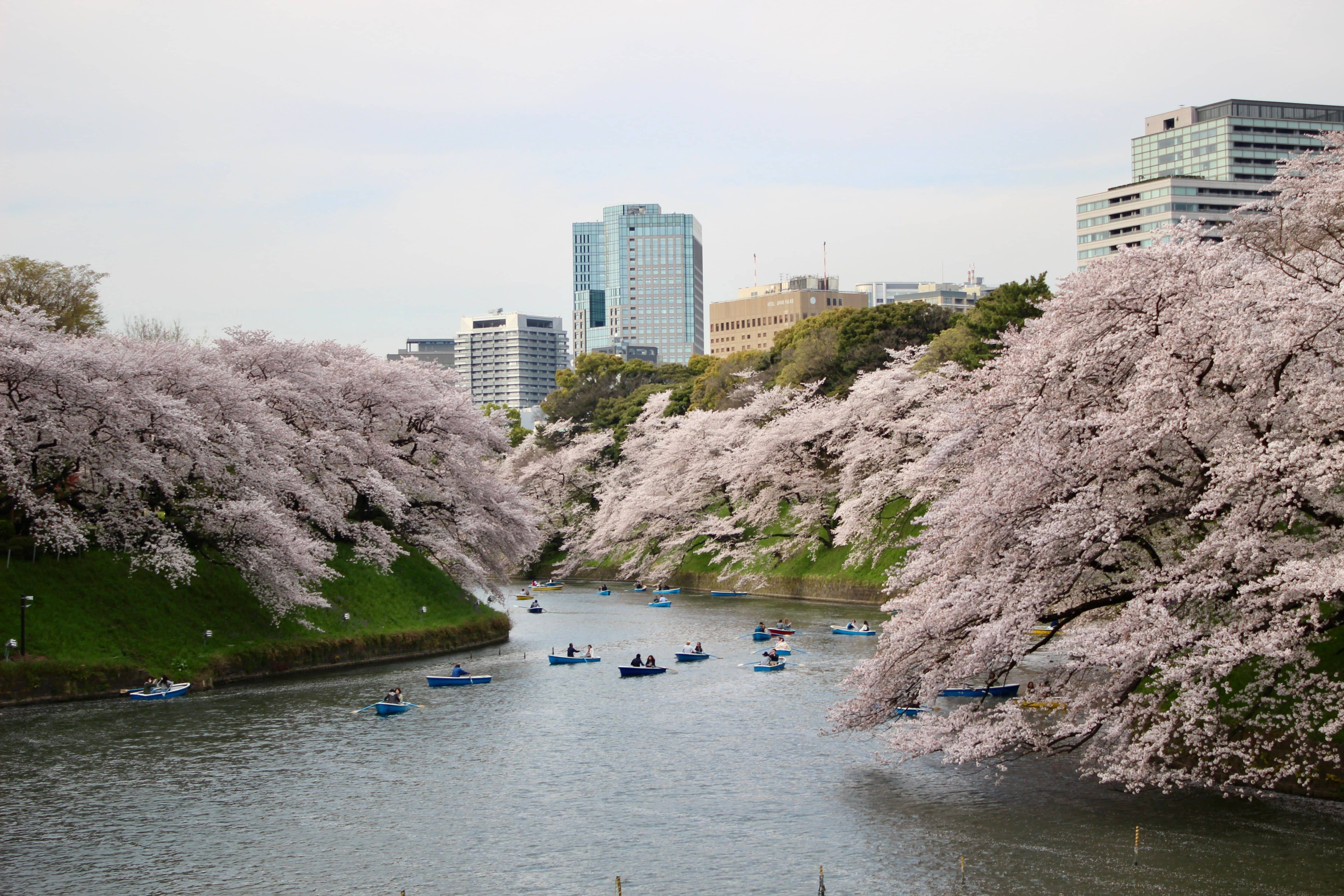
  • Chidorigafuchi: 700-metre blossom tunnel, rowboats and night light-up by the palace moat
  • Viewing is free; Shinjuku Gyoen charges 500 JPY and bans alcohol
  • Peak bloom lasts about a week; book hotels months ahead

Good to know

Dates
Tokyo bloom expected around 24 Mar, peak around 31 Mar 2027; Kyoto and Osaka a few days later; official forecasts from Jan 2027
Opening hours
Parks open all day; Ueno lanterns and Chidorigafuchi light-up run in the evening; Shinjuku Gyoen 9:00 to about 18:00 with spring extensions
Venue
Tokyo: Ueno Park, Chidorigafuchi, Meguro River, Shinjuku Gyoen; Kyoto: Philosopher's Path; Osaka: Osaka Castle Park
Entry
Free in parks and along rivers; Shinjuku Gyoen 500 JPY; rowboats and some gardens paid
Getting there
Ueno Park is 8 min on foot from Ueno Station; Chidorigafuchi from Kudanshita; Meguro River from Nakameguro
Recommended eSIM
Japan eSIM

A festival that moves with the weather

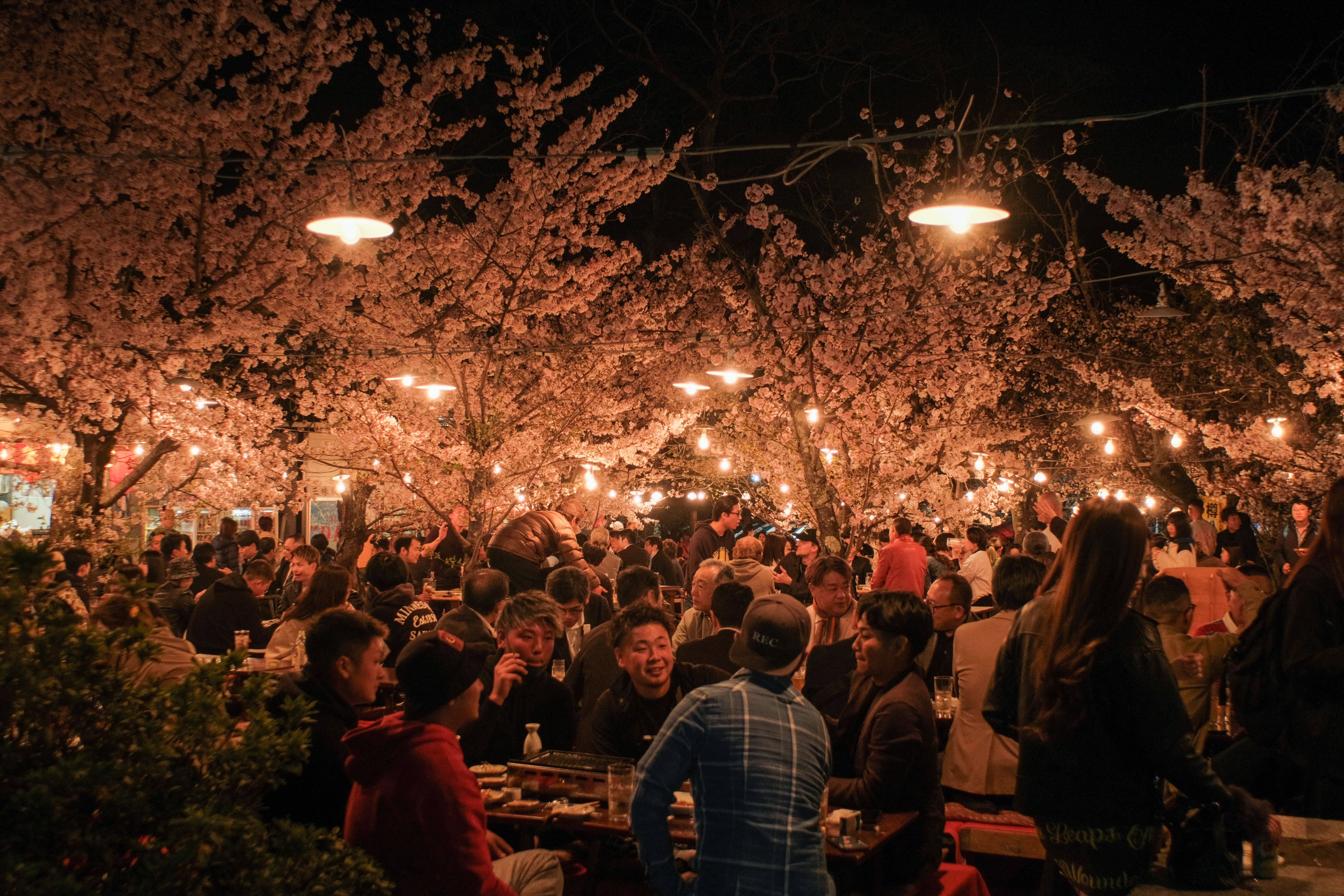
Hanami, flower viewing, is a thousand years old: courtiers in the Heian period wrote poems under the blossoms, and by the Edo period Tokyo's commoners were picnicking under the Somei Yoshino trees planted along the rivers and in Ueno. Today the season is a national ritual. Offices book patches of grass at dawn, families spread blue tarps under the trees, the Ueno avenue glows under 800 lanterns, rowboats drift under the blossom tunnel at Chidorigafuchi, and the Meguro River turns pink for a week. It is beautiful, short, and the most crowded fortnight in Japan.

It is also the only festival in this guide with no fixed date. The blossoms open when the weather says so, the peak lasts about a week, and a cold snap or a rainy, windy night can shift or end it. The sakura forecasts from the Japan Meteorological Corporation and Weathernews update every week from January, the festival light-ups are set to the forecast, and the best spots are decided on the morning. Hotel Wi-Fi stays in the hotel, and the free park Wi-Fi collapses under a million people. A Japan eSIM installed at home keeps the forecast, the maps, the group chat and the restaurant booking working while you chase the bloom from park to park.

Chasing the bloom day by day

The sakura front moves north and the forecast changes weekly. The JMC and Weathernews apps, the Tokyo tourism board's live bloom status and the park websites tell you whether Ueno is at 30 percent or full bloom today, and whether Chidorigafuchi's light-up starts tonight. Without data you plan around last week's news.

Finding the quieter tree

Ueno and the Meguro River are shoulder to shoulder at full bloom on a weekend; a park twenty minutes away on the same line is calm. A live map, the Tokyo transit app and crowd-status pages from the parks send you to the right station exit and the right riverbank before the sun goes down.

Regrouping under the lanterns

Ueno's main avenue is one-way on peak evenings, and the Meguro River path is a slow single file. Live location sharing in a group chat is how a group that stops for photos finds each other at the picnic spot, and every phone needs its own data.

Bookings, boats and last trains

Rowboat slots at Chidorigafuchi, timed entry to illuminated gardens, restaurant tables with blossom views and the last train after a night hanami all live on your phone. So does the taxi app when the last train is gone.

Paying and reading the stall signs

Yatai stalls at Ueno and the convenience stores that supply every picnic take cashless payment, and the signs about where you may picnic, drink or sit are in Japanese. Mobile payment and camera translation both need a connection.

Install your eSIM before you fly and be online when you land — see matching plans

The complete guide

When Is the Japanese Cherry Blossom Festival in 2027?

The 2027 cherry blossom season in Japan's main cities is expected in late March and early April, with Tokyo's Somei Yoshino trees opening around 24 March and reaching full bloom around 31 March in an average year; Kyoto and Osaka follow within a few days. No official 2027 forecast exists yet: the Japan Meteorological Corporation (JMC) issues its first forecast of the year around late December or January and updates it roughly every week until the blossoms open, while the Japan Weather Association (JWA) and Weathernews publish their own independent charts from February.

Why there is no fixed date: the blossoms open according to the temperature of the preceding weeks, so a warm March pulls the whole season forward and a cold one pushes it back. In 2026 Tokyo opened on 19 March and reached full bloom around 26 to 28 March, well ahead of average; in 2024 a cold spell pushed Tokyo's peak to around 4 April. Full bloom usually arrives about a week after the first blossoms open and lasts another week, so the peak viewing window in any city is roughly ten days.

How the season moves across Japan:

  • Kyushu and Shikoku (Fukuoka, Kochi): open around 19 to 24 March, peak late March

  • Tokyo, Nagoya, Osaka, Kyoto: open around 20 to 25 March, peak 28 March to 5 April

  • Hokuriku and northern Honshu (Kanazawa, Sendai): early to mid April

  • Hirosaki and Kakunodate in Tohoku: late April to early May

  • Sapporo and Hokkaido: early May

The festivals follow the trees. In Tokyo the Ueno Sakura Matsuri ran from 14 March to 5 April 2026, the Chiyoda Sakura Festival at Chidorigafuchi from 5 March to 22 April with evening light-ups from 26 March to 6 April, and the Nakameguro festival on the Meguro River on 28 and 29 March; organisers will officially set the 2027 festival calendars in mid-to-late February based on the latest localized meteorological trends.

Tip: Book a window rather than a date. Flights for 25 March to 7 April 2027 and hotels with free cancellation cover an early or a late year; then fine-tune which city you are in on which day once the February forecast lands.
The cherry blossom avenue in Ueno Park, Tokyo, in full bloom with lanterns strung between the trees and crowds walking beneath

Do You Need a Ticket, and What Does It Cost?

No ticket is needed for cherry blossom viewing. The great majority of hanami happens in free public parks, along river paths and in temple grounds, and the festivals that run in those places (Ueno, Chidorigafuchi, Meguro River, Sumida River) are free to walk through. You pay only for gardens with gates, for boats and for food.

Where money does come in, at recent published prices:

  • Shinjuku Gyoen National Garden, Tokyo: 500 JPY adult entry, with around 65 varieties of cherry that extend the season by a fortnight either side of the Somei Yoshino peak; no alcohol allowed, and advance timed-entry bookings are strictly required during peak cherry blossom weekends (such as late March to early April) between 10:00 and 16:00 to manage crowds.

  • Rowboat rental at Chidorigafuchi: paid by the half hour, with long queues at full bloom; price non-residents/tourists pay 1,500 JPY per 30 minutes

  • Illuminated gardens with paid entry such as Rikugien in Tokyo, advance online tickets priced at 1,000 JPY and same-day tickets at 1,200 JPY

  • Temple grounds in Kyoto with famous trees: Kiyomizu-dera about 500 JPY, Daigo-ji, Ninna-ji and others charge for their gardens; Maruyama Park and the Philosopher's Path are free

  • Osaka Castle Park is free; the castle keep charges entry

  • Mount Yoshino in Nara is free to walk, with paid ropeway and buses

  • Yakatabune boat dinners on the Sumida River and river cruises in Osaka are priced per person by the operator

Food is the other cost. Ueno's yatai stalls and the convenience-store picnic are cheap; a hanami bento from a department store basement is a mid-range treat; a blossom-view table at a restaurant on the Meguro River is booked weeks ahead at a premium.

Note: Nothing legitimate is sold as a "cherry blossom festival ticket". Tour operators sell guided hanami walks, bus tours to Mount Fuji's blossom spots and yakatabune dinners, which are fine, but any site selling admission to Ueno or Chidorigafuchi is selling nothing.

Picnic spots are the only thing that is truly scarce. At Ueno and the big parks, companies send a junior employee at dawn to sit on a tarp all day; visitors do the same, or arrive after 20:00 when the office parties leave and the spots open up.

Need a steady connection for transit and maps?See eSIM plans

Where It Happens and How to Get There

Cherry blossom season happens across Japan, but Tokyo gives the most festivals in the smallest area and is where most first-time visitors base themselves, with Kyoto a Shinkansen ride away for the second half of the trip.

Tokyo's main spots and how to reach them:

  • Ueno Park (about 35.715 N, 139.773 E): 800 Somei Yoshino trees along the main avenue, 800 lanterns, stalls and the loudest party in the city; 8 minutes on foot from JR Ueno or Keisei Ueno, 6 minutes from Yushima on the Chiyoda Line

  • Chidorigafuchi: a 700-metre blossom tunnel along the Imperial Palace moat with rowboats and an evening light-up; from Kudanshita station on the Tozai, Hanzomon and Toei Shinjuku lines, or a walk from Tokyo Station through the palace gardens

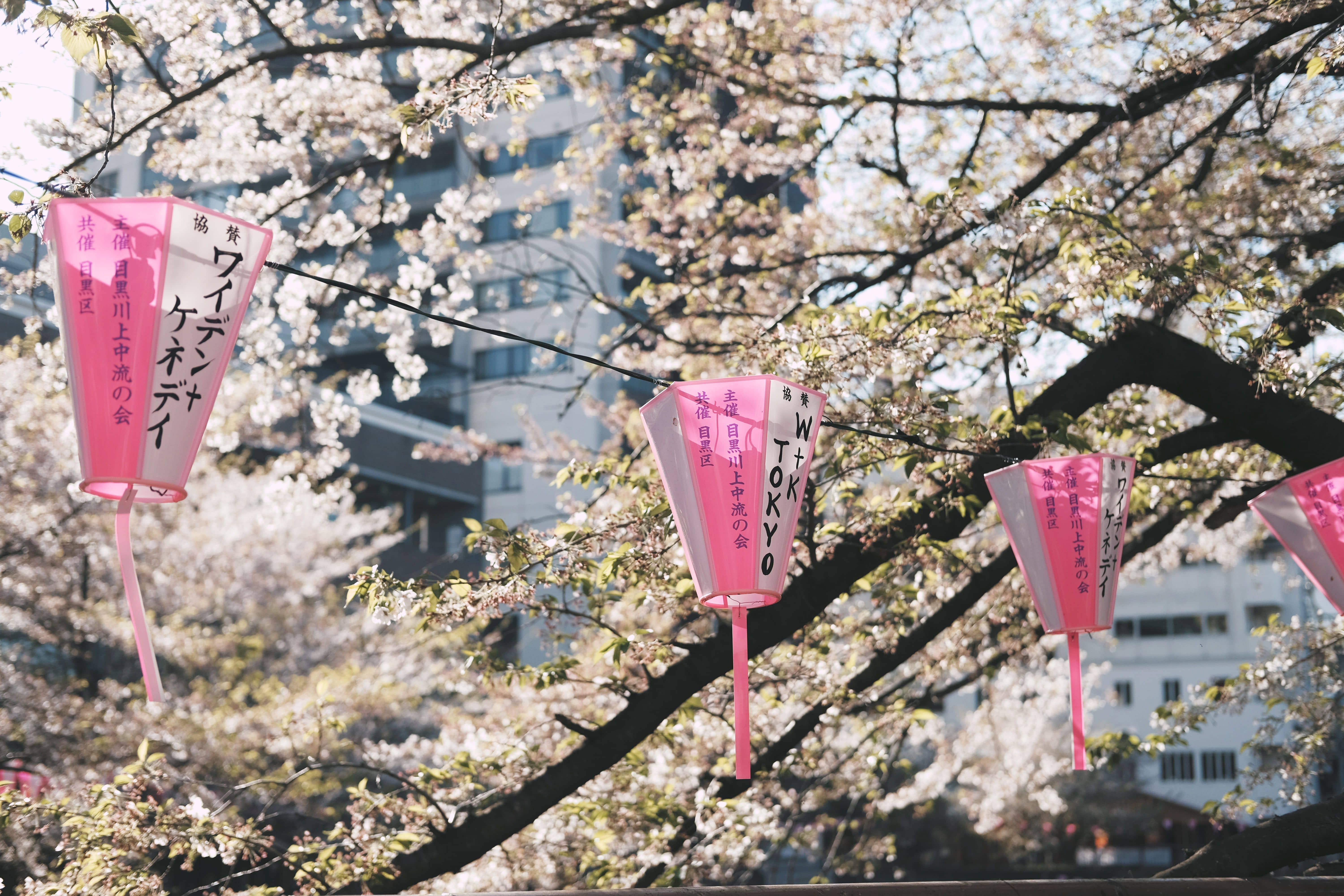
  • Meguro River at Nakameguro: four kilometres of trees over a canal, lantern-lit at night with stalls selling sparkling wine; from Nakameguro on the Hibiya and Tokyu Toyoko lines

  • Shinjuku Gyoen: the calm, paid garden; from Shinjuku-Gyoenmae on the Marunouchi Line or a walk from Shinjuku Station

  • Sumida River around Asakusa: riverside trees with Tokyo Skytree behind; from Asakusa station

  • Yoyogi Park, Koishikawa Korakuen and the Imperial Palace East Gardens: late-March peaks and smaller crowds

Getting to Tokyo: Haneda Airport to the city centre by Keikyu Line or Tokyo Monorail in about 15 to 20 minutes; Narita by Narita Express or Keisei Skyliner in about 36 to 50 minutes. Inside the city, the metro and JR lines reach every spot above; load a Suica or Pasmo card on your phone or buy one at the airport.

Beyond Tokyo: the Tokaido Shinkansen reaches Kyoto in about 75 to 80 hours. Kyoto's Philosopher's Path and Maruyama Park are on bus and subway routes from Kyoto Station; Osaka Castle Park is a short walk from Osakajokoen station; Mount Yoshino is about 75 to 80 minutes from Osaka by Kintetsu train plus a ropeway.

Tip: Visit Ueno and Chidorigafuchi on the same day: Ueno at 7:30 for empty paths, then the Chiyoda Line and a walk to Chidorigafuchi for the golden hour and the light-up, with Yasukuni Shrine's famous forecast tree on the way.

Getting back late: Tokyo's trains stop around midnight 12:15 AM and 12:35 AM. The Meguro River and Ueno light-ups wind down by 21:00 to 22:00, which leaves time; a yakatabune dinner or a long picnic does not, so know your last train or budget for a taxi.

Rowboats on the Chidorigafuchi moat in Tokyo beneath overhanging cherry trees in full bloom

What Actually Happens, Hour by Hour

A hanami day runs from dawn photographs to lantern-lit picnics, and the rhythm is the same in every city. There is no official programme beyond each park's festival hours, which are set once the bloom date is known [TO VERIFY 2027 times].

Morning, 7:00 to 10:00:

  • The paths at Ueno and Chidorigafuchi are briefly quiet and the light is soft; this is the hour for photographs without crowds

  • Company juniors are already on their tarps at Ueno, saving the best patches for the evening party

  • Temple grounds in Kyoto open around 8:00 or 9:00 and are at their calmest in the first hour

Midday to afternoon:

  • Picnics begin; convenience stores and department-store basements sell hanami bento, sakura mochi and chilled drinks

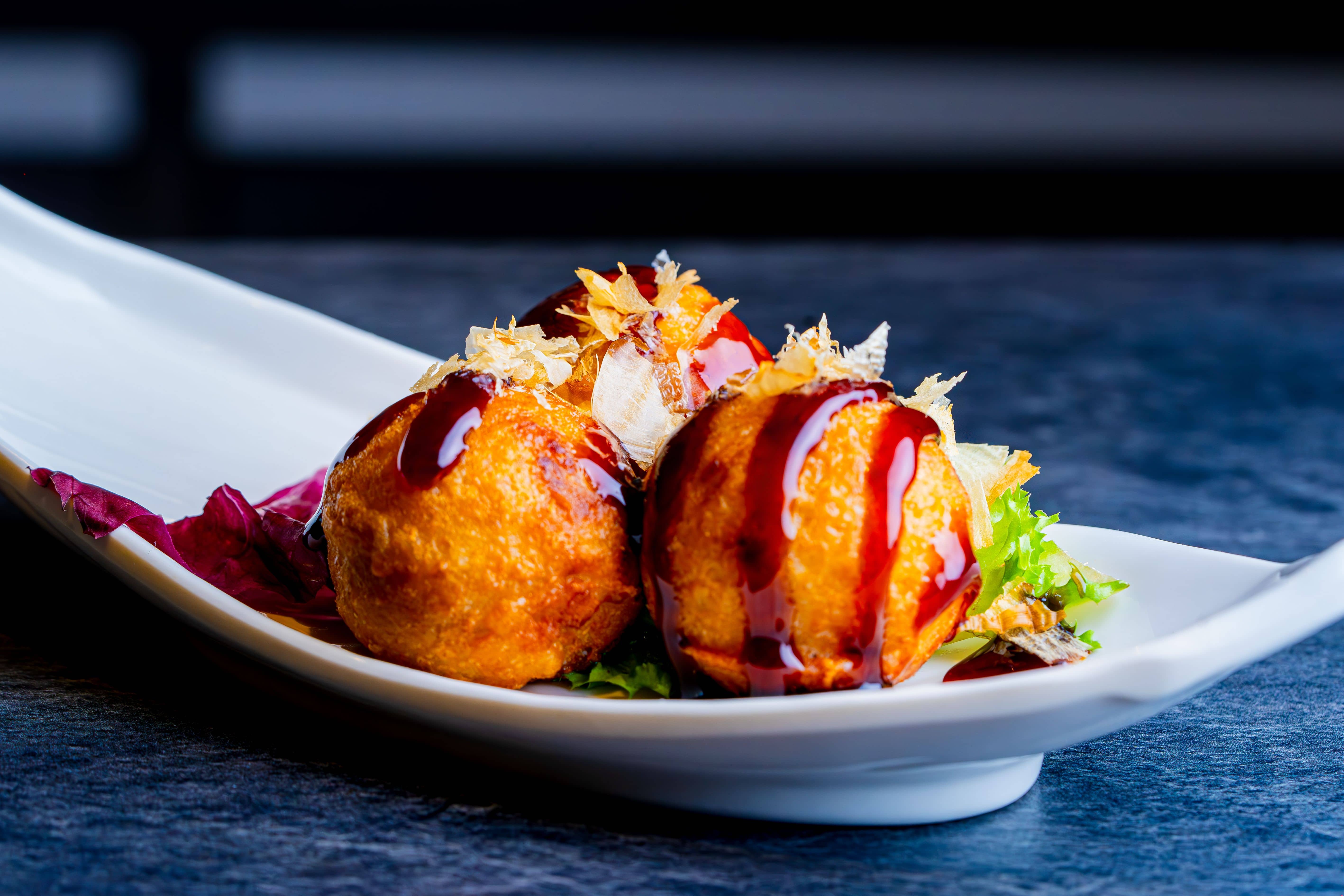
  • Stalls at Ueno serve yakisoba, takoyaki, grilled squid and beer along the avenue

  • Rowboats go out at Chidorigafuchi, with the queue building through the afternoon

  • Shinjuku Gyoen is the air-conditioned-feeling option: wide lawns, no alcohol, no loudspeakers

Dusk and evening (yozakura, night blossoms):

  • Lanterns switch on at Ueno and the blossom avenue glows; the office parties peak between 18:00 and 21:00

  • The Chidorigafuchi light-up turns the moat tunnel pale pink from sunset until the lights turn off punctually at 21:00

  • The Meguro River's lanterns and stalls run until around 21:00; the view from the bridges with the lanterns reflected in the water is the photo of the trip

  • Illuminated gardens such as Rikugien run timed evening entry

The two moments worth building a day around: full bloom itself, when every tree is open at once, and hanafubuki, the "blossom blizzard" a few days later when wind sends petals across the paths and rivers in sheets, and the Meguro River runs pink with them.

Tip: At Ueno, walk the avenue once in the afternoon for the stalls and once after 20:00 for the lanterns; between those times it is a one-way shuffle. For Chidorigafuchi, be in the boat queue by 15:30 or skip the boat and watch them from the bank at dusk.

Best Time to Arrive and What the Weather Is Like

Arrive in Tokyo around 26 or 27 March 2027 and stay about a week, then move to Kyoto, and you have the best odds of catching full bloom in both cities in an average year. The 2027 forecast will sharpen that from January; if it points to an early year like 2026, shift the whole trip five days earlier.

Crowd levels on a scale of 1 to 5 for Tokyo's big spots:

  • First days of bloom (around 24 to 27 March): level 3; buds and early flowers, photographers out, parties not yet started
  • Full bloom on a weekday: level 4 at Ueno, Chidorigafuchi and the Meguro River; level 2 at the smaller parks
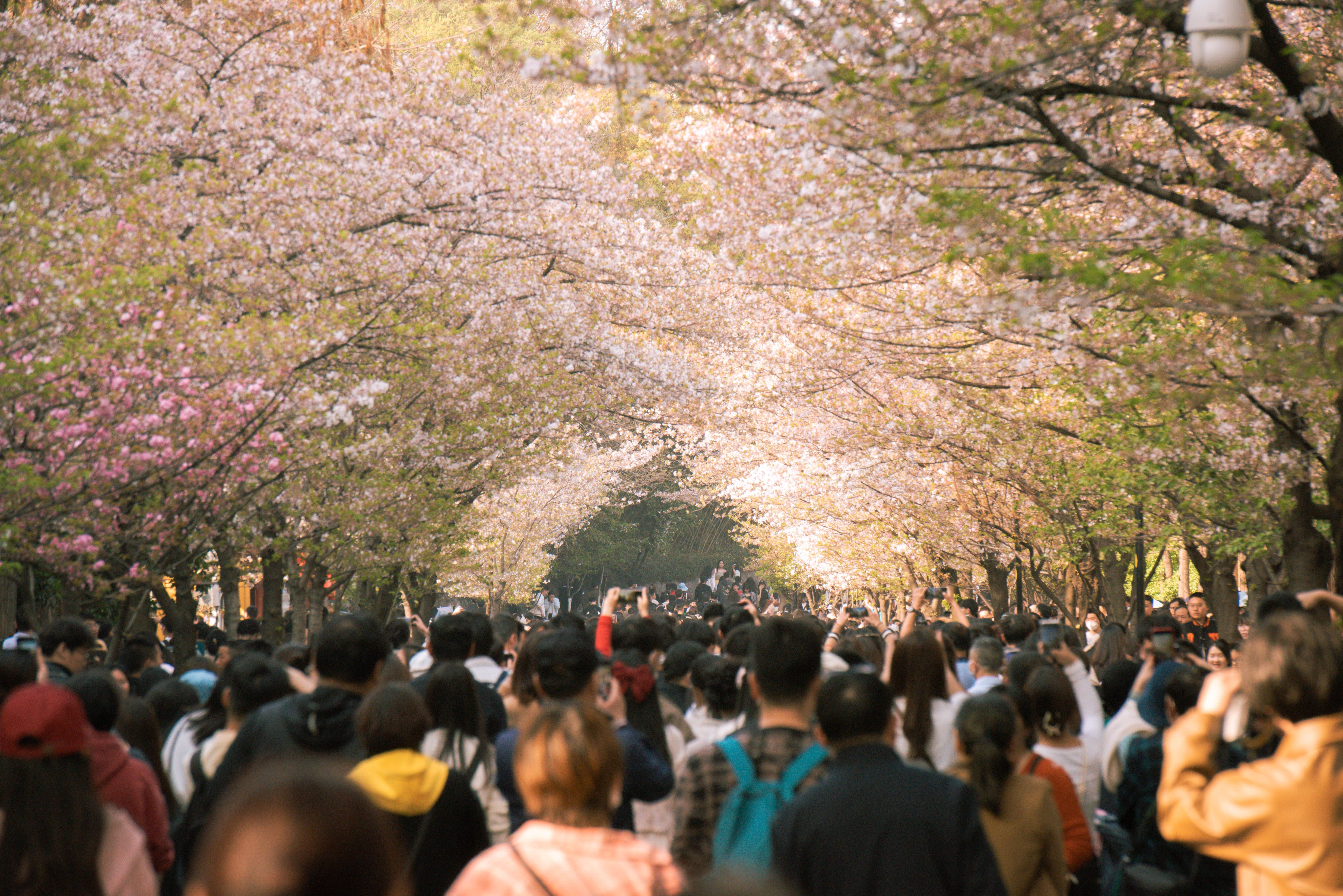
  • Full bloom on a weekend (likely 3 and 4 April 2027): level 5 everywhere famous, one-way paths, boat queues of two hours
  • Hanafubuki, the week after peak: level 3 and arguably the prettiest days
  • Late season (after about 7 April): level 2; Shinjuku Gyoen's late varieties and Tohoku still to come

The weather is spring at its most changeable. Tokyo in late March and early April has mild days in the mid-teens Celsius and cool nights in single figures [TO VERIFY averages], with sunny spells, sudden showers and the spring winds that both bring the blossoms on and strip them off. A warm week in mid-March starts the season early; a rainy, windy night at peak can end it in a day. Pollen is heavy in Tokyo in March, and many locals wear masks for it.

Planning around it:

  • Dress in layers; a sunny picnic at 15°C becomes a cold one at 7°C once the sun drops behind the trees
  • Carry a compact umbrella and a waterproof layer; rain does not cancel hanami, it just moves it under the eaves
  • Pack antihistamines if pollen affects you
  • Check the forecast and the bloom status every morning and go to the park that is peaking, not the one you planned

Note: Daylight is roughly 5:40 to 18:00 at the end of March, so the light-ups start early and a full day fits dawn photos, a picnic and a night walk comfortably.

Kyoto runs two to four days behind Tokyo and Osaka a day or two ahead of Kyoto, so Tokyo first, then Kansai, follows the front.

Cherry blossom petals falling in a hanafubuki blossom blizzard over a path in a Tokyo park on a windy spring afternoon

Where to Stay and When to Book

Stay within a short train ride of the spots you care about most, and book far earlier than for any other trip to Japan; cherry blossom season is the single most expensive and most sold-out fortnight in the Japanese hotel calendar.

Tokyo areas that work:

  • Ueno, Asakusa and the north-east: Ueno Park and the Sumida River on foot, direct trains from Narita, good-value business hotels and ryokan; the best base for the festival atmosphere

  • Around the Imperial Palace, Kudanshita and Tokyo Station: Chidorigafuchi on foot, the East Gardens, easy Shinkansen departures; business and international hotels

  • Shinjuku: Shinjuku Gyoen on foot, the widest choice of hotels at every price, central for everything

  • Nakameguro, Daikanyama and Ebisu: the Meguro River outside the door, cafés and a quieter night

  • Anywhere on the Yamanote loop: nowhere in central Tokyo is more than 30 minutes from the main spots

In Kyoto, Higashiyama and Gion for the temples and Maruyama Park, or around Kyoto Station for Shinkansen arrivals; in Osaka, around Osaka Castle or Namba.

When to book: Tokyo's late-March rooms begin filling the previous autumn, and the nights of 28 March to 5 April 2027 will be largely gone from central hotels by December 2026; Kyoto sells out even earlier. Book by October or November 2026 for choice; from January you are choosing between the suburbs and premium rates, and by March the only options are far out or in Osaka. Reference rates for peak nights: a business hotel in Ueno or Shinjuku runs about 22,000 to 35,000 JPY, a mid-range hotel near Tokyo Station about 35,000 to 55,000 JPY, a Kyoto machiya or ryokan from 60,000 to 120,000+ JPY, with Tokyo's and Kyoto's restructured local accommodation taxes added per person, per night.

Tip: Book cancellable rates for a window of 25 March to 7 April now, then cancel the nights you do not need once the February forecast settles. A week of flexibility is worth more than the best hotel in the wrong week.

Ask for a high floor facing a park or canal if one exists; a room above a line of cherry trees at night is the best free light-up in the city.

Staying Connected During the Festival

Public Wi-Fi is everywhere in Tokyo and useless under a tree at full bloom. The station and city networks need registration and time out, the parks have none, and when a million people stand along the Meguro River on a Saturday night every public hotspot stalls. Hotel Wi-Fi stays in the hotel. Your phone needs its own data, and a Japan eSIM installed before you fly is the simplest way to get it.

What you use data for in cherry blossom season:

  • The sakura forecasts and live bloom status for each park, checked every morning
  • Transit apps for the right station exit, the last train and Shinkansen bookings for the move to Kyoto
  • A group chat with live location for regrouping at the picnic spot or the boat queue
  • Restaurant bookings, rowboat and garden timed entries, and the yakatabune reservation
  • Mobile payment at stalls and convenience stores for the picnic
  • Camera translation of park rules, stall menus and temple signs
  • Photos, video and calls home from under the blossoms, which is the point of the trip

Set-up: check that your phone is unlocked and eSIM-capable (most phones from the last five years are), buy the plan, scan the QR code while you still have a reliable connection at home, and switch the line on when you land at Haneda, Narita or Kansai. Japanese networks are excellent in every city and on the Shinkansen; the only slowdowns are the famous riverbanks on peak weekend evenings, when uploads crawl for an hour.

How much data: 1 to 2 GB a day covers forecasts, maps, transit, messaging, translation and payments. Photos and video are the variable; cherry blossom season is the most photographed fortnight in Japan, and a day of uploads can double it. For a ten-day Tokyo and Kyoto trip, 20 GB is comfortable; 10 GB suits a shorter stay or light use. GoHub's Japan plans are listed on the eSIM for Japan page.

Tip: Download an offline map of Tokyo and Kyoto and save the bloom-status pages as screenshots each morning. Carry a power bank; a full day of photographs and video under the trees empties a phone by dusk.

Keep your home SIM active for SMS so bank verification codes arrive, set the eSIM as your data line, and turn off data roaming on the home SIM.

What to Eat, Drink and Buy

Eat the season: Japan produces a whole cuisine for the two weeks of blossom, from the traditional sweets to the pink editions of every convenience-store snack.

Classic hanami foods:

  • Sakura mochi: a pink rice cake with sweet bean paste wrapped in a salted, pickled cherry leaf, which you eat; the Kanto version is a thin crêpe, the Kansai version a ball of glutinous rice
  • Hanami dango: three-colour skewers of pink, white and green rice dumplings
  • Hanami bento: tiered boxes of seasonal food from department-store basements, the proper picnic
  • Sakura tea: salted cherry blossoms steeped in hot water, served at celebrations
  • Sakura-flavoured everything from the convenience stores and coffee chains: lattes, ice cream, beer, chips; a harmless ritual
  • Yatai stall food at Ueno and the river festivals: yakisoba, takoyaki, grilled squid, karaage, candied strawberries and beer
  • Spring seafood and vegetables in restaurants: bamboo shoots, rapeseed greens, sea bream, the first bonito

Where to eat and drink: the department-store basements at Ueno, Shinjuku, Ginza and Tokyo Station for a bento and a bottle of sake or sparkling wine; the convenience stores for everything else; the stalls at Ueno and along the Meguro River; riverside cafés at Nakameguro, booked ahead for a window table at peak; and in Kyoto, the tea houses along the Philosopher's Path and the yatai in Maruyama Park.

Picnic rules: most parks allow alcohol and food on the grass; Shinjuku Gyoen bans alcohol and checks bags; some temple grounds ban eating. Take rubbish away or to the marked bins, and leave the spot as you found it; locals judge visitors on this.

Tip: Buy the bento before 11:00; the good ones sell out by lunchtime on a full-bloom weekend, and the department stores restock only once.

What to buy: sakura-season sweets boxed for home (they keep a week), cherry-blossom teas, hand towels and stationery with blossom prints, sakura sake and limited-edition cosmetics, and in Kyoto, sakura-dyed textiles and incense.

Sakura mochi wrapped in a pickled cherry leaf and sakura-flavoured sweets on a Japanese plate beside a cup of green tea

Money, Etiquette, Family and Side Trips

Cherry blossom season costs what Japan always costs, plus a hotel premium. Viewing is free, a picnic from the convenience store is a few hundred yen a head, a hanami bento and drinks from a department store about 1,500 to 5,000 JPY, and even the paid gardens are 500 JPY. Budget per day excluding flights and hotel: a modest day with a picnic, a paid garden and trains about3,000 to 5,000 JPY; a comfortable day with a restaurant lunch, a rowboat, a yakatabune dinner and taxis about20,000 to 30,000 JPY. Cards and mobile payment are accepted almost everywhere in Tokyo and Kyoto; carry some cash for stalls, temples and small shops. Convenience-store ATMs accept foreign cards. Tipping is not done.

Etiquette under the trees:

  • Never pick blossoms, pull branches down or shake trees for a petal shower; it is the one thing that will get you told off

  • Do not climb trees or lean on them for photos

  • Keep picnics tidy, take rubbish away, and keep noise down after 21:00; parks post rules in English at peak

  • Respect reserved tarps; they are claimed fairly at dawn

  • Stay off roped lawns and behind the fences around old trees, especially in Kyoto temples

  • Queue for boats, bridges and famous viewpoints; cutting in is noticed

  • On narrow riverside paths, follow the one-way flow

Going with young children: hanami is ideal for kids. Pick a park with lawns rather than a riverside path (Yoyogi, Shinjuku Gyoen, Osaka Castle Park, Kyoto's Maruyama Park), picnic early before the office parties, bring a ground sheet and wet wipes, and do the light-ups before 20:00. Pushchairs are fine in parks and hopeless on the Meguro River path at peak.

Going with older relatives: Shinjuku Gyoen's wide, flat paths and benches, Chidorigafuchi from the bank at dusk, and Ueno in the morning are the gentle options; a yakatabune boat dinner gives the blossoms from a seat. Avoid the Saturday night riverbanks.

Safety: Japan is as safe as it gets; the hazards are crowds, cold nights and alcohol. Keep bags in front on the river paths, know the last train, and dress for 7°C after dark. Emergency numbers are 110 for police and 119 for ambulance and fire.

Note: Pollen season peaks with the blossoms. Pharmacies sell effective antihistamines over the counter; ask at the counter for hay fever medicine.

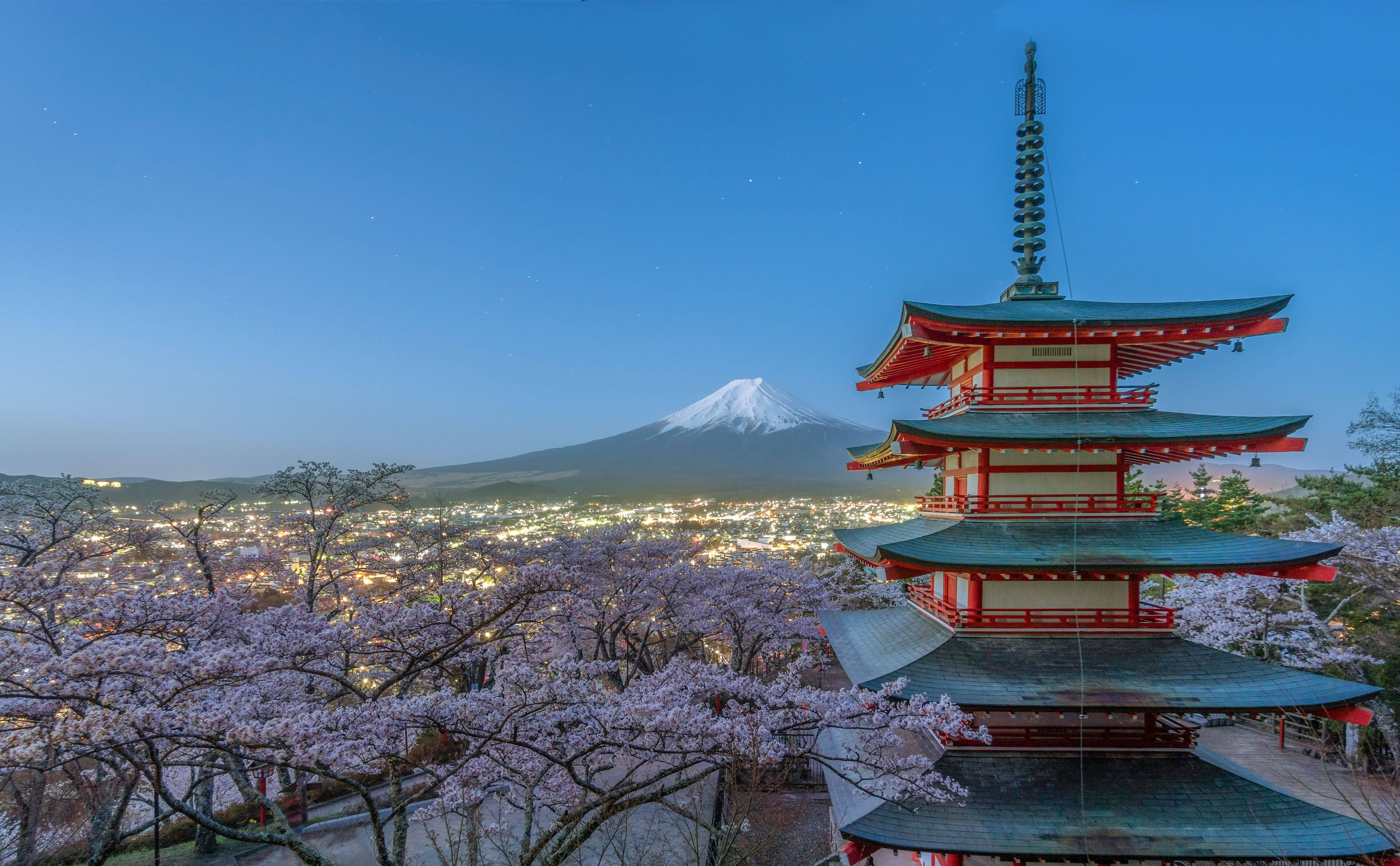
Side trips: Mount Yoshino in Nara, with 30,000 trees up a mountainside, peaks in early April; the Fuji Five Lakes for blossoms with Mount Fuji behind in mid April; Hirosaki Castle in Tohoku and the samurai street in Kakunodate in late April; and Sapporo in early May, if you want to follow the front to the end.

Suggested itinerary

Day 1 · Tokyo, Ueno and Chidorigafuchi

  1. Around 7:30
    Ueno Park cherry avenueEmpty paths and soft light; photograph the avenue before the crowds
  2. Late morning
    Department-store basement near UenoBuy a hanami bento and sakura mochi before they sell out
  3. Early afternoon
    Chidorigafuchi moatWalk the 700-metre blossom tunnel; join the rowboat queue early or watch from the bank
  4. Around 17:30
    Chidorigafuchi light-upThe moat turns pink at dusk; the best photos are in the first half hour
  5. Evening
    Back to Ueno for the lanternsThe office parties peak; walk the avenue once more after 20:00

Day 2 · Tokyo, Shinjuku Gyoen and the Meguro River

  1. Around 9:00
    Shinjuku Gyoen National Garden500 JPY entry, no alcohol, wide lawns; the calm hanami
  2. Midday
    Picnic on the lawnsBento and tea; the garden bans alcohol, so the picnic stays quiet
  3. Afternoon
    Rest or Yoyogi ParkKeep energy for the evening; Yoyogi is a free, lively alternative
  4. Around 17:00
    Nakameguro, Meguro RiverArrive before the evening crowd; walk the canal while the light is still good
  5. Evening
    Lanterns on the Meguro RiverSparkling wine from the stalls, lanterns reflected in the water; leave by 21:00

Day 3 · Shinkansen to Kyoto

  1. Morning
    Tokyo Station to KyotoReserve seats; sit on the right side for a chance of Mount Fuji
  2. Around 13:00
    Check in near Higashiyama or Kyoto StationLeave bags and head straight out while the light is good
  3. Afternoon
    Philosopher's PathTwo kilometres of trees along the canal; walk north to south for the quieter end
  4. Around 17:00
    Maruyama ParkThe weeping cherry and the yatai stalls; the park's hanami parties start at dusk
  5. Evening
    Gion side streetsDinner, then a lantern-lit walk down Hanamikoji

Day 4 · Kyoto temples and a side trip

  1. Early morning
    Kiyomizu-deraOpen from 6:00; the blossoms over the valley before the tour groups arrive
  2. Late morning
    Daigo-ji or Ninna-jiPaid temple gardens with famous trees; choose by which is peaking
  3. Around 13:00
    Lunch near Kyoto StationThen the train south if you have the afternoon
  4. Afternoon
    Mount Yoshino or Osaka Castle ParkYoshino for 30,000 trees on a mountainside, Osaka for a city park and the castle moat
  5. Evening
    Illuminated temple night viewing in KyotoTimed entry to a lit garden such as Kodai-ji or Kiyomizu-dera, booked ahead
Tip: Follow the sakura front: Tokyo first around full bloom, then the Shinkansen to Kyoto a few days later as Kansai peaks; check the bloom status every morning and swap days if needed.

Recommended eSIM plans

Pick by trip length. Visiting several countries? Choose a regional plan.

Selected: eSIM Japan 10GB 10 Day(s)

Set up your eSIM in 3 steps

  1. Order and get your QR codeThe QR code arrives by email right after payment.
  2. Scan before you flySettings → Cellular → Add eSIM, while you still have Wi-Fi.
  3. Turn on data when you landSet the eSIM as your data line and enable data roaming.

Frequently asked questions

In an average year, the last week of March and the first week of April for Tokyo, Kyoto and Osaka. Tokyo's blossoms open around 24 March and peak around 31 March; Kyoto peaks a few days later. The 2027 forecast from the Japan Meteorological Corporation arrives in January and is updated weekly, so book a flexible window of about 25 March to 7 April and adjust. In 2026 the season ran a week early, with Tokyo peaking around 26 to 28 March.

About two weeks in any one city, and about six weeks across the country. Full bloom arrives roughly a week after the first blossoms open and lasts about a week, with a few more days of petal fall. The season starts in Kyushu in mid March, reaches Tokyo, Kyoto and Osaka in late March, moves to northern Honshu in mid April and ends in Hokkaido in early May, so a late arrival can still catch the north.

Both. The trees are the point, and the festivals are what cities add around them: lanterns, stalls, night illuminations and events. In Tokyo the Ueno Sakura Matsuri, the Chiyoda Sakura Festival at Chidorigafuchi and the Nakameguro festival on the Meguro River are the big ones; Kyoto's temples run evening illuminations; Osaka's Castle Park and the Mint's cherry walk draw crowds. Dates are set each February once the bloom forecast is in.

It depends on your passport. Many nationalities enter Japan visa-free for short tourist stays, while others must apply in advance; the list and any online pre-registration requirements change, so check the Japanese embassy or consulate site for your country at least two months before travel [TO VERIFY current rules]. Carry your passport in Japan; hotels must see it at check-in and shops need it for tax-free purchases.

Plan on 1 to 2 GB a day for forecasts, maps, transit, messaging, translation and payments, and more because this is the most photographed fortnight in Japan: a day of uploading blossom photos and video can double that. A 20 GB eSIM is comfortable for a ten-day Tokyo and Kyoto trip; 10 GB suits a shorter stay or light use. Install the eSIM before you fly so it works the moment you land, and carry a power bank.

Yes, with two conditions: book accommodation months ahead and plan around the crowds. Hotels cost more than at any other time and the famous spots are packed at full bloom on weekends, but the season is short, the atmosphere of a city picnicking under pink trees is unlike anything else, and the quieter parks, early mornings and the petal-fall days after peak are easy to find. Visitors who go in with flexible dates and a list of backup parks rarely regret it.