在 App Store 下載應用程式Download Gohub App on the App Store
AsiaIndia eSIM

Holi 2027: Dates, Where to Celebrate and Travel Tips

  • Mar 21 – 22, 2027 (Braj Holi from Mar 15)
  • India (Mathura, Vrindavan, Jaipur, Delhi)
  • Last updated: 2026年10月8日

Holi 2027

Overview

Holi is the Hindu spring festival of colours, when India throws powder, water and caution to the wind. In 2027 the Holika Dahan bonfires burn on the night of Sunday 21 March and Rangwali Holi, the colour day, is Monday 22 March. The Braj towns around Mathura celebrate for a week before, Jaipur and Udaipur stage royal versions, Delhi throws parties, and Nepal and the Caribbean celebrate as Fagu Purnima and Phagwah.

Highlights

  • Holika Dahan Sunday 21 March 2027; Rangwali Holi Monday 22 March 2027
  • Braj Holi in Barsana, Nandgaon and Vrindavan runs from about 15 March
  • Street Holi is free; organised parties and palace events are ticketed
  • Nepal's Fagu Purnima falls on 21 March in Kathmandu, 22 March in the Terai
  • Mathura and Vrindavan draw an estimated 5 to 7 million visitors in Holi week
  • Dry, warm spring weather in north India; colours wash off, phones do not

Good to know

Dates
Holika Dahan Sun 21 Mar, Holi Mon 22 Mar 2027; Braj calendar from about 15 Mar (Laddu Holi) with Lathmar Holi in Barsana and Nandgaon around 16 to 18 Mar
Opening hours
Colours from early morning to about midday on 22 Mar; Holika Dahan after sunset on 21 Mar; Braj temple events mostly mornings
Venue
Nationwide; Braj region 160 to 170 km south of Delhi (Mathura about 27.49 N, 77.67 E); Jaipur, Udaipur, Delhi; Nepal
Entry
Streets and temples free; Holi parties roughly 1,000 to 5,000 INR, palace and hotel events more
Getting there
Delhi airport, then train to Mathura in 2 to 3 hours or road in about 3 hours; Jaipur and Udaipur by air or rail
Recommended eSIM
India eSIM

A festival that covers you, your clothes and your phone in colour

Holi celebrates the arrival of spring, the victory of good over evil in the story of Prahlad and the demoness Holika, and the playful love of Krishna and Radha, which is why the Braj towns where Krishna grew up celebrate hardest. On the night of the full moon of Phalguna, bonfires burn Holika's effigy; the next morning the streets fill with gulal powder, water pistols, drums, bhang and strangers smearing colour on each other's faces with "Bura na mano, Holi hai", do not mind, it is Holi. By noon everyone is pink and purple and heading home to wash and eat.

It is the most joyful festival in India and the hardest on a traveller's phone and plans. Colours and water get everywhere, including into charging ports; Braj in Holi week holds millions of people in lanes that have no English signage; trains and hotels sell out months ahead; ride-hailing is the only transport that works at noon on Holi day; and the ticketed parties, the temple timings and the road closures are all announced online in Hindi. Hotel Wi-Fi stays at the hotel and public Wi-Fi is rare. An India eSIM installed before you fly, inside a waterproof pouch, keeps the map, the group chat and the ride home working when you are too colourful to be let into a taxi.

Temple timings and the Braj calendar

Each Braj town celebrates on its own day and each temple at its own hour: Laddu Holi in Barsana, Lathmar Holi in Barsana and Nandgaon, Phoolon wali Holi at Banke Bihari, the Dwarkadhish procession in Mathura. The dates and timings are published by the temples and the district administration in Hindi, days ahead, and they shift. Data plus a translation app is how you are at the right gate on the right morning.

Rides when nobody wants you in their car

On Holi morning, auto-rickshaws and taxis refuse colour-soaked passengers or triple the fare, and the lanes of Vrindavan and Mathura close to vehicles around the temples. A ride-hailing app with a fixed price, booked from a pin a few streets away once you have changed, is how you get back to the hotel.

Finding your friends in a pink crowd

Everyone in Vrindavan on Holi morning looks the same: covered in gulal, wet and laughing. Live location sharing in a group chat is how a group that split outside Banke Bihari Temple finds each other again, and it needs every phone to have its own data inside a sealed pouch.

Tickets, payments and the party list

Holi parties in Delhi, Jaipur and Udaipur sell e-tickets; Indian QR payments through UPI are everywhere and foreign-card routes to them need a live connection; and the party line-up changes until the week itself. Your phone is the ticket, the wallet and the schedule.

Install your eSIM before you fly and be online when you land — see matching plans

The complete guide

What Holi Is and Why It Is Worth the Trip

Holi is India's festival of colours, spring and forgiveness, and the one Hindu festival built for strangers to join. It falls on the full moon of the lunar month of Phalguna and runs over two days: Holika Dahan, when bonfires are lit at dusk to burn the demoness Holika and the old year's grudges with her, and Rangwali Holi, the morning after, when the colours fly. In the villages of Braj, where Krishna is said to have grown up teasing the milkmaids with colour, the festival stretches over a week and takes forms found nowhere else.

What you see and do:

  • Holika Dahan: neighbourhood bonfires with an effigy on top, prayers, roasted grain thrown into the flames, and the first drumming of the night

  • Rangwali Holi: gulal (dry powder) smeared on faces, water pistols and buckets, pichkari syringes, drummers and dancers in the lanes, and the greeting "Happy Holi" or "Bura na mano, Holi hai"

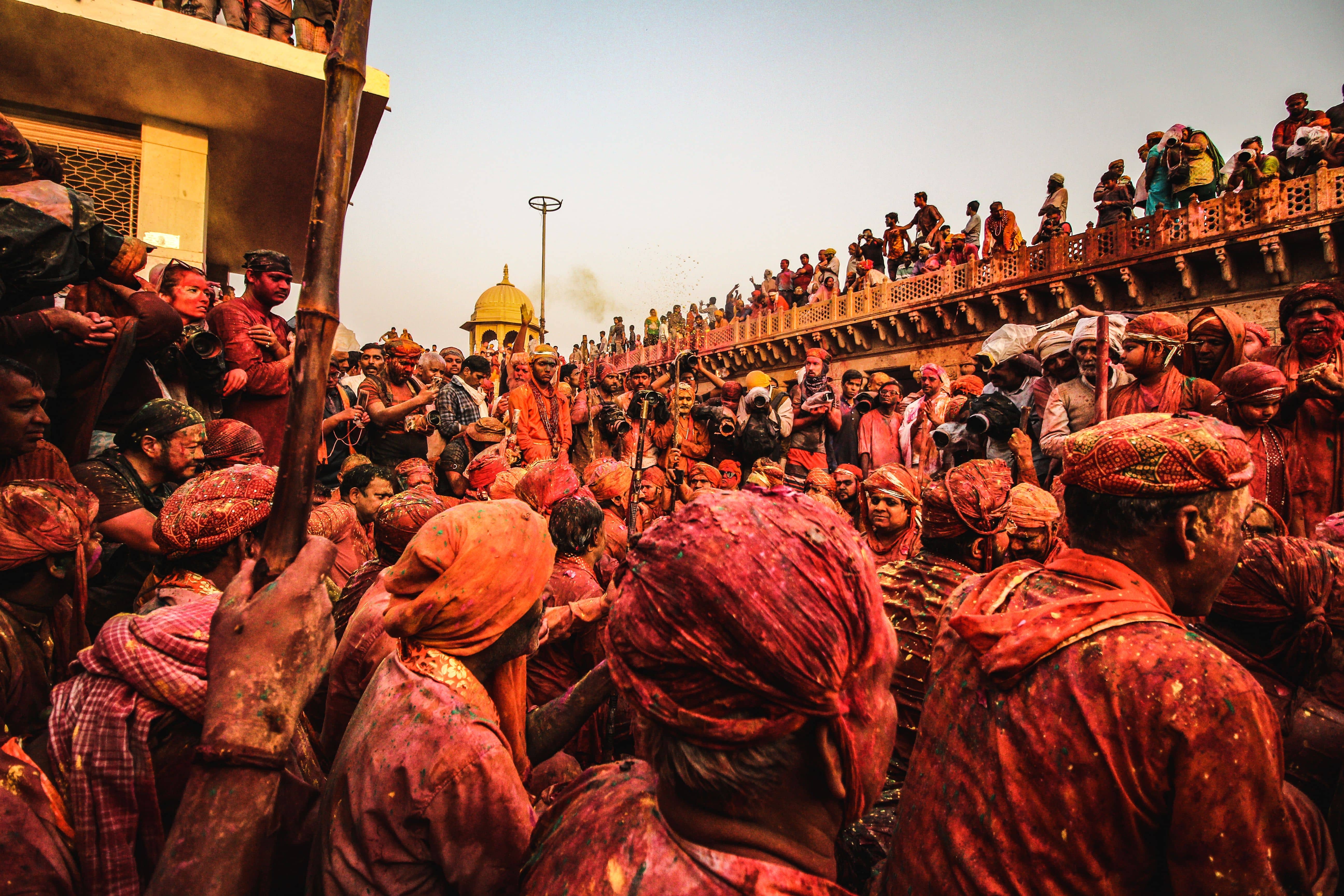
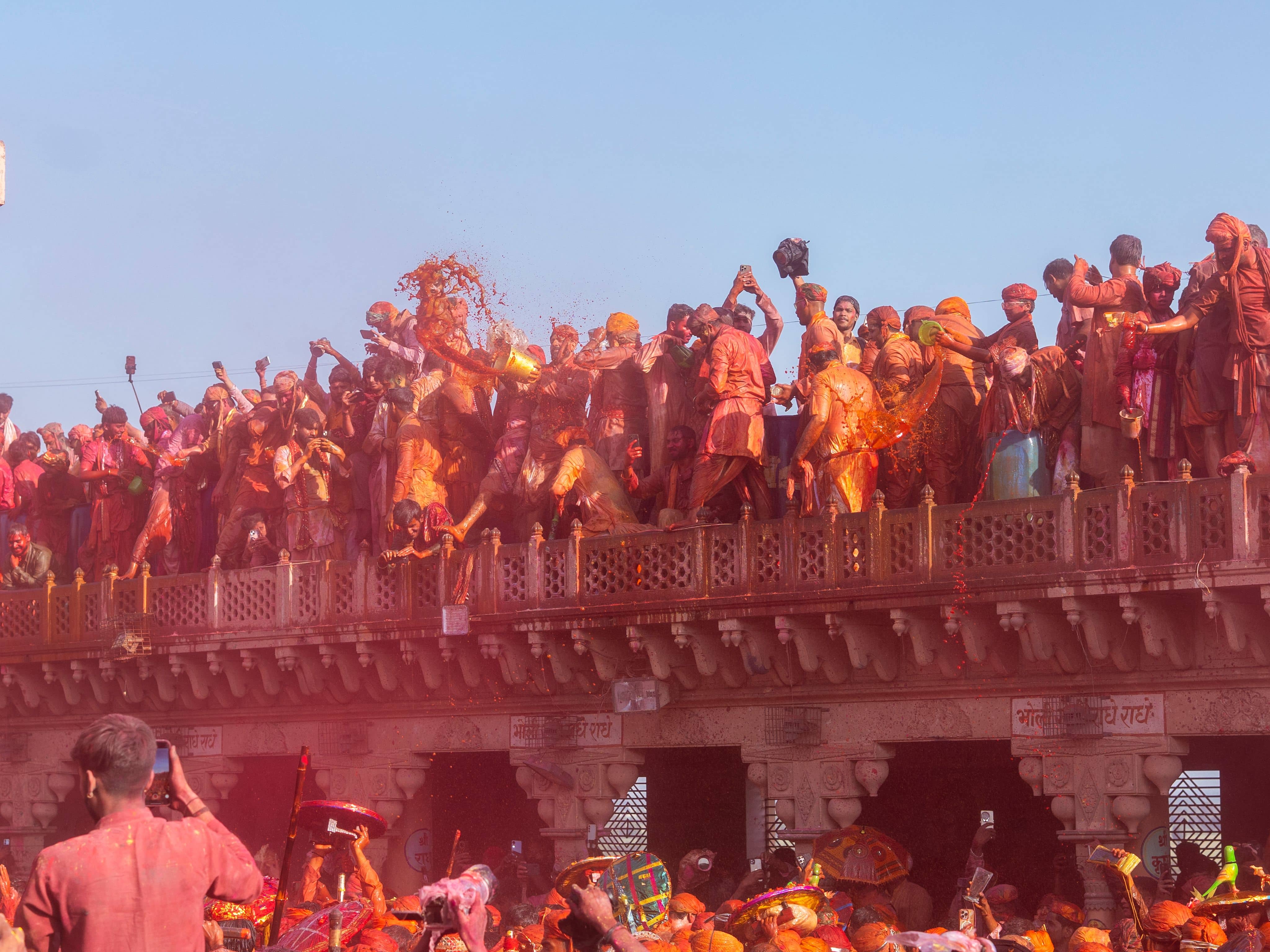
  • In Braj: Lathmar Holi, where the women of Barsana beat the men of Nandgaon with sticks while the men defend themselves with shields; Phoolon wali Holi, where Banke Bihari Temple's priests shower devotees with flower petals; Laddu Holi, where sweets are thrown; and the widow's Holi in Vrindavan, a recent and moving tradition

  • In Rajasthan: Udaipur's royal Holika Dahan at the City Palace with the Mewar royal family, and Jaipur's elephant-free but colourful city events

  • In the cities: ticketed Holi parties with DJs, rain dance and organic colours, from Delhi's parks to Goa's beaches

  • After noon: a wash, a huge lunch, gujiya sweets, thandai (sometimes laced with bhang) and an afternoon of visiting

Holi is also celebrated outside India. In Nepal it is Fagu Purnima, a public holiday on different days in the hills and the plains; in Guyana, Trinidad and Tobago and Suriname, where the descendants of Indian indentured workers settled, it is Phagwah, with parades, chowtal singing and the same abeer colours.

Tip: Decide early which Holi you want: the devotional chaos of Braj, the royal pageantry of Rajasthan, or a ticketed party in Delhi or Goa. They are different trips, and the first one needs the most planning.
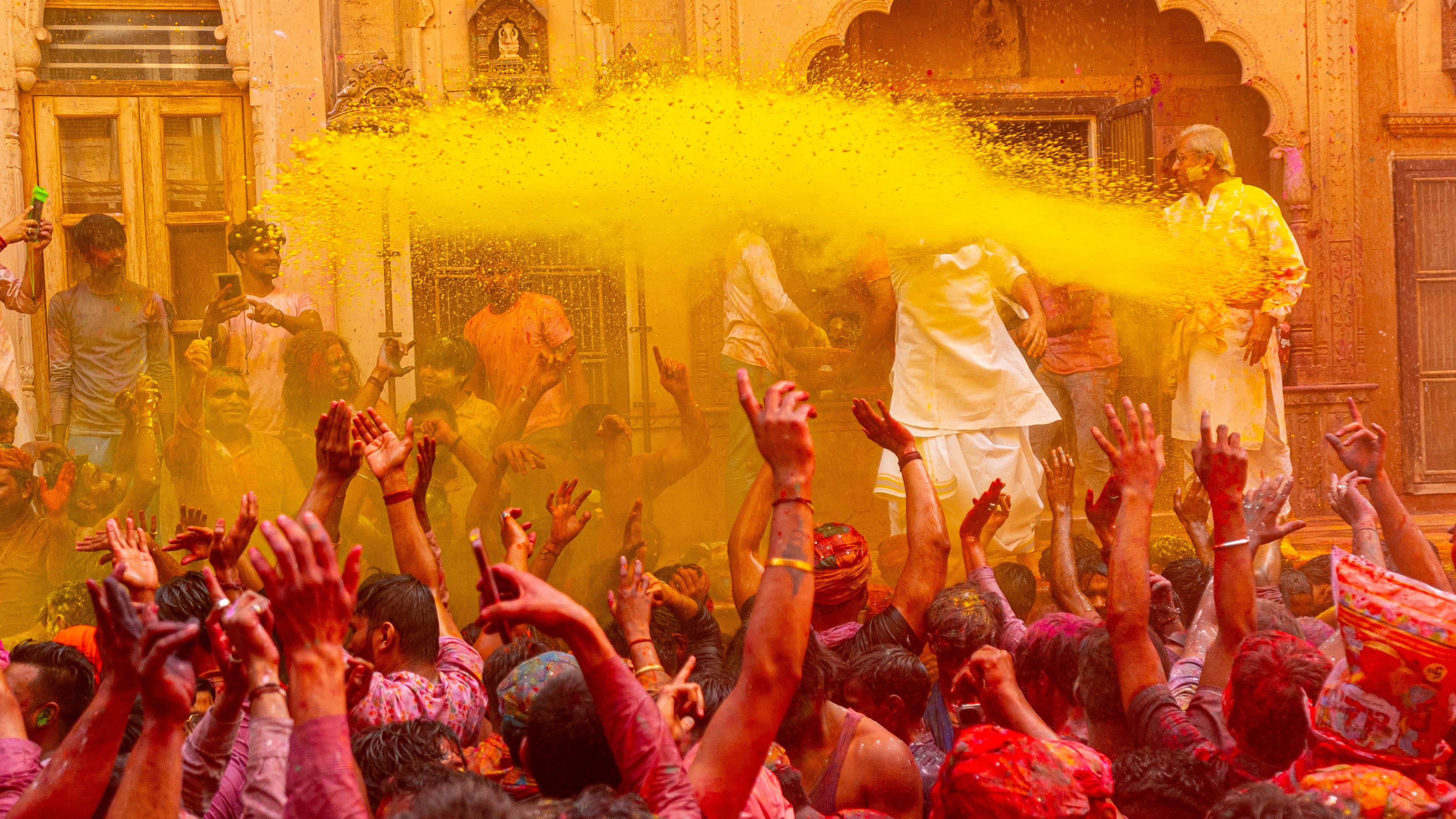
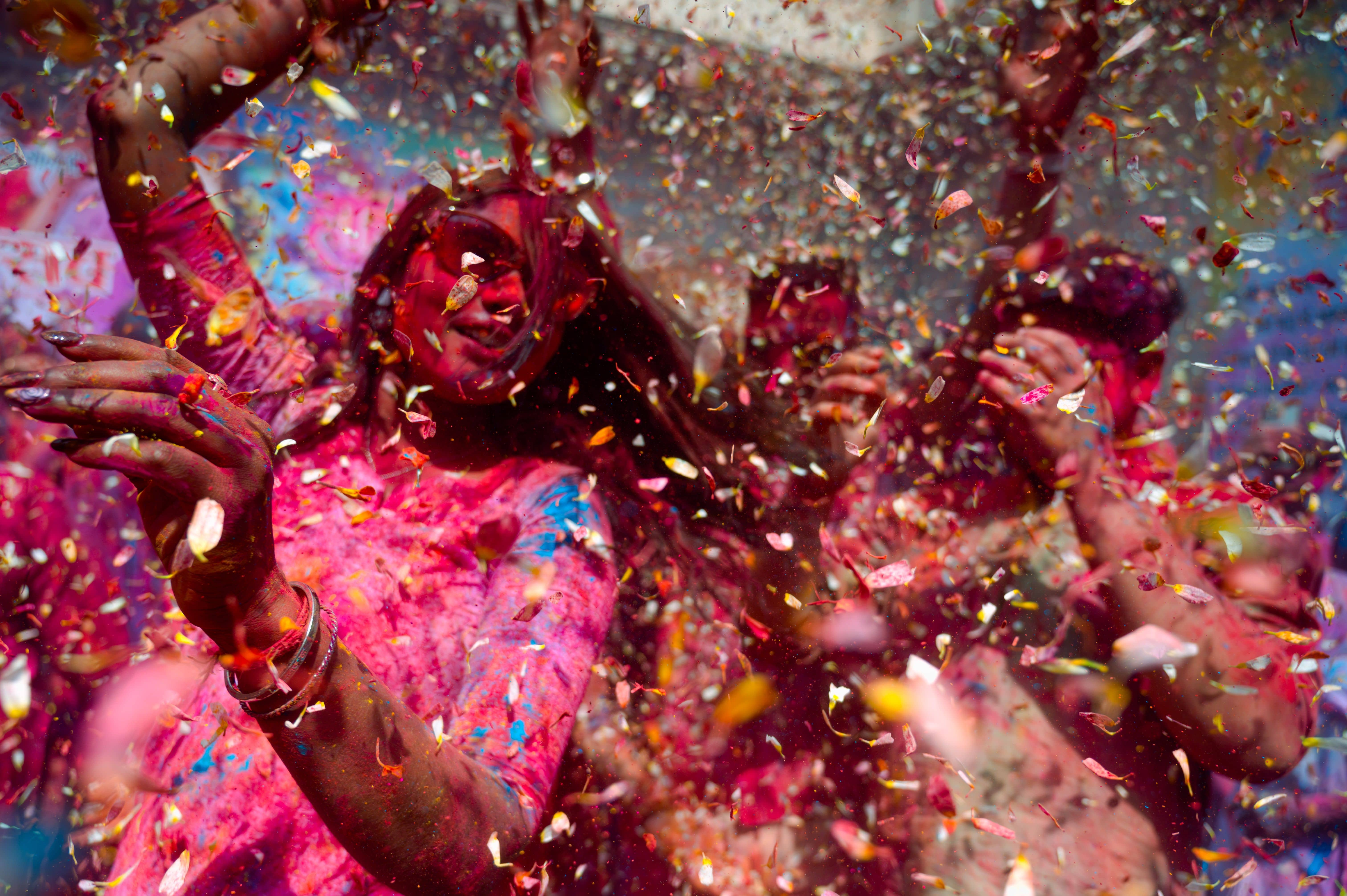
A crowd in white clothes covered in pink and yellow gulal powder throwing colours into the air in a Vrindavan temple courtyard

When Is Holi in 2027?

Holi 2027 falls on Monday 22 March 2027, with Holika Dahan on the evening of Sunday 21 March; the Phalguna full moon runs across 21 and 22 March, and in Delhi the muhurat for the bonfire is after sunset on the 21st. Holi 2026 fell three weeks earlier, on 4 March, and Holi 2028 will be on 11 March, because the festival follows the lunar calendar and drifts between late February and late March on the Gregorian one.

The Braj region celebrates for about a week before the main day, each town on its own date, and the 2027 calendar as currently listed by local tourism operators is:

  • Monday 15 March 2027: Laddu Holi at Barsana

  • Tuesday 16 March 2027: Lathmar Holi at Barsana (some listings give 17 March)

  • Wednesday 17 March 2027: Lathmar Holi at Nandgaon (some listings give 18 March)

  • The days between: Phoolon wali Holi at Banke Bihari Temple, Vrindavan on Thursday 18 March 2027, followed by the main temple processions in Mathura on Saturday 20 March 2027

  • Sunday 21 March 2027: Holika Dahan across Braj

  • Monday 22 March 2027: Rangwali Holi in Mathura and Vrindavan, the main morning

  • Tuesday 23 March 2027: Dauj, and the Huranga at Dauji Temple in Baldeo, where women drench men with colour and tear their shirts

Nepal: Fagu Purnima is observed on 21 March 2027 in Kathmandu and the hills and on 22 March in the Terai plains, following the same full moon.

The Caribbean: Phagwah in Guyana, Trinidad and Tobago and Suriname is officially celebrated as a public holiday on Monday 22 March 2027, with regional festive parades organized throughout that holiday weekend.

Note: Braj dates are set by the temples and the district administration and announced in the weeks before; treat the 15 to 18 March dates as expected and confirm on the temples' and Uttar Pradesh tourism's channels before you book the Lathmar days.

Need a steady connection for transit and maps?See eSIM plans

Where to Celebrate Holi in India

Pick your Holi by what you want from it; the four main options are a week in Braj, a royal Holi in Rajasthan, a party in a big city, or a village Holi somewhere quiet.

Braj (Mathura, Vrindavan, Barsana, Nandgaon), Uttar Pradesh: the most traditional, the most crowded and the most photographed. The region sits 160 to 170 km south of Delhi and draws an estimated 5 to 7 million visitors in Holi week. Lathmar Holi in Barsana and Nandgaon, Phoolon wali Holi at Banke Bihari, the Dwarkadhish Temple in Mathura and the Huranga at Baldeo are the set-pieces, and the lanes are the stage. Hotels are few and triple in price; many visitors base in Delhi or Agra and day-trip.

Jaipur, Rajasthan: a cleaner, safer city Holi with organised events in the Old City, hotel parties, and the Rajasthan tourism board's cultural programme; a good first Holi, and well connected by air and rail.

Udaipur, Rajasthan: the royal Holika Dahan on the eve, with the Mewar royal family's procession from the City Palace, a palace bonfire and a ticketed dinner; the colours the next morning are gentler than in the north.

Delhi: the capital's Holi is in neighbourhoods, hotel lawns and ticketed parties with music, rain dance and organic colours; the most comfortable option for a first-timer who wants the colours without the Braj crush, and the gateway to everything else.

Elsewhere: Shantiniketan in West Bengal celebrates Basanta Utsav with Tagore's songs and dances; Punjab's Anandpur Sahib holds the Sikh martial festival of Hola Mohalla; Goa's beaches host parties; and Varanasi's ghats do a loud, local Holi.

Outside India:

  • Nepal: Kathmandu's Durbar Square and Thamel fill with colour on 21 March 2027, a day before the Terai towns; Pokhara's Lakeside is the backpacker version

  • The Caribbean: Phagwah parades in Georgetown, Guyana, and across Trinidad and Suriname, with chowtal singing and abeer colour on the weekend nearest the date

Tip: Combine two: Braj for Lathmar Holi on 16 or 17 March, then Jaipur or Udaipur for a calmer Holika Dahan and colour day on 21 and 22 March, with Agra in between.

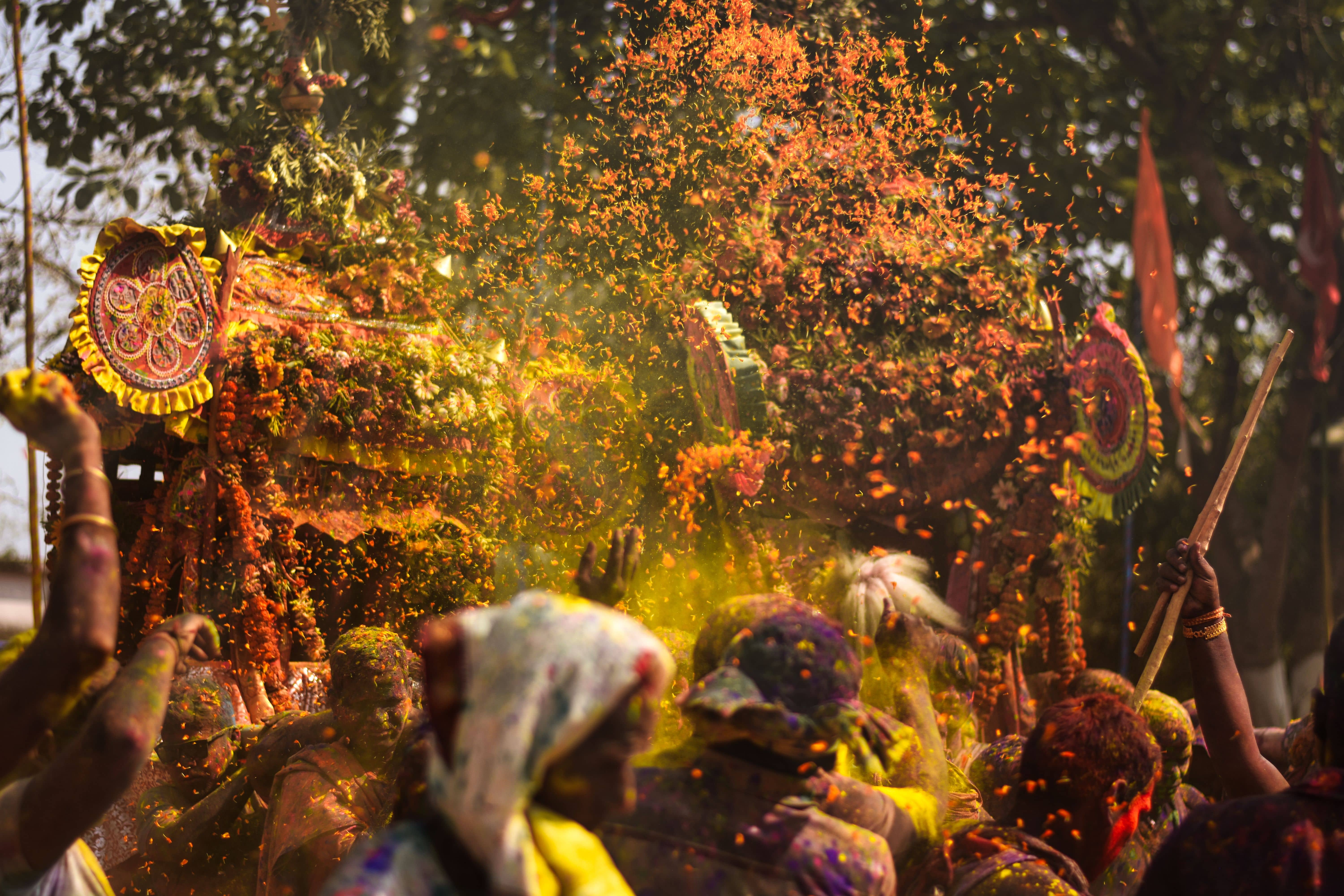
The crowded courtyard of Banke Bihari Temple in Vrindavan during Phoolon wali Holi with flower petals raining from the balcony

What Actually Happens, Day by Day

Holi's main days have a clear rhythm, and Braj adds a week of set-pieces before them. Times below follow recent editions; temples and the district administration publish 2027 timings in the days before with official schedules finalized in early March 2027.

Braj week, from about 15 March 2027:

  • Laddu Holi, Barsana: sweets thrown from the Radha Rani Temple to the crowd in the afternoon

  • Lathmar Holi, Barsana: from the afternoon, the men of Nandgaon arrive singing and the women of Barsana meet them with sticks in the lanes below the temple; the beating is theatre, the crowd is real

  • Lathmar Holi, Nandgaon: the return fixture the next day

  • Phoolon wali Holi, Banke Bihari Temple, Vrindavan: a short, intense flower shower from the balcony during the morning darshan, usually around roughly 9:00 AM to 10:00 AM (with the intense flower shower itself lasting about 20 to 30 minutes) on its day, with queues from before dawn

  • Widow's Holi, Vrindavan: colours and flowers at the ashrams, a dignified counterpoint

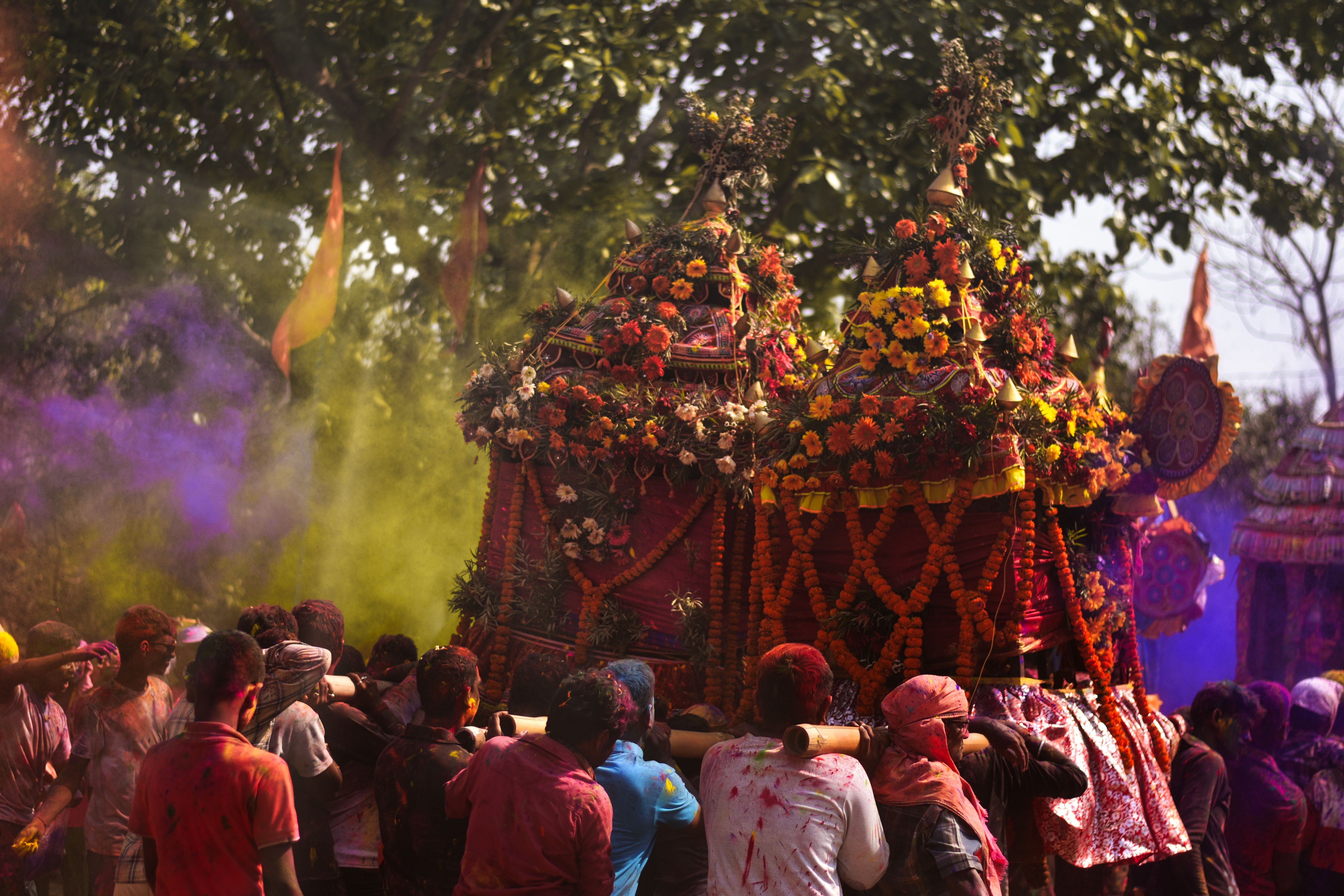
  • Mathura: processions and colour at the Dwarkadhish Temple and along Holi Gate

Holika Dahan, 21 March 2027:

  • Afternoon: wood and cow-dung cakes stacked at crossroads, an effigy placed on top

  • After sunset: the bonfire lit within the muhurat, circled by families, grain and coconut offered; in Udaipur, the royal procession and palace fire; in Braj, dozens of fires in every town

Rangwali Holi, 22 March 2027:

  • From about 8:00: the colours start; by 10:00 every lane in Braj, Jaipur's Old City and Delhi's neighbourhoods is a riot of gulal, water and drums

  • Mid-morning: the peak; temple courtyards in Vrindavan are wall to wall, strangers smear your face, children aim water pistols from rooftops

  • Around 12:00 to 13:00: it stops, almost on cue; everyone goes home to wash and eat

  • Afternoon: lunch, gujiya, thandai, visiting; the ticketed parties run into the evening

Dauj, 23 March: the Huranga at Dauji Temple in Baldeo, the wildest of the Braj traditions, from the morning.

Tip: Be in position before 9:00 on 22 March and leave the lanes by 12:30; the morning is the festival, and the late-afternoon streets belong to the drinkers.

Tickets, Parties and the Free Streets

Holi itself is free, and the best of it costs nothing: the Braj temples, the lanes, the bonfires, Jaipur's Old City and Delhi's neighbourhoods are open to anyone willing to be coloured. Tickets exist for the organised parties and for a few hotel and palace events, and they are a comfortable way in for first-timers and families.

What is ticketed, at approximate recent prices confirmed for 2027:

  • Holi parties in Delhi, Gurugram, Jaipur, Mumbai, Bengaluru and Goa: outdoor events with DJs, rain dance, organic colours, food and drink, typically about 1,000 to 5,000 INR for general entry and more for VIP or couples packages; sold online through Indian event platforms, with foreign cards accepted on most

  • Hotel Holi brunches and lawn parties: the five-star hotels in Delhi, Jaipur and Udaipur run colour-and-brunch events priced per head, often the safest and least chaotic option for families

  • Udaipur's royal Holika Dahan: the procession is free to watch from the streets; the palace dinner and viewing is ticketed by the City Palace, at a premium

  • Organised Braj tours from Delhi: day trips to Mathura and Vrindavan on Holi or Lathmar days, with transport, a guide and escort through the crowds, from about 7,500 INR per person; multi-day Braj Holi tours and Golden Triangle packages that include the festival sell out months ahead

  • Temple darshan in Braj: free, though VIP darshan passes are sold by some temples and tour operators

Where to buy: the party platforms in India sell e-tickets with QR codes; hotels sell direct; tour operators through their own sites and the big marketplaces. Everything genuine is dated and named; "Holi passes" for Vrindavan's streets do not exist.

Note: Alcohol and bhang at parties are legal but potent; organic colours are a selling point worth paying for, because cheap industrial gulal stains skin and irritates eyes.

The free streets are the real Holi. They are also where the risks are, which is why the safety section below matters more here than for any other festival in this guide.

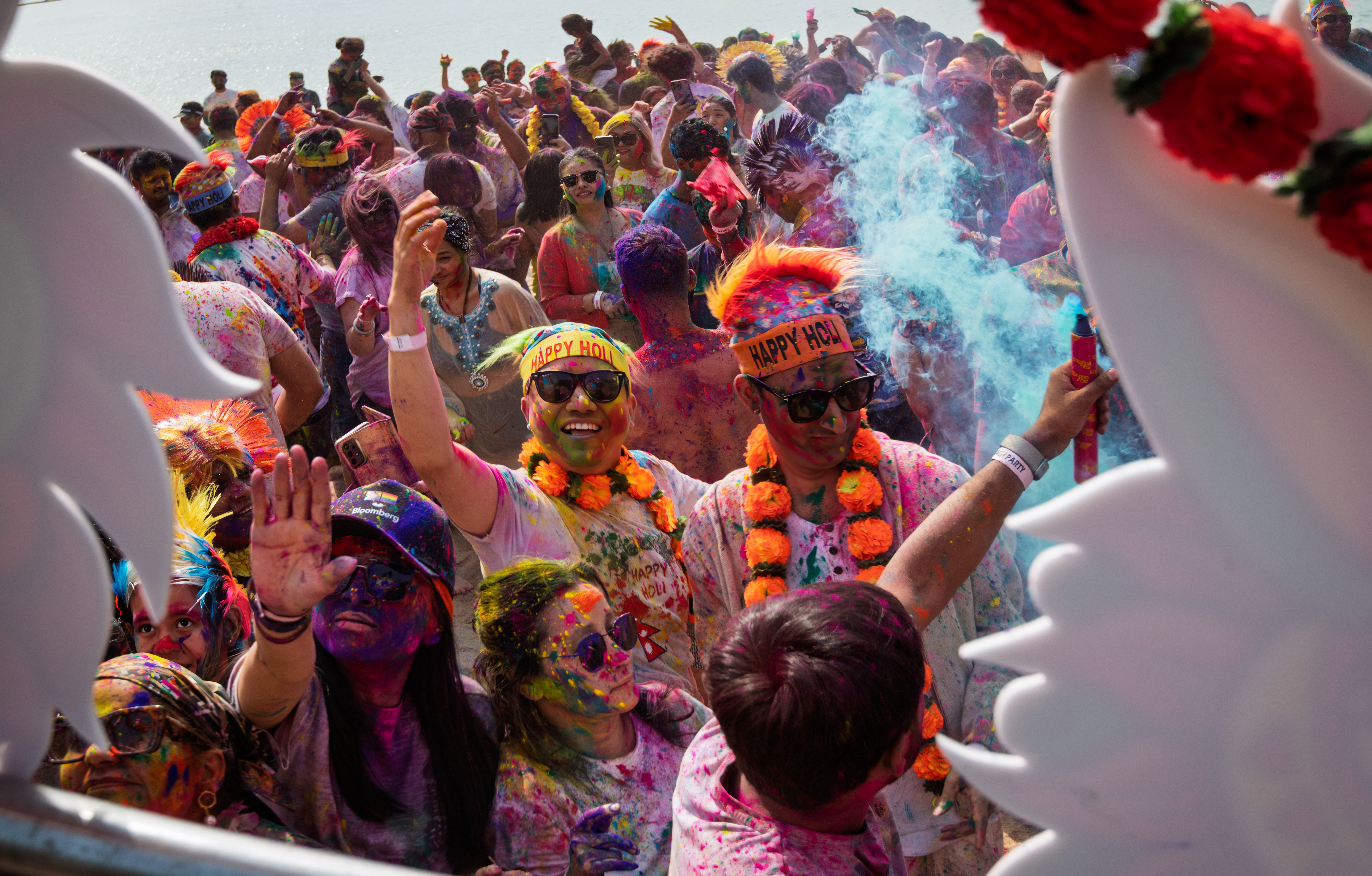
A DJ stage and a crowd covered in colour at an organised Holi party on a lawn in Delhi with rain-dance sprinklers

Getting There and Getting Around

Delhi is the gateway for Braj and the northern Holi, and Jaipur and Udaipur have their own airports. Getting around on the days themselves is the real challenge: vehicles are banned around the Braj temples, drivers avoid coloured passengers, and the roads south of Delhi jam for the whole week.

Getting to Braj:

  • Delhi's Indira Gandhi International Airport (DEL) is the entry point; Mathura is 160 to 170 km to the south

  • By train: Delhi to Mathura Junction in 2 to 3 hours depending on the service, with express trains from New Delhi and Hazrat Nizamuddin stations; book on the official Indian Railways platform weeks ahead, as Holi week sells out

  • By road: about 3 hours in normal traffic on the Yamuna Expressway or NH19, longer in Holi week; hire a car with driver through a hotel or an app

  • From Agra: Mathura is about 1.5 hours by road or 45 minutes to an hour by train, so Braj fits a Golden Triangle loop

  • Within Braj: Mathura, Vrindavan, Barsana, Nandgaon and Baldeo are all within about 50 km of each other; electric autos and shared tempos link them, and a hired car with driver is the sane option on Lathmar days, parked at the edge of each town

Getting to Jaipur and Udaipur: both have airports with flights from Delhi and Mumbai; Jaipur is about 4.5 hours from Delhi by train, Udaipur an overnight train or a 1.5-hour flight.

Nepal: Kathmandu's Tribhuvan International Airport; Thamel and Durbar Square are walkable on Fagu Purnima, when traffic is light.

Getting around on Holi morning: walk. Temple zones in Braj are vehicle-free, and the whole point is the lanes. Afterwards, change into clean clothes before trying any taxi or auto; ride-hailing apps work in Delhi, Jaipur and Mathura with a pin set a few streets from the crowd.

Tip: For Braj, base in Vrindavan or Mathura and walk, or base in Delhi or Agra and hire a car for the day with a driver who knows where to park; a self-drive car in Vrindavan on Holi is a mistake.

Getting back late: the parties end late and Delhi's metro standard last trains depart between 23:00 and 23:30 (with lines completely shutting down around 23:30 to 23:45); the ride-hailing surge on Holi evening is real, so budget for it or stay near the venue.

Best Time to Arrive and What the Weather Is Like

Arrive in India by 14 March 2027 if you want the Braj week, or by 19 March for the main two days somewhere calmer; leave on 24 March or later, after the Dauj traditions and once the trains have thinned. Holi is a national holiday, so the days around it are a domestic travel peak.

Crowd levels on a scale of 1 to 5:

  • 15 to 18 March, Braj week: level 5 in Barsana and Nandgaon on their Lathmar days, level 4 in Vrindavan; level 2 elsewhere in India

  • 19 and 20 March: level 3 in Braj, level 3 on trains and roads as the country travels for the holiday

  • 21 March, Holika Dahan: level 4 in the evening in every neighbourhood with a bonfire; level 5 in Udaipur at the palace

  • 22 March, Holi: level 5 everywhere from 9:00 to 12:00; level 1 in the streets by 14:00

  • 23 March, Dauj: level 5 at Baldeo, level 2 elsewhere; return travel builds

  • 24 March onwards: level 2

The weather in late March is the tail of north India's best season: warm, dry days with highs in the high 20s to around 30°C in Delhi, Braj and Jaipur, cool mornings, almost no rain and increasing dust and haze as summer approaches [TO VERIFY averages]. Udaipur and Rajasthan are a little hotter; Kathmandu is milder. The colours dry on you within an hour in the sun, which makes them harder to wash off and easier to breathe in.

Planning around it:

  • Sunscreen and a hat under the colour; a sunburn through gulal is a bad combination

  • Water, and lots of it; the lanes have no shade and the party starts at 9:00

  • Old white clothes you will throw away, closed shoes, and a change of clothes in the car or hotel

  • Oil your hair and skin before you go out; the colours wash off oiled skin in one shower instead of three

Note: Holi falls at the start of the hot season. If you are combining it with Rajasthan or Agra, do the sightseeing in the mornings and keep the afternoons for pools and lunch.

Where to Stay and When to Book

Stay inside the town you want to play Holi in, because the morning starts early and nobody drives a coloured guest anywhere; the exception is Braj, where many visitors sleep in Delhi or Agra and come in by car because the local hotel stock is small and triples in price.

Braj:

  • Vrindavan: the most atmospheric base, with guesthouses, ashram lodgings and a few mid-range hotels near Banke Bihari and the ISKCON temple; walk to everything, expect noise and early starts

  • Mathura: more hotels, the railway station, Holi Gate and the Dwarkadhish Temple; a short auto ride to Vrindavan

  • Barsana and Nandgaon: a handful of basic guesthouses; day-trip from Vrindavan unless you want the pre-dawn Lathmar position

  • Delhi or Agra as a base: comfortable hotels, a 3-hour drive each way, and a driver who waits

Rajasthan:

  • Jaipur: the Old City and the heritage havelis for the street Holi, the hotel strip for parties and pools

  • Udaipur: around the City Palace and the lake for the royal Holika Dahan, with palace and lakeside hotels running their own events

Delhi: south Delhi and the hotel districts for the parties and brunches; near the metro for everything else.

Nepal: Thamel in Kathmandu for the colour, Lakeside in Pokhara for the backpacker version.

When to book: Braj's rooms for 15 to 23 March 2027 begin selling in autumn and are largely gone by January; Delhi and Jaipur hold out longer but festival-week rates rise through February. Book Braj by November 2026, Rajasthan by January 2027 and Delhi by February. Reference rates for Holi week: a Vrindavan guesthouse about 1,500 to 4,000 INR, a Mathura mid-range hotel about 3,500 to 7,000 INR, a Jaipur heritage hotel about 4,000 to 9,000 INR, a Delhi five-star with a Holi brunch about 3,000 to 6,000 INR; flights booked 60 to 90 days out are far cheaper than last-minute fares, which can rise sharply in the final weeks.

Tip: Ask the hotel what it does on Holi morning. Many in Jaipur and Delhi run a colour party on the lawn, which is the safest Holi for children and older relatives, with a shower and lunch afterwards.

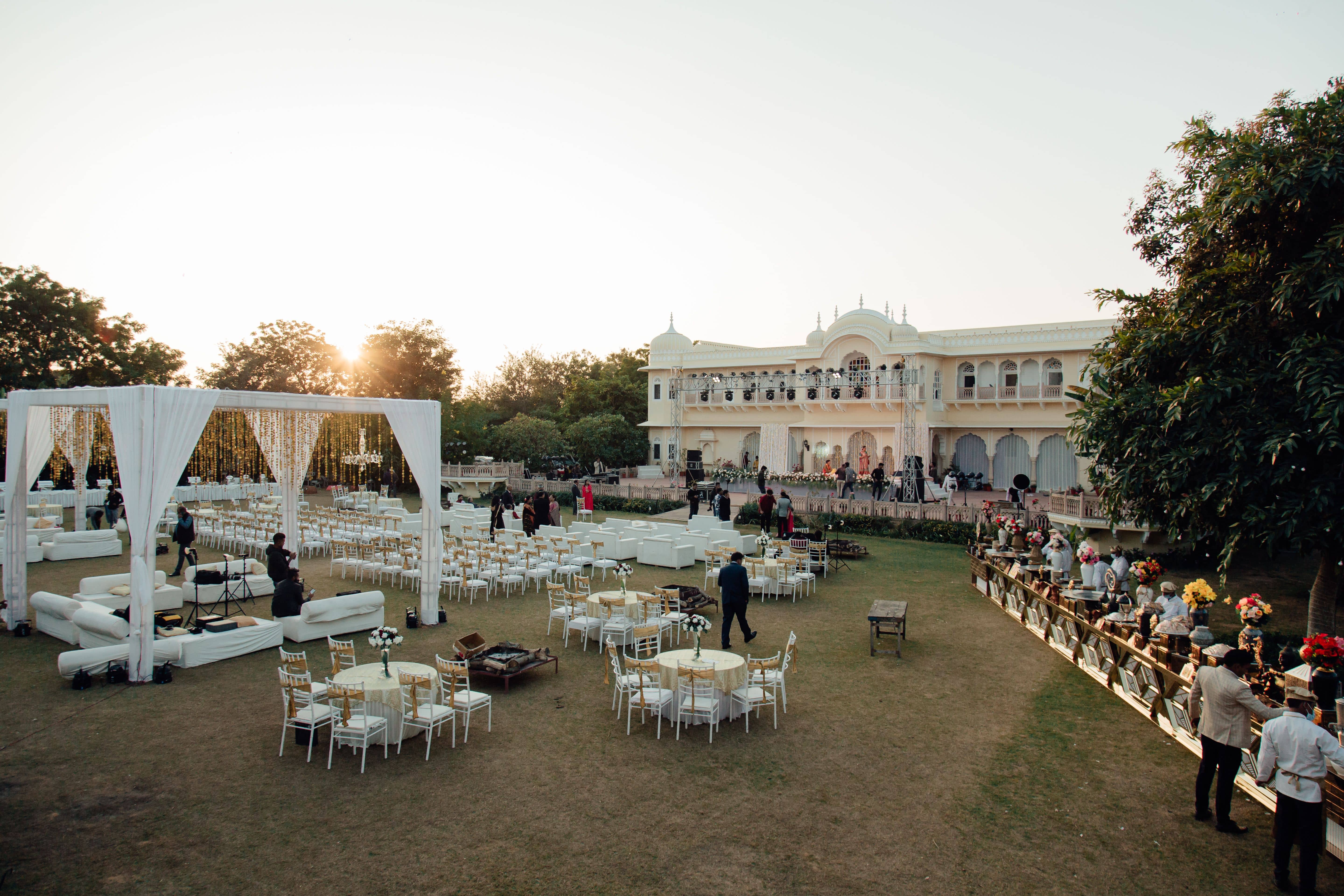
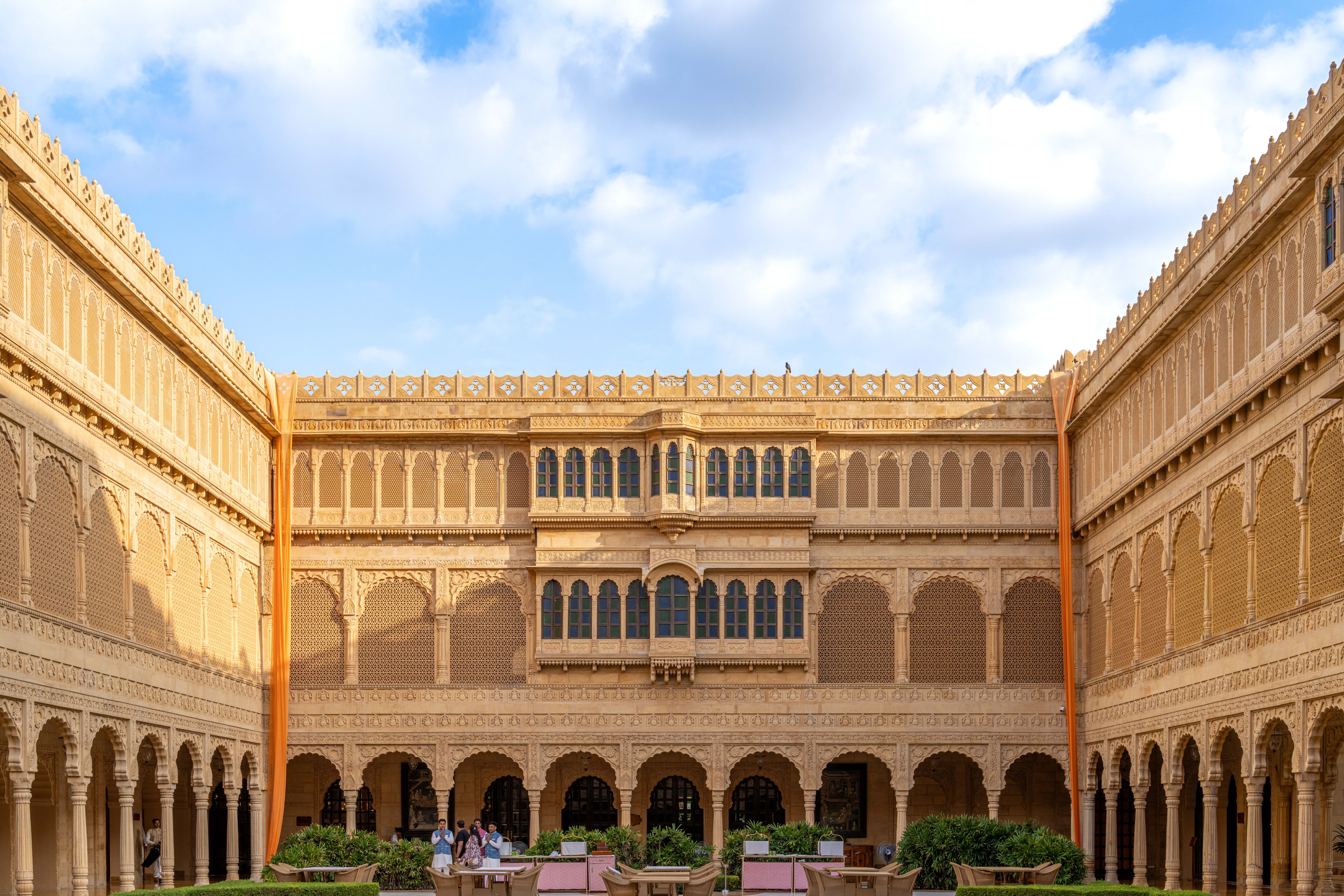
A heritage haveli hotel courtyard in Jaipur's Old City decorated with marigolds for Holi

Safety, Etiquette and Holi with Children

Holi is joyful and it is also the Indian festival with the most consent problems, and visitors, especially women, should plan around that. The colour-smearing is supposed to be mutual and friendly; in the lanes of Braj and in parts of any city after noon, it is not always.

Staying safe:

  • Go in a group, stay together with live location sharing, and leave the streets by about 12:30, before the bhang and alcohol take over

  • Women travelling alone or in pairs should consider a hotel event, an organised tour with escorts in Braj, or the company of local friends; groping under cover of colour is a known problem, and a firm "no" plus walking away is the right response

  • Keep valuables at the hotel; carry a waterproof pouch for the phone, a little cash and a copy of your passport

  • Protect eyes and mouth: sunglasses, and keep your mouth closed when powder flies; cheap gulal can contain industrial dyes

  • Avoid the Braj temple crushes with small children; Banke Bihari's courtyard on Phoolon wali Holi is a pressure crowd

  • Emergency numbers in India: 112 for all services; 100 for police, 102 for ambulance; the tourist police help lines in Delhi, Jaipur and Agra speak English

Etiquette that keeps it friendly:

  • Say "Happy Holi" and smear colour on the cheeks, never the eyes; ask or gesture before colouring a stranger, and accept a refusal

  • Do not colour elders, priests or anyone clearly not playing (people in work clothes, mourners)

  • Do not photograph women at close range without asking; in Braj, the widows' Holi in particular is not a photo opportunity

  • Bhang, the cannabis drink, is traditional and legal in licensed forms; it is strong and slow, so a small cup or none

  • Join the afternoon meals if invited; gujiya, dahi bhalla and thandai are the taste of the day

Going with young children or older relatives: a hotel or society (residential compound) Holi, with organic colours, a hose and a shower nearby, is ideal; the Braj lanes are not. Pack children's swim goggles, old clothes, oil for skin and hair, and plan the whole thing for 9:00 to 11:00.

Note: Holi colours stain phones, cameras, hair dye and light clothing for days. A zip-lock bag over the phone, a cheap cap, and coconut oil on exposed skin the night before solve most of it.

Staying Connected During the Festival

Public Wi-Fi is rare in India and absent in the lanes of Braj, and hotel Wi-Fi stays at the hotel, which on Holi morning is exactly where you are not. Indian mobile networks are strong in Delhi, Jaipur, Udaipur and Mathura and reasonable in Vrindavan; they slow in the temple crushes but do not fail. The problem is your phone's survival, and whether it has data of its own when you need a ride home.

What you use data for at Holi:

  • Temple timings and the Braj calendar, published in Hindi and read through a translation app

  • Live maps and a ride-hailing app with a fixed price when drivers refuse coloured passengers

  • A group chat with live location for regrouping in the Vrindavan lanes

  • E-tickets for parties and tours, and Indian Railways bookings and platform changes

  • UPI and card payments through a payment app, which need a live connection for each code

  • Weather and dust alerts, and the tourist police help lines

  • Photos, video and the call home from the middle of the colours

Set-up: check that your phone is unlocked and eSIM-capable (most phones from the last five years are), buy the plan, scan the QR code while you still have a reliable connection at home, and switch the line on when you land in Delhi. Indian SIM registration for foreigners involves paperwork and a wait; an eSIM skips the queue. Keep your home SIM active for SMS so bank verification codes arrive, set the eSIM as your data line, and turn off data roaming on the home SIM.

How much data: 1 to 2 GB a day covers maps, rides, translation, messaging and payments; video from the colours can double it. For a ten-day Golden Triangle and Holi trip, 10 GB is comfortable, and 20 GB suits heavy social media use. GoHub's India plans are listed on the eSIM for India page.

Tip: Put the phone in a waterproof pouch with a lanyard before you leave the hotel and leave it there until you have showered; colour in a charging port is the most common Holi casualty after sunburn. Screenshot the hotel address in Hindi and your ride app's pin in case the screen is too wet to type.

Suggested itinerary

Day 1 · 16 March, Delhi to Barsana

  1. Early morning
    Delhi to Barsana by carAbout three hours; leave before 6:00 to beat the Lathmar traffic
  2. Late morning
    Radha Rani Temple, BarsanaClimb to the temple before the lanes close; the view over the town and the crowd
  3. Afternoon
    Lathmar Holi in the lanesPosition on a rooftop or at the lane edge; the sticks are real, the fight is theatre
  4. Evening
    Drive to VrindavanCheck in near Banke Bihari; wash, eat, sleep early

Day 2 · 17 March, Nandgaon and Vrindavan

  1. Morning
    Banke Bihari Temple darshanJoin the queue early; flower Holi may fall on this or a nearby morning
  2. Around 11:00
    Vrindavan lanes and the ghatsColours already flying in the week before; old clothes from here on
  3. Afternoon
    Nandgaon Lathmar HoliThe return fixture; car to the town edge, walk in
  4. Evening
    ISKCON temple kirtanCalm after the colours; dinner in the temple's vegetarian restaurant

Day 3 · 18 March, Mathura and Agra

  1. Morning
    Dwarkadhish Temple and Holi Gate, MathuraProcessions and a final round of Braj colour
  2. Around 12:00
    Drive to AgraAbout 1.5 hours; lunch and a pool
  3. Late afternoon
    Taj MahalGolden hour; clean clothes, no colour on the marble
  4. Evening
    RestTomorrow is a travel day

Day 4 · 21 to 22 March, Jaipur

  1. Morning
    Train or car to JaipurCheck into a heritage haveli in the Old City
  2. Evening (21 Mar)
    Holika DahanNeighbourhood bonfires near the hotel; join a family circle if invited
  3. Around 9:00 (22 Mar)
    Holi on the hotel lawn or the Old CityOrganic colours, drums, a hose; out of the streets by 12:30
  4. Afternoon
    Shower, lunch, thandaiGujiya and a long lunch; the city sleeps
  5. Evening
    Nahargarh Fort at sunsetClean clothes, the pink city below, the first calm of the week
Tip: Do Braj for the Lathmar days with a car and driver, rest in Agra, then play the main Holi in Jaipur, where a heritage hotel's lawn is the safest colour party for a first-timer.

Recommended eSIM plans

Pick by trip length. Visiting several countries? Choose a regional plan.

Selected: eSIM India 5GB 7 Days

Set up your eSIM in 3 steps

  1. Order and get your QR codeThe QR code arrives by email right after payment.
  2. Scan before you flySettings → Cellular → Add eSIM, while you still have Wi-Fi.
  3. Turn on data when you landSet the eSIM as your data line and enable data roaming.

Frequently asked questions

They are the same festival under different names. Phagwah is what Holi is called in Guyana, Trinidad and Tobago and Suriname, where the descendants of Indian indentured workers brought it in the nineteenth century; the name comes from Phalguna, the lunar month of the festival. Phagwah has its own traditions, including chowtal singing, parades through Georgetown and abeer colour, and is a public holiday in Guyana and Suriname, usually on the weekend nearest the Indian date [TO VERIFY 2027 dates].

Nepal celebrates Holi as Fagu Purnima on the same Phalguna full moon, but on two days: 21 March 2027 in Kathmandu and the hill districts, and 22 March 2027 in the Terai plains along the Indian border. It is a public holiday in each region on its day. Kathmandu's Durbar Square and Thamel fill with colour from the morning, and Pokhara's Lakeside hosts a gentler, backpacker version.

Mostly, with precautions. The colours are friendly, and millions celebrate without trouble, but crowds, drunkenness after noon and unwanted touching, especially of women, are real risks in the streets. Go in a group, stay out of the Braj temple crushes with children, leave the streets by about 12:30, keep valuables at the hotel, and consider a hotel or organised event for a first Holi. Dial 112 in an emergency.

Almost certainly yes. Most nationalities need an e-Visa or a regular visa for India, applied for online in advance; processing times and fees vary, and the e-Visa must be arranged before you fly [TO VERIFY current rules for your nationality]. Nepal issues visas on arrival to most nationalities. Apply at least a month ahead of a March trip, since demand rises before the festival and the spring travel season.

Plan on 1 to 2 GB a day for maps, ride-hailing, translation, payments and messaging, and more if you film and upload a lot of colour video. A 10 GB eSIM comfortably covers a ten-day Golden Triangle and Holi trip; take 20 GB for heavy social media use. Install the eSIM before you fly, because Indian SIM registration for foreigners takes paperwork and time, and keep the phone in a waterproof pouch on the day.

Old white clothes you are willing to throw away, closed shoes with grip, sunglasses, a cap, and a change of clothes for afterwards. Oil your hair and exposed skin the night before so the colours wash off, keep your mouth closed when powder flies, and put your phone in a sealed waterproof pouch. Avoid anything you love, anything light-coloured you want to keep, and jewellery; everything you wear will be pink by ten o'clock.