Baixar na App StoreDownload Gohub App on the App Store
AsiaChina eSIM

Qingming Festival 2027: Dates, Tickets and How to Get There

  • Apr 3 – 5, 2027 (Qingming day Apr 5)
  • China (Kaifeng, Zhengzhou, Hangzhou)
  • Last updated: 8 de out. de 2026

Qingming Festival 2027

Overview

Qingming Festival (Tomb-Sweeping Day) 2027 falls on Monday 5 April, with a public holiday expected from 3 to 5 April. It is the day Chinese families clean ancestral graves, then go out into the spring with kites, willow branches and green qingtuan dumplings. For visitors, the best place to experience it is Kaifeng in Henan, where the Qingming Cultural Festival fills Millennium City Park, the park built from the painting Along the River During the Qingming Festival.

Highlights

  • Qingming day is Monday 5 April 2027; holiday expected 3 to 5 April
  • Fixed by the solar calendar: always 4 or 5 April, never lunar
  • Kaifeng's Qingming Cultural Festival recreates the famous Song dynasty painting
  • Millennium City Park: 120 RMB entry, Song-era street shows from morning to night
  • Spring outings, kite flying and green qingtuan dumplings are the traveller's side
  • Mild weather: Kaifeng in April averages 22°C by day, 9°C at night

Good to know

Dates
Qingming day Mon 5 Apr 2027; holiday expected Sat 3 to Mon 5 Apr; Kaifeng festival around early April
Opening hours
Millennium City Park 9:00 to 22:00; cemeteries and parks open from early morning
Venue
Millennium City Park, 5 Longting West Road, Kaifeng, Henan; spring outings in parks nationwide
Entry
Qingming customs free; Millennium City Park 120 RMB adult (recent price), half price for eligible visitors
Getting there
Fly to Zhengzhou Xinzheng Airport, then high-speed rail to Kaifeng North in about 30 minutes from Zhengzhou East
Recommended eSIM
China eSIM

A quiet festival with a busy holiday around it

Qingming is the gentlest of China's big festivals. On the morning of 5 April 2027 families walk to cemeteries and hillside graves to pull weeds, lay chrysanthemums, burn paper offerings and share a meal with the ancestors; by afternoon the same families are in the parks flying kites, picnicking on green rice dumplings and walking under the first willows of spring. It is also a three-day public holiday, which means every scenic spot in China is full, every train is booked and every hotel in a historic town like Kaifeng is running at holiday rates.

For a visitor that combination is exactly where your phone earns its keep. The ceremonies you want to see are in places with no English signs, the park in Kaifeng runs a timetable of shows that is posted only on a Chinese app, the trains from Zhengzhou sell out days ahead on a platform you need data to use, and payment for every snack and taxi runs through Alipay or WeChat Pay. Hotel Wi-Fi stays in the hotel, and even there China's filters stop Google Maps, WhatsApp and Instagram loading. A China eSIM installed at home before you fly keeps the map live, the ticket on your screen and the group chat working all weekend.

Timed tickets and show schedules in a Chinese app

Millennium City Park sells dated e-tickets through its official WeChat account and the big Chinese travel apps, and during the Qingming Cultural Festival the park posts the day's parade and show times there too. Without data you cannot buy, cannot check when the Song dynasty "opening of the city gate" ceremony starts, and cannot show the QR code at the turnstile.

Trains that sell out and stations that confuse

Kaifeng has two stations, Kaifeng and Kaifeng North, and the high-speed trains from Zhengzhou East use the northern one. Holiday trains sell out; seats release on the official 12306 platform. A live map and the rail app tell you which station, which train and whether the taxi rank or the bus is the better bet when you arrive at 21:00 on a holiday night.

Finding each other on a holiday weekend

The main street of Millennium City Park during the festival is a slow river of people in Hanfu and families with pushchairs; the Kaifeng night markets are the same after dark. Live location sharing in a group chat is how a group that splits to watch two shows finds each other again, and it only works if every phone has data.

Reading offerings, menus and etiquette signs

Cemetery notices about where fires are allowed, the menu at a qingtuan bakery, the names on the show board and the signs asking you not to photograph a family's ceremony are all in Chinese. Camera translation makes you a respectful visitor rather than a confused one, and it needs a connection each time.

Paying and getting home late

Street food, Hanfu rental, the park's boat rides and the taxi home from the night market all expect mobile payment, which needs a live connection to generate each code. After the evening show lets out, ride-hailing is the only reliable way back to the hotel, and it runs on your data too.

Install your eSIM before you fly and be online when you land — see matching plans

The complete guide

When Is Qingming Festival in 2027?

Qingming Festival 2027 falls on Monday 5 April 2027. The public holiday in mainland China is expected to run from Saturday 3 April to Monday 5 April, three days; the State Council usually confirms the holiday calendar in November or December of the previous year, so treat the exact days off as provisional until then. Hong Kong observes Ching Ming as a public holiday on 5 April 2027 too.

Qingming is one of the few Chinese festivals that does not follow the lunar calendar. It is a solar term, the fifteenth day after the spring equinox, which pins it to 4 or 5 April on the Western calendar every year: 4 April in 2025, 5 April in 2026 and 2027, 4 April in 2028. The name means "pure brightness", the clear, bright weather of early April, and the festival has been observed for around 2,500 years, formalised as a one-day holiday by the Tang emperor Xuanzong in 732 and made a statutory public holiday in the People's Republic in 2008.

What the dates mean for a traveller:

  • Tomb sweeping is not confined to 5 April. Families visit graves across roughly the ten days before and after Qingming, so you will see ceremonies in cemeteries and on hillsides from late March to mid-April, with the biggest crowds on the holiday weekend itself

  • The holiday weekend of 3 to 5 April is a domestic travel peak: scenic spots, trains and hotels are full, and prices rise

  • Related spring events cluster around the same weeks: the Kaifeng Qingming Cultural Festival in early April 1 to April 10, 2027, the Yellow Emperor ancestor worship ceremony at Xinzheng near Zhengzhou on the third day of the third lunar month (expected around 8 April 2027), and kite festivals in cities such as Weifang in mid-April

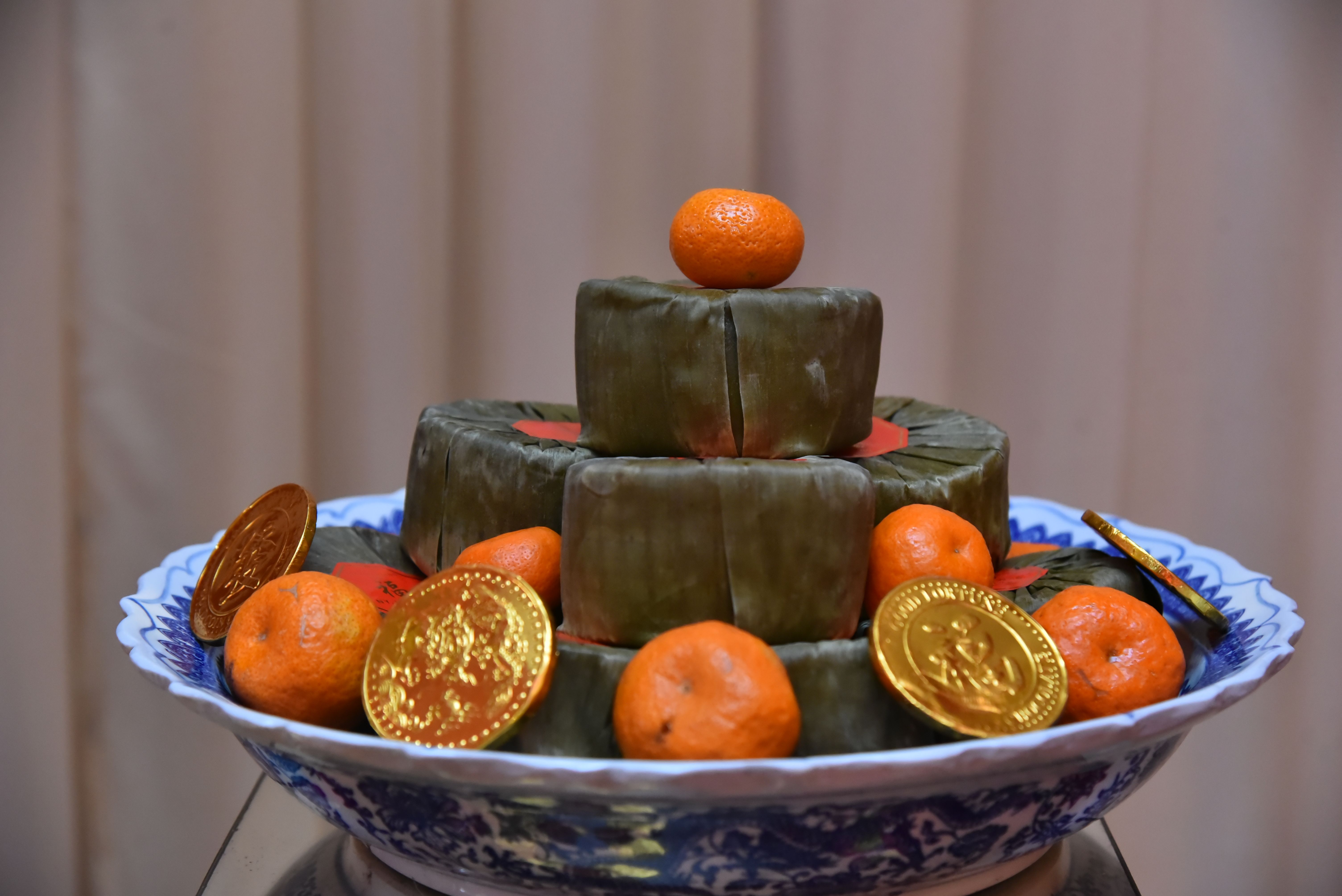
The day before Qingming is the old Cold Food Festival (Hanshi), when fires were traditionally not lit and only cold food eaten; that is where the green qingtuan dumplings come from, and in Shanxi and parts of the north you will still find cold-food customs on 4 April.

Tip: For the ceremonies, be in a city with historic cemeteries or a famous ancestral site on the morning of 5 April; for the festival atmosphere, go to Kaifeng for the holiday weekend and stay a day either side to avoid the worst of the crowds.
A family cleaning a hillside grave and laying yellow chrysanthemums during Qingming, with incense smoke and spring greenery around them

Do You Need a Ticket, and What Does It Cost?

Qingming itself costs nothing: cemeteries, temples, parks and the spring countryside are open to everyone, and the customs are family rituals, not ticketed shows. What you pay for is the organised festival in Kaifeng and the attractions around it.

Millennium City Park (Qingming Riverside Landscape Garden), the home of the Kaifeng Qingming Cultural Festival, is a national 5A attraction built from the Song dynasty painting Along the River During the Qingming Festival. Published prices and hours in recent years:

  • Adult admission 120 RMB, with half-price tickets for eligible visitors such as students and seniors with ID, and free entry for children under 1.2 metres

  • Opening hours are from 8:30 to 22:00. The standard admission ticket is valid for one-time entry on a single specific day and covers all daytime folk shows, the evening lantern lighting, and the night market within the park.

  • The 70-minute large-scale live show staged on the park's lake in the evening is a separate ticket, priced by seating zone (which includes the standard park admission fee if you enter after 17:30).

  • Hanfu costume rental inside and around the park, boat rides on the Bian River and some craft workshops are extras

Other Kaifeng attractions with recent published prices: Kaifeng Fu (the Northern Song prefectural office with its daily "opening of the court" ceremony) is 65 RMB; Longting Park is 35 RMB; the Iron Pagoda Park is free to enter the grounds but costs 30 RMB to climb the pagoda; the city wall is 40 RMB; Wansui Mountain Great Song Martial Arts City is 80 RMB. Combination tickets covering several sites are sold at the gates and online and save money if you stay two days

Where to buy: the park's official WeChat account and the major Chinese travel apps sell dated e-tickets; the ticket windows and self-service kiosks at the gate sell on the day. On the Qingming holiday weekend, the morning queues at the gate are long, so buy the night before and go straight to the QR scanners. Foreign cards work on the main Chinese travel apps; if you cannot register on a Chinese platform, a reputable tour operator or your hotel can book for a small fee.

Note: Beware of "VIP skip-the-line festival passes" sold by touts and unofficial sites around the Qingming weekend. The park sells only through its official channels and the recognised platforms; everything else is resale at a markup or a fake.

The free side of Qingming in Kaifeng: the Gulou night market, the city's old streets, the lake walks around Longting and the kite flyers on the open lawns.

Need a steady connection for transit and maps?See eSIM plans

Where It Happens and How to Get There

Qingming happens everywhere in China, but the festival a visitor can plan a trip around is in Kaifeng, Henan, the Northern Song capital, where Millennium City Park sits at 5 Longting West Road in Longting District, on the lake north of the old city centre; coordinates about 34.80 N, 114.35 E . Kaifeng has no airport of its own; Zhengzhou, the provincial capital, is the gateway.

Getting to Kaifeng:

  • Fly to Zhengzhou Xinzheng International Airport (CGO), about 53 km from Kaifeng. An intercity high-speed train links the airport to Zhengzhou East and on to Kaifeng; the airport to Kaifeng leg takes about an hour, roughly 30 RMB by train or about 160 RMB by taxi

  • From Zhengzhou East station, high-speed trains to Kaifeng North take about 30 minutes; slower trains from Zhengzhou station to Kaifeng station take about 45 minutes and cost 11 to 19 RMB

  • Long-distance high-speed trains on the Lanzhou to Xuzhou line call at Kaifeng North, allowing you to arrive directly from Xi'an in about 2.5 hours, from Nanjing in roughly 2.5 to 3 hours, or from Shanghai in around 4.5 hours.

  • Buses run from Zhengzhou and Luoyang to Kaifeng's central bus station near Kaifeng station

Kaifeng North station is 5 km from the centre; a taxi or bus to the Gulou or Longting area takes 15 to 30 minutes and costs about 20 to 25 RMB. The older Kaifeng station is closer to the centre but served mostly by conventional trains.

Getting to Millennium City Park from the centre: it is about 3.3 km from the Gulou (Drum Tower) area; a taxi takes 10 to 15 minutes, city buses stop at Longting Park nearby, and the walk from Longting Park is pleasant along the lakes. The park has several entrances; the main gate on Longting West Road is where the ceremonies start.

Getting back late: the evening show finishes after 21:00 and the park closes at 22:00. Ride-hailing from the main gate is the practical option; taxis queue at the gate on holiday nights. Kaifeng is small, so even a long wait ends in a short ride.

Tip: On the Qingming holiday, train seats from Zhengzhou East to Kaifeng North sell out the day before. Book both directions on the official 12306 platform as soon as your dates are fixed, or ride the slower conventional train, which usually has space.

Alternatives in other regions: Hangzhou and Suzhou for the southern spring outing and qingtuan culture, Beijing for the Babaoshan cemeteries and kite flying on the lawns of the Temple of Heaven, Guangzhou and Hong Kong for the Cantonese roast pig offerings on the hillsides.

A high-speed train at Kaifeng North Railway Station platform with the modern station building behind

What Actually Happens, Hour by Hour

Qingming day has two rhythms: a solemn morning at the graves and a lively afternoon outdoors, and the Kaifeng festival layers a Song dynasty timetable on top. Here is how 5 April 2027 and a festival day in Kaifeng unfold; the park's official 2027 show times will be posted on-site and updated daily on their official WeChat mini-program.

Qingming morning, anywhere in China:

  • Early morning: families head to cemeteries and village hillsides carrying brooms, flowers, food and bundles of paper money; cemetery roads are jammed by 8:00

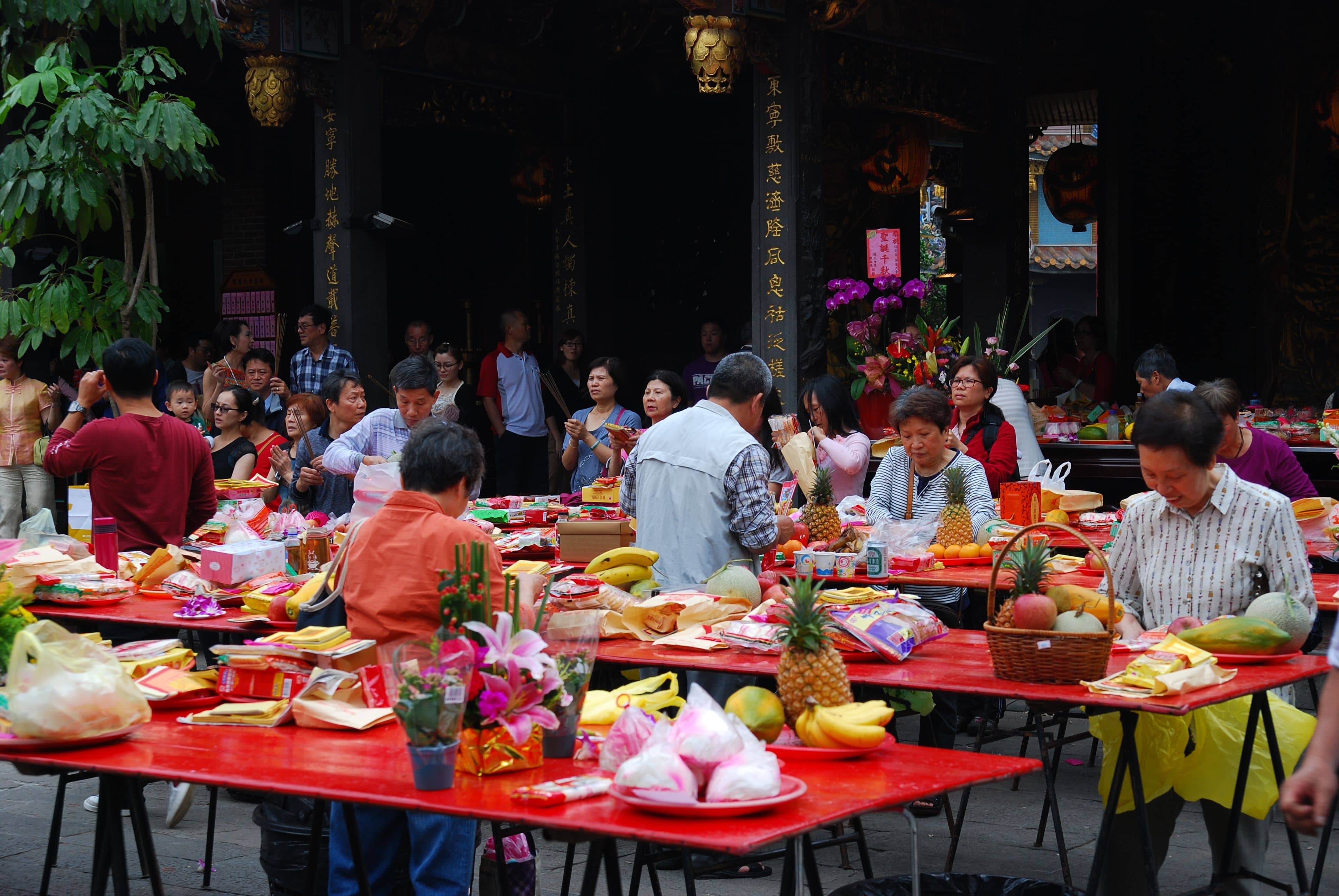
  • Mid-morning: the ceremony itself. Weeds are pulled, the headstone is wiped, chrysanthemums or willow are laid, incense is lit, food and wine are set out, paper offerings are burned in the designated bins, and the family bows three times. Many families then eat part of the offering together

  • Late morning: the walk home, often via a park. Willow sprigs are tucked into doorways and hats to ward off bad luck

Qingming afternoon and the spring outing (taqing):

  • Kite flying on open lawns, river banks and city squares; some fliers cut the string to let the kite carry bad luck away

  • Picnics with qingtuan, cold dishes and spring greens; in the south, tea houses fill with families

  • Boating, temple visits and the first warm-weather strolls of the year

A festival day at Millennium City Park in Kaifeng, 9:00 to 22:00:

  • 9:00: the gate-opening ceremony at the main entrance, with Song dynasty officials, drummers and a procession; arrive 20 minutes early for a spot at the front

  • Through the morning and afternoon: a rolling programme on the park's streets and squares, such as the imperial procession, the "Judge Bao" trial scene, horse-and-rider stunts, water acrobatics on the Bian River, cockfighting shows, folk crafts and Northern Song street vendors in costume

  • Qingming festival extras in early April: kite-making and flying, qingtuan workshops, willow-weaving, Qingming poetry readings and a themed parade recreating the painting

  • Dusk: lanterns light up along the river and the Rainbow Bridge; the night market inside the park opens

  • Evening: the large-scale live show on the lake, about 70 minutes, telling the story of the Northern Song capital; a separate ticket, best booked in advance on holiday nights

Tip: Rent Hanfu at the park gate in the morning; the costume stalls run out of popular sizes by midday on the holiday weekend, and the photos on the Rainbow Bridge are the reason everyone comes.

Best Time to Arrive and What the Weather Is Like

Arrive in Kaifeng on Friday 2 April 2027, do the festival on Saturday 3 and Sunday 4 April, and keep Monday 5 April, Qingming day itself, for the ceremonies and a quiet spring outing before travelling on. If you want the park at its calmest, come the week before or after the holiday instead; the Kaifeng festival runs for several weeks around early April

Crowd levels on a scale of 1 to 5:

  • 29 March to 1 April: level 2 to 3. Festival underway in Kaifeng, tomb sweeping starting, ordinary weekday crowds

  • 2 April (Friday): level 3, rising through the evening as the holiday starts

  • 3 and 4 April (Saturday, Sunday): level 5 at Millennium City Park and all major scenic spots in China; trains and hotels full

  • 5 April (Monday, Qingming): level 5 at cemeteries in the morning, level 4 in parks in the afternoon, easing by evening as people travel home

  • 6 to 11 April: level 2 to 3, the best week for a relaxed visit

The weather in early April is spring at its most pleasant in central China. Kaifeng averages a high of about 22°C and a low of about 9°C in April; days are mostly dry and bright, with daylight from about 6:00 to 19:00. Expect a sharp difference between a warm afternoon and a cool evening, a southerly breeze most days, and the occasional dust-laden wind blowing down from the north, which can turn the sky yellow for a day. The old poem about Qingming speaks of drizzle, and in the Yangtze region (Hangzhou, Suzhou, Shanghai) April is indeed wetter and greyer; the north is drier.

Planning around it:

  • Mornings are cool enough for a light jacket; afternoons in the park are T-shirt weather

  • Carry a compact umbrella in the south, sunglasses and a mask for dust in the north

  • Pollen is high; hay fever sufferers should pack antihistamines

  • Sunset is around 19:00, so the park's lanterns and evening show start late enough to see the daytime programme first

Note: If the ceremonies are your main interest, be at a cemetery before 8:00 on 5 April and plan to watch from a respectful distance; by mid-morning the roads around the big urban cemeteries are closed to cars.

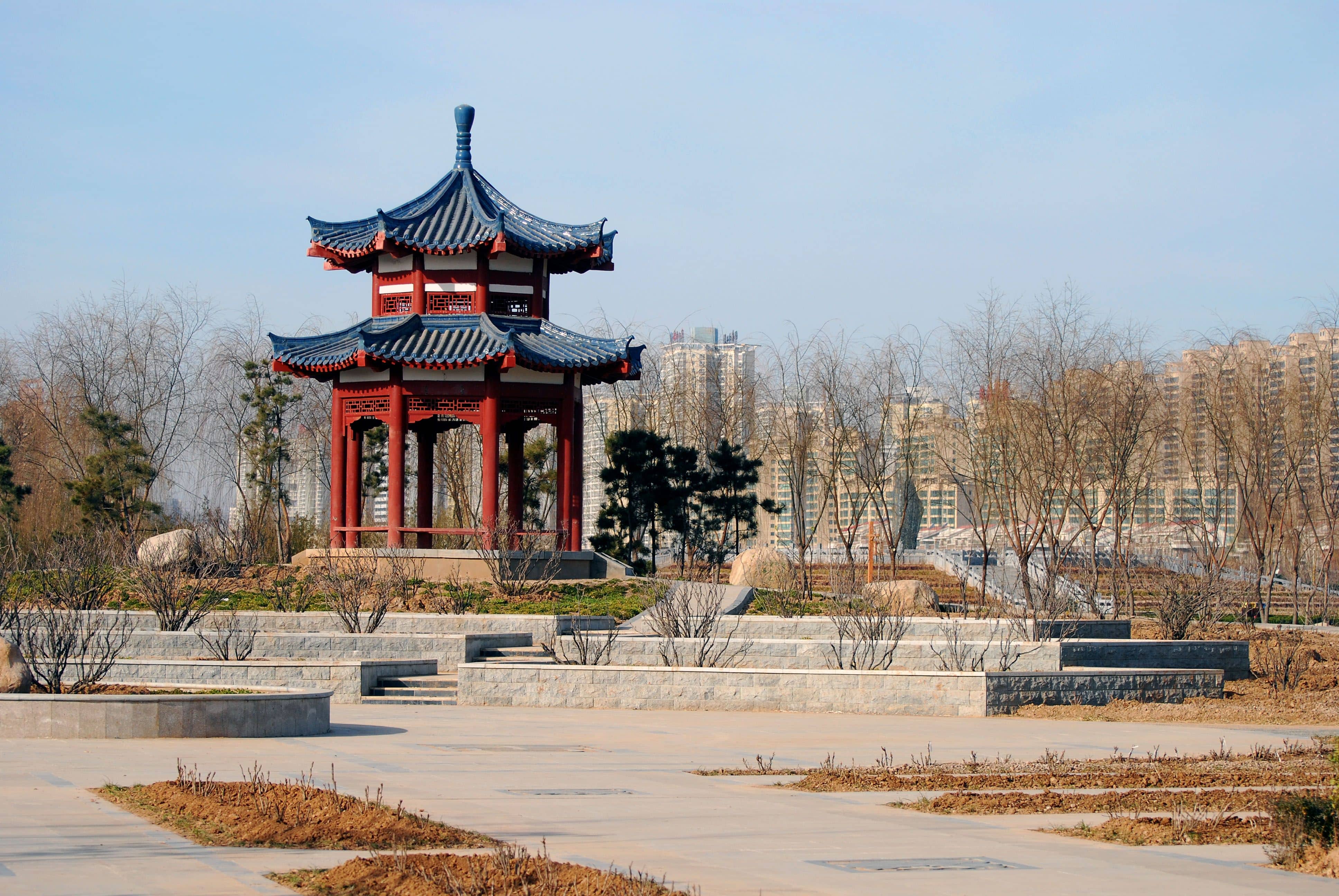
Visitors flying kites on a sunny spring day in a Chinese city park with willow trees in fresh green leaf

Where to Stay and When to Book

Stay in Kaifeng's old city, either around Gulou (the Drum Tower) and Shudian Street or around Longting near the park, and everything you have come for is within a short walk or a ten-minute taxi.

Areas to consider:

  • Gulou and Shudian Street: the night market, old shops, the Daxiangguo Temple and the best food; small hotels and a few boutique courtyard places; 10 to 15 minutes by taxi to Millennium City Park

  • Longting and the lakes: the park, Longting Park, the Iron Pagoda and the city wall on your doorstep; mid-range and resort-style hotels, quieter at night

  • Near Kaifeng North station: modern chain hotels, convenient for a late train, 15 to 30 minutes from the sights

  • Zhengzhou: a far bigger choice of international hotels and easy flights, with Kaifeng as a day trip by the 30-minute train; the right choice if Kaifeng sells out or if you prefer a big city base

When to book: Kaifeng's hotel stock is small and the Qingming holiday weekend is one of its peaks of the year. Rooms around Gulou and Longting start filling in early February and are largely gone by mid-March; book by February 2027 for choice. Zhengzhou fills later and rarely sells out. Reference rates for the holiday nights: a simple hotel in the old city costs about 150 – 250 RMB, a mid-range hotel near the park is around 350 – 600 RMB, and an international chain hotel in Zhengzhou starts from 400 – 900 RMB. Expect holiday surcharges on 3 and 4 April.

Tip: Confirm that the hotel is registered to host foreign guests before booking; many small Kaifeng hotels are domestic-only, and the police registration rule is enforced. Ask for a quiet room if you are near Gulou, as the night market runs late.

If you are combining Qingming with the Yellow Emperor ceremony at Xinzheng or the Shaolin Temple and Longmen Grottoes, Zhengzhou is the better hub; all are within a short train or drive.

Staying Connected During the Festival

Public Wi-Fi is not something to rely on during Qingming. Kaifeng's park and night-market networks need a Chinese mobile number to log in and buckle on the holiday weekend, and hotel Wi-Fi goes through China's filters, so Google Maps, Gmail, WhatsApp, Instagram and most Western news and booking sites will not load on it. A VPN over hotel Wi-Fi is slow and unreliable, and it is no help on the street.

What you actually use data for during Qingming:

  • Train booking and station directions, including which of Kaifeng's two stations your train uses and when the holiday trains sell out

  • Timed e-tickets for the park and the evening show, shown as QR codes

  • The park's show timetable and parade route, posted on its official account

  • Camera translation of cemetery notices, menus, Hanfu rental contracts and show boards

  • A group chat with live location for regrouping in the park or the night market

  • Alipay and WeChat Pay for every snack, taxi and costume rental; each payment needs a live connection

  • Ride-hailing after the evening show

  • Video calls home from the Rainbow Bridge, which is where everyone wants to call from

The simple fix is a China travel eSIM that routes data so your usual apps work, installed at home before you fly. Check your phone is unlocked and supports eSIM (most phones from the last five years do), buy the plan, scan the QR code while you still have a good connection, and switch the line on when you land. Coverage in Kaifeng, Zhengzhou and along the high-speed line is strong on 4G and 5G, and it holds up inside the park; it slows briefly during the evening show when everyone uploads at once.

How much data: 1 to 2 GB a day covers maps, tickets, translation, payments and messaging. Video is the variable; a day of filming Song dynasty parades and uploading them can double it. For a four-day trip, 10 GB is comfortable, and 20 GB suits heavy social media use or a longer China itinerary. GoHub's China plans are listed on the eSIM for China page.

Tip: Keep your home SIM active for SMS so bank verification codes arrive, set the eSIM as your data line, and turn off data roaming on the home SIM. Download an offline map of Kaifeng and save your hotel's address in Chinese characters as a backup.

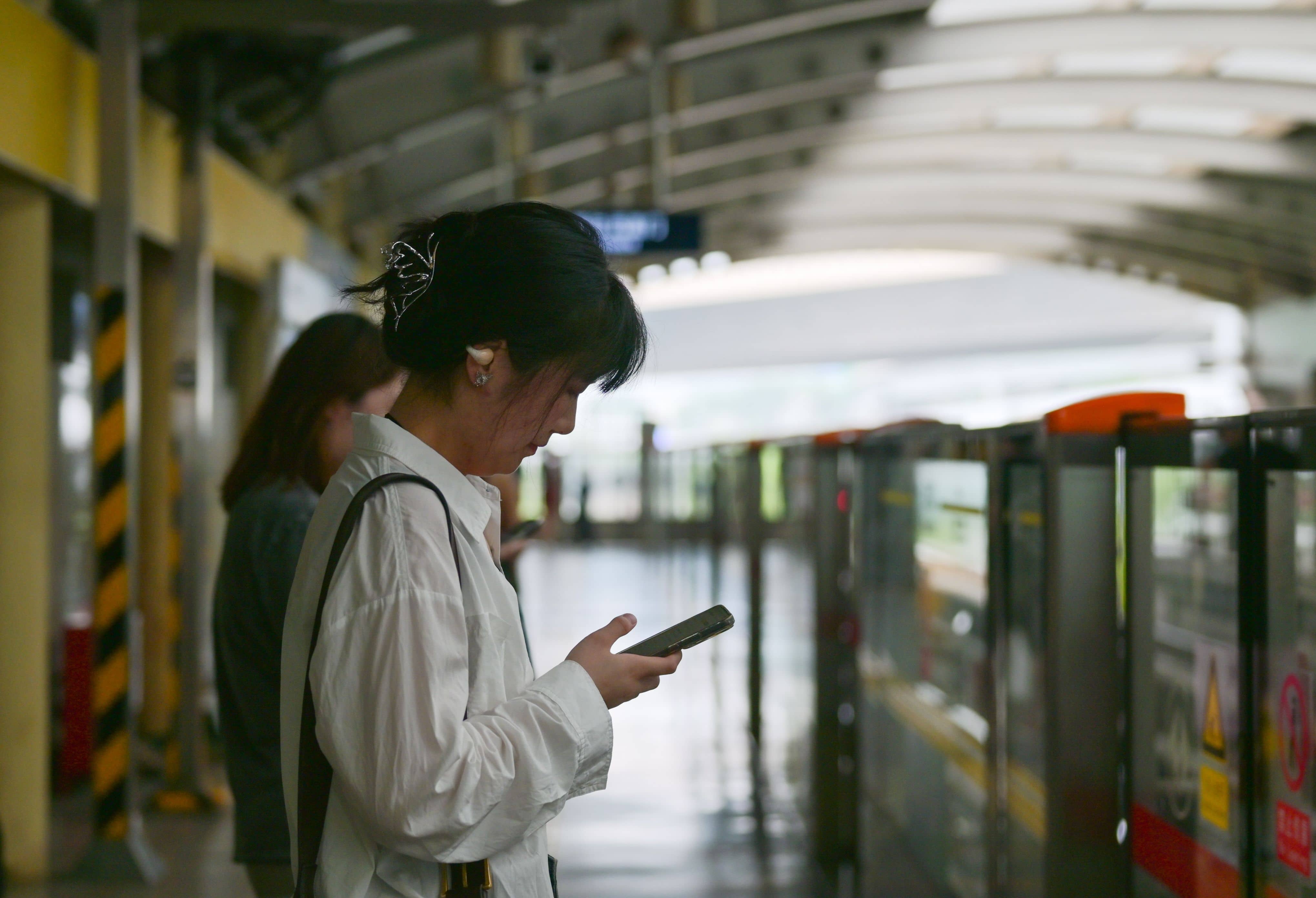
A visitor in rented Hanfu costume checking a smartphone on the Rainbow Bridge in Millennium City Park, Kaifeng, with crowds behind

What to Eat and Buy

Eat qingtuan, the green rice dumpling that is to Qingming what mooncakes are to Mid-Autumn. The dough is glutinous rice flour coloured and flavoured with mugwort or barley grass, wrapped around sweet red bean paste, and in recent years around salted egg yolk and pork floss, which is the version the queues form for in Shanghai and Hangzhou. In the north they are less common, but every bakery in a tourist town stocks them for the holiday. Buy them fresh in the morning; they harden by evening.

Other Qingming and spring foods:

  • Cold dishes and cold noodles, a survival of the Cold Food Festival customs, especially in Shanxi
  • Sanzi, fried dough twists, eaten cold across the north and south
  • Spring greens: shepherd's purse dumplings, fresh bamboo shoots, toon leaves with eggs
  • Peach blossom porridge and other seasonal sweets in the Yangtze region
  • Cantonese roast pig and spring rolls, offered at graves in Guangdong and Hong Kong and eaten by the family afterwards

Kaifeng's own food, which you will eat for three days:

  • Kaifeng soup dumplings (guantang bao): the famous version, bigger and thinner-skinned than Shanghai's; the Gulou night market and the old dumpling houses on Sihou Street serve them all day. Bite a small hole, drink the soup, then eat the dumpling
  • Carp with noodles (liyu beimian): the signature banquet dish, sweet and sour carp under crisp fried noodles
  • Mutton kang mo, flatbread stuffed with spiced mutton, from night-market griddles
  • Peanut cake, sesame flatbread, chrysanthemum tea and the night market's hundreds of skewers

Where: the Gulou night market opens around dusk and is the best single meal in the city; Shudian Street and the lanes around Daxiangguo Temple have the old restaurants; the night market inside Millennium City Park is handy but pricier. Most stalls take only mobile payment; carry small cash as a backup.

Tip: Lunch early inside the park before 11:30, or late after 14:00; the food streets between the two shows are the most crowded place in Kaifeng on the holiday weekend.

What to buy: Kaifeng's woodblock New Year prints from Zhuxian Town, Bian embroidery, chrysanthemum tea, qingtuan boxed for the train, kites from the stalls around Longting, and Hanfu accessories from the shops outside the park.

Customs, Etiquette and Things to Avoid

Qingming is a day for the dead first and for spring second, and visitors who understand that are welcomed everywhere. The core custom is tomb sweeping: tidying the grave, offering food and wine, burning incense and paper money or paper models of houses, cars and phones for the ancestors to use, and bowing. It is a family ritual, often the one day a year the whole clan gathers, and it carries real emotion.

How to be a good guest:

  • Watch ceremonies from a distance; do not approach a family's grave, step on grave mounds or photograph people mid-ritual unless invited

  • If a friend invites you to their family's tomb sweeping, go; bring nothing but yourself, follow their lead on bowing, and accept the food shared afterwards

  • Do not wish anyone "Happy Qingming". The right greeting is a wish for peace and health, or simply an acknowledgement; many people avoid celebrations and weddings on the day

  • Wear plain, muted clothing at cemeteries; red and bright colours are for the afternoon in the park

  • Willow sprigs on doors and hats are for warding off wandering spirits; it is fine to buy one and wear it

  • Burning paper is restricted to designated bins in many cities, and open fires on hillsides are a serious offence in dry spring weather; follow the signs

Things to avoid: cutting through cemeteries as a shortcut, lighting your own incense without knowing the custom, loud behaviour near ceremonies, and booking anything that depends on a shop or office being open on 5 April, when many small businesses close.

Money and costs: mobile payment is universal, and both Alipay and WeChat Pay accept foreign Visa, Mastercard and other international cards; set one up before you leave. Cash is accepted but change is scarce; keep small notes for night-market stalls and temple donations. Budget per day in Kaifeng excluding flights: a tight day with a simple hotel, night-market food and the park covers about 250 – 350 RMB; a comfortable day with a mid-range hotel, two restaurant meals, the park, the evening show and taxis is about 500 – 800 RMB. Kaifeng is cheaper than Beijing or Shanghai outside the holiday surcharge. Tipping is not customary.

Note: Banks and government offices close for the holiday, 3 to 5 April. Exchange or withdraw what you need before Friday 2 April; the big bank ATMs accept foreign cards.

Packing, Family, Safety and Side Trips

Pack for a warm spring day with a cool start and finish, and for a lot of walking on stone.

  • A light jacket or fleece for mornings and the evening show, over a T-shirt or shirt for the afternoon

  • Comfortable walking shoes; the park, the city wall and the night market add up to many kilometres

  • Sunglasses, sunscreen and a cap; the spring sun is stronger than it feels

  • A compact umbrella (rain in the south, shade in the north) and a mask for dusty days

  • Antihistamines if pollen bothers you

  • A power bank; the park and the night market are a full day of photos

  • A small bag worn in front in crowds, and some small cash

  • Passport (carry it daily), your China eSIM already installed, and offline copies of train bookings

Going with young children: Kaifeng is an easy festival for kids. The park is flat, stroller-friendly and full of shows, stunt riders and water acrobatics; the kite lawns and the lakes around Longting fill an afternoon; and the night market is a treat if you go early. Rent a small Hanfu for the photos, carry snacks and water, and plan a hotel break in the afternoon on the hottest days. Skip the cemeteries with toddlers; they are crowded, smoky with incense and solemn.

Going with older relatives: the park has benches, shade and boat rides, and taxis can drop you at the gate; the city wall and the Iron Pagoda involve stairs. Book the evening show in a seated zone near the exit, and travel on the slower conventional train if the high-speed seats are gone.

Safety: Kaifeng is a calm provincial city, and the risks are crowds and heat. Keep valuables in a front pocket in the night market, watch children near the lakes and the Bian River, and drink water through the afternoon. Emergency numbers are 110 for police, 120 for ambulance and 119 for fire. Carry your hotel's address in Chinese.

Tip: With family, do the park on a weekday and the holiday weekend in the quieter corners of the city; the reverse order fights the crowds twice.

Side trips on the same visit:

  • Zhengzhou: the Henan Museum, one of China's best, and the Yellow River scenic area

  • Xinzheng:The Yellow Emperor ancestor worship ceremony will be held on April 9, 2027 (the third day of the third lunar month), acting as the biggest public ritual of the season and located just an hour's drive from Zhengzhou

  • Luoyang: the Longmen Grottoes and the peony festival, which usually opens in early to mid-April, under two hours by high-speed train

  • Dengfeng: the Shaolin Temple and Songshan, a day trip from Zhengzhou

  • Anyang: the Yinxu oracle-bone site, for the deepest roots of ancestor worship in China

Suggested itinerary

Day 1 · 2 April, arrival and the old city

  1. Around midday
    Zhengzhou Xinzheng Airport to Kaifeng NorthIntercity train via Zhengzhou East, about an hour from the airport; book the seat in advance
  2. Afternoon
    Gulou square and Shudian StreetOld shops, the Drum Tower and a first bowl of Kaifeng soup dumplings
  3. Late afternoon
    Daxiangguo TempleThe great Song dynasty temple, quiet before the holiday crowds arrive
  4. Around 18:30
    Gulou night marketSkewers, mutton flatbread and chrysanthemum tea; go early before the weekend rush
  5. Evening
    Hotel near Gulou or LongtingBuy tomorrow's park e-ticket tonight and check the show times on the park's account

Day 2 · 3 April, Millennium City Park

  1. Before 9:00
    Main gate, Longting West RoadBe early for the gate-opening ceremony with Song dynasty officials and drummers
  2. Mid-morning
    Hanfu rental and the Rainbow BridgeRent a costume before sizes run out; the bridge is the photo everyone wants
  3. Late morning
    Street shows and the Bian RiverHorse stunts, water acrobatics and the Qingming kite and craft workshops
  4. Around 13:00
    Early lunch inside the parkBeat the holiday food-street crowd; qingtuan from the stalls
  5. Afternoon
    Longting Park and the lakesA calmer hour on the water and the kite lawns before returning for dusk
  6. Evening
    Lanterns and the lake showPre-booked seats for the 70-minute live show; ride-hail back after it ends

Day 3 · 4 April, walls, pagoda and the night market

  1. Morning
    Kaifeng FuThe Northern Song prefectural office and its morning court-opening ceremony
  2. Late morning
    Iron Pagoda ParkThe glazed-brick pagoda; climb if the stairs suit your group
  3. Around 13:00
    Carp with noodles lunchThe signature banquet dish in an old restaurant near Shudian Street
  4. Afternoon
    City wall walkA continuous stretch from Longting to the wall with views over the old city
  5. Evening
    Night market one more timeTry what you missed; pick up qingtuan and woodblock prints for the journey

Day 4 · 5 April, Qingming day

  1. Before 8:00
    A city cemetery or templeWatch the tomb-sweeping ceremonies from a respectful distance; muted clothing
  2. Mid-morning
    Willow and kites by the lakesBuy a willow sprig and a kite from the stalls; this is the spring-outing half of the day
  3. Around 12:00
    Picnic lunch of cold dishes and qingtuanThe Cold Food Festival tradition, eaten outdoors
  4. Afternoon
    Train to ZhengzhouHenan Museum if you have the evening, or onward to Luoyang for the grottoes and peonies
Tip: Arrive on the Friday before the holiday, do the park on Saturday, the old city on Sunday and the ceremonies and a spring outing on Qingming day itself.

Recommended eSIM plans

Pick by trip length. Visiting several countries? Choose a regional plan.

Selected: eSIM China 03GB 05 Day(s)

Set up your eSIM in 3 steps

  1. Order and get your QR codeThe QR code arrives by email right after payment.
  2. Scan before you flySettings → Cellular → Add eSIM, while you still have Wi-Fi.
  3. Turn on data when you landSet the eSIM as your data line and enable data roaming.

Frequently asked questions

Not everything, but plan around it. Banks, government offices and many small shops close for the three-day holiday, and some family restaurants close on 5 April itself. Trains, airports, metro, hotels, tourist attractions, chain restaurants, malls and convenience stores stay open and are busier than usual. The bigger issue is crowds: scenic spots and trains are at holiday capacity on 3 to 5 April, so book transport and tickets ahead.

Yes, public cemeteries and the areas around temples are open, and watching from a distance is acceptable. Treat it as you would a funeral: wear muted colours, keep your voice down, do not approach a family's grave, do not photograph people mid-ritual, and stay off the grave mounds. If a Chinese friend invites you to their family's tomb sweeping, that is a genuine honour; go, follow their lead on bowing, and share the food afterwards.

It depends on your passport. China has expanded visa-free entry and transit exemptions for many nationalities, but the list and permitted stay lengths change often [TO VERIFY current rules for your nationality]. Check with the Chinese embassy or consulate in your country at least two months before travel, and apply early if you need a visa. Carry your passport daily in China; hotels require it at check-in and it is needed for train tickets.

Do not say "Happy Qingming". The day commemorates the dead, so the customary greetings are wishes for peace and good health, such as "Qingming ankang", or a simple acknowledgement that it is a day of remembrance. If you are with a family at their ancestors' graves, a quiet bow with them says more than words. On the afternoon spring outing, ordinary friendly conversation is fine.

Plan on 1 to 2 GB a day for train booking, maps, timed e-tickets, translation, mobile payments and messaging, and more if you film and upload a lot of festival video. A 10 GB eSIM plan comfortably covers a four-day trip; take 20 GB for heavy social media use or a longer China itinerary. Buy and install the eSIM before you fly so your usual apps work from the moment you land, and keep your home SIM active for bank SMS codes.

Qingming follows the solar calendar, not the lunar one. It is the fifteenth day after the spring equinox, one of the 24 solar terms, so it lands on 4 or 5 April depending on the astronomical timing of the equinox in that year. The current pattern is 4 April in leap years and the year after, 5 April in the other two years of each four-year cycle, which gives 5 April in 2026 and 2027 and 4 April in 2028 and 2029.