

थाईलैंड में पर्यटकों के लिए इंटरनेट: 2026 की संपूर्ण गाइड

द्वीपों के लिए फेरी बुक करने, ऐप के माध्यम से खाना ऑर्डर करने और यह पता लगाने के बीच कि कौन सी बीटीएस लाइन आपको ग्रैंड पैलेस तक ले जाती है, थाईलैंड की यात्रा आपके फोन पर उतनी ही चलती है जितनी आपके पासपोर्ट पर। उतरने से पहले अपने डेटा को व्यवस्थित करने से पहला दिन आसान हो जाता है, और थाईलैंड में ऐसा करने के कई तरीके हैं जो अधिकांश गंतव्यों की तुलना में अधिक हैं।
यह मार्गदर्शिका हर यथार्थवादी विकल्प की तुलना करती है, एक भौतिक पर्यटक सिम से जिसे आप अपने पासपोर्ट के साथ पंजीकृत करते हैं, एक eSIM तक जिसे आप विमान में चढ़ने से पहले ही इंस्टॉल कर सकते हैं, ताकि आप बैंकॉक, द्वीपों या दोनों को कवर करने वाली यात्रा के लिए सही विकल्प चुन सकें।
आपके विकल्प एक नज़र में
विकल्प | सामान्य लागत | सेटअप का समय | इसके लिए सबसे अच्छा | मुख्य कमी |
|---|---|---|---|---|
कम | मिनटों में, उड़ान भरने से पहले | अधिकांश पर्यटकों के लिए, छोटी से मध्यम यात्राओं के लिए | eSIM-संगत, अनलॉक किए गए फोन की आवश्यकता है | |
भौतिक पर्यटक सिम | कम | काउंटर पर 10 से 20 मिनट | थाई फोन नंबर चाहने वाले यात्रियों के लिए | पासपोर्ट पंजीकरण कतार, व्यक्तिगत रूप से किया जाना चाहिए |
डेटा रोमिंग (घरेलू वाहक) | उच्च | तत्काल, कोई सेटअप नहीं | बहुत छोटी यात्राओं के लिए, केवल बैकअप के लिए | आमतौर पर अब तक का सबसे महंगा विकल्प |
सार्वजनिक वाईफाई | मुफ़्त | तत्काल | बैकअप कनेक्टिविटी, हल्का ब्राउज़िंग | धीमा, कम सुरक्षित, हमेशा उपलब्ध नहीं |
पॉकेट वाईफाई किराया | मध्यम | पिकअप/डिलीवरी आवश्यक | एक कनेक्शन साझा करने वाले समूह | ले जाने और चार्ज करने के लिए अतिरिक्त डिवाइस |
थाईलैंड सिम बनाम eSIM: आपको कौन सा लेना चाहिए
यह वह सवाल है जो अधिकांश पर्यटकों के मन में होता है, और इसका सीधा जवाब यह है कि दोनों एक ही अंतर्निहित नेटवर्क से जुड़ते हैं, इसलिए अंतर सुविधा का है, गति का नहीं।
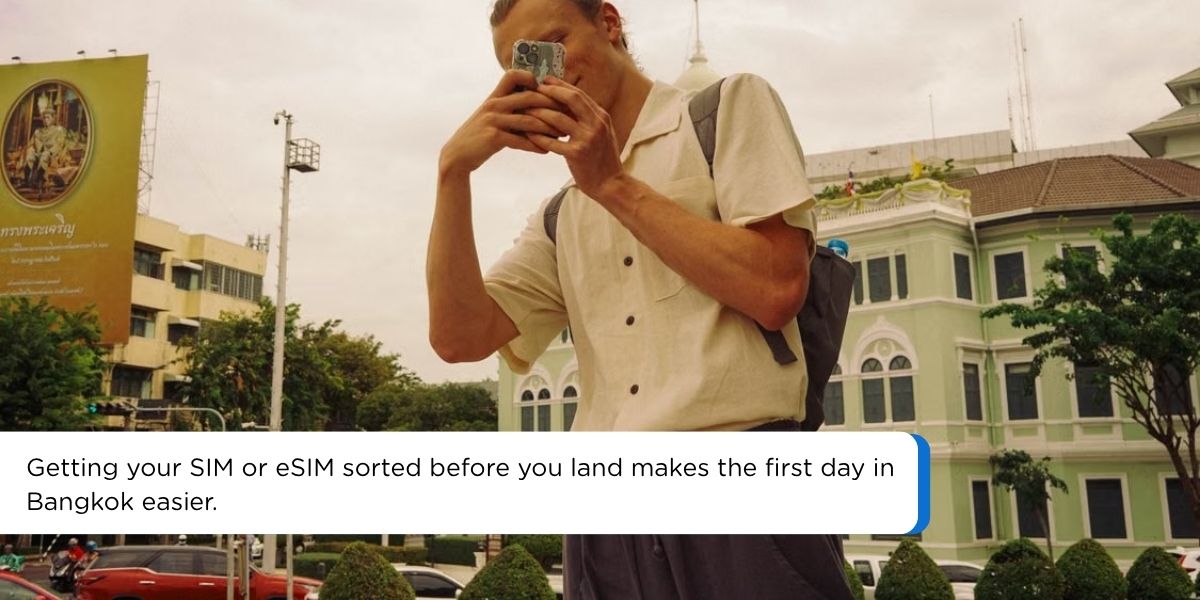
एक भौतिक पर्यटक सिम के लिए आपको व्यक्तिगत रूप से अपने पासपोर्ट के साथ पंजीकरण करना होगा, क्योंकि थाईलैंड का दूरसंचार नियामक (एनबीटीसी) हर सिम को सक्रिय होने से पहले आपके पासपोर्ट की एक तस्वीर से लिंक करना अनिवार्य करता है। इसका मतलब है एक काउंटर, एक कतार, और कुछ मिनट का कागजी काम, चाहे आप इसे हवाई अड्डे पर, 7-इलेवन में, या किसी कैरियर स्टोर पर करें।
एक डेटा-ओनली ट्रैवल eSIM इस कदम को पूरी तरह से छोड़ देता है, क्योंकि यह आपको थाई फोन नंबर जारी नहीं करता है और इसलिए एनबीटीसी पंजीकरण नियम के दायरे से बाहर आता है। आप इसे उड़ान भरने से पहले ऑनलाइन खरीदते और इंस्टॉल करते हैं, और यह आपके उतरते ही और डेटा रोमिंग चालू करते ही उपयोग के लिए तैयार हो जाता है, जिसमें कोई भौतिक कार्ड और कोई व्यक्तिगत कतार नहीं होती है। ध्यान देने योग्य बात: यदि आप इसके बजाय एआईएस, ट्रू या डीटैक से सीधे एक पर्यटक eSIM खरीदते हैं जो एक स्थानीय थाई नंबर के साथ आता है, तो भी उसी एनबीटीसी नियम के तहत पासपोर्ट पंजीकरण की आवश्यकता होती है, यह केवल काउंटर के बजाय ऑनलाइन किया जाता है। तो वास्तविक विभाजन रेखा भौतिक बनाम डिजिटल नहीं है, बल्कि यह है कि क्या सिम या eSIM आपको पंजीकृत थाई नंबर देता है या नहीं।
अधिकांश छोटी और मध्यम यात्राओं के लिए, एक eSIM एक सरल विकल्प है। यदि आप लंबे समय तक रुक रहे हैं या स्थानीय व्यवसायों, बैंकों या डिलीवरी ऐप्स के लिए थाई नंबर की आवश्यकता है ताकि वे आपको वापस कॉल कर सकें, तो एक भौतिक पर्यटक सिम कुछ अतिरिक्त मिनटों के लायक है।
एआईएस, ट्रू और डीटैक की तुलना
एआईएस
एआईएस को थाईलैंड में सबसे मजबूत समग्र कवरेज के लिए व्यापक रूप से माना जाता है, विशेष रूप से कोह समुई, कोह फांगन और कोह ताओ जैसे खाड़ी द्वीपों में। एआईएस सीधे 5 से 30 दिनों की वैधता, असीमित डेटा, एआईएस नेटवर्क के भीतर असीमित कॉल और अन्य नेटवर्क के लिए कॉल क्रेडिट के साथ पर्यटक eSIM बेचता है, जिसकी कीमत योजना की अवधि के आधार पर आमतौर पर लगभग 399 और 1,699 THB के बीच बताई जाती है। खरीदने से पहले वर्तमान लाइनअप के लिए एआईएस की अपनी साइट देखें, क्योंकि सटीक कीमत बदल सकती है।
ट्रू और डीटैक
ट्रू और डीटैक को एक साथ समझना महत्वपूर्ण है, क्योंकि कंपनियों का 2023 में विलय हो गया था और तब से उन्होंने अपने नेटवर्क का पूर्ण तकनीकी एकीकरण पूरा कर लिया है, जिसका अर्थ है कि ट्रू और डीटैक सिम अब एक ही अंतर्निहित बुनियादी ढांचे पर चलते हैं। उस विलय समझौते के हिस्से के रूप में, दोनों ब्रांडों को कम से कम तीन साल तक अलग उपभोक्ता ब्रांडों के रूप में काम करते रहने की आवश्यकता थी, एक प्रतिबद्धता जो मार्च 2026 के आसपास समाप्त हो जाती है, इसलिए इस साल आगे ब्रांड समेकन संभव है, भले ही अभी तक कुछ भी घोषित नहीं किया गया है, लाइट रीडिंग के नेटवर्क एकीकरण के कवरेज के अनुसार।
पर्यटकों के लिए, ट्रू और डीटैक वर्तमान में 8, 15 और 30-दिवसीय पास में एक संयुक्त टूरिस्ट इनफिनिट सिम बेचते हैं, जिनमें से प्रत्येक असीमित मोबाइल डेटा, ऑपरेटर के अपने हॉटस्पॉट नेटवर्क के माध्यम से मुफ्त वाईफाई, प्रति कॉल 15 मिनट तक सीमित स्थानीय कॉल और एक अंतरराष्ट्रीय कॉल क्रेडिट प्रदान करता है जो ब्रांड के अनुसार थोड़ा भिन्न होता है। 8-दिवसीय पास की कीमत 449 THB है। एक डेटा-ओनली 10-दिवसीय संस्करण भी है जिसमें वॉयस कॉलिंग पूरी तरह से अक्षम है, जिसे चुनना उचित है यदि आपको केवल डेटा की आवश्यकता है, जैसा कि ट्रू के अपने पर्यटक सिम शर्तों में विस्तृत है।
एक भौतिक पर्यटक सिम खरीदना
आपको अपने पासपोर्ट और एक अनलॉक किए गए फोन की आवश्यकता होगी। सिम प्रदाता आपके पासपोर्ट की तस्वीर लेता है और आपके सिम के सक्रिय होने से पहले उसे एनबीटीसी प्रणाली के माध्यम से पंजीकृत करता है, इसलिए केवल सिम लेकर चले जाने की तुलना में कुछ अतिरिक्त मिनटों का बजट रखें। पर्यटक सिम हर प्रमुख अंतरराष्ट्रीय हवाई अड्डे (सुवर्णभूमि, डॉन मुएंग, फुकेत, चियांग माई, समुई) के काउंटरों पर, कैरियर स्टोरों पर और देश भर में 7-इलेवन और फैमिली मार्ट जैसे सुविधा स्टोरों पर बेचे जाते हैं, इसलिए आप शायद ही कभी इसे खरीदने की जगह से दूर होंगे।
वैधता पर नज़र रखें। पर्यटक सिम की वैधता लगभग 60 दिनों तक होती है और एक बार समाप्त होने के बाद इसे केवल टॉप-अप करके बढ़ाया नहीं जा सकता है; उसी नंबर का उपयोग जारी रखने के लिए आपको स्टोर पर अपने पासपोर्ट के साथ फिर से पंजीकरण करना होगा।
एक eSIM सेट करना
थाईलैंड में एक eSIM इंस्टॉल करना वैसे ही काम करता है जैसे कहीं भी: आप ऑनलाइन एक प्लान खरीदते हैं, एक क्यूआर कोड प्राप्त करते हैं, और वाईफाई से कनेक्ट होने पर उसे स्कैन करते हैं, आदर्श रूप से घर से निकलने से पहले। आपका नियमित सिम दूसरे स्लॉट में सक्रिय रहता है, इसलिए घर से कॉल और टेक्स्ट अभी भी आप तक पहुंचते हैं, जबकि eSIM आपके थाई डेटा को संभालता है। यह उतरने के बाद आपके फोन द्वारा थाई नेटवर्क का पता लगाने के बाद स्वचालित रूप से सक्रिय हो जाता है। अधिकांश eSIM iPhone XS और बाद के मॉडल, और हाल के सैमसंग गैलेक्सी और गूगल पिक्सेल मॉडल पर योग्य हैं, बशर्ते फोन कैरियर-अनलॉक हो।
आपको वास्तव में कितने डेटा की आवश्यकता है
उपयोग स्तर | दैनिक गतिविधि | प्रति दिन डेटा |
|---|---|---|
हल्का | मैप्स, मैसेजिंग, कभी-कभार सोशल मीडिया | 1 to 2GB |
मध्यम | नेविगेशन, राइड-हेलिंग ऐप्स, सोशल मीडिया, कुछ वीडियो कॉल | 2 to 4GB |
भारी | स्ट्रीमिंग, वीडियो कॉल, फोटो और वीडियो अपलोड करना, रिमोट वर्क | 4GB or more, or unlimited |
बैंकॉक, उत्तर और द्वीपों में 7 से 10 दिनों की एक सामान्य यात्रा के लिए, मैप्स, राइड-हेलिंग ऐप्स और सोशल मीडिया पर निर्भर रहने वाले औसत उपयोगकर्ता के लिए कुल 10 से 15GB डेटा की आवश्यकता होती है।
द्वीपों पर कवरेज: जहां सिग्नल कमजोर पड़ जाता है
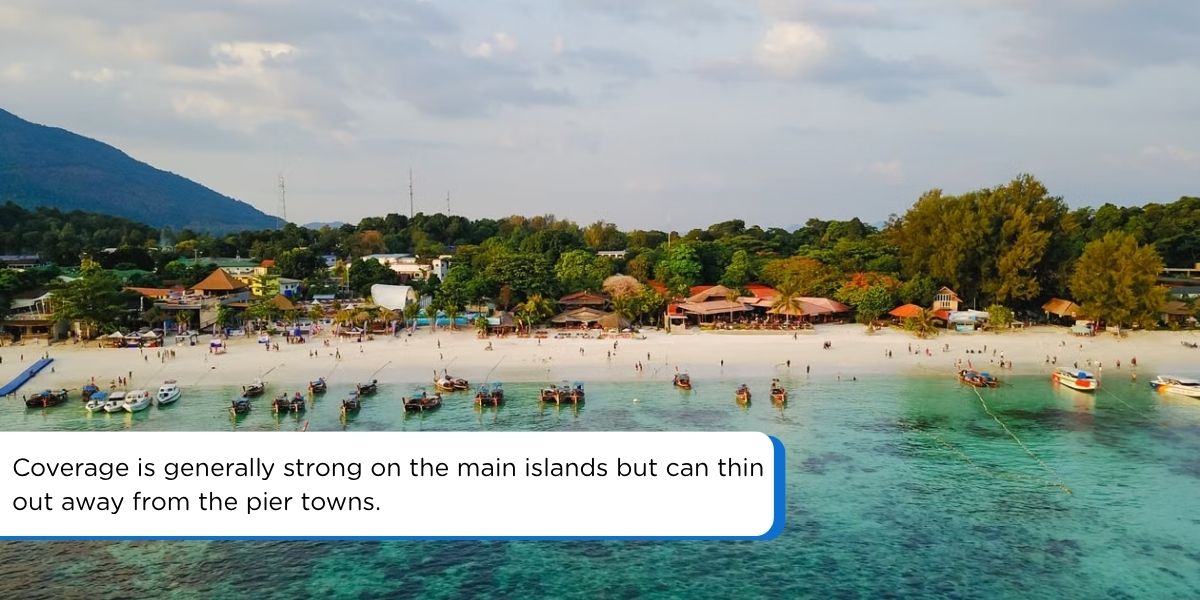
थाईलैंड के मोबाइल नेटवर्क क्षेत्र के कई गंतव्यों की तुलना में पूरे देश में अच्छा प्रदर्शन करते हैं, लेकिन एक बार जब आप मुख्य शहरों को छोड़ देते हैं तो कवरेज अभी भी भिन्न होता है। कोह समुई, कोह फांगन और कोह ताओ में समग्र रूप से ठोस कवरेज है, जिसमें एआईएस आमतौर पर इन द्वीपों के शांत कोनों में बढ़त रखता है। फुकेत और क्राबी, जिसमें पातोंग, काटा और कारोन जैसे व्यस्त समुद्र तट क्षेत्र शामिल हैं, में तीनों नेटवर्क पर विश्वसनीय कवरेज है। कोह लिपे, कोह मक और कोह कूड जैसे छोटे और अधिक दूरस्थ द्वीपों में मुख्य शहर या घाट क्षेत्र में अच्छा सिग्नल होता है, लेकिन केंद्र से दूर अभी भी मृत स्थान हो सकते हैं, इसलिए नाव से उतरते ही पूर्ण कवरेज की उम्मीद न करें।
सार्वजनिक वाईफाई और बैकअप विकल्प
थाईलैंड में मुफ्त वाईफाई आसानी से मिल जाता है, होटलों और कैफे से लेकर शॉपिंग मॉल और हवाई अड्डों तक। यह हल्के ब्राउज़िंग के लिए एक अच्छा बैकअप है, लेकिन इसे वैसे ही मानें जैसे आप कहीं और मानते हैं: खुले नेटवर्क पर बैंकिंग ऐप्स में लॉग इन करने से बचें, और यदि आप कुछ भी संवेदनशील संभाल रहे हैं तो वीपीएन का उपयोग करें।
अक्सर पूछे जाने वाले प्रश्न
क्या मुझे थाईलैंड के लिए सिम या eSIM लेना चाहिए?
अधिकांश पर्यटकों के लिए एक eSIM एक सरल विकल्प है क्योंकि यह व्यक्तिगत पासपोर्ट पंजीकरण कतार को पूरी तरह से छोड़ देता है। यदि आपको विशेष रूप से थाई फोन नंबर की आवश्यकता है तो एक भौतिक सिम अधिक समझ में आता है।
क्या मुझे थाईलैंड सिम कार्ड के लिए पासपोर्ट की आवश्यकता है?
हाँ, एक भौतिक सिम के लिए। थाईलैंड का दूरसंचार नियामक हर सिम को सक्रिय होने से पहले आपके पासपोर्ट की एक तस्वीर के साथ पंजीकृत करना अनिवार्य करता है, इसलिए जब आप इसे खरीदें तो इसे अपने साथ लाएँ।
क्या एआईएस, ट्रू और डीटैक अभी भी अलग नेटवर्क हैं?
तकनीकी रूप से नहीं। ट्रू और डीटैक का 2023 में विलय हो गया था और तब से उन्होंने अपने नेटवर्क बुनियादी ढांचे को पूरी तरह से एकीकृत कर लिया है, इसलिए आज दोनों ब्रांडों के सिम एक ही अंतर्निहित नेटवर्क पर चलते हैं, भले ही वे अभी भी दो अलग उपभोक्ता ब्रांडों के रूप में बेचे जाते हैं।
क्या मेरा सिम या eSIM थाई द्वीपों पर काम करता है?
आमतौर पर कोह समुई, कोह फांगन, कोह ताओ और फुकेत जैसे मुख्य द्वीपों पर हाँ। कोह लिपे या कोह कूड जैसे छोटे, अधिक दूरस्थ द्वीपों में मुख्य शहर में अच्छा कवरेज होता है, लेकिन अन्य जगहों पर अंतराल हो सकते हैं।
थाईलैंड में एक सप्ताह के लिए मुझे कितने डेटा की आवश्यकता है?
लगभग 10 से 15GB एक औसत उपयोगकर्ता के लिए मैप्स, राइड-हेलिंग और सोशल मीडिया के एक सामान्य सप्ताह को कवर करता है; भारी स्ट्रीमिंग या रिमोट वर्क के लिए अधिक की आवश्यकता होती है।
यदि आप पासपोर्ट कतार को पूरी तरह से छोड़ना चाहते हैं, तो गोहब का थाईलैंड eSIM योजना के आधार पर एआईएस या ट्रू मूव से जुड़ता है, जिसमें डेटा-ओनली विकल्प एक छोटी बैंकॉक यात्रा से लेकर द्वीपों की लंबी यात्रा तक के लिए उपलब्ध हैं।

Hi! Mình là Lala Wren, một content creator yêu xê dịch và đam mê chia sẻ trải nghiệm thực tế cho cộng đồng Gohub. Trong nhiều năm qua, mình đã đặt chân đến Thái Lan, Hàn Quốc, Nhật Bản, Singapore, Malaysia, Bali và nhiều điểm đến thú vị khác trên khắp châu Á. Cùng mình tìm hiểu tất tần tật từ khâu chuẩn bị eSIM, Visa, lịch trình và địa điểm nổi bật cho chuyến đi sắp tới của bạn nhé!
सभी लेख देखें →Related articles
शिकागो ओ'हारे हवाई अड्डे (ORD) पर eSIM: 2026 आगमन गाइड
ओ'हारे पर कनेक्टेड रहें। टर्मिनल 5 पर वास्तव में SIM कहाँ से खरीदें, मुफ्त बिंगो वाईफाई कैसे काम करता है, और 2026 में गोहब eSIM दोनों से बेहतर क्यों है।
कैनकन हवाई अड्डे (CUN) पर eSIM: लाइनों को छोड़ें और 2026 में जुड़े रहें
कैनकन हवाई अड्डे के पहले सिम स्टैंड टर्मिनल में लगातार सबसे महंगे होते हैं। देखें कि CUN के कैरियर काउंटर वास्तव में कहाँ हैं, मुफ्त वाईफाई कैसे काम करता है, और क्यों एक मेक्सिको eSIM 2026 में दोनों से बेहतर है।
अबू धाबी हवाई अड्डे (AUH) पर eSIM: सेटअप, लागत और सर्वोत्तम प्लान 2026
जायद अंतर्राष्ट्रीय हवाई अड्डा अब 24 घंटे के लिए एक मुफ्त 10GB SIM दे रहा है। यह कैसे काम करता है, इसकी कमियाँ क्या हैं, और UAE eSIM प्लान कब भी फायदेमंद है।
दक्षिण कोरिया में पर्यटकों के लिए इंटरनेट: 2026 की संपूर्ण गाइड
कोरिया जा रहे हैं? eSIM, पर्यटक SIM कार्ड और पॉकेट वाईफाई किराए पर लेने की तुलना करें, साथ ही, जानें कि KTX और सियोल की सबवे में दुनिया के सबसे तेज़ कनेक्शन क्यों हैं।
वियतनाम में पर्यटकों के लिए इंटरनेट: 2026 की संपूर्ण गाइड
वियतनाम के लिए eSIM, SIM कार्ड और वाईफाई विकल्पों की तुलना करें। देखें कि सापा और मेकांग डेल्टा में कौन सा कैरियर बेहतर काम करता है, डेटा की आवश्यकताएं, और 2026 के लिए सेटअप युक्तियाँ।
गोहब ई-सिम के साथ चीन में टिकटॉक का उपयोग कैसे करें
चीन यात्रा करने से पहले जानें कि अपना गोहब ई-सिम कैसे सेट करें और टिकटॉक सेटिंग्स को कैसे समायोजित करें, ताकि आपकी पूरी यात्रा के दौरान विश्वसनीय पहुंच बनी रहे।