
تنزيل من App StoreDownload Gohub App on the App Store

How to Visit Awa Odori in 2027: Dates, Tickets, Access and Where to Stay

  • Aug 11 – 15, 2027 (street dances Aug 12 – 15)
  • Japan (Tokushima, Shikoku)
  • Last updated: 27 نوفمبر 2026

Overview

Awa Odori is Tokushima City’s signature Obon dance festival on Shikoku, rooted in over 400 years of history and featuring around 1,000 dance groups called ren 2 8. The 2027 edition runs 11 to 15 August 2027, with indoor opening shows on 11 August and evening street dances on 12 to 15 August from 18:00 2 7. Highway buses from Osaka reach Tokushima in about 2.5 hours 4 6.

Highlights

  • Runs 11 to 15 August 2027, with indoor opening shows on 11 August and evening street dances on 12 to 15 August from 18:00 2 7
  • Roughly 1,000 ren dance groups and over one million spectators across five festival days 1 2
  • Free street-side viewing and open plazas alongside reserved stands at Aibahama, Minamiuchimachi and Konyamachi 2 7
  • Open niwaka-ren dance plazas at Tokushima Ekimae and Motomachi invite visitors to join the dance 8
  • Direct highway buses link Osaka and Kobe to Tokushima in about 2.5 hours 4 6
  • August in Tokushima averages 92°F (33°C) high and 78°F (26°C) low with afternoon storm and typhoon risk 5

Good to know

Dates
Wed 11 to Sun 15 Aug 2027 (indoor opening on 11 Aug; street stages 12 to 15 Aug) 2 7
Opening hours
Evening street blocks at 18:00 and 20:20 until roughly 22:30; daytime hall shows at 11:00, 13:30 and 16:00 7 8
Venue
Tokushima City Centre, Tokushima, 5 to 15 minutes on foot south of JR Tokushima Station 7 8
Entry
Free on streets; recent advance enbujo seats 1,000 JPY (C) to 6,000 JPY (SS), Minamiuchimachi premium 15,000 JPY 2 7
Getting there
Highway bus from Osaka or Kobe in about 2.5 hours; flights from Tokyo Haneda in about 75 minutes 1 6
Recommended eSIM
Japan eSIM

Why does the whole city dance for four nights?

Awa Odori traces its origins to Tokushima’s Obon traditions and more than 400 years of history in Tokushima Prefecture, where around 1,000 ren dance troupes perform to live shamisen, taiko drums, kane bells and shinobue flutes 2 8. The festival’s famous Awa Yoshikono chant declares that “the dancers are fools, and the watchers are fools; if both are fools, then why not dance?” 8. Across mid-August, over one million visitors pack central Tokushima to watch women’s dance (onna odori) and men’s dance (otoko odori) on outdoor stages and closed streets 1 2 8.

With high visitor numbers and the need to manage reserved stage tickets, bus schedules, and navigation across Tokushima and beyond, reliable mobile data is essential for Awa Odori attendees. Reserved stage tickets, two-block schedules, highway bus reservations and late-afternoon weather notices are checked on the move, while Tokushima hotels sell out months ahead and push many travellers to stay in Naruto, Takamatsu or Osaka 1 3 4. As evening crowds strain public Wi-Fi, personal mobile data is crucial for checking real-time transit timetables, two-block schedules, and coordinating group meet-ups within Tokushima.

Looking for details on reserved seats, stage maps, and the two-block timetable?

Paid outdoor enbujo street stages—Aibahama, Minamiuchimachi and Konyamachi—sell dated reserved seating for two evening sessions starting at 18:00 and 20:20, alongside daytime hall performances at Awagin Hall and ASTY Tokushima 7. Keeping Ticket Pia confirmations, Seven-Eleven pickup numbers, seat block maps and daily ren rotation schedules on a phone prevents confusion at crowded entry gates 7.

Why do buses sell out and trains stop early?

Direct highway buses from Osaka, Kobe and Kyoto take roughly 2.5 to 3 hours into Tokushima 4 6, while JR Shikoku lines connect Tokushima with Naruto and Takamatsu 6 8. Because festival-week buses sell out and late-evening return trains depart shortly after the 22:30 street finish 6 8, live timetables and mobile reservations are vital for anyone sleeping outside the city.

Finding your group between Awa Odori performances

Paid stands, free viewing streets and open dance plazas stretch across central Tokushima between JR Tokushima Station and the Shinmachi River, with vehicle traffic barred from 18:00 to 22:30 7 8. When part of a group steps into a niwaka-ren dance plaza or stops by riverside food stalls, live location sharing helps everyone regroup without walking the closed perimeter twice 8.

Reading the rain call and the stall menus

August in Tokushima brings intense humidity, afternoon thunderstorms and typhoon risk 5, and severe weather can force organisers to suspend outdoor street dancing 1 3. Visitors can find Awa Odori-specific weather alerts and updates on indoor performance halls to manage disruptions, along with festival street food menus 1 2.

Install your eSIM before you fly and be online when you land — see matching plansSee eSIM plans

The complete guide

Five-Day Schedule for Awa Odori 2027

Awa Odori 2027 runs from Wednesday 11 August to Sunday 15 August 2027 in Tokushima City, opening with indoor theatre performances on 11 August followed by four nights of outdoor street dancing from 12 to 15 August 2 7. Because the festival is anchored to Japan’s mid-August Obon holiday, the street dance dates fall on 12 to 15 August every year, while the executive committee confirms exact 2027 performance schedules and ticketing windows in late spring 1 2 7.

Tokushima City’s official history 2 links the dance to three roots spanning more than 400 years: celebrations ordered by domain founder Hachisuka Iemasa after completing Tokushima Castle in 1586, ancestral Obon dances in the castle town, and Muromachi-era furyu odori recorded during the Tensho era. Unlike lunar festivals elsewhere in Asia, Obon across most of Japan follows fixed mid-August dates, placing peak domestic holiday travel squarely across 13 to 15 August 2. Welcoming roughly 100,000 dancers and around 1.3 million spectators transforms a city of around 250,000 residents into an open-air stage 1.

  • Wednesday 11 August: Indoor opening showcase (Suguribi) by selected expert dancers at ASTY Tokushima ahead of the street parade run 2 7.

  • Thursday 12 to Sunday 15 August: Daytime Matsuribi stage shows at Awagin Hall plus two evening street blocks on paid and free stages from 18:00 to 22:30 2 7 8.

  • Sunday 15 August: Closing night of the four-evening street run, followed by heavy outbound travel through the night and Monday 16 August 2 3.

Visitors who travel outside mid-August can watch year-round performances at Awa Odori Kaikan in central Tokushima 2 9, while Tokyo’s Koenji Awa Odori takes place on a late-August weekend 7 [TO VERIFY 2027].

Tip: Arrive in Tokushima on 10 or 11 August before the Obon outbound surge, and book your departure for the morning of 16 August rather than late on the night of 15 August 2 3.
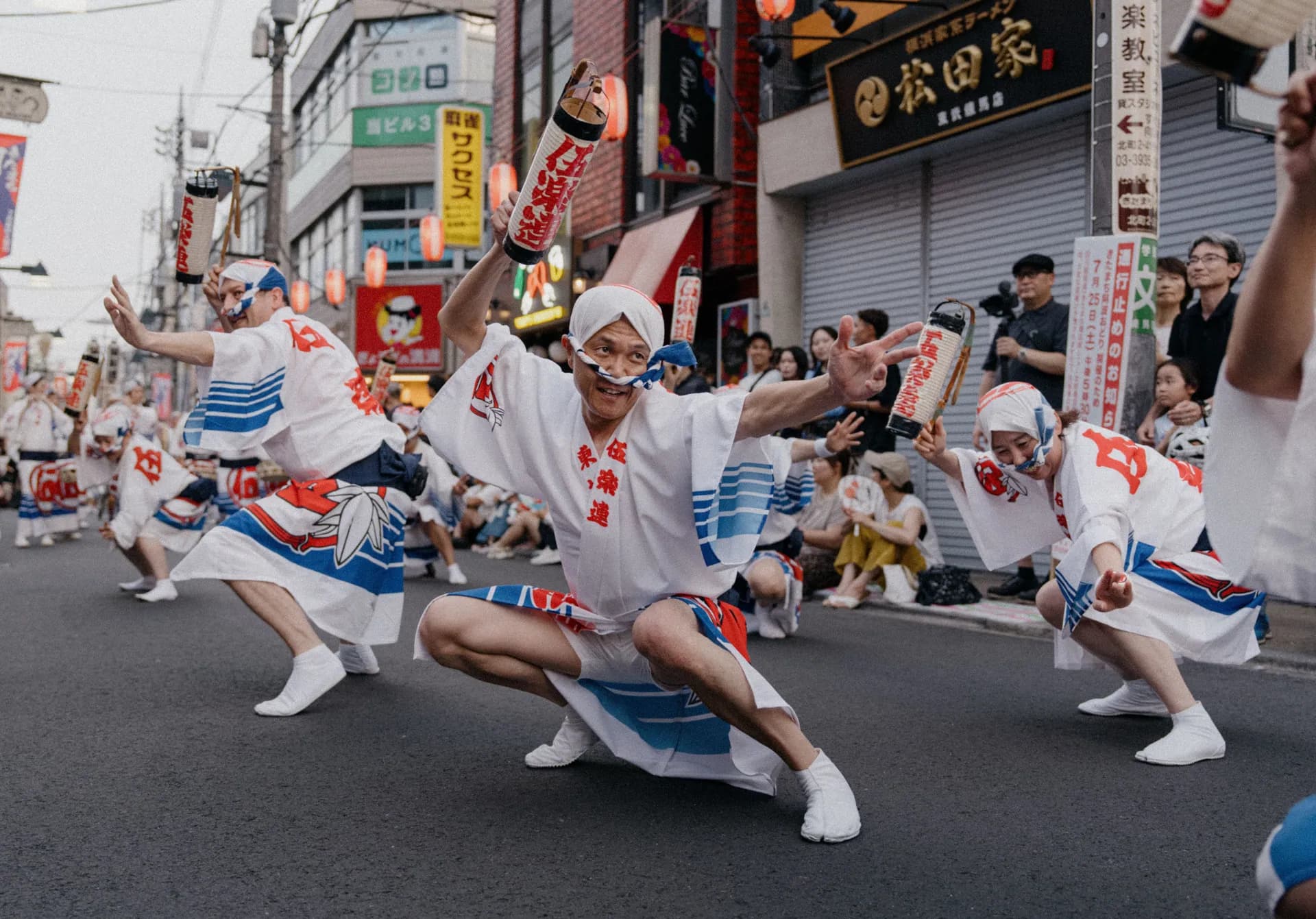
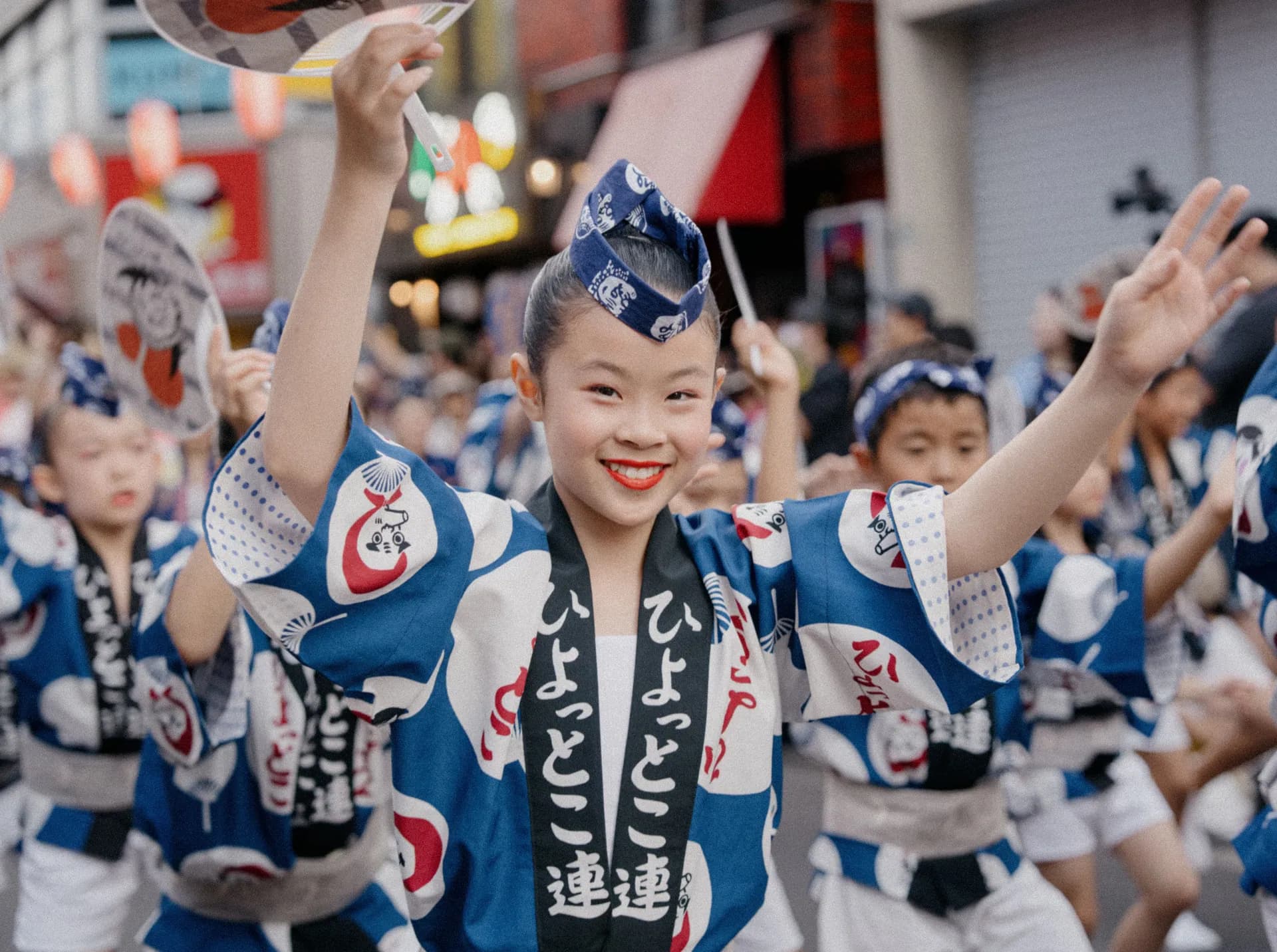
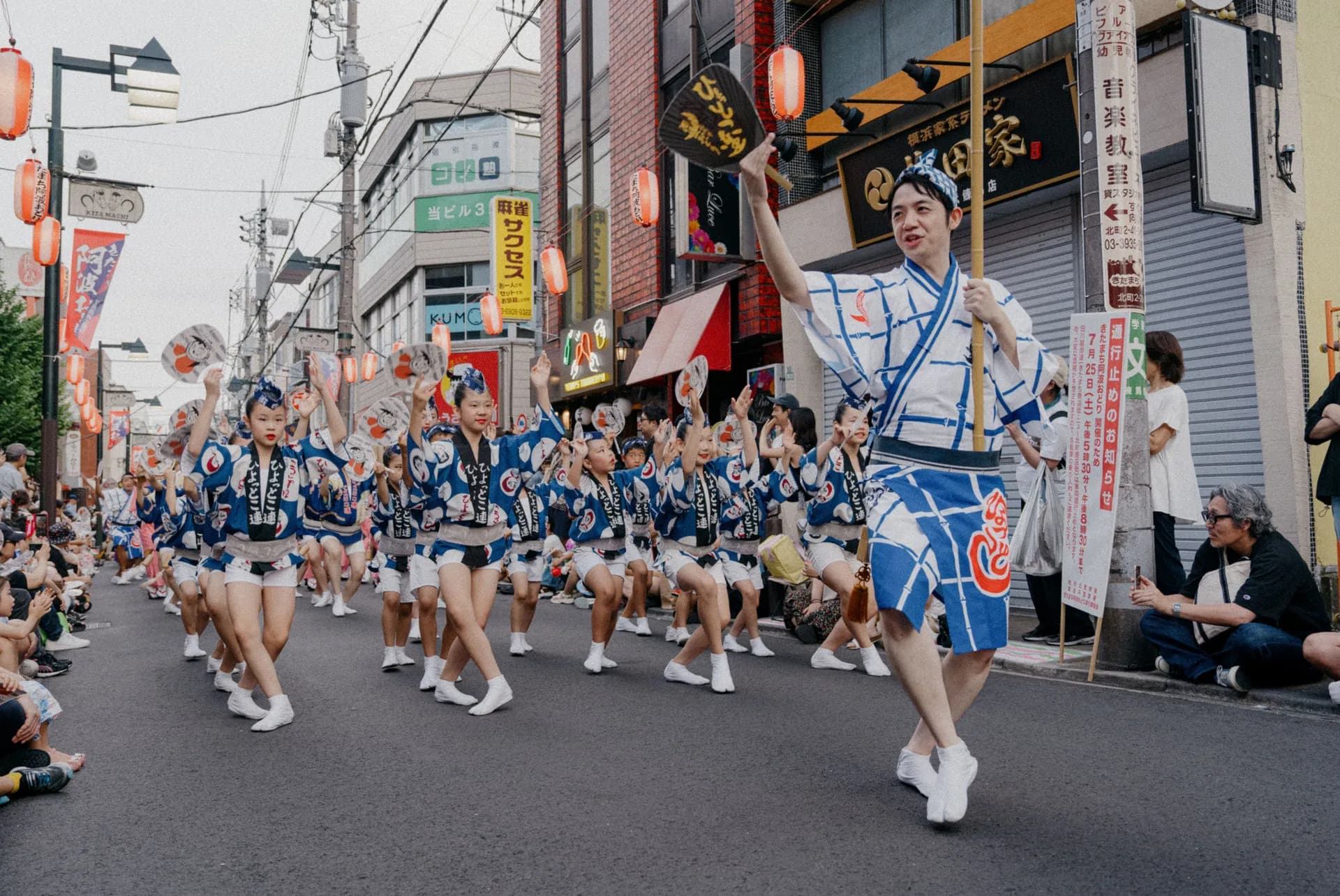
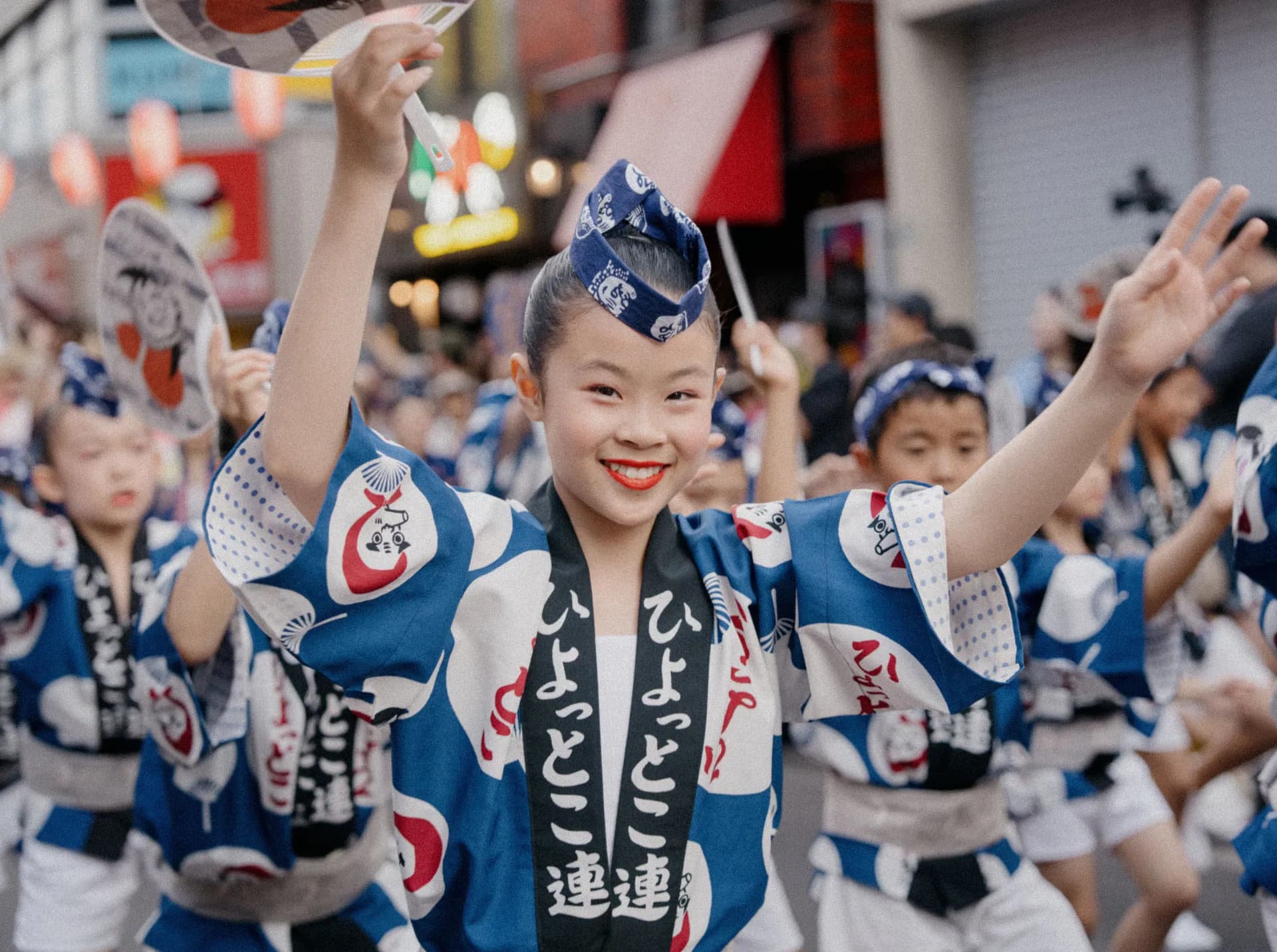
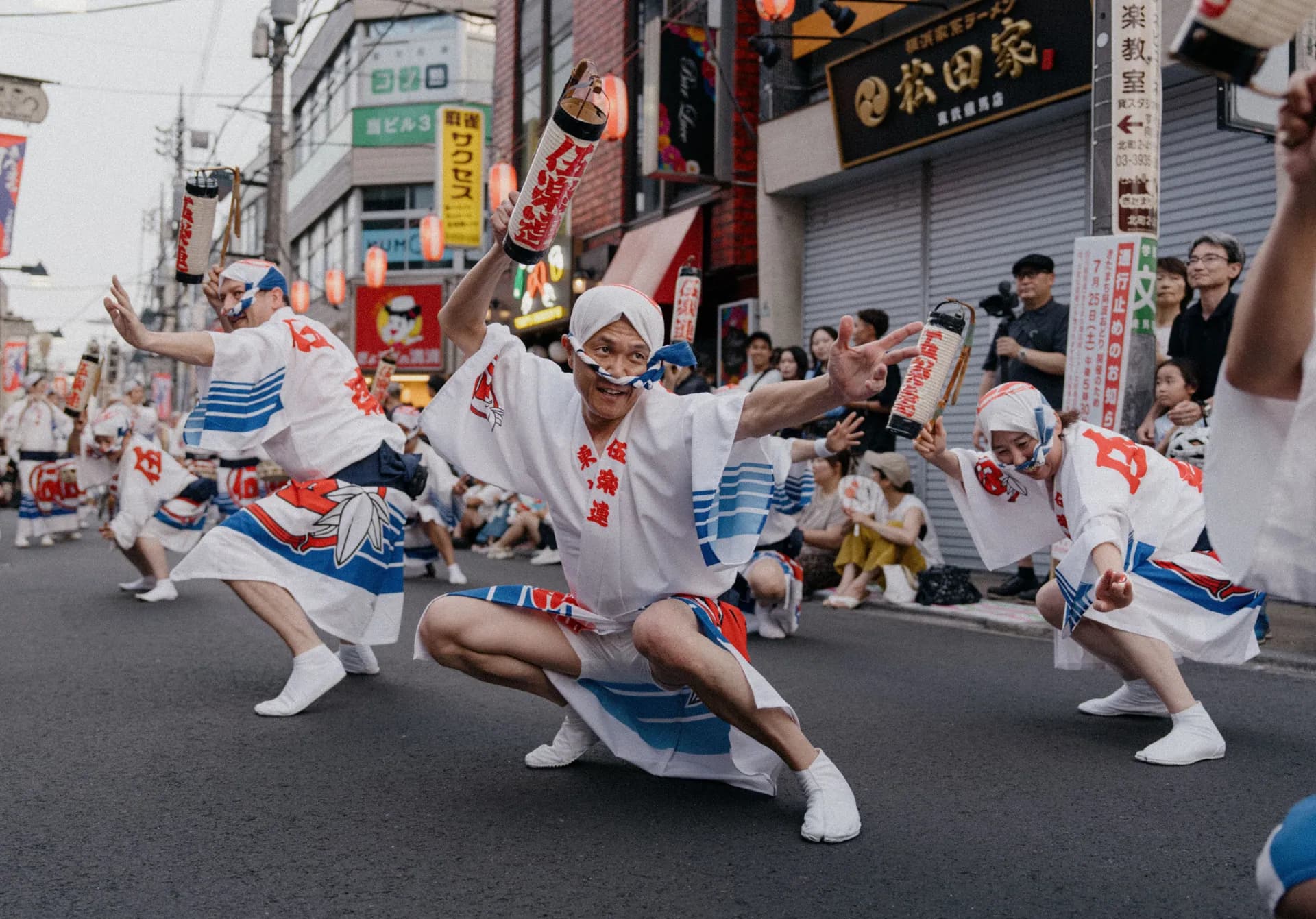
Female Awa Odori dancers in straw amigasa hats and yukata dancing in formation on their geta down a lit Tokushima street

Ticket Prices for Paid Enbujo Stands

No ticket is required to experience Awa Odori from the pavements and open plazas of central Tokushima, where street-side viewing is free to everyone 2 7. Paid tickets cover assigned tiered stands along the three official outdoor enbujo street stages—Aibahama, Minamiuchimachi and Konyamachi—as well as daytime indoor hall shows 2 7.

Recent official advance ticket tiers sold through Ticket Pia give a clear benchmark for 2027 budgeting 2 7:

  • Outdoor paid street stages (Aibahama, Minamiuchimachi, Konyamachi): Unreserved C seats at 1,000 JPY; assigned B seats at 2,000 JPY; A seats at 2,500 JPY; S seats at 3,000 JPY; and SS seats at 6,000 JPY per evening session, with children aged 0 to 2 free on a lap 2 7.

  • Minamiuchimachi premium block: Top-tier reserved seating offered exclusively at Minamiuchimachi at 15,000 JPY advance 2 7.

  • Daytime indoor shows: Suguribi at ASTY Tokushima (11 August) ran from 3,800 JPY for S seats, while Matsuribi at Awagin Hall (12 to 15 August) ran 2,800 JPY (A), 3,500 JPY (S) and 4,500 JPY (SS) 2 7.

  • Awa Odori Kaikan (year-round fallback): Regular daytime performances cost 1,300 JPY for adults (700 JPY students) and evening performances cost 1,600 JPY (800 JPY students) outside festival week 9.

In recent editions, presales opened in mid-June and general sales launched on 1 July via Ticket Pia’s English portal, with credit card payment and mandatory ticket printing at Seven-Eleven stores in Japan prior to arrival at the venue 7. For free street viewing at Ryogokuhonmachi, Shinmachibashi or Motomachi, arrive by 17:00 for an 18:00 start and carry cash for food stalls 1 8.

Note: There is no venue box office for online Ticket Pia orders; print your physical paper tickets at any Seven-Eleven convenience store before heading to the stage entrance 7.

Reserved tiered seating along a Tokushima street stage filled with spectators watching Awa Odori dancers pass at night
Need a steady connection for transit and maps?See eSIM plans

Travel to Tokushima for Awa Odori 2027

Awa Odori takes place in central Tokushima City in north-eastern Shikoku, with every paid stage, free plaza and indoor hall located within a 5- to 15-minute walk south of JR Tokushima Station toward the Shinmachi River 7 8. Because Tokushima has no Shinkansen line, visitors cross from Honshu by highway bus over the Akashi Kaikyo and Naruto bridges, by ferry or by domestic air 1 6.

Main transport links into Tokushima include:

  • Highway bus from Osaka and Kobe: Frequent buses depart Osaka Station (JR Highway Bus and Hankyu Sanbancho terminals) and Namba (OCAT and Nankai terminals) as well as Kobe Sannomiya, reaching Tokushima Station in about 2.5 hours for roughly 3,100 to 4,100 JPY one way 4 6 [TO VERIFY 2027].

  • Overnight bus from Tokyo: Cooperating operators run 9-hour overnight coaches between Tokyo and Tokushima for roughly 8,900 to 13,800 JPY depending on date and seat class 6 [TO VERIFY 2027].

  • Flight from Tokyo Haneda: JAL and ANA fly from Haneda to Tokushima Awaodori Airport in about 75 minutes, followed by a 28- to 30-minute limousine bus to Tokushima Station for around 500 JPY; regular fares sit near 42,000 JPY as Obon discounts sell out 1 6 7 [TO VERIFY 2027].

  • Rail via Okayama and Takamatsu: Take the Tokaido/Sanyo Shinkansen to Okayama, switch to the Marine Liner rapid train to Takamatsu, and ride the JR Limited Express Uzushio to Tokushima (about 5 to 6 hours and 18,010–19,000 JPY from Tokyo) 6 8 [TO VERIFY 2027].

  • Ferry from Wakayama: Nankai Ferry links Wakayama Port (connected by train from Namba and Kansai Airport) with Tokushima Port in about 2 hours 1 [TO VERIFY 2027].

Central streets around the stages close to vehicles from 18:00 to 22:30 on 12 to 15 August, making walking the only way to move between venues 7 8.

Tip: Reserve round-trip highway bus seats through Willer or Kosokubus as soon as your dates are fixed, as evening return buses to Osaka sell out well before festival week 4 6.

Navigating the Two-Block Evening Schedule and Niwaka-Ren Plazas

Awa Odori follows a structured daily arc that shifts from air-conditioned daytime theatre shows to four and a half hours of non-stop street dancing after sunset 2 7. While exact 2027 troupe rotations are published closer to August, recent editions operate on a consistent schedule 2 7.

During the day on 12 to 15 August, Matsuribi indoor showcases at Awagin Hall run three 70-minute sessions at 11:00, 13:30 and 16:00, featuring top ren performing choreographed stage routines (butai odori) 2 6 7. Alternatively, Awa Odori Kaikan at the foot of Mount Bizan hosts museum exhibits and daytime dance demonstrations where staff teach the basic two-beat step 6 9.

At 18:00, central streets close and the evening street festival begins across two distinct sessions 7 8:

  • First evening session (18:00 to 19:40): Top ren enter the paid enbujo stands at Aibahama, Minamiuchimachi and Konyamachi in formation (nagashi odori) 2 7. Women’s dance (onna odori) leads with upright posture, folded straw amigasa hats and wooden geta clogs, followed by men’s dance (otoko odori) in happi coats with low, energetic footwork and fans, backed by shamisen, taiko, bells and flutes 2 8.

  • Second evening session (20:20 to 22:00, with free plazas until 22:30): Stands clear and reload for the second block as famous ren rotate across stages so each venue sees a different line-up 7 8.

  • Niwaka-ren open dance plazas (18:30 to 20:30): At Tokushima Ekimae Dance Plaza and Motomachi-odori Dance Plaza, experienced leaders gather spectators, teach the steps on the spot, and lead everyone down the street 8.

Tip: Book one evening session in an assigned enbujo seat to see precision formations head-on, then spend the second session along Shinmachibashi or in a niwaka-ren plaza 7 8.

Challenges of August Heat and Festival Crowds

Arriving on 11 or 12 August 2027 allows visitors to experience the indoor opening and first street night before peak Obon holiday crowds arrive on 13 to 15 August 2 7. Crowd pressure builds predictably each day: 11 August centres on ASTY Tokushima as inbound buses fill; 12 August draws dense evening foot traffic along the Shinmachi River from 18:00; and 13 and 14 August hit maximum capacity when Japan’s nationwide Obon break overlaps with every street stage 2 7. On 15 August, the closing finale draws packed stands before stations and bus terminals surge after 22:30 2 3.

Weather in Tokushima in mid-August is intensely hot, humid and vulnerable to sudden summer storms 5. August climate averages record a daytime high of 92°F (33°C), an overnight low of 78°F (26°C), an 85°F (29°C) mean and 4.12 inches (105 mm) of rainfall, alongside afternoon thunderstorms and peak Pacific typhoon risk 5. Even after sundown, heat radiates off asphalt streets and crowded tiered stands 1 5.

  • Midday heat strategy: Schedule indoor visits—such as Awagin Hall daytime shows, Awa Odori Kaikan or the Mount Bizan Ropeway (open 9:00 to 21:00 in August)—between 11:00 and 16:00 7 9.

  • What to wear and carry: Choose breathable cotton yukata or light summer clothes, broken-in walking shoes, a hand towel and a folding fan; umbrellas are prohibited in tiered stands 2 8.

  • Typhoon and rain contingencies: Monitor Japan Meteorological Agency updates a week ahead and keep bookings refundable, as heavy rain or typhoon winds can cancel outdoor street sessions while indoor hall shows continue 1 3 5.

Note: Street food stalls line the Shinmachi riverside and open early; grab cold drinks and shaved ice before 17:30 to avoid long queues between the 18:00 and 20:20 blocks 7 10.

Spectators in yukata fanning themselves and holding cold drinks on a hot August evening at Awa Odori in Tokushima

Awa Odori Accommodation in Tokushima, Naruto, Takamatsu, and Osaka

Staying within a 10- to 15-minute walk of JR Tokushima Station and the Shinmachi River turns all four street nights into an easy stroll without watching last-train clocks 7 8. The challenge is Tokushima City’s limited hotel inventory, which sells out four to six months ahead of August—often by February or March—with festival-week rates rising sharply and minimum-stay rules frequently applied 1 6.

When central Tokushima rooms are unavailable or over budget, travellers rely on nearby cities connected by rail or highway bus 1 3 4:

  • Central Tokushima (Station & Shinmachi River): Best for walking home after the 22:30 finish and accessing Awa Odori Kaikan by day, but requires booking four to six months out 1 7 9.

  • Naruto (40 minutes north by JR Naruto Line): Closest regional fallback near the Naruto Strait whirlpools, with modest hotel supply and late-evening local train connections 3 4.

  • Takamatsu (about 1 hour west via JR Limited Express Uzushio): Kagawa’s prefectural capital offers deep business-hotel inventory and straightforward rail links for multi-night stays when Tokushima fills up 3 6 8.

  • Osaka or Kobe (2.5 hours across the bridges): Practical for single-day or evening visits via direct highway buses from Namba, Osaka Station or Sannomiya when paired with pre-booked return tickets 4 6.

Check whether Tokushima hotels offer accommodation-plus-ticket packages, as several local properties hold small allocations of enbujo seats for guests 1 3.

Tip: Lock in a cancellable room in Takamatsu or Tokushima first, then immediately book your highway bus or JR Limited Express Uzushio seats on the same day 4 6 8.

Managing Phone Service in Awa Odori Crowds

Packed evening streets around JR Tokushima Station and the Shinmachi River put heavy strain on local mobile networks between 18:00 and 22:30, while hotel Wi-Fi only works back at your room or in a neighbouring hub like Takamatsu or Osaka 1 3 7. Public hotspots around the station and shopping arcades frequently stall when tens of thousands of spectators gather along the parade route, cutting off access to Ticket Pia pickup codes, stage maps, highway bus reservations and group messaging 1 4 7.

International visitors can install a Japan eSIM before flying so mobile data activates immediately upon landing at Kansai, Haneda or Tokushima without queuing at airport SIM counters. Pre-configuring the eSIM at home allows immediate access to maps for locating Awa Odori stages, translation tools for local announcements and menus, and public transport schedules for navigating Tokushima 1 2.

  • Travelers should plan for mobile data access, ensuring their device is compatible and unlocked for international use. Preparing connectivity options before departure can help ensure smooth data activation upon arrival in Japan.

  • Data allowance: Plan on 1 to 2 GB of daily data usage for e-tickets, stage maps, bus and JR timetables, messaging, and translation; increase to 10 to 20 GB over four nights if filming and sharing dance videos 1 4.

  • Offline backups and power: Screenshot your Seven-Eleven ticket barcode, seat assignment, stage map and last train or bus departure time, and carry a compact power bank for hot evenings outdoors 1 7.

Tip: Keep your home SIM active for SMS banking codes if needed, set your Japan eSIM as the primary data line, and save heavy video uploads for hotel Wi-Fi.

Suggested itinerary

Day 1 · 12 August, arrival and first street night

  1. Morning
    Osaka to Tokushima StationRide a pre-booked highway bus across the bridges in about 2.5 hours 4 6
  2. Early afternoon
    Seven-Eleven and hotel check-inPrint Ticket Pia enbujo tickets at Seven-Eleven and drop bags near the station 7
  3. Late afternoon
    Awa Odori Kaikan and Bizan RopewayWatch a 40-minute daytime dance demo and ride the ropeway before dusk 6 9
  4. 18:00
    Shinmachibashi and RyogokuhonmachiWatch the opening evening street dances from free riverside pavements 8

Day 2 · 13 August, Obon peak and reserved stand

  1. Morning
    Tokushima Castle ruins and gardensWalk the shaded park grounds early before peak afternoon heat builds 2 5
  2. 13:30
    Matsuribi show at Awagin HallCool off indoors during a 70-minute daytime stage showcase by top ren 6 7
  3. 18:00
    Reserved enbujo seat (first block)Watch women’s and men’s dance formations head-on from tiered stands 2 7
  4. 19:45
    Motomachi-odori Dance PlazaJoin a niwaka-ren open dance group to learn the steps and dance in the street 8

Day 3 · 14 August, Naruto excursion and riverside stalls

  1. Morning
    JR Naruto Line to NarutoTake a morning local train to view the Naruto Strait whirlpools 3 4
  2. Late afternoon
    Shinmachi riverside food stallsEat yakitori, takoyaki and shaved ice before the 18:00 road closures 8 10
  3. 20:20
    Second evening block on free streetsFollow rotating ren line-ups around Konyamachi and Aibahama exteriors 7 8
  4. After 22:30
    Walk back to station areaStroll back as traffic reopens and crowds disperse 7 8

Day 4 · 15 August, grand finale and departure

  1. Morning
    Slow morning in TokushimaPack bags and rest ahead of the final festival evening 2 3
  2. Afternoon
    Arudeyo Tokushima souvenir plazaBrowse local indigo crafts and sudachi citrus treats on the 1F of Awa Odori Kaikan 9
  3. 18:00
    Finale evening blocksClaim an early pavement spot along the parade route for closing-night performances 1 8
  4. After 22:30
    Pre-booked night bus or hotelDepart on a reserved coach to Osaka or rest for a morning departure on 16 August 3 4 6

Tip: Book highway buses and hotels months ahead, print Ticket Pia seats at Seven-Eleven on arrival, and combine one paid stand with free streets and a niwaka-ren plaza 4 6 7 8.

Recommended eSIM plans

Pick by trip length. Visiting several countries? Choose a regional plan.

Selected: eSIM Japan 10GB 07 Day(s)
المزيد من الباقات لـ اليابانتحتاج إلى بيانات أكثر؟ استكشف كل باقات اليابانسعة أكبر، باقات غير محدودة ورحلات أطولعرض الكل

Set up your eSIM in 3 steps

  1. Order and get your QR codeThe QR code arrives by email right after payment.
  2. Scan before you flySettings → Cellular → Add eSIM, while you still have Wi-Fi.
  3. Turn on data when you landSet the eSIM as your data line and enable data roaming.

Frequently asked questions

Awa Odori is Japan’s largest traditional Bon dance festival, uniting around 1,000 ren dance groups and over one million spectators in Tokushima City for five days every August 1 2. Unlike parades where crowds only watch from behind barriers, Awa Odori pairs precision women’s and men’s street formations with open niwaka-ren plazas where visitors are invited to learn the steps and dance along 2 8.

Yes. While organised ren perform choreographed routines on paid and free stages, open niwaka-ren groups gather spectators at Tokushima Ekimae Dance Plaza and Motomachi-odori Dance Plaza from 18:30 to 20:30 8. Leaders teach the basic two-beat hand and foot movements on the spot, and anyone may join in everyday summer clothes without advance registration or fees 2 8.

Spending two to three nights during the 12 to 15 August street dance window gives enough time to watch one session from a reserved enbujo stand, explore free riverside streets, join a niwaka-ren group, and ride the Bizan Ropeway by day 6 7 8. Adding an arrival buffer on 11 August or departing on 16 August avoids peak Obon transport bottlenecks 2 3.

Entry rules depend on your passport nationality. Citizens of many countries qualify for short-term visa-free tourism in Japan, while others must apply for a visa through a Japanese embassy or consulate before travel [TO VERIFY current rules]. Verify current entry requirements and Visit Japan Web registration rules well before August, and carry your physical passport for hotel check-in.

Yes, heavy evening crowds between 18:00 and 22:30 can slow public hotspots and congested cell towers around JR Tokushima Station and the Shinmachi River 1 7. Screenshot your Seven-Eleven ticket barcodes, stage maps, and last bus or train times ahead of time, and plan on 1 to 2 GB of daily mobile data—or 10 to 20 GB if filming and sharing dance videos 1 4 7.

Tokushima Awa Odori is the original 400-year-old festival on Shikoku, held from 11 to 15 August with around 1,000 ren, indoor hall shows and tiered enbujo street stands 2 7. Tokyo’s Koenji Awa Odori is the largest offshoot, held over a late-August weekend around Koenji Station along neighbourhood shopping streets without Tokushima’s riverside enbujo stands 7 [TO VERIFY 2027].

Sources

Figures on this page come from the sources below — the small number next to each figure points to its source.

  1. 1The Japan Guides, Awa Odori Festival 2027
  2. 2Hey Japan!, Awa Odori Festival 2027, Tokushima
  3. 3Club Tourism, Tokushima Awa Odori Festival Tour/Travel 2027
  4. 4Kosokubus, Tokushima/Osaka Highwaybus Booking
  5. 5Time and Date, Climate & Weather Averages in Tokushima, Japan
  6. 6japan-guide.com, Awa Odori Festival - Tokushima Travel
  7. 7GlosTravel, Awa Odori Tokushima 2026: Tickets, Dates, and Paid vs Free Viewing
  8. 8MATCHA, Awa Odori Festival: Tokushima's Summer Dance Festival
  9. 9Shikoku Tourism, Awa Odori Kaikan (Awa Odori Museum)
  10. 10Japan Activity, Awa Odori: Tokushima Festival Travel Guide