Скачать в App StoreDownload Gohub App on the App Store
Gohub Logo – Travel eSIM Provider
AsiaChina eSIM

Harbin Ice and Snow World 2027: Best Time to Visit, Tickets and Travel Tips

  • Late Dec 2026 – late Feb 2027 (expected)
  • China (Harbin, Heilongjiang)
  • Last updated: 7 окт. 2026 г.

Harbin Ice and Snow World 2027

Overview

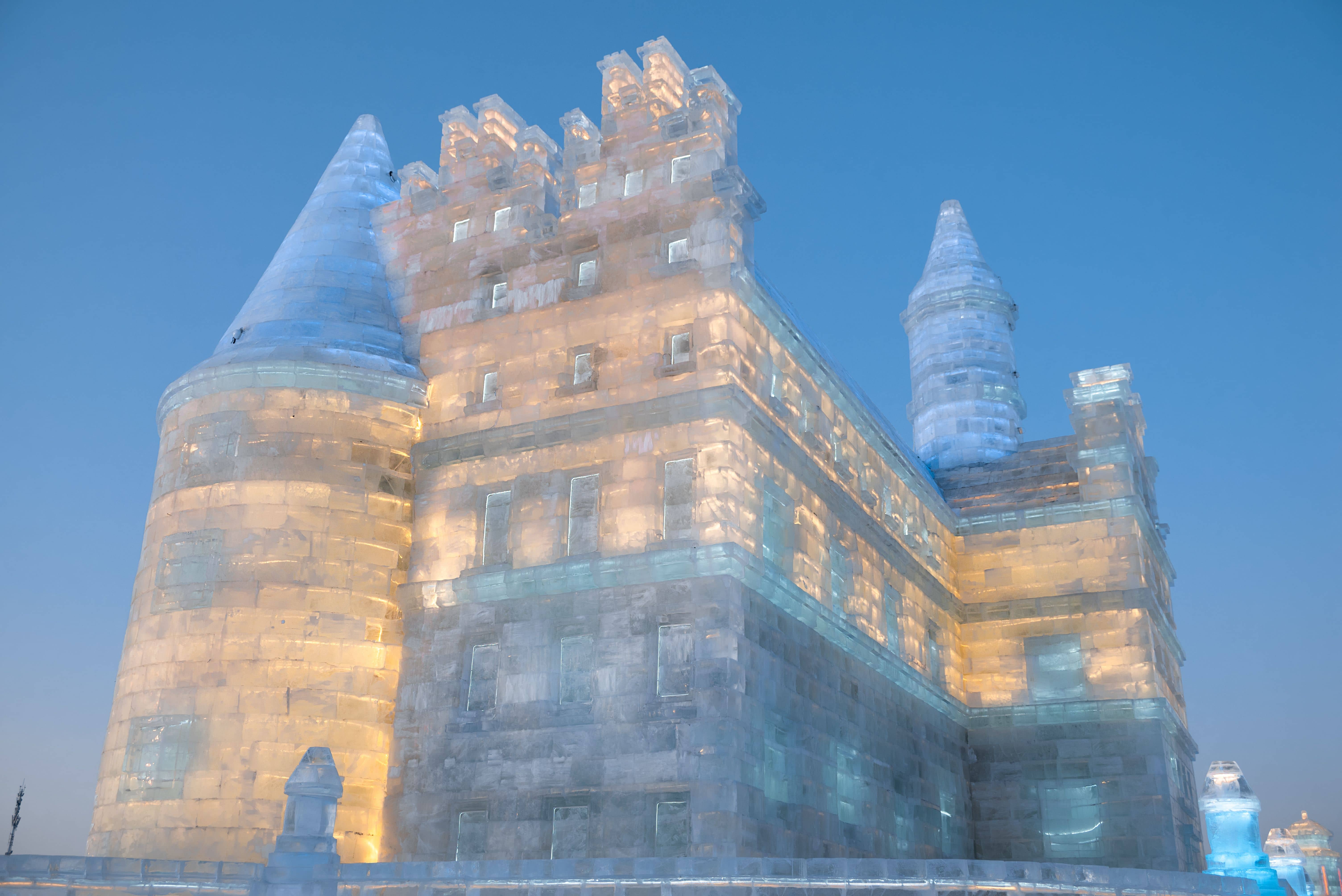
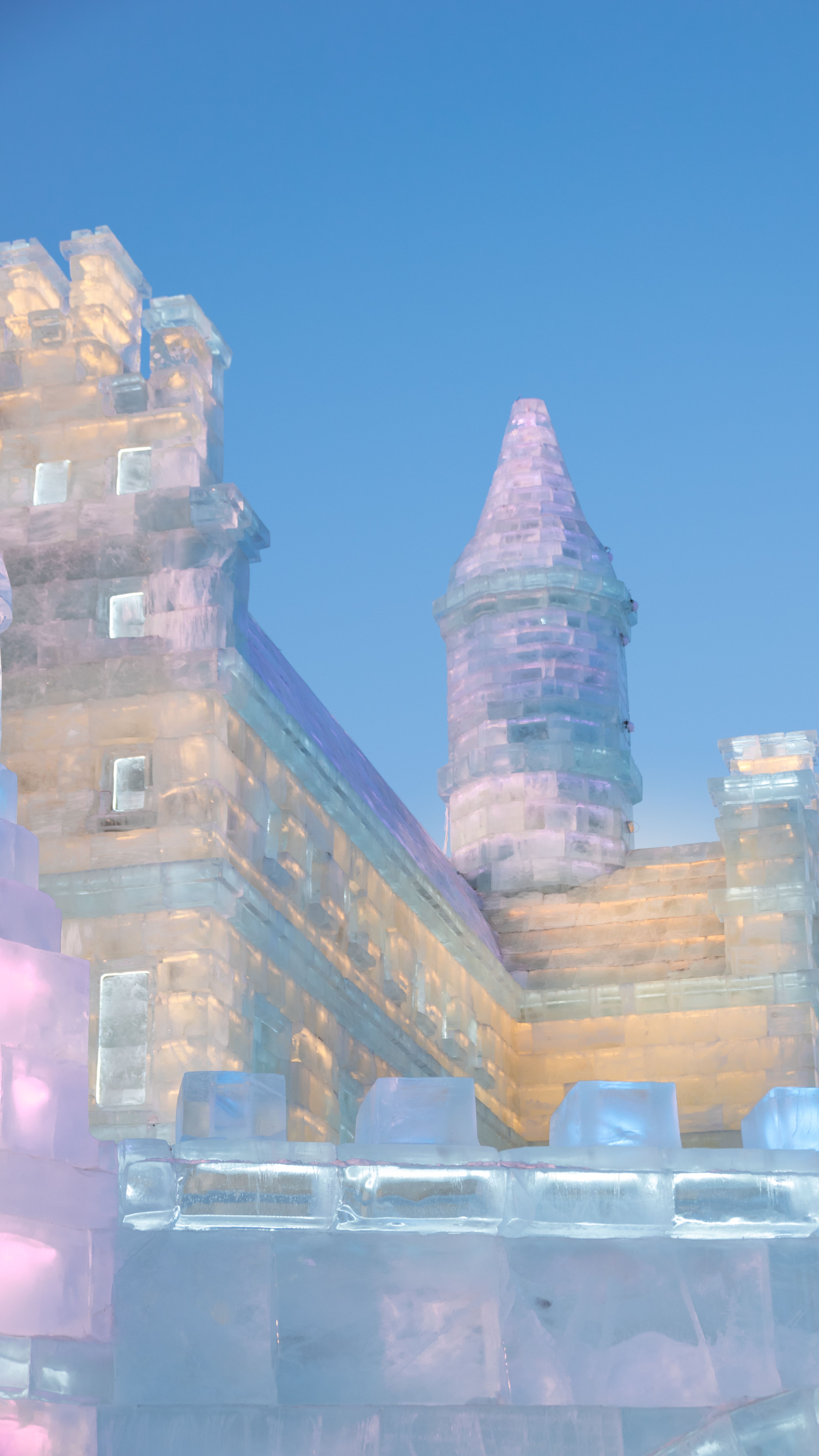
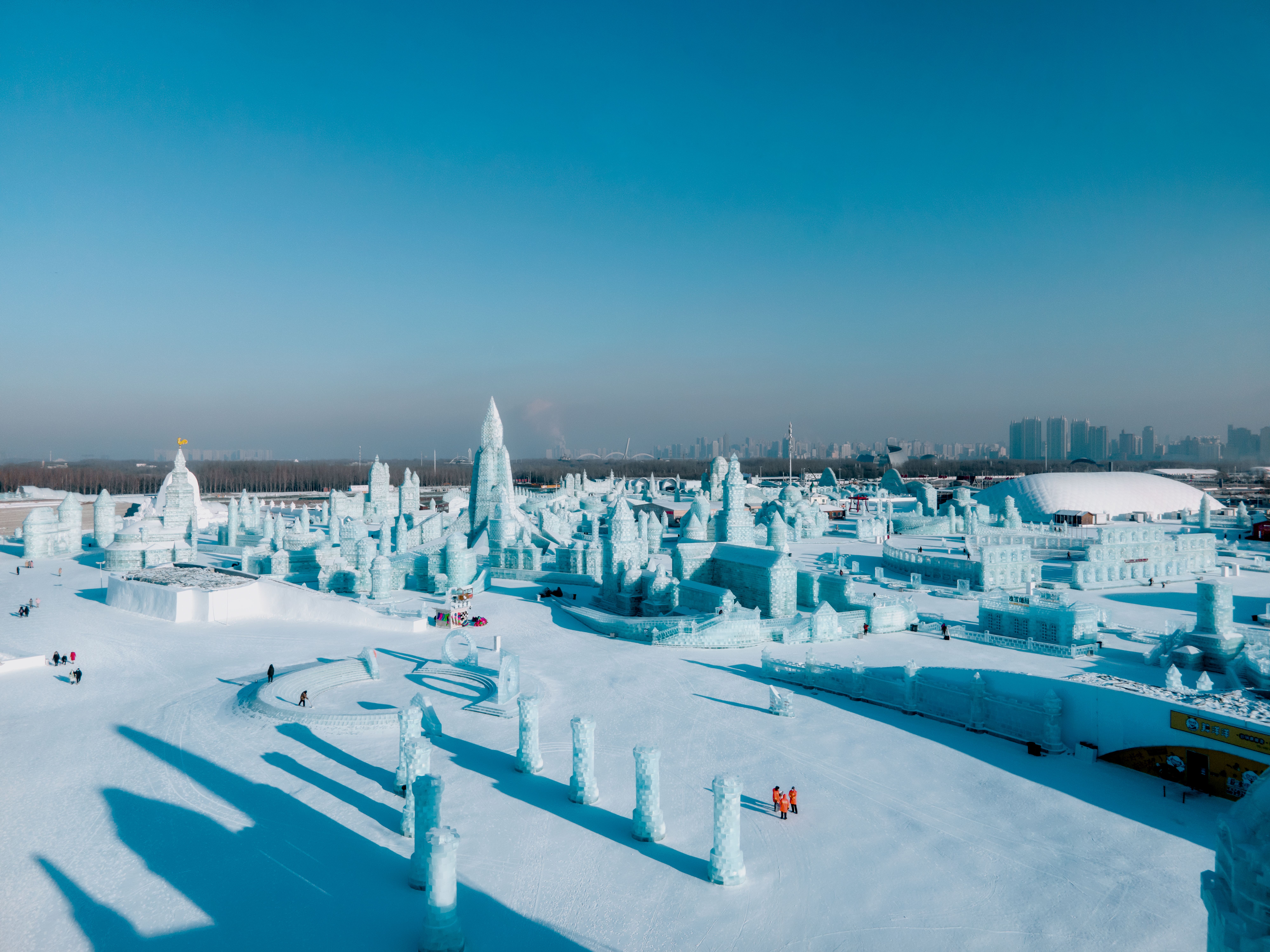
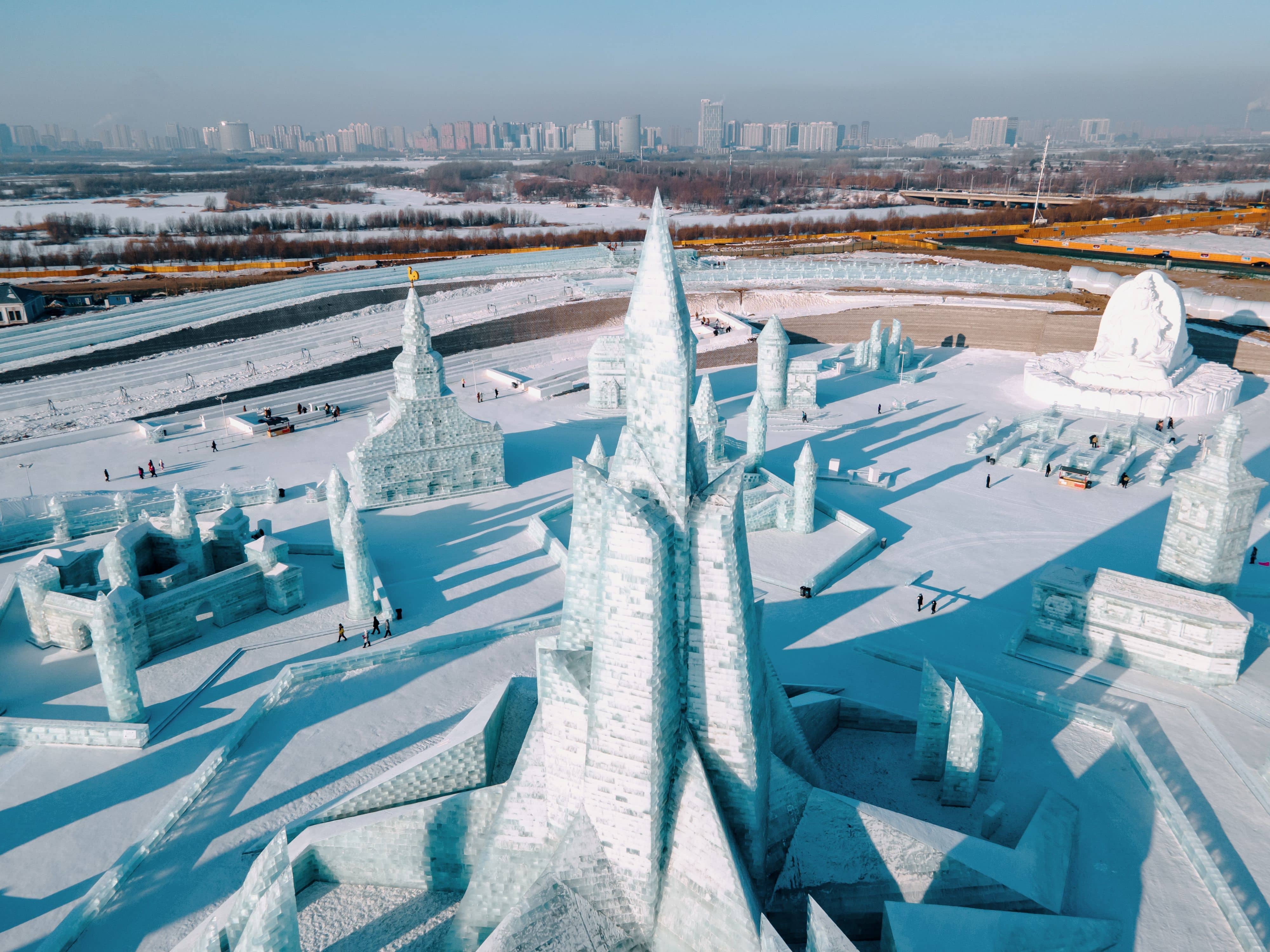
Harbin Ice and Snow World is the ticketed ice theme park on the north bank of the Songhua River in Harbin, north-east China, and the main venue of the city's winter festival. Rebuilt every December from river ice, it opens around 20 December and runs to late February; the 2027 season is the park's 28th. Expect castles up to 50 metres tall lit in colour, a super ice slide, shows, fireworks and -25°C nights.

Highlights

  • 2027 season expected from around 20 December 2026 to late February 2027
  • 328 RMB standard ticket in the 2026 season, 298 RMB in the opening week
  • Over 310 ice displays, buildings up to 50 metres, lit from dusk to 22:00
  • Metro Line 2 runs straight to Harbin Ice and Snow World station
  • Enter around 15:00 to see daylight ice, dusk and the full light show on one ticket
  • January nights of -25°C: plan on three to four hours inside with heated breaks

Good to know

Dates
Expected around 20 Dec 2026 to late Feb 2027 (2026 season: 17 Dec to 21 Feb); official festival opening 5 Jan 2027; closing depends on the thaw
Opening hours
10:00 to 22:00, last entry 21:30 (2026 season); lights on from dusk, around 16:00
Venue
Songbei District, north bank of the Songhua River, Harbin; at about 45.78° N, 126.56° E, situated on the western side of Sun Island.
Entry
328 RMB standard adult, 298 RMB opening week, VIP up to about 988 RMB (2026 season); dated and timed e-tickets
Getting there
Metro Line 2 to Harbin Ice and Snow World station; taxi 20 to 30 min from Central Street; Harbin Taiping Airport 45 min to the city
Recommended eSIM
China eSIM

A theme park made of ice, open eight hours a day in the dark

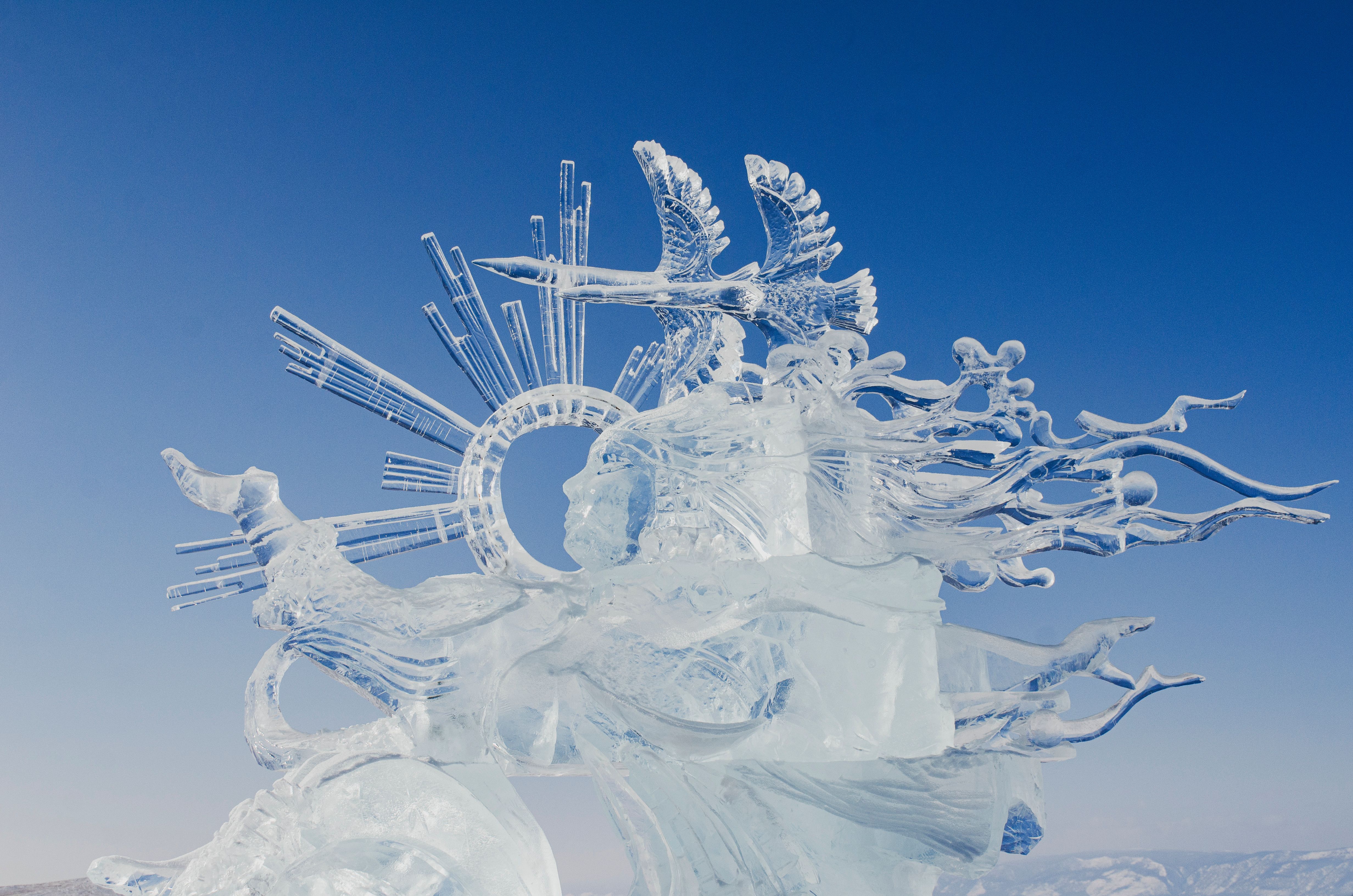
Harbin Ice and Snow World is not a sculpture garden; it is a full theme park built from blocks cut out of the frozen Songhua River, rebuilt from scratch every December and gone by March. There are castles and towers you climb, a cathedral-sized hall, a super ice slide, ice bikes and go-karts, a Ferris wheel, parades, stage shows, an ice bar and food halls, spread across a site so large that walking end to end takes half an hour at -25°C. It opened in 1999 as an offshoot of the city's older ice lantern tradition and is now the main venue of the Harbin International Ice and Snow Festival, which officially opens on 5 January each year.

Everything about visiting it runs through your phone. The ticket is a dated, timed QR code bought in a Chinese app. The slide fast pass, the show times and the closing notices on a -30°C night are posted on the park's official account. Metro Line 2 gets you there, but the stop names, the exits and the ride-hailing pin for the way home are in Chinese. Payments inside are Alipay and WeChat Pay. The park has no usable Wi-Fi for its crowd, your hotel's network stays at the hotel, and local networks block Google Maps, WhatsApp and Instagram anyway. A China eSIM installed before you fly keeps all of it working, as long as you keep the phone warm.

A timed ticket, a fast pass and a show schedule, all in one app

Entry is by dated, timed e-ticket; the super ice slide fast pass, the Ferris wheel and the indoor ice exhibition are separate codes; and the King's Chariot show and fireworks run to a timetable posted on the park's account. Each needs a connection to buy, to open at the scanner with gloves on, and to check before you walk twenty minutes across the ice to a stage.

Metro Line 2 and the walk to the gate

Line 2 drops you at Harbin Ice and Snow World station, but the exit, the signed walk to the entrance and the shuttle to Sun Island are all in Chinese on dark, icy streets. After the 22:00 close, the taxi rank is a 40-minute wait in the cold; ride-hailing from a pin two blocks away is the exit, and it runs on your data.

Keeping the group together between the castles

The park is bright at the castles and dark between them, and the plaza in front of the main structure packs solid before fireworks. A grandparent who ducks into a heated hall or a child who runs to the slide is lost in a minute. Live location sharing in a group chat is the fix, with every phone on its own data and inside a coat.

Reading the cold-weather notices

Frostbite warnings on the screens, slide closures, shortened hours in a cold snap and the menu at the ice bar are in Chinese. Camera translation reads them in seconds with a connection; the notice that the park is closing an hour early tonight is the one you most need to understand.

Install your eSIM before you fly and be online when you land — see matching plans

The complete guide

When Is Harbin Ice and Snow World in 2027?

Harbin Ice and Snow World 2027, the park's 28th season, is expected to open around 20 December 2026 and run to late February 2027; the organiser had not confirmed the exact opening date at the time of writing, and it never promises a fixed closing date because operations are entirely dependent on weather conditions and rising temperatures. The pattern is consistent. Harbin Ice and Snow World 2026, the 27th season, opened on 17 December 2025, well before the Harbin International Ice and Snow Festival's fixed official opening on 5 January, and closed on 21 February 2026 when the thaw made the structures unsafe.

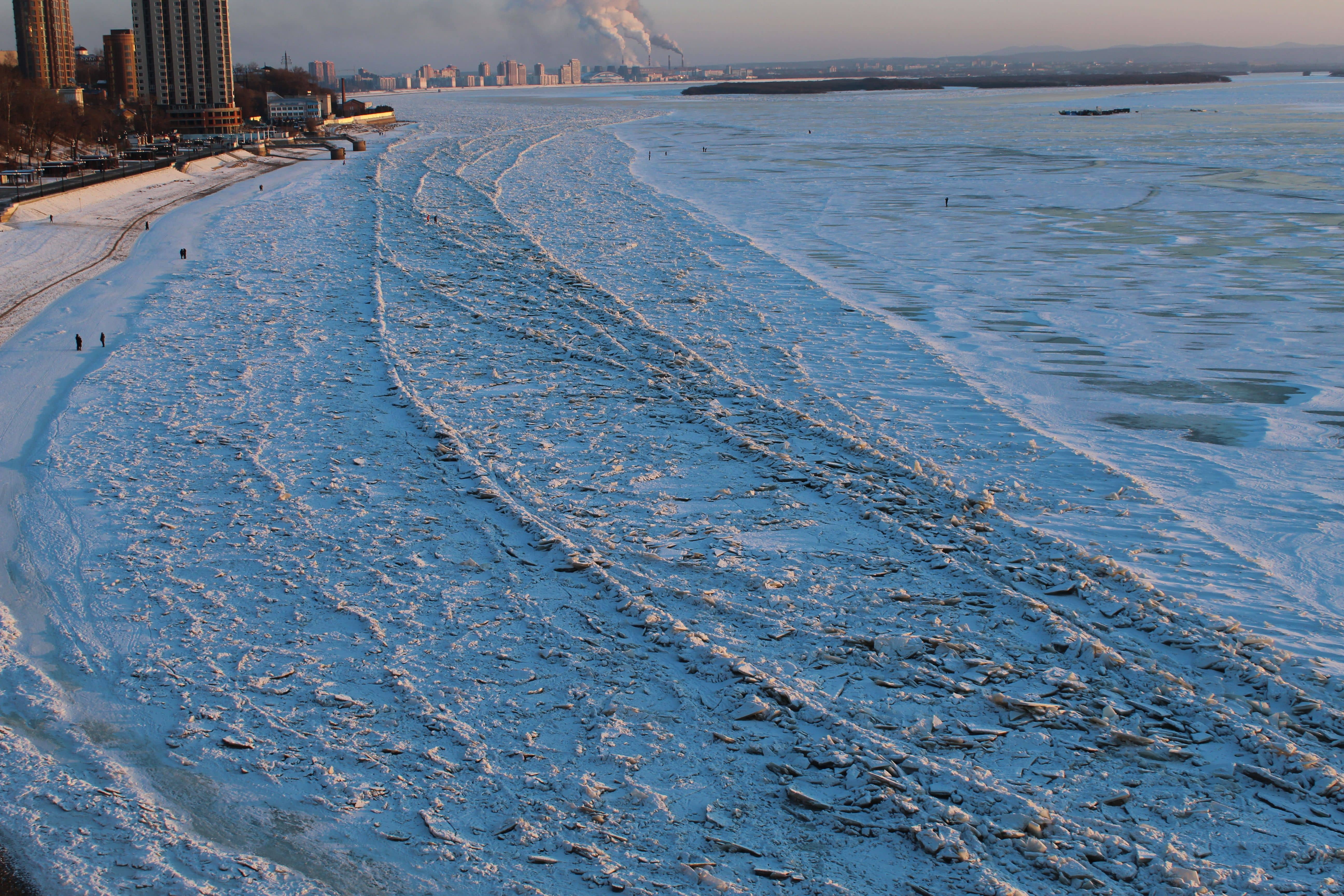
The park's dates are set by ice, not by a calendar. Harvesting starts when the Songhua River is frozen thick enough to cut, usually in early December; building takes two to three weeks; the park opens as soon as the main structures are lit and safe. At the other end, a warm spell in late February softens the ice, loses its clarity and closes the park with little notice. There is no lunar element and no fixed weekday rule.

How the organiser announces the season:

  • Mid-October: a first announcement with the scale of the new park and the ticket price. The 2026 season's came on 13 October 2025 and confirmed the fare was unchanged

  • Early December: the opening date, usually a week or two before the gates open

  • 5 January 2027: the festival's official opening ceremony, with fireworks over the park that night

  • Late February: closing announced days ahead, or not at all

Dates inside the season that change the visit:

  • Opening week: a cheaper ticket (298 RMB in 2026) and some structures still being finished

  • 1 to 3 January 2027: China's New Year holiday, very crowded

  • 6 to 25 January: the deep-cold, finished-park, ordinary-crowd window

  • 5 to 11 February 2027: Chinese New Year week (New Year's Day is 6 February), the busiest week for tickets, trains and hotels

  • After 12 February: thinner crowds and a growing risk of early closure

Tip: Follow the park's official account and the Harbin tourism bureau from mid-October 2026 for the price and from early December for the opening date; book flights for the second or third week of January if you want certainty.
Workers cutting ice blocks from the frozen Songhua River with saws and dragging them onto the bank during the December ice harvest for Harbin Ice and Snow World

Do You Need a Ticket, and What Does It Cost?

Yes, Harbin Ice and Snow World tickets are required, dated and timed, and they are the main cost of a Harbin trip after the hotel. As of October 2026, the official 2027 season ticket prices have not yet been formally released, meaning the 2026 season pricing remains the most accurate budgetary guide:

  • Standard adult: 328 RMB for most of the run, 298 RMB in the opening week; the organiser confirmed the fare was unchanged from the previous season

  • VIP packages: up to about 988 RMB, bundling a fast pass for the super ice slide, the Snowflake Ferris Wheel, reserved seats for the King's Chariot show and entry to the indoor ice exhibition

  • Combined ticket with the Sun Island Snow Sculpture Expo (about 198 RMB on its own): a small saving, but directional, since it is dated to the ice park and must be used there first; the Sun Island half can be used the next day. Used the other way round, the system reports the ticket as expired

  • Children, students and seniors: Concession tickets have been priced at 240 RMB for minors under 18 years old (taller than 1.2 meters) and full-time undergraduate students under 24 years old with valid student IDs. Free admission applies to children 1.2 meters and shorter, as well as seniors aged 65 and above, subject to on-site ID verification and daily capacity caps

What the standard ticket includes: the structures and viewing towers, most slides and the outdoor shows, projection mapping and fireworks on peak nights. Extras inside: the super ice slide fast pass (the general queue reaches 30 to 60 minutes on busy evenings), some rides, the Ferris wheel, the indoor exhibition, the ice bar and the food halls.

Where to buy: the park's official WeChat account and app and the Harbin tourism bureau's platform sell dated, timed e-tickets; overseas bank cards have been accepted for ticket purchases since the 2026 season, and multilingual guides work at the park. The major Chinese travel apps and reputable tour operators resell the same tickets at a small markup, which is the easy route if you cannot register on a Chinese platform. The opening fortnight and the Chinese New Year week sell out in advance; mid-January is usually available a few days ahead.

Note: Choose a time slot around 15:00. One ticket then covers the ice in daylight, the switch-on at dusk and the full lit park, which is the whole point; a 19:00 slot gives you only the dark and the longest queues.

Nothing inside the fence is free, but the free side of Harbin's winter is real: Central Street's ice sculptures, St Sophia's square and the frozen river with its sleds and swimmers cost nothing and fill a day.

The illuminated main entrance gate of Harbin Ice and Snow World at night with ticket scanners and queuing visitors in heavy coats
Need a steady connection for transit and maps?See eSIM plans

Where It Happens and How to Get There

Harbin Ice and Snow World is in Songbei District on the north bank of the Songhua River, across the water from Harbin's old city centre, at about 45.78 N, 126.60 E, a short ride from the Sun Island Snow Sculpture Expo on the same island. How to get to Harbin Ice and Snow World is simple since Metro Line 2 opened: the line has its own station named for the park.

Getting to Harbin:

  • Harbin Taiping International Airport (HRB): direct flights from Beijing (about 2 hours), Shanghai (about 2.5 hours), most Chinese cities and some international routes; a taxi to the city centre takes about 45 minutes and costs around 100 to 150 RMB, airport shuttle buses about 20 RMB, Note that there is currently no direct rail or metro link running from the airport to the city center; ground transportation via bus, taxi, or private transfer remains the only option.

  • High-speed rail: 5 to 6 hours from Beijing to Harbin West or Harbin North; Harbin Station has the best access to the centre. Book both directions on the official 12306 platform, since returns sell out around Chinese New Year

Getting to the park from the city:

  • Metro Line 2 from Harbin Railway Station or Central Street direct to Harbin Ice and Snow World station; from the centre allow about 15 minutes. Load the Harbin transit code into Alipay or WeChat Pay, or buy a metro card, before the evening

  • Taxi or ride-hailing from Central Street: 20 to 30 minutes outside peak hours, about 18 to 25 RMB; expect a long wait after closing

  • Hotel and tour shuttles: many run afternoon departures and returns after the fireworks

  • A cable car crosses the river from Stalin Park to Sun Island: it operates during winter to provide a scenic, panoramic view over the frozen river. However, it drops you off at the Sun Island Scenic Area, which requires an additional short taxi or shuttle bus ride to reach the actual park gate of Ice and Snow World

Inside the park: the entrance plaza leads to the main castle; the super ice slide, the ice bikes and go-karts, the Ferris wheel, the show stage and the heated rest halls are spread around a loop that takes 30 to 40 minutes to walk at a cold-weather pace. Signage inside is bilingual in parts; the park app and your translation app cover the rest.

Tip: Leave by the metro, not the taxi rank. Walk to Harbin Ice and Snow World station before 21:30 or straight after the fireworks; the rank at the gate can mean 40 minutes standing at -25°C, which is a safety issue, not an inconvenience.

Getting back late: closing is 22:00 and the last Line 2 trains leave soon after with the last train departing from Ice and Snow World station at 22:45 heading towards Meteorological Observatory and at 23:01 heading towards Jiangbei University Town if you have children or older relatives, pre-book a return transfer through your hotel.

What Actually Happens, Hour by Hour

A visit runs from clear ice in daylight to a fully lit city after dark, and the park's programme is built around that switch. The park is open 10:00 to 22:00 with last entry at 21:30; exact 2027 show times will be posted by the park closer to the opening date, typically via their official WeChat mini-program. Around 15:00, entry: the ice is clear and faintly green in daylight, and you can see the river blocks stacked into walls, bridges and the cathedral-sized hall. This is the hour for the queue-heavy attractions:

  • The super ice slide, before the evening line builds to 30 to 60 minutes

  • Ice bikes, go-karts and tubing lanes

  • Climbing the tower stairs for the overview while it is still light

Around 16:00, dusk: the lights inside the ice come on and the park turns blue, red and gold within minutes. The twenty minutes around sunset are the photographs of the trip; stand on the main plaza in front of the central castle, or on a tower stair, before the lights go on.

Evening, in rotation until close:

  • Projection-mapped animations on the largest ice surfaces

  • The King's Chariot parade and stage shows on the central avenue (Note: The specific performance themes, including the Ice and Snow Show and indoor performances, change every season to match the annual theme, which will be fully detailed in the mid-October park release).

  • Fireworks over the park on peak nights and on the festival's official opening night, 5 January 2027

  • The Snowflake Ferris Wheel, the overhead view from a heated cabin

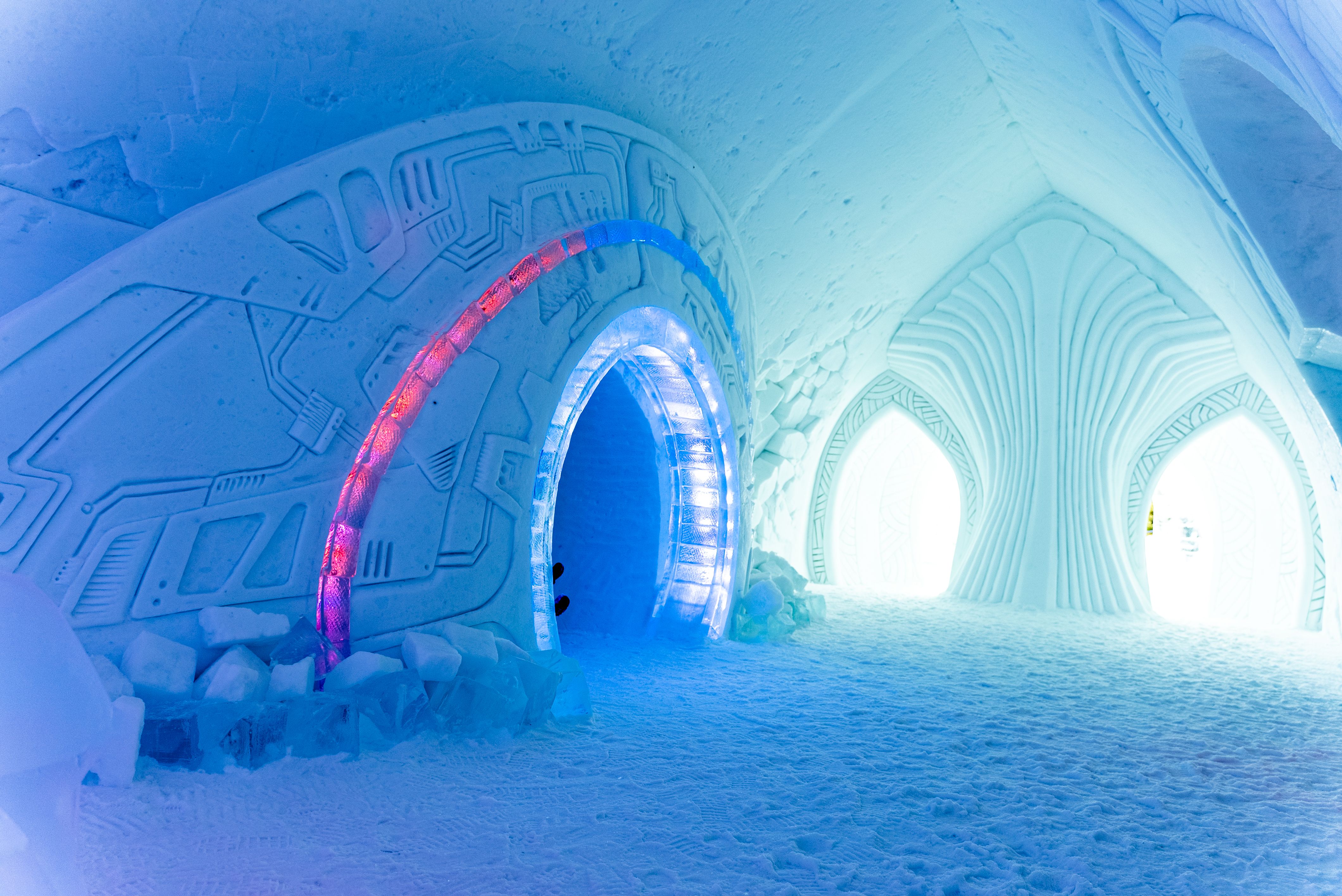
  • The ice bar, the indoor ice exhibition and the food halls for warming breaks

What the 2026 season looked like: more than 310 ice displays, from traditional ice lanterns to the projection-mapped structures, with buildings up to 50 metres tall; for the 2027 season, the park is scaling up further to an estimated 1.2 million square meters, featuring entirely new themed architectural layout zones and advanced digital integration, maintaining its status as a world-record ice park.

Tip: Do the slide and the rides in your first hour, then the castles and towers at dusk, then the shows and the Ferris wheel after dark, with a heated hall every 45 minutes. In that order you see everything once and queue least.

Visitors sliding down the long super ice slide at Harbin Ice and Snow World with lit ice towers glowing behind them

Best Time to Arrive and What the Weather Is Like

The best time to visit Harbin Ice and Snow World is the second or third week of January, entering around 15:00 on a weekday. That window sits after the opening-week finishing work and the 5 January ceremony, in the deepest and most reliable cold, with the ice at its clearest, and well before the Chinese New Year crush that starts in early February.

Crowd levels on a scale of 1 to 5:

  • Opening week, around 20 to 31 December 2026: level 3; cheaper tickets, some structures still being finished

  • 1 to 3 January 2027: level 5; China's New Year holiday

  • 4 and 5 January: level 4 to 5; the opening ceremony and fireworks on the 5th

  • 6 to 25 January: level 3; the sweet spot

  • 26 January to 4 February: level 3 to 4, rising

  • 5 to 11 February: level 5; Chinese New Year week, tickets and hotels sold out weeks ahead

  • 12 February to closing: level 2 to 3, with the closing date uncertain

Within a day: 10:00 to 15:00 is quiet and cold-light pretty, 15:00 to 17:00 is the sweet spot for entering, 18:00 to 21:00 is the peak for both crowds and queues, and the last hour thins out.

The weather is the coldest most visitors will have travelled in. January in Harbin averages around -18°C, with daytime highs near -13°C and nights of -25°C or colder; cold snaps push past -30°C, when the park may shorten its hours. It is dry and bright with little snowfall; the ice and snow you see were harvested and built. Wind off the river makes the park feel colder than the city streets, and there is nowhere to hide from it except the heated halls.

How to plan around it:

  • Enter mid-afternoon, not at opening, and leave by about 21:00; three to four hours is enough

  • Heated breaks every 45 minutes; the halls, the ice bar and the Ferris wheel cabin all count

  • Cover every piece of skin after dark; frostbite on cheeks and fingers happens to visitors every year

  • Keep the phone inside the coat and carry a power bank in an inside pocket; batteries fail at -25°C with charge to spare

Note: Sunrise is around 7:00 and sunset around 16:00 in January, so the lit park is at full effect by late afternoon; there is nothing to gain from a morning entry and a lot of cold to lose.

Where to Stay and When to Book

Stay in Harbin's old city around Central Street in Daoli District, one Metro Line 2 ride from the park, and base yourself where the free half of a Harbin winter is: the lit street, St Sophia Cathedral, the frozen river and Zhaolin Park's ice lanterns. Staying next to the park in Songbei is possible but isolates you for everything except the evening.

Areas to consider:

  • Central Street and the riverfront: the widest choice from budget to high-end, English menus nearby, 20 to 30 minutes to the park by taxi or one metro ride; the default

  • Around Harbin Railway Station and Nangang District: business hotels, good for rail arrivals, a short metro ride to Central Street and direct Line 2 to the park

  • Songbei District beside the park: a few resort-style hotels with views over the lit ice; convenient for the evening and pricier, with everything else across the river

  • Near Harbin West Station: only for a late arrival or an early departure by high-speed rail

When to book: rooms for mid-January begin selling in October, and the opening week and the Chinese New Year week are gone by late November. Book by early November 2026 for choice; from mid-December you take what is left at premium rates. Based on historical winter peak pricing, standard reference rates for mid-January typically range from 200 to 400 RMB for a budget hotel near Central Street, 500 to 900 RMB for a mid-range hotel, and from 1,200 to over 2,500 RMB for an international chain or a Songbei resort hotel, with steep surcharges for 1 to 5 January and 5 to 11 February.

Things to check before you book:

  • Registration to host foreign guests; many Harbin budget hotels are domestic-only and the police registration rule is enforced

  • A humidifier in the room, or one on request; the heated air is desert-dry

  • A luggage room and a late check-in desk, since the park keeps you out until 22:00

  • A shuttle to the park, which several central hotels run in the afternoon with a return after the fireworks

Tip: Ask for a river-facing high floor on Central Street; on a clear night the glow of Ice and Snow World is visible across the water, a free preview of where you are going.

Central Street in Harbin at night in winter with Russian-style buildings lit up and ice sculptures along the pedestrian street

Staying Connected During the Festival

Wi-Fi is not a strategy at Harbin Ice and Snow World. The park has no usable public network for its crowd, the cafés on Central Street want a Chinese mobile number to log in, and hotel Wi-Fi goes through China's filters, which stop Google Maps, Gmail, WhatsApp, Instagram and most Western sites from loading. A VPN over hotel Wi-Fi is slow and unreliable, and it is no use at the gate at 15:00 with your ticket QR code in an email that will not open.

What data does for you at the park:

  • Buying and showing the timed e-ticket, the slide fast pass and the Ferris wheel code at the scanners
  • The park's official account for show times, fireworks nights, cold-snap hour changes and the closing-date notice
  • Metro Line 2 directions, the transit code in Alipay or WeChat Pay, and ride-hailing after closing
  • Camera translation of frostbite warnings, slide closures and the menu at the ice bar
  • A group chat with live location for regrouping in the dark between castles
  • Alipay and WeChat Pay for hot drinks, food halls and the ice bar; every payment needs a live connection
  • Video calls home from inside an ice hall, which is the call everyone makes

The fix is a China travel eSIM that routes data so your usual apps work, installed at home before you fly. Check that your phone is unlocked and supports eSIM, buy the plan, scan the QR code on a reliable connection, and switch the line on when you land. 4G and 5G coverage inside the park and along Line 2 is strong; it slows briefly during the fireworks when the whole park uploads at once.

How much data: 1 to 2 GB a day covers tickets, maps, translation, payments and messaging. Video is the variable; an evening of filming lit ice and sending clips home can double it. For a four-day Harbin trip, 10 GB is comfortable, and 20 GB suits heavy social media use or a longer China itinerary. GoHub's China plans are listed on the eSIM for China page.

Tip: Cold is the real connectivity problem here. A phone at -25°C can shut down with 40 percent battery left; keep it against your body, use a power bank from an inside pocket, and screenshot your ticket and your hotel's address in Chinese before you leave the hotel.

Keep your home SIM active for SMS so bank verification codes arrive, set the eSIM as your data line, and turn off data roaming on the home SIM.

Suggested itinerary

Day 1 · Arrival and the old city

  1. Around midday
    Harbin Taiping Airport to Central StreetTaxi takes about 45 minutes; buy hand warmers and a face mask at the first shop you pass
  2. Afternoon
    Central Street and St Sophia CathedralThe free half of a Harbin winter, with the cathedral floodlit from dusk
  3. Around 17:30
    Zhaolin Park ice lanternsA small, walkable introduction to carved ice before the main event
  4. Evening
    Dongbei dinner off Central StreetGuobaorou and a sauerkraut stew; an early night before a long day tomorrow

Day 2 · Ice and Snow World

  1. Morning
    Slow start and a warm breakfastSave energy and warmth for the afternoon; the park does not reward a morning entry
  2. Around 14:00
    Metro Line 2 to Harbin Ice and Snow World stationLoad the transit code first; screenshot your timed ticket
  3. Around 15:00
    Super ice slide, ice bikes and go-kartsFirst hour, shortest queues; the slide fast pass is worth it on busy nights
  4. Around 16:00
    Main plaza at duskStay in one wide spot for the twenty minutes when the lights come on inside the ice
  5. Evening
    Castles, shows, Ferris wheel and fireworksA heated hall every 45 minutes; the Ferris wheel cabin counts as one
  6. Around 21:00
    Metro back to Central StreetBeat the 22:00 exodus; late snack on the lit street

Day 3 · Sun Island and the river

  1. Around 9:30
    Sun Island Snow Sculpture ExpoMorning sun on the snow carvings; two to three hours at most
  2. Around 12:30
    Lunch on Sun Island or back in the cityWarm up fully before the afternoon
  3. Afternoon
    Flood Control Monument and the frozen SonghuaSleds, ice bikes and the winter swimmers; cash for the operators
  4. Evening
    Russian dinner in the old quarterBorscht and blini; the morning flight out is the next buffer
Tip: Enter around 15:00, do the slide and rides first, watch the lights come on from the main plaza, and leave by metro before the 22:00 crush.

Recommended eSIM plans

Pick by trip length. Visiting several countries? Choose a regional plan.

Selected: eSIM China 20GB 30 Day(s)

Set up your eSIM in 3 steps

  1. Order and get your QR codeThe QR code arrives by email right after payment.
  2. Scan before you flySettings → Cellular → Add eSIM, while you still have Wi-Fi.
  3. Turn on data when you landSet the eSIM as your data line and enable data roaming.

Frequently asked questions

Yes, if you can handle -25°C for a few hours. Nothing else looks like a lit city of carved ice at this scale, with a super ice slide, shows and fireworks. The ticket was 328 RMB in the 2026 season, expensive for China, and the cold is real; enter mid-afternoon, dress properly and it is a great winter night.

Three to four hours, entering around 15:00. That covers the ice in daylight, the switch-on at dusk, the slide and rides, the evening shows and the Ferris wheel, with heated breaks every 45 minutes. Longer is possible with the indoor halls, but the cold accumulates and most visitors are ready to leave by 21:00, before the 22:00 close.

Yes, the park opens at 10:00, but the lights are the point, and in daylight you see clear ice without the colour. The best compromise is a mid-afternoon entry around 15:00: an hour of daylight for the slide and rides, the lights coming on at about 16:00, and the full lit park afterwards, all on one timed ticket.

It depends on your passport. China has expanded visa-free entry for many nationalities and offers a transit exemption for which Harbin Taiping Airport is an eligible entry point, but rules change often [TO VERIFY current rules]. Check with the Chinese embassy in your country two months ahead. Carry your passport daily; hotels and train tickets require it.

Plan on 1 to 2 GB a day for e-tickets, metro directions, translation, payments and messaging, and more if you upload a lot of video from the lit ice. A 10 GB eSIM covers a four-day Harbin trip; take 20 GB for heavy social media use or a longer China trip. Install it before flying and keep the phone warm.

Dress for -25°C with wind: a long down parka, fleece and thermal base layer, lined trousers over thermals, insulated waterproof boots with grip, a hat covering the ears, a balaclava or face mask, ski gloves over touchscreen liners, wool socks and foot warmers. Hand warmers in every pocket, two power banks inside the coat, and sunglasses for the afternoon glare.