App Store पर डाउनलोड करेंDownload Gohub App on the App Store
AsiaJapan eSIM

Gion Matsuri 2027: Dates, Tickets and How to Get There

  • Jul 1 – 31, 2027 (parades Jul 17 and 24)
  • Japan (Kyoto)
  • Last updated: 7 अक्टू॰ 2026

Gion Matsuri 2027

Overview

Gion Matsuri is Kyoto's month-long July festival, held since 869 to pray for the city's health, and one of the three great festivals of Japan. The 2027 dates are fixed by tradition: events run 1 to 31 July, the first float procession (Saki Matsuri) is on 17 July, the second (Ato Matsuri) on 24 July, and the lantern-lit Yoiyama street nights fall on 14 to 16 and 21 to 23 July. Watching from the street is free.

Highlights

  • Fixed dates every year: 1 to 31 July, parades on 17 and 24 July
  • Saki Matsuri procession 17 July, 23 floats from Shijo-Karasuma at 9:00
  • Yoiyama nights 14 to 16 July: lantern-lit floats, food stalls, car-free streets
  • Ato Matsuri procession 24 July, 10 floats, calmer and easier to see
  • Free from the pavement; reserved seats from 5,000 JPY near Kyoto City Hall
  • Hot and humid: Kyoto in July averages 31°C by day, 23°C at night

Good to know

Dates
1 to 31 Jul 2027; Saki Matsuri procession Sat 17 Jul, Ato Matsuri procession Sat 24 Jul; Yoiyama 14 to 16 and 21 to 23 Jul
Opening hours
Processions from 9:00 to around 13:00 on 17 Jul and from 9:30 on 24 Jul; Yoiyama streets car-free 18:00 to about 23:00 on 15 and 16 Jul
Venue
Shijo-Karasuma to Kawaramachi and Oike streets, central Kyoto; float neighbourhoods around Shijo and Karasuma; Yasaka Shrine
Entry
Free to watch; reserved seats on Oike-dori 5,000 to 7,500 JPY, premium seats 125,000 to 155,000 JPY (2026 prices)
Getting there
Kansai or Osaka Itami airport to Kyoto Station, then subway Karasuma Line to Shijo or Hankyu to Karasuma; Keihan to Gion-Shijo
Recommended eSIM
Japan eSIM

A month of ritual in a city of narrow streets

Gion Matsuri began in 869 as a plea to the gods to end a plague, and more than 1,150 years later Kyoto still spends all of July on it: neighbourhood ceremonies, sacred-rope cutting, lantern-lit evenings when the great yamaboko floats stand in the streets and families open their old townhouses to show heirlooms, and two processions in which floats weighing several tons, some 25 metres tall, are hauled by hand through the city centre and swung round corners on bamboo slats and water. The sound of the gion-bayashi flutes and bells drifts over everything. It is one of the three great festivals of Japan and the most elegant.

It is also a festival of logistics. The floats stand in a grid of small streets west of Karasuma that all look alike at night; the processions close roads from early morning; the reserved seats are tied to a specific block of Oike-dori; the Yoiyama food stalls take cashless payment; and the subway exits that are open change by the hour. Hotel Wi-Fi stays in the hotel. The free city Wi-Fi needs registration and collapses on 16 July when hundreds of thousands of people stand on Shijo. A Japan eSIM installed at home before you fly keeps the map live, the group chat working and the seat ticket on your screen through the whole month.

Finding the floats by name in the lantern grid

Each float has a home intersection in the neighbourhoods west of Karasuma, and the ones with the best interiors to visit (Naginata-hoko, Funa-hoko, Tsuki-hoko) are spread across a dozen small streets. The official Yoiyama map and a live location pin are how you find the float you want to climb instead of the one in front of you.

Road closures and the open subway exits

On 15 and 16 July Shijo and Karasuma go car-free from 18:00 to about 23:00 with one-way pedestrian flow, and on parade mornings the whole centre is closed to vehicles from early. The transit app and the city's festival notices tell you which exits are open at Shijo, Karasuma and Kawaramachi stations and which way the pedestrian flow runs.

Regrouping on Yoiyama night

On the evening of 16 July the crowd on Shijo moves one way, slowly, and anyone who stops at a stall is fifty metres behind in a minute. Live location sharing in a group chat is how a family regroups at a float, and it only works if every phone has its own data.

Reserved seats, show times and QR codes

Reserved seats for the processions are sold online by the Kyoto City Tourism Association and come with a seat number and a block on Oike-dori. The e-ticket, the seating map and any weather notice (the procession can be delayed by heavy rain) live in your email and the association's site, which you need data to open at the gate.

Menus, stall prices and the townhouse rules

Yoiyama stalls, the byobu (folding screen) displays in private houses and the rules for climbing a float (no shoes, sometimes men only, a small charm purchase required) are all signposted in Japanese. Camera translation turns a confusing evening into an easy one, with a connection each time you point the phone.

Install your eSIM before you fly and be online when you land — see matching plans

The complete guide

When Is Gion Matsuri in 2027?

Gion Matsuri 2027 runs from 1 to 31 July 2027, and its headline events fall on the same calendar dates every year: the Saki Matsuri float procession on Saturday 17 July 2027 and the Ato Matsuri procession on Saturday 24 July 2027. Unlike China's lunar festivals, Gion Matsuri has used fixed Gregorian dates since the Meiji era, so you can book flights and hotels for 2027 now without waiting for an announcement. The organiser confirms the detailed timetable each spring, and the Kyoto City Tourism Association puts reserved seats on sale in early June.

The month in order:

  • 1 to 5 July: opening rites in each float neighbourhood (kippuiri) and the lottery at Kyoto City Hall that fixes the parade order

  • 10 to 14 July: the floats are assembled in the streets without a single nail, roped together over three days; watching the build is free and fascinating

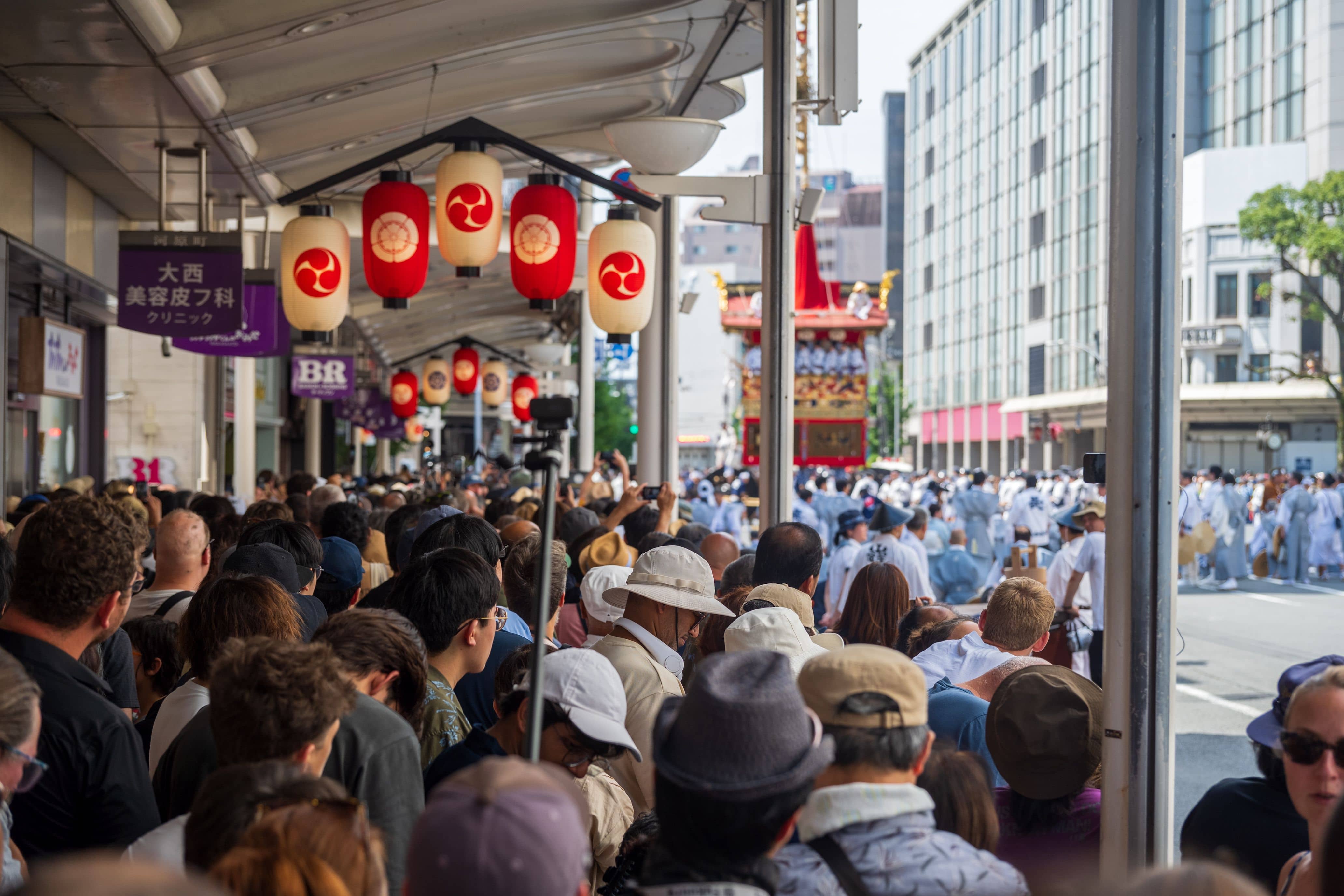
  • 14 to 16 July: Saki Matsuri Yoiyama. The 23 floats stand lit with lanterns, musicians play on board, stalls line Shijo and Karasuma, and on 15 and 16 July the streets go car-free from 18:00 to about 23:00. The 16th is the busiest night of the year in Kyoto; the 14th is far quieter

  • 17 July: Saki Matsuri Yamaboko Junko, the first procession, from 9:00 at Shijo-Karasuma to around 13:00; that evening the three mikoshi portable shrines leave Yasaka Shrine from 18:00 and are carried to the Otabisho on Shijo

  • 21 to 23 July: Ato Matsuri Yoiyama, smaller and without the food stalls, with the 10 Ato Matsuri floats lit in their neighbourhoods

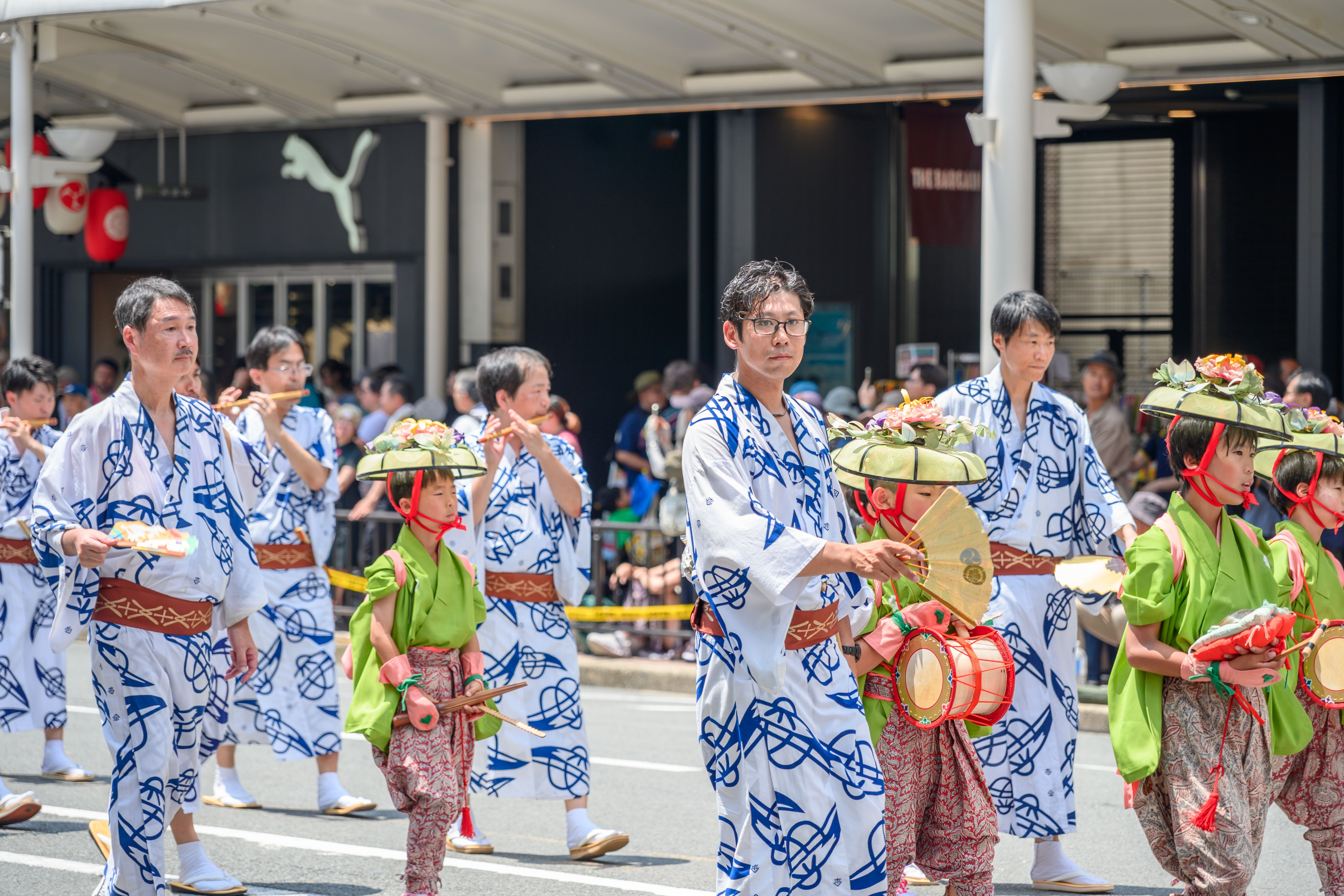
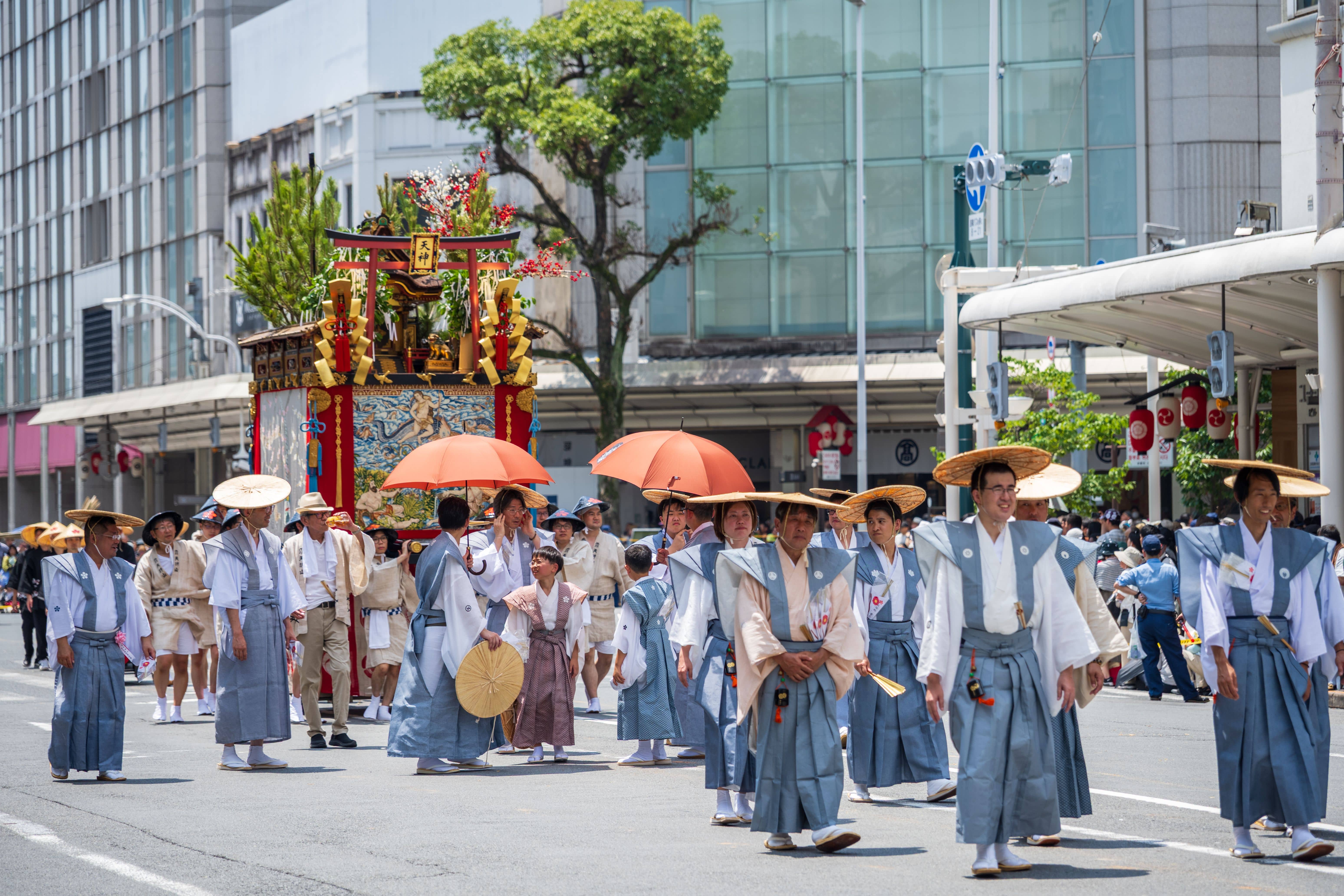
  • 24 July: Ato Matsuri procession from 9:30 at Karasuma-Oike, running the first route in reverse, followed by the Hanagasa flower-hat parade, and in the evening the mikoshi return to Yasaka Shrine

  • 28 to 31 July: mikoshi purification on Shijo Bridge and the closing rites at Yasaka's Eki Shrine on 31 July

If you can only be in Kyoto for a few days, 15 to 17 July is the heart of it. If you want the ritual without the crush, 21 to 24 July gives you lit floats, the second procession and far thinner crowds.

Tip: Both 2027 processions fall on a Saturday. Expect domestic crowds above a normal year, and book reserved seats on 1 June 2027, the morning they go on sale.
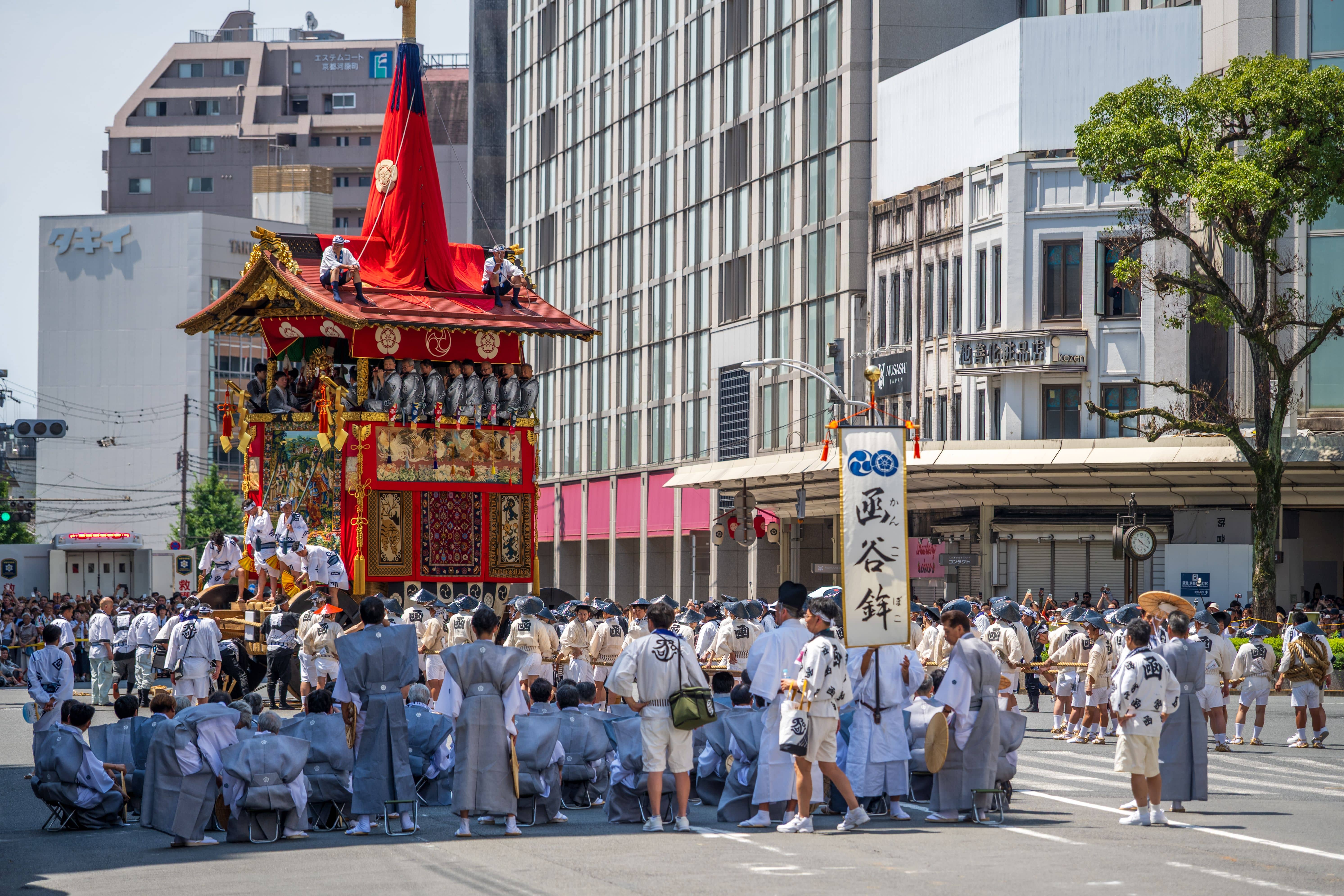
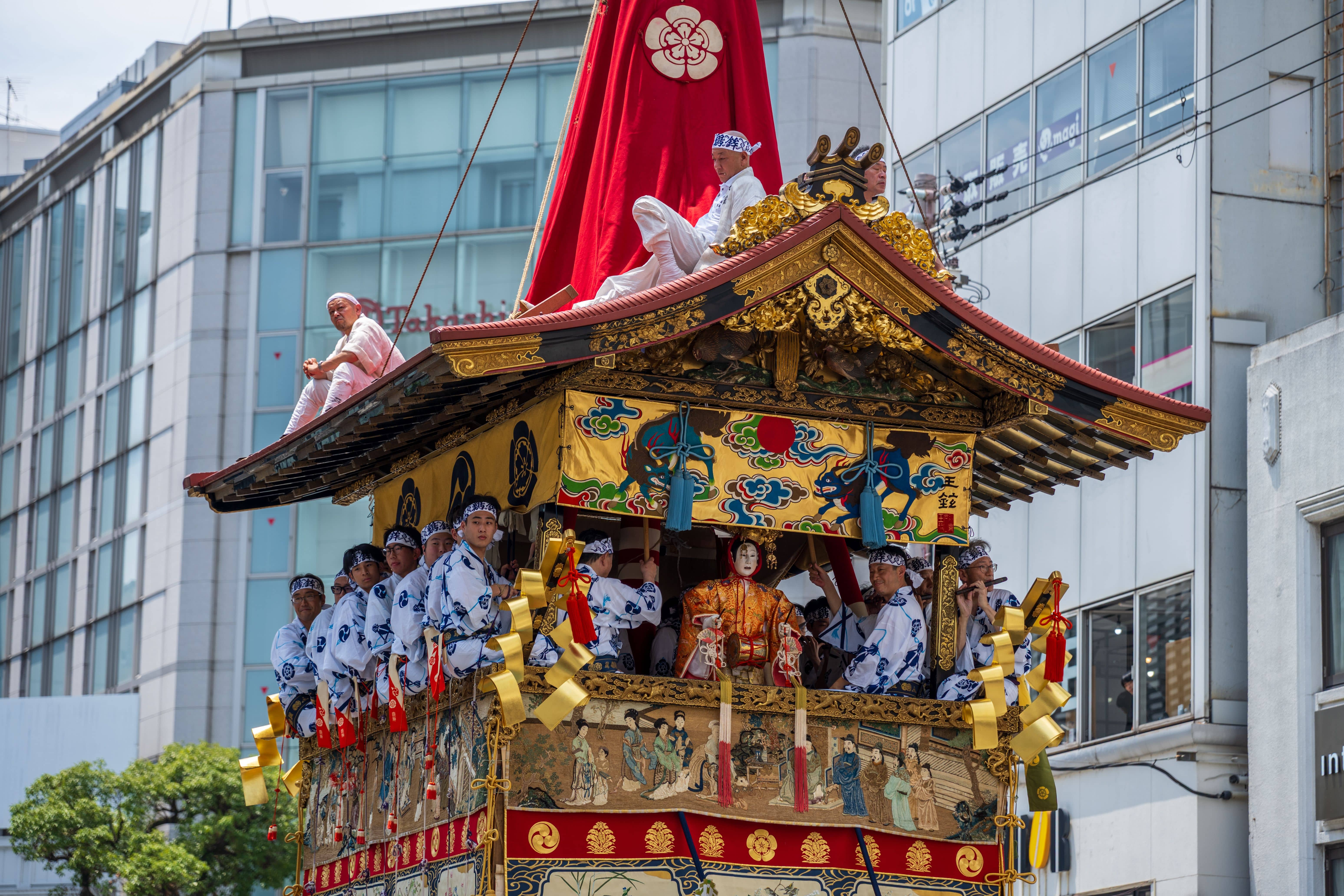
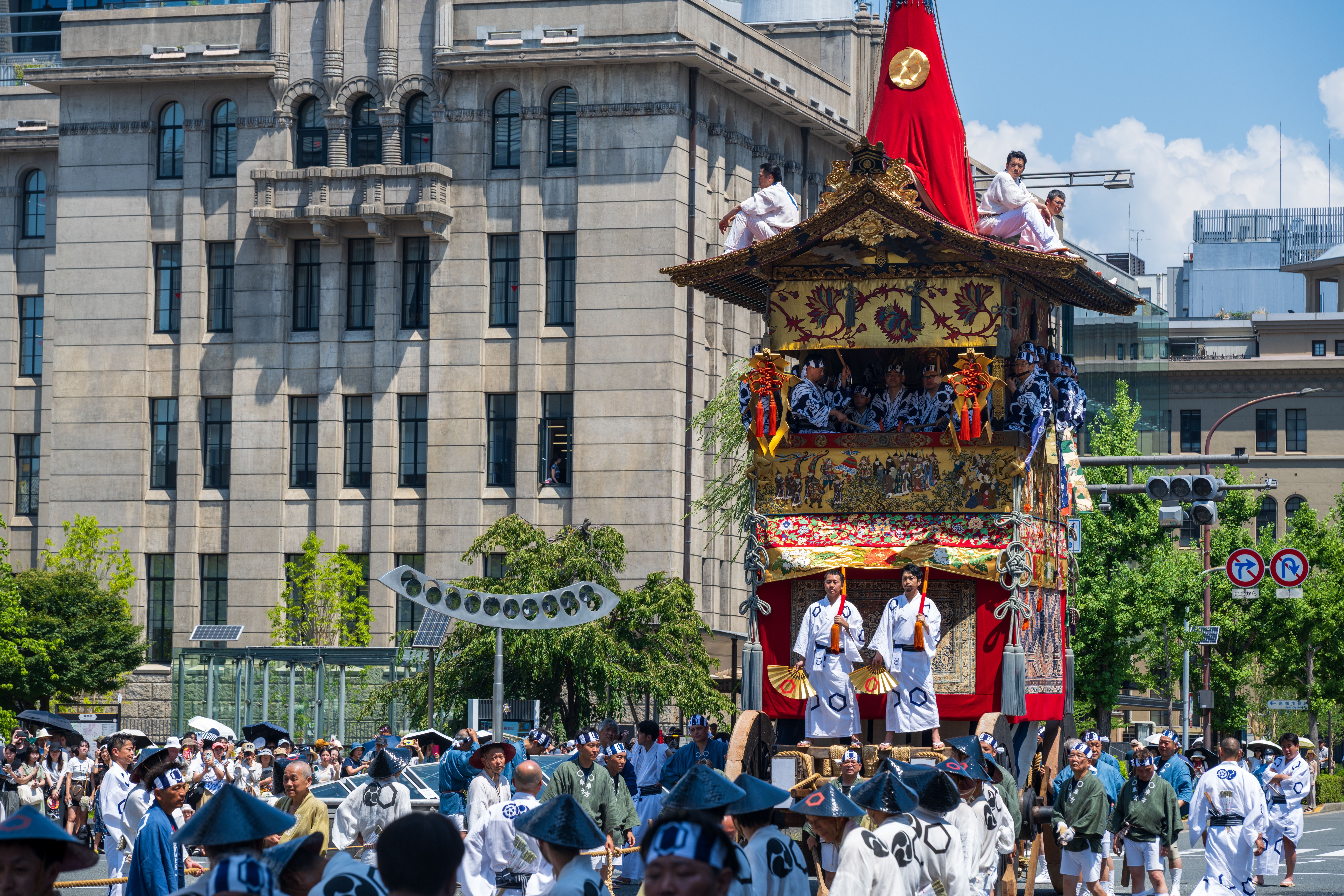
The towering Naginata-hoko float leading the Yamaboko Junko procession along Shijo Street in Kyoto with crowds on both pavements

Do You Need a Ticket, and What Does It Cost?

No ticket is needed for Gion Matsuri. Every part of it, from the float building and the Yoiyama nights to the two processions and the mikoshi, happens in public streets and can be watched for free from the pavement. What you can pay for is a guaranteed seat for the processions, and a few extras.

Reserved seats for the Yamaboko Junko are sold by the Kyoto City Tourism Association, set up along Oike-dori in front of Kyoto City Hall, where the floats pass at a slow walk. The 2026 edition, the latest published, offered:

  • Regular reserved seats: 5,000 JPY from the second row, 7,500 JPY in the front row, each with an official guidebook in Japanese and English and a hand towel

  • Special learning seats with live commentary in English or Japanese, available for the 24 July procession

  • Premium seats in front of City Hall with live English or Japanese commentary, drinks and a buffet, at 125,000 to 155,000 JPY per person; earlier editions ranged from 150,000 to 400,000 JPY before prices were revised after public debate

While the formal announcement for the 2027 season will be released by the city in spring, general ticket sales are highly consistent and traditionally open precisely at 10:00 AM JST on June 1, preceded by an advance lottery application window running from late April to early May. Tickets are sold online through the association's site with an English route, and some travel agents and hotels bundle seats with lodging or a kaiseki lunch.

Other things that cost money:

  • Climbing aboard a float on Yoiyama nights: most floats let visitors up for a small donation or the purchase of a charm (chimaki) or towel, typically a few hundred to 1,000 JPY depending on the specific neighborhood association some floats admit men only, a tradition the city notes on its maps

  • Chimaki, the bamboo-leaf charms sold by each float to hang on your door for a year of protection

  • Food and drink at the Yoiyama stalls, almost all cashless now

  • Restaurant and rooftop viewing packages on Shijo and Kawaramachi for the procession, sold by individual restaurants at premium prices

Note: The procession is free to watch, but a good free spot is not. On 17 July the front of the pavement at Shijo-Kawaramachi and the Oike corners is taken by 7:00. If you want the tsuji-mawashi corner-turning without a two-hour wait, the reserved seats are the honest answer.

Touts and resellers appear online every June; the association's site and its official partners are the only legitimate channels, and resold seats are often cancelled at the gate.

Need a steady connection for transit and maps?See eSIM plans

Where It Happens and How to Get There

Gion Matsuri happens in the centre of Kyoto, in the grid of streets around the Shijo-Karasuma intersection (about 35.004 N, 135.760 E, and along the procession route that runs east on Shijo, north on Kawaramachi and west on Oike to Karasuma-Oike. Yasaka Shrine, the festival's home, is at the east end of Shijo in Gion. Everything is walkable from Shijo or Karasuma station.

Getting to Kyoto:

  • Kansai International Airport (KIX): the Haruka limited express to Kyoto Station in about 75 to 80 minutes, or a limousine bus

  • Osaka Itami Airport (ITM): limousine bus to Kyoto Station in about 50 to 55 minutes

  • From Tokyo: okaido Shinkansen to Kyoto Station takes about 2 hours and 15 minutes via the bullet Nozomi train, or 2 hours and 40 minutes via the Hikari train.

  • From Osaka: JR special rapid to Kyoto Station, or Hankyu from Osaka-Umeda direct to Karasuma and Kyoto-Kawaramachi, which drops you in the middle of the festival

From Kyoto Station to the festival:

  • Subway Karasuma Line to Shijo station, four minutes' walk to the floats and the procession start

  • Hankyu Kyoto Line to Karasuma station (five minutes' walk) or Kyoto-Kawaramachi station for the Shijo-Kawaramachi corner

  • Keihan Line to Gion-Shijo for Yasaka Shrine and the mikoshi events

  • Subway Tozai Line to Kyoto Shiyakusho-mae for the reserved seats on Oike-dori

  • Buses stop running through the centre on Yoiyama nights and parade mornings; use the trains

Road closures to plan around: on 15 and 16 July, Shijo and Karasuma are car-free from 18:00 to about 23:00 with one-way pedestrian traffic; on 17 and 24 July the procession route closes from early morning until the last float passes. Taxis cannot enter the zone; walk to a station or the edge of the closure.

Tip: Enter the Yoiyama zone from the west or south (Shijo-Omiya or Gojo) and drift east with the pedestrian flow; entering at Shijo-Karasuma against the flow on 16 July takes an hour.

Getting back late: Yoiyama winds down around 23:00 and the last subway trains depart from Shijo Station at 23:47 bound for Takeda and 23:57 bound for Kokusaikaikan, while the final Hankyu Line trains heading toward Osaka-Umeda leave shortly after midnight, around 00:00 to 00:15 depending on the platform. If you stay in Gion or along Kawaramachi, you walk home; if you stay near Kyoto Station, take the Karasuma Line before the stalls close rather than with the exodus.


The Shijo-Karasuma intersection in central Kyoto with the Hankyu Karasuma station entrance and a yamaboko float standing in the street during Yoiyama

What Actually Happens, Hour by Hour

The festival's rhythm is evenings for the lit floats and one morning for the procession, and the two feel completely different. Here is how the key days run, using the official timetable pattern; while the scheduling follows a deeply rooted centuries-old tradition, the Kyoto City Tourism Association and Yasaka Shrine will formally publish the definitive 2027 timetable in spring (typically around April or May) on their official digital platforms

Yoiyama evenings, 14 to 16 July:

  • From late afternoon: the floats stand in their home streets with lanterns lit, musicians on board playing gion-bayashi, and neighbourhood houses opening their fronts to show folding screens and heirlooms (the byobu matsuri)

  • 18:00: on 15 and 16 July, Shijo and Karasuma close to traffic, stalls open, and the crowd begins its slow one-way circuit

  • Evening: climb a float where permitted, buy a chimaki charm, eat at the stalls, and walk the lantern grid between Shijo, Oike, Karasuma and Horikawa

  • Around 23:00: the streets reopen; the floats stay lit a little longer

Saki Matsuri procession, 17 July:

  • Before 7:00: free spots at Shijo-Kawaramachi and the Oike corners are taken; reserved seat holders arrive from about 8:00

  • 9:00: the Naginata-hoko leads 23 floats out from Shijo-Karasuma; the chigo child on board cuts the sacred rope with a sword at Shijo-Fuyacho, the ceremonial start

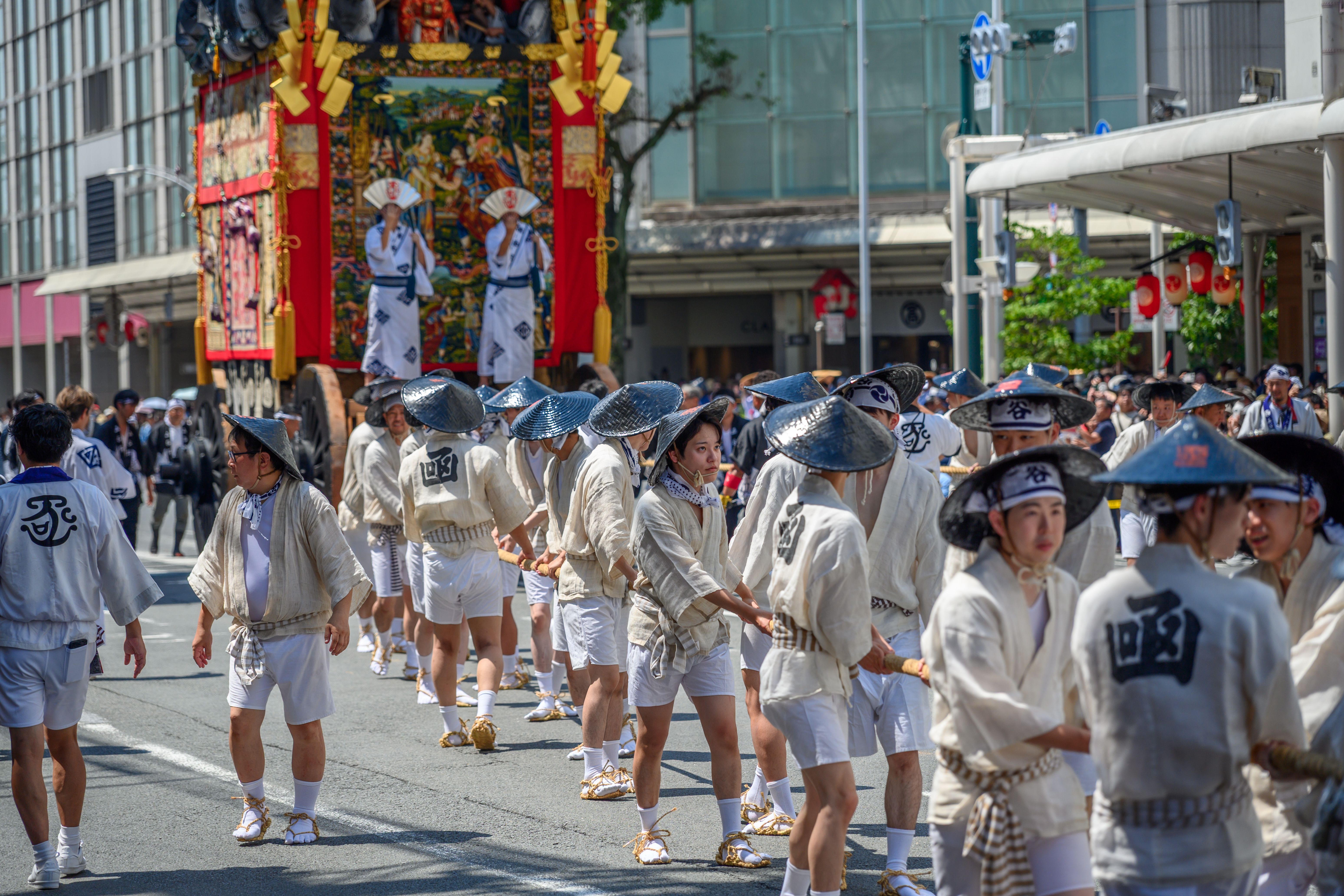
  • Around 9:35: the first float reaches Shijo-Kawaramachi and performs the tsuji-mawashi, swung ninety degrees on wet bamboo slats by dozens of pullers; the crowd's roar tells you it is happening

  • Around 11:00: the head of the procession reaches Karasuma-Oike, with the tail still turning corners behind; it is over by about 13:00

  • 18:00: the three mikoshi leave Yasaka Shrine and are carried through Gion to the Otabisho on Shijo, arriving around 19:30; the shouting, swaying shrines are the festival's rawer face

Ato Matsuri procession, 24 July:

  • 9:30: ten floats leave Karasuma-Oike and run the route in reverse, ending at Shijo-Karasuma

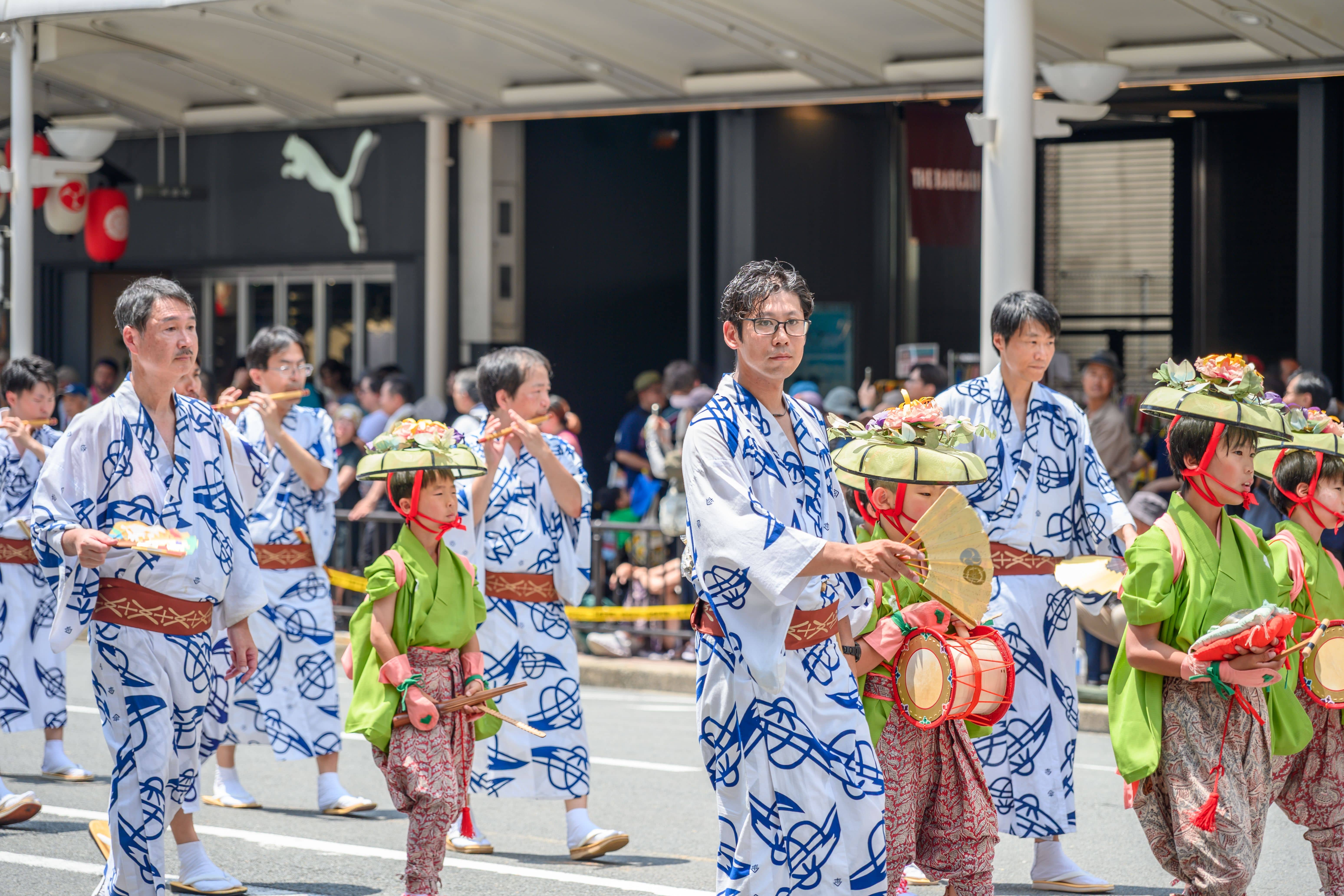
  • Around 10:00: the Hanagasa flower-hat parade, with dancers and children, leaves Yasaka Shrine

  • Evening: the mikoshi return to Yasaka Shrine

Tip: For the tsuji-mawashi, stand at the Kawaramachi-Oike corner rather than Shijo-Kawaramachi; it is slightly less crowded and the floats turn twice within sight.

Outside the big days, the float assembly on 10 to 14 July and the mikoshi washing at Shijo Bridge on 10 July at 20:00 are quiet, atmospheric and free.

Best Time to Arrive and What the Weather Is Like

Arrive on 14 July 2027 and stay through the 17th for the full Saki Matsuri sequence: a calm first Yoiyama night, the two big street nights, the procession and the mikoshi. If crowds worry you, come on 21 July and stay through the 24th instead; you get lit floats, the second procession and the Hanagasa parade at a fraction of the density.

Crowd levels on a scale of 1 to 5:

  • 10 to 13 July: level 2; floats being assembled, the city still normal

  • 14 July (Yoiyoiyoiyama): level 3; lit floats, no stalls, pleasant

  • 15 July (Yoiyoiyama): level 4; car-free streets and stalls from 18:00

  • 16 July (Yoiyama): level 5; the busiest night in Kyoto's year, one-way crowd control on Shijo

  • 17 July (procession): level 5 on the route from 7:00 to 13:00, level 3 elsewhere

  • 18 to 20 July: level 2

  • 21 to 23 July (Ato Matsuri Yoiyama): level 3

  • 24 July (second procession): level 3 to 4 on the route

The weather is the other crowd. Kyoto in July averages a high of about 31°C and a low of 23°C, with humidity around 72 percent and rain on roughly 14 days of the month; the rainy season usually ends in the final week of July, so the festival sits in its muggy tail. The city is a basin, and the felt temperature on Shijo at 20:00 with a million people is well above the forecast. Heat index warnings are routine, and heatstroke is the main medical issue of the festival. Sudden evening downpours happen; the procession goes ahead in rain and is delayed only in severe weather.

How to handle it:

  • Do the lit floats after 19:00, when the sun is off the streets; the procession morning is cooler than the afternoon

  • Carry water and refill at the official dispensers on the Yoiyama map; drink before you are thirsty

  • A folding fan, a hat for the procession and a light towel for the neck; locals wear yukata for a reason

  • Retreat into the Shijo department stores and the underground mall between stations when the heat builds

  • Check the festival notices on the morning of 17 July for any weather delay

Note: Daylight is roughly 5:00 to 19:10. The lanterns come into their own after 19:30, so there is no need to be in the streets at 17:00; eat first, then walk.

Crowds in yukata holding paper fans walking past lantern-lit yamaboko floats on a hot Yoiyama night in Kyoto

Where to Stay and When to Book

Stay inside the festival grid, between Oike and Shijo and between Horikawa and Kawaramachi, and the floats are literally outside your door; the second-best choice is anywhere on the Karasuma or Hankyu lines within two stops of Shijo. Kyoto is small, but on 16 and 17 July the centre is closed to vehicles, so distance is measured in walking minutes.

Areas, from best to workable:

  • Shijo-Karasuma and the machiya lanes west of it (Shinmachi, Muromachi, Nishinotoin): the float neighbourhoods themselves; small hotels and townhouse rentals, lit floats under your window on Yoiyama, and the procession start a few minutes away. Noisy until 23:00 on the 15th and 16th

  • Kawaramachi and Sanjo: big choice of hotels, the procession route at the end of the street, restaurants open late; the Kawaramachi-Oike corner for the tsuji-mawashi

  • Gion and Higashiyama: Yasaka Shrine, the mikoshi events and the old entertainment district; 15 minutes' walk across the river to the floats

  • Around Kyoto Station: the widest choice and the easiest arrival, ten minutes by subway to Shijo; the right fallback when the centre is full

  • Osaka: 45 minutes by Hankyu to Karasuma, with far more rooms; a serious option for a procession-day visit if Kyoto is sold out

When to book: Kyoto's July rooms begin filling in autumn, and the nights of 15 to 17 July 2027 are the single most requested block of the year. Book by December 2026 for a central choice; by March most small hotels in the grid are gone, and by May you are choosing between Kyoto Station chains and Osaka. During the peak nights of 16 and 17 July, reference rates typically surge to around 15,000 to 30,000 JPY per night for a standard business hotel near Karasuma, 40,000 to over 80,000 JPY for a traditional machiya townhouse rental, and 25,000 to 50,000 JPY for a mid-range hotel in Kawaramachi, with Kyoto's accommodation tax added per night..

Tip: Book a cancellable rate for 14 to 18 July now, then refine. Many small hotels release second allocations in spring once tour groups confirm; set a reminder for March.

Ask whether the hotel has a laundry; three nights of Yoiyama heat go through a lot of shirts. And check in before 17:00 on the 15th and 16th, because the streets around Shijo close to taxis at 18:00.

Staying Connected During the Festival

Public Wi-Fi in Kyoto is widespread and useless on Yoiyama night. The city and station networks require registration, time out after a set period, and cannot carry the crowd on Shijo on 16 July. Hotel Wi-Fi stays in the hotel, where you are not. Your phone needs its own data, and a Japan eSIM installed before you fly is the simple way to get it.

What you use data for at Gion Matsuri:

  • The official Yoiyama map and the float directory, to find the floats you want by name in the lantern grid
  • The city's festival notices on road closures, open subway exits and pedestrian flow directions
  • The transit app for last trains and which station exit is open
  • A group chat with live location for regrouping in the one-way crowd
  • Reserved seat e-tickets and the seating map on Oike-dori
  • Cashless payment at the stalls and for chimaki and float climbs, where offered
  • Camera translation of stall menus, float rules and the byobu displays
  • Weather alerts for procession delays and heatstroke warnings
  • Photos and video calls home from under a lit float, which is the call everyone makes

Set-up: check that your phone is unlocked and eSIM-capable (most phones from the last five years are), buy the plan, scan the QR code while you still have a reliable connection at home, and switch the line on when you land at Kansai, Itami or Tokyo. Japanese networks are excellent in Kyoto and on the trains from the airports; the only slowdown is the Shijo crowd on 16 July, when uploads crawl for an hour.

How much data: 1 to 2 GB a day covers maps, transit, messaging, translation and payments. Video is the variable; a Yoiyama night of filming lantern floats and sending clips home can double it. For a five-day Kyoto trip, 10 GB is comfortable, and 20 GB suits heavy social media use or a longer Japan itinerary. GoHub's Japan plans are listed on the eSIM for Japan page.

Tip: Heat kills batteries almost as fast as cold. Keep the phone out of direct sun, carry a power bank, and download the official Yoiyama map and an offline map of central Kyoto before you leave the hotel.

Keep your home SIM active for SMS so bank verification codes arrive, set the eSIM as your data line, and turn off data roaming on the home SIM.

A visitor in a yukata checking a smartphone map in front of a lantern-lit yamaboko float on a crowded Kyoto street at night

What to Eat, Drink and Buy

Eat at the Yoiyama stalls on 15 and 16 July and in Kyoto's restaurants the rest of the month; the festival has its own seasonal dishes and July is the month for them.

Festival and summer foods to look for:

  • Hamo, pike conger, the taste of Gion Matsuri: served as hamo-otoshi (blanched and dipped in plum sauce) or in a clear soup in restaurants all over the city; locals call this the hamo festival
  • Yoiyama stall food: yakitori, yakisoba, takoyaki, grilled corn, kakigori shaved ice, chilled cucumber on a stick and beer; the stalls line Shijo and Karasuma only on the 15th and 16th
  • Kyo-ryori kaiseki with hamo courses in Gion and Pontocho; book weeks ahead for 16 and 17 July
  • Kawadoko dining on platforms over the Kamo River at Pontocho and over the stream at Kibune, the classic Kyoto summer evening
  • Warabi-mochi, mizu-yokan and other chilled summer sweets from the old confectioners near Shijo
  • Cold matcha and the department store food halls at Shijo for a quick, air-conditioned lunch

Where: the stalls are on Shijo and Karasuma inside the car-free zone; the Nishiki Market area a block north of Shijo has sit-down lunches and is a good heat refuge; Pontocho and Kiyamachi along the river are for dinner after the floats; Gion's side streets for hamo at a counter. Most restaurants on the procession route close for lunch on 17 July or sell viewing packages, so book or eat early.

Tip: On 16 July, eat before 18:00 and treat the stalls as snacks. By 20:00 the queues for anything on Shijo are longer than the walk to Nishiki.

What to buy: a chimaki charm from the float whose protection you want (each has a speciality: business, exams, safe travel, beauty); hand towels and lanterns with the float crests; uchiwa paper fans; a yukata and geta from the Shijo department stores if you want to join the locals; and Kyoto's summer sweets boxed for home.

Money, Etiquette and Family

Gion Matsuri is cheap to attend and expensive to sleep near. The streets are free, a Yoiyama night of stall food and a float climb costs a few thousand yen, and even a reserved procession seat is 5,000 to 7,500 JPY at 2026 prices. Hotels are where the money goes. Budget per day excluding flights and hotel: a modest day with stalls, a float climb and the subway about 3,000 to 5,500 JPY; a comfortable day with a hamo lunch, a reserved seat, kawadoko dinner and taxis about 25,000 to 45,000 JPY. Cards and mobile payment work at the stalls and almost everywhere in central Kyoto; carry small cash for chimaki, float donations and temple visits. Convenience-store ATMs accept foreign cards. Tipping is not done.

Etiquette that keeps you welcome:

  • Follow the one-way pedestrian flow on Shijo and Karasuma; police and volunteers direct it, and going against it is both rude and slow

  • Remove shoes to climb a float, carry them in the bag provided, and respect floats that admit men only; the custom is old and the city signposts it

  • Do not touch the float decorations, many of which are centuries-old textiles

  • Stay behind the ropes on procession day; the pullers need the whole street for the tsuji-mawashi

  • Ask before photographing inside the townhouse byobu displays, and never enter uninvited

  • Yukata are welcome and widely rented; wear them properly, left side over right

  • Take rubbish to the marked stations; the Yoiyama map shows the bins

Going with young children: Yoiyama is magical for kids before 19:30 and overwhelming after. Do 14 July for lit floats without the crush, go early on the 15th, carry small ones (pushchairs are hopeless in the one-way flow) and use the Children's Station on the official map for nursing and rest. For the procession, a reserved seat is the kind choice; a two-hour pavement wait in 30°C is not. Ear protection is unnecessary; the festival is musical, not loud.

Going with older relatives: the reserved seats on Oike-dori have shade in places and a guidebook, and the special learning seats on 24 July add commentary. Choose the calmer Ato Matsuri week, stay near a Karasuma Line station, and plan the lit floats for one street rather than the whole grid.

Note: Heatstroke is the festival's real hazard. First-aid posts and water dispensers are marked on the official map; emergency numbers in Japan are 119 for ambulance and 110 for police.

A child in a yukata holding a chimaki charm beside a yamaboko float during Gion Matsuri Yoiyama in Kyoto

Safety, Side Trips and the Rest of July

Gion Matsuri is one of the safest big festivals anywhere, and the risks are heat, crowds and losing each other. Keep a bag in front of you on Yoiyama night, drink constantly, step out of the flow into a side street when you need a break, and agree a meeting point outside the car-free zone in case phones die. Kyoto police close streets and run one-way systems precisely to prevent crushes; follow the arrows. Emergency numbers are 110 for police and 119 for ambulance and fire; the Yoiyama map marks police boxes, first-aid posts and children's stations.

Side trips and the rest of the month in Kyoto:

  • Kawadoko dinner at Kibune or Takao, in the hills north of the city, for a cool evening over the water
  • Arashiyama's bamboo grove and river at dawn, before the heat, then the cormorant fishing boats at night on the Oi River from July
  • Fushimi Inari before 8:00 or after 18:00 in July; midday in the torii tunnels is brutal
  • Nara's deer park and the great Buddha, 45 minutes by train
  • Osaka's Tenjin Matsuri on 24 and 25 July, another of Japan's three great festivals, with boats and fireworks on the river; it pairs with the Ato Matsuri procession on the morning of the 24th
  • Uji for tea and the Byodoin, half a day by train
  • Mount Hiei and Enryakuji for cool air and forest, by cable car from the north of the city

Tip: Combine the two great July festivals: Gion's Ato Matsuri procession on the morning of 24 July, then the Hankyu to Osaka for Tenjin Matsuri's river procession and fireworks the same night.

If you have the whole month, the quieter rituals are the reward: the float assembly from 10 July, the mikoshi washing on Shijo Bridge, the Hanagasa parade and the closing rites at Yasaka on 31 July, when the city finally exhales.

Suggested itinerary

Day 1 · 14 July, Yoiyoiyoiyama

  1. Afternoon
    Kyoto Station to ShijoKarasuma Line, four minutes' walk to the floats; check in early
  2. Around 17:00
    Float neighbourhoods west of KarasumaSee the finished floats in daylight and buy a chimaki before the crowds
  3. Evening
    Lantern-lit floats, no stallsThe calmest night; climb a float and listen to the gion-bayashi
  4. Late evening
    Nishiki or Pontocho dinnerHamo on the menu; book ahead

Day 2 · 15 July, Yoiyoiyama

  1. Morning
    Yasaka Shrine and GionThe festival's home shrine before the heat; Keihan to Gion-Shijo
  2. Midday
    Shijo department store food hallsAir-conditioned lunch and a yukata if you want one
  3. Around 18:00
    Car-free Shijo and KarasumaStalls open; enter from the west and move with the flow
  4. Evening
    Byobu displays in the townhousesFolding screens and heirlooms shown by the neighbourhood families
  5. Around 22:00
    Kamo River bankCool down by the water before the streets reopen

Day 3 · 16 July, Yoiyama

  1. Morning
    Arashiyama bamboo groveEarly, before the heat; back in the centre by midday
  2. Afternoon
    Hotel restThe busiest night of the year starts at 18:00; rest first
  3. Around 18:30
    Lantern grid from Horikawa eastwardsThe big three floats (Naginata, Funa, Tsuki) by lantern light
  4. Evening
    Stalls and the one-way flow on ShijoSnacks only; eat before you enter
  5. Around 22:30
    Walk back via side streetsAvoid Shijo-Karasuma station at closing time

Day 4 · 17 July, Yamaboko Junko

  1. Around 8:00
    Reserved seat on Oike-doriOr a free spot at Kawaramachi-Oike by 7:00
  2. 9:00
    Procession start at Shijo-KarasumaWatch the sacred rope cutting if you are at Shijo-Fuyacho
  3. Around 9:35 onwards
    Tsuji-mawashi at the cornersThe floats swung on bamboo slats and water
  4. Around 13:00
    Lunch indoorsThe route reopens; restaurants near Oike are quiet
  5. 18:00
    Yasaka Shrine mikoshi departureThe shouting shrines through Gion to the Otabisho around 19:30
  6. Evening
    Gion side streetsHamo at a counter and the last festival music
Tip: Arrive on 14 July for the quiet first Yoiyama night, see the floats lit on the 15th and 16th, and take a reserved seat for the procession on the 17th.

Recommended eSIM plans

Pick by trip length. Visiting several countries? Choose a regional plan.

Selected: eSIM Japan 30GB 30 Day(s)

Set up your eSIM in 3 steps

  1. Order and get your QR codeThe QR code arrives by email right after payment.
  2. Scan before you flySettings → Cellular → Add eSIM, while you still have Wi-Fi.
  3. Turn on data when you landSet the eSIM as your data line and enable data roaming.

Frequently asked questions

Yes. The float assembly, the Yoiyama lantern nights, both processions and the mikoshi events all happen in public streets and are free to watch. You pay only for optional extras: reserved procession seats near Kyoto City Hall (5,000 to 7,500 JPY in 2026, premium seats far more), small donations or a charm purchase to climb a float, and food at the stalls. The real cost of Gion Matsuri is a central Kyoto hotel in mid-July.

Four days, from 14 to 17 July, covers the full Saki Matsuri: a calm first Yoiyama night, the two big street nights, the procession and the evening mikoshi. Two days, 16 and 17 July, is the minimum that feels like the festival. If you want the ritual with fewer people, 21 to 24 July gives you lit floats, the second procession and the Hanagasa parade in a calmer week.

For spectacle, 17 July: 23 floats, the sacred rope cutting, the full route and the biggest tsuji-mawashi. For comfort, 24 July: ten floats, the route in reverse from Karasuma-Oike, the Hanagasa parade afterwards and far thinner crowds, so a free pavement spot is realistic. The special learning seats with English commentary are offered only on 24 July. Many visitors do the Yoiyama nights of the first week and the procession of the second.

It depends on your passport. Many nationalities enter Japan visa-free for short tourist stays, while others must apply in advance; the list and any online pre-registration requirements change, so check the Japanese embassy or consulate site for your country at least two months before travel [TO VERIFY current rules]. Carry your passport in Kyoto; hotels must see it at check-in and shops need it for tax-free purchases.

Plan on 1 to 2 GB a day for the official Yoiyama map, transit apps, group chat with live location, translation and payments, and more if you upload a lot of video from the lantern nights. A 10 GB eSIM plan comfortably covers a five-day Kyoto trip; take 20 GB for heavy social media use or a longer Japan itinerary. Install the eSIM before you fly so it works the moment you land, and carry a power bank for the heat.

Yes, on Yoiyama evenings many floats let visitors aboard for a small donation or the purchase of a chimaki charm or towel, usually a few hundred to 1,000 JPY. You remove your shoes and carry them, and you cannot touch the decorations. Some floats, by long tradition, admit men only, and the city's official map marks which; others welcome everyone. Queues on 16 July are long, so climb on the 14th or 15th.