
App Store पर डाउनलोड करेंDownload Gohub App on the App Store

Gangaur 2027: Dates, Where to Celebrate and Travel Tips

  • Apr 9, 2027 (expected)
  • Jaipur, Rajasthan, India
  • Last updated: 6 नव॰ 2026
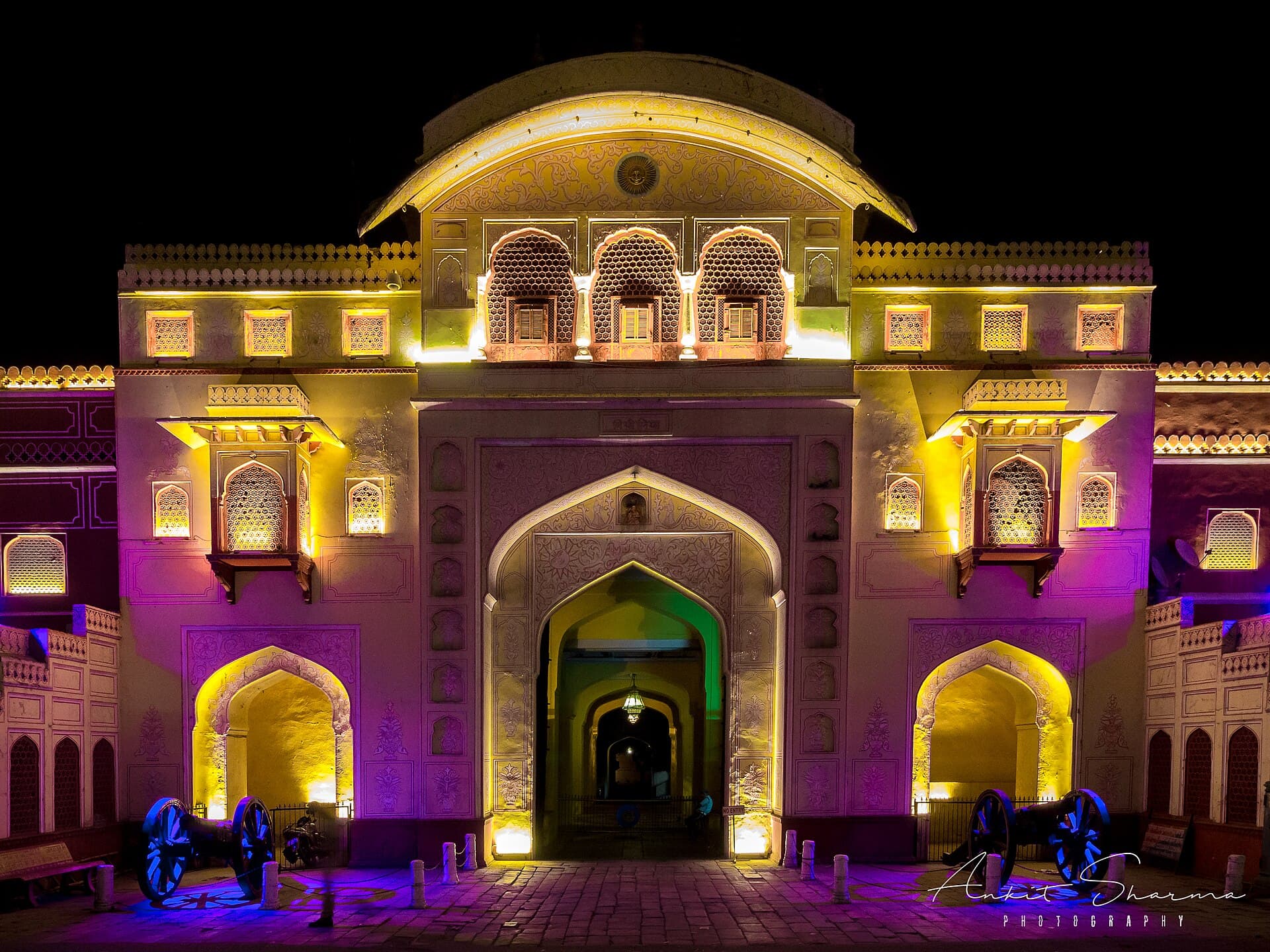
Gangaur procession leaving Tripolia Gate of the City Palace, Jaipur, with the goddess's palanquin and crowds in Tripolia Bazaar
Decorated idol of Gauri carried in a palanquin during the Gangaur procession in Jaipur
Women in Rajasthani dress carrying clay Gangaur idols on their heads in Jaipur
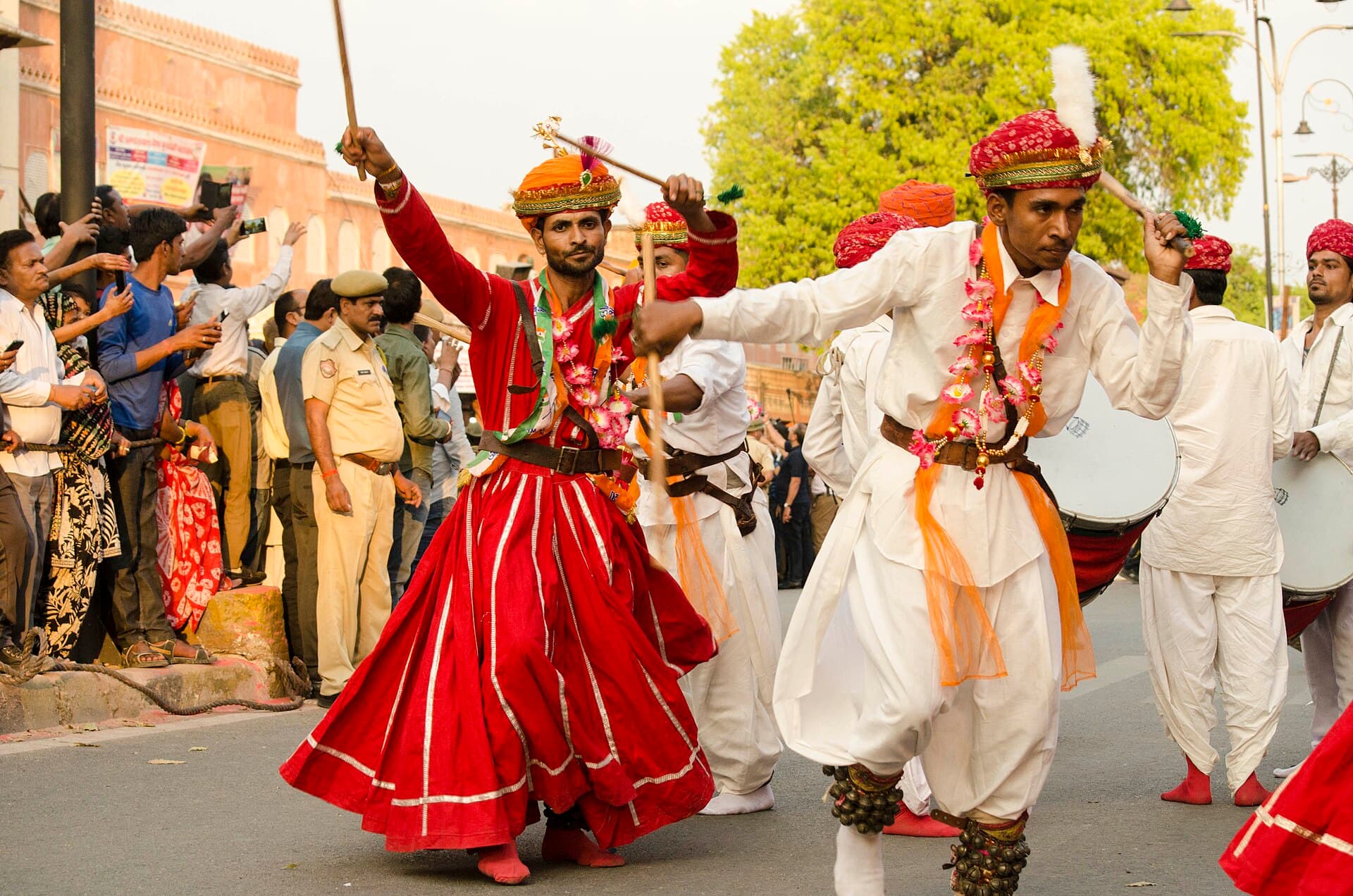
Kachhi Ghodi dancers with dummy horses in a Rajasthani folk procession in Jaipur
Malai ghewar displayed at a sweet shop in Jaipur's walled city

Overview

Gangaur 2027 is expected on Friday 9 April 2027, with the royal procession leaving the City Palace in Jaipur, Rajasthan, that evening 1. It closes about 18 days of worship of Gauri and Isar by Rajasthani women 1. The palanquin of Gauri crosses Tripolia Bazaar, Chhoti Chaupar and Gangauri Bazaar with camels, bands and folk dancers, and watching from the street is free 2 7.

Highlights

  • Gauri's palanquin leaves the City Palace through Tripolia Gate at dusk 2
  • Kalbeliya, Kachhi Ghodi and Gair dancers walk ahead of the idol 2
  • A royal aarti is performed for the goddess at Tripolia Gate 4
  • Ghewar sweets are bought and shared across Jaipur for the festival 3
  • The procession runs again on the following evening 2
  • Women carry clay idols of Gauri and Isar home through the old city 4

Good to know

Dates
Expected Friday 9 April 2027, procession that evening and the next 1 2
Opening hours
Procession leaves around dusk; Rajasthan Tourism recorded a 6 pm start in 2017 2
Venue
City Palace, Jaipur, 26.926 N, 75.824 E, to Talkatora 8 7
Entry
Free from the street; City Palace museum 400 INR for Indian adults (October 2026) 9
Getting there
Pink Line metro to Badi Chaupar; airport about 10 km from the centre 9 11
Recommended eSIM
eSIM for India

A Dead Battery at Tripolia Gate Costs You the Sawari

The Jaipur Gangaur procession has no printed timetable you can pick up in the street. The goddess leaves the City Palace when the palace and the Department of Tourism are ready, and in 2017 Rajasthan Tourism reported a 6 pm departure from Tripolia Gate 2. Some travel guides put the start nearer 4 pm 19. That gap is the whole reason your phone matters: local news posts, friends already on the pavement and hotel staff are how you learn that the bands have started moving.

The rest of the evening runs on the same thread. You need a map to slip from Tripolia Bazaar to Chhoti Chaupar ahead of the palanquin, a camera with battery left for the moment Gauri herself appears at the very end of the line 2, and a way to find the people you came with once the crowd breaks up. A phone that dies at 5 pm on the pavement outside Tripolia Gate leaves you guessing in a packed street, with no way to check whether you missed the goddess or she is still inside the palace.

Regrouping at Chhoti Chaupar After the Palanquin Passes

Chhoti Chaupar is the square where the procession swings from Tripolia Bazaar towards Gangauri Bazaar 2, and it is where groups split. Agree on a corner before you go, share live locations, and send a photo of the exact shopfront rather than a street name. The colonnaded arcades all look the same after dark.

Paying a Ghewar Counter in Johari Bazaar

Sweet shops across the walled city sell ghewar for the festival, and people buy boxes to share with relatives 3. Most counters take QR-code payments, which fail when the bazaar network jams at dusk. Carry small rupee notes for the sweets, flower garlands and street snacks you buy along the route.

Catching the Last Pink Line Train From Badi Chaupar

The Jaipur Metro Pink Line stops running at 22:30 10. If the procession ends late near Talkatora, check the live route back to Badi Chaupar station before you walk, or book an app cab while the crowd thins. Agree any auto-rickshaw fare before you get in, since meters are rarely used on festival nights.

Install your eSIM before you fly and be online when you land — see matching plansSee eSIM plans

The complete guide

When Is Gangaur in 2027?

Gangaur in 2027 is expected on Friday 9 April 2027, which is Chaitra Shukla Tritiya, the third day of the bright half of the Hindu month of Chaitra 1. The Jaipur procession leaves the City Palace on the evening of Gangaur itself and runs again the following evening, so the second outing is expected on Saturday 10 April 2027 2. The organisers have not yet published a 2027 programme; confirm the start time with the Department of Tourism counter in Jaipur in early April.

The date moves every year because Gangaur follows the lunar calendar. Worship begins the day after Holi, on the first day of Chaitra, and lasts about 18 days until the Tritiya 1 2. Newly married women keep the full 18 days, while the usual cycle is 16 days 3.

Recent and upcoming dates for comparison:

  • Gangaur 2025 fell on 31 March 2025 1.
  • Gangaur 2026 was celebrated on Saturday 21 March 2026 1 4.
  • Gangaur 2028 is listed for 29 March 2028 1.

What happens in the days before the procession:

  • Holi ash: women collect ash from the Holi bonfire in clay pots and sow wheat and barley in it 1.
  • Clay idols: after about seven days, families shape images of Gauri and Isar 1.
  • Ghudlia evenings: from the seventh evening, unmarried girls carry clay pots with a lamp inside and collect small gifts from neighbours 1 3.
  • Sinjara: the day before Gangaur, families send gifts to married daughters 1 13.

Tip: Book Jaipur for the nights of 8, 9 and 10 April 2027. That covers Sinjara, the main Gangaur evening and the second procession, whichever night your plans slip to.

The festival runs on the day the panchang gives for Tritiya, not on a fixed weekday, so check a 2027 Hindu calendar again in March before booking flights.
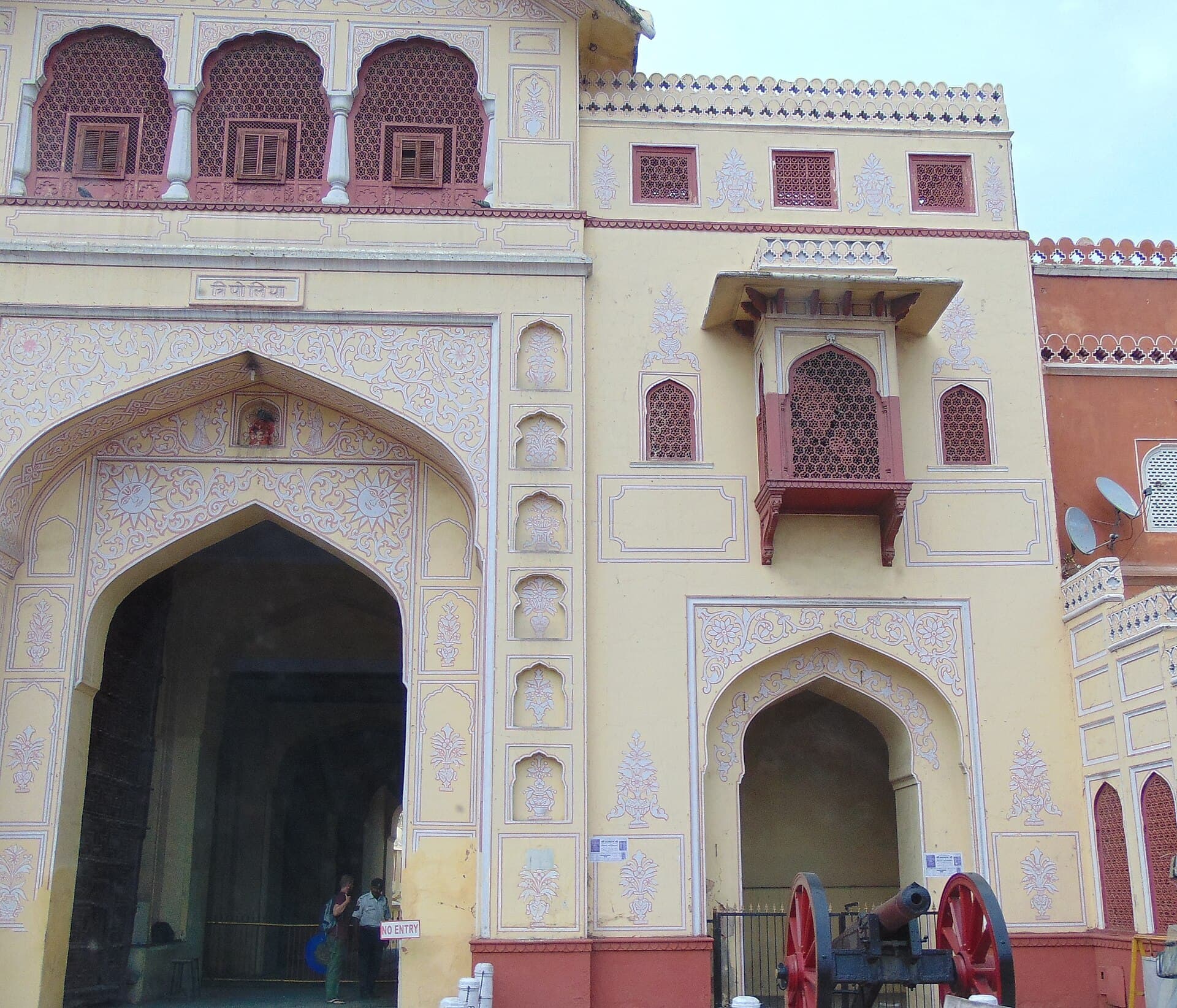
Tripolia Gate of the City Palace, Jaipur, with the Gangaur procession gathering in Tripolia Bazaar
Photo: Nabanita Sinha · CC BY-SA 4.0 · Wikimedia Commons

Free Pavement Spots Along Tripolia Bazaar

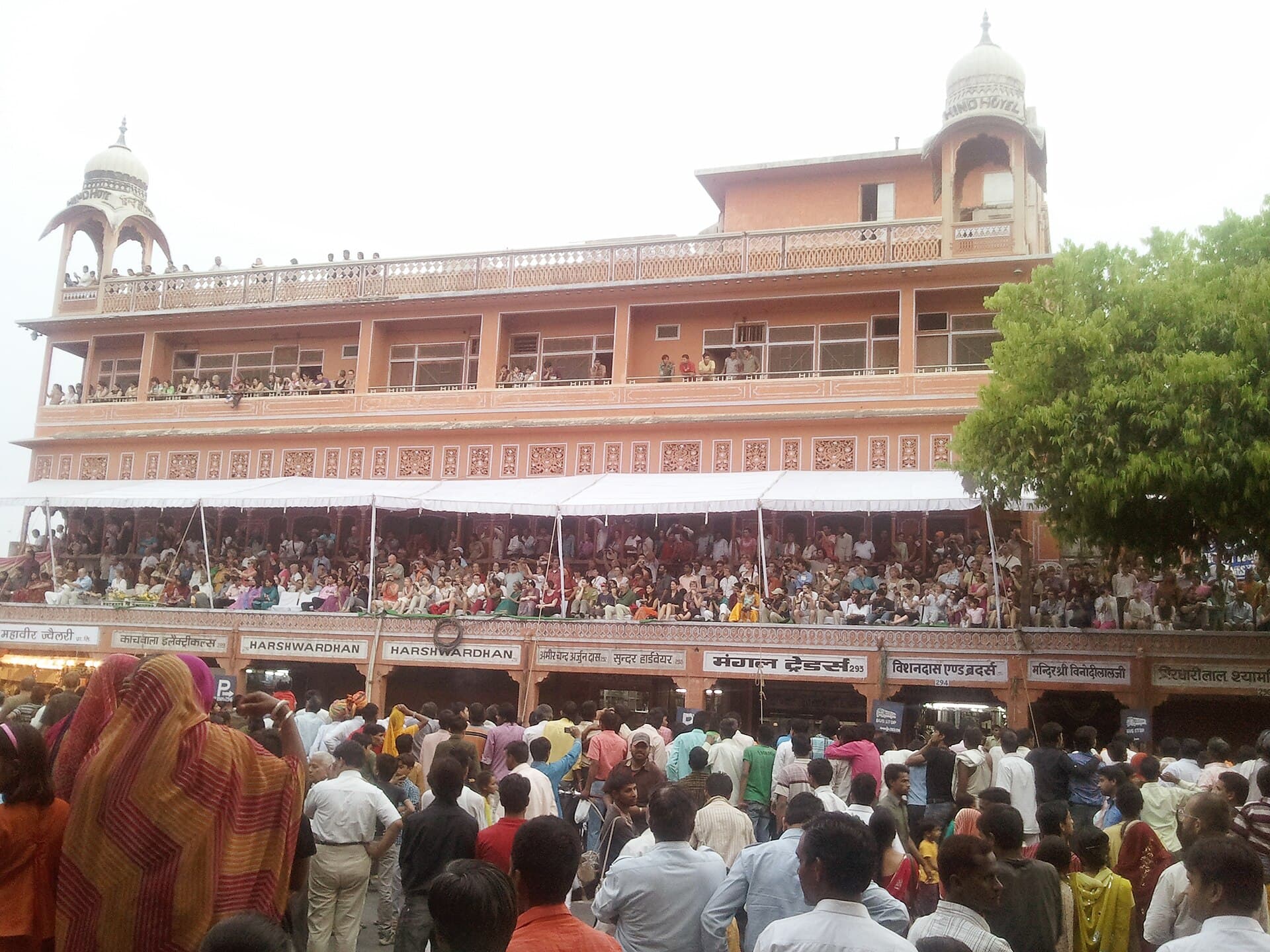
Watching the Gangaur procession in Jaipur costs nothing. The palanquin moves along public streets in the walled city, from Tripolia Gate through Tripolia Bazaar, Chhoti Chaupar and Gangauri Bazaar 2, and anyone can stand on the pavement. Domestic and foreign visitors gather at Tripolia Gate to see the goddess leave 5.

There is no public ticket for the procession. The 2017 Gangaur procession was organised jointly by the Department of Tourism, the district administration, the Maharaja Sawai Man Singh II Museum Trust and the Jaipur Municipal Corporation, and arrangements were made for tourists to photograph it from a hotel terrace opposite Tripolia Gate 2. Ask the tourism office whether a similar terrace is set aside for 2027.

Where money does come in:

  • City Palace museum: entry is 400 INR for Indian adults and 200 INR for students or children under 12 (October 2026) 9. The palace website does not list foreign-visitor rates in its admission text.
  • Museum hours: 9:30 to 18:30, with the last tickets sold by 18:00 9.
  • Royal Tour of the Chandra Mahal: 4,000 INR for Indian adults, sold only at the counter (October 2026) 9.
  • Golf carts inside the palace: 150 INR per person (October 2026) 9.

Tripolia Gate itself is reserved for the royal family, and visitors enter the City Palace through Udai Pol near Jaleb Chowk or Virendra Pol near Jantar Mantar 8. Inside, the image of the goddess is placed in a palanquin in the Sarvato Bhadra hall before the procession sets out 8.

Tip: Visit the City Palace museum in the morning of Gangaur, then leave before the afternoon crowd builds at Tripolia Bazaar. You will not be let out through Tripolia Gate with the goddess.

The best free spots are the arcade steps facing Tripolia Gate and the corners of Chhoti Chaupar, where the line turns and slows.

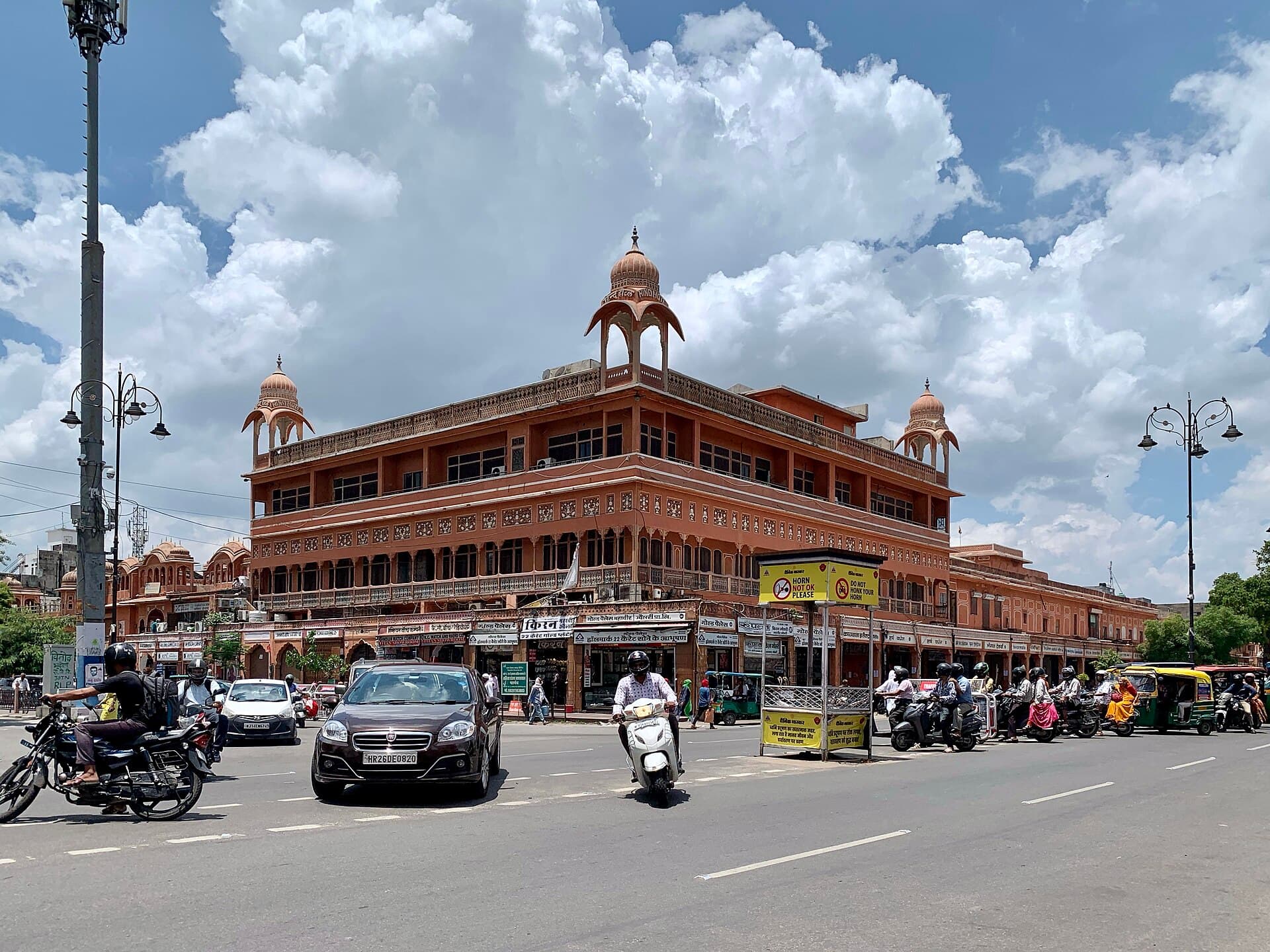
Colonnaded shopfronts of Tripolia Bazaar, Jaipur, with Tripolia Gate of the City Palace behind
Photo: Chainwit. · CC BY-SA 4.0 · Wikimedia Commons
Need a steady connection for transit and maps?See eSIM plans

From Sanganer Airport to the Zanani Deodhi

The Jaipur Gangaur procession starts at the Zanani Deodhi, the women's wing of the City Palace on Tripolia Bazaar 7, at about 26.926 N, 75.824 E 8. Jaipur International Airport is in the southern suburb of Sanganer, about 10 km from the city centre 11, and an app cab or prepaid taxi takes you to the edge of the walled city.

Foreign visitors can land in Jaipur on an Indian e-Visa, because Jaipur is one of the designated e-Visa airports 16. Applications go in at least 4 days and up to 120 days before arrival 16. Terminal 1 handles international flights and Terminal 2 domestic ones 11.

How to reach the route:

  • Jaipur Metro Pink Line: 11 stations from Mansarovar to Badi Chaupar, running from 5:30 to 22:30 10.

  • Stops for the procession: Chhoti Chaupar sits on the route itself, and Badi Chaupar is the nearest stop for the City Palace 9 10.

  • From the railway: the Pink Line has a Railway Station stop, so arrivals by train can change straight onto the metro 10.

  • Fares: single tokens cost 10 to 30 INR, and a one-day tourist card costs 50 INR plus a 50 INR refundable deposit (October 2026) 10.

  • Parking: City Palace visitor parking is only at Gate Number 2 near Jaleb Chowk 9.

Expect roads inside the walled city to close to cars on procession evenings. The metro avoids that problem completely, because the Chaupar stations open straight onto the bazaars.

Tip: Leave your cab at Sindhi Camp or Chandpole and ride the Pink Line the last few stops into Chhoti Chaupar. You arrive on the route instead of stuck behind barricades.

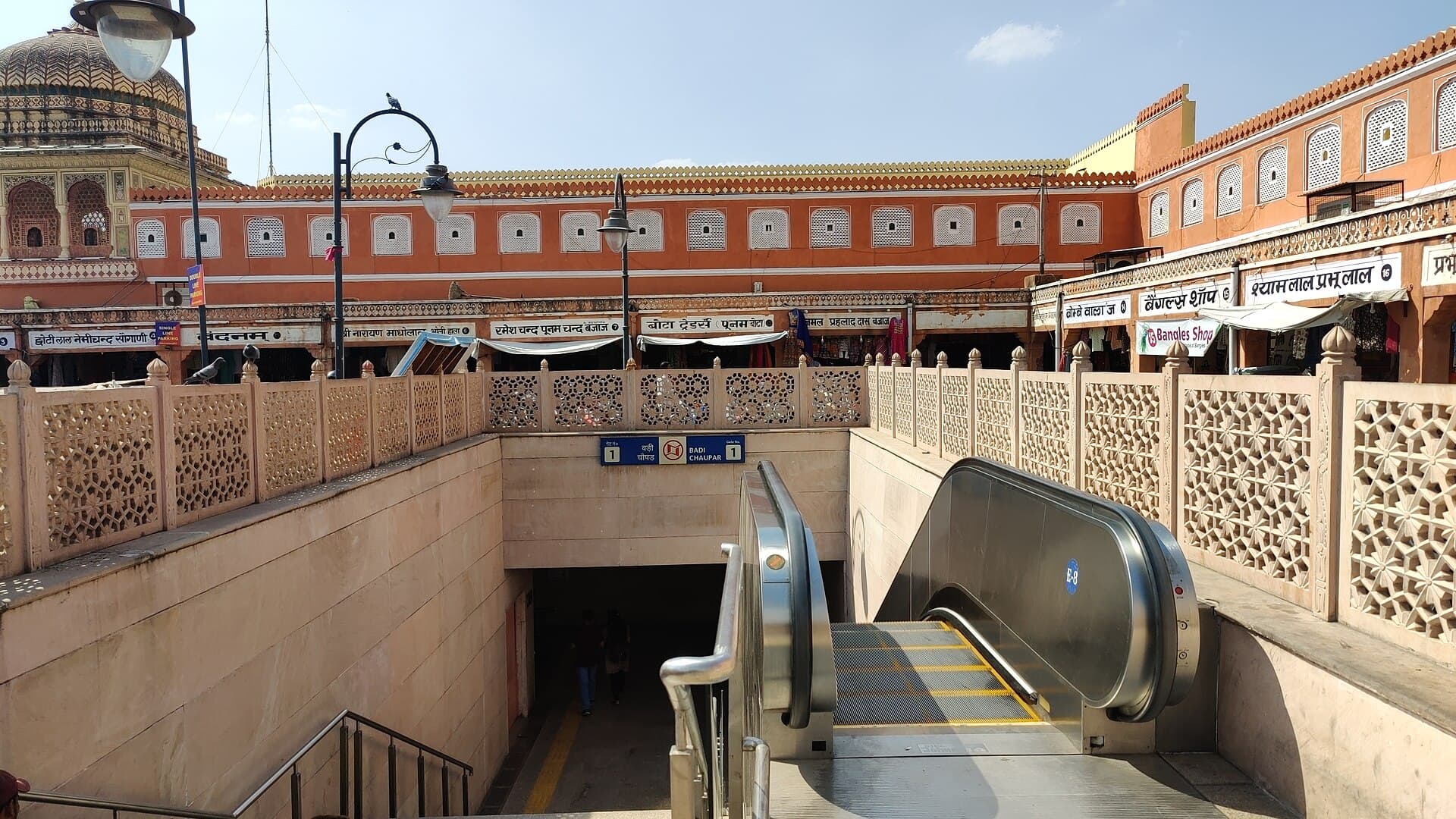
Badi Chaupar metro station entrance in Jaipur's walled city with Hawa Mahal in the background
Photo: Ravi Dwivedi · CC BY-SA 4.0 · Wikimedia Commons

The Procession From Zanani Deodhi to Talkatora

The Jaipur Gangaur procession is a slow parade of royal regalia that ends with the goddess herself. Gauri's image leaves the Zanani Deodhi of the City Palace and travels through Tripolia Bazaar, Chhoti Chaupar, Gangauri Bazaar and Chaugan Stadium before converging near Talkatora 7. Chaugan Stadium, the ground used for elephant polo and Teej, lies between Gangauri Bazaar and the City Palace 18. The 2017 route ended at Pondrik Park, close to Talkatora 2.

The order of the line matters more than the clock. In the 2017 procession, recorded by Rajasthan Tourism, the line ran roughly like this 2:

  • Cannon carriage, a decorated rath, ornamented horses and camels.

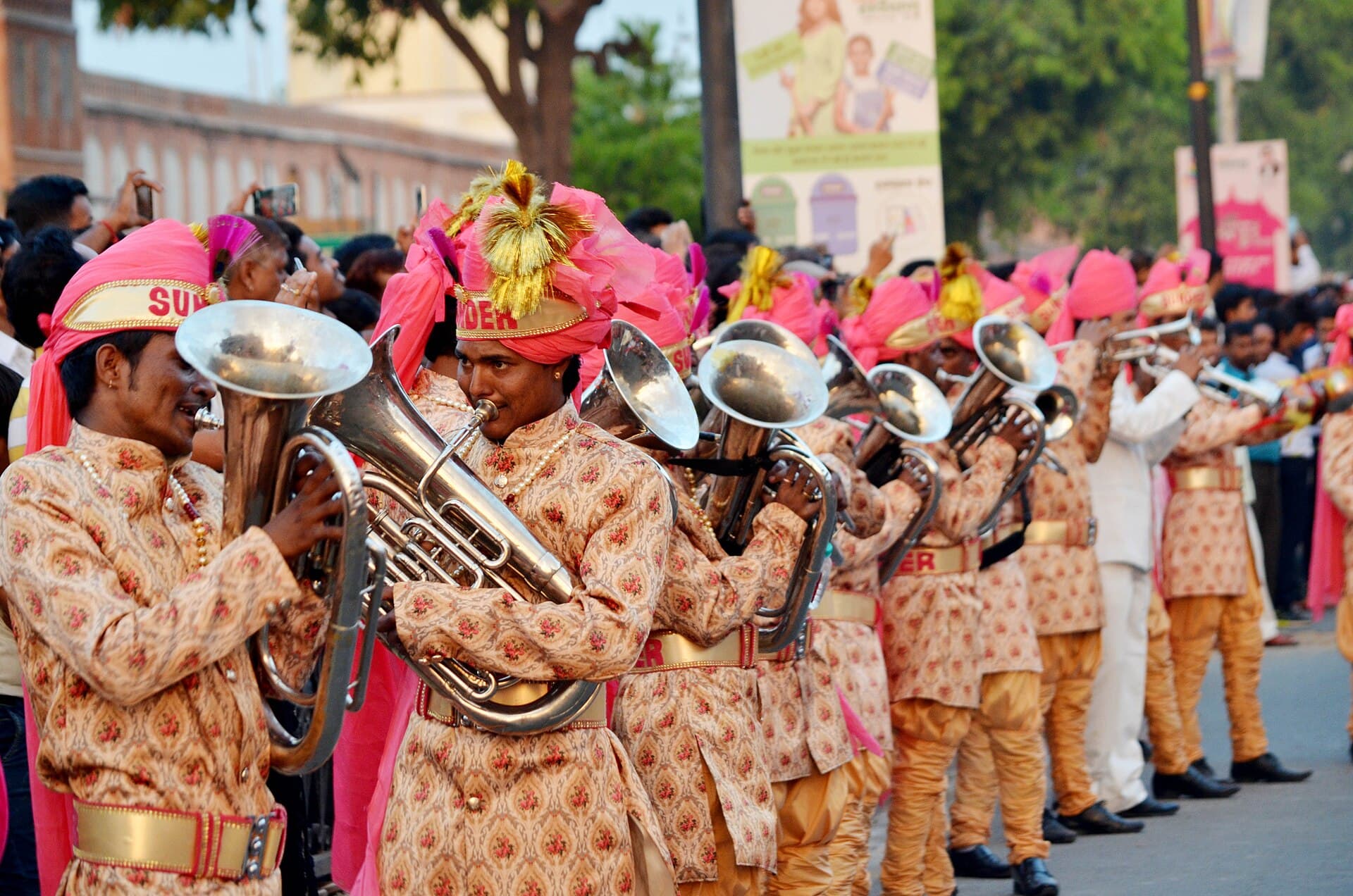
  • Brass bands marching between groups.

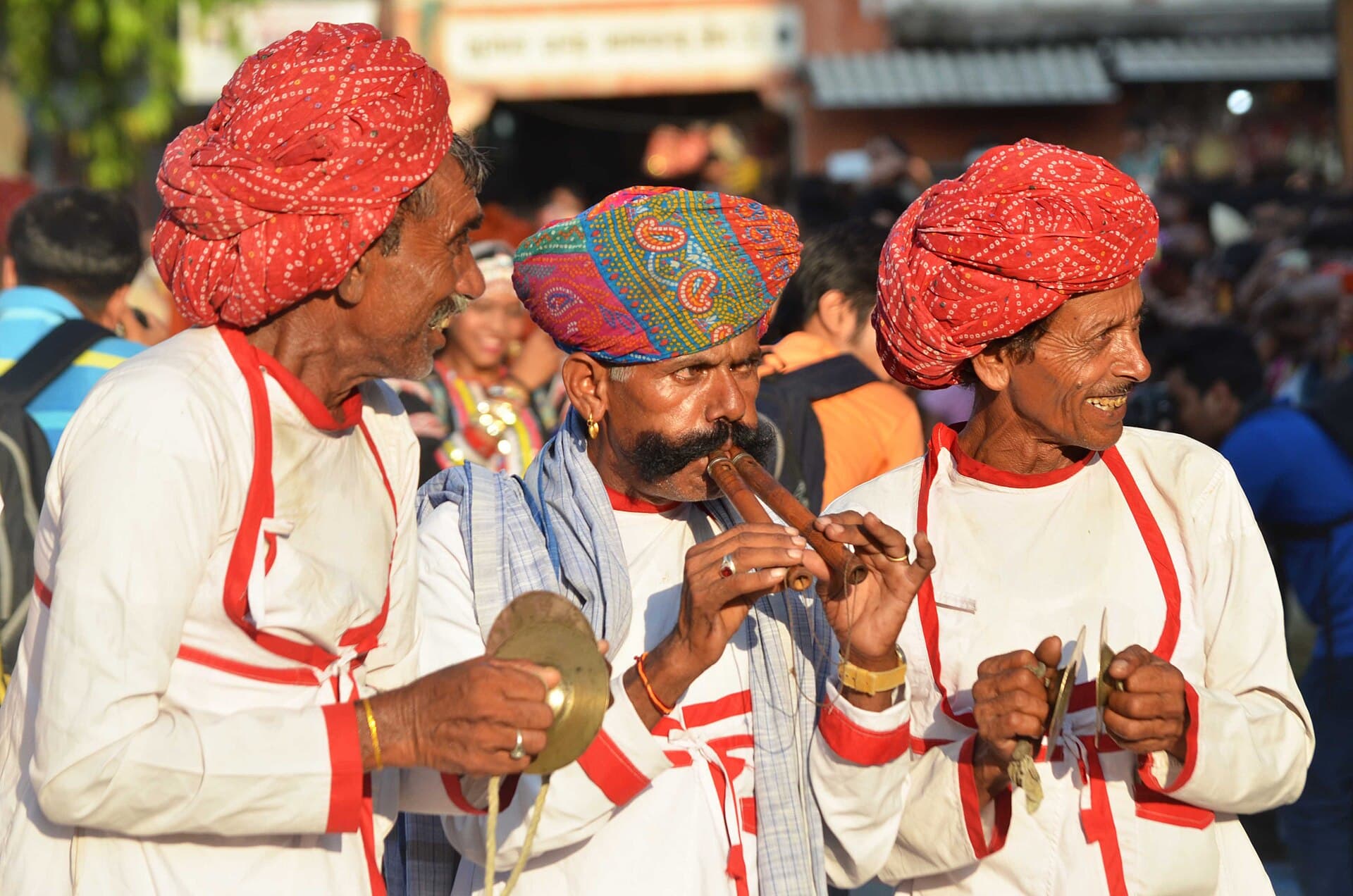
  • Folk performers: Kachhi Ghodi dummy-horse dancers, Kalbeliya, Behrupiya impersonators, Algoza flute players, Gair and Chakri dancers, and shehnai players.

  • The Gangaur sawari at the very end, followed by the Dhalet chobdar and women in traditional dress carrying kalash pots.

Elephants and horses have also walked in recent years, with a group of gunmen beside the artists 5. A royal aarti for Gauri is performed at Tripolia Gate as the procession leaves 4, and the former royal family worships the goddess before the procession ends 5.

The procession has left the City Palace every year since 1828, with 2020 the first time it did not run, because of COVID-19 limits on gatherings 6. On the same evenings, women all over Jaipur carry their own clay idols of Gauri and Isar on their heads, singing 4.

Tip: Do not leave once the camels and dancers have gone by. The palanquin of the goddess is the last thing in the line, and that is the moment people came for.

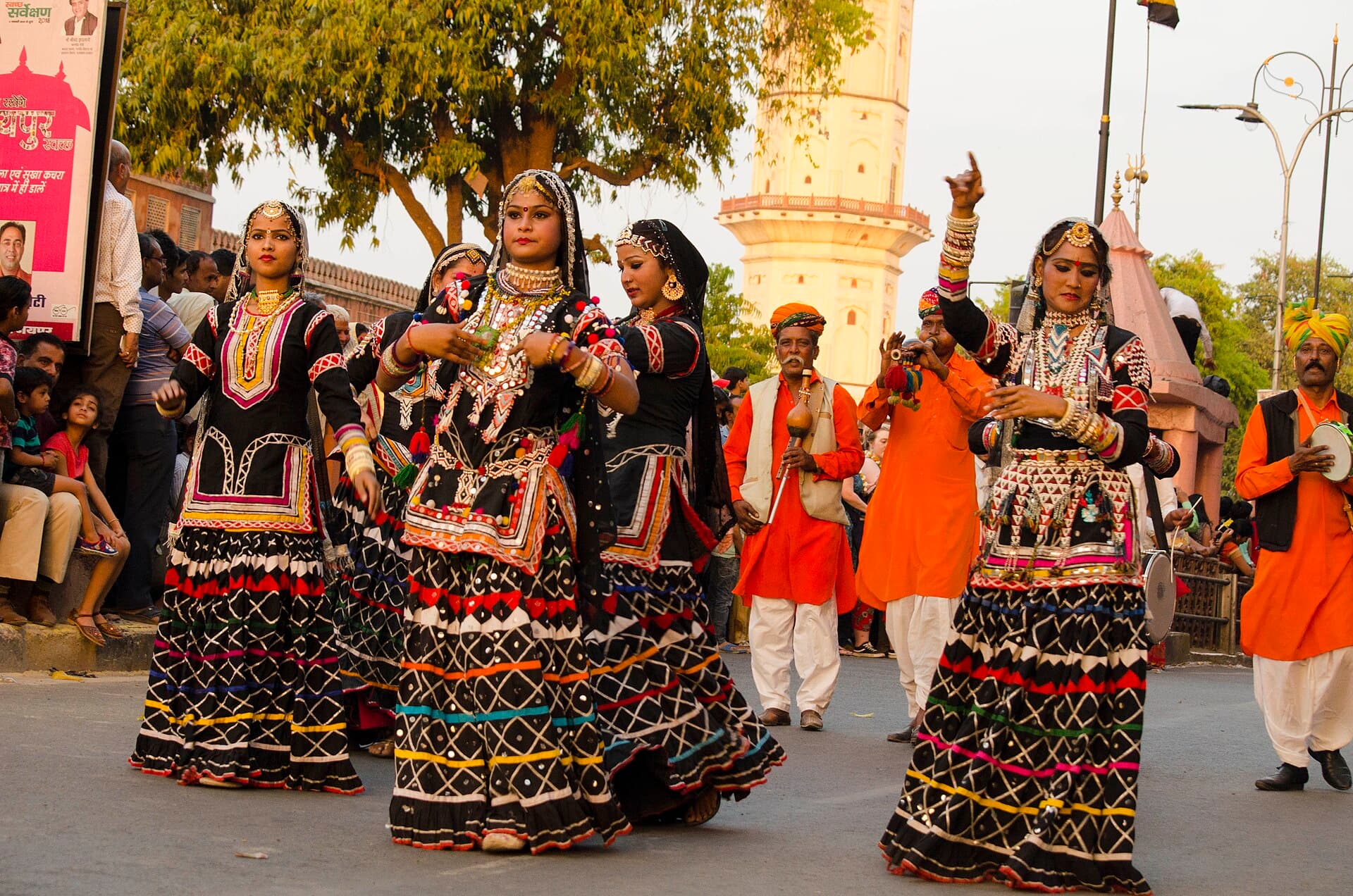
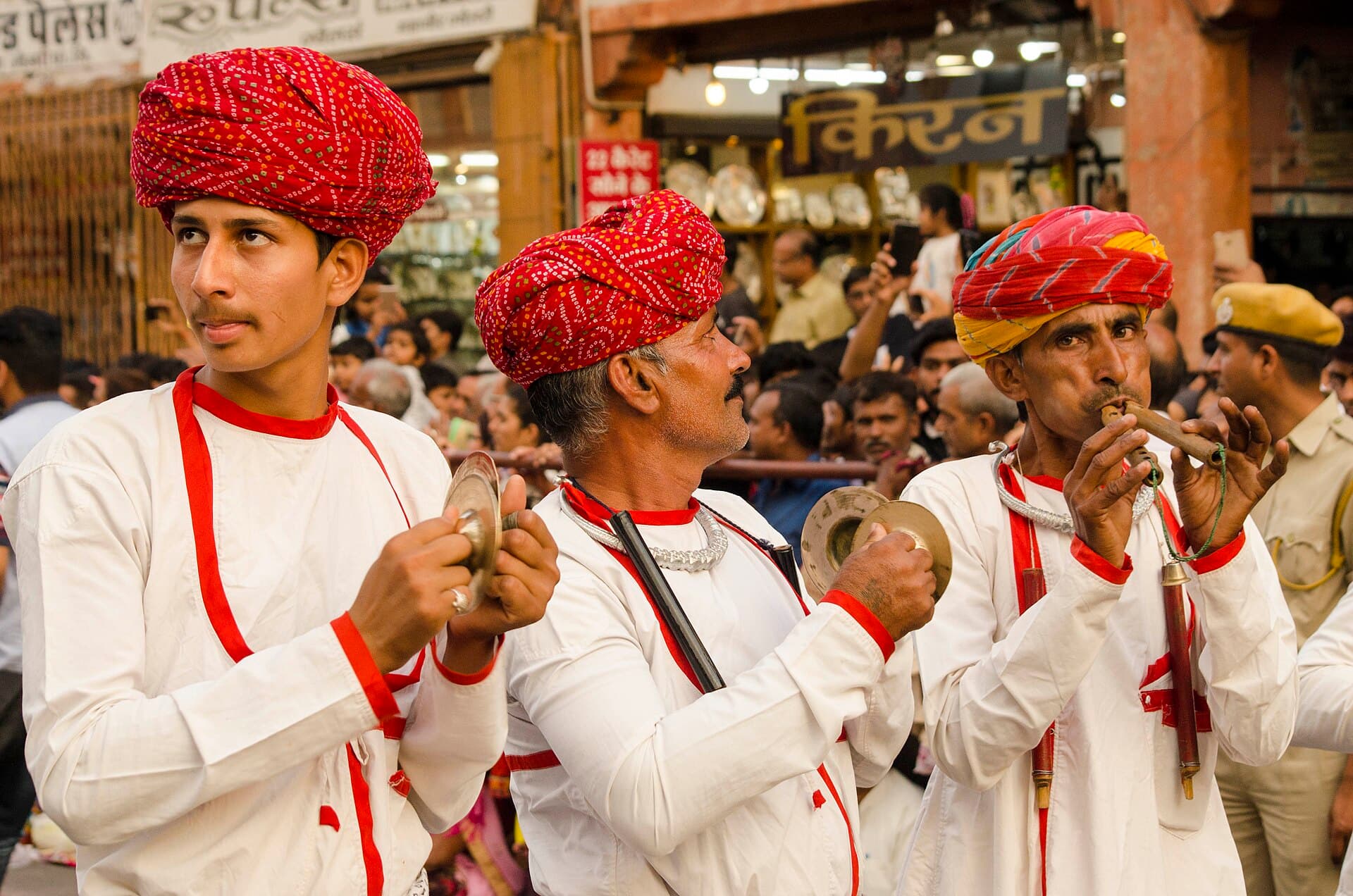
Kalbeliya dancers in black costumes performing in the Gangaur procession in Jaipur
Photo: Siddharth 36 · CC BY-SA 4.0 · Wikimedia Commons

April Heat Over the Pink City Walls

Jaipur in early April is hot and dry, so plan Gangaur around the evening. Long-term India Meteorological Department averages for Jaipur give April a mean daily high of 37.6°C and a mean low of 22.8°C, with 7.1 mm of rain on about 0.9 rainy days 12. March averages are cooler, with a 32.0°C high and a 17.4°C low 12, which matters in years when Gangaur falls in late March.

For a 9 April 2027 Gangaur, assume afternoons close to the April average and pleasant nights. The procession moves at dusk, after the worst heat, but the wait on the pavement starts in full sun.

Crowd level, on a scale of 1 to 5:

  • Morning of Gangaur: 2, with women worshipping at home and at temples.
  • Mid-afternoon on Tripolia Bazaar: 3, as families claim arcade steps.
  • Departure from Tripolia Gate: 5, the densest point of the evening 5.
  • Second evening: 4, slightly lighter, with more local families.

What to bring for the wait:

  • A litre of water per person, refilled at shops along the bazaar.
  • A cotton scarf or cap against the sun on the stone pavement.
  • Light, covered clothing, which also suits temple visits.
  • A small torch for the lanes after the line has passed.

Tip: Arrive at Tripolia Bazaar by mid-afternoon if you want an arcade step in the shade. Latecomers end up several rows back, watching between heads.

Dust is the other nuisance. Camels, horses and the crowd on the bazaar stones kick up fine grit, so carry a cloth for your camera lens.

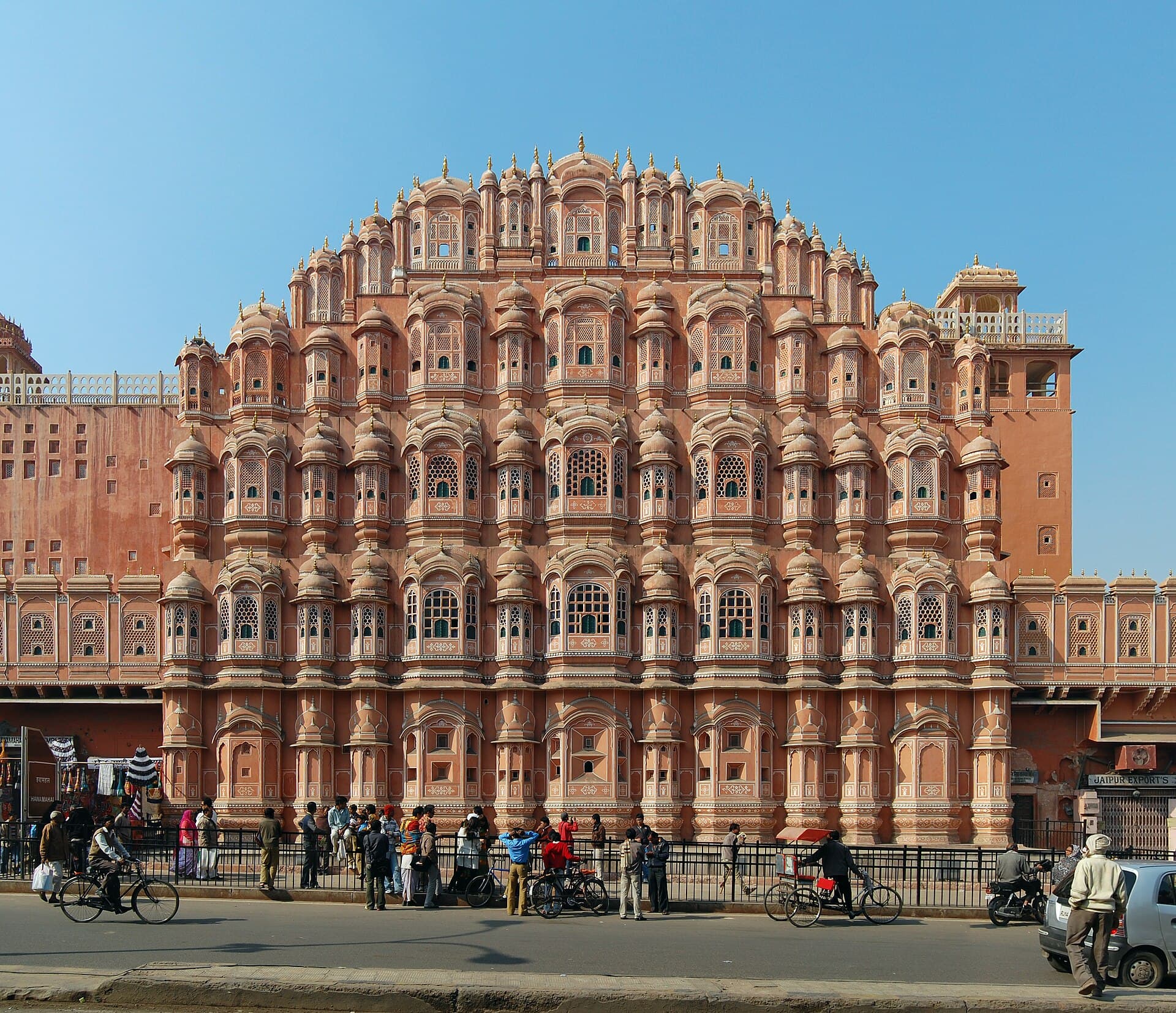
Hawa Mahal facade in Jaipur under a hazy late-afternoon April sky
Photo: Marcin Białek · CC BY-SA 4.0 · Wikimedia Commons

Walled-City Rooms Within Walking Distance of Chhoti Chaupar

The best base for Gangaur in Jaipur is inside or just outside the walled city, close enough to walk to Tripolia Bazaar. The old city was laid out by Sawai Jai Singh II, who founded Jaipur in 1727, behind walls with seven fortified gates 12, and its UNESCO World Heritage listing came in 2019 12.

Areas that work:

  • Inside the walls near Chhoti Chaupar or Chandpole: haveli guesthouses on the procession side of the city. You walk out of the door into the crowd.
  • Around Chandpole Gate and Sindhi Camp: a short metro ride to Chhoti Chaupar on the Pink Line 10, with more choice of mid-range rooms.
  • Civil Lines and Bani Park: quieter garden hotels, one or two metro stops further out 10.
  • Near the airport in Sanganer: only for a late arrival, since the airport is about 10 km from the centre 11.

Gangaur is mostly a local festival, so rooms do not sell out the way they do for the Jaipur Literature Festival in January. The busier risk is Chaitra Navratri, which overlaps Gangaur week, when Indian families travel to Rajasthan's temples and forts.

Tip: Ask any walled-city guesthouse whether its roof looks onto Tripolia Bazaar or Chhoti Chaupar. A rooftop facing the route turns the procession into a private viewing.

Book two to three months ahead for the nights of 8 to 10 April 2027, and check cancellation terms in case the panchang date shifts. Rooms inside the walls are small, often up steep stairs, which matters if you travel with older relatives.

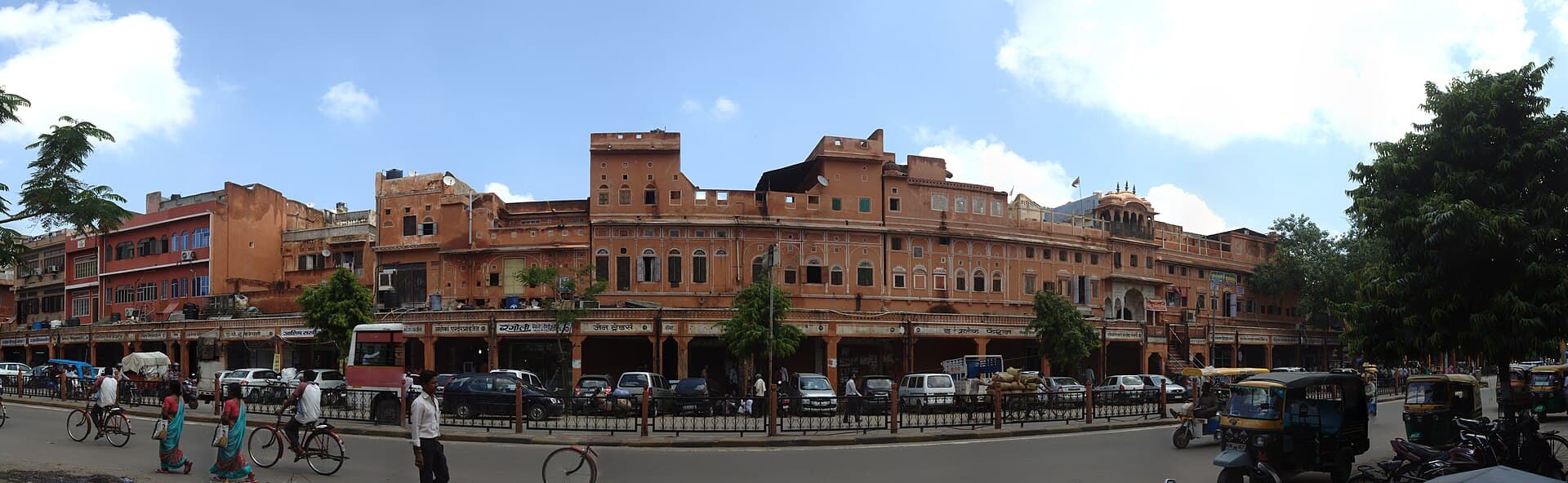
Pink-washed haveli facades along a street of Jaipur's walled city near Chhoti Chaupar
Photo: I would appreciate being notified if you use my work outside Wikimedia. More of · CC BY-SA 4.0 · Wikimedia Commons

Phone Signal in the Tripolia Bazaar Crush

Mobile data slows down sharply on Tripolia Bazaar when the Gangaur procession leaves the City Palace, because domestic and foreign visitors are filming and calling from one short stretch of street at once 5. The walled city's thick arcades and narrow lanes make the dead spots worse.

What visitors actually do with their phones at Gangaur shapes how much data to plan for:

  • Video: most people film the palanquin, the Kalbeliya dancers and the aarti at Tripolia Gate, then send clips home that night.
  • Maps: you will check the route from Tripolia Bazaar to Chhoti Chaupar and back to Badi Chaupar station several times.
  • Messaging: live-location sharing keeps a group together in the crowd.
  • Payments: sweet counters and metro top-ups often run on QR codes.
  • Translation: songs, signs and conversations are mostly in Hindi or Rajasthani.

A day like this, heavy on video uploads and map checks, uses far more data than an ordinary sightseeing day, so pick a plan with headroom rather than the smallest one. Public Wi-Fi does not help on the street.

Tip: Install an eSIM for India before you fly and switch it on when you land in Jaipur. You will have maps and a cab app working at the airport instead of hunting for a SIM counter.

In an emergency, dial 112, India's single number for police, fire and ambulance 17. Upload your videos after you get back to the hotel, not on the pavement. The network clears quickly once the crowd leaves the bazaar, and your battery lasts longer for the second evening.

Crowd of spectators filling Tripolia Bazaar, Jaipur, during the Gangaur procession at dusk
Photo: Avinashmaurya · CC BY 3.0 · Wikimedia Commons

Ghewar on Sinjara, the Eve of Gangaur

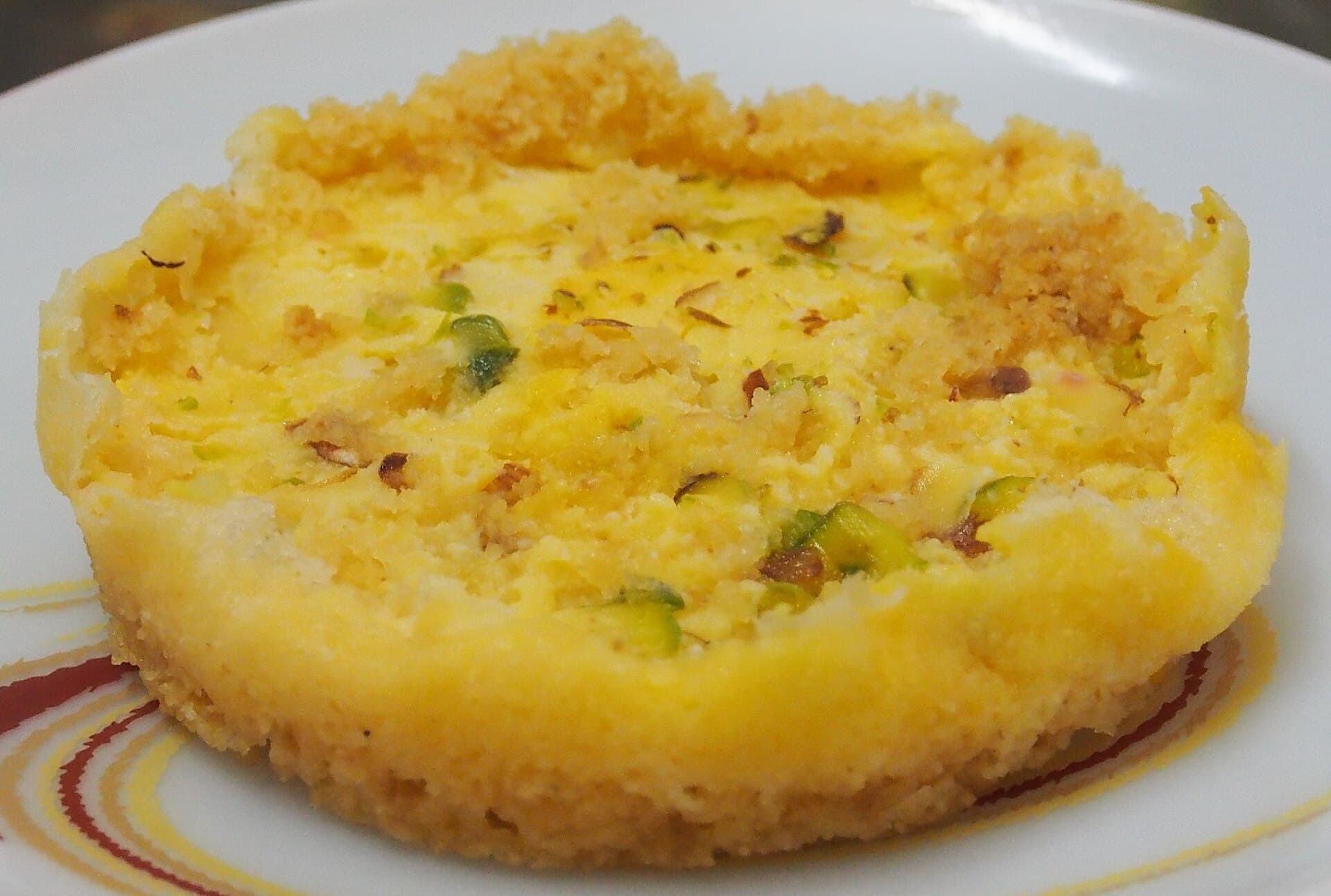
Ghewar is the sweet of Gangaur in Jaipur: people buy it to eat and to share with friends and relatives during the festival 3. It is a disc of batter made from maida, ghee, milk and water, fried in ghee and soaked in sugar syrup, often topped with almonds, pistachios, saffron or kewra 13.

The sweet is tied to Sinjara, the day before Gangaur, when families send gifts to newly married daughters 13. On Sinjara, women also decorate their hands with henna, and parents send a gift package to married daughters 1.

Kinds of ghewar you will see on the counters:

  • Plain ghewar: the honeycomb disc soaked in syrup 13.
  • Mawa ghewar: topped with thickened milk solids 13.
  • Malai ghewar: finished with cream, often with rabdi 13.
  • Chhena ghewar: a Jaipur variety introduced in 1961 13.

Ghewar is also strongly linked to the monsoon month of Shravan and to Teej 13, so April is one of two seasons when Jaipur's sweet shops stack it high.

Women fasting for Gangaur often eat only one meal a day during the festival weeks 1 3, and the end of the festival is when families break the fast with a meal at home.

Tip: Buy ghewar on the morning of Gangaur rather than the evening. By the time the procession leaves, the good counters around the walled city may be sold out of the fresh batch.

Ghewar is crumbly and syrupy, so ask for a sealed box if you plan to carry it on a flight home.

Stacked discs of malai ghewar topped with nuts in a Jaipur sweet shop display
Photo: Pradeep717 · CC BY-SA 4.0 · Wikimedia Commons

Gangaur Ghat in Udaipur as a Second Stop

Udaipur celebrates Gangaur as the Mewar Festival, which coincides with the Gangaur festival in Chaitra 14. Women in traditional dress carry idols of Isar and Gangaur on their heads in a procession that starts at the clock tower and goes down to Lake Pichola 14.

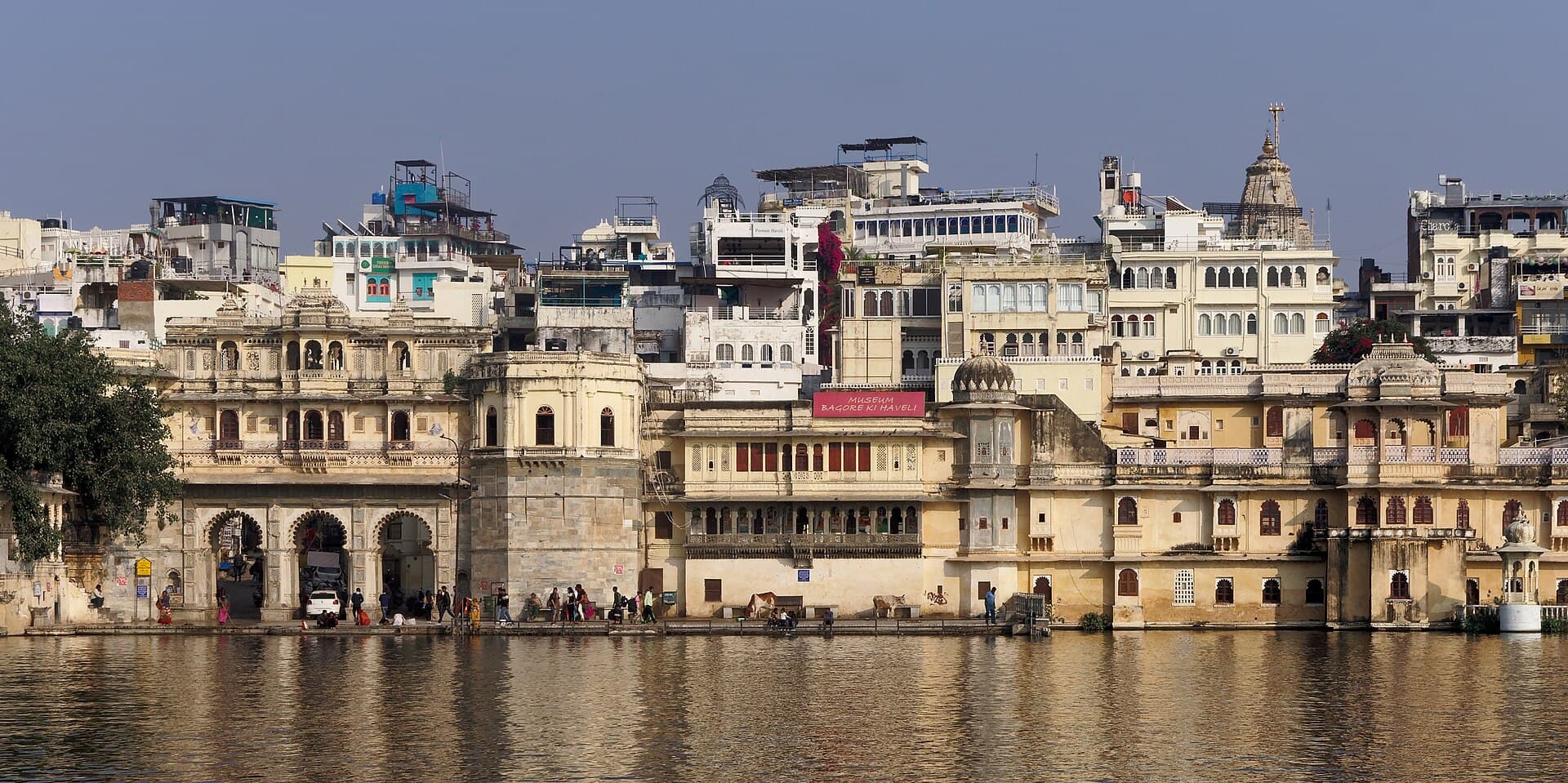
At the lake, the idols are moved onto boats for immersion 14. The ceremony centres on Gangaur Ghat, a main ghat on the Lake Pichola waterfront near Jagdish Chowk, best known for Bagore Ki Haveli 15. Kalbeliya and Ghoomar dances and Rajasthani folk songs fill the evening 14.

Ways to combine the two cities:

  • Jaipur first: see the City Palace procession on 9 April 2027, then travel on to Udaipur.
  • Udaipur first: the Mewar Festival runs over three days, as it did on 22 to 24 March 2023 14.
  • Jaisalmer: Gangaur there honours only Gauri, without Isar, because locals say the Isar idol was taken by Bikaner residents about 400 years ago 4.
  • Bikaner and Jodhpur: both hold their own Gangaur celebrations 4.

Gangaur is the same festival across Rajasthan, but each city stages it differently. Jaipur gives you royal regalia in a bazaar, Udaipur gives you boats on a lake.

Tip: Check both cities' programmes before committing. Udaipur's Mewar Festival dates are set separately each year, and the two processions can fall on the same evening.

Udaipur needs at least two nights to see the procession, the boats and the lakefront, so plan a five-night Rajasthan trip rather than squeezing it into a day trip.

Gangaur Ghat on Lake Pichola, Udaipur, with Bagore Ki Haveli beside the steps
Photo: Jakub Hałun · CC BY-SA 4.0 · Wikimedia Commons

Suggested itinerary

Day 1 · Sinjara in the walled city

  1. Morning
    City Palace museumGo when it opens at 9:30 and see the Sarvato Bhadra hall where Gauri's palanquin waits.
  2. Midday
    Hawa MahalWalk from the City Palace along the bazaars and rest in the shade of the arcades.
  3. Afternoon
    Johari BazaarWatch women having henna applied for Sinjara and buy bangles.
  4. Evening
    Ghewar countersBuy a box of malai ghewar while the fresh batch is still on the counter.
  5. Night
    Chhoti ChauparWalk the route once in the dark so you know your corners for tomorrow.

Day 2 · Gangaur evening

  1. Morning
    Neighbourhood templesSee women carrying clay idols of Gauri and Isar on their heads.
  2. Midday
    Hotel restStay out of the heat; charge phones and power banks fully.
  3. Mid-afternoon
    Tripolia BazaarClaim an arcade step facing Tripolia Gate before the shade goes.
  4. Around dusk
    Tripolia GateWatch for the royal aarti and the palanquin leaving the palace.
  5. Evening
    Chhoti ChauparSlip ahead of the line to see the turn into Gangauri Bazaar.
  6. After the sawari
    Badi Chaupar stationCatch the Pink Line before the last train at 22:30.

Day 3 · The second procession

  1. Morning
    Amer FortHead out of the walled city early to beat the heat on the ramparts.
  2. Afternoon
    Chaugan StadiumFind a spot near the stadium, which sits between Gangauri Bazaar and the City Palace.
  3. Around dusk
    Gangauri BazaarWatch the second outing of the goddess with a lighter crowd.
  4. Evening
    TalkatoraFollow the end of the line to where the procession converges.

Tip: Keep afternoons light: the April sun is hardest between noon and 16:00, and the procession runs in the cooler evening.

Recommended eSIM plans

Pick by trip length. Visiting several countries? Choose a regional plan.

Selected: eSIM India 5GB 3 Days

Set up your eSIM in 3 steps

  1. Order and get your QR codeThe QR code arrives by email right after payment.
  2. Scan before you flySettings → Cellular → Add eSIM, while you still have Wi-Fi.
  3. Turn on data when you landSet the eSIM as your data line and enable data roaming.

Frequently asked questions

Gangaur 2026 was celebrated on Saturday 21 March 2026 across Rajasthan 1 4. In Jaipur, Gangaur Mata's royal procession left the City Palace, received a royal aarti at Tripolia Gate and moved through Chhoti Chaupar and Gangauri Bazaar to Talkatora and Pondrik Park 4. The next Gangaur is expected on Friday 9 April 2027 1.

The Jaipur Gangaur procession leaves the City Palace on Gangaur itself and again on the following evening, at the same time 2. In 2017, for example, it set out on 30 March and again on 31 March 2. The second evening is a useful backup if heat, flight delays or crowds spoil the first, and the pavement is usually a little easier to reach.

Yes, once in its modern history. The City Palace administration cancelled the procession in 2020 because a government advisory limited gatherings to five people 6. It was the first time it had not been held since 1828, and a few people prayed inside the palace instead 6. Women across Rajasthan celebrated over video calls and messaging apps that year 6.

A ghudlia is a perforated clay pot with a lit lamp inside. From the evening of the seventh day after Holi, unmarried girls carry it on their heads while singing, and neighbours give them small gifts of money, sweets, jaggery, ghee or oil 3. At the end of the festival the pots are broken and the girls share a feast 3.

Jaisalmer's Gangaur honours Goddess Gauri alone, without the Isar idol of Shiva that other Rajasthani cities carry beside her. Locals say the Isar idol was taken by Bikaner residents about 400 years ago, and prayers continue in the hope that it returns 4. It makes Jaisalmer's procession look noticeably different from Jaipur's or Udaipur's.

Plan for more than an ordinary sightseeing day, because most visitors film the palanquin and the dancers at Tripolia Gate and send video home the same night. Maps, live-location sharing and QR payments in the bazaars add to it. Install an eSIM before flying to Jaipur and upload videos at the hotel, when the network around Tripolia Bazaar is quiet again.

Sources

Figures on this page come from the sources below — the small number next to each figure points to its source.

  1. 1Bhakti Bharat, Gangaur festival dates and rituals (accessed 2026-10-30)
  2. 2Rajasthan Tourism press release, Gangaur celebrated with traditional pomp and pageantry (accessed 2026-10-30)
  3. 3Wikipedia, Gangaur (accessed 2026-10-30)
  4. 4Free Press Journal, Gangaur festival lights up Rajasthan's cities (accessed 2026-10-30)
  5. 5ETV Bharat, Gangaur festival celebrates eternal union of Lord Shiva and Goddess Parvati (accessed 2026-10-30)
  6. 6ETV Bharat, Corona fear robs Rajasthan's Gangaur festival of all fervour (accessed 2026-10-30)
  7. 7eSamskriti, Gangaur Festival Jaipur (accessed 2026-10-30)
  8. 8Wikipedia, City Palace, Jaipur (accessed 2026-10-30)
  9. 9City Palace Jaipur, Visit and admission (accessed 2026-10-30)
  10. 10Wikipedia, Jaipur Metro (accessed 2026-10-30)
  11. 11Wikipedia, Jaipur International Airport (accessed 2026-10-30)
  12. 12Wikipedia, Jaipur, climate data from the India Meteorological Department (accessed 2026-10-30)
  13. 13Wikipedia, Ghevar (accessed 2026-10-30)
  14. 14Incredible India, Mewar Festival (accessed 2026-10-30)
  15. 15Wikipedia, Gangaur Ghat (accessed 2026-10-30)
  16. 16Government of India, e-Visa portal (accessed 2026-10-30)
  17. 17Wikipedia, 112 emergency telephone number (accessed 2026-10-30)
  18. 18Wikipedia, Chaugan Stadium (accessed 2026-10-30)
  19. 19The Hosteller, Know more about Gangaur (accessed 2026-10-30)