

Pucón, Chile: The Complete Travel Guide to South America's Adventure Capital

If you are looking for a place that packs volcano hiking, thermal hot springs, white water rafting, and old-growth forest trekking into a single base town, Pucón, Chile delivers all of it. Sitting on the shores of Lake Villarrica in the Chilean Lake District, Pucón sits in the shadow of the Villarrica Volcano — an active, 2,847-meter peak that last erupted in 2015 and remains one of the most climbed volcanoes in South America.
TL:DR
Located 780 km south of Santiago in the Chilean Lake District
Best known for: Villarrica Volcano hike, Termas Geométricas, rafting, and trekking
Best time to visit: December–March for summer activities; June–September for skiing
Getting there: Bus from Santiago ~$19–27 (9–10 hours) or fly to Temuco then bus
Budget: From $50/day (hostel + activities) to $150+/day (mid-range)
What Makes Pucón Worth the Trip
Pucón earns its reputation as the adventure capital of South America not from one landmark but from the sheer concentration of things to do within a short radius. Four volcanoes ring the area. A network of thermal rivers feeds hot springs that look like they belong in a fairy tale. The Río Trancura rushes past the edge of town with rapids that range from family-friendly to genuinely demanding.
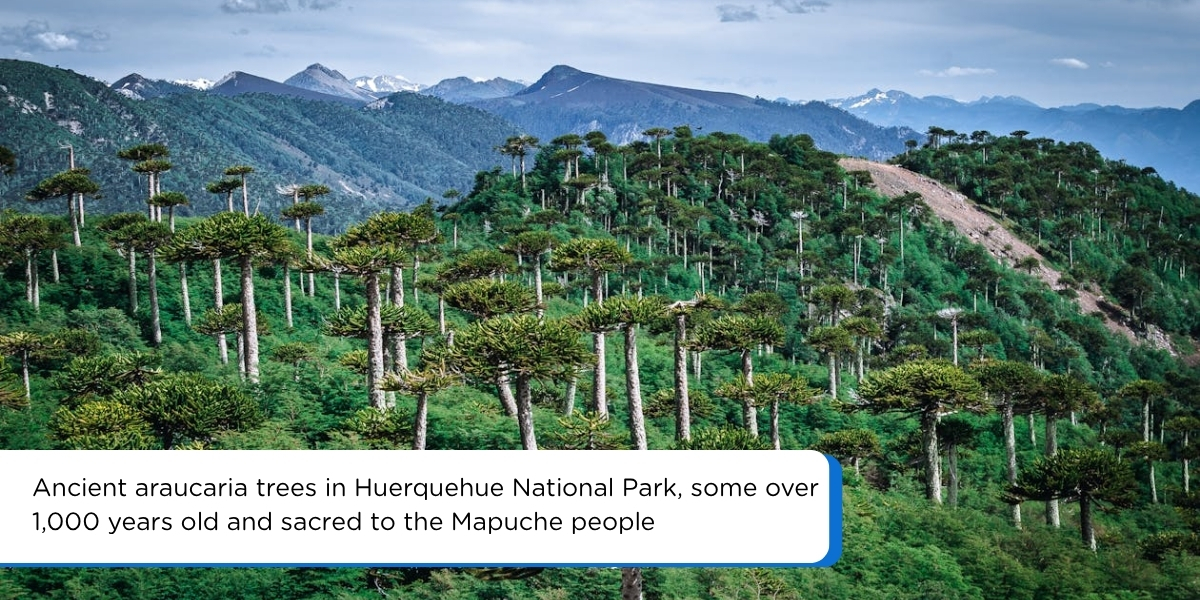
Beyond the adrenaline, there is also a quieter side to the region. The araucaria forests in Huerquehue National Park contain trees over 1,000 years old, considered sacred by the local Mapuche people. Pucón itself is a lively, well-serviced town with good hostels, plenty of tour agencies, and restaurants that stay open late into the summer season.
How to Get to Pucón from Santiago
By bus is the most popular and affordable option. Direct buses depart from Santiago's Terminal Alameda with companies like Turbus and Pullman, taking roughly 9–10 hours and costing $19–27 one way. Book a cama or semi-cama seat for the overnight trip and you arrive rested.
By plane and bus is faster. Fly from Santiago (SCL) to Temuco (ZCO) in about 1.5 hours from around $33, then connect by bus or shared transfer to Pucón in another 2 hours. Total journey time drops to around 5–6 hours.
By rental car gives you the most flexibility, especially if you plan to visit Termas Geométricas or Huerquehue at your own pace. The 780 km drive from Santiago takes 8–9 hours along a straightforward route.
Travel tip: Mobile coverage along the Santiago–Pucón highway gets patchy after the first 200 km. Set up your eSIM for Chile before you leave the city so you have reliable data for navigation, checking volcanic activity alerts from CONAF, and booking tours on the road.
Top Things to Do in Pucón
Climb Villarrica Volcano
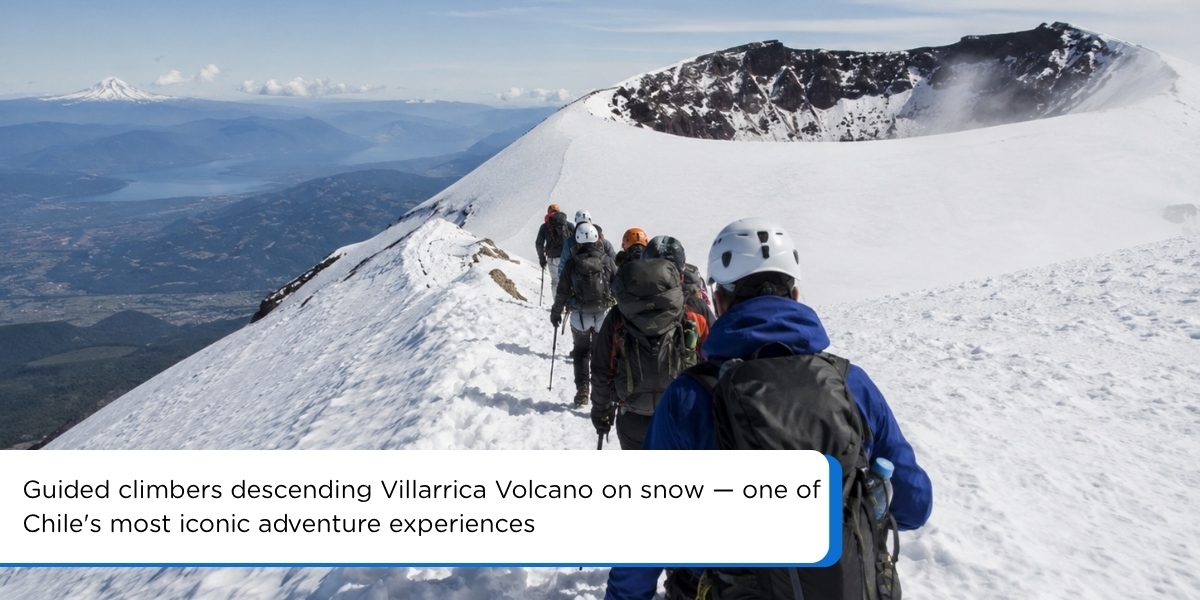
This is the headline experience. The guided summit hike takes 7–10 hours round trip, reaching an active crater at 2,847 m. On clear days, you can see eight surrounding volcanoes and six lakes from the top. The descent is done on crampons with an ice axe — or by sitting down and sliding. Tour operators provide all gear, and prices run around $160 per person. Always confirm CONAF's volcanic activity status before booking, as the summit closes without warning.
Soak in Termas Geométricas
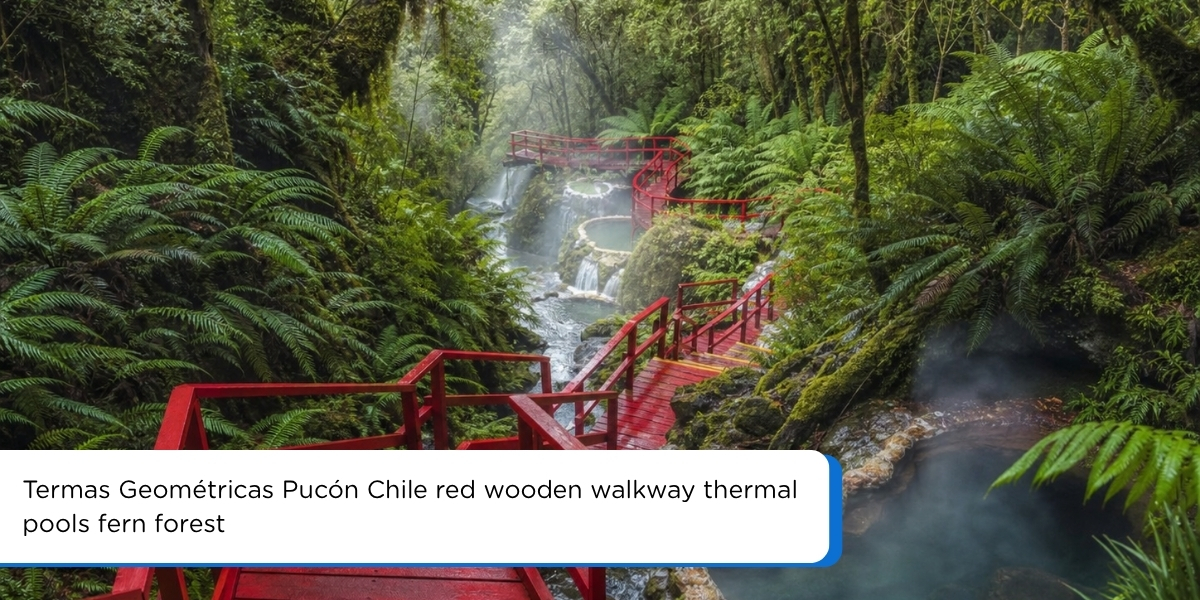
About 40 km from Pucón, Termas Geométricas is one of Chile's most beautiful hot spring complexes. Twenty natural thermal pools ranging from 35°C to 45°C are connected by red wooden walkways winding through dense fern forest. The design alone is worth the trip. Plan to arrive when doors open to avoid the afternoon tour bus crowds.
White Water Rafting on Río Trancura
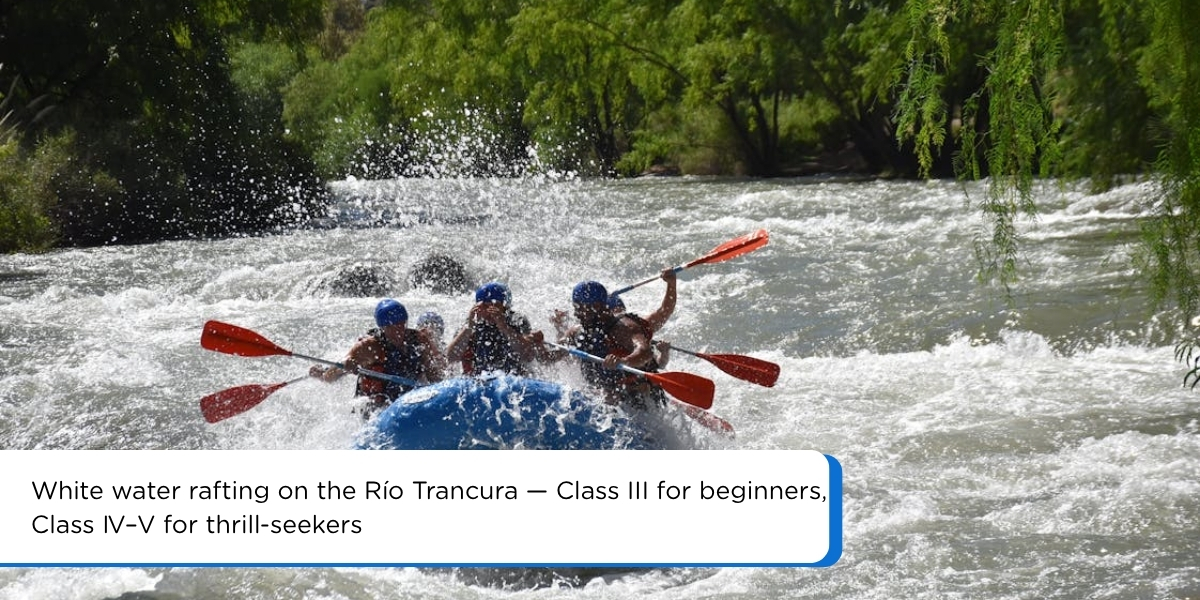
The Trancura River flows just outside town and offers two levels of experience. The Lower Trancura (Class III) suits beginners and families. The Upper Trancura (Class IV–V) is for people who want something harder. Half-day trips start at around $60 per person and depart 15 minutes from the town center.
Trek Huerquehue National Park
Huerquehue sits 33 km east of Pucón and protects 12,500 hectares of temperate rainforest. The Los Lagos Trail covers 10 km round trip through four mountain lakes and past waterfalls. The San Sebastian Trail climbs higher for panoramic views of three volcanoes. Park entrance costs around $10–15, and guided day tours are available from Pucón.
Kayak on Lake Villarrica
For something slower-paced, kayaking on the lake with the volcano reflected in flat water is one of Pucón's most memorable experiences. Several operators along the lakefront rent kayaks by the hour, and sunset paddles are particularly popular.
Best Time to Visit
Season | Conditions | Best For |
|---|---|---|
December – March | 20–25°C, dry, busy | Volcano hike, rafting, trekking, lake activities |
March – May | Cooler, fewer crowds, autumn colours | Photography, budget travel, quiet hiking |
June – September | Cold, snow at altitude | Skiing at Pucón Ski Center, cozy lodge stays |
September – November | Warming up, wildflowers | Spring trekking, lower prices, fewer visitors |
Peak season is December through February. Book accommodation and volcano tours at least two to three weeks ahead during this period.
Costs at a Glance
Expense | Estimated Cost |
|---|---|
Bus (Santiago to Pucón, one-way) | $19–27 |
Flight + bus (SCL to Temuco + transfer) | $33–145 flight + bus |
Hostel dorm | $28–40/night |
Budget private room | $40–80/night |
Mid-range hotel | $80–200/night |
Villarrica Volcano guided tour | ~$160/person |
Rafting Río Trancura (half-day) | ~$60/person |
Termas Geométricas with transfer | ~$40–60/person |
Huerquehue National Park entrance | ~$10–15 |
Stay Connected with an eSIM for Chile
Pucón sits in a region where mobile coverage can shift quickly — reliable in town, variable once you head into the national parks or up toward the volcano. You will need data for checking CONAF volcanic activity updates, navigating to Termas Geométricas, booking tours in advance, and staying in contact during multi-hour hikes in Huerquehue.
Chile's best-covered networks for the Lake District are Entel and Movistar, both offering solid 4G LTE in tourist areas and along main roads. A travel eSIM for Chile activates before you board your flight and connects automatically when you land in Santiago — no SIM card swap, no airport kiosk queue.
Get your Gohub eSIM for Chile here
Practical Tips Before You Go
Check CONAF's Villarrica Volcano status the day before your climb — closures happen with little notice
Book the volcano tour and Termas Geométricas transfers at least one week ahead in January–February
Bring layers even in summer: afternoons hit 25°C but evenings drop to 10°C or below
Carry Chilean pesos for smaller hot spring entrances, markets, and rural food stops
If you plan to drive, a 4WD is useful for the unpaved road sections near Huerquehue
Frequently Asked Questions
What is Pucón famous for?
Pucón is best known for hiking the active Villarrica Volcano, soaking in Termas Geométricas hot springs, white water rafting on the Río Trancura, and trekking in Huerquehue National Park. It is widely considered the adventure capital of South America.
How do I get from Santiago to Pucón?
The most popular option is a direct overnight bus from Terminal Alameda, taking 9–10 hours and costing $19–27 one way. If you prefer speed, fly from Santiago (SCL) to Temuco (ZCO) in 1.5 hours, then take a bus or transfer to Pucón for a total journey of around 5–6 hours.
Is it safe to climb Villarrica Volcano?
Yes, with a licensed guide. Tour operators provide all safety equipment including crampons, ice axes, and helmets. CONAF monitors volcanic activity daily and closes the summit when conditions are unsafe. Always check the status the day before your climb.
How long should I spend in Pucón?
Three to four days covers the main highlights: the volcano hike, Termas Geométricas, rafting, and a day in Huerquehue. A full week gives you time to explore at a slower pace or add a ski day in winter.
When is the best time to visit Pucón?
December through March is ideal for outdoor activities, with warm temperatures and calm weather. If skiing is your goal, visit between June and September when Pucón Ski Center is in full operation.
Do I need to book tours in advance?
Yes, especially for the Villarrica Volcano hike and Termas Geométricas during peak season (December–February). Book at least one to two weeks ahead to avoid missing out.
Pucón rewards every type of traveler — the one chasing adrenaline and the one chasing stillness. The volcano, the forest, and the hot springs are all within 40 kilometers of each other, which makes it one of the most efficient adventure destinations on the continent.

Hi! Mình là Lala Wren, một content creator yêu xê dịch và đam mê chia sẻ trải nghiệm thực tế cho cộng đồng Gohub. Trong nhiều năm qua, mình đã đặt chân đến Thái Lan, Hàn Quốc, Nhật Bản, Singapore, Malaysia, Bali và nhiều điểm đến thú vị khác trên khắp châu Á. Cùng mình tìm hiểu tất tần tật từ khâu chuẩn bị eSIM, Visa, lịch trình và địa điểm nổi bật cho chuyến đi sắp tới của bạn nhé!
Ver todos los artículos →