

eSIM am Flughafen Cancun (CUN): Warteschlangen umgehen & verbunden bleiben 2026

Internationaler Flughafen Cancun (CUN) ist einer der verkehrsreichsten Ankunftspunkte für Strandreisen in Amerika und auch einer der berüchtigtsten Flughäfen für SIM-Karten-Aufschläge. Wenn Sie auch nur einen einzigen Cancun-Reise-Thread gelesen haben, haben Sie wahrscheinlich schon jemanden davor warnen sehen, am Flughafen weitaus mehr für Daten zu bezahlen als irgendwo sonst in der Stadt. Die Kurzversion: Eine SIM-Karte im CUN zu kaufen funktioniert, ist aber die teuerste Art, online zu gehen, und eine vor dem Flug installierte eSIM umgeht das Problem vollständig.
Kurze Antwort: Verzichten Sie auf den SIM-Karten-Aufschlag am Flughafen
Der CUN verkauft vor Ort SIM-Karten, hauptsächlich an Telcel-Schaltern in Terminal 3, aber die Preise am Flughafen liegen weit über dem, was die gleichen Daten ein paar Minuten entfernt kosten würden. Mehrere aktuelle Reiseberichte beschreiben, dass man an den ersten „Touristen“-Ständen im Terminal (denen, die in US-Dollar abrechnen) etwa 50 USD für eine einfache reine Daten-SIM bezahlt, im Vergleich zu etwa 10 bis 15 USD für ein viel größeres Datenpaket an einem offiziellen Telcel-Schalter, der in Pesos abrechnet, oder in einem Oxxo-Supermarkt außerhalb des Flughafens. Es gibt keine einzige offizielle Preisliste, auf die man verweisen könnte, aber das Muster ist über unabhängige Quellen hinweg konsistent genug, um zu vertrauen: Welcher Stand Ihnen zuerst einen Preis in Dollar nennt, ist selten das beste Angebot im Terminal.
Eine vor der Abreise installierte eSIM liefert Ihnen das gleiche Ergebnis: Konnektivität ab dem Moment Ihrer Landung, ohne den Flughafenaufschlag zu zahlen.
Wo sich SIM- und eSIM-Verkäufer im CUN tatsächlich befinden
Der Flughafen Cancun hat vier Terminals, und die meisten internationalen Langstreckenflüge (aus den USA, Kanada und Europa) landen in Terminal 4, dem neuesten und größten der vier. Inländische und einige internationale Fluggesellschaften nutzen Terminal 3.
Wenn Sie eine physische SIM-Karte im Flughafen kaufen möchten, sind die Hauptoptionen:
Ein Viva Aerobus Schalter vor der Passkontrolle in Terminal 3, der Telcels „Amigo“-Prepaid-SIM (keine Registrierung erforderlich) für etwa 300 Pesos, also rund 15 USD, verkauft, nützlich, wenn Sie online sein möchten, bevor Sie überhaupt die Einwanderungsbehörde erreichen.
Telcel-Schalter in Terminal 3, befinden sich in der Nähe der Gepäckausgabe und der Ausgangstore und sind in der Regel von etwa 7 Uhr morgens bis 23 Uhr abends geöffnet.
Stände von Mobilfunkanbietern wie Movistar, AT&T Mexico und Unefon, ebenfalls konzentriert in der Nähe des Ankunfts-/Einwanderungsausgangs in Terminal 3.
Die Preise an diesen Schaltern variieren je nach Stand: Diejenigen, die ganz vorne bei den Ankünften in US-Dollar abrechnen, sind tendenziell die teuersten, während offizielle Anbieter-Schalter, die weiter hinten in Pesos abrechnen, in der Regel das bessere Preis-Leistungs-Verhältnis bieten.
Terminal 4 hat weniger spezielle SIM-Schalter als Terminal 3. Wenn Ihr Flug dort landet, planen Sie zusätzliche Gehzeit ein, falls Sie unbedingt eine physische SIM-Karte am Flughafen kaufen möchten.
Das eigentliche Preisproblem: Welchen Schalter Sie wählen
Dies ist das Detail, das die meisten CUN-Reiseführer überspringen. Die Stände, die sich direkt am Ausgang der Ankunftshalle befinden und Preise in US-Dollar angeben, werden durchweg als die teuerste Möglichkeit bezeichnet, eine SIM-Karte im gesamten Flughafen zu erhalten. Gehen Sie etwas weiter zu einem offiziellen Telcel-, Movistar- oder AT&T-Schalter, der in Pesos abrechnet, oder warten Sie, bis Sie einen Oxxo-Supermarkt außerhalb des Flughafens erreichen (diese gibt es überall in der Hotelzone von Cancun und in der Innenstadt), und das gleiche oder ein größeres Datenpaket kostet nur einen Bruchteil des Preises.
Keine dieser Lösungen ist jedoch sofort verfügbar. Oxxo befindet sich nicht im gesicherten Terminal, hilft also erst, wenn Sie die Ankunft hinter sich haben und auf dem Weg zu Ihrem Hotel sind, und der Kauf an einem physischen SIM-Schalter bedeutet immer noch einen SIM-Tausch und die Aktivierung auf dem Telefon eines Verkäufers, auf Spanisch.
Eine eSIM vermeidet diesen Kompromiss vollständig. Sie zahlen einen klaren, im Voraus bezahlten Preis, bevor Sie fliegen, ohne Terminalaufschlag und ohne Oxxo-Umweg nach der Landung.
Kostenloses WLAN am Flughafen Cancun
Alle Terminals am CUN bieten kostenloses WLAN über das Prodigy Mobile Netzwerk an, aber die kostenlose, gesponserte Verbindung ist auf 60 Minuten begrenzt. Das reicht aus, um eine Flugstatusanzeige zu überprüfen, Ihrem Hotel eine Nachricht zu senden oder eine Abholung zu bestätigen, aber nicht, um durch Einwanderungsschlangen, Gepäckausgabe und die Fahrt zu Ihrem Resort verbunden zu bleiben.
Wie die meisten Flughafen-WLANs hört es auch auf, nützlich zu sein, sobald Sie nach draußen treten, um Ihre ADO-Bushaltestelle oder den Rideshare-Abholpunkt zu finden, was genau der Zeitpunkt ist, an dem Sie Karten und Messaging am dringendsten benötigen.
Warum vor der Landung aktivieren, nicht danach
Drei Gründe, warum dies am CUN wichtiger ist als an einem typischen Flughafen:
Sie vermeiden den teuersten Schalter im gesamten Flughafen. Die SIM-Preise des CUN sind unter Vielreisenden als einer der höchsten Aufschläge aller großen lateinamerikanischen Flughäfen bekannt. Dies zu umgehen, ist eine erhebliche Ersparnis, nicht nur eine Bequemlichkeit.
Sie sind nicht darauf beschränkt, in welchem Terminal Sie landen. Egal, ob Sie in Terminal 3 oder Terminal 4 ankommen, Ihre eSIM funktioniert identisch, sodass Sie nicht darauf angewiesen sind, dass Ihr Terminal einen funktionierenden Schalter hat.
Ihre 60 Minuten kostenloses WLAN reichen weiter. Anstatt gegen die Uhr zu kämpfen, um die Einwanderung zu passieren und Ihren Transport zu finden, bevor die kostenlose WLAN-Sitzung abläuft, funktioniert Ihre eSIM die ganze Zeit, ohne Sitzungsbegrenzung.
So richten Sie Ihre Gohub eSIM vor dem Flug nach Cancun ein
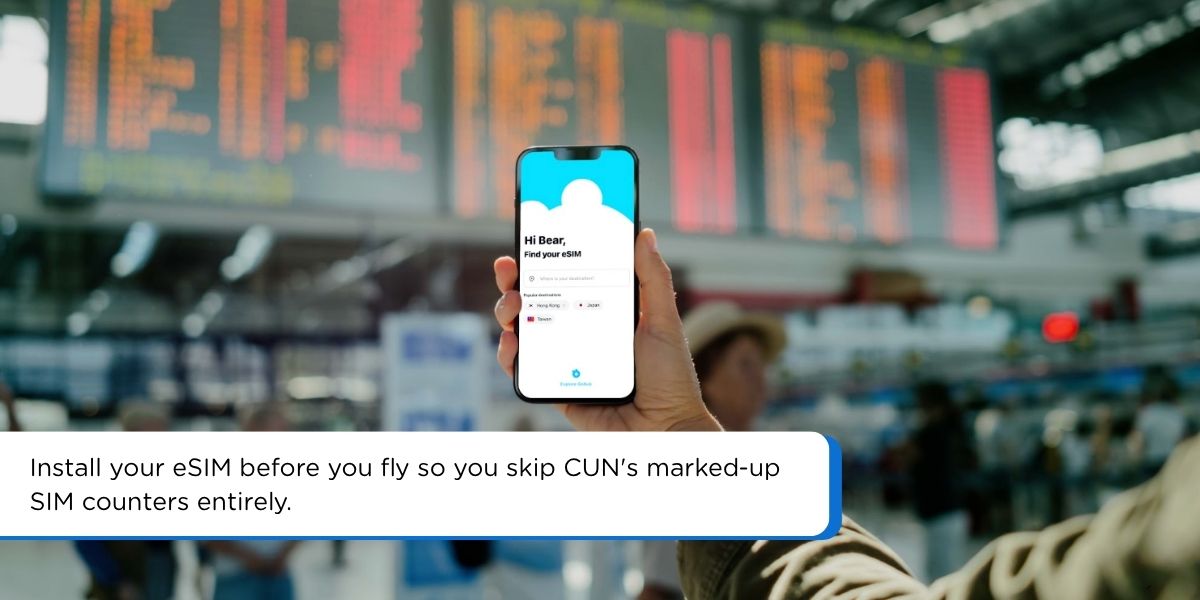
Kaufen Sie eine Mexiko eSIM online vor Ihrer Reise. Gohubs Mexiko eSIM-Pläne sind genau für diese Art der Ankunft konzipiert: einmal installieren, dann funktioniert es ab der Landung.
Installieren Sie das Profil, solange Sie noch WLAN haben, idealerweise zu Hause oder an Ihrem Abflughafen, da die eSIM-Installation eine Internetverbindung erfordert.
Stellen Sie den Plan so ein, dass er bei Ankunft aktiviert wird und nicht sofort bei der Installation, damit Sie nicht Tage vor Ihrem Flug Daten verbrauchen.
Überprüfen Sie die APN-Einstellungen mithilfe der Gohub-Einrichtungsanleitung für iPhone und Android, damit die Daten innerhalb von ein oder zwei Minuten nach der Landung live sind.
Das bedeutet, dass Karten, die WhatsApp-Nummer Ihres Hotels und Ihre Rideshare- oder ADO-Bus-App alle funktionieren, bevor Sie überhaupt die Telcel-Schalter erreicht haben, an denen alle anderen Schlange stehen.
Vom CUN nach Cancun, Playa del Carmen oder Tulum gelangen
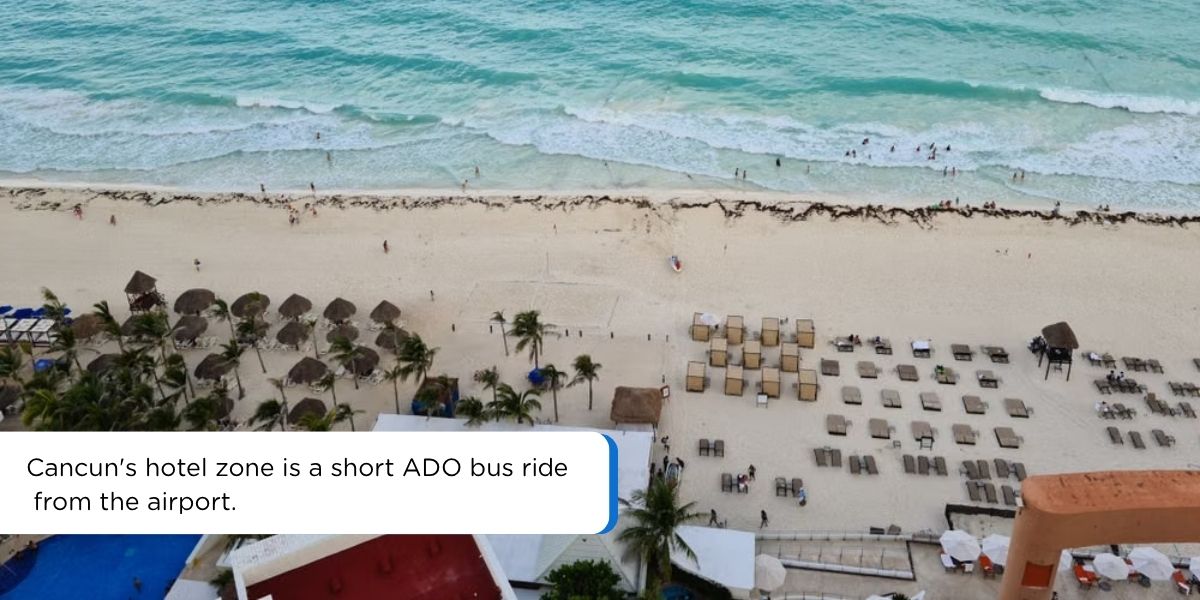
ADO-Busse fahren direkt von Abholpunkten außerhalb der Terminals 2, 3 und 4 mit Nonstop-Verbindungen nach Downtown Cancun, Playa del Carmen und Tulum. Speziell von Terminal 4 aus erfordert der ADO-Abholpunkt einen kurzen Fußweg zu einem roten Kiosk und einem Bussteigbereich, anstatt einer Haltestelle direkt vor den Türen. Eine funktionierende Karte auf Ihrem Telefon hilft Ihnen also, ihn schnell zu finden, anstatt mit Gepäck am Ankunftsbereich herumzuirren.
Wenn Sie ab dem Moment der Landung aktive Daten haben, ist es auch viel einfacher, den ADO-Fahrplan zu überprüfen, zu bestätigen, dass Ihr Hoteltransferfahrer wartet, oder eine Rideshare-App aufzurufen, falls dies Ihre bevorzugte Art ist, in die Hotelzone zu gelangen.
Häufig gestellte Fragen
Lohnt es sich, eine SIM-Karte am Flughafen Cancun zu kaufen? Es hängt davon ab, welchen Schalter Sie nutzen. Die Stände mit Dollarpreisen direkt am Ankunftsausgang werden durchweg als die teuerste Option am Flughafen gemeldet. Ein offizieller Anbieterschalter, der in Pesos abrechnet, ein Oxxo außerhalb des Terminals oder eine vorab gekaufte eSIM kosten alle merklich weniger.
In welchem Terminal sollte ich am CUN landen? Die meisten internationalen Langstreckenflüge aus den USA, Kanada und Europa kommen in Terminal 4 an, dem neuesten Terminal. Inländische und einige internationale Fluggesellschaften nutzen Terminal 3, das auch die Haupt-SIM-Karten-Schalter beherbergt.
Hat der Flughafen Cancun kostenloses WLAN? Ja, über das Prodigy Mobile Netzwerk in allen Terminals, aber die kostenlose Sitzung ist auf 60 Minuten begrenzt.
Benötige ich eine mexikanische Telefonnummer für eine Cancun-Reise? Nein. Die meisten Reise-eSIM-Pläne sind reine Datenpläne, was für Karten, Messaging-Apps und Rideshare- oder ADO-Busbuchungen ausreicht.
Kann ich eine eSIM nutzen, um vom Flughafen nach Playa del Carmen oder Tulum zu gelangen? Ja. Eine aktive eSIM ermöglicht es Ihnen, ADO-Busfahrpläne zu überprüfen, private Transfers zu bestätigen oder eine Rideshare-App zu nutzen, sobald Sie landen, ohne sich auf das zeitlich begrenzte kostenlose WLAN des Flughafens verlassen zu müssen.
Verbunden in Cancun landen
Der CUN ist einer der klarsten Fälle, in denen der Kauf am Flughafen wirklich die schlechteste finanzielle Option ist, nicht nur die langsamste. Überspringen Sie die Schalter in Terminal 3 und die 60-Minuten-WLAN-Uhr. Durchsuchen Sie Gohubs Mexiko eSIM-Pläne und richten Sie sich vor dem Flug ein, damit Ihre erste Station in Mexiko der ADO-Bus ist und nicht ein überteuerter SIM-Schalter.
Referenzierte externe Quellen (jetzt im Text oben verlinkt)
WLAN-Informationen, Internationaler Flughafen Cancun (offiziell): verlinkt auf „kostenloses WLAN“ im Abschnitt „Kostenloses WLAN“
Terminals, Internationaler Flughafen Cancun (offiziell): verlinkt auf „Der Flughafen Cancun hat vier Terminals“ im Abschnitt „Wo sich SIM- und eSIM-Verkäufer befinden“
Anmerkungen zur Wettbewerbslücke
Die Top-Suchergebnisse für „eSIM am Flughafen Cancun“ und „SIM-Karte Flughafen Cancun“ sind fast ausschließlich eSIM-Shops von Wettbewerbern (Simify, Holafly, eSIM4, Simsurf) und dünne Blog-Aggregatoren. Keiner verbindet die spezifische Preisspanne Flughafen vs. Oxxo mit terminalspezifischen Schalterstandorten und ADO-Weiterreisehinweisen in einem einzigen Artikel. Diese Kombination, plus ein unaufdringlicher Ton, ist die Differenzierung dieses Artikels. Wettbewerber-Websites wurden nur zur Lückenanalyse verwendet, niemals zitiert oder verlinkt.

Hi! Mình là Lala Wren, một content creator yêu xê dịch và đam mê chia sẻ trải nghiệm thực tế cho cộng đồng Gohub. Trong nhiều năm qua, mình đã đặt chân đến Thái Lan, Hàn Quốc, Nhật Bản, Singapore, Malaysia, Bali và nhiều điểm đến thú vị khác trên khắp châu Á. Cùng mình tìm hiểu tất tần tật từ khâu chuẩn bị eSIM, Visa, lịch trình và địa điểm nổi bật cho chuyến đi sắp tới của bạn nhé!
Alle Artikel ansehen →Related articles
Beste eSIM für USA-Reisen 2026: 5 Anbieter im Vergleich
Welche eSIM ist die beste für die USA im Jahr 2026? Wir vergleichen Gohub, Airalo, Holafly, Nomad und Ubigi hinsichtlich Preis, Netzabdeckung, Hotspot und US-Nummern, sowie die Einrichtungsschritte.
Beste eSIM für Vietnam 2026: 8 Optionen im Vergleich
Welche eSIM ist die beste für Vietnam im Jahr 2026? Vergleichen Sie Gohub, Airalo, Holafly, Nomad, Ubigi und lokale SIM-Karten nach Preis, Datenvolumen, Abdeckung und Registrierung.
eSIM am Flughafen Chicago O'Hare (ORD): Ankunftsführer 2026
Verbunden landen am O'Hare. Wo man tatsächlich eine SIM-Karte in Terminal 5 kaufen kann, wie das kostenlose Boingo WLAN funktioniert und warum eine Gohub eSIM im Jahr 2026 beides übertrifft.
eSIM am Flughafen Abu Dhabi (AUH): Einrichtung, Kosten & Beste Tarife 2026
Der Zayed International Airport vergibt jetzt eine kostenlose 10GB SIM-Karte für 24 Stunden. Wie es funktioniert, wo es Mängel gibt und wann ein VAE eSIM-Tarif immer noch lohnenswert ist.
Internet in Thailand für Touristen: Der vollständige Leitfaden 2026
Planen Sie eine Reise nach Thailand? Vergleichen Sie eSIM vs. Touristen-SIM, AIS vs. True vs. dtac und die Abdeckung Insel für Insel, um die passende Verbindung zu finden.
Internet in Südkorea für Touristen: Der vollständige Leitfaden 2026
Auf dem Weg nach Korea? Vergleichen Sie eSIM, Touristen-SIM-Karten und Pocket-WLAN-Miete, plus warum KTX und die U-Bahn Seouls einige der schnellsten Verbindungen weltweit bieten.