
ดาวน์โหลดบน App StoreDownload Gohub App on the App Store

Sanja Matsuri 2027 in Asakusa: Mikoshi Weekend, 14 to 16 May

  • May 14 – 16, 2027
  • Japan (Tokyo, Asakusa)
  • Last updated: 10 พ.ย. 2569

Overview

Sanja Matsuri, the grand festival of Asakusa Shrine, runs from Friday 14 to Sunday 16 May 2027, according to the schedule the shrine has already published 1. Friday opens with the Daigyoretsu parade at 13:00, Saturday sends out about 100 mikoshi from the 44 parish neighbourhoods at noon, and Sunday’s miya-dashi lifts the three great mikoshi at 7:00 1. Asakusa Shrine counts about 1.8 million people over the three days 2.

Highlights

  • Friday 14 to Sunday 16 May 2027, published by Asakusa Shrine 1
  • Daigyoretsu costume parade at 13:00 on Friday, cancelled in rain 1
  • About 100 mikoshi from 44 neighbourhoods leave from behind Senso-ji’s main hall at noon on Saturday 1
  • Miya-dashi of the three great mikoshi at 7:00 on Sunday, miya-iri around 19:00 to 20:00 1
  • About 1.8 million spectators over three days 2
  • A special mikoshi boat procession on the Sumida is planned for 17 to 19 March 2028 6

Good to know

Dates
Friday 14 to Sunday 16 May 2027; spirit-transfer rite on Thursday 13 May at 19:00 1
Key times
Fri Daigyoretsu 13:00; Sat mikoshi from 12:00; Sun miya-dashi 7:00, miya-iri around 19:00 to 20:00 1
Venue
Asakusa Shrine, 2-3-1 Asakusa, Taito City 3
Entry
Free street festival; spectators are kept outside the gates during the Sunday miya-dashi 8
Getting there
Asakusa Station on the Ginza, Toei Asakusa and Tobu lines, plus the Tsukuba Express two stops from Akihabara 8 15
Recommended eSIM
Japan eSIM

Why Does a Phone Matter Most Outside the Gates at Sunday’s Miya-dashi?

Sanja Matsuri honours the three men linked to the founding of Senso-ji: the fisherman brothers Hinokuma Hamanari and Takenari, who netted a small Kannon statue in the river on 18 March 628, and Haji no Nakatomo, who recognised it as a sacred image 4 7. On the third day of the festival their three great mikoshi leave Asakusa Shrine at 7:00 for a day-long circuit of the parish 1. Spectators are kept outside the gates during that opening scrum 8, so most visitors spend the morning on the streets beyond the shrine, guessing which way the shrines will come.

That is the moment a phone earns attention. Asakusa Shrine counts about 1.8 million people across the three days 2, and the narrow lanes between Kaminarimon and Asakusa Shrine fill quickly. The shrine posts its schedule and route maps online, and friends who split up at the gate need a way to find each other again. A charged phone with a working connection, an offline copy of the route maps and a pin on a fixed meeting point make the difference between seeing a great mikoshi pass and hearing it from two streets away.

Which Way Are Ichinomiya, Ninomiya and Sannomiya Heading?

After the miya-dashi, the three great mikoshi split up: Ichinomiya takes the western district, Ninomiya the southern and Sannomiya the eastern, each following a route map published on the shrine’s schedule page 1. Saving all three maps before Sunday morning lets you choose one shrine and stay with it.

Which Streets Close to Traffic on Mikoshi Sunday?

On Sunday 16 May 2027 Kaminarimon-dori is closed to traffic from 10:00 to 19:00 and Umamichi-dori from 10:00 to 17:00 1. Taxis and ride-hail pickups have to meet you outside those streets, so a live map showing the closures saves a long walk back from a dead end.

Where Do You Regroup Behind Senso-ji’s Main Hall on Saturday?

Saturday’s mikoshi assemble on the open ground behind Senso-ji’s main hall before setting off one by one 1. When a team lifts its shrine, the crowd surges and parts; a pinned meeting point, such as the Hozomon gate, and shared live location bring a group back together faster than shouting.

How Do You Read the Shrine’s Japanese-Only Festival Schedule?

The detailed timetable, rain rules and road closures sit on Asakusa Shrine’s Japanese pages, while its English page carries only a short overview 1 3. Browser translation turns the schedule into English in seconds, which matters when a rain cancellation is posted on the morning of the Daigyoretsu.

Install your eSIM before you fly and be online when you land — see matching plansSee eSIM plans

The complete guide

Why Does Sanja Matsuri 2027 Fall on 14 to 16 May?

Asakusa Shrine sets the festival by a fixed rule: the Friday, Saturday and Sunday built around the third Saturday of May 2. In 2027 May begins on a Saturday, so the third Saturday is 15 May, and the shrine’s published schedule runs from Friday 14 to Sunday 16 May 2027 1. The same rule put Sanja Matsuri 2026 on 15 to 17 May 9. Travellers who follow the looser phrase “third weekend of May” sometimes book a week too late in years when May begins on a Saturday, as it does in 2027.

The festival was not always in May. In the Edo period it was held on 17 and 18 March, closely tied to Senso-ji and known as the Kannon festival 2. From 1872 it moved to 17 and 18 May, and processions of mikoshi through the neighbourhoods began 2. The shrine calls it one of the three great festivals of Edo, with its present form established in the Edo period 3.

The 2027 calendar, as published by the shrine 1:

  • Thursday 13 May, 19:00: the rite that moves the deities into the three great mikoshi 1

  • Friday 14 May, 13:00: the Daigyoretsu parade, then the Binzasara dance at 14:20 and 15:00 1

  • Saturday 15 May, 12:00: the joint procession of about 100 neighbourhood mikoshi 1

  • Sunday 16 May, 7:00: the miya-dashi, with the miya-iri around 19:00 to 20:00 1

The shrine notes that the schedule may change, so the Japanese schedule page is worth a check in the week before travel 1.

Tip: With only one day, Saturday shows the most mikoshi in the most places; Sunday gives the three great mikoshi but the densest crowds.
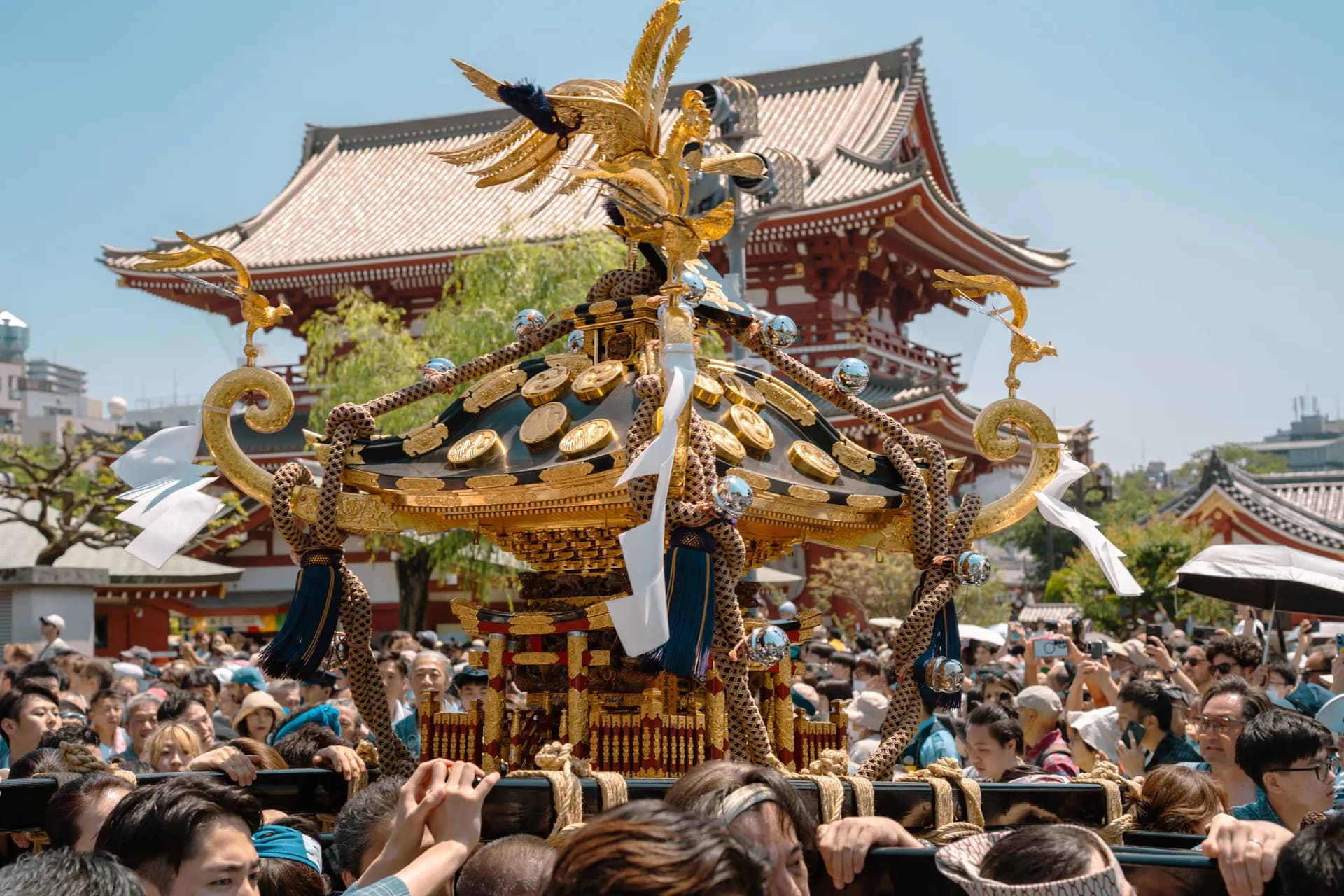
A crowd of festival carriers in matching happi coats hoisting a large golden mikoshi in front of the Hozomon gate at Senso-ji during Sanja Matsuri

Which Parts of Sanja Matsuri Are Closed to Spectators?

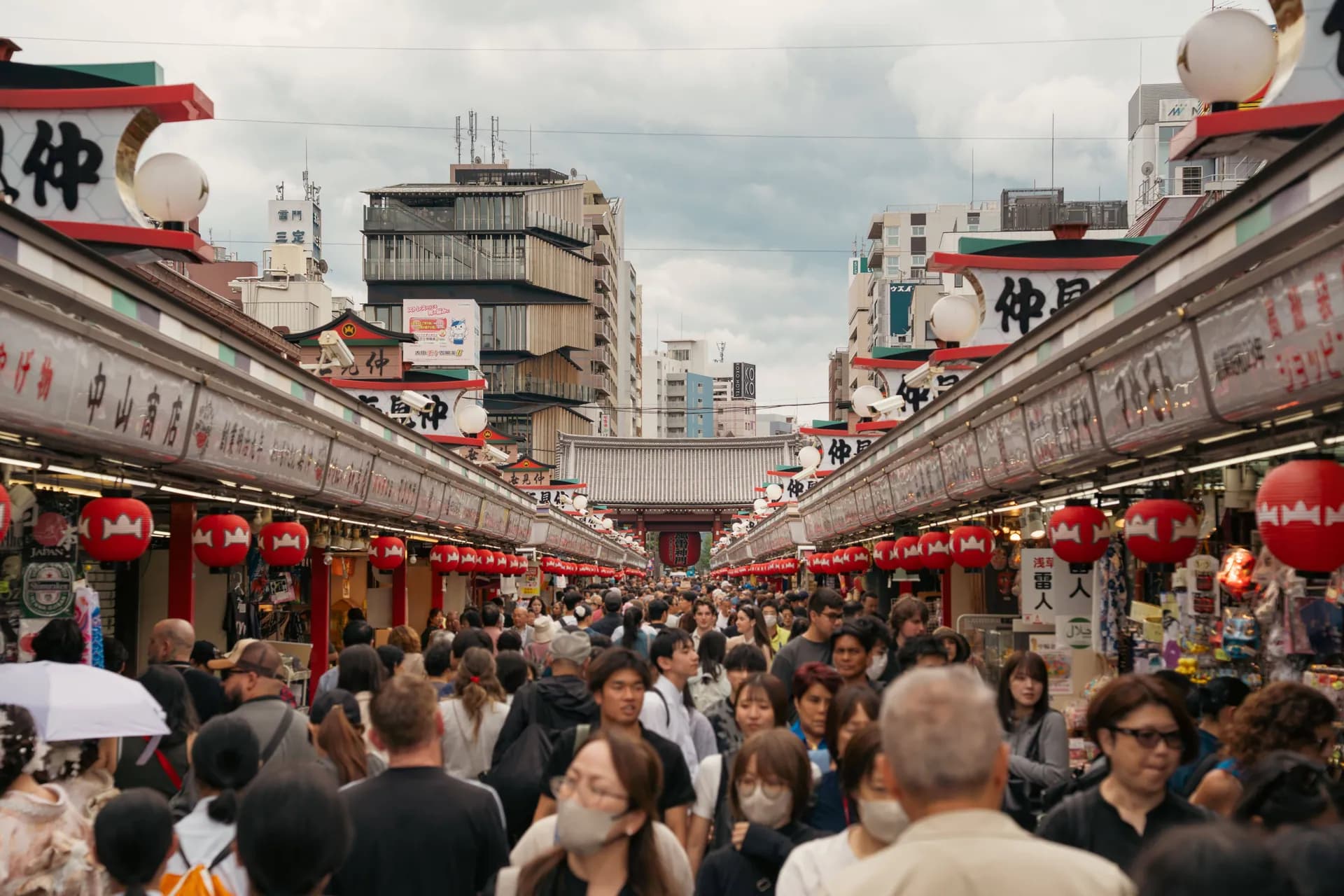
Almost nothing at Sanja Matsuri is ticketed. The Daigyoretsu, the neighbourhood mikoshi and the three great mikoshi all move through public streets, and GO TOKYO’s listing gives no admission fee, referring visitors to the official site 9. Asakusa Shrine estimates about 1.8 million people come over the three days 2.

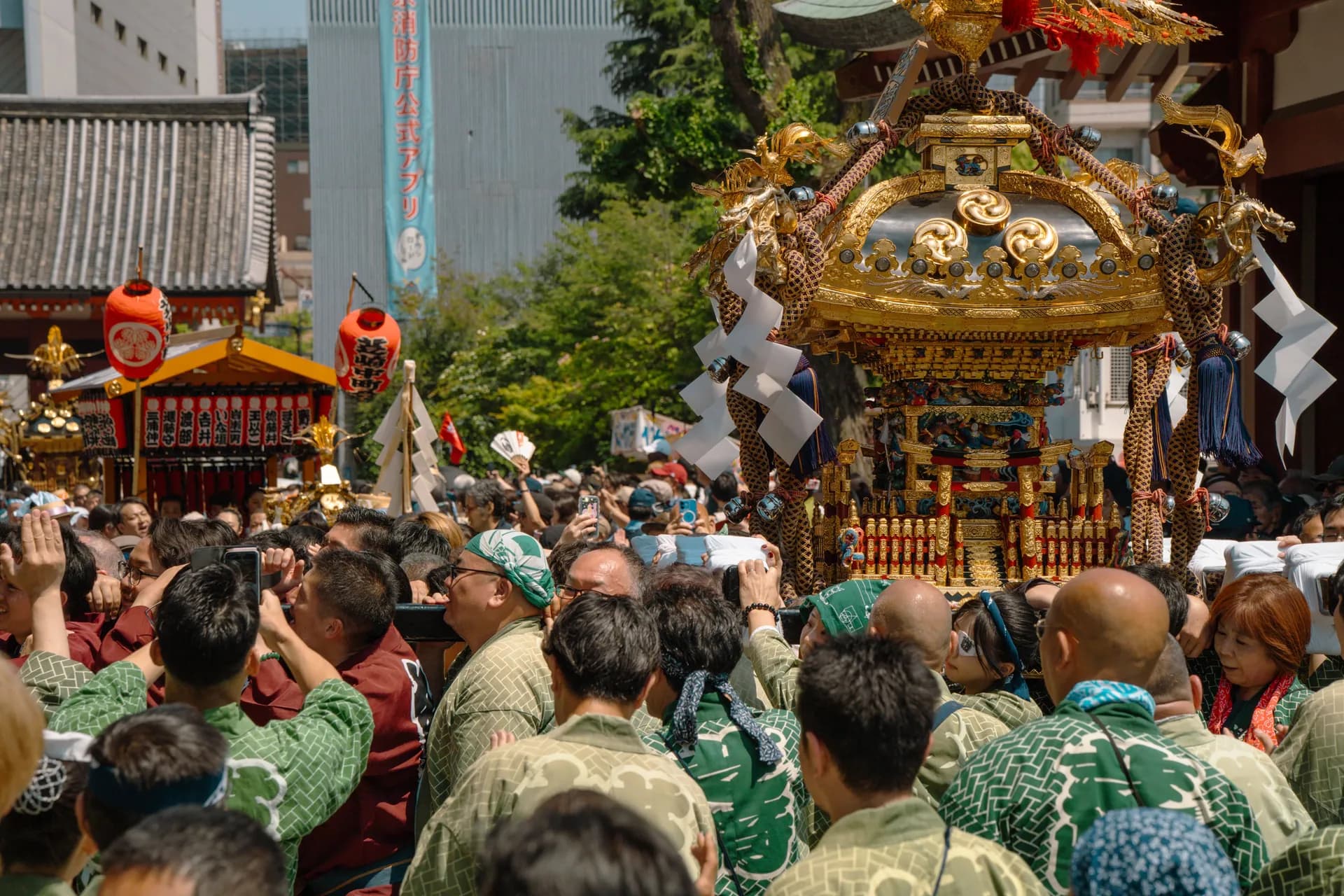
The one real restriction is Sunday morning. During the miya-dashi at 7:00, crowds of carriers in matching neighbourhood happi coats compete inside the shrine grounds to shoulder one of the three great mikoshi, and japan-guide reports that spectators are not allowed beyond the gates for space and safety reasons 1 8. After roughly two hours the mikoshi leave and head into the district, so the practical plan is to wait on the streets outside rather than queue at the gate 8.

Free places to watch through the weekend:

  • Nakamise-dori and Kaminarimon on Friday afternoon, when the Daigyoretsu passes on its way to the shrine 1

  • The ground behind Senso-ji’s main hall from noon on Saturday, where about 100 mikoshi set off one by one 1

  • The shopping arcades of the three districts on Sunday, which the great mikoshi pass on their circuits 8

  • The observation terrace of the Asakusa Culture Tourist Information Center, across the street from Kaminarimon, free and open from 9:00 to 22:00 11

What does cost money: food from the festival stalls, souvenirs on Nakamise-dori, and anything bought from shops near the shrine. Seven Bank ATMs inside 7-Eleven stores accept Visa, Mastercard, American Express, JCB and UnionPay cards, with screen instructions in 12 languages 16.

Note: The shrine’s schedule lists no ticketed or reserved viewing for any part of the festival, so a “VIP pass” sold online does not come from the shrine 1.

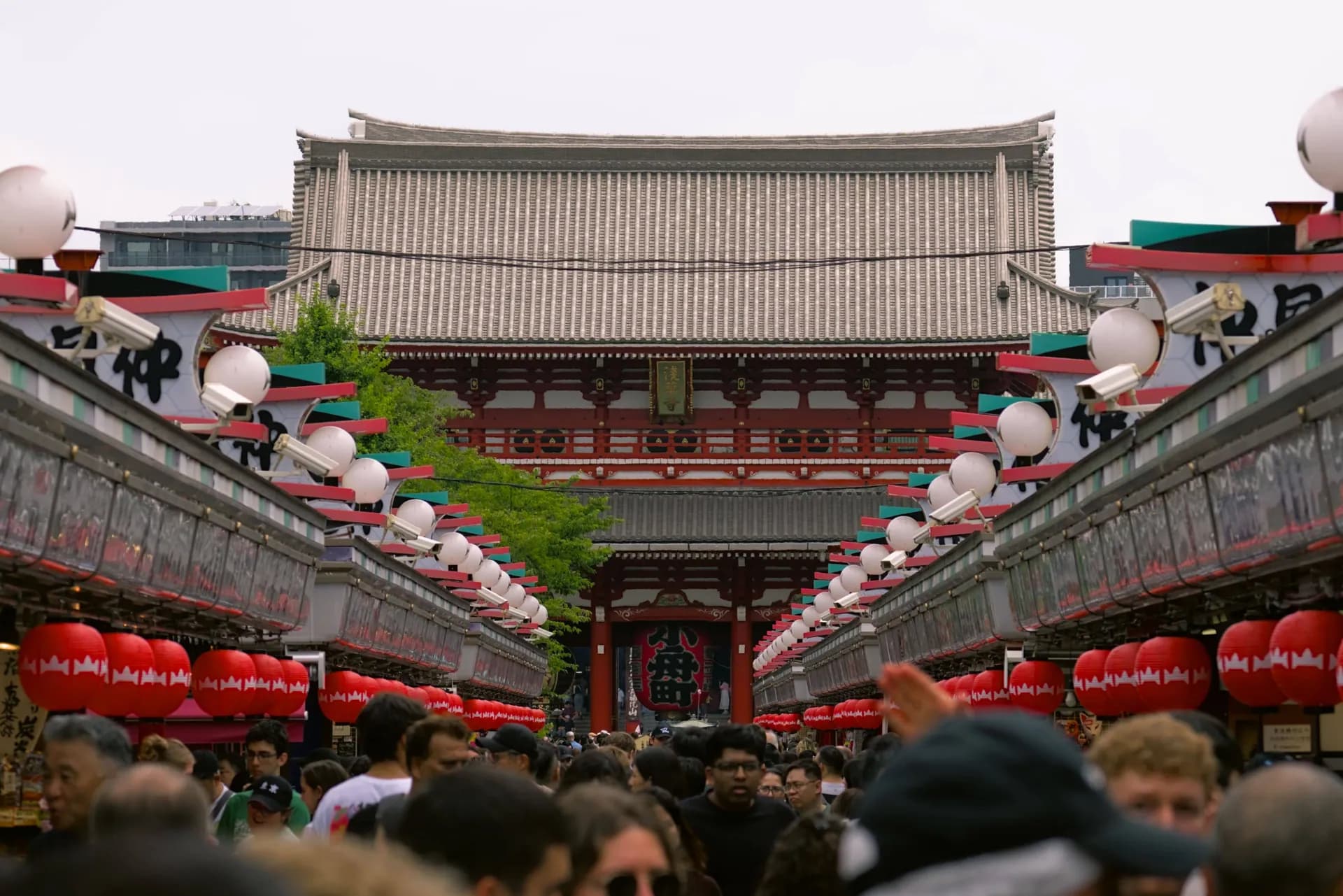
Spectators lining a narrow Asakusa shopping street as a neighbourhood mikoshi passes, with no barriers or ticket gates in sight
Need a steady connection for transit and maps?See eSIM plans

Which Asakusa Station Should You Use on Mikoshi Sunday?

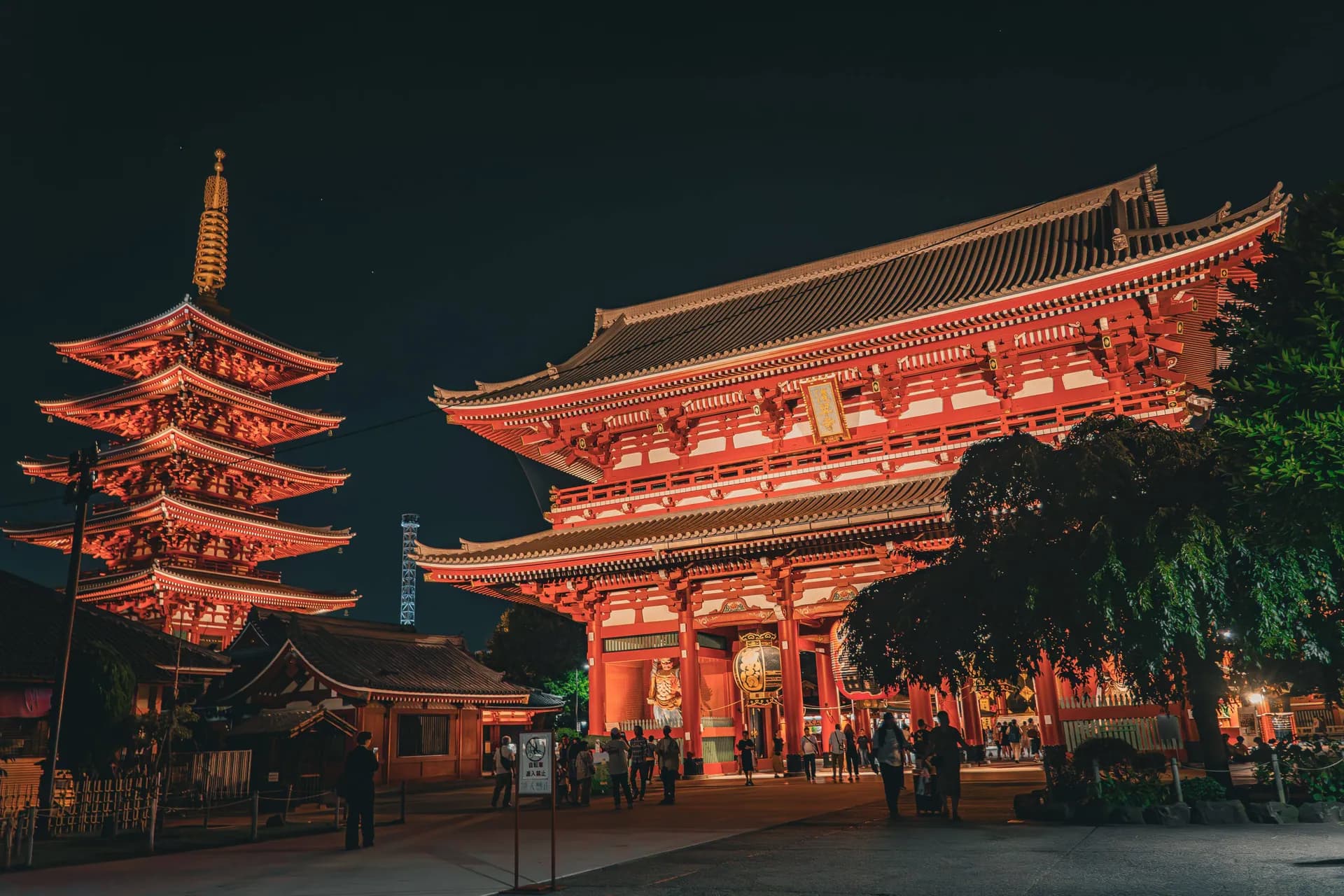
Asakusa Shrine stands at 2-3-1 Asakusa in Taito City, a few steps from Asakusa Station 3 8. Four railway lines serve the district, and on festival days the choice of station decides how long you queue to get out.

  • Tokyo Metro Ginza Line: the closest to Kaminarimon, five minutes from Ueno and fourteen from Kanda, the transfer point from Tokyo Station 10

  • Toei Asakusa Line: through-trains from Sengakuji, which links to Haneda on the Keikyu Line, about 21 minutes plus about 16 minutes 10

  • Keisei Sky Access Line: direct trains from Narita Airport to Asakusa in about 50 minutes 10

  • Tobu Skytree Line: Tokyo Skytree Station is about 3 minutes away 10

  • Tsukuba Express: Asakusa is station TX03, two stops from Akihabara 15

On Sunday 16 May 2027, Kaminarimon-dori closes to traffic from 10:00 to 19:00 and Umamichi-dori from 10:00 to 17:00 1. Buses detour and cars cannot reach the streets near Senso-ji, so the Tsukuba Express station on the west side is a calmer way in and out than the Ginza Line exits by Kaminarimon.

From Shinjuku, japan-guide suggests the JR Chuo Line to Kanda and the Ginza Line to Asakusa, about 10 minutes each 8.

The Sumida River water bus is a gentler arrival. The Sumida River Line links Asakusa with Hama-rikyu Gardens in about 35 minutes and Hinode Pier in about 40 to 50 minutes, but with roughly 3 departures a day it suits sightseeing rather than a 7:00 start 14. The Hama-rikyu stop is for getting off only 14.

Tip: On Sunday, arrive early by the Tsukuba Express and walk east; leave the same way after the miya-iri.

What Happens Between Thursday’s Spirit Transfer and Sunday’s Miya-iri?

The shrine’s published programme for 2027 runs over four days 1. Times are as listed by Asakusa Shrine, which notes that they may change 1.

Thursday 13 May 1:

  • 19:00: the ceremony that moves the deities into the three great mikoshi 1

Friday 14 May 1:

  • 13:00: the Daigyoretsu parade along Yanagi-dori, Umamichi-dori, Kaminarimon-dori, through Kaminarimon and up Nakamise to the shrine, cancelled in rain 1

  • 14:20: the Binzasara dance offered in the main hall; 15:00: again on the kagura stage, cancelled in rain 1

  • 15:30: the deities are moved into each neighbourhood’s mikoshi 1

Saturday 15 May 1:

  • 10:00: the grand festival ceremony 1

  • 12:00: about 100 mikoshi from the 44 neighbourhoods gather behind Senso-ji’s main hall, set off one by one, receive purification at Asakusa Shrine and go home to their own streets 1

  • 15:30: the children’s mikoshi procession; 17:00: a miko dance on the kagura stage 1

Sunday 16 May 1:

  • 7:00: the miya-dashi, when the three great mikoshi leave the shrine grounds 1

  • After the miya-dashi: Ichinomiya circles the western district, Ninomiya the southern, Sannomiya the eastern 1

  • 14:00: miko dance and a miko dance class; 15:00: a dance offering by the Tokyo Asakusa Kumiai; 16:00: taiko drumming by Miyamoto Unosuke Shoten 1

  • Around 19:00 to 20:00: the miya-iri, the return to the shrine, followed by the rite that sends the deities back to the main hall 1

The Binzasara dance is a form of dengaku that grew out of rice-planting rites, performed for a good harvest and to drive away evil; its clapper is made of 108 thin cypress boards 5. Each of the three great mikoshi carries one of the three founders, and the current ones were donated by parishioners in 1950 and 1953 after all seven pre-war mikoshi were lost in air raids 2.

Tip: Follow the sound. The chant and the clatter of a mikoshi carry a block ahead, and the street one over is usually far quieter.

Hundreds of carriers in happi coats crowding the courtyard of Asakusa Shrine at dawn as one of the three great mikoshi is lifted during the Sunday miya-dashi

How Warm Is Asakusa in Mid-May for a 7:00 Start?

Mid-May sits between Tokyo’s cherry blossom season and the June rains, and the averages are kind to anyone standing outside all day. The Japan Meteorological Agency’s 1991–2020 normals for Tokyo give May an average daily high of 23.6°C, an average low of 14.6°C and a monthly mean of 18.8°C 12. Rainfall averages 139.7 mm for the month, and sunshine totals 179.6 hours 12.

What that means on the ground:

  • A 7:00 Sunday start sits near the cool end of the day, so a light layer helps while you wait for the miya-dashi to spill out 1 12

  • By midday the shrine courtyard and the open ground behind Senso-ji are in full sun; a hat and water are worth carrying

  • Showers are possible; the Daigyoretsu and the kagura-stage Binzasara are cancelled in rain, but the shrine’s schedule lists no rain rule for the mikoshi 1

  • Umbrellas are hard to manage in a packed lane, so a thin rain jacket works better

Arriving on Thursday 13 May 2027 lets you see the 19:00 spirit-transfer rite at the shrine, a quiet start before three loud days 1. A Monday departure avoids rushing to an airport while the miya-iri is still under way around 19:00 to 20:00 on Sunday 1.

Crowds build through the weekend. Friday afternoon is busy along the parade route and calm elsewhere, Saturday spreads its crowds across many neighbourhoods, and Sunday concentrates them wherever a great mikoshi happens to be. A block away from the shrine of the moment, the lanes are often almost empty.

Note: Closed shoes are sensible. Standing for hours in a pushing crowd is hard on open sandals.

Which Side of Senso-ji Makes the Best Base for Mikoshi Sunday?

For a Sanja weekend, the best base is any room you can walk from to Asakusa Shrine without touching a train. Sunday’s miya-dashi is at 7:00 and Kaminarimon-dori closes to traffic from 10:00 1, so staying within walking distance takes the transport question away.

How the districts around Senso-ji compare:

  • North and west of the temple, around the shrine itself: closest to the miya-dashi and to the ground behind the main hall where Saturday’s mikoshi assemble 1

  • West Asakusa, near the Tsukuba Express station and Kappabashi’s kitchenware street: quieter, with an easy exit two stops from Akihabara 15

  • South of Kaminarimon, towards the Toei Asakusa Line: direct trains to Narita, and to Haneda via Sengakuji 10

  • Ueno: a larger hotel stock five minutes away on the Ginza Line, the usual fallback when Asakusa is full 10

  • Around Tokyo Skytree Station: about 3 minutes from Asakusa on the Tobu Skytree Line 10

On Sunday the miya-iri runs until around 19:00 to 20:00 1.

Booking early is the safest course, because the festival draws about 1.8 million people to the district 2. Rooms with a free cancellation window allow a later switch if the shrine changes its programme 1.

Tip: Ask your hotel whether it lies on one of the great mikoshi routes; the shrine’s route maps show the western, southern and eastern circuits 1.

A quiet street of small hotels and ryokan in Asakusa at dusk with Senso-ji's five-storey pagoda visible behind the rooftops

Will the Signal Hold in the Shrine Courtyard on Mikoshi Sunday?

Asakusa is well covered by mobile networks, but the festival tests them. When a great mikoshi passes, thousands of phones in a few lanes try to film and upload at once, and pages that loaded instantly at breakfast can stall. Planning for that, rather than reacting to it, keeps the day smooth.

Before Sunday morning:

  • Save the shrine’s three route maps and the day’s schedule from the Japanese schedule page 1

  • Download an offline map of Asakusa so directions work when pages will not load

  • Agree on a fixed meeting point, such as the Hozomon gate, before the miya-dashi 1

Free Wi-Fi exists, but it is patchy in a crowd. The Tsukuba Express offers TX Free Wi-Fi 15, and hotel networks stay inside the hotel.

A local data line keeps maps, messaging and translation working in the streets. For travellers who prefer not to depend on hotspots, a Japan eSIM can be installed before departure and switched on at the airport. Keeping the home SIM active for text messages means bank verification codes still arrive.

Battery matters as much as signal. A dawn-to-evening Sunday with the camera running drains a phone well before the miya-iri around 19:00 to 20:00 1, so a power bank is worth carrying.

Tip: Upload clips in the quiet blocks between mikoshi rather than while one is passing, when the network is busiest.

Why Will the Mikoshi Board Boats on the Sumida in March 2028?

Sanja Matsuri began, according to the shrine, as a boat festival. Tradition dates a river festival to 1312, with mikoshi carried on boats along the Sumida, a practice that continued until the late Edo period and ended in the Meiji era 2. Asakusa Shrine is reviving it once for a special occasion.

From Friday 17 to Sunday 19 March 2028, the shrine plans a funatogyo, a boat procession of the three great mikoshi, to mark the 1,400th anniversary of the appearance of Senso-ji’s principal image 6. This is a separate event from the May festival, and it falls on the old Edo-period festival dates of 17 and 18 March 2 6.

The planned programme 6:

  • 17 March: the deities are moved into the three great mikoshi, which travel in procession to Senso-ji’s main hall 6

  • 18 March: the mikoshi are carried through Asakusa and loaded onto boats, which run from 13:00 between Yanagibashi, Komagata Bridge and Shirahige Bridge; they come ashore at 15:00 and rest at Komagata-do from 16:00 6

  • 19 March: a procession returns them to the shrine, with a closing rite at 18:00 6

The shrine is raising funds for the event in units of 10,000 yen, and sponsors receive priority booking for paid seats on viewing boats 6. For most visitors the riverside walk between Komagata Bridge and Sumida Park will be the free way to see it.

Note: The shrine states the funatogyo schedule may change; check its special page in early 2028 6.

Why Did Organisers Plan to Keep the Three Great Mikoshi in the Shrine in 2008?

The one rule spectators hear most at Sanja Matsuri is that nobody rides on the mikoshi, and the reason goes back to the 2000s. Revellers became so rowdy that they climbed onto the shrines during the procession, and TIME reported that the three great mikoshi would not be carried through the streets in 2008 as a result 13. The same report described the crowd as more densely packed than a rush-hour train 13.

The great mikoshi are not decoration. Each one houses one of the three founders of Asakusa, and on the festival’s third day they are carried out in the early morning and returned at sunset 2. Before the Second World War there were seven, including a lighter fourth shrine nicknamed the “rampaging mikoshi” because it was easy to shake; all seven were destroyed in air raids 2. The three carried today date from 1950 and 1953 2.

What that history means for visitors today:

  • Watch from the side of the street, not the middle; a mikoshi team turns and surges without warning

  • Do not climb on walls, railings or the mikoshi itself to get a photograph

  • Carrying is done by the ujiko, the parishioners of the 44 neighbourhoods 2

  • Follow instructions from police and neighbourhood marshals at road closures 1

The rite at the heart of it is old: the shrine’s main hall was donated by the third Tokugawa shogun, Iemitsu, in 1649 and was designated an Important Cultural Property in 1951 4. The festival around it is lively, but the mikoshi remain sacred objects.

Tip: The safest place to photograph a passing mikoshi is a step back in a shop doorway, with both hands free.

Suggested itinerary

Friday · Daigyoretsu and Binzasara

  1. Morning
    Senso-ji main hallQuiet visit before the parade crowds arrive
  2. 13:00
    Daigyoretsu on Umamichi-doriThe costume parade heads for Kaminarimon and Nakamise 1
  3. 14:20
    Binzasara at Asakusa ShrineThe rice-planting dance in the main hall 1
  4. 15:30
    Neighbourhood mikoshi riteDeities moved into each neighbourhood mikoshi 1
  5. Evening
    Asakusa Culture Tourist Information CenterFree terrace view over Kaminarimon, open until 22:00 11

Saturday · A hundred mikoshi

  1. Morning
    KappabashiKitchenware street west of Asakusa, before the crowds
  2. 12:00
    Behind Senso-ji’s main hallAbout 100 mikoshi set off one by one 1
  3. Afternoon
    Neighbourhood lanesFollow one mikoshi home to its own streets 1
  4. 15:30
    Children’s mikoshiThe children’s procession sets off 1
  5. 17:00
    Kagura stageMiko dance at Asakusa Shrine 1

Sunday · The three great mikoshi

  1. 7:00
    Outside the shrine gatesThe miya-dashi begins inside the grounds 1
  2. Around 9:00
    Pick one great mikoshiWestern, southern or eastern circuit 1 8
  3. 15:00
    Kagura stageDance offering by the Tokyo Asakusa Kumiai 1
  4. 16:00
    Shrine groundsTaiko by Miyamoto Unosuke Shoten 1
  5. 19:00 to 20:00
    Miya-iriThe great mikoshi return to Asakusa Shrine 1

Tip: Stay within walking distance of Senso-ji, use the Tsukuba Express on Sunday, and save the shrine’s route maps the night before.

Recommended eSIM plans

Pick by trip length. Visiting several countries? Choose a regional plan.

Selected: eSIM Japan Unlimited 100Mbps 05 Day(s)
แพ็กเกจเพิ่มเติมสำหรับญี่ปุ่นต้องการดาต้าเพิ่ม? ดูแพ็กเกจญี่ปุ่นทั้งหมดดาต้ามากขึ้น ไม่จำกัด และทริปที่ยาวขึ้นดูทั้งหมด

Set up your eSIM in 3 steps

  1. Order and get your QR codeThe QR code arrives by email right after payment.
  2. Scan before you flySettings → Cellular → Add eSIM, while you still have Wi-Fi.
  3. Turn on data when you landSet the eSIM as your data line and enable data roaming.

Frequently asked questions

No. During Sunday’s miya-dashi, crowds of carriers compete inside the shrine grounds to lift the three great mikoshi, and japan-guide reports that spectators are not allowed beyond the gates for space and safety reasons 8. The scrum lasts about two hours before the mikoshi head into the district 8. Waiting on a street along the western, southern or eastern route gives a far better view 1.

No. Asakusa Shrine’s schedule says the Daigyoretsu at 13:00 on Friday 14 May 2027 is cancelled in rain, as is the Binzasara dance on the kagura stage at 15:00 1. The 14:20 Binzasara inside the main hall carries no such note 1. The shrine posts changes on its Japanese schedule page, so check it on Friday morning.

Saturday’s joint procession starts at noon on the open ground behind Senso-ji’s main hall 1. About 100 mikoshi from the 44 neighbourhoods gather there, set off one by one, receive purification at Asakusa Shrine and then return to their own streets 1. Standing near the shrine early in the afternoon shows the most shrines in the shortest time.

The miya-iri, the return of the three great mikoshi, is listed for around 19:00 to 20:00 on Sunday 16 May 2027 1. After they are back, the shrine holds the rite that returns the deities from the mikoshi to the main hall 1. Since the timing depends on how the carriers move through the day, arrive early.

Not as walk-ins. The mikoshi are carried by the ujiko, the parishioners of the 44 neighbourhoods of the shrine’s parish, who organise the festival themselves 2 3. TIME reported that, after revellers climbed on them, the three great mikoshi would not be carried through the streets in 2008 13. Watching from the roadside is the expected role for visitors.

It is a separate, special event. Asakusa Shrine plans a funatogyo on 17 to 19 March 2028, carrying the three great mikoshi by boat on the Sumida to mark the 1,400th anniversary of the appearance of Senso-ji’s principal image 6. It revives the river festival that, by tradition, began in 1312 2. The regular May festival continues as usual.

Sources

Figures on this page come from the sources below — the small number next to each figure points to its source.

  1. 1Asakusa Shrine, Reiwa 9 (2027) Sanja Matsuri schedule (accessed 2026-10-30)
  2. 2Asakusa Shrine, About Sanja Matsuri (accessed 2026-10-30)
  3. 3Asakusa Shrine, English page (accessed 2026-10-30)
  4. 4Asakusa Shrine, About Asakusa Shrine: history and main hall (accessed 2026-10-30)
  5. 5Asakusa Shrine, Binzasara dance (accessed 2026-10-30)
  6. 6Asakusa Shrine, Funatogyo special page (accessed 2026-10-30)
  7. 7Senso-ji, About Senso-ji (accessed 2026-10-30)
  8. 8japan-guide.com, Sanja Matsuri (accessed 2026-10-30)
  9. 9GO TOKYO (Tokyo Convention & Visitors Bureau), Sanja Matsuri (accessed 2026-10-30)
  10. 10Tobu Railway, Access to Asakusa (accessed 2026-10-30)
  11. 11Time Out Tokyo, Asakusa Culture Tourist Information Center (accessed 2026-10-30)
  12. 12Japan Meteorological Agency, Tokyo climate normals 1991–2020 (accessed 2026-10-30)
  13. 13TIME, Sanja Matsuri (accessed 2026-10-30)
  14. 14GO TOKYO, Cruise ships and water buses (accessed 2026-10-30)
  15. 15Metropolitan Intercity Railway, Tsukuba Express English site (accessed 2026-10-30)
  16. 16nippon.com, Guide to Japanese Convenience Store Services: Money Transactions (accessed 2026-10-30)