
ดาวน์โหลดบน App StoreDownload Gohub App on the App Store

Hakata Gion Yamakasa 2027: Best Time to Visit, Tickets and Travel Tips

  • Jul 1–15, 2027 (expected)
  • Hakata, Fukuoka, Japan
  • Last updated: 17 พ.ย. 2569
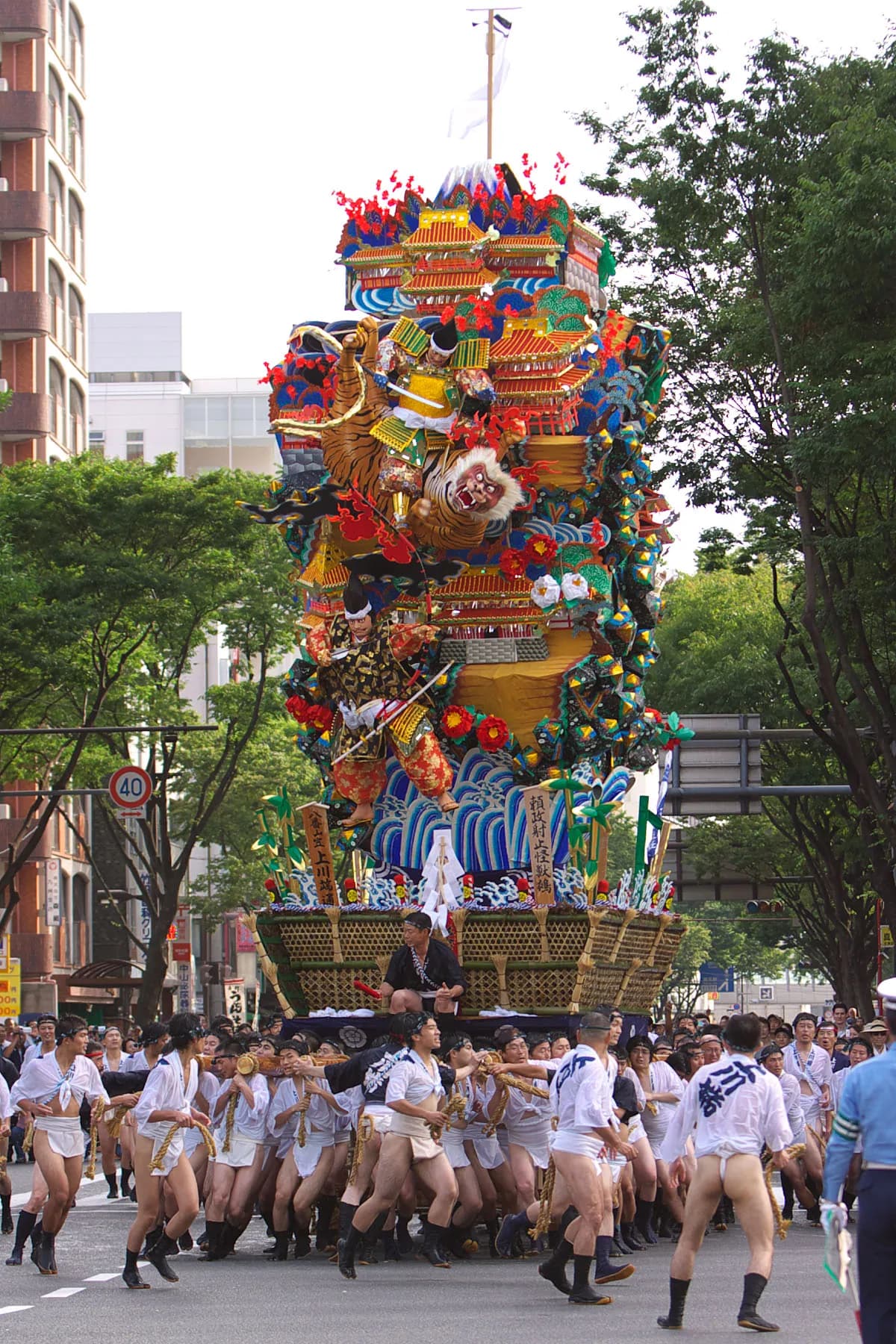
The Oiyama of Hakata Gion Yamakasa, a kakiyama float carried through Kushida Shrine at dawn, Fukuoka
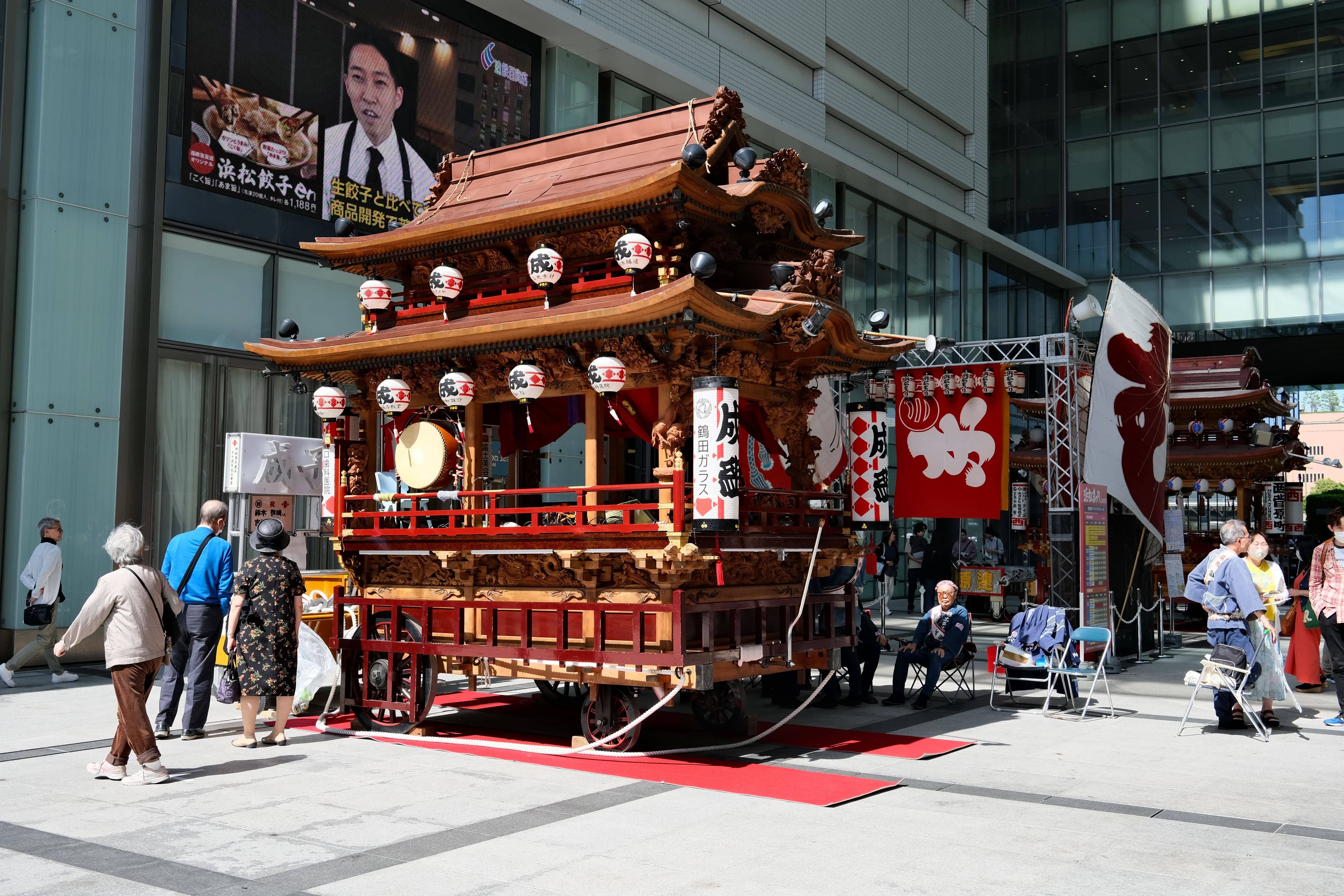
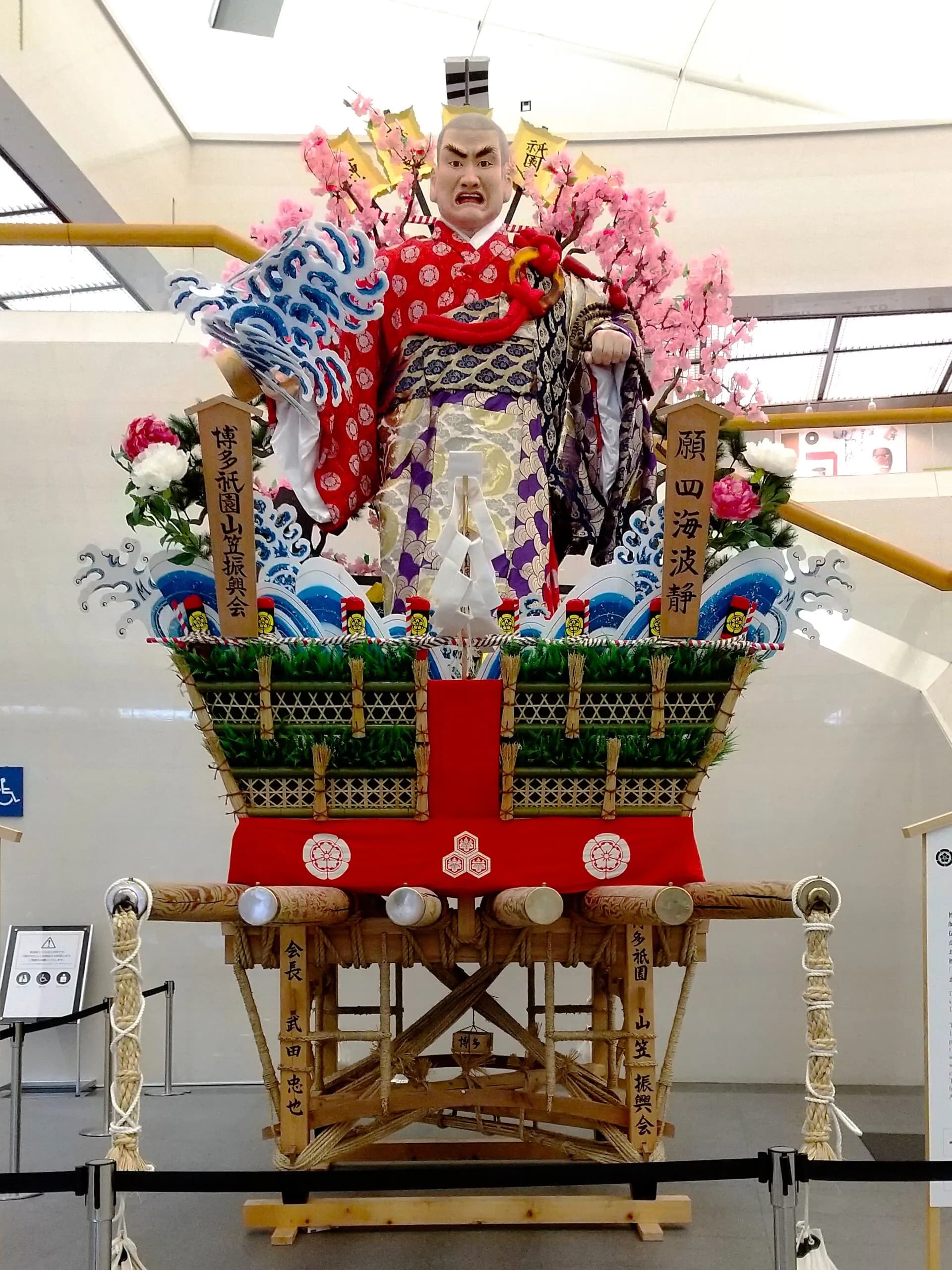
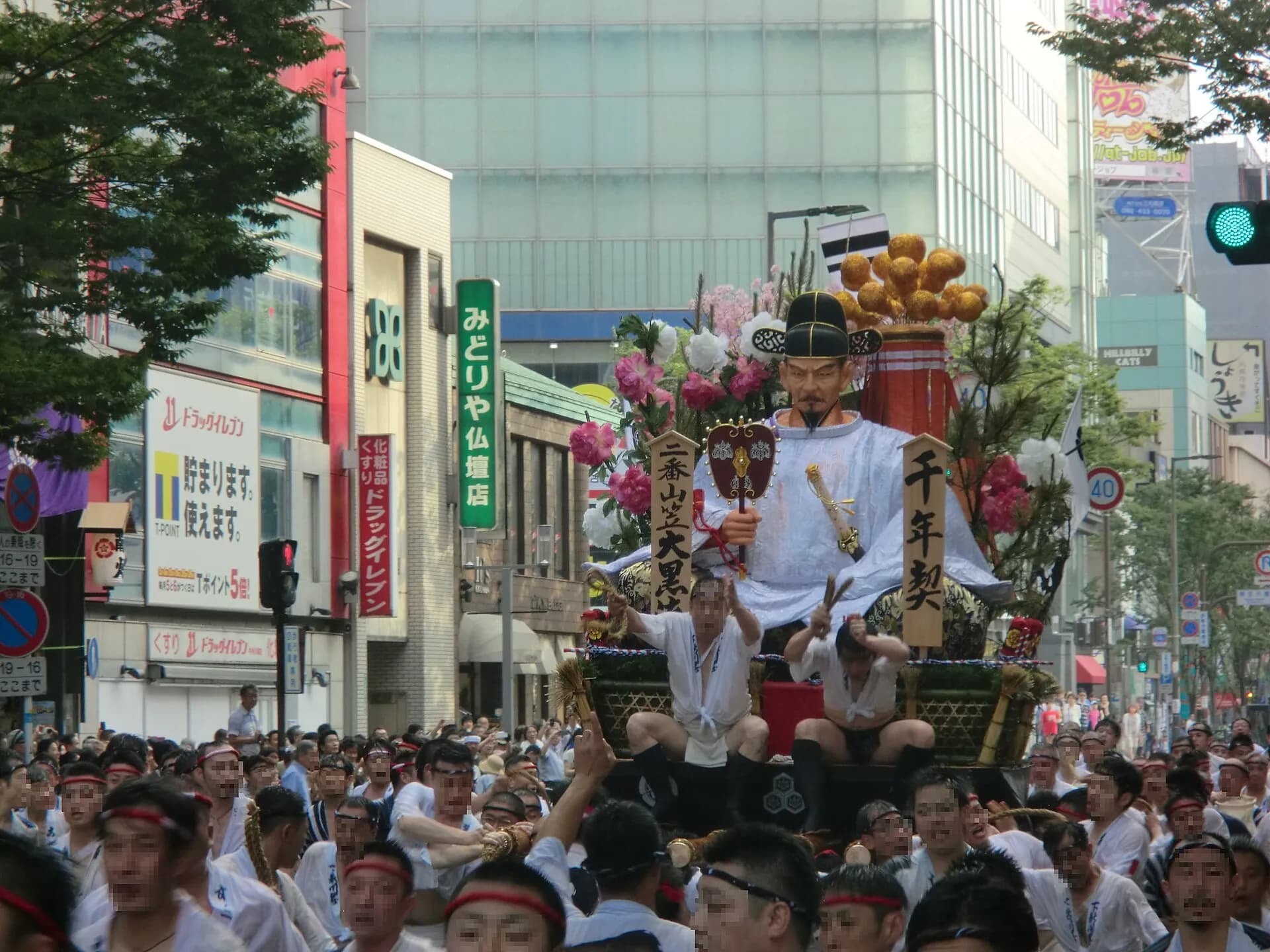
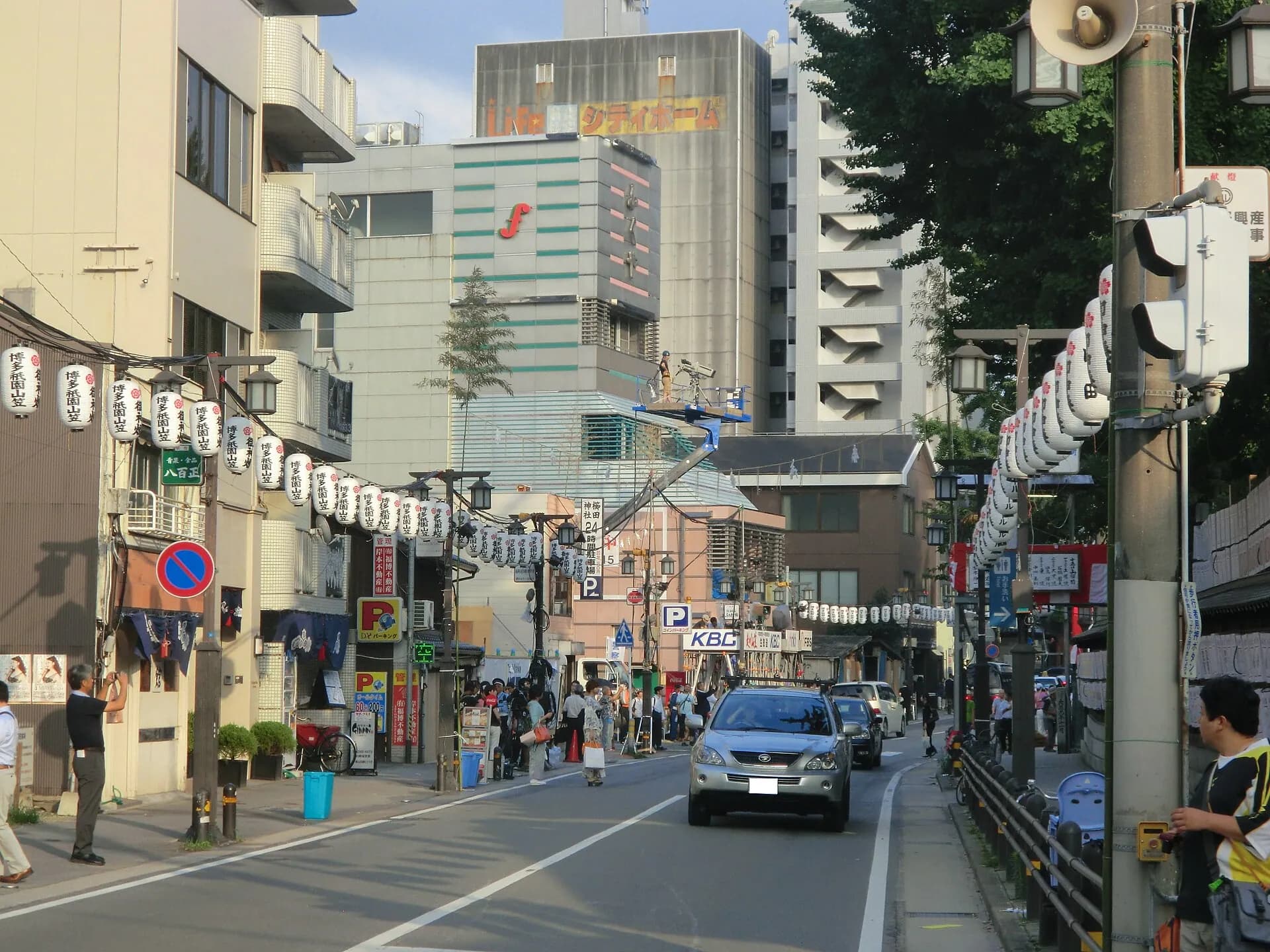
Kazariyama in front of JR Hakata Station during Hakata Gion Yamakasa
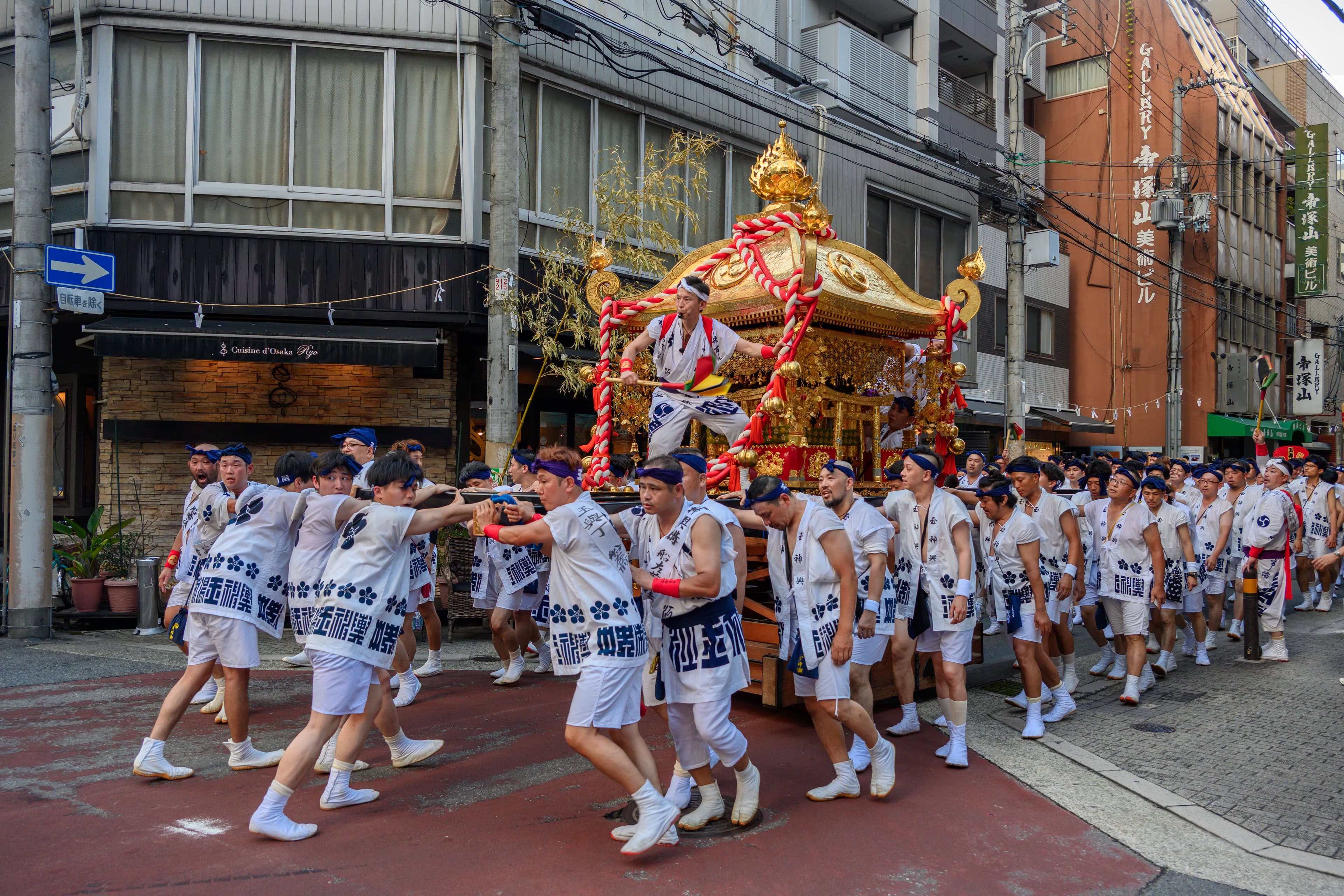
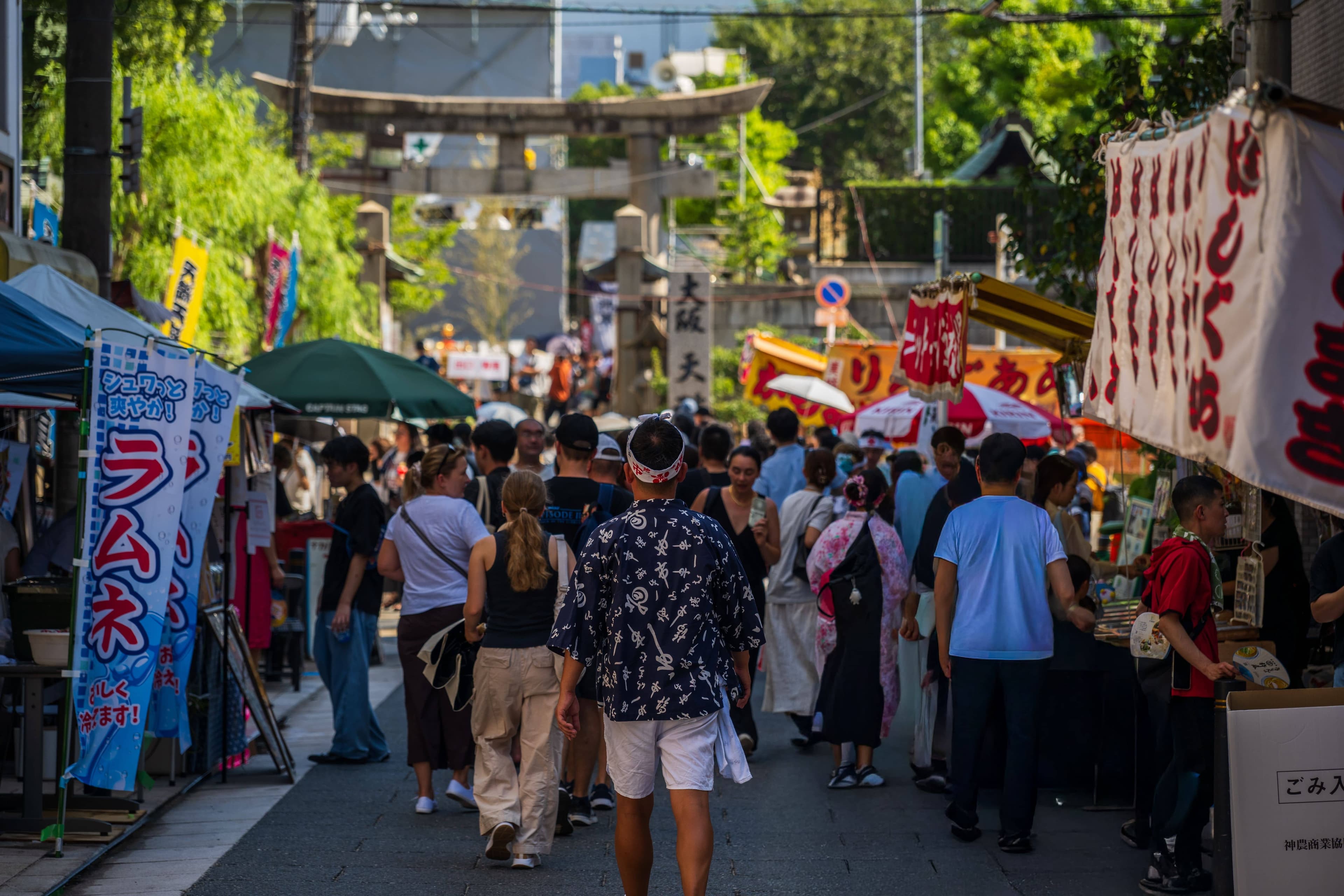
Kakiyama teams passing Tochoji temple on the Oiyama course, Hakata
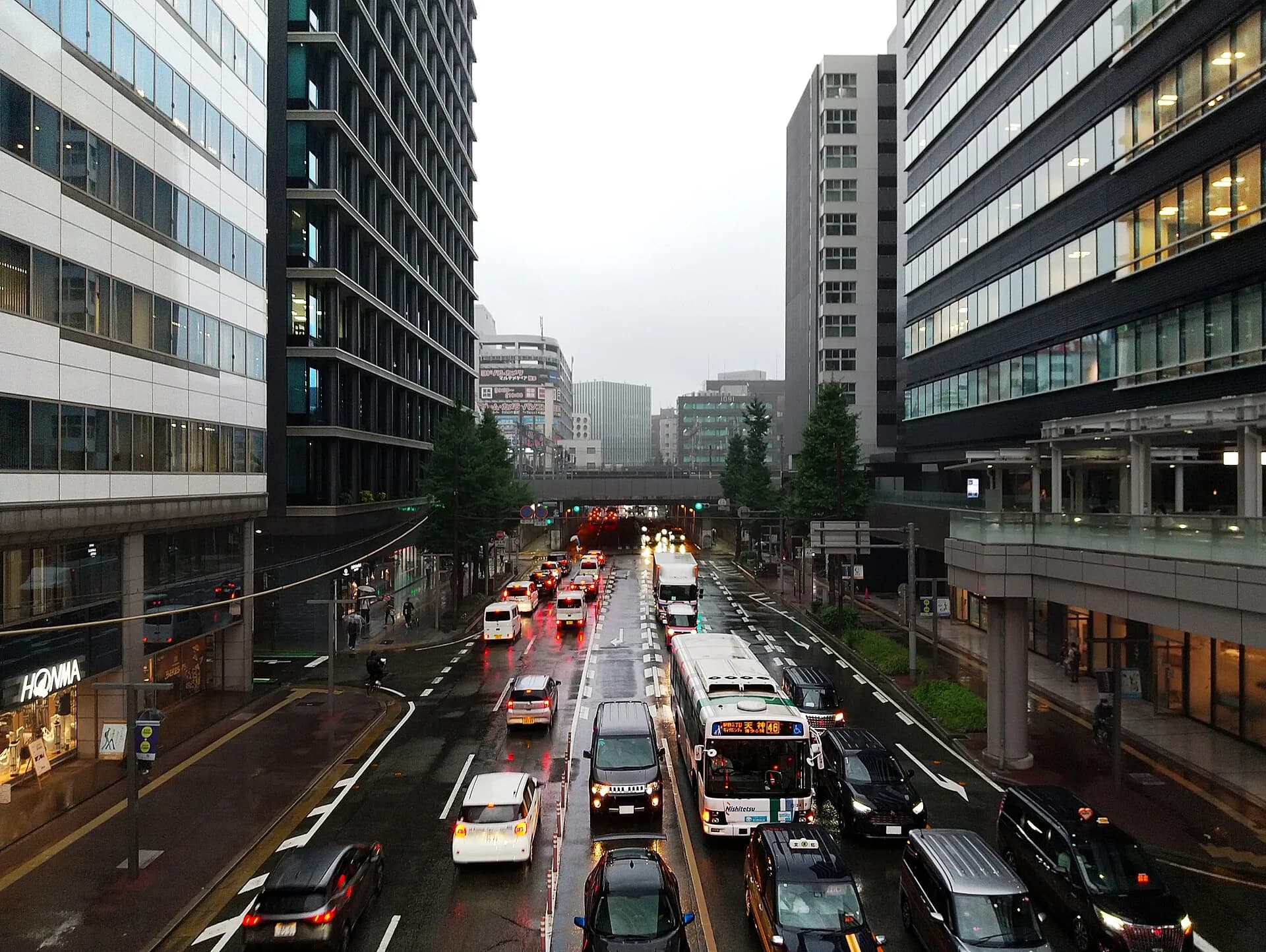
Shudan Yamamise floats on Meiji-dori in front of Fukuoka City Hall

Overview

Hakata Gion Yamakasa 2027 is expected to run from 1 to 15 July in Hakata, Fukuoka, with the Oiyama race on Thursday 15 July starting at 4:59 a.m. at Kushida Shrine 1 10. Seven neighbourhood teams carry one-ton floats about 5 km through the old town, one team every five minutes 2 3. Street viewing is free, and 13 decorated floats stand around the city from 1 July 8.

Highlights

  • Oiyama dawn race starts at 4:59 a.m. on 15 July 2 3
  • Seven teams enter Kushida Shrine at five-minute intervals 3 4
  • Thirteen kazariyama floats on show from 1 July, one in front of JR Hakata Station 8
  • Street viewing is free; sajiki seats cost 7,000 yen for Oiyama in 2026 9
  • Kushida-jinja-mae Station is one minute from Hakata Station by subway 14
  • A free Shizume-no-Noh ritual follows at the shrine from 6:00 a.m. 4 9

Good to know

Dates
1–15 July 2027 expected; Oiyama on Thursday 15 July 2027 1 10
Opening hours
Oiyama starts at 4:59 a.m.; floats gather on Doi-dori from about 1:00 a.m. 3 4
Venue
Kushida Shrine, Hakata, and a course of about 5 km 2
Entry
Street viewing free; sajiki 7,000 yen for Oiyama 9
Getting there
Nanakuma Line to Kushida-jinja-mae, 210 yen from Hakata 14

What Does a 4:59 a.m. Start Do to Your Phone Plans?

Each year during the Hakata Gion Yamakasa, the Oiyama race leaves Kushida Shrine at 4:59 a.m., and by then the lanes around Doi-dori have been closed to cars for hours 3 4. Floats start lining up from about 1:00 a.m., pedestrians crowd the streets from the early hours, and the subway is the only way in that does not depend on a taxi 4 9. That leaves you standing in the dark with a very specific list of needs: an up-to-date timetable, a map that still knows which streets are blocked, a ride home when the crowd breaks up at about 6:00 a.m., and a way to find your group when everyone is wearing the same dark clothes.

Hakata Gion Yamakasa also changes by the hour in the days before. Nagare run from afternoon to evening, the organisers publish live updates on Yamakasa-Navi, and the rehearsal on 12 July and the Shudan Yamamise on 13 July sit on different routes 5 6. Missing a text from your hotel or the event feed can cost you the one run you flew in for. A connection that works before sunrise is part of the plan, not an extra 1.

How to Find Your Group at the Doi-dori Float Assembly?

When the floats gather on Doi-dori from about 1:00 a.m., one dark street holds seven teams, their supporters and the spectators 4. Drop a pinned location before you separate, because shouting across the crowd does not work once the drums start.

What are the 15 July dawn subway times?

The Fukuoka City Subway is expected to run extra early trains on the morning of 15 July, with specific lists changing by line and station 6 9. Keep the timetable open offline or on mobile data rather than on a shop Wi-Fi.

Will roads be closed for the course?

Traffic controllers close the course, and some narrow crossings are managed by marshals in green and white bands 2. A live map shows which side of the street you can still cross.

Install your eSIM before you fly and be online when you land — see matching plansSee eSIM plans

The complete guide

When is Hakata Gion Yamakasa in 2027?

Hakata Gion Yamakasa is expected to run from 1 to 15 July 2027, with the Oiyama on Thursday 15 July 2027 1 10. The official guide says the same event takes place on the same day every year, so the dates do not move with a lunar calendar, and the organiser has not yet published a 2027 timetable 1 10.

Standing alone: Hakata Gion Yamakasa 2027 in Hakata, Fukuoka, is expected to end with the Oiyama at 4:59 a.m. on Thursday 15 July 2027, and the rehearsal known as Oiyamanarashi on Monday 12 July 2027 1 3. The 2026 edition ran from Wednesday 1 July to Wednesday 15 July 2026, with the Oiyama starting at 4:59 a.m. 5 6.

The Yamakasa has never been cancelled for bad weather, apart from the children's runs, and the dates stay fixed through rain and approaching typhoons 1. The history the organisers follow starts in 1241, when the monk Shoichi Kokushi was carried through plague-stricken Hakata on a platform 9. Unesco inscribed the Oiyama among 33 float festivals in 2016 11 13.

  • 1 July 2027 (expected): kazariyama on view and the first Oshioitori 1 8

  • 12 and 13 July 2027 (expected): Oiyamanarashi and Shudanyamamise 1 6

  • 15 July 2027 (expected): Oiyama from 4:59 a.m. 1 3

Tip: Fixed dates mean the weekday changes every year: 15 July 2027 is a Thursday, the rehearsal on 12 July is a Monday and the Shudanyamamise on 13 July is a Tuesday. The official guide notes that popular events draw larger crowds when they coincide with a weekend or holiday, so weekday dates should be a little calmer 1.
The Oiyama of Hakata Gion Yamakasa, a kakiyama float entering Kushida Shrine at dawn in Fukuoka
Photo: Hirho · CC BY-SA 4.0 · Wikimedia Commons

How Does the Kushida Shrine Sajiki Ticket Sale Work?

Sajiki seats are the only tickets for Hakata Gion Yamakasa, and they are sold only at Kushida Shrine 1. The official guide says tickets go on sale at 9:00 a.m. on 26 June each year, with 300 seats for the 12 July rehearsal and 300 for the 15 July Oiyama 1. Popular Oiyama seats sold out within 15 minutes of the start of sales 1.

Standing alone: for Hakata Gion Yamakasa 2027 in Hakata, Fukuoka, the 26 June sale is expected to be held in person at Kushida Shrine, since the organisers state that reservations are not possible 1 9. The 2026 prices were 7,000 yen for the Oiyama on 15 July and 3,000 yen for the Oiyamanarashi on 12 July 9. Questions about seats go to Kushida Shrine by telephone, according to the organiser 10.

Everything else is free. Kazariyama can be viewed from 1 July, the nagare runs on 10, 11 and 14 July cost nothing, and roadside viewing along the Oiyama course is open to anyone 1 9. The Oiyama is also shown live outside the shrine for people without a seat 2. Without a ticket you still see the floats rush down the street in front of the shrine, but you miss the view from inside the grandstand when each team makes its Kushida-iri 2 9.

  • Sajiki sale: 9:00 a.m. on 26 June, Kushida Shrine only 1

  • Oiyama seat: 7,000 yen in 2026 9

  • Oiyamanarashi seat: 3,000 yen in 2026 9

Tip: Treat any online seller as suspect, because the organisers say seats cannot be reserved 9.

The sajiki grandstand and the sacred ground in front of Kushida Shrine in Hakata during Oiyama
Photo: ぱちょぴ(pacyopi) · CC BY-SA 3.0 · Wikimedia Commons
Need a steady connection for transit and maps?See eSIM plans

How Do You Reach Kushida Shrine From Hakata Station Before Dawn?

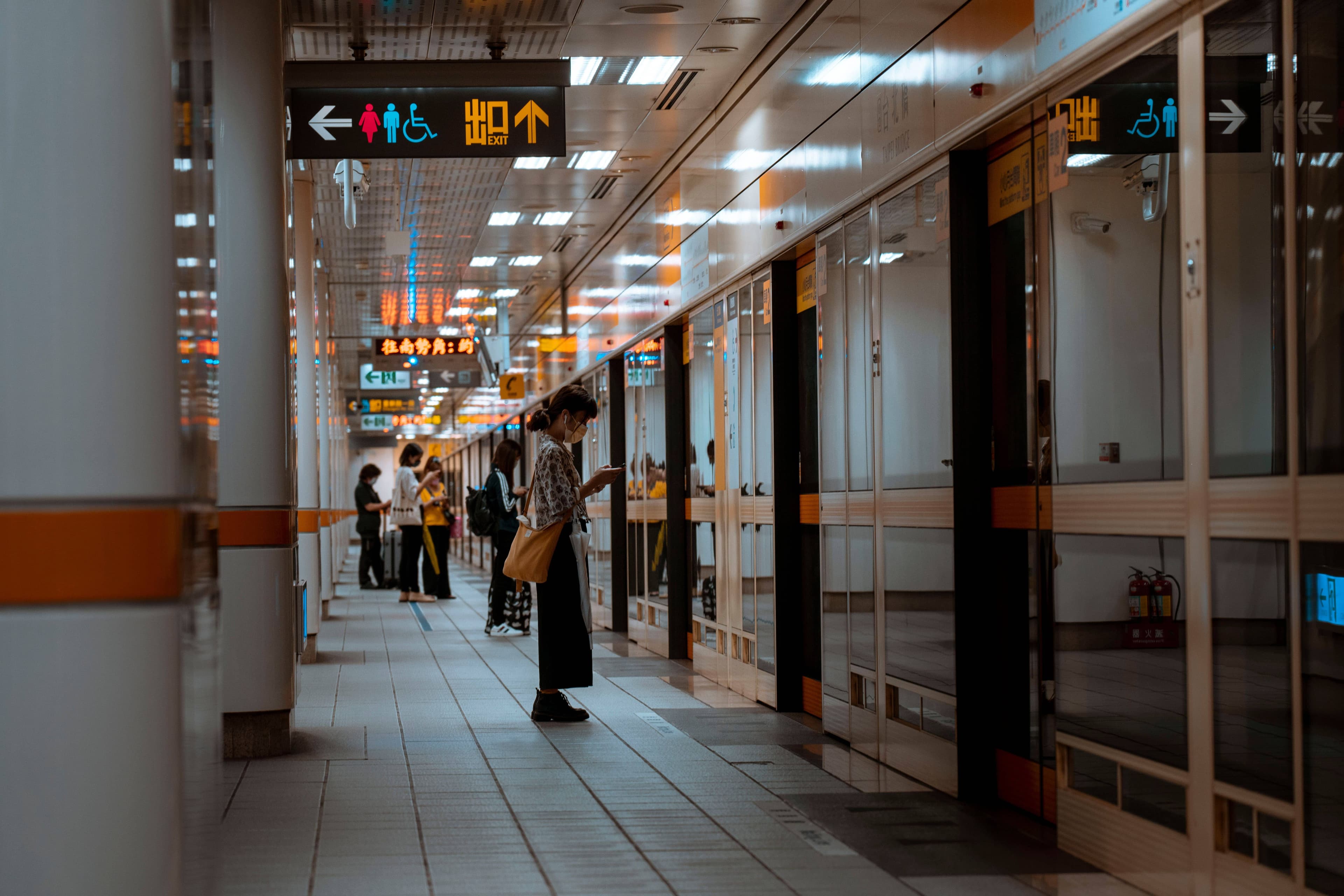
The fastest route is the Fukuoka City Subway Nanakuma Line, which runs from Hakata to Kushida-jinja-mae in one minute for 210 yen 14. The shrine is about a 2 minute walk from Kushida-jinja-mae Station, and Gion Station on the Kuko Line is about 6 minutes away on foot 5.

Standing alone: for Hakata Gion Yamakasa 2027 at Kushida Shrine in Hakata, Fukuoka, the walk from JR Hakata Station takes 15 to 20 minutes, and at 4:30 a.m. most people prefer the subway 14. From Fukuoka Airport the Kuko Line to Hakata costs 260 yen with an IC card and takes about 15 minutes door to door, according to a March 2026 guide 12. A subway one-day pass costs 640 yen 12.

Extra trains run on the morning of 15 July 2026. In 2026 the JR Kyushu limited express Kirameki 91 left Mojiko at 3:01 a.m. for Hakata at 4:07 a.m., and the Nishitetsu Tenjin Omuta Line left Hanabatake at 2:55 a.m. for Tenjin at 4:01 a.m. 6. In 2026, the subway ran every 10 to 20 minutes between 3:00 a.m. and 5:00 a.m. 6. Return services run from Hakata, Nakasu-Kawabata and Fukuoka Airport into the early morning 9.

  • Nanakuma Line: Kushida-jinja-mae, 2 minutes on foot 5

  • Kuko Line: Gion Station, 6 minutes on foot 5

  • Canal City Hakata bus stop: about 2 minutes on foot 5

Note: The trains do not give you a good position; floats start gathering on Doi-dori about 1:00 a.m. 4 9.

Kushida-jinja-mae Station entrance of the Nanakuma Line, Fukuoka City Subway, near Kushida Shrine
Photo: Hirho · CC BY-SA 4.0 · Wikimedia Commons

Which Days Before Oiyama Are Worth Planning Around?

For Hakata Gion Yamakasa, seven neighbourhood teams called nagare, Chiyo, Nakasu, Doi, Daikoku, Nishi, Ebisu and Higashi, each carry one kakiyama and each take in 10 to 15 towns 4. Hakata Gion Yamakasa lets you meet them across two weeks, not only at 4:59 a.m. on 15 July.

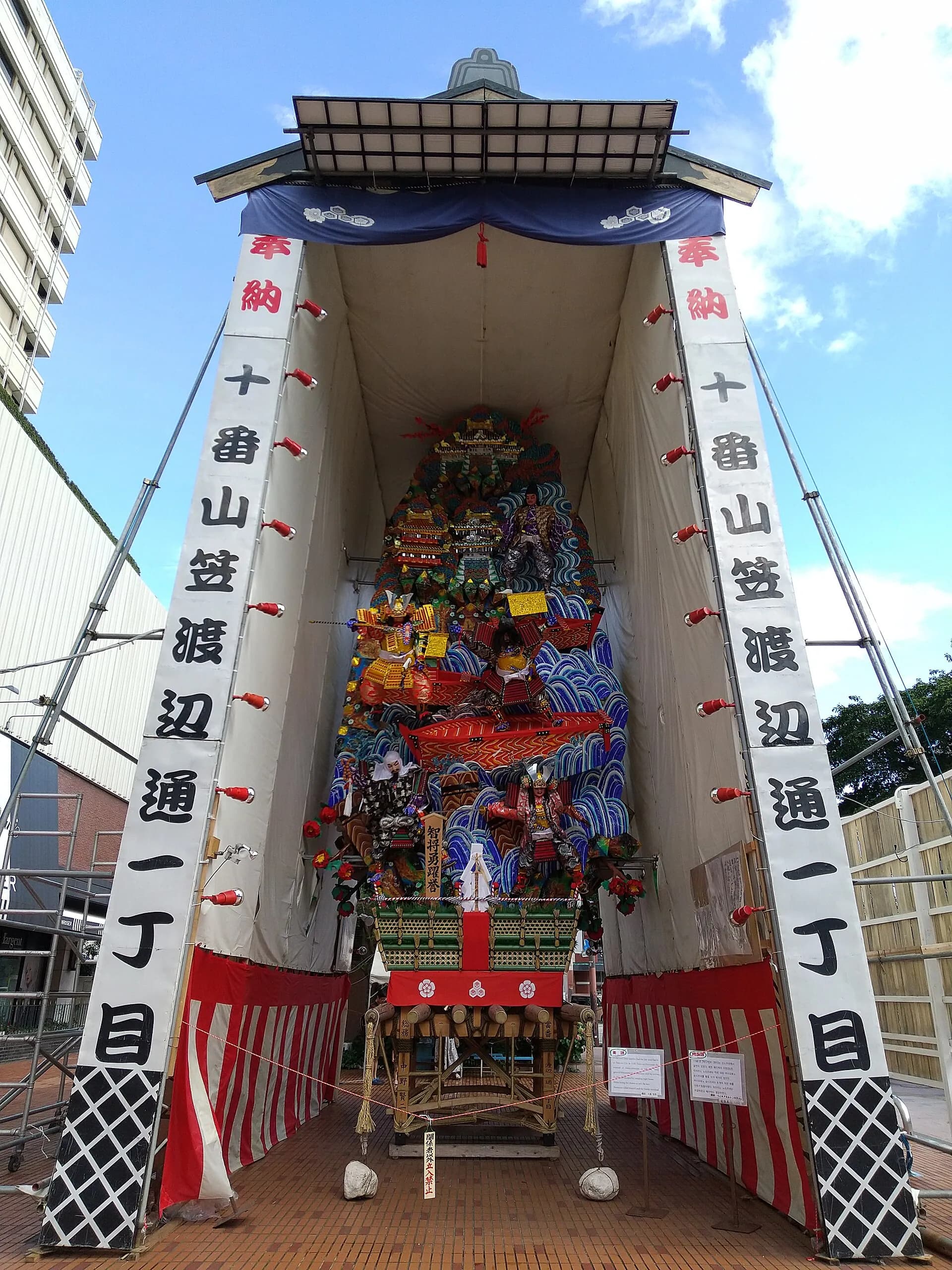
Standing alone: at Hakata Gion Yamakasa 2027 in Hakata, Fukuoka, the 13 kazariyama on view from 1 July are decorated floats that are never carried, and one stands in front of JR Hakata Station 8. In 2026 the first Oshioitori was on 1 July, the full Oshioitori on 9 July from 5:30 p.m. at Hakozaki beach, and the early Asayama on 11 July at 5:00 a.m. 4 5.

The previous year's schedule had the nagare runs on 10, 11 and 14 July scheduled in the afternoon and evening, 16:00 to 18:00 on the first day 6. The Oiyamanarashi on 12 July started at 15:59 over about 4 km, and the Shudanyamamise on 13 July crossed about 1.2 km from Gofukumachi to Fukuoka City Hall 6. The organisers add that on 13 July the floats enter Tenjin 4.

  • 1 July: kazariyama open, many 24 hours a day 8

  • 11 July: Asayama, quiet and good for families 4

  • 13 July: only day floats reach Tenjin 4

Tip: Compare the omote and the miokuri, the front and back faces of a kazariyama, such as One Piece behind the front scene at Hakata Station in 2026 8.

Kazariyama float in front of JR Hakata Station, Fukuoka, in July
Photo: Pontafon · CC BY-SA 3.0 · Wikimedia Commons

What Happens Between 1:00 a.m. and 5:35 a.m. on Oiyama Morning?

The Oiyama starts at 4:59 a.m. exactly, not 5:00, and a large taiko drum sounds the start 3 5. From about 1:00 a.m. pedestrians fill the assembly area, floats line up on Doi-dori from about 1:30 a.m., and vehicle closures start at 4:00 a.m. 9.

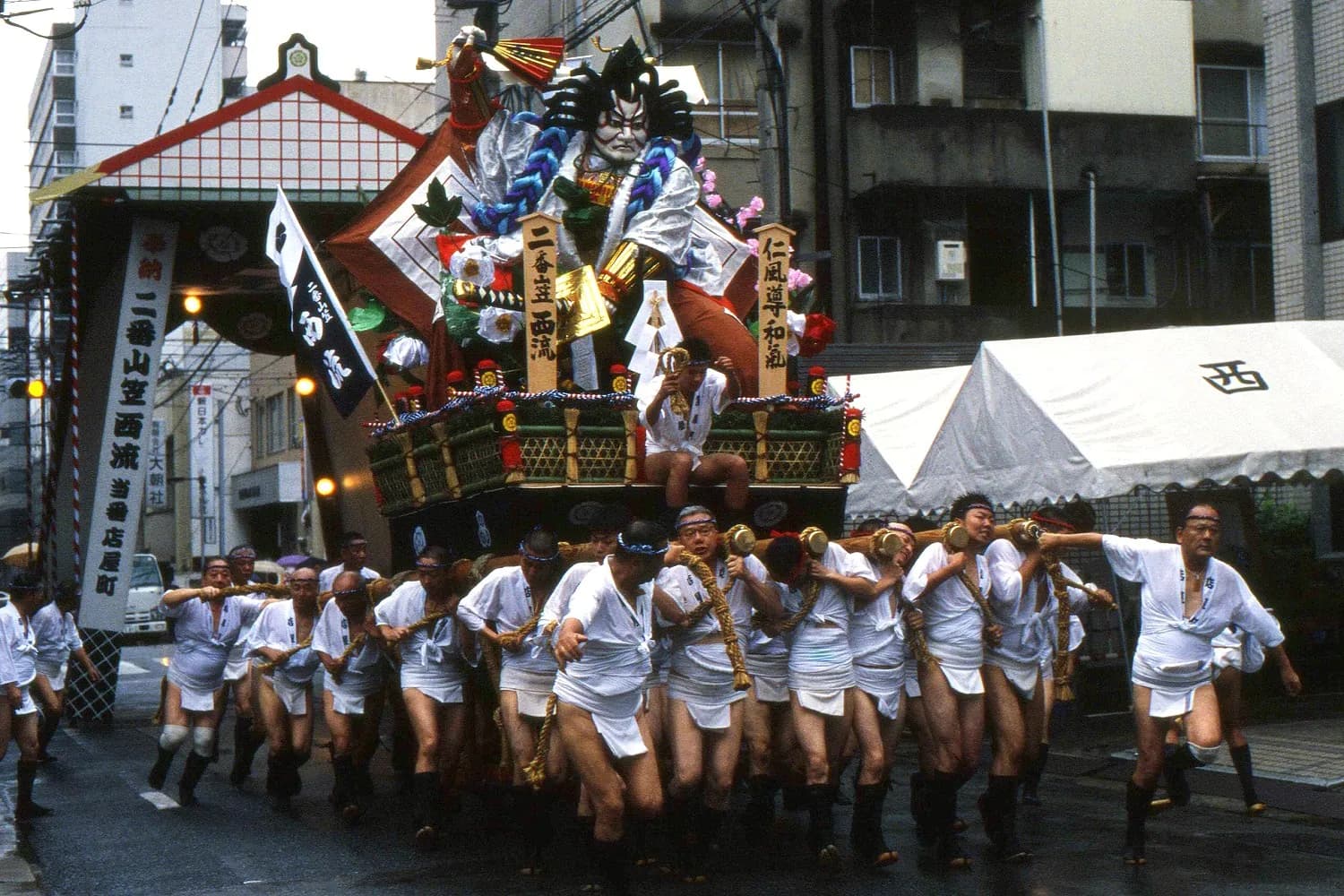
Standing alone: at Hakata Gion Yamakasa 2027 in Hakata, Fukuoka, the Oiyama is expected to run eight floats, seven nagare plus the Kamikawabata kazariyama, each entering Kushida Shrine every five minutes 4. In 2025 the last team started at 5:35 a.m. 3. The Kushida-iri section inside the shrine is 112 m and is timed, then the team runs about 5 km through old Hakata 2 4.

Each float weighs about one ton and is carried by rotating teams of 26 to 28 men 4. Water is splashed on carriers to cool them and reduce friction 3. No winner is announced during the event 3.

Team members wear matching traditional outfits, a red headband, a blue-and-white coat and split-toe shoes, while men who are not carrying run alongside, chanting and encouraging the carriers 3. Children take part too, carrying light wooden boards with older men guiding them 3. The heaviest crowds gather at the first flag, where the Kushida-iri begins 9.

  • 4:59 a.m.: first float, with a song before the start 3

  • Five minutes later: next team, down the same course 3

  • 6:00 a.m.: free Shizume-no-Noh at the Noh stage 4 9

Tip: Plan to leave once the last float passes, because the festival ends abruptly 4.

Kakiyama teams lining up on Doi-dori outside Kushida Shrine before the Oiyama race

Where Are the Best Spots Along the Oiyama Course?

Doi-dori, next to Kushida Shrine, is the usual free spot for the start 3 4. The strip from the shrine to Reisen Park is another prime stretch, according to Fukuoka's tourism office 4.

Standing alone: at Hakata Gion Yamakasa 2027 along Kushida Shrine and the old town of Hakata, Fukuoka, the three seidoki flags slow floats down and are the best free places, in front of Kushida Shrine, Tochoji and Jotenji 9. At Jotenji the float turns 180 degrees in an alley about 5 m wide 2. Taihaku-dori has a wide road and broad sidewalks, and carriers swap places there 2.

Gokusho district is crowded and water is thrown on carriers, so protect anything that must stay dry 2. Kamigofuku-machi crossing has a 90 degree left turn at speed, and the narrowest alley of the course on Kyunishimachi-suji is run by traffic operators 2. The finish, the mawaridome, is near Sasakimachi 9.

Kamihigashi-machi crossing slopes slightly downhill, so floats move faster there and are hard to stop on the narrow road 2. The Oiyamanarashi finish sits about 1 km before the Oiyama finish and is a good place to watch a final acceleration on the last long straight 2. The finish also keeps its own atmosphere, with waiting crowds, cheering and a pause before times are announced 2. For the Shudanyamamise on 13 July, the Meiji-dori sidewalks near Nishi-Ohashi bridge and the stand at Fukuoka City Hall are the places to be 2 9.

  • Doi-dori: start, floats gather here 4

  • Taihaku-dori: wide pavement, carriers swap places 2

  • Sasakimachi: finish 9

Note: Spectator numbers are not published, but Gokusho and Taihaku-dori are described as the busiest 2.

Spectators and a kakiyama passing Tochoji temple on the Oiyama course, Hakata, Fukuoka

Which Rules Apply on the Three Big Days, 12, 13 and 15 July?

The rules on 12, 13 and 15 July are the same everywhere along the course: stay back from the runners, and never climb up to photograph 3 9. Fukuoka Prefectural Police ban stepladders and step stools for photography, and only existing armband holders may use them 9.

Standing alone: at Hakata Gion Yamakasa 2027 around Kushida Shrine, Hakata, Fukuoka, umbrellas and parasols are not allowed, so bring a hat or raincoat, and strollers and bicycles should stay away from crowded areas 4 7. Drones are banned in the shrine precinct, and the organisers say they will report drone use over crowds to the police 9.

Sajiki seats on 12 and 15 July are the only restricted viewing; on other days you can watch from your preferred spot, including the 13 July Shudanyamamise 1 2. Smoking while walking is discouraged across the city, and Tenjin and the Hakata Station area are non-smoking districts 9. Commercial use of festival images needs permission from the association, although sharing photos personally is not covered by that restriction 9.

At narrow crossings, follow the traffic operators in green-and-white bands, because floats sometimes tilt to sharp angles and cannot stop quickly 2. On 13 July the stand in front of Fukuoka City Hall is where the mayor, company leaders and local figures give short speeches while the floats are displayed 2.

  • 12 July: Oiyamanarashi, sajiki restricted 1

  • 13 July: Shudanyamamise, free 2

  • 15 July: Oiyama, sajiki restricted 1

Tip: Carrying a float is limited to local men; visitors and foreign non-residents are excluded 1 9.

Shudan Yamamise floats on Meiji-dori in front of Fukuoka City Hall, Tenjin, Fukuoka
Photo: Hirho · CC BY-SA 4.0 · Wikimedia Commons

Is early July hot and rainy in Fukuoka?

July is hot and humid in Fukuoka, with a daily minimum of 24.6°C and humidity of 75%, from 1991 to 2020 averages 9. It is also the wettest month of the year, with 299.1 mm of rain 9.

Standing alone: at Hakata Gion Yamakasa 2027 in Hakata, Fukuoka, the early start does not help much, because summer mornings get hot quickly, even before sunrise 3. The festival is held on its dates through rain and typhoon warnings 1. Pack water, a towel, breathable clothing and rain gear; warm layers are not needed 9.

Comfortable walking shoes matter for a night out on foot 3. The festival also coincides with the end of the rainy season, and a Go Fukuoka guide warned that the heat can be stronger in a year when the rainy season ends early 4. Stay hydrated and take precautions against heatstroke, especially while waiting for hours before the start 4.

The cooler slots of the schedule are the early ones. The Asayama on 11 July starts at 5:00 a.m. and is recommended for families because it is quieter 4. Water is also splashed on the carriers all along the Oiyama course, so anything electronic should go in a waterproof pouch if you stand close to the floats 2 3. A small towel serves for sweat and for water thrown from the course 9.

  • Water and a small towel 9

  • Rain jacket instead of an umbrella, which is banned 4

  • Hat and breathable clothes 4 9

Tip: Kushida Shrine is not in a non-smoking district, so expect smoke at the margins of the crowd 9.

Runners and spectators splashed with water on the Oiyama course in Hakata at dawn

Where to stay near Kushida Shrine for Oiyama morning?

The best base for the Oiyama is within walking distance of Kushida Shrine, which is the main recommendation of one detailed guide 9. Hakata Station is 15 to 20 minutes on foot from the shrine, and one minute away by subway 14.

Standing alone: for Hakata Gion Yamakasa 2027 around Kushida Shrine in Hakata, Fukuoka, the main choices are the Hakata Station area, with the Shinkansen, the airport subway and the Nanakuma Line, and Nakasu, near the river 14. Several kazariyama stand in front of hotels, and the 2026 list placed one in front of a hotel and another in front of a second hotel on Watanabe-dori, so you may find a float at your door 8.

The floats start gathering from about 1:00 a.m., so a hotel on the Nanakuma Line saves a taxi 4. Because the festival is held on fixed dates, July rooms near the course are likely to be in demand, and the dates are known long before the organiser publishes the timetable 1. Book as soon as your flights are fixed rather than waiting for the programme.

Nakasu-Kawabata Station, on the Kuko Line, also had early trains on the morning of 15 July in 2026, at 4:10 a.m. and then every 10 minutes or so, which makes the Nakasu side workable if you cannot find a room nearer the shrine 9. The river side of Nakasu is also close to the Kawabata arcade, where two kazariyama stand 8.

  • Hakata Station: trains and airport subway 14

  • Nakasu: on foot to Kawabata arcade and the course 8

  • Tenjin: 11 minutes by Kuko Line from the airport 12

Tip: Ask the hotel whether it has a late checkout, since Oiyama ends about 6:00 a.m. 4 9.

Hakata Station building and Chikushi exit area, Fukuoka, from the plaza
Photo: Hirho · CC BY-SA 4.0 · Wikimedia Commons

How Do You Get Online Around Kushida Shrine at Dawn?

Fukuoka City Wi-Fi is free, and you choose the network name Fukuoka City Wi-Fi, then register with a name and email address or a social account 15. Registration lasts six months, and coverage includes all subway stations and sightseeing and commercial facilities 15.

Standing alone: at Hakata Gion Yamakasa 2027 around Kushida Shrine in Hakata, Fukuoka, Fukuoka City Wi-Fi follows the business hours of each facility, so it is not a plan for a 4:59 a.m. start 15. A travel eSIM installed before you fly gives you data from the moment you land; see the Japan eSIM page for options 15.

The Japan Connected-free Wi-Fi app is recommended for use before your trip 15. Real-time schedule changes are published on Yamakasa-Navi 5.

An English booklet with maps and timetables is available for the nagare runs, and a saved copy on your phone works without any signal 14. Before you leave the hotel, download the offline map of Hakata, save the Nanakuma Line timetable and screenshot your sajiki ticket if you have one 1 6. Fukuoka City Wi-Fi is registered once and lasts six months, which helps in the days before 15 July, when you move between subway stations and kazariyama sites 15.

A shared pinned location is the simplest way to keep a group together when the floats line up on Doi-dori and the lights are low 4.

  • Install the eSIM or Wi-Fi app before departure 15

  • Save the subway timetable offline 6

  • Keep the Yamakasa-Navi page bookmarked 5

Note: Keep an offline copy of your sajiki ticket details and the official schedule 1.

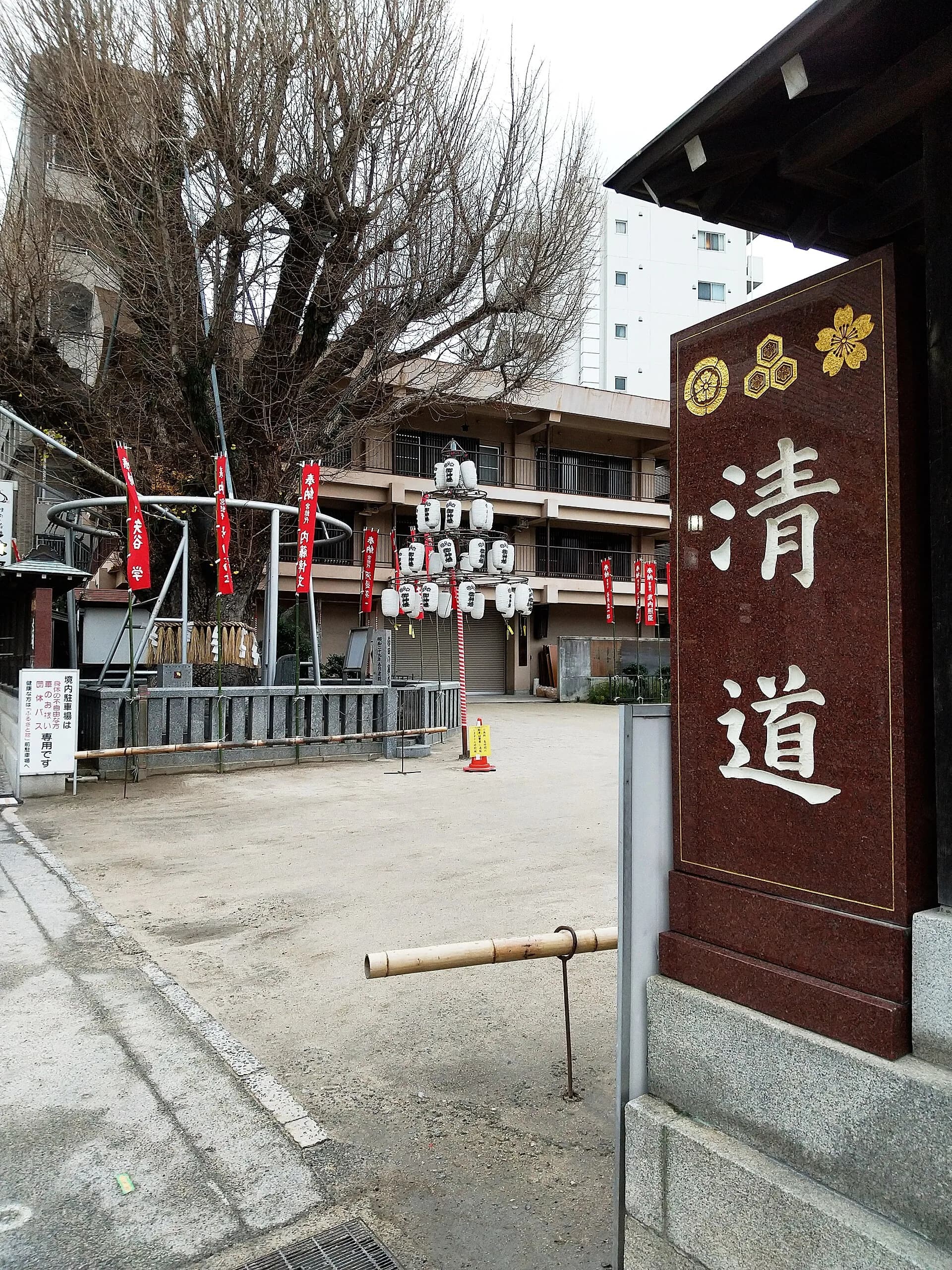
Kushida Shrine main hall and the Noh stage in Hakata, Fukuoka

Suggested itinerary

Day 1 · Shudanyamamise Day

  1. Morning
    Kazariyama in front of JR Hakata StationThe Gekito nejiro zaka float stands in front of the station and is open all day
  2. Afternoon
    Kawabata arcade kazariyamaCompare the two faces of the float
  3. Late afternoon
    Gofukumachi intersectionFloats cross toward Tenjin on Meiji-dori
  4. Evening
    Fukuoka City HallFloats are displayed and speeches are given

Day 2 · Last Nagare

  1. Morning
    Canal City Hakata kazariyamaCheck the viewing hours before you go
  2. Afternoon
    Hakata old town templesWalk past Tochoji and Jotenji, where the seidoki flags stand
  3. Evening
    Final nagare runPick a street near your hotel
  4. Night
    Early bed near Kushida ShrineSet the alarm for about 3:00

Day 3 · Oiyama Morning

  1. After midnight
    Subway to Kushida-jinja-maeChoose your viewing spot beforehand
  2. Around 03:30
    Doi-doriFloats are lined up by now
  3. 04:59
    Kushida ShrineWatch the first Kushida-iri
  4. Around 06:00
    Shizume-no-NohFree ritual at the Noh stage
  5. Late morning
    Breakfast and restCool down before checkout

Tip: Sleep near Kushida Shrine on the night of the 14th, because the Oiyama starts at 4:59 a.m.

Recommended eSIM plans

Pick by trip length. Visiting several countries? Choose a regional plan.

Selected: eSIM Japan 30GB 30 Day(s)
แพ็กเกจเพิ่มเติมสำหรับญี่ปุ่นต้องการดาต้าเพิ่ม? ดูแพ็กเกจญี่ปุ่นทั้งหมดดาต้ามากขึ้น ไม่จำกัด และทริปที่ยาวขึ้นดูทั้งหมด

Set up your eSIM in 3 steps

  1. Order and get your QR codeThe QR code arrives by email right after payment.
  2. Scan before you flySettings → Cellular → Add eSIM, while you still have Wi-Fi.
  3. Turn on data when you landSet the eSIM as your data line and enable data roaming.

Frequently asked questions

No. Taking part is organised by town units and is restricted to men, and in principle people who do not live in the districts cannot join 1 9. Foreign non-residents are excluded, and people with tattoos are barred 9. Spectating has no restrictions, and children from outside the area can apply to the Hakata Kodomo-yamakasa Class run by RKB Fukuoka Broadcasting 1.

The finish, called the mawaridome, is near Sasakimachi, about 5 km from Kushida Shrine 9. The Oiyamanarashi rehearsal on 12 July stops about 1 km earlier, at Naraya-machi 2. The finish is described as a quiet place to wait for the arrival of each team and the cheers before the times are announced 2. Sources vary on the spelling of the district, so confirm on the official map 6.

Yes. The official guide says the festival has never been cancelled because of bad weather, apart from the children's Kodomo-yamakasa, and that the events are held on fixed dates despite rain or an approaching typhoon 1. In the past the kazariyama were taken down earlier than scheduled because of a typhoon, so check the organiser's page before 15 July 1.

Yes, because only the sajiki seats inside Kushida Shrine are ticketed, and roadside viewing along the course is free 1 9. Doi-dori next to the shrine and the seidoki flag points at Tochoji and Jotenji are common choices, and the Oiyama is also shown live outside the shrine 2 3 9. Arrive early, because the assembly area fills from about 1:00 a.m. 9.

Oiyamanarashi on 12 July is the timed rehearsal, run from Kushida Shrine to Naraya-machi over about 4 km, while the Oiyama on 15 July runs about 5 km and starts at 4:59 a.m. 2 6 9. The rehearsal starts at 15:59 in the afternoon, so it is easier on sleep, and sajiki seats cost 3,000 yen against 7,000 yen for the Oiyama in 2026 6 9.

The organisers publish no data figures, so plan around what you will use: live maps, subway timetables and messaging for your group 5 6. Fukuoka City Wi-Fi is free but needs registration and follows facility opening hours, so install an eSIM before you fly to stay online at 4:59 a.m. 15.

Sources

Figures on this page come from the sources below — the small number next to each figure points to its source.

  1. 1Yamakasa-Navi FAQ, Hakata Gion Yamakasa (accessed 2026-10-18)
  2. 2Yamakasa-Navi viewing points (accessed 2026-10-18)
  3. 3Go Fukuoka, Our Experience at Hakata Gion Yamakasa Oiyama (accessed 2026-10-18)
  4. 4Go Fukuoka, How Locals Enjoy Hakata Gion Yamakasa (accessed 2026-10-18)
  5. 5Go Fukuoka, Hakata Gion Yamakasa 2026 event page (accessed 2026-10-18)
  6. 6Fukuoka Now, Hakata Gion Yamakasa 2026 schedule (accessed 2026-10-18)
  7. 7Fukuoka Now, Hakata Gion Yamakasa 2025 guide (accessed 2026-10-18)
  8. 8Fukuoka Now, Yamakasa kazariyama guide (accessed 2026-10-18)
  9. 9Watabi, Hakata Gion Yamakasa guide (accessed 2026-10-18)
  10. 10Hakata Gion Yamakasa Promotion Association (accessed 2026-10-18)
  11. 11Unesco, Decision 11.COM 10.B.19, float festivals in Japan (accessed 2026-10-18)
  12. 12GLT Japan, Fukuoka Airport to Hakata (accessed 2026-10-18)
  13. 13Crossroad Fukuoka, July events in Fukuoka (accessed 2026-10-18)
  14. 14Japan Guide, Hakata Gion Yamakasa Festival (accessed 2026-10-18)
  15. 15Go Fukuoka, Fukuoka City Wi-Fi (accessed 2026-10-18)