Télécharger sur l'App StoreDownload Gohub App on the App Store
AsiaChina eSIM

Chinese New Year 2027: Dates, Tickets and How to Get There

  • Feb 6 – 20, 2027
  • China (Beijing, Shanghai, Guangzhou)
  • Last updated: 6 oct. 2026

Chinese New Year 2027

Overview

Chinese New Year 2027 (Spring Festival) begins on Saturday 6 February 2027 and opens the Year of the Goat. The celebrations run around 15 days, ending with the Lantern Festival on 20 February. Across China you get temple fairs, lion dances, lantern displays, fireworks and family feasts. Beijing's temple fairs are the classic way for a visitor to experience it, with Shanghai and Guangzhou as strong alternatives.

Highlights

  • New Year's Day is Saturday 6 February 2027; New Year's Eve is 5 February
  • Year of the Goat (Fire Goat), the eighth animal of the zodiac
  • Beijing temple fairs at Ditan and Longtan Park run the first week
  • Lantern Festival closes the season on 20 February 2027
  • Street celebrations are free; temple fairs cost about 30 RMB
  • Expect the largest annual migration on Earth around travel dates

Good to know

Dates
6 to 20 Feb 2027 (New Year's Day to Lantern Festival); official holiday week expected 5 to 11 Feb
Opening hours
Ditan Temple Fair roughly 9:00 to 17:00 daily; peak entry 10:00 to 14:00
Venue
Nationwide; Beijing: Ditan Park, Longtan Park; Shanghai: Yu Garden; Guangzhou: flower markets
Entry
Free on the streets; Ditan and Longtan fairs 30 RMB adult, 15 RMB concession (2026 prices)
Getting there
Beijing Capital or Daxing airport, then metro; Ditan is at Yonghegong station, Lines 2 and 5
Recommended eSIM
China eSIM

Two weeks of the whole country celebrating at once

Chinese New Year is the one time of year when China stops working and starts celebrating. Families travel home in the hundreds of millions, red lanterns go up on every street, temple fairs fill the big parks in Beijing, and fireworks crackle somewhere in the distance from the night of 5 February 2027 onwards. For a visitor it is loud, colourful, delicious and slightly chaotic, which is exactly why you want to be there.

It is also the trip where losing your connection hurts most. Almost everything in China runs through your phone: metro tickets, taxi apps, menus with QR codes, paying for a skewer of sugar-coated haws at a fair, and the translation app you use to read the sign saying which gate is closed. Hotel and café Wi-Fi exist, but they sit behind China's internet filters, so Google Maps, Gmail, WhatsApp and Instagram will not load on them. Public Wi-Fi at a temple fair with tens of thousands of people is not something to rely on either.

A China travel eSIM installed before you fly gives you working data from the moment you land, with the apps you already use. The sections below explain where you will actually need it.

Buying and showing temple fair tickets

Beijing's temple fairs sell tickets on site, but the big ones have moved most sales online through Chinese apps and mini-programs, and the queue at the ticket window on the second day of the new year can take an hour. With data you can buy in advance, keep the QR code on your screen and walk straight to the entry scanners instead of standing in the cold.

Metro, taxis and finding the right gate

Ditan Park has four gates and the metro station sits next to one of them. Longtan Park is across town. During the festival some gates become entry-only or exit-only and the closest metro exits get closed for crowd control. A live map app plus a ride-hailing app saves you from guessing, especially when you leave at dusk and every taxi in the area is already taken.

Reading menus, signs and prices

English signage drops off fast once you step away from the airport and the big hotels. At a fair, stall signs, allergen notes and performance schedules are all in Chinese. A camera translation app works instantly with data and lets you order dumplings, understand that a dish is numbingly spicy, or read a notice that a show has moved to another stage.

Paying with your phone

Cash is still accepted, but most stalls, taxis and shops expect Alipay or WeChat Pay, both of which link to foreign cards now. These apps need a live connection to generate the payment code and confirm each purchase. No data means no payment, even when the stall is right in front of you.

Install your eSIM before you fly and be online when you land — see matching plans

The complete guide

When Is Chinese New Year in 2027?

Chinese New Year 2027 falls on Saturday 6 February 2027, and it opens the Year of the Goat (also called the Sheep or Ram). New Year's Eve, the night of the big family reunion dinner, is Friday 5 February 2027. The celebrations traditionally last 15 days and close with the Lantern Festival on Saturday 20 February 2027.

If you remember Chinese New Year 2026 being in mid-February (it was 17 February, Year of the Horse), the shift to 6 February in 2027 is normal. The festival follows the lunisolar calendar, not the Gregorian one. New Year's Day is the first day of the first lunar month, which lands on the second new moon after the winter solstice, so the date drifts between 21 January and 20 February from one year to the next. That is also why the zodiac animal only changes on Chinese New Year, not on 1 January: someone born on 30 January 2027 is still a Horse.

The key dates for planning a trip:

  • 5 February 2027: New Year's Eve, reunion dinner, fireworks at midnight where permitted

  • 6 February 2027: New Year's Day, temples and parks busy, many shops closed

  • 7 to 12 February 2027: temple fairs in Beijing, lion and dragon dances, the busiest tourist days

  • 20 February 2027: Lantern Festival, lantern displays and the last big night of the season

The public holiday week in mainland China is expected to run from 5 to 11 February 2027. Treat this as a provisional date: the State Council usually publishes the official holiday and make-up workday schedule in November or December of the previous year, so check again before you book if business hours matter to you. Hong Kong has already confirmed its own public holidays for 6, 8 and 9 February 2027.

Tip: Temple fairs in Beijing have historically opened on New Year's Day or the day after and closed on the seventh day of the lunar year. For 2027 that means roughly 6 or 7 to 12 February. If temple fairs are your main reason to come, do not arrive after the 12th.
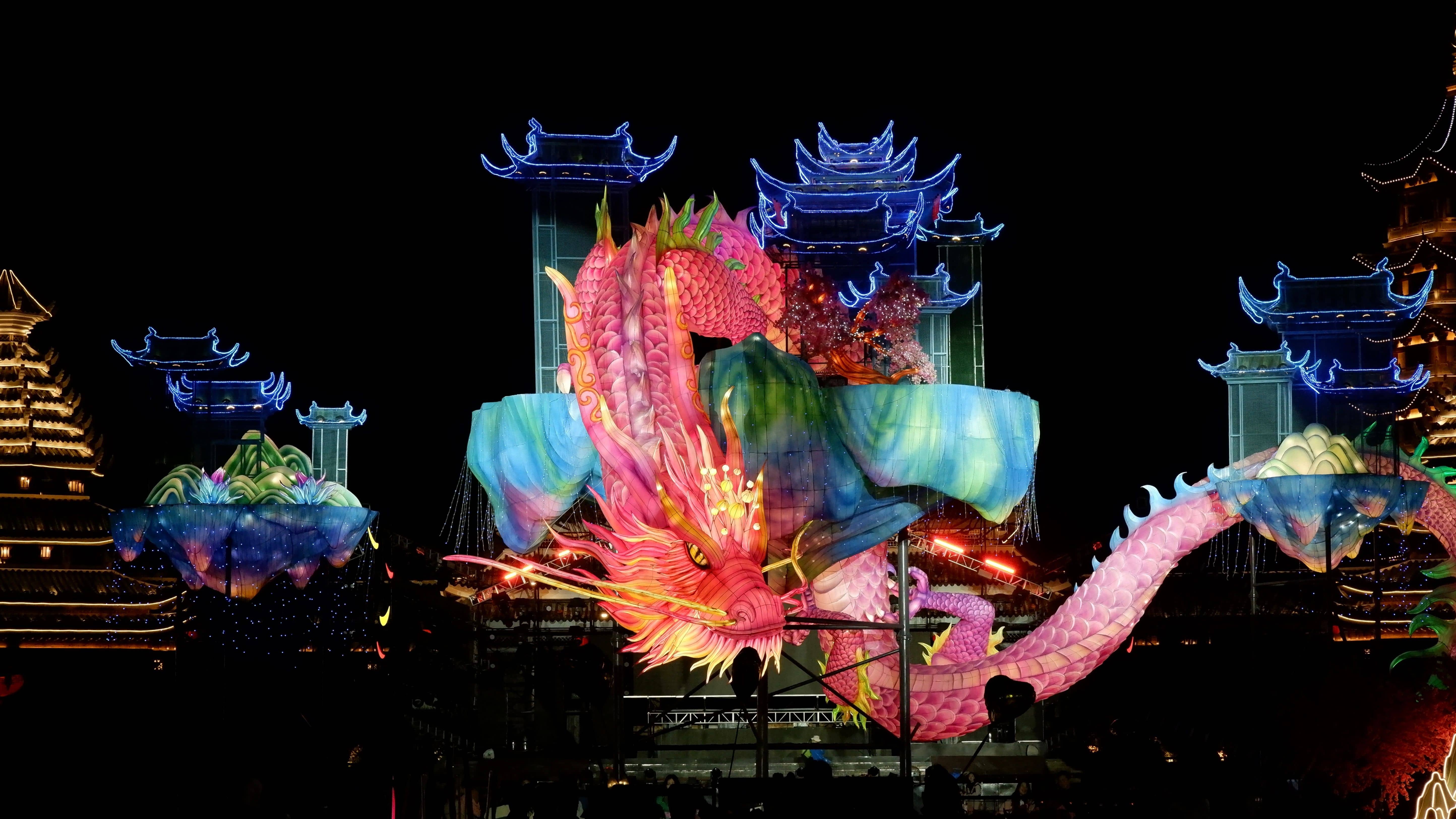
A wall calendar page showing February 2027 with the Chinese New Year date circled in red, next to red paper lanterns

Do You Need a Ticket, and What Does It Cost?

Most of Chinese New Year is free: the streets, the lantern-lit hutongs, the lion dances outside shopping malls, the fireworks and the general atmosphere cost nothing. What you pay for are the organised events inside parks and temples, and those fees are small.

In Beijing, the two flagship temple fairs are the Ditan Spring Festival Cultural Temple Fair and the Longtan Park Spring Festival Cultural Temple Fair. In 2026 both charged 30 RMB for an adult ticket and 15 RMB for a concession ticket. Students and visitors aged 60 and over have qualified for the concession price in previous years by showing ID. The annual Beijing park pass is not valid during the fair. Expect similar prices in 2027, announced by the Beijing parks administration and the Beijing tourism board in January.

Other paid options worth knowing about:

  • Smaller Beijing fairs (Changdian, the Summer Palace Suzhou Street fair, Yuanmingyuan garden fair) have charged about 10 RMB in the past

  • Themed fairs at Daguan Garden or the Temple of Heaven have charged around 40 RMB

  • Shanghai's Yu Garden lantern fair charges for entry to the lantern zone on peak evenings; price and dates for 2027 set as 80 RMB for adults and 50 RMB for children

  • Guangzhou's flower markets and Hong Kong's New Year parade are free to watch from the street

Where to buy: the big Beijing fairs run an on-site ticket window and sell online through the park's official WeChat mini-program or the Beijing parks ticketing platform. Online tickets are usually tied to a date and a time slot, and the official channels are the only ones to trust. Third-party resellers appear every year charging several times the price for the same QR code.

Note: On the second and third day of the new year, the ticket queue at Ditan can be longer than the queue to get in. Buy online the night before if you can, and go for a morning slot.

The entry ticket covers everything inside: the ceremony re-enactments, the stage shows and the market. Food, crafts and carnival games are paid separately, in cash or by phone.

Need a steady connection for transit and maps?See eSIM plans

Where It Happens and How to Get There

Chinese New Year happens everywhere in China, but for a first-time visitor three cities give the most concentrated experience. Beijing has the famous temple fairs, Shanghai has the Yu Garden lantern fair and the Bund, and Guangzhou in the south has the night flower markets and a milder climate. This guide uses Beijing as the base because its fairs are the easiest to plan around.

The main Beijing venues and how to reach them:

  • Ditan Park (Temple of Earth): 2 Andingmenwai Dajie, Dongcheng District. Coordinates roughly 39.952 N, 116.411 E. Take metro Line 2 or Line 5 to Yonghegong Lama Temple station and leave by Exit A; the west gate of the park is right there. Buses 18, 104, 108, 119 and others stop at Ditan West Gate

  • Longtan Park (Dragon Pool Park): Longtan Lu, Dongcheng District, south-east of the Temple of Heaven. Coordinates 39.883 N, 116.438 E. Nearest metro: Line 5 or Line 7, Line 5 (Tiantandongmen station) or Line 7 (Guangqumenwai station) then a short walk

  • Changdian Temple Fair: around Liulichang cultural street and Taoranting Park in Xicheng District, reachable from metro Line 4 or Line 7 ,Line 4 (Caishikou or Taoranting station) or Line 7 (Caishikou station).

From the airport: Beijing Capital International Airport (PEK) connects to the city by the Airport Express line to Dongzhimen, which is one stop from Yonghegong on Line 2; the ride into town takes about 25 – 30minutes. Beijing Daxing International Airport (PKX) sits far to the south and connects by the Daxing Airport Express and intercity rail, roughly 20 minutes to the city centre. Taxis from either airport cost about 120 – 250 RMB and take longer on holiday afternoons.

Within the city, the metro is the only reliable way to move during the festival. Pay with a transport card bought at any station, or add Beijing's transit code to Alipay or WeChat Pay. Taxis and ride-hailing exist but surge badly between 16:00 and 19:00 near the parks.

Tip: Leaving Ditan, walk ten minutes north or east to a quieter metro entrance instead of fighting for Yonghegong Exit A, which is often set to entry-only in the late afternoon.

Getting between cities: high-speed rail from Beijing South reaches Shanghai in about 4.5 – 6 hours and Guangzhou in about 7.5 – 10 hours, but trains around 3 to 6 February and 11 to 14 February sell out weeks ahead. Book on the official 12306 platform or through a reputable agent the day sales open.

Yonghegong Lama Temple metro station entrance on Beijing Line 2 with crowds of visitors heading towards Ditan Park

What Actually Happens, Hour by Hour

The festival has a rhythm, and knowing it tells you where to be and when. Here is how a typical New Year's Eve and temple fair day unfold.

New Year's Eve, 5 February 2027:

  • Afternoon: markets are packed as families buy last ingredients; restaurants fill from 17:00 for reunion dinners, mostly with pre-booked tables
  • Evening: streets go quiet as everyone eats at home or in a hotel restaurant. Book a hotel dinner or eat early
  • Around midnight: fireworks and firecrackers wherever they are permitted. Beijing's city centre restricts them heavily, so expect distant bangs rather than a display [TO VERIFY current rules]

A temple fair day at Ditan, roughly 9:00 to 17:00:

  • 9:00: gates open; the first hour is the calmest time to see the market stalls and craft demonstrations
  • Mid-morning: the first performance of the Qing dynasty earth worship ceremony re-enactment on the main altar. This is the signature event of the Ditan fair and draws the biggest crowd of the day, so take a position on the steps 20 to 30 minutes early
  • 10:00 to 14:00: peak entry hours. Historically the second day of the lunar year is the busiest day of the whole fair
  • Midday: three stages run folk music, opera excerpts, acrobatics and intangible heritage shows in rotation; a printed schedule is usually posted near each stage and on the park's official account
  • Afternoon: a second performance of the ceremony; lion and dragon dances weave through the main avenue
  • Around 16:00: stalls start selling off food cheaply; crowds thin before closing

Lantern Festival, 20 February 2027: the last night. Parks and old streets hang lanterns, families eat tangyuan (sweet glutinous rice balls), and in Shanghai the Yu Garden display is at its brightest. Beijing's temple fairs will have closed by then, so plan the Lantern Festival as an evening stroll rather than an event with a programme.

Tip: The best viewing spot for the Ditan ceremony is the raised terrace on the north side of the altar square. Arrive before the drums start; once the procession begins, nobody moves.

Outside the parks, look for lion dances in front of banks and shopping malls on the first working day after the holiday, when businesses invite troupes to bring luck.

Best Time to Arrive and What the Weather Is Like

Arrive by 4 February 2027 if you want to see the build-up and have New Year's Eve in the city, or by 6 February if you are mainly here for the temple fairs. Leaving on 10 or 11 February avoids the return-travel crush of the last holiday weekend.

Crowd levels, on a scale of 1 to 5:

  • 3 to 4 February: level 3. Markets busy, transport packed with people heading home, tourist sites quieter than usual

  • 5 February (New Year's Eve): level 2 in the evening. The city empties after dark

  • 6 February (New Year's Day): level 4 at temples, level 2 elsewhere; many shops and small restaurants closed

  • 7 to 9 February: level 5. The temple fairs hit their peak on the second day; this is the hardest time to get a taxi or a table

  • 10 to 12 February: level 4, easing day by day

  • 13 to 20 February: level 2 to 3. Fairs closed, city back to normal, lanterns still up for the Lantern Festival

Weather in Beijing in early February is cold, dry and bright. The long-term average high is about 4°C and the average low about -7°C, with measurable precipitation on only around 8 percent of days. Wind is the real enemy; a sunny 4°C afternoon with a northern wind feels much colder on an open park square. Snow is possible but uncommon. Shanghai is milder at roughly 3°C to 9°C but damp, and Guangzhou is spring-like, so pack for the city you actually choose.

On the fair days, be at the gate before 10:00. Entry peaks between 10:00 and 14:00, and the morning ceremony performance is calmer than the afternoon one. If you can only visit one fair, go on the first or the sixth day of the lunar year rather than the second or third.

Note: Mornings in Beijing are typically below freezing. Plan indoor stops (a tea house, a hutong café, the Lama Temple halls) every 90 minutes or so, especially with children.

A sunny, cold winter day at Ditan Park with bare trees, blue sky, red lanterns strung along the main path and visitors in heavy coats

Where to Stay and When to Book

Stay inside the Second Ring Road in Beijing, ideally in Dongcheng District, and you will be a metro ride or a walk from everything that matters during the festival. The three areas that work best:

  • Around Yonghegong, Guozijian and the Andingmen hutongs: a short walk to Ditan Park and the Lama Temple, lots of courtyard guesthouses, quiet at night. The best base for temple-fair days

  • Dongsi, Nanluoguxiang and Gulou: lively old-city lanes with small restaurants and bars that stay open through the holiday, 15 minutes by metro to Ditan, walkable to the Drum Tower lantern streets

  • Wangfujing and Dongdan: big international hotels near Tiananmen and the Forbidden City, the easiest option if you want English-speaking staff and a hotel restaurant for New Year's Eve dinner

Avoid staying near Beijing West or Beijing South railway stations during this period; they are the epicentre of the holiday travel crush and offer little else.

When to book: hotels in central Beijing for the holiday week start filling from about mid-December, and the courtyard hotels with only ten or so rooms sell out first. Book by early January 2027 for choice; after mid-January you will be picking from what is left at higher rates. Reference prices for the holiday week: a hutong courtyard room about 600 – 1,200 RMB per night, a mid-range hotel about 400 – 700 RMB, international chains from 1,000 – 2,500 RMB. Expect holiday surcharges on 5 and 6 February.

In Shanghai, choose Huangpu District near Yu Garden and the Bund, or the former French Concession for cafés. In Guangzhou, Liwan and Yuexiu put you next to the flower markets.

Tip: Book a room with free cancellation and confirm whether the hotel restaurant will be open on 5 and 6 February. Many small guesthouses run on skeleton staff over the holiday, and breakfast may be a bag of buns left at reception.

Check in advance that your accommodation is registered to host foreigners; by law every hotel must report your stay, and a few budget places still cannot do this.

Staying Connected During the Festival

Public Wi-Fi is not a plan at Chinese New Year. When tens of thousands of people pour into Ditan Park on the same morning, the park's free Wi-Fi collapses, and the café networks nearby ask for a Chinese mobile number to log in. Even when hotel Wi-Fi works, it goes through the national filters, so Google, Gmail, WhatsApp, Instagram and most Western news sites simply do not load. A VPN on top of hotel Wi-Fi is unreliable and slow.

What you actually need data for during the festival:

  • Maps and live metro directions, including which exits are closed for crowd control
  • Translating menus, stall signs and performance boards with your camera
  • A group chat so your family or friends can find each other again after the lion dance crowd separates you
  • Paying with Alipay or WeChat Pay, both of which need a connection to generate each payment code
  • Ride-hailing late in the evening when taxis are gone
  • Video calls home, because this is the festival everyone wants to show their relatives

The simplest fix is a China travel eSIM that routes your data in a way that keeps your usual apps working. Install it at home before you fly, while you still have a working connection, then switch it on when you land. Your phone needs to be unlocked and eSIM-capable; most phones from the last five years are.

How much data: budget 1 to 2 GB per day for maps, translation, messaging and payments, and more if you plan to upload a lot of festival video. For a 7-day trip, a 10 GB plan is comfortable; a 20 GB plan covers heavy social media use. GoHub's China plans are listed on the eSIM for China page.

Tip: Keep your home SIM active for SMS only so that bank verification codes still reach you, and set the eSIM as your data line. Turn off data roaming on the home SIM to avoid a surprise bill.

Signal inside the parks is good on 4G and 5G because the big fairs are in central districts, but the network slows at the busiest hour. Download an offline map of Beijing and save your hotel address in Chinese characters as a backup.

What to Eat and Buy at the Fairs

Eat your way around the temple fair; that is half the reason to go. Ditan and Longtan line their main avenues with food stalls selling Beijing snacks and regional specialities, and the Ditan fair in recent years has invited provincial offices to run a nationwide food bazaar inside the park.

Signature festival foods to look for:

  • Tanghulu: skewers of hawthorn berries in hard sugar glaze, the icon of a Beijing winter
  • Jiaozi: boiled dumplings, the northern New Year dish, eaten at midnight on New Year's Eve
  • Niangao: sticky rice cake, eaten for the pun on "a higher year"
  • Lamb skewers grilled over charcoal, hot and smoky, perfect at -5°C
  • Jianbing: the egg crêpe folded around a crispy cracker, a good breakfast before the fair
  • Tangyuan: sweet rice balls in soup, the dish of the Lantern Festival on 20 February
  • Candied sweet potato, roasted chestnuts and baked yams from street carts

Prices at fair stalls run higher than on the street outside, and most stalls expect mobile payment. Carry some small notes anyway in case a vendor's QR code is slow.

Outside the fairs, plan your dinners. Many family-run restaurants close from New Year's Eve for three to five days, and the ones that stay open want reservations. Hotel restaurants, big chain restaurants, hot-pot chains and the malls near Wangfujing and Sanlitun are your reliable options on 5 and 6 February. Hot pot is the ideal festival meal: warm, communal and easy to order from a picture menu.

Tip: For New Year's Eve dinner, reserve by late January 2027. If you have no booking, aim for a hot-pot chain or a hotel buffet, and arrive by 17:30.

What to buy: paper cuttings, spring couplets, zodiac goat figures, cloth tigers, kites, hand-painted Beijing opera masks and intangible heritage crafts demonstrated on site. The Ditan fair runs a gift market of heritage crafts from along Beijing's central axis. Haggling is not expected at fixed-price craft stalls; it is at the carnival-game and toy stalls.

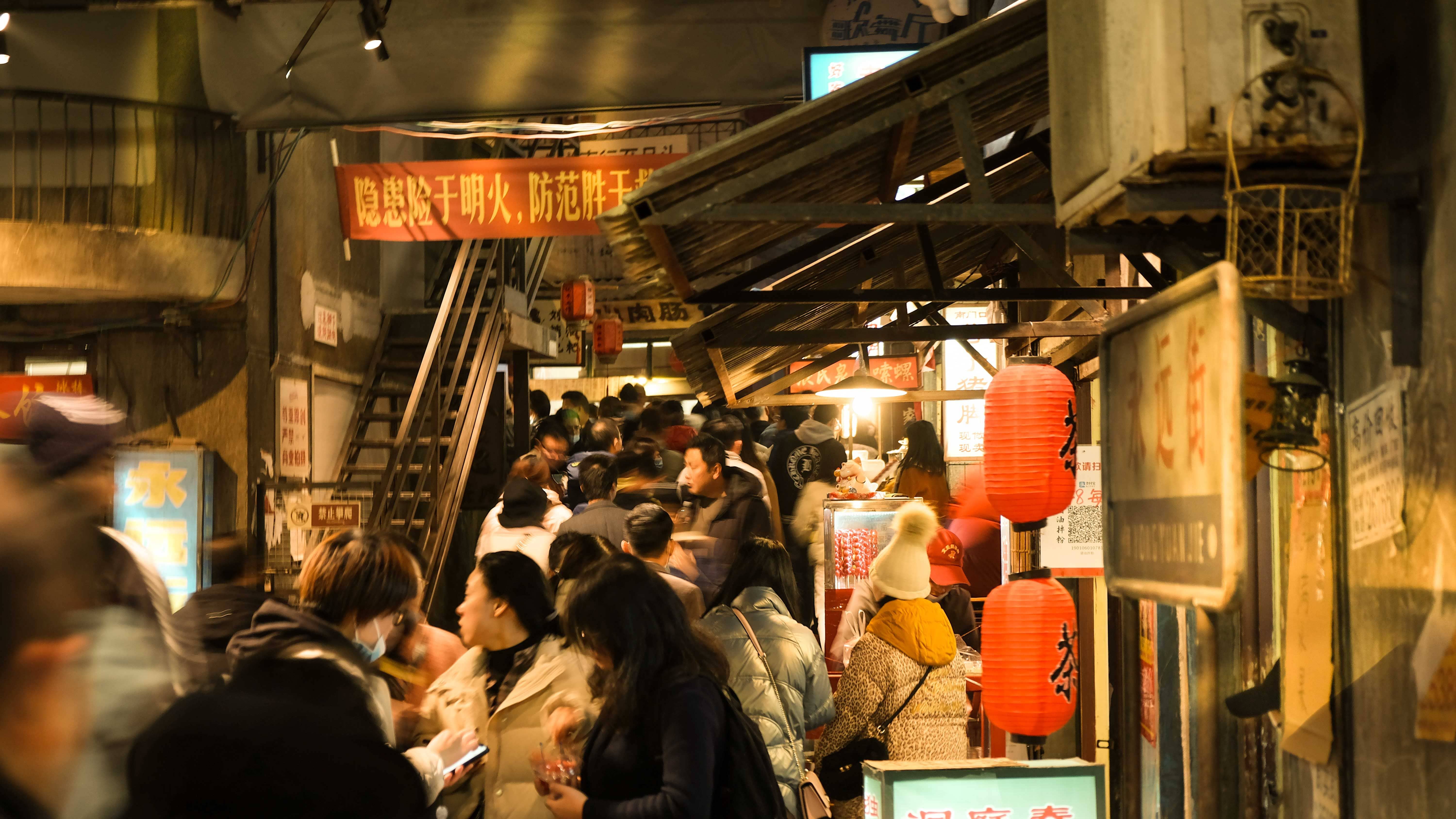
Close-up of sugar-coated hawthorn skewers (tanghulu) on a stall at a Beijing Spring Festival temple fair

Money, Etiquette and Things to Avoid

China runs on mobile payment, and both Alipay and WeChat Pay now accept foreign Visa, Mastercard and other international cards. Set up one of them before you leave, link your card and make a small test payment. Cash is legal and accepted everywhere, but change is scarce, so carry 100 RMB notes broken into smaller ones from a bank ATM. International cards work at ATMs of the big banks and at hotel desks, rarely at small shops.

Budget per day in Beijing, excluding flights: a tight budget of about 200 – 300 RMB covers a hostel bed, street food and the metro; a comfortable day with a mid-range hotel, two sit-down meals, fair tickets and a taxi is about 400 – 600 RMB. Over a week, plan on 2,000 – 3,000 RMB plus accommodation, and add a holiday surcharge for 5 to 8 February. Tipping is not customary.

Etiquette that helps:

  • Say "Xin nian kuai le" (happy new year) or "Gong xi fa cai" (wishing you prosperity) to staff; it is always welcome

  • Wear something red; it is festive, and black or all-white outfits are associated with mourning at this time

  • If you are invited to a home, bring fruit (mandarins are ideal) or a box of sweets, never a clock or anything in sets of four

  • Red envelopes (hongbao) are given by elders to children and unmarried juniors; as a visitor you are not expected to give them

  • Do not sweep or clean anything in a host's home on New Year's Day; it sweeps the luck out

Things to avoid: setting off your own fireworks inside Beijing's restricted zones (fines are real), buying tickets from touts outside park gates, booking trains on unofficial sites, and leaving reservations to the last day. Pickpocketing at crowded fairs is the main petty crime; keep your phone in a front pocket and your bag zipped at the front.

Note: Banks close for the whole holiday week and many currency exchange counters with them. Exchange or withdraw what you need before 5 February.

Emergency numbers: 110 for police, 120 for ambulance, 119 for fire. Keep your hotel's address in Chinese in your phone and on paper, and carry your passport; it is required for hotel check-in, train tickets and some park entries.

Packing, Kids, Older Relatives and Side Trips

Pack for a dry, windy winter with sub-zero mornings and plenty of standing around outdoors.

  • A windproof coat, thermal base layer and a warm hat; the wind on the Ditan altar square cuts through anything less

  • Gloves that work with a touchscreen, because you will be scanning QR codes all day

  • Comfortable walking shoes with grip; park paths can be icy early in the morning

  • Lip balm, moisturiser and a reusable water bottle; the air is extremely dry

  • A power bank; cold weather drains phone batteries fast, and your phone is your ticket, map and wallet

  • A small day bag worn in front, and a few 10 and 20 RMB notes

  • Something red to wear, and a mask if the air quality index spikes

  • Passport (carry it daily), your eSIM already installed, and copies of your bookings offline

Going with young children: temple fairs are great for kids, with lion dances, carnival games, acrobats and sugar crafts, but the crowds on 7 to 9 February can be overwhelming. Go on the first or sixth day, arrive at opening, take a pushchair only if it folds (the main avenues get shoulder to shoulder), and pin a note with your phone number inside your child's coat. Firecracker noise can frighten toddlers on New Year's Eve, so bring ear defenders.

Going with older relatives: keep walking days short and plan warm indoor breaks. The Lama Temple halls, tea houses on Guozijian Street and the malls at Wangfujing all work as warm-up stops. Ditan offers a concession ticket for visitors aged 60 and over with ID. Metro stations have lifts, though not always at the exit nearest the park, so check the station map.

Tip: With children or grandparents, pick one fair and do it well rather than racing between two. Ditan is the easier one thanks to the metro station at its gate.

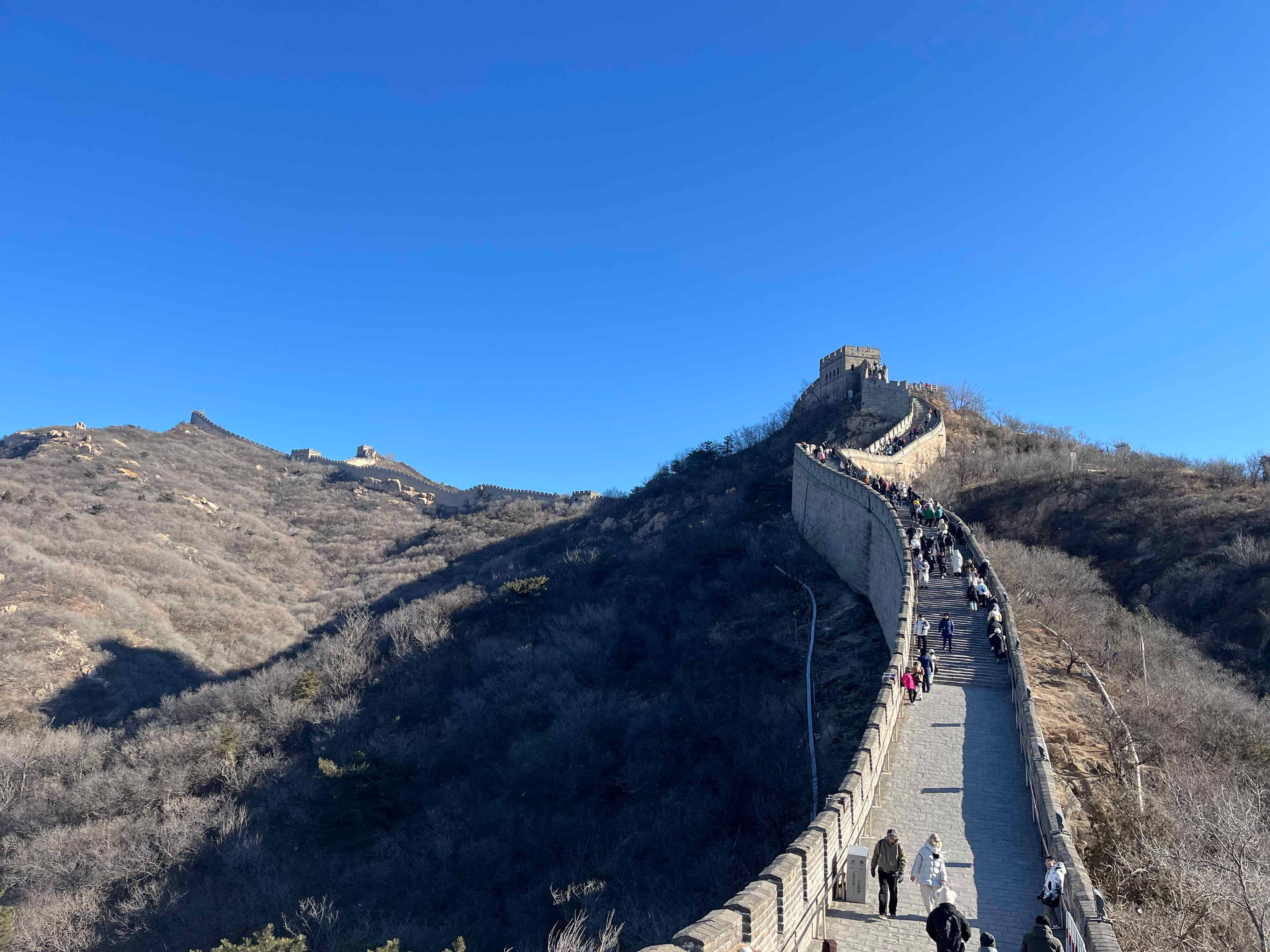
Side trips on the same visit: the Great Wall at Mutianyu is a half-day trip and beautiful in winter light, with far fewer visitors than in summer. A high-speed train puts Tianjin's old concession streets about 30 – 35 minutes away. If you have four more days, take the train south to Shanghai for the Yu Garden lanterns, timed for the Lantern Festival on 20 February, or fly to Harbin for the ice and snow festival that runs through the same weeks.

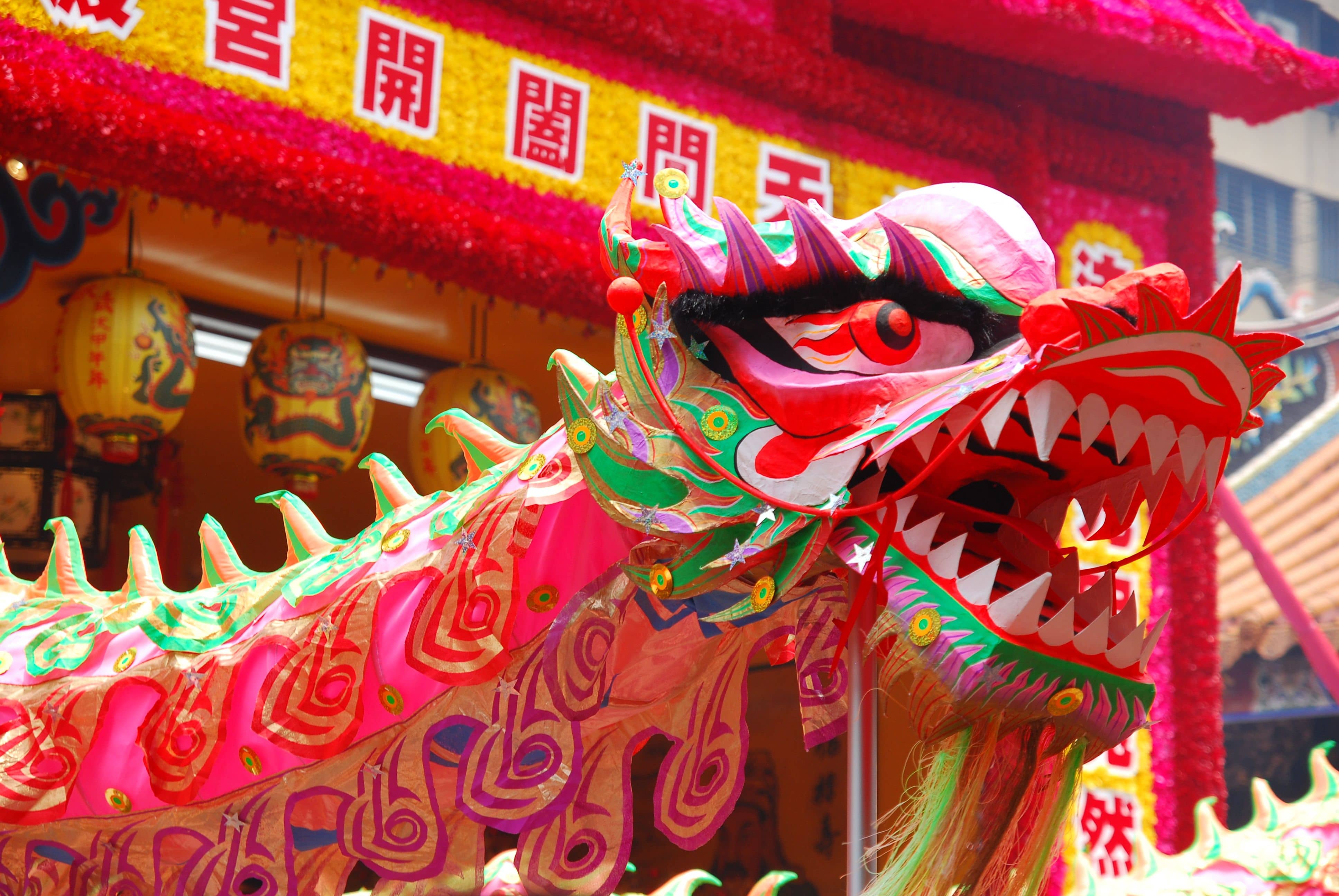
A family with a child in a bright red coat looking at a dragon dance performance in a crowded Beijing park during Chinese New Year

Suggested itinerary

Day 1 · 5 February, New Year's Eve

  1. Morning
    Lama Temple (Yonghegong)Incense, red lanterns and locals praying for the new year; easy to pair with Ditan later
  2. Late morning
    Guozijian Street and the Confucius TempleQuiet old street for lunch and a warm tea house before the afternoon
  3. Afternoon
    Nanluoguxiang and the Drum Tower hutongsWatch families buying decorations and sweets; many stalls close by evening
  4. Around 17:30
    Hotel or hot-pot restaurant dinnerReserve ahead; most small restaurants close tonight
  5. Around midnight
    Hotel rooftop or a quiet hutong cornerListen for distant fireworks; the city centre restricts them, so expect sound more than sight

Day 2 · 6 February, New Year's Day

  1. Before 9:00
    Ditan Park west gateBe in the queue at opening with an online ticket; the first hour is the calmest
  2. Mid-morning
    Altar square at DitanFirst performance of the earth worship ceremony re-enactment; stand on the north terrace 30 minutes early
  3. Around 12:00
    Food avenue inside DitanLunch on lamb skewers, jianbing and tanghulu while the stages run folk shows
  4. Early afternoon
    Craft and gift market inside DitanPaper cuttings and zodiac goat souvenirs; quieter than the food stalls
  5. Late afternoon
    Walk south to the Dongsi hutongsLeave before the 16:00 exit crush and find a warm café
  6. Evening
    WangfujingLantern decorations, open malls and reliable dinner options on a day when much is closed

Day 3 · 7 February, second day of the new year

  1. Morning
    Great Wall at MutianyuWinter light, thin crowds and a chance to escape the busiest fair day; book transport the day before
  2. Around 14:00
    Return to the cityRest at the hotel; traffic near the parks peaks mid-afternoon
  3. Late afternoon
    Temple of Heaven ParkWatch locals fly kites and practise calligraphy on the stones; separate fair ticket if its temple fair is running
  4. Evening
    Qianmen and DashilanLantern-lit pedestrian streets with lion dances outside shops and a last round of festival snacks
Tip: Arrive on 5 February, do the temple fair on New Year's Day morning before the second-day peak, and keep a warm indoor stop in every half day.

Recommended eSIM plans

Pick by trip length. Visiting several countries? Choose a regional plan.

Selected: eSIM China 20GB 30 Day(s)

Set up your eSIM in 3 steps

  1. Order and get your QR codeThe QR code arrives by email right after payment.
  2. Scan before you flySettings → Cellular → Add eSIM, while you still have Wi-Fi.
  3. Turn on data when you landSet the eSIM as your data line and enable data roaming.

Frequently asked questions

Both names refer to the same zodiac sign. The Chinese character yang covers goats, sheep and rams, so English sources translate it differently. 2027 is specifically a Fire Goat year, beginning on 6 February 2027 and ending on 25 January 2028. The next Chinese New Year, on 26 January 2028, opens the Year of the Monkey.

No, but plan around closures. Banks, government offices and many family-run restaurants and shops close from New Year's Eve for three to seven days. Metro, buses, airports, big hotels, malls, chain restaurants, convenience stores and tourist sites all stay open, and parks run their temple fairs. The first two days are the quietest for shopping; by the third day most places reopen.

It depends on your passport. China has expanded visa-free entry for many countries and also offers transit visa exemptions at major airports, but the list and the permitted length of stay change frequently [TO VERIFY current rules for your nationality]. Check with the Chinese embassy or consulate in your country at least two months before travel, and apply early if you need a visa, since consulates slow down before the holiday.

Only in a limited way. Beijing maintains a strict, total ban on all personal fireworks and firecrackers within the Sixth Ring Road for safety and air quality control. Therefore, you will not see any major firework displays or be allowed to light them yourself in the city centre. Outer districts and smaller cities are livelier. For a guaranteed show, look for organised lantern and light events on the Lantern Festival, 20 February 2027.

Plan on 1 to 2 GB per day. Maps, translation, messaging and mobile payments use modest data, but video calls home and uploading festival clips add up quickly. A 10 GB eSIM plan comfortably covers a week for most travellers, and 20 GB suits heavy social media use. Buy and install the eSIM before you fly so it works the moment you land, and keep your home SIM for bank SMS codes only.

The traditional celebration lasts 15 days, from New Year's Day on 6 February 2027 to the Lantern Festival on 20 February 2027. The public holiday for workers is shorter, expected to run from 5 to 11 February 2027 pending the official State Council notice. Beijing's temple fairs usually run for the first week only, so visit between 6 and 12 February for the full festival atmosphere.