

Coiba Island Panama: The Complete Travel Guide

Last updated: May 2026
Coiba Island is one of Central America's best-kept secrets. It is a remote UNESCO World Heritage marine park off Panama's Pacific coast where you can dive with whale sharks, hike untouched jungle, and watch humpback whales without the crowds that overwhelm other bucket-list destinations.
TLDR
Located in the Gulf of Chiriquí, Coiba is the largest island in Central America
UNESCO World Heritage Site since 2005, with 750+ fish species and 30 shark species
Access is by boat only from Santa Catalina; guided tours are required
Best time: December–April for diving; July–October for whale watching
Park fee: ~$20/person/day (cash only, not included in tour prices)
What Makes Coiba Island Special
Coiba Island, Panama spent most of the 20th century as a feared political prison. For nearly 85 years (1919–2004), the island was off-limits to the public, and that isolation turned out to be its greatest gift. No hotels were built, no roads were paved, no fishing fleets moved in. When the prison finally closed in 2004, scientists found an ecosystem so intact that the Smithsonian Tropical Research Institute called it a living laboratory of evolution.
A year later, UNESCO designated Coiba and its surrounding waters as a World Heritage Site. The park now covers more than 270,000 hectares of ocean and forest. It sits within the Eastern Tropical Pacific Marine Corridor alongside the Galápagos Islands, Cocos Island, and Malpelo, which is why many divers call it the "Galápagos of Central America."
Wildlife You Can Expect to See
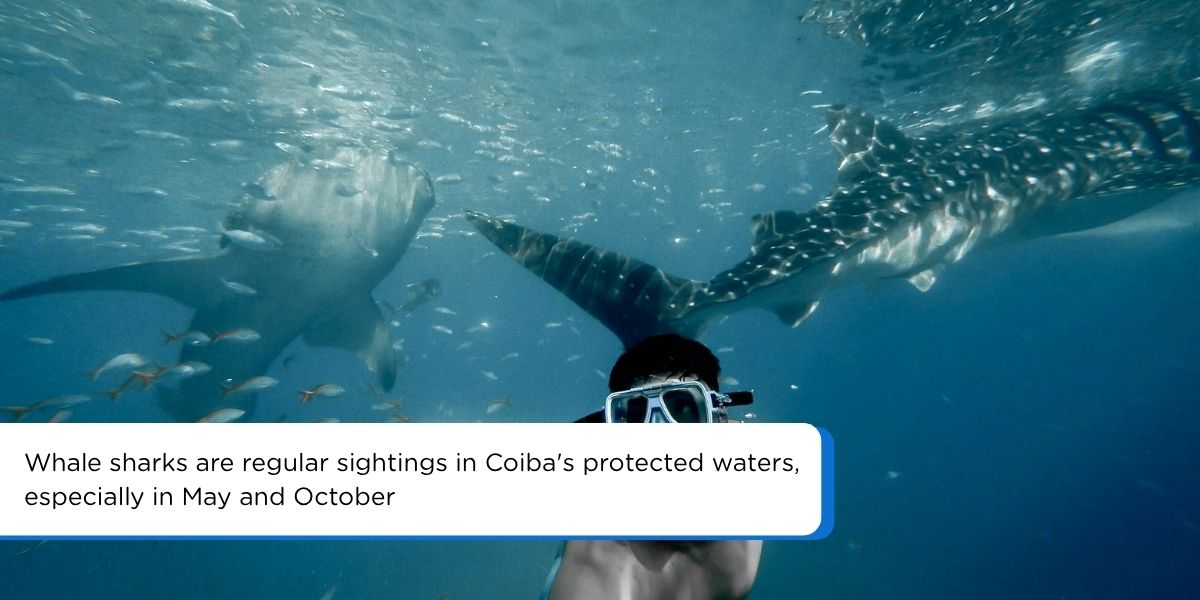
The biodiversity here is hard to overstate. Underwater, the park hosts over 750 fish species and 30 species of sharks, including whale sharks, hammerheads, nurse sharks, and bull sharks. Manta rays, spotted eagle rays, sea turtles, dolphins, and humpback whales are regular sightings depending on the season.
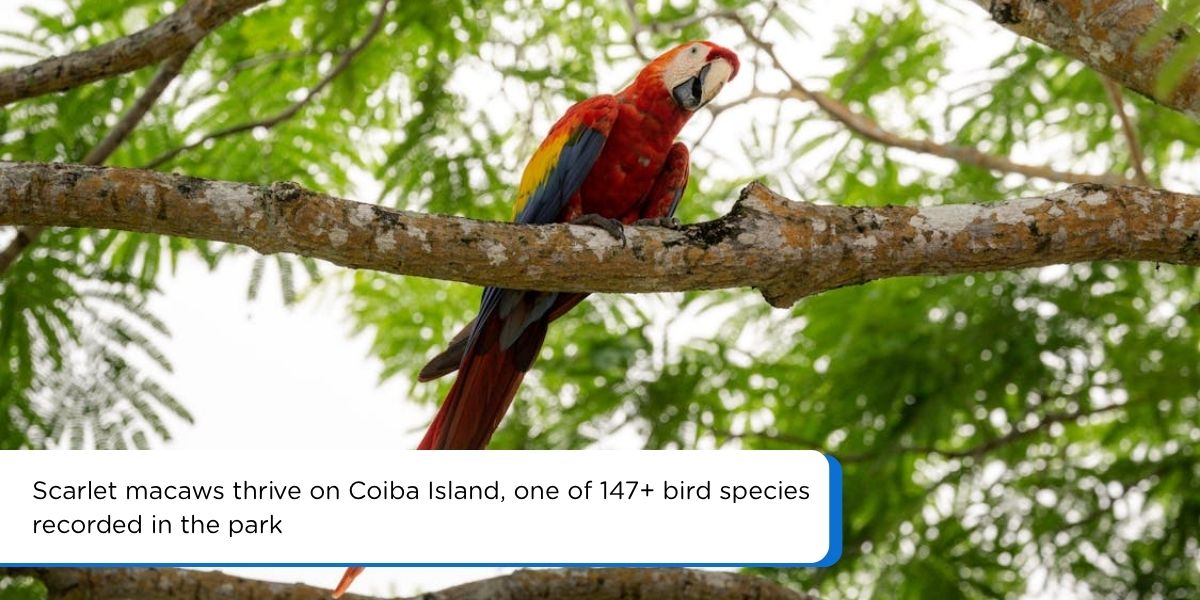
On land, more than 147 bird species have been recorded. Scarlet macaws are so common here they almost feel ordinary. Howler monkeys and capuchins that evolved in isolation from mainland populations also roam the forest trails, making a jungle hike genuinely unlike anything else in the region.
How to Get to Coiba Island
Getting to Coiba takes some planning, and that planning is a big part of what keeps the island pristine.
From Panama City to Santa Catalina (your base):
By bus: Albrook Terminal to Soná (about 6 hours) then a small connection to Santa Catalina (1.5 hours). Budget around $10–15 total.
By car: A 390 km drive that takes 6–8 hours. The road is fully paved and straightforward.
By charter flight: 45 minutes from Albrook Airport (PAC) to Lago Bay at around $875 per flight (max 3 passengers).
From Santa Catalina to Coiba:
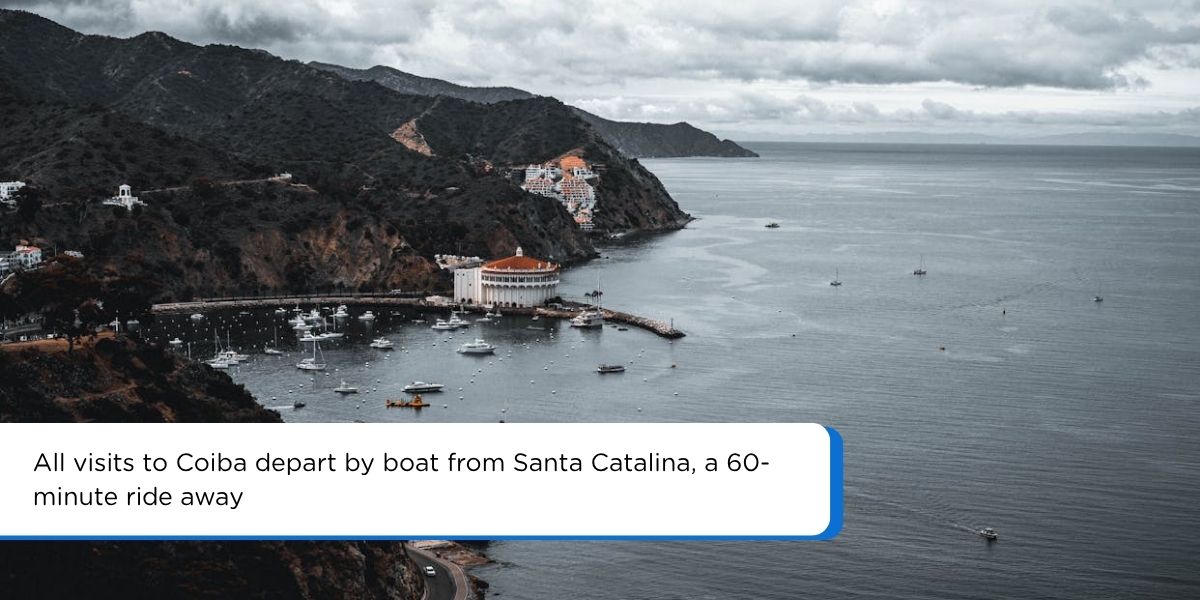
The boat ride takes about 60 minutes. All visits require a licensed guide; independent access inside the national park is not permitted. Book your tour before you arrive, especially during December–April.
Travel tip: The long road from Panama City to Santa Catalina passes through areas with limited WiFi. Set up your eSIM for Panama before you leave the city so you can navigate, check sea conditions, and contact your tour operator without hunting for hotspots.
Top Things to Do in Coiba Island, Panama
Snorkeling at Granito de Oro
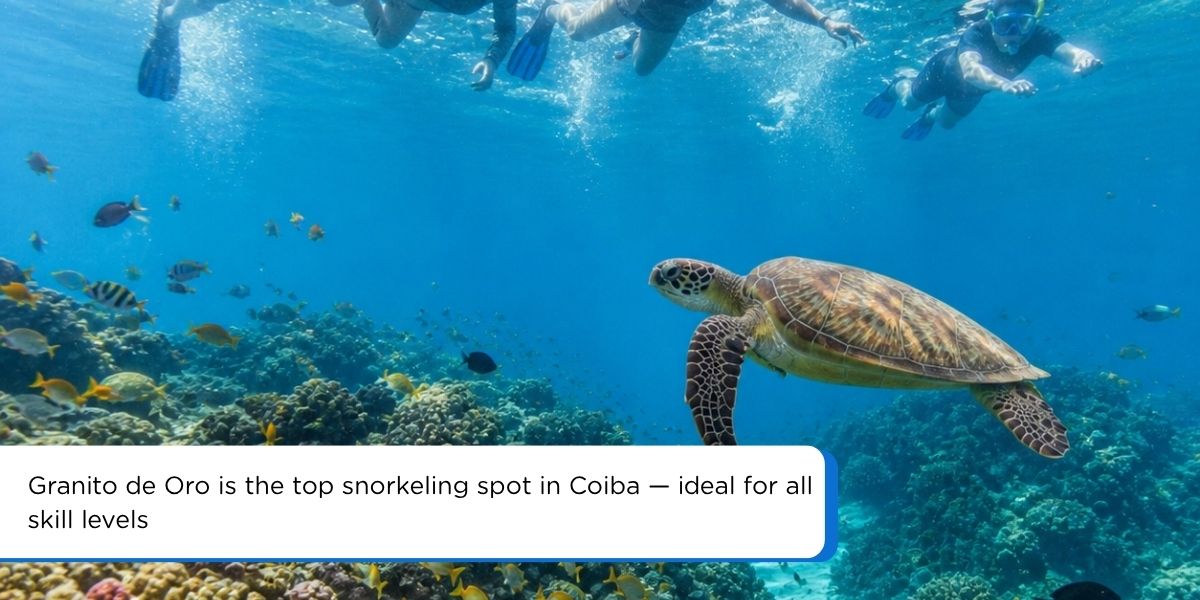
This small islet just off the main island is the best snorkeling spot in the park. Crystal-clear water, coral gardens, spotted eagle rays, and sea turtles greet you at shallow depths. No advanced skills needed.
Scuba Diving
Coiba is widely considered the best dive destination in Panama. Offshore pinnacles attract hammerhead schools, manta rays, and bull sharks. Day-trip diving (two to three dives) runs $140–180 per person plus the park fee.
Whale Watching
Between July and October, humpback whales migrate north from the Southern Hemisphere to breed in Coiba's warm waters. Whale sharks appear year-round but peak in May and October.
Jungle Hiking
The Sendero de Los Monos (Monkey Trail) cuts through old-growth rainforest where howler monkeys and scarlet macaws are easy to spot. Your guide will also walk you through the ruins of the old penal colony, where the crumbling cell blocks tell the darker side of the island's history.
Best Time to Visit
Season | Conditions | Best For |
|---|---|---|
December – April | Calm seas, high visibility | Diving, snorkeling, first-timers |
May – June | Start of rainy season, fewer visitors | Hammerheads, manta rays, lower prices |
July – October | Some rain, rougher seas | Humpback whales, whale sharks |
November | Quietest month | Budget travelers |
Panama sits outside the hurricane belt, so Coiba can technically be visited year-round. Visibility drops during rainy months because of plankton blooms, and that is exactly why the whale sharks show up.
Costs at a Glance
Expense | Estimated Cost |
|---|---|
Park entrance fee | ~$20/person/day (cash only) |
Snorkeling day trip | $70–$120 + park fee |
Diving day trip (2–3 dives) | $140–$180 + park fee |
Multi-day expedition | $300–$900+ depending on package |
Hostel dorm in Santa Catalina | $11–$25/night |
Private room in Santa Catalina | $40–$250/night |
Always carry USD cash. The ATM in Santa Catalina is unreliable, and park fees are not accepted by card.
Stay Connected in Panama with an eSIM
Between Santa Catalina's patchy WiFi and zero connectivity on Coiba itself, reliable mobile data matters more than you might expect on this trip. You need it for booking last-minute tours, checking sea conditions, navigating 390 kilometers of Panamanian highway, and staying reachable in an emergency.
Panama's main 4G LTE networks provide solid coverage along major routes and in Panama City. A travel eSIM for Panama is the most hassle-free option: no physical SIM to buy at the airport, no local contract, no roaming surprises. Activate it before your flight and you are online the moment you land.
Get your Gohub eSIM for Panama and stay connected from day one
Practical Tips Before You Go
Guided tours are mandatory inside the park; independent exploration is not allowed
Book at least 2–4 weeks ahead during the December–April dry season
Use reef-safe, mineral-based sunscreen only; chemical sunscreens damage coral
Pack a rash guard, motion sickness tablets for the boat ride, and a dry bag
Crocodiles inhabit some areas of the island, so follow your guide's instructions at all times
Carry enough USD cash for park fees, meals, and any extras in Santa Catalina
Coiba Island rewards the travelers who make the effort to get there. The logistics are not complicated, but they do require planning. Get that part right, and what you find on the other side is one of the most extraordinary marine ecosystems left on Earth.

Hi! Mình là Lala Wren, một content creator yêu xê dịch và đam mê chia sẻ trải nghiệm thực tế cho cộng đồng Gohub. Trong nhiều năm qua, mình đã đặt chân đến Thái Lan, Hàn Quốc, Nhật Bản, Singapore, Malaysia, Bali và nhiều điểm đến thú vị khác trên khắp châu Á. Cùng mình tìm hiểu tất tần tật từ khâu chuẩn bị eSIM, Visa, lịch trình và địa điểm nổi bật cho chuyến đi sắp tới của bạn nhé!
عرض جميع المقالات →