

Yaz Sonunda İtalya'yı Ziyaret Etmeden Önce Bilmeniz Gereken 3 Şey

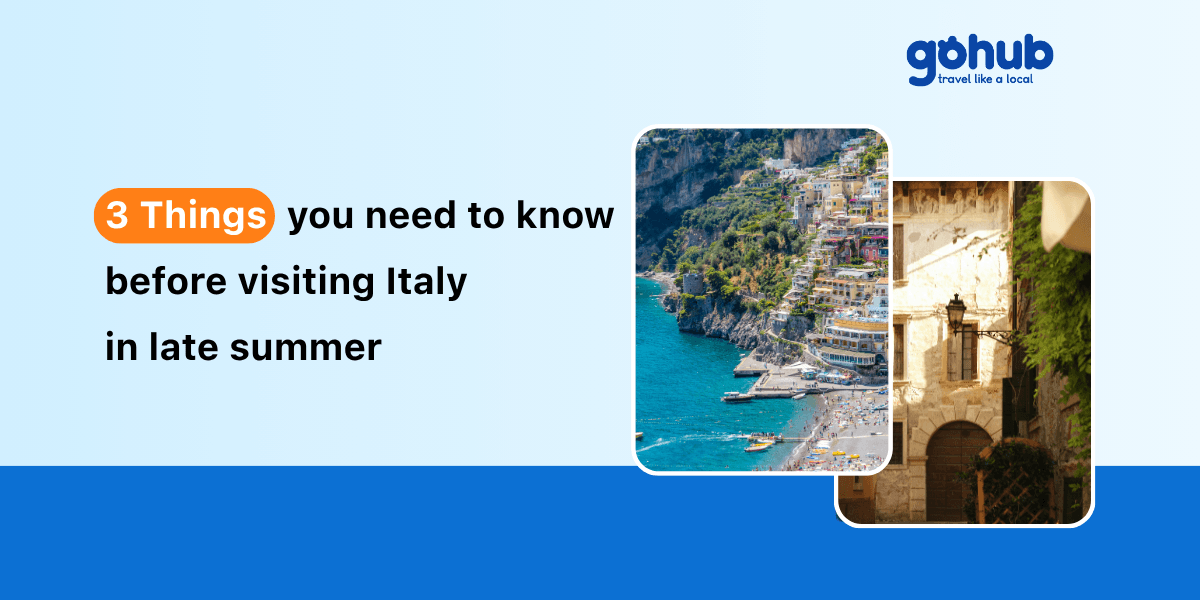
Yaz sonu, İtalya'yı ziyaret etmek için en keyifli zamanlardan biri olabilir. Deniz sıcaktır, akşamlar canlı kalır ve şehirler, adalar ve kıyı kasabaları hala tam yaz modunda faaliyet gösterir.
Aynı zamanda yanlış anlaşılabilecek kolay bir mevsimdir.
Gezginler bazen Ağustos son haftalarına ulaştığında İtalya'nın serinlemeye başladığını, Ferragosto sırasında ülkenin tamamen kapandığını veya Eylül ayının otomatik olarak daha düşük fiyatlar ve daha az kalabalık anlamına geldiğini varsayarlar. Gerçeklik, nereye gittiğinize ve ne zaman seyahat ettiğinize bağlıdır.
Ağustos sonu veya Eylül ayında İtalya'yı ziyaret etmeden önce anlamanız gereken üç şey var: Ferragosto yerel açılış saatlerini değiştirir, yaz sıcağı Eylül ayına kadar devam edebilir ve kalabalıklar kaybolmaktan çok yer değiştirme eğilimindedir.
Bir Bakışta Yaz Sonunda İtalya
Ne beklemeli | Seyahatiniz için ne anlama geliyor |
|---|---|
15 Ağustos'ta Ferragosto | Resmi tatil programları ve olası yerel işletme kapanışları |
Sürekli yaz sıcağı | Açık hava gezileri sabah ve akşam daha rahattır |
Yoğun plajlar ve adalar | Konaklama, feribotlar ve plaj tesisleri için önceden rezervasyon gerekebilir |
Aktif büyük cazibe merkezleri | Ünlü müzeler ve simge yapılar, yerel mahalleler sessiz hissetse bile yoğun kalabilir |
Aşamalı mevsimsel değişim | Eylül, Ağustos ortasından daha kolay olabilir, ancak otomatik olarak serin veya kalabalık değil |
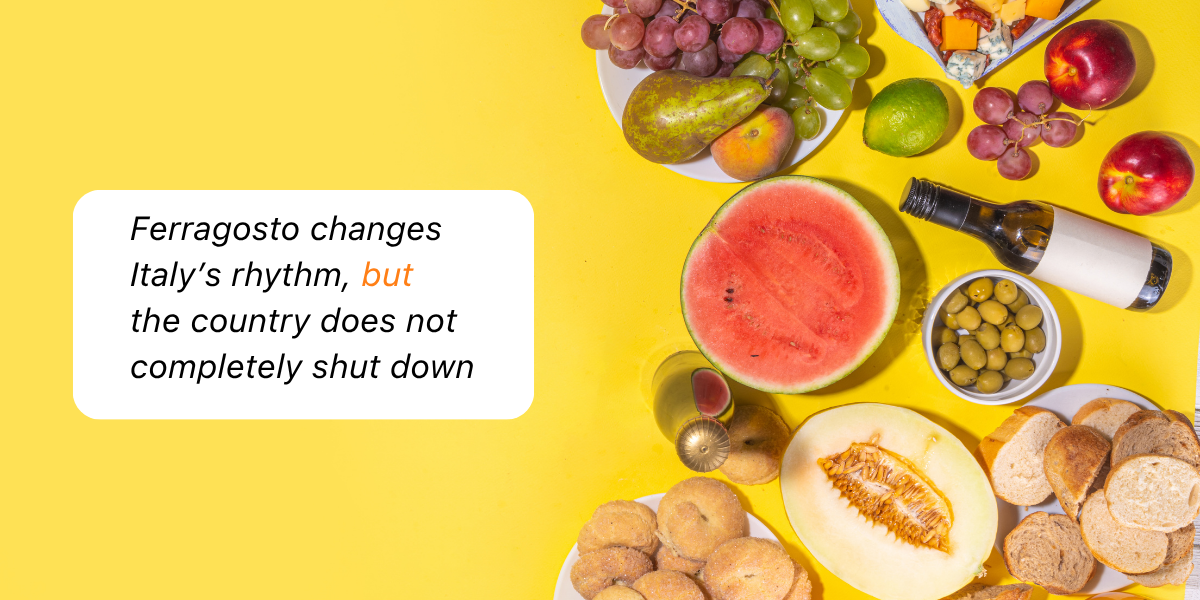
1. Ferragosto İtalya'nın Ritmini Değiştirir, Ancak Ülke Tamamen Kapanmaz
Ferragosto, 15 Ağustos'ta İtalya genelinde kutlanır. Ulusal bir resmi tatildir ve İtalyan yaz takvimindeki en önemli tarihlerden biridir.
Bu dönemde birçok İtalyan izin alır ve plajlara, göllere, dağ tatil köylerine veya aile evlerine seyahat eder. Bazı bağımsız dükkanlar, kafeler, ofisler ve aile işletmeleri birkaç günlüğüne kapanır. Diğerleri ise 15 Ağustos'u aşabilecek daha uzun bir yıllık mola verir.
Ancak, Ferragosto sırasında İtalya'daki her şeyin kapandığı fikri yanıltıcıdır.
Turizme büyük ölçüde bağımlı olan destinasyonlardaki işletmeler, yılın en yoğun dönemlerinden birinde genellikle açık kalır. Popüler kıyı kasabalarındaki oteller, restoranlar, dondurmacılar, plaj kulüpleri ve ziyaretçi hizmetleri kapanmak yerine tam kapasiteyle çalışıyor olabilir.
Birçok büyük müze, arkeolojik alan ve turistik cazibe merkezi de erişilebilir kalır, ancak tatil saatlerini takip edebilir veya önceden rezervasyon gerektirebilirler. En güvenli yaklaşım, normal programının geçerli olacağını varsaymak yerine her cazibe merkezinin resmi web sitesini kontrol etmektir.
İtalya'nın resmi turizm web sitesi, İtalya'daki resmi tatiller ve pratik seyahat düzenlemeleri hakkında daha fazla bilgi sağlar.
Ferragosto neleri değiştirebilir
Ferragosto'nun etkisi destinasyonlar arasında önemli ölçüde değişir.
Milano veya Roma'daki bir yerleşim bölgesinde, küçük bir fırın, eczane veya aile işletmesi restoran, sahipleri yıllık tatillerini yaparken kapanabilir. Buna karşılık, Amalfi Sahili'nde, Sicilya'da veya popüler bir plajın yakınındaki bir otel veya restoran tamamen dolu olabilir.
Toplu taşıma, özellikle yerel otobüs güzergahlarında tatil programını takip edebilir. Kıyı bölgelerine, göllere ve dağ kasabalarına giden yollar ve trenler, yerli gezginler yaz tatillerine başladıkça çok daha yoğun hale gelebilir.
Bu, gezginlerin her işletmenin normal şekilde çalışacağı varsayımına dayanarak bir seyahat programı oluşturmaması gerektiği anlamına gelir.
15 Ağustos civarındaki günlerde, güncel açılış saati güncellemelerini kontrol edin, restoran rezervasyonlarını doğrudan onaylayın ve yakınlarda yemek yiyebileceğiniz alternatif yerler kaydedin. Özellikle küçük bir kasabada kalıyorsanız, resmi tatilden önce temel eşyaları satın almak da mantıklıdır.
Google Haritalar faydalı olabilir, ancak tatil saatleri her zaman hemen güncellenmez. Seyahatiniz için önemli olan herhangi bir cazibe merkezi, restoran veya hizmet için, resmi web sitesi, sosyal medya sayfası veya doğrudan iletişim bilgileri aracılığıyla onaylayın.
Ferragosto sırasında İtalya'dan kaçınmalı mısınız?
Ferragosto, ziyaret etmek için mutlaka kötü bir zaman değildir.
Birçok destinasyon, tatil döneminde konserler, havai fişek gösterileri, dini kutlamalar, yemek festivalleri ve plaj etkinlikleri düzenler. Sadece simge yapıları ziyaret etmek yerine İtalyan yaz kültürünü deneyimlemek için mükemmel bir fırsat olabilir.
Fark beklentilere bağlıdır. Değişen programlara hazırlanan gezginler şenlikli atmosferin tadını çıkarabilirler. Standart bir hafta içi seyahat programıyla gelenler ise beklenmedik kapanışlar ve sınırlı müsaitlik nedeniyle hayal kırıklığına uğrayabilirler.
2. Yaz Sonu Hala Sıcak, Bu Yüzden Günlük Programınız Önemli
Ağustos sonu, İtalya'ya otomatik olarak sonbahar havası getirmez.
Roma, Floransa, Napoli, Puglia, Sicilya ve Sardinya hala yoğun sıcaklık, güçlü güneş ışığı ve yüksek nem yaşayabilir. Kuzey şehirleri de sıcak kalabilirken, dağlık bölgeler ve yüksek rakımlar belirgin şekilde daha serin hissedebilir.
Koşullar bölgeden bölgeye ve yıldan yıla değişir, bu nedenle İtalya için genel bir tahmin nadiren faydalıdır. Seyahat programınızdaki her destinasyon için yerel tahmini kontrol edin.
İtalyan Sağlık Bakanlığı, Mayıs'tan Eylül'e kadar şehre özel sıcak hava dalgası bültenleri yayınlar. Bu hizmet, büyük İtalyan şehirleri için kısa vadeli risk tahminleri sunar ve gezginlerin aşırı sıcak dönemlerde açık hava planlarını ayarlamalarına yardımcı olabilir.
Sıcağa karşı değil, sıcağa göre plan yapın
En yaygın hatalardan biri, gün ortasında tam bir açık hava gezi programını tamamlamaya çalışmaktır.
Kolezyum, Roma Forumu, merkezi Roma ve açık bir seyir noktasını içeren bir rota haritada verimli görünebilir. Yaz sonu sıcağında ise fiziksel olarak yorucu hale gelebilir.
Daha iyi bir yaklaşım, sabahı açık hava simge yapıları, tarihi mahalleler, bahçeler, pazarlar ve arkeolojik alanlar için kullanmaktır. Öğleden sonranın en sıcak kısmında ise müzeler, kiliseler, galeriler, restoranlar veya konaklama yerinizde dinlenmek için kapalı alanlara geçin.
Daha sonra meydanlar, sahil yürüyüşleri, çatı katı manzaraları, aperitivo ve akşam yemeği için dışarı çıkın.
Gezinin çok sıcak hale geldiği tek bir saat yoktur. Sıcaklık, nem, gölge ve aktivitenin yoğunluğu hepsi önemlidir. Katı bir programa uymak yerine, günlük hava tahminini kontrol edin ve koşullar en rahatsız edici olduğunda açık havada yürüyüşü azaltın.
Erken giriş saatlerini seçin
Sabah biletleri, Kolezyum, Pompei, arkeolojik parklar ve büyük saray bahçeleri gibi açık hava veya kısmen açık cazibe merkezleri için özellikle faydalıdır.
Erken giriş hem sıcağa maruz kalmayı hem de kalabalık baskısını azaltabilir. Ayrıca öğleden sonrayı kapalı bir cazibe merkezi veya yavaş bir öğle yemeği için ayırır, böylece birkaç zorlu aktiviteyi aynı günün aynı kısmına sıkıştırmak zorunda kalmazsınız.
Konaklama seçerken, sadece gecelik fiyattan fazlasını düşünün. Merkezi konumda bir otel, her yöne toplu taşımaya bir saat kaybetmeden öğleden sonra bir mola için geri dönmenizi sağlayabilir.
Sıcağa ve kültürel mekanlara uygun giyinin
Hafif, nefes alabilen giysiler genellikle en rahat seçimdir, ancak ziyaretçiler omuzların veya dizlerin örtülmesi gerekebilecek kiliseler ve dini binaları da göz önünde bulundurmalıdır.
İnce bir gömlek veya eşarp, gün boyunca ağır giysiler taşımaktan daha kolaydır. Tarihi merkezler genellikle Arnavut kaldırımları, merdivenler ve düzensiz sokaklar içerdiğinden rahat yürüyüş ayakkabıları da önemlidir.
Su taşıyın ve düzenli olarak doldurun. Özellikle uzun yürüyüş günlerinde veya açık arkeolojik alanları ziyaret ederken susuzluk hissetmeyi beklemeyin.
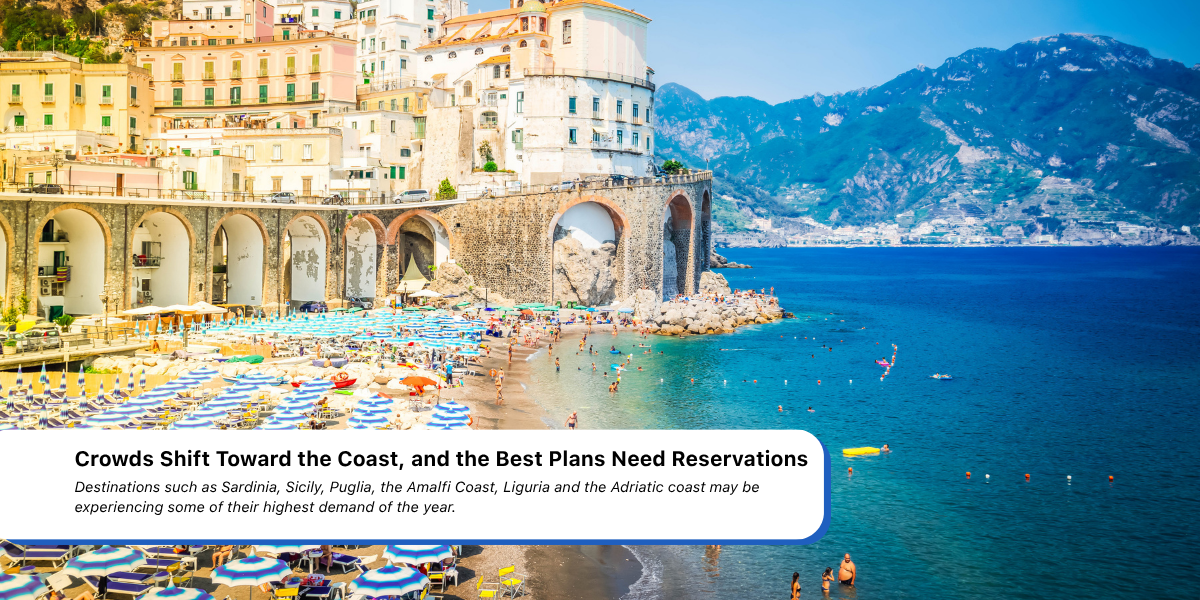
3. Kalabalıklar Sahile Kayıyor ve En İyi Planlar Rezervasyon Gerektiriyor
Ferragosto kalabalıkları yok etmez. Onların nerede yoğunlaştığını değiştirir.
Ağustos ortası civarında, yurt içi seyahat talebi güçlü bir şekilde plajlara, adalara, göllere ve dağ tatil köylerine doğru kayar. İtalya'nın resmi turizm web sitesi Ferragosto'yu deniz kenarı gezileri ve yaz kutlamaları için klasik bir dönem olarak tanımlar.
Bu, belirgin bir kontrast yaratabilir. Büyük şehirlerdeki yerleşim bölgeleri, yerel sakinlerin uzakta olması nedeniyle daha sessiz hissedebilirken, ünlü müzeler ve simge yapılar uluslararası ziyaretçilerle yoğun kalır.
Aynı zamanda, Sardinya, Sicilya, Puglia, Amalfi Sahili, Ligurya ve Adriyatik kıyısı gibi destinasyonlar yılın en yüksek taleplerinden bazılarını yaşıyor olabilir.
En önemli yolculukları ayırtın
İtalya'nın demiryolu ağı çeşitli hizmet türlerini içerir ve hepsi aynı rezervasyon stratejisini gerektirmez.
Frecciarossa ve Italo yüksek hızlı trenleri büyük şehirleri birbirine bağlar ve ayrılmış koltuklar kullanır. Popüler kalkış saatleri, seyahat tarihi yaklaştıkça daha pahalı hale gelebilir veya tükenebilir. Seyahat programınız Roma, Floransa, Venedik, Milano, Bologna veya Napoli arasındaki belirli bir bağlantıya bağlıysa önceden rezervasyon özellikle faydalıdır.
Italo, tren güzergahları ve önceden bilet fiyatları hakkında bilgi sağlar.
Bölgesel trenler genellikle daha esnektir. Güzergah ve bilet türüne bağlı olarak, kalkışa çok daha yakın bir zamanda satın alınabilirler. Trenitalia, dijital bölgesel biletleri için mevcut koşulları açıklar.
Pratik kural basittir: belirli bir trene ihtiyacınız olduğunda yüksek hızlı ve uzun mesafeli hizmetleri erken ayırtın. Güzergah rezervasyon gerektirmiyorsa bölgesel yolculukları esnek tutun.
Yüksek talep gören cazibe merkezlerini resmi kanallar aracılığıyla ayırtın
Kolezyum, Vatikan Müzeleri, Uffizi Galerisi, Pompei, Dükler Sarayı ve Leonardo da Vinci'nin Son Akşam Yemeği gibi cazibe merkezleri için önceden bilet almak düşünülmeye değerdir.
Resmi cazibe merkezi web sitesini veya yetkili bir satıcıyı kullanın. Resmi olmayan rezervasyon sayfaları, cazibe merkezinin kendi sitesine benzer görünebilirken, önemli hizmet ücretleri veya kısıtlayıcı iptal koşulları ekleyebilir.
Önceden alınan bir bilet, boş bir cazibe merkezini garanti etmez, ancak tercih ettiğiniz giriş saatinin mevcut olmaması nedeniyle tüm bir günü kaybetmenizi önleyebilir.
Kıyı gezileri farklı planlama gerektirir
Şehir gezileri için rezervasyonlar genellikle müzelere ve trenlere odaklanır. Kıyı güzergahları için ise konaklama, feribotlar ve yerel ulaşım da aynı derecede önemli hale gelir.
Ferragosto civarında oteller ve pansiyonlar hızla dolabilir. Adalara giden feribotlarda en uygun saatlerde yer sınırlı olabilirken, kiralık arabalar ve tekne turları seyahat tarihine yakın pahalı hale gelebilir.
Plaj tesisleri de farklılık gösterir. İtalya'da hem spiagge libere olarak bilinen halk plajları hem de genellikle lidi veya stabilimenti balneari olarak adlandırılan özel işletilen plaj kulüpleri bulunur.
Halk bölümleri ücretsiz erişilebilir ancak sınırlı tesisler sunar. Özel plaj kulüpleri genellikle şemsiye, şezlong, soyunma odası veya duş için ücret alır. Popüler kulüpler, özellikle gezginler ön sıra oturma veya belirli bir gün istediklerinde, yoğun haftalarda rezervasyon gerektirebilir.
Her plajın rezervasyon yapılması gerekmez, ancak belirli bir feribot, otel veya plaj kulübüne bağlı herhangi bir kıyı planı önceden onaylanmalıdır.
Seyahat programının bir kısmını esnek tutun
Yaz sonu aşırı sıcak, fırtına, ulaşım aksaklığı veya dalgalı deniz koşulları getirebilir.
Seyahatin her saatini önceden ödenmiş ve iade edilemez yapmaktan kaçının. Tükenmesi muhtemel deneyimleri ayırtın, ancak esnek yemekler, mahalle keşfi ve kapalı alternatifler için yer bırakın.
Hava rahatsız edici hale geldiğinde bir müze, kapalı pazar veya uzun bir öğle yemeği, kıyı yürüyüşünün yerini alabilir. Feribot ve tren tarifeleri, biletler önceden satın alınmış olsa bile, kalkıştan kısa bir süre önce tekrar kontrol edilmelidir.
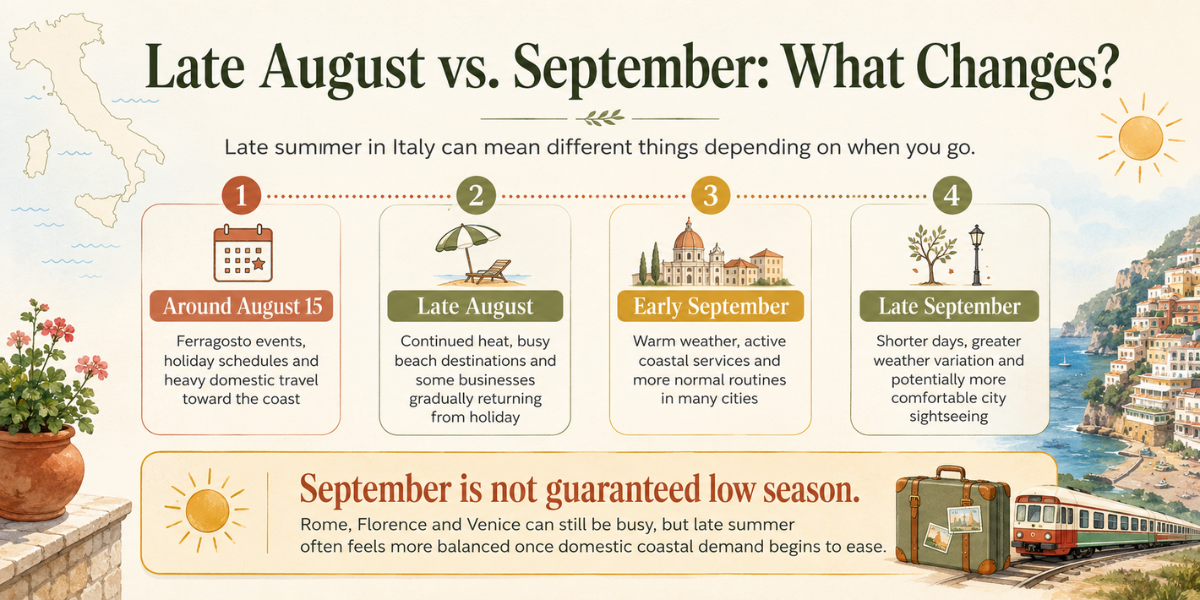
Ağustos Sonu ve Eylül: Neler Değişir?
“Yaz sonu” ifadesi, birkaç farklı seyahat dönemini ifade edebilir ve bunlar aynı deneyimi sunmaz.
Seyahat dönemi | Gezginler ne beklemeli |
|---|---|
15 Ağustos civarı | Ferragosto etkinlikleri, tatil programları ve sahile doğru yoğun yurt içi seyahat |
Ağustos sonu | Devam eden sıcaklık, yoğun plaj destinasyonları ve bazı işletmelerin tatilden kademeli olarak dönmesi |
Eylül başı | Ilık hava, aktif kıyı hizmetleri ve birçok şehirde daha normal rutinler |
Eylül sonu | Daha kısa günler, daha fazla hava değişimi ve potansiyel olarak daha rahat şehir gezileri |
Eylül, garantili bir düşük sezon olarak görülmemelidir.
Roma, Floransa, Venedik ve diğer uluslararası üne sahip destinasyonlar, ziyaretçi talebinin sadece İtalyan okul tatillerine bağlı olmaması nedeniyle yoğun kalabilir. Büyük etkinlikler, kruvaziyer programları ve elverişli hava, popüler cazibe merkezlerini kalabalık tutabilir.
Eylül ayının avantajı genellikle boş bir İtalya değildir. Özellikle kıyı tatil köylerindeki yurt içi talebin azalmaya başlamasıyla daha dengeli bir gezi olasılığıdır.
Yaz Sonunda İtalya İçin Ne Paketlenmeli
Sıcak, kapalı alanlardaki klima, dini mekanlar ve ara sıra yağmur için uygun giysi ve aksesuarlar getirin:
Hafif, nefes alabilen giysiler
Rahat yürüyüş ayakkabıları
Yüksek SPF'li güneş kremi
Güneş gözlüğü ve şapka
Doldurulabilir bir su şişesi
Kompakt bir şemsiye
Hafif bir gömlek veya eşarp
Taşınabilir şarj cihazı
Kıyı destinasyonları için mayo
Gerektiğinde suya dayanıklı sandaletler
Kıyı güzergahı için bile sadece plaj kıyafetleri paketlemekten kaçının. Kiliseler, restoranlar ve resmi mekanlar daha mütevazı bir kıyafet bekleyebilir.
Hafif bir katman, klimalı trenlerde ve kuzey veya dağlık bölgelerdeki daha serin akşamlarda da faydalı olabilir.
Açılış Saatleri ve Planlar Değiştiğinde Bağlantıda Kalın
Yaz sonunda İtalya'yı ziyaret ederken güvenilir mobil veri özellikle faydalıdır.
Bir restoranın Ferragosto için kapalı olup olmadığını kontrol etmeniz, bir sıcak hava dalgası uyarısı almanız, bir tren peronunu onaylamanız, bir müze bileti indirmeniz veya bir feribot tarifesi değiştiğinde bir otelle iletişime geçmeniz gerekebilir.
Bir Gohub İtalya eSIM, fiziksel SIM kartınızı çıkarmanızı gerektirmeden mobil veri sağlar. Kurulum detayları dijital olarak teslim edilir ve gezginlerin Wi-Fi'ye bağlıyken uyumlu, operatör kilitsiz bir telefonda eSIM'i kurmalarına olanak tanır.
Seyahat boyunca mobil veri mevcut olduğunda, halka açık Wi-Fi'ye bağımlı olmadan navigasyon, demiryolu uygulamaları, cazibe merkezi biletleri, hava durumu uyarıları, feribot tarifeleri ve çeviri araçlarına erişebilirsiniz.
Mevcut planlar veri hakkı, geçerlilik süresi ve dahil olan özelliklere göre değişir. Satın almadan önce seçilen planın koşullarını, geçerlilik süresinin ne zaman başladığı ve hotspot paylaşımının desteklenip desteklenmediği dahil olmak üzere kontrol edin.
Diğer ülkelere devam eden gezginler, sadece İtalya planını bölgesel bir Avrupa eSIM'i ile de karşılaştırabilirler. Satın alma işlemini tamamlamadan önce seyahat programındaki her destinasyonun dahil olduğundan emin olun.
Sıkça Sorulan Sorular
Yaz sonu İtalya'yı ziyaret etmek için iyi bir zaman mı?
Evet. Yaz sonu, özellikle plajlar, ılık akşamlar, mevsimlik etkinlikler ve açık havada yemek yemekle ilgilenen gezginler için uygundur. Başlıca zorluklar, devam eden sıcaklık, tatil dönemi kapanışları ve popüler destinasyonlarda devam eden taleptir.
Ağustos ayında İtalya'da her şey kapalı mı?
Hayır. Bazı bağımsız işletmeler yıllık izin alırken, popüler destinasyonlardaki oteller, restoranlar ve turizm hizmetleri tamamen faaliyette kalabilir. Açılış saatleri ayrı ayrı kontrol edilmelidir.
Ferragosto nedir?
Ferragosto, 15 Ağustos'ta kutlanan bir İtalyan resmi tatilidir. Meryem Ana'nın Göğe Yükselişi ile ilişkilidir ve ülkenin en önemli yaz tatili dönemlerinden biri haline gelmiştir.
Ağustos sonunda İtalya daha az kalabalık mı?
Bazı yerleşim şehir mahalleleri daha sessiz hale gelebilir, ancak ünlü cazibe merkezleri ve kıyı destinasyonları yoğun kalabilir. Kalabalıklar genellikle tamamen kaybolmaktan çok bölgeler arasında yer değiştirir.
Eylül ayında İtalya Ağustos'tan daha serin mi?
Sıcaklıklar genellikle Eylül ayında düşmeye başlar, ancak Eylül başı, özellikle orta ve güney İtalya'da hala yaz gibi hissedebilir. Ülke çapında bir varsayıma güvenmek yerine her destinasyon için hava tahminini kontrol edin.
İtalyan trenlerini önceden ayırtmalı mıyım?
Belirli bir kalkışa ihtiyacınız varsa veya daha düşük ücretlere erişmek istiyorsanız yüksek hızlı ve uzun mesafeli trenleri erken ayırtın. Bölgesel trenler genellikle daha esnektir, ancak koşullar güzergah ve bilet türüne göre değişir.
İtalyan plajları ücretsiz mi?
İtalya'da hem ücretsiz halk plajı bölümleri hem de özel işletilen plaj kulüpleri bulunur. Tesisler, erişim koşulları ve fiyatlar destinasyona göre değişir.
Son Düşünceler
Yaz sonunda İtalya'yı ziyaret etmek mükemmel bir deneyim olabilir, ancak bu mevsim, yaygın varsayımlara göre değil, yerel koşullara göre plan yapan gezginleri ödüllendirir.
Ferragosto, tüm ülkeyi kapatmadan açılış saatlerini değiştirir. Yaz sıcağı Ağustos ortasından çok sonrasına kadar devam edebilir. Kalabalıklar bir gecede kaybolmak yerine şehirler, plajlar ve adalar arasında yer değiştirir.
Önemli açılış saatlerini onaylayın, yüksek talep gören ulaşım ve cazibe merkezlerini ayırtın ve her günün bir kısmını esnek bırakın. En önemlisi, programınızı en sıcak saatlerde her açık hava cazibe merkezini tamamlamaya çalışmak yerine hava durumuna göre tasarlayın.
Doğru beklentilerle, yaz sonu ılık akşamlar, aktif kıyı kasabaları ve daha serin aylarda ziyaret eden gezginlerin asla göremeyeceği canlı bir İtalya tarafı sunar.
Kaynaklar
Italia.it: Saat Dilimleri ve İtalya'daki Resmi Tatiller
Italia.it: İtalya'daki Resmi Tatiller ve Festivaller
İtalyan Sağlık Bakanlığı: Sıcak Hava Dalgası Bültenleri
Turismo Roma: Müzelerde Ferragosto
Trenitalia: Çevrimiçi ve Dijital Bölgesel Biletler
Italo: İtalyan Yüksek Hızlı Tren Rezervasyonu
Gohub: İtalya Seyahat eSIM'i
İlgili Makaleler
İtalya'da Görülmesi Gereken Şehirler: İlk Kez Ziyaret Edenler İçin En İyi 12 Şehir
Tarih Severler İçin İtalya'da Ziyaret Edilecek En İyi Yerler
İtalya Seyahati İçin En İyi eSIM
Ekim Ayında Ziyaret Edilecek En İyi Destinasyonlar

Hi! Mình là Lala Wren, một content creator yêu xê dịch và đam mê chia sẻ trải nghiệm thực tế cho cộng đồng Gohub. Trong nhiều năm qua, mình đã đặt chân đến Thái Lan, Hàn Quốc, Nhật Bản, Singapore, Malaysia, Bali và nhiều điểm đến thú vị khác trên khắp châu Á. Cùng mình tìm hiểu tất tần tật từ khâu chuẩn bị eSIM, Visa, lịch trình và địa điểm nổi bật cho chuyến đi sắp tới của bạn nhé!
Tüm yazıları gör →Related articles
İspanya'da Ağustos 2026'da Yapılacak Şeyler: Festivaller, Plajlar ve Serin Kaçış Noktaları
Ağustos İspanya gezinizi planlayın: La Tomatina gibi mutlaka görülmesi gereken 2026 festivalleri, plaj kasabaları, serin kuzey kaçış noktaları, sıcakla başa çıkma ipuçları ve kalabalıkta nasıl bağlantıda kalacağınız.
Ağustos'ta Yunanistan Neden Bu Kadar Kalabalık? 5 Neden Açıklandı
Ağustos'ta Yunanistan neden bu kadar kalabalık? Yoğun sezonu neyin tetiklediğini, kalabalıkların nerede yoğunlaştığını ve daha iyi bir Yunan yaz tatili nasıl planlayacağınızı keşfedin.