

पृष्ठ लोड हो रहा है, कृपया प्रतीक्षा करें...
Few road trips in America rival the combination of Yellowstone and Grand Teton National Parks. Together, these two parks pack geysers, dramatic mountain scenery, abundant wildlife, and some of the continent's best hiking into a single unforgettable journey through Wyoming and Montana.
Whether you have a long weekend or a full week, this guide breaks down exactly how to plan your trip with flexible 3-day, 5-day, and 7-day itineraries designed for first-timers and returning visitors alike.
TLDR
3 days: 2 days in Yellowstone (Lower + Upper Loop highlights) + 1 day Grand Teton
5 days: 3 days in Yellowstone + 2 days Grand Teton (recommended for most travelers)
7 days: 4 days Yellowstone + 2 days Grand Teton + 1 flexible departure day
Best time to visit: mid-June through October; sweet spot is mid-September to mid-October
Both parks can be entered with one America the Beautiful Annual Pass ($80)
The honest answer is that more time is always better, but most travelers can experience both parks meaningfully in as few as three days. The table below gives you a quick overview before diving into each itinerary.
Trip Length | Time in Yellowstone | Time in Grand Teton | Best For |
|---|---|---|---|
3 Days | 2 days | 1 day | Long weekend travelers |
5 Days | 3 days | 2 days | Most first-time visitors |
7 Days | 4 days | 3 days | Deep explorers, photographers |
Yellowstone is significantly larger (3,500 square miles versus Grand Teton's 485 square miles), so it naturally demands more time. That said, Grand Teton rewards slow exploration, and rushing through it would mean missing some of the most beautiful alpine scenery in North America.
Which park to visit first? The answer depends on your arrival airport. If you fly into Jackson Hole Airport (JAC), start with Grand Teton and work your way north to Yellowstone. If you fly into Bozeman, Montana (BZN), enter Yellowstone from the north or west entrance and drive south toward Grand Teton as you wrap up.
Illustrated driving tour map with stops: Jenny Lake, Mormon Row, Snake River Overlook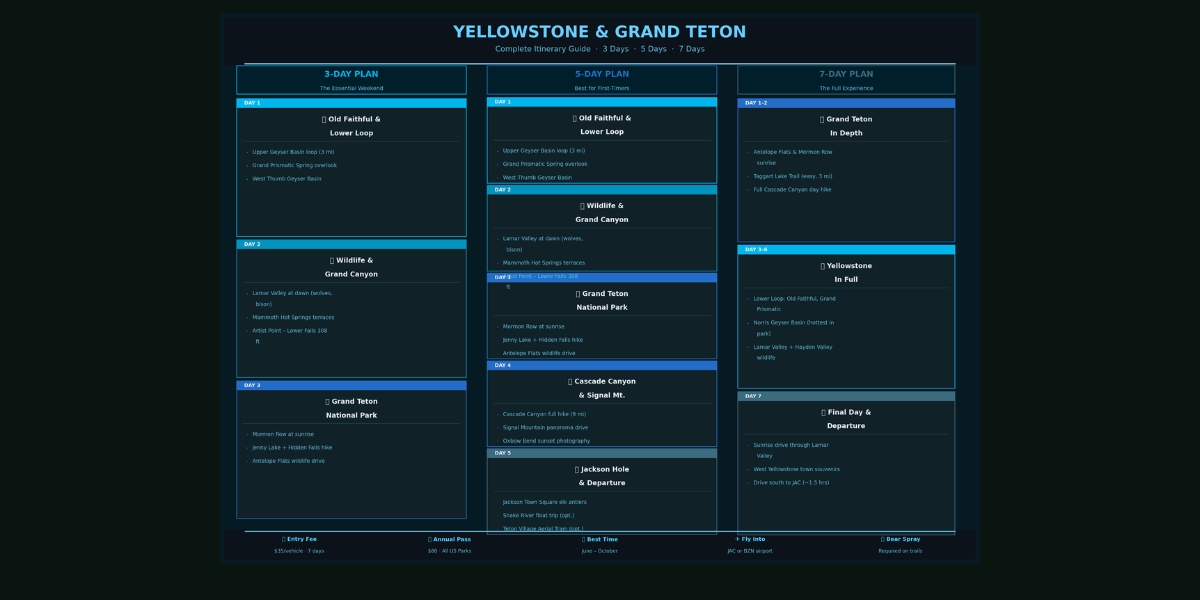
Three days is tight, but absolutely doable with early starts and a focused plan. The key is to prioritize the most iconic sights in each park rather than trying to see everything.
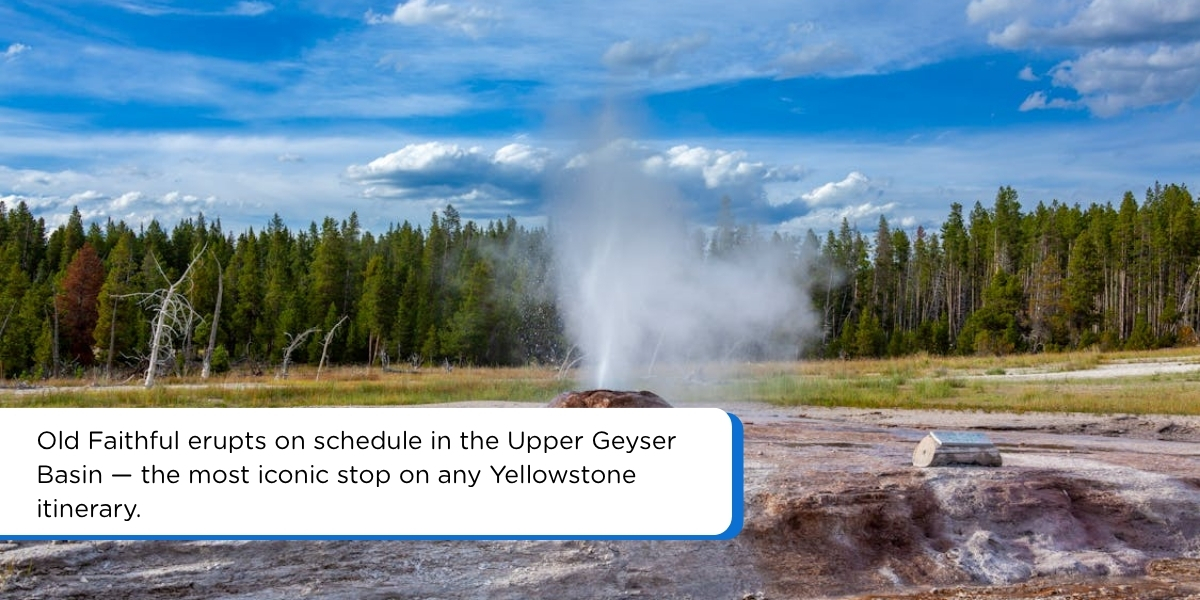
Start your first morning at Old Faithful, Yellowstone's most famous geyser. It erupts roughly every 90 minutes and shoots water up to 180 feet in the air. Arrive early (before 9am) to beat the crowds and catch the first eruption of the day.
After Old Faithful, walk the Upper Geyser Basin loop (about 3 miles), where you will find Castle Geyser, Riverside Geyser, and the ethereal Morning Glory Pool. This stretch of boardwalk is one of the most geothermally active areas on Earth and takes about 1.5 to 2 hours at a relaxed pace.
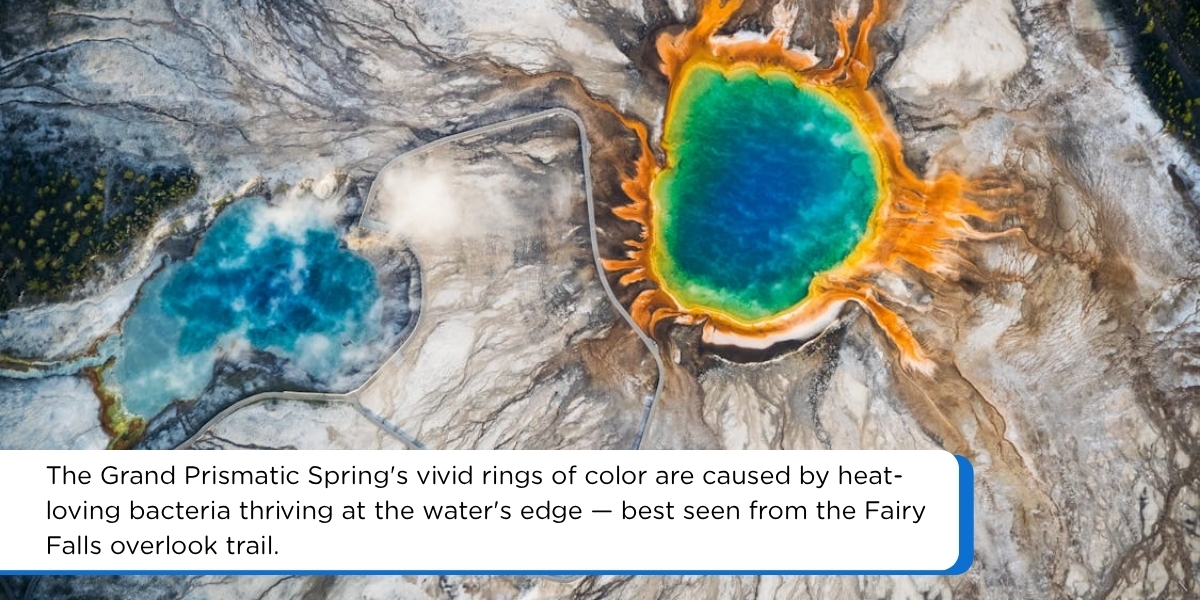
In the afternoon, drive a few minutes north to Midway Geyser Basin to see the Grand Prismatic Spring. At 370 feet wide, it is the largest hot spring in the United States and produces vivid rings of orange, yellow, and green caused by heat-loving bacteria. For the best aerial view, take the short Fairy Falls trailhead overlook (1 mile round trip).
End your day at West Thumb Geyser Basin on the shore of Yellowstone Lake, where hot springs bubble right at the water's edge. It is a surreal and peaceful way to finish the afternoon before checking into your accommodation in West Yellowstone or near Old Faithful.
Pro Tip: Book Old Faithful Inn or nearby lodges at least 6 months in advance during peak season. West Yellowstone town offers many hotel options as an alternative base.
This is your wildlife and canyon day, so an extremely early start (6am or before) is highly recommended.
Drive to Lamar Valley in the northeast corner of the park, widely called "America's Serengeti." Bison herds are virtually guaranteed year-round, and this valley offers the best chance in the continental US to spot wolves, grizzly bears, and pronghorn antelope in the wild. Bring binoculars and position yourself along the pullouts before 8am for the best sightings.
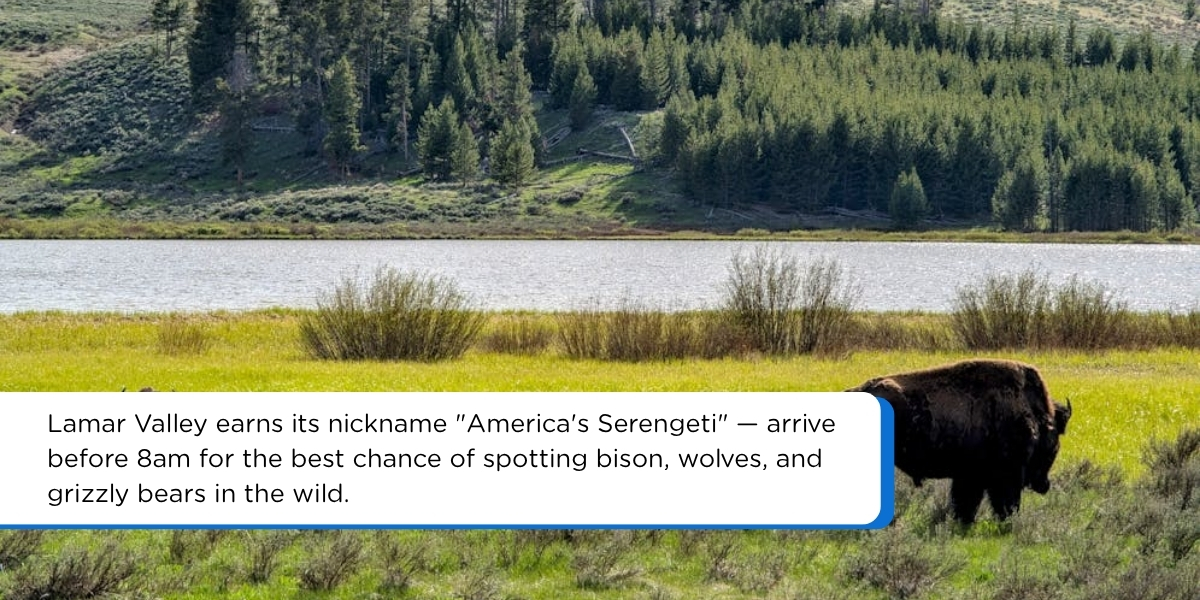
After Lamar Valley, continue west along the Grand Loop Road toward Tower Junction, then south to the Grand Canyon of the Yellowstone for the afternoon. Head to Artist Point on the South Rim... On your way back north, stop at Mammoth Hot Springs in the late afternoon when the terraces are bathed in golden hour light.
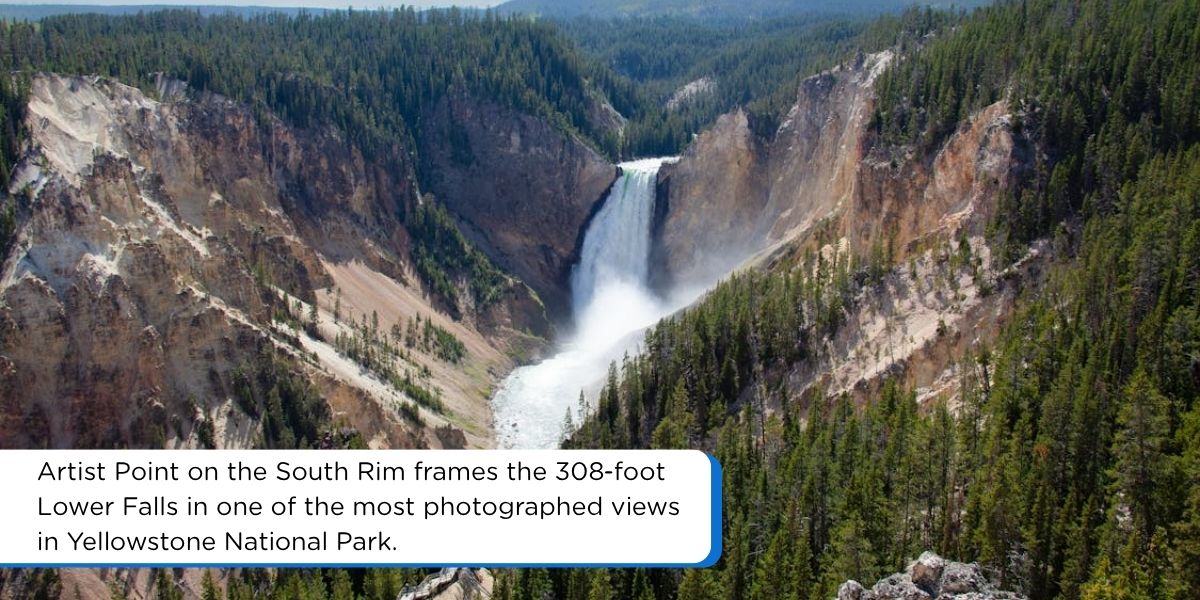
In the afternoon, make your way to the Grand Canyon of the Yellowstone. Head to Artist Point on the South Rim for the classic view of the 308-foot Lower Falls, the most photographed spot in the park. Then cross to the North Rim and walk to the Brink of the Lower Falls trail for a dizzying close-up view of the waterfall. Lookout Point and Inspiration Point are also worth stopping at along the North Rim Drive.
Pro Tip: "Bison jams" are real. If a bison herd crosses the road, simply put your car in park and wait patiently. Never honk or approach the animals.
On your final morning, drive south from Yellowstone on US-89 through the John D. Rockefeller Jr. Memorial Parkway (approximately 1 hour to the main Grand Teton visitor areas).
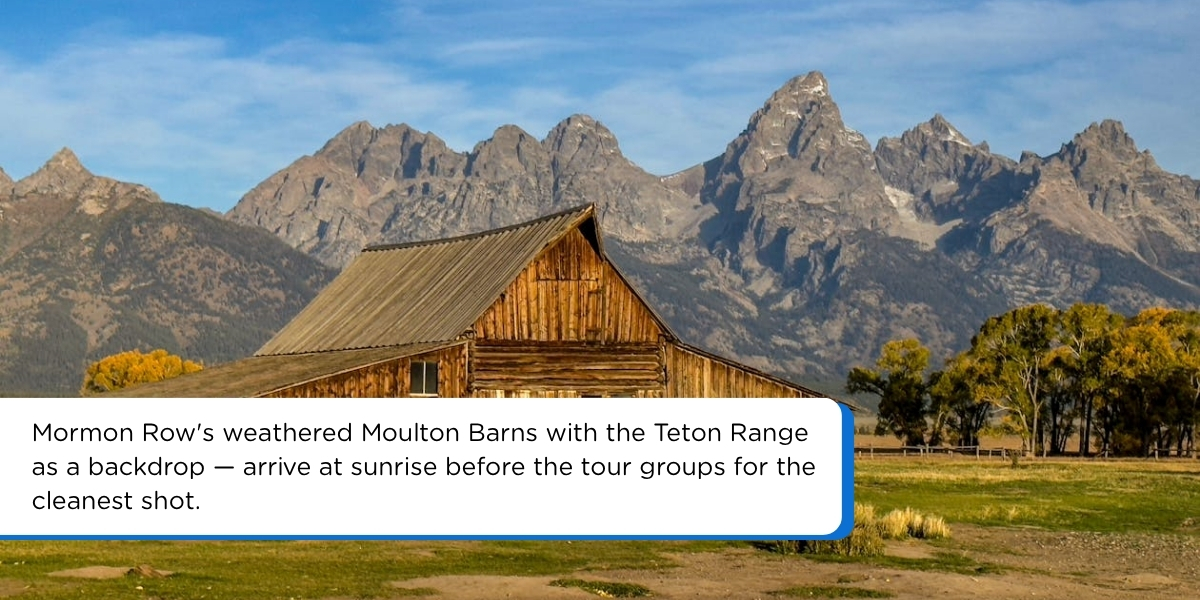
Your first stop should be Mormon Row, a historic homestead area where weathered barns sit directly in front of the jagged Teton Range. It is one of the most photographed locations in any national park and is especially beautiful at sunrise.
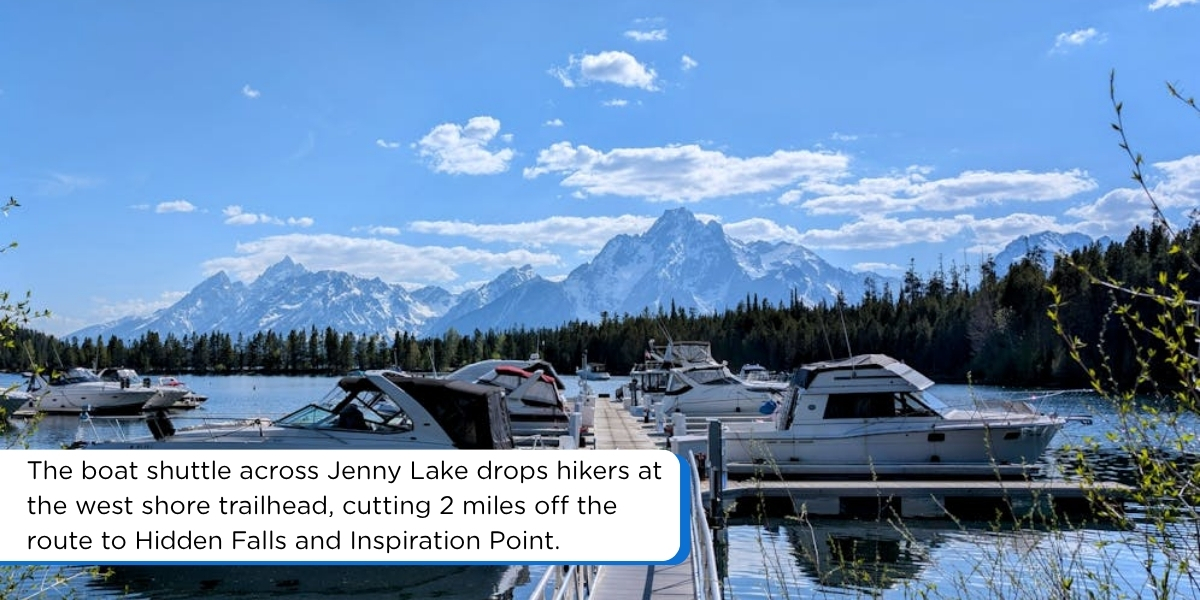
After Mormon Row, head to Jenny Lake, the crown jewel of Grand Teton. Take the ferry boat shuttle across the lake ($20 round trip, operating mid-May through late September) to cut 2 miles off the hike. From the west shore, it is a short walk to Hidden Falls, a gorgeous 200-foot cascade, and another 0.5 miles up to Inspiration Point for sweeping views of the valley below. Budget about 3 hours for this excursion.
Wrap up your afternoon with a drive through Antelope Flats for one more chance at wildlife spotting before heading into Jackson town for dinner and your overnight stay before departure.
Five days is the most popular trip length for a reason. It gives you enough time to cover the essential highlights of both parks without feeling rushed. Follow the same Days 1 through 3 as above, then continue with the following additions.
With a full day dedicated to Grand Teton, you can go deeper than the 3-day plan allows. Start with the Cascade Canyon Trail from the Jenny Lake west shore. This is widely considered one of the most spectacular hikes in the entire national park system. The trail follows a crystal-clear stream deep into a glacially carved canyon beneath the towering Teton peaks. The round trip to the canyon fork is about 9 miles, but even hiking 2 to 3 miles in before turning back is worthwhile.
In the afternoon, drive up Signal Mountain Road (a 5-mile paved road off Teton Park Road) for a panoramic view of the entire Jackson Hole valley and the Teton Range. It is one of the easiest high-elevation viewpoints in the park to access by car.
As the sun begins to set, position yourself at Oxbow Bend near the Jackson Lake Dam. This is a legendary photography spot where the still water mirrors the mountains and the surrounding cottonwood trees. Wildlife sightings of moose, bald eagles, and great blue herons are common here.
Your fifth day is intentionally flexible. Start with a leisurely morning in Jackson town. The charming downtown square, bordered by four antler arches, has excellent cafes, outdoor gear shops, and restaurants. It also makes for a great last-morning coffee stop before heading to the airport.
Depending on your departure time and energy level, consider one of these optional add-ons:
Snake River Float Trip: A gentle 2-hour float through the park with great wildlife viewing along the riverbanks
National Elk Refuge: Best visited October through March when thousands of elk winter here
Teton Village & Aerial Tram: A gondola ride up Rendezvous Mountain for jaw-dropping views (open in summer)
Schwabachers Landing: An early-morning mirror reflection photography spot just minutes off the main highway
Seven days lets you slow down, breathe deeply, and discover parts of both parks that the majority of visitors never see. The recommended approach for a 7-day trip is to start with Grand Teton and work northward to Yellowstone.
Day 1 Morning: Begin at Antelope Flats at sunrise for bison and pronghorn spotting. Then visit Mormon Row before the tour buses arrive. By mid-morning, head to Taggart Lake Trail, an easy 3-mile round trip hike with beautiful mountain reflections in the lake. It is less crowded than Jenny Lake and ideal for a calm first morning.
Day 1 Afternoon: Drive the Teton Park Road north, stopping at Cathedral Group Turnout for one of the best views of the three central Teton peaks: Mount Owen, Teewinot Mountain, and the Grand Teton itself. Check into your lodging at Signal Mountain Lodge or in Jackson.
Day 2: Dedicate the full day to the Jenny Lake area. Take the boat shuttle across and hike the full Cascade Canyon Trail as far as your fitness allows. For stronger hikers, continuing to Lake Solitude (18 miles round trip) is one of the most rewarding full-day hikes in the American West. In the evening, return to Oxbow Bend for sunset.
Day 3: Travel north to Yellowstone. Spend the afternoon on the Lower Loop: Old Faithful, Upper Geyser Basin, Grand Prismatic Spring, and West Thumb. Check into lodging inside the park.
Day 4: Focus on the Upper Loop. Start at Mammoth Hot Springs, then drive to the Norris Geyser Basin, Yellowstone's hottest and most dynamic geothermal area. Norris contains the world's tallest geyser, Steamboat, which can erupt over 300 feet high (though eruption timing is unpredictable). Continue to Gibbon Falls (84 feet) and the Artists Paintpots, a bubbling mud pot field that is far less visited than Grand Prismatic.
Day 5: Dedicate the morning to Lamar Valley wildlife watching. Leave your lodging by 5:30am if possible. After wildlife watching, drive to the Grand Canyon of the Yellowstone for the afternoon. With more time than in the 3-day plan, you can hike down to the Brink of the Upper Falls and the Uncle Tom's Trail (over 300 steep steps down to the canyon floor) for close-up waterfall views.
Day 6: This is your off-the-beaten-path day. Visit Hayden Valley in the morning for bison herds and grizzly bear sightings along the Yellowstone River. In the afternoon, explore the less-visited Shoshone Lake area via the DeLacy Creek trailhead (6 miles round trip to the largest backcountry lake in the lower 48 states). End the evening back at West Thumb to watch the sunset over Yellowstone Lake.
Spend your last morning at a pace that suits you. A sunrise drive through Lamar Valley one more time is never a bad idea. Alternatively, grab coffee in West Yellowstone town, pick up souvenirs, and make the scenic drive south to Jackson Hole Airport for your departure flight. The drive from the park's south entrance to JAC is approximately 1.5 hours.
The parks are technically open year-round, but the vast majority of roads and facilities are only accessible from mid-June through October.
June to August: Peak season with full road access, all facilities open, and the most amenities. Expect significant crowds at popular spots, especially Old Faithful and Jenny Lake.
Mid-September to mid-October: The best sweet spot for most travelers. Crowds thin out dramatically, aspen and cottonwood trees turn golden in Grand Teton, and wildlife becomes more active ahead of winter.
November to May: Most interior roads are closed to vehicles (some open to snowmobiles and skis). Only the North Entrance road at Mammoth remains open year-round.
Pass | Cost | Valid For |
|---|---|---|
Yellowstone vehicle pass | $35 | 7 days |
Grand Teton vehicle pass | $35 | 7 days |
America the Beautiful Annual Pass | $80 | All US national parks, 1 year |
If you are visiting both parks (and potentially others on the same trip), the America the Beautiful Annual Pass pays for itself immediately and is the smartest purchase you can make before leaving home.
Inside Yellowstone:
Old Faithful Inn — the iconic, rustic hotel steps from the geyser. Book 6 to 12 months in advance.
Lake Yellowstone Hotel — elegant option on the lake's shore with great morning views.
Canyon Lodge — convenient central location for accessing both loops.
Near Yellowstone:
West Yellowstone, MT — the most popular gateway town with a wide range of budget to mid-range hotels and easy access to the West Entrance.
Gardiner, MT — small town at the North Entrance, open year-round.
Grand Teton & Jackson Hole:
Signal Mountain Lodge — the only full-service lodge inside the park with direct views of the Tetons.
Jackson, WY — the largest nearby town with the most dining, nightlife, and hotel options at every price point.
Teton Village — ski resort base area about 15 miles from Jackson with upscale accommodations.
Both parks require a personal vehicle since there is no public transportation inside park boundaries. Car rentals are available at both Bozeman (BZN) and Jackson Hole (JAC) airports. Renting an SUV or crossover is recommended for navigating unpaved pullouts and potential early-season road conditions.
Plan to depart your accommodation by 7am at the latest for popular trailheads and geyser basins. Parking lots at places like Jenny Lake, Old Faithful, and the Grand Prismatic Spring overlook fill completely by 9am in peak season.
Cell service is extremely limited or nonexistent throughout most of both parks. Before your trip, download offline maps on Google Maps or Maps.me, save your itinerary to your phone, and download the NPS App (free) which includes offline trail maps for both parks. A reliable eSIM with a US data plan ensures you stay connected whenever you do have signal, which is especially useful in gateway towns for restaurant reservations, weather updates, and navigation.
Layered clothing (summer mornings at elevation can be well below 50°F even in July)
Bear spray (mandatory for any backcountry hiking; available for rent/purchase in both parks)
Binoculars (essential for Lamar Valley wildlife watching)
Sturdy hiking boots with ankle support
Reusable water bottle (stay hydrated at altitude)
Portable charger and power bank (limited charging opportunities in the backcountry)
Physical or downloaded paper maps as a backup
Is 3 days enough for Yellowstone and Grand Teton?
Yes, three days is possible with early starts and a focused plan. Prioritize Old Faithful, Grand Prismatic Spring, Lamar Valley, the Grand Canyon of the Yellowstone, and Jenny Lake in Grand Teton. You will not see everything, but you will see the best of both parks.
Should I visit Yellowstone or Grand Teton first?
If you are flying into Jackson Hole Airport (JAC), begin with Grand Teton and travel north to Yellowstone for a logical geographic flow. If you are flying into Bozeman, Montana (BZN), start with Yellowstone's North Entrance and work south toward Grand Teton at the end of your trip.
How far is Grand Teton from Yellowstone?
Grand Teton's north boundary sits approximately 57 miles south of Yellowstone's south entrance. The drive along US-89 through the John D. Rockefeller Jr. Memorial Parkway takes about 1 hour under normal conditions.
Do I need a reservation to enter the parks?
As of 2026, no timed entry reservation is required for either park (this has varied in recent years, so check NPS.gov before your trip). However, lodging inside both parks requires reservations made many months in advance, particularly for June, July, and August stays.
Is it safe to hike alone in Yellowstone and Grand Teton?
Both parks are safe for solo hikers on established trails, provided you carry bear spray, make noise while hiking, stay on marked paths, and tell someone your plans. Grizzly bears and black bears are present in both parks, so bear spray is not optional on longer trails.
What is the best single hike in each park?
In Yellowstone, the Fairy Falls Trail (5.4 miles round trip) combines a stunning waterfall with the best aerial view of Grand Prismatic Spring. In Grand Teton, the Cascade Canyon Trail from Jenny Lake's west shore is consistently rated among the top day hikes in the entire US national park system.
One eSIM, data in 200+ destinations. Activates in minutes.
Code applies to your first order.