

Loading page, please wait...
Shibuya is Tokyo at full volume. Neon signs, a crossing so busy it stops traffic in every direction at once, rooftop observatories, ancient shrines tucked behind skyscrapers, and narrow alleys packed with some of the best food in Japan. Whether you have one afternoon or a full weekend, this neighborhood delivers more per block than almost anywhere else on Earth.
This guide covers the 15 best things to do in Tokyo Shibuya, organized from iconic landmarks to hidden local gems, plus practical tips to make your visit seamless from start to finish.
Travel tip: Shibuya runs on mobile data. You will need Google Maps to navigate its maze of exits, Google Translate to read menus, and real-time search to book tickets. Grab a GoHub eSIM for Japan before your flight so you are connected the moment you land at Narita or Haneda.
Quick Summary: The top things to do in Tokyo Shibuya include crossing the iconic Scramble Crossing, visiting the Shibuya Sky Observatory, exploring Meiji Jingu Shrine, shopping on Takeshita Street, and discovering hidden izakayas in Nonbei Yokocho. Allow one full day minimum.
No visit to Shibuya is complete without standing in the middle of the Scramble Crossing. When the lights turn red, traffic stops from all directions simultaneously, and up to 2,500 pedestrians flood the intersection at once.
During evening rush hour (5 PM to 8 PM on weekdays), it is one of the most visually overwhelming scenes in any city on the planet.
For the best experience, cross it at street level first, then head upstairs for an aerial view. The Starbucks on the second floor of the Shibuya Tsutaya building offers a front-row seat. The L'Occitane Cafe and Shibuya Hikarie also provide excellent overhead angles for photos.
Best time to visit: 5 PM to 8 PM for the full crowd experience. Early mornings (before 8 AM) if you want quieter photos.
Just outside Shibuya Station's Hachiko Exit stands the bronze statue of Hachiko, the Akita dog who waited loyally for his owner at this spot for nine years. It is one of the most recognized meeting points in all of Tokyo, and locals still use it as a landmark daily.
Visit early in the morning before tourists arrive if you want a clear shot. In the evenings, the surrounding plaza fills with people and becomes a lively gathering spot.
The bronze statue of Hachiko stands at Shibuya Station's Hachiko Exit — a beloved Tokyo landmark and the city's most famous meeting spot.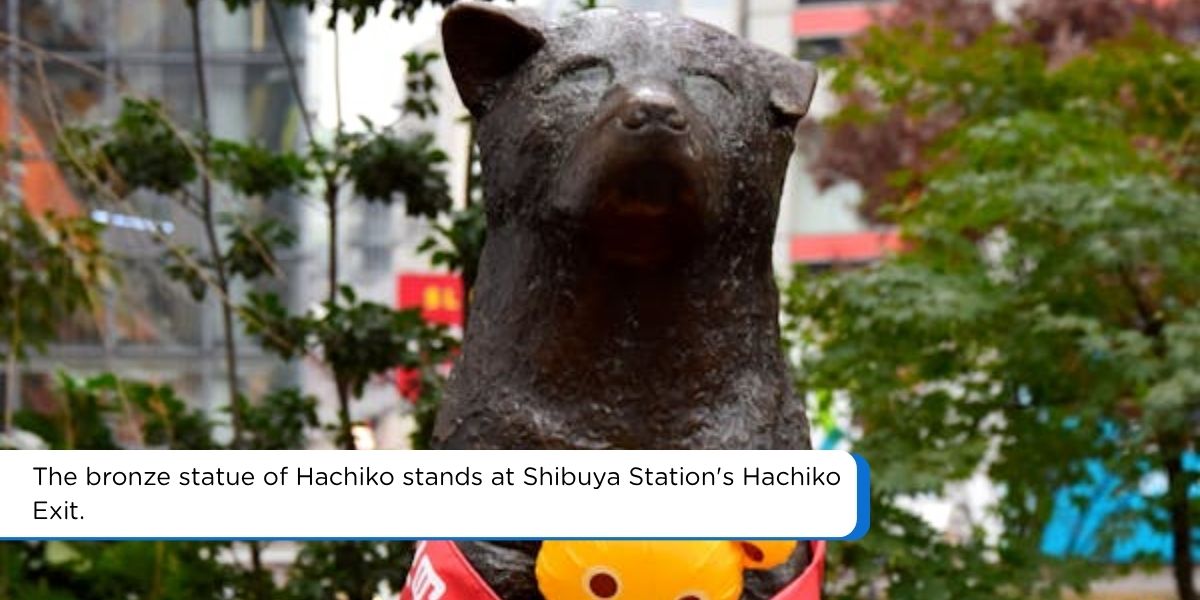
Sitting 230 meters above street level on top of Shibuya Scramble Square, Shibuya Sky is Tokyo's highest open-air observation deck. On clear days, you can see Mount Fuji to the west and Tokyo Bay to the east. At night, the city stretches out in every direction as a grid of light.
Shibuya Sky sits 229 meters above street level on the 47th floor of Shibuya Scramble Square, offering a 360-degree panoramic view of Tokyo.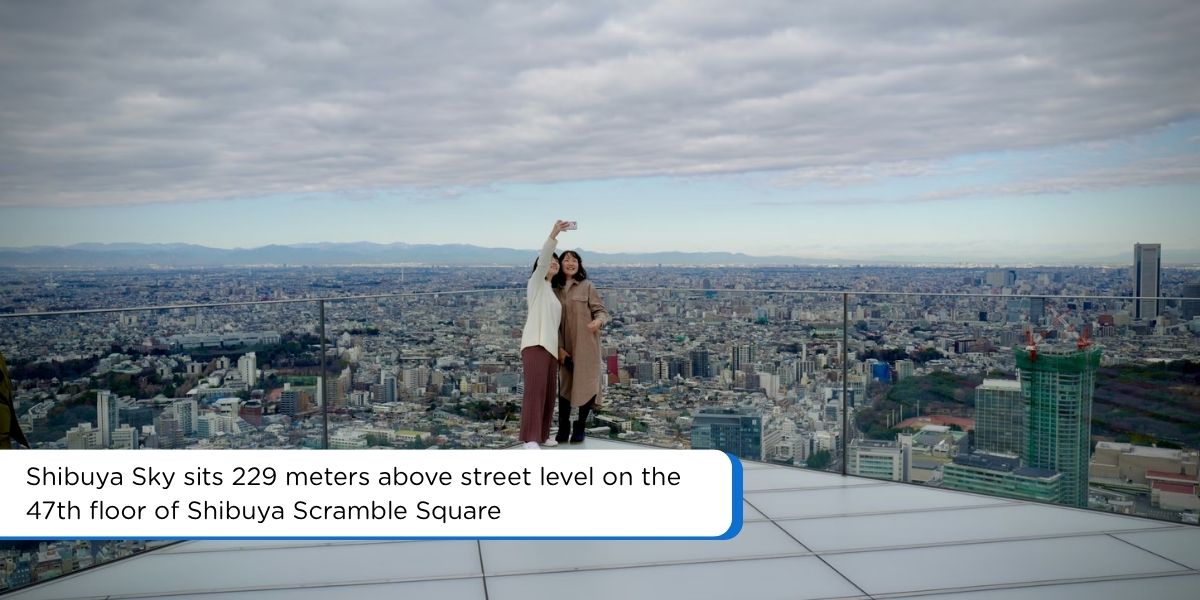
The deck features a "Crossing Light" display in the evenings that mirrors the movement of the Scramble Crossing below. Book tickets online in advance as same-day slots often sell out, especially on weekends.
Opening hours: 10:00 AM to 10:30 PM (last entry 9:20 PM / 21:20). Check the official site for seasonal changes.
Tickets: From ¥2,700 online (before 3 PM) or ¥3,400 online (after 3 PM). Same-day tickets at the counter are slightly more expensive. Children under 5 enter free.
A 10-minute walk from Shibuya (or one stop on the Yamanote Line to Harajuku Station) brings you to one of Japan's most important Shinto shrines. Meiji Jingu is dedicated to Emperor Meiji and Empress Shoken and sits within a 70-hectare forested park that feels completely disconnected from the city surrounding it.
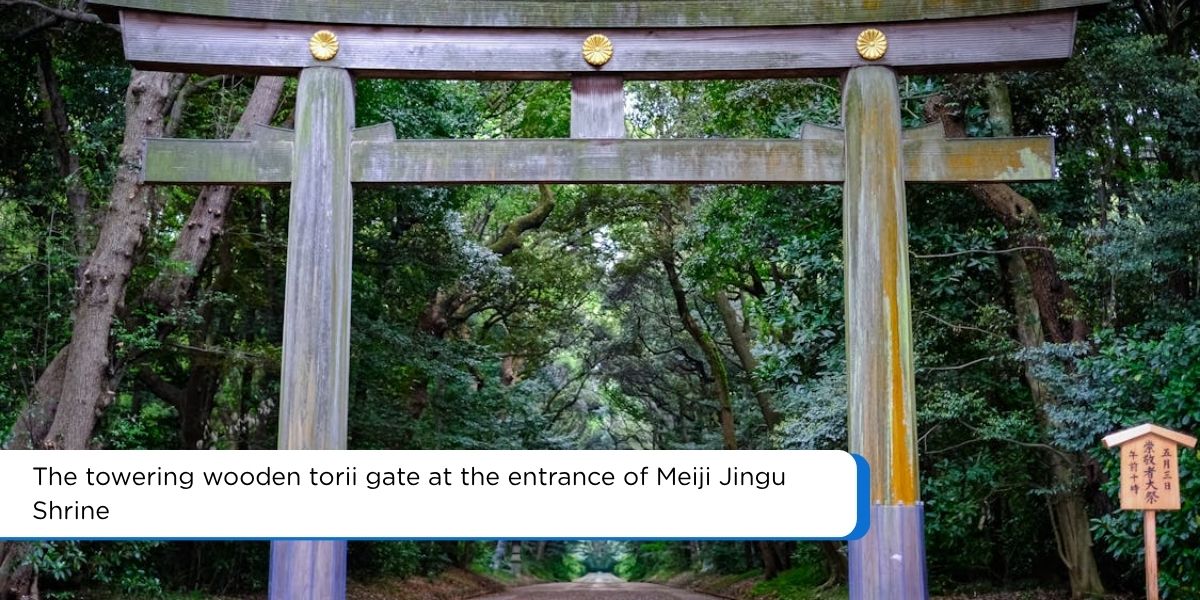
The forested path leading to the main shrine is lined with towering camphor trees. Near the entrance, rows of sake barrels donated by breweries from across Japan and Burgundy wine barrels from France make for a striking visual. Entry to the main shrine is free.
Best time: Early morning on weekdays for a calm, meditative atmosphere. Weekends bring larger crowds, especially for ceremonies.
Adjacent to Meiji Jingu, Yoyogi Park is one of Tokyo's largest public green spaces and a window into how locals actually spend their free time. On weekends, you will find musicians playing on the lawns, dance groups practicing choreography, families picnicking, and friends throwing frisbees.
During cherry blossom season (late March to early April), the park becomes one of the city's top hanami (flower viewing) spots. There is no admission fee, and the park is open year-round.
Located in the upscale Minami-Aoyama neighborhood, just east of Shibuya, the Nezu Museum houses a private collection of Japanese and Asian art spanning ceramics, lacquerware, bronze vessels, calligraphy, and painted screens. The real surprise is the garden behind the museum, a traditional Japanese landscape with stone lanterns, ponds, and walking paths through bamboo groves.
Visit in May when the iris garden reaches full bloom. Admission is around 1,300 yen for adults.
One stop north of Shibuya on the Yamanote Line, Takeshita Street is Japan's most famous fashion street and a pilgrimage site for anyone interested in Harajuku street culture. The narrow pedestrian lane is packed with crepe stalls, vintage boutiques, cosplay shops, and streetwear brands you will not find anywhere else.
Takeshita Street in Harajuku is Japan's most famous fashion lane, lined with crepe stalls, cosplay boutiques, and streetwear brands unlike anywhere else in the world.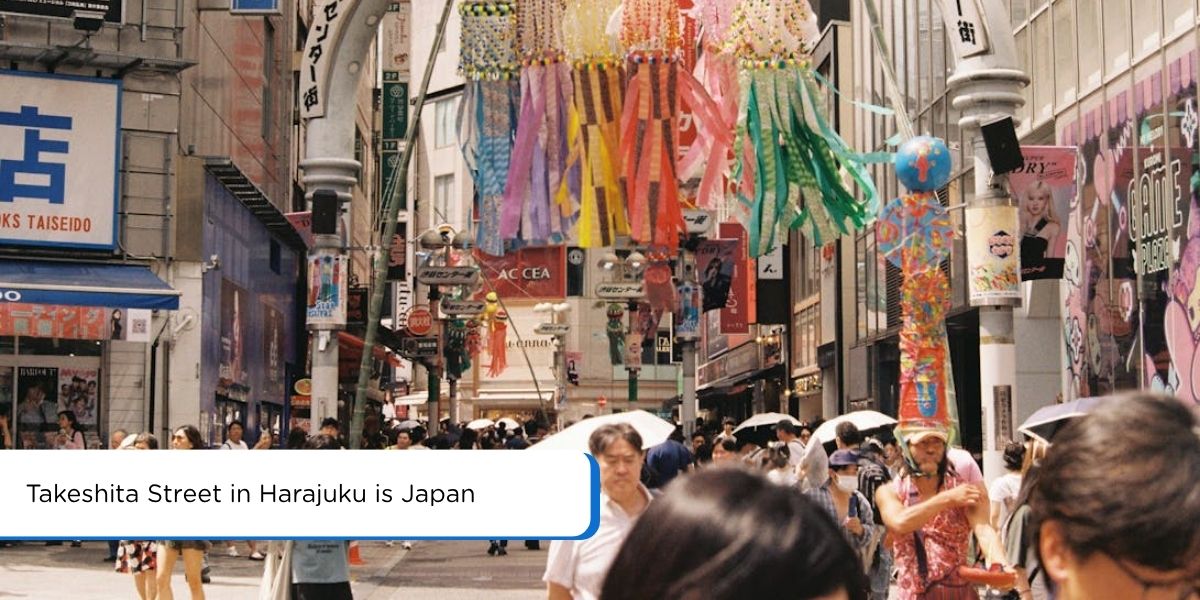
Rainbow crepes, cotton candy in oversized shapes, and taiyaki ice cream are the snacks of choice here. Visit on a weekday morning if you want to browse without fighting through shoulder-to-shoulder weekend crowds.
The cylindrical tower at the center of Shibuya has been the epicenter of Japanese youth fashion since it opened in 1979. Its eight floors of boutiques represent a rotating cast of local brands that define what trendy means in Tokyo at any given moment. Even if you are not buying, it is worth a walk-through just to observe.
Open time: Open daily 10 AM–9 PM
Running parallel to the main shopping streets, Center-Gai is a covered pedestrian alley filled with music, giant screens, fast food chains, takoyaki stalls, and small boutiques. It is the commercial heart of Shibuya's youth culture and is lively from midday until late at night.
Rebuilt and reopened in 2020 as part of the Rayard Miyashita Park complex, this rooftop park combines green outdoor space with boutique shopping and dining. The upper level has a skateboard area, bouldering wall, and a sand volleyball court. The lower floors include a mix of local and international brands.
It is a good stop if you want to rest mid-afternoon before the evening crowds build up.
Miyashita Park, reopened in 2020 as part of the Rayard Miyashita Park complex, combines a rooftop green space with boutique retail and dining in the heart of Shibuya.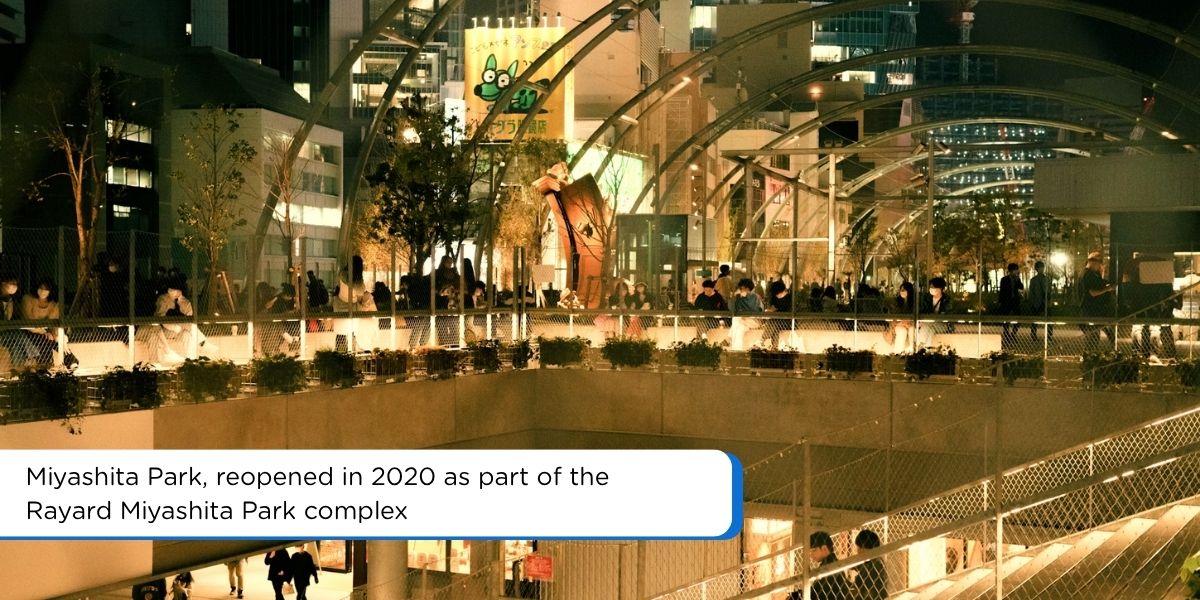
For souvenirs, cosmetics, snacks, and unique Japanese goods at competitive prices, Don Quijote is an essential stop. The Shibuya branch is open 24 hours and stocks everything from Japanese skincare products to themed snacks to kitchen gadgets. Tax-free shopping is available for foreign visitors with a passport.
Tucked behind the main shopping streets near Shibuya Station, Nonbei Yokocho is a narrow lantern-lit alley of tiny bars, most seating fewer than 10 people. The atmosphere is warm and distinctly un-touristy. Many bars specialize in Japanese whisky, shochu, or craft beer, and bartenders here tend to speak enough English to point you toward a good pour.
This is the kind of place where you can strike up a genuine conversation with local regulars. It comes alive after 7 PM.
Nonbei Yokocho, known as Whiskey Alley, is a narrow lantern-lit street of tiny bars near Shibuya Station where locals unwind after dark.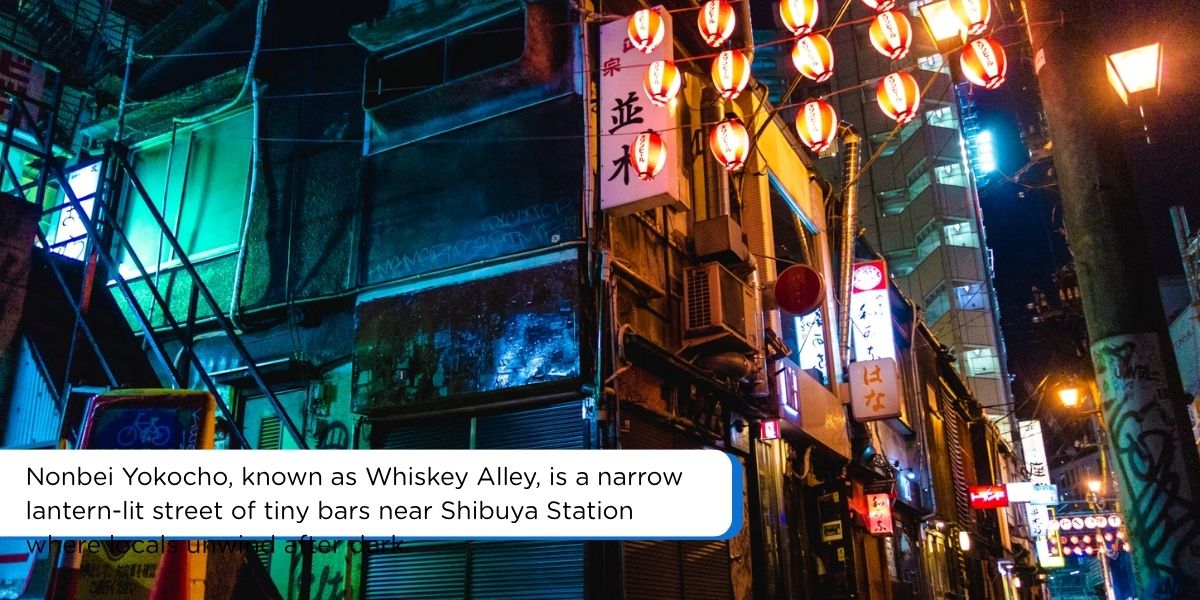
At the intersection near Center-Gai, a large-format 3D LED billboard displays a giant Akita Inu dog that appears to leap off the screen. There is also a giant 3D panda installation nearby. These digital art pieces have become photography landmarks in their own right and are especially striking after dark when the contrast is sharpest.
Opened in late 2023, Shibuya Sakura Stage is the newest addition to Shibuya's evolving skyline. The complex connects directly to Shibuya Station and offers a mix of offices, residences, retail, and dining across multiple towers. It is worth exploring if you want to see the newest face of the neighborhood.
Shibuya has more than 4,000 restaurants and bars, covering every price point and cuisine. Here is how the food day breaks down:
Daytime:
Grab a fresh fruit crepe on Takeshita Street
Try a katsu sando (pork cutlet sandwich) from one of the convenience stores for a quick local lunch
Visit one of the basement food halls (depachika) in Shibuya Hikarie or Tokyu Food Show for premium Japanese snacks and prepared foods
Evening:
Shibuya Yokocho is a retro-style food alley near Shibuya Station with dozens of stalls serving yakitori, ramen, gyoza, and skewers in an open-air setting
For a full izakaya experience, the alleys around Dogenzaka have dozens of options from casual to mid-range
Late Night:
Shibuya stays open later than most Tokyo neighborhoods. Ramen shops, convenience stores, and many bars operate until 2 AM or later
Sushi Gonpachi in Shibuya serves quality sushi until the early hours
Getting there: Shibuya Station is served by the JR Yamanote Line, Tokyo Metro Ginza Line, Hanzomon Line, Fukutoshin Line, and the Tokyu Lines. It is one of Tokyo's busiest transfer hubs. The station has multiple exits so check which exit matches your destination before you leave the platform.
Suica/IC card: Pick up a Suica or Pasmo card at any JR station upon arrival. It works on every train, subway, and bus in Tokyo, and doubles as a contactless payment card at convenience stores, vending machines, and many Shibuya restaurants.
How much time do you need: A single full day covers the major landmarks comfortably. Budget two days if you want to explore Harajuku, Aoyama, and Shibuya in depth without rushing.
Safety: Shibuya is extremely safe, including late at night. The main thing to be aware of is touts near club entrances in the Dogenzaka area who may approach foreign visitors. A polite "no thank you" is enough.
Cash vs card: Most restaurants and shops in Shibuya accept credit cards, but smaller bars and street food stalls are often cash only. Keep some yen on hand.
Language: Google Translate's camera mode is invaluable for reading menus. Make sure you have data before you arrive.
Navigating Shibuya without mobile data is genuinely difficult. The station alone has over 30 exits. Restaurants frequently require QR code menus. Booking Shibuya Sky tickets, finding the entrance to Nonbei Yokocho, or translating a ramen menu on the spot all require a live internet connection.
A GoHub eSIM for Japan activates instantly on your phone before departure, connects automatically when you land, and covers all major carriers including NTT Docomo, au (KDDI), and SoftBank. Plans start from $5.99 with no physical SIM swap required.
Get your Japan eSIM from GoHub and explore Shibuya without limits.
What is the best time to visit Shibuya Crossing?
The crossing is most dramatic between 5 PM and 8 PM on weekdays. If you want fewer people in your photos, go before 8 AM.
Is Shibuya safe at night?
Yes. Shibuya is one of the safest urban neighborhoods in the world, even late at night. Use standard common sense as you would in any busy city.
How many days do you need in Shibuya?
One full day covers the highlights. Two days lets you explore at a more relaxed pace and include side trips to Harajuku and Aoyama.
Do I need to book Shibuya Sky tickets in advance?
Yes. Online booking is strongly recommended, especially on weekends and public holidays. Same-day tickets are often unavailable.
What is the best way to get internet access in Tokyo?
A travel eSIM is the most convenient option. GoHub eSIM for Japan activates digitally before your trip and connects immediately upon arrival, with no queuing at the airport for a SIM card.
Planning a trip to Japan? Read next: Best eSIM for Japan Travel | Tokyo Itinerary 7 Days | What to Pack for Japan
Information verified April 2026.
One eSIM, data in 200+ destinations. Activates in minutes.
Code applies to your first order.