

San Pedro de Atacama Travel Guide: How to Visit the World’s Driest Desert


If you want to feel like you have landed on another planet without leaving Earth, San Pedro de Atacama is where you go. This tiny adobe town on the edge of Chile’s Atacama Desert is the launchpad for Mars‑like rock valleys, flamingo‑filled salt flats, sunrise geysers at 4,300 meters, and some of the clearest night skies on the planet. It also sits at around 2,400 meters above sea level, so the altitude hits you before you even unpack your bag.
TL;DR
Located in northern Chile, about 100 km from Calama Airport (CJC), at ~2,400 m elevation
Best known for Valle de la Luna, El Tatio Geysers, Atacama Salt Flat, altiplanic lagoons and stargazing
Best time to visit: March–May and September–November; December–February is busy and hot, June–August has very cold nights
Getting there: Fly Santiago → Calama then shuttle, or take a long‑distance bus if you have time
Budget: Expect around $80–150 per day for tours, food and transport, not counting accommodation
What Makes San Pedro de Atacama Special
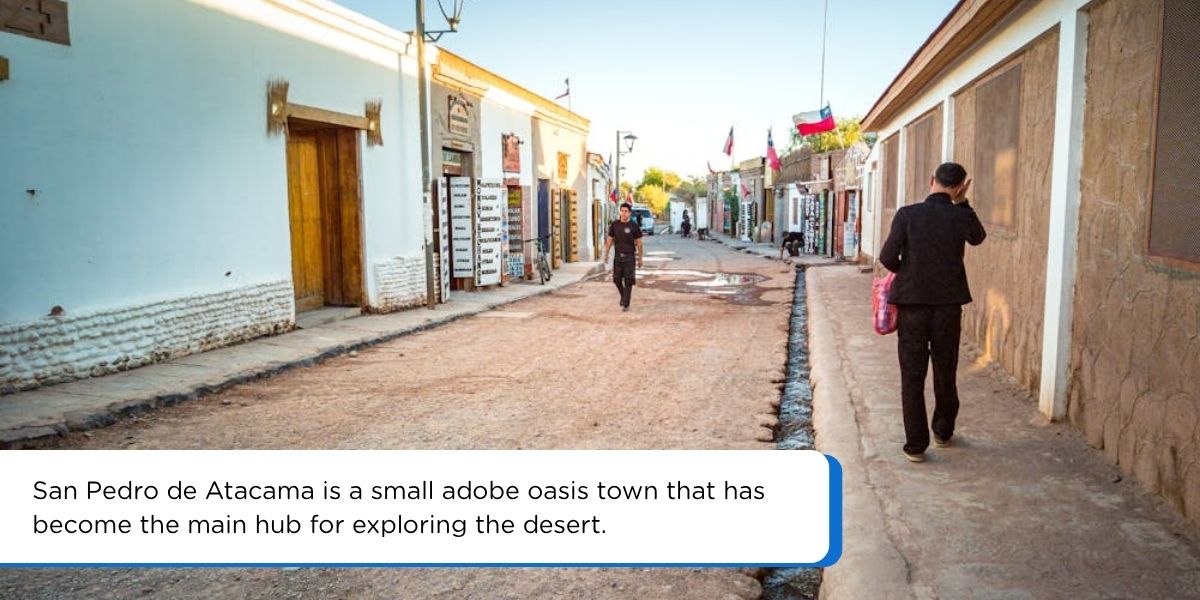
San Pedro itself is tiny, a cluster of dusty streets and adobe buildings that has been an oasis settlement since pre‑Hispanic trading times. Today, nearly every doorway on its main street, Calle Caracoles, is a hostel, café or tour agency, and almost every trip into the desert starts from here.
Outside town, the Atacama Desert stretches for more than 1,200 kilometers. It is a surreal landscape of volcanoes, salt flats, cacti, geysers and ghost towns. Some weather stations in the region have never recorded rainfall, which makes Atacama the driest non‑polar desert on Earth. That extreme dryness, combined with high altitude and almost no light pollution, is why Atacama hosts many of the world’s most advanced observatories and has become a global capital for stargazing.
Altitude: What You Need to Know
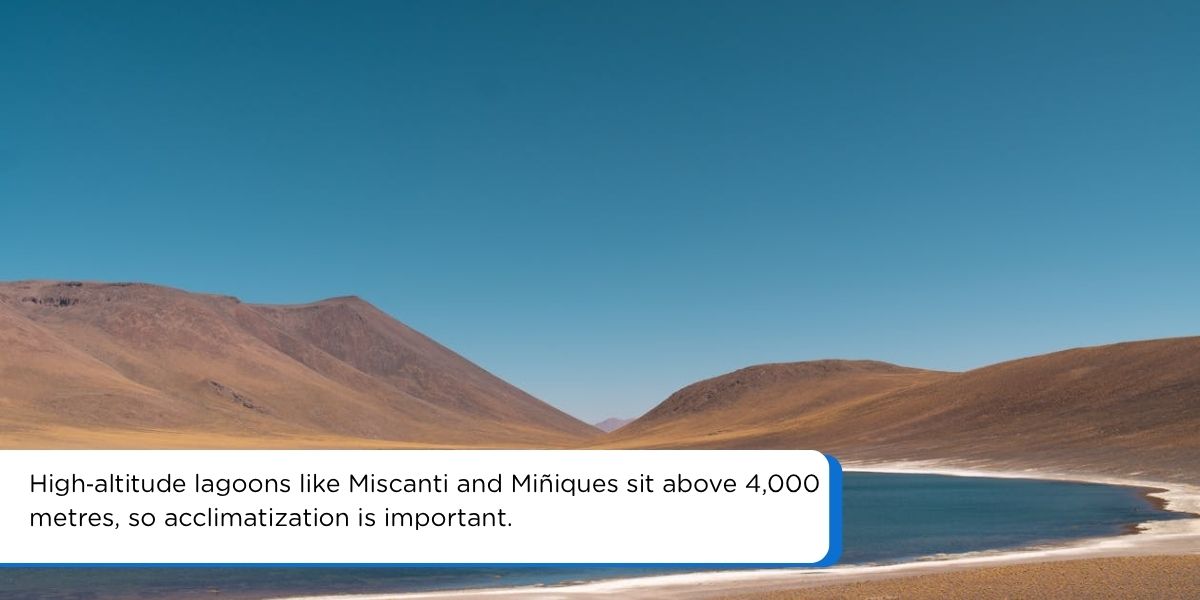
San Pedro already sits at roughly 2,400 meters, and many classic tours go far higher. Laguna Chaxa and the nearby salt flats are close to town in height, but the altiplanic lakes reach around 4,140 meters and El Tatio Geysers are up at about 4,320 meters.
That means altitude sickness is a real risk if you rush your itinerary. Light symptoms include headaches, dizziness and shortness of breath, and they tend to show up when you jump from town straight to high‑altitude sites on day one.
Acclimatization tips
Plan at least one or two low‑altitude days before heading to El Tatio or the altiplanic lagoons. Start with Valle de la Luna and the salt flats instead.
Drink a lot of water, because the combination of very dry air and altitude dehydrates you quickly.
Avoid heavy alcohol the first nights, and talk to your doctor about medication if you know you are sensitive to altitude.
How to Get to San Pedro de Atacama
Fly to Calama + shuttle (recommended)
The fastest route is to fly from Santiago (SCL) to Calama (CJC). The flight takes about two hours and several airlines operate this route daily. From Calama, shared shuttles and buses run to San Pedro in about 1.5–2 hours, dropping you at your hotel or in the center for roughly $10–20 each way.
Long‑distance bus (budget option)
If you are already traveling through Chile by road, you can reach San Pedro by overnight bus from cities like Santiago, La Serena or Antofagasta. From Santiago the ride takes more than 20 hours, so this only makes sense if you are slow‑traveling and want to save on airfare.
Self‑drive
Renting a car in Calama gives you maximum freedom to visit viewpoints at sunrise or stay longer in places you love. Roads to the main sights are mostly paved and straightforward, but there are long stretches with no services and some gravel sections near more remote locations. Always fuel up before leaving town and download offline maps.
Travel tip: There is no WiFi once you leave Calama or San Pedro, and mobile coverage drops sharply in the middle of the desert. Set up an eSIM for Chile before you land so you have data for navigation, checking road conditions and receiving tour confirmations whenever you are back in town.
Top Things to Do in San Pedro de Atacama
Valle de la Luna (Moon Valley)
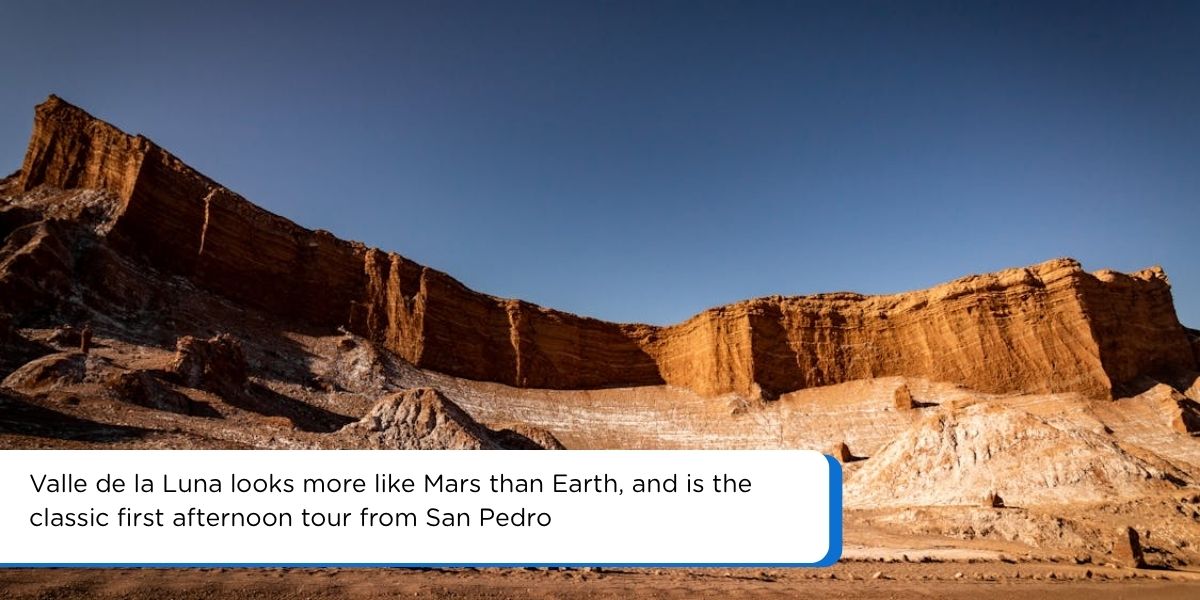
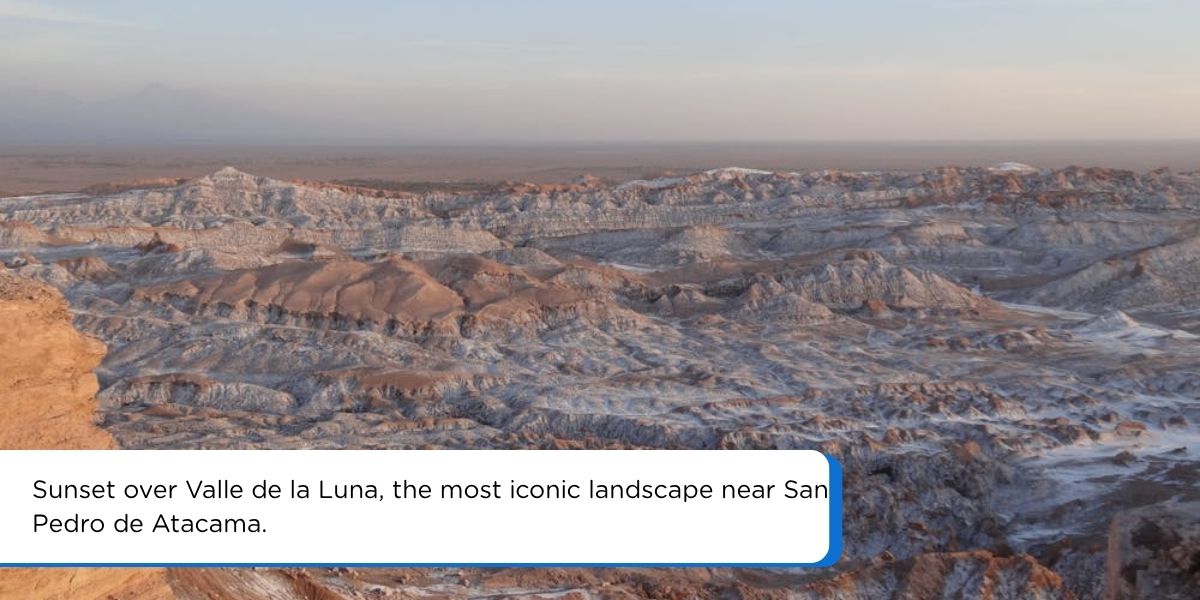
Just 13–15 km from town, Valle de la Luna is a maze of salt‑coated ridges, sand dunes and caves that look more like Mars than Earth. The best time to visit is late afternoon, when the setting sun turns the valley orange and pink. Group tours cost around $35–50 and usually include several viewpoints and a short hike.
El Tatio Geysers
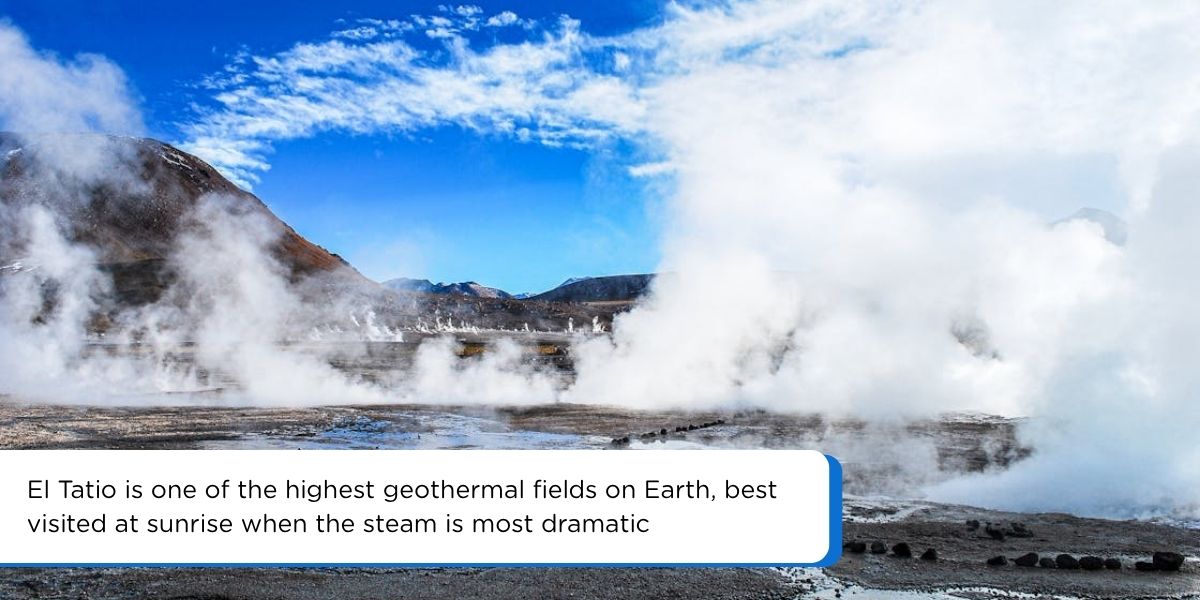
El Tatio is one of the highest geothermal fields in the world, bubbling away at more than 4,300 meters above sea level. Tours leave San Pedro around 4–5 am to arrive before sunrise, when the cold air makes the steam columns most dramatic. Temperatures can drop below –10°C, even colder in winter, so full winter layers, gloves and a warm hat are essential.
Atacama Salt Flat & Laguna Chaxa
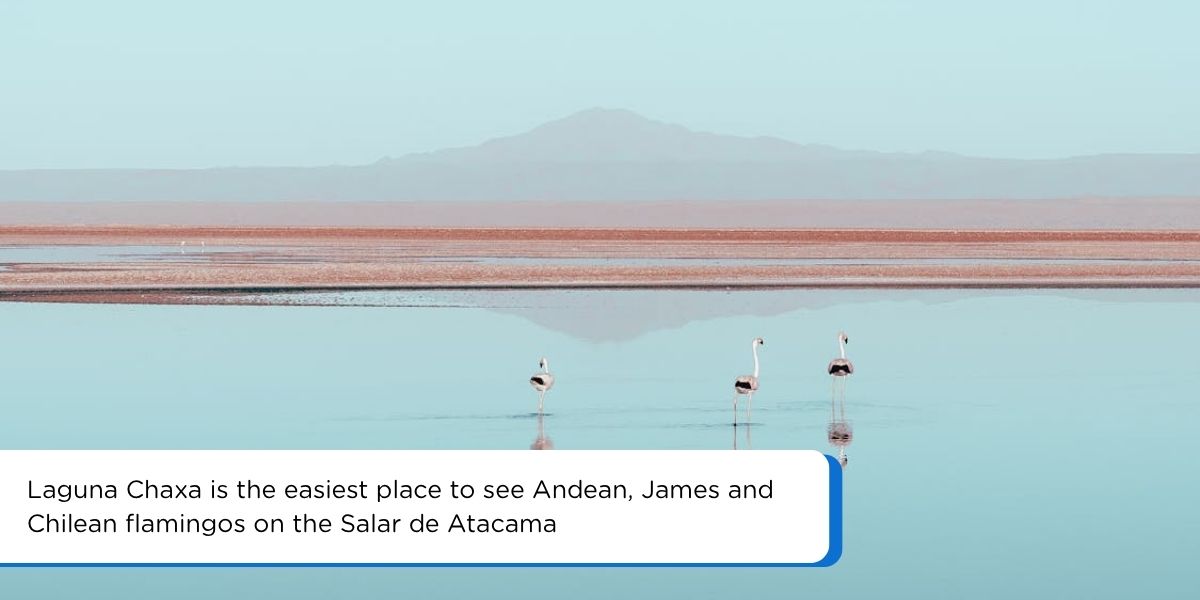
Salar de Atacama is Chile’s largest salt flat and the third‑largest in the world, stretching over 3,000 square kilometers. Laguna Chaxa, on its edge, is home to three species of flamingos: Andean, James and Chilean. It is an ideal lower‑altitude day trip to slot into your first or second day in town.
Altiplanic Lakes: Miscanti & Miñiques
Further up on the altiplano, the twin lakes Miscanti and Miñiques sit at over 4,100 meters, framed by snow‑dusted volcanoes and white salt shores. They are often combined with Laguna Chaxa in a full‑day tour that climbs gradually in height.
Cejar Lagoon & Ojos del Salar
At Laguna Cejar, the water is so salty that you float effortlessly, just like in the Dead Sea. Most tours include a stop at nearby Ojos del Salar, two deep, perfectly round freshwater pools in the middle of the desert that are great for a quick dip and photos.
Rainbow Valley and Stargazing
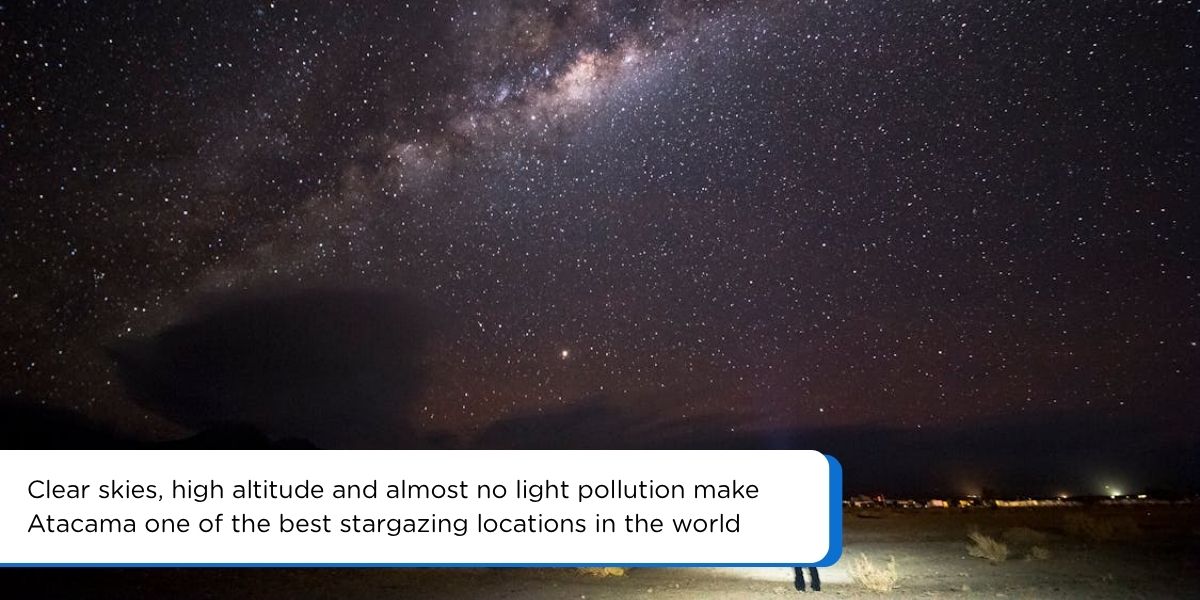
Rainbow Valley (Valle del Arcoiris) shows layers of red, green and yellow rock created by mineral deposits and erosion, which makes it a dream location for photographers. After dark, stargazing tours take you under some of the clearest skies on Earth, with more than 300 cloudless nights a year and minimal light pollution. Through telescopes, you can see the Milky Way, nebulae and distant galaxies in remarkable detail.
Best Time to Visit the Atacama Desert
Thanks to its dry climate, San Pedro de Atacama is a year‑round destination, but some months are more comfortable than others.
March–May and September–November: The sweet spots. Daytime temperatures sit around 15–25°C with clear skies and fewer crowds, which makes these months ideal for most travelers.
December–February: Warmest nights and the busiest season. Prices rise and you may see rare summer storms on the altiplano, although most days are still dry.
June–August: Daytime can still feel pleasant, but nights are freezing, especially on high‑altitude tours like El Tatio. Good for budget travelers who are happy to pack serious winter gear.
Staying Connected with an eSIM for Chile
In San Pedro itself, 4G coverage from networks like Entel and Movistar is generally good. Once you drive out into the desert or up to El Tatio and the altiplano, signals often disappear completely. A travel eSIM for Chile gives you reliable data in Santiago, Calama and San Pedro without hunting for a local SIM card at the airport.
With an eSIM you can:
Receive booking confirmations and last‑minute changes via WhatsApp
Use offline maps that sync whenever you are back in coverage
Check weather, moon phases and stargazing conditions before night tours
Call or message your hotel or tour operator if altitude or weather becomes an issue
👉 Get your Gohub eSIM for Chile before you fly so you are connected from the moment you land.
Frequently Asked Questions
Is San Pedro de Atacama worth visiting?
Yes. San Pedro is the best base for exploring Chile’s Atacama Desert, with easy access to Valle de la Luna, El Tatio Geysers, flamingo‑filled salt flats, high‑altitude lagoons and some of the clearest night skies on Earth.
How many days do you need in San Pedro de Atacama?
Plan at least 4 full days so you can acclimatize to the altitude and still fit in Valle de la Luna, the salt flats, El Tatio and a stargazing tour. If you want to add volcano hikes or explore more slowly, aim for 5–7 days.
How do I get from Santiago to San Pedro de Atacama?
The fastest option is to fly from Santiago (SCL) to Calama (CJC) in about 2 hours, then take a 1.5–2 hour shuttle or bus to San Pedro. Budget travelers can take a long‑distance bus directly from Santiago, but the journey takes more than 20 hours.
Can you get altitude sickness in Atacama?
Yes. San Pedro sits at around 2,400 m, while popular tours like El Tatio Geysers and the altiplanic lagoons climb above 4,000 m. To reduce the risk of altitude sickness, start with lower‑altitude tours, drink plenty of water and avoid heavy alcohol on your first nights.
Is the Atacama Desert safe for solo travelers?
Overall, Atacama is considered safe, with most safety concerns related to nature rather than crime: intense sun, extreme dryness, big temperature swings and altitude. Take common‑sense precautions, join reputable tours, carry enough water and warm layers, and you should be fine.
Final Thought
San Pedro de Atacama is not the kind of place you rush through. Give yourself at least four full days to adjust to the altitude and see the big highlights at a comfortable pace, and a week if you want to add volcano hikes or extra stargazing nights. Plan well, pack for both heat and cold, sort your connectivity before you go, and the world’s driest desert will reward you with some of the most unforgettable landscapes of your life.

Hi! Mình là Lala Wren, một content creator yêu xê dịch và đam mê chia sẻ trải nghiệm thực tế cho cộng đồng Gohub. Trong nhiều năm qua, mình đã đặt chân đến Thái Lan, Hàn Quốc, Nhật Bản, Singapore, Malaysia, Bali và nhiều điểm đến thú vị khác trên khắp châu Á. Cùng mình tìm hiểu tất tần tật từ khâu chuẩn bị eSIM, Visa, lịch trình và địa điểm nổi bật cho chuyến đi sắp tới của bạn nhé!
Alle Artikel ansehen →