
App Store'da indirDownload Gohub App on the App Store
AsiaJapan

Tenjin Matsuri 2027: Dates, Tickets and How to Get There

  • Jul 24-25, 2027 (expected)
  • Osaka, Japan
  • Last updated: 23 Kas 2026
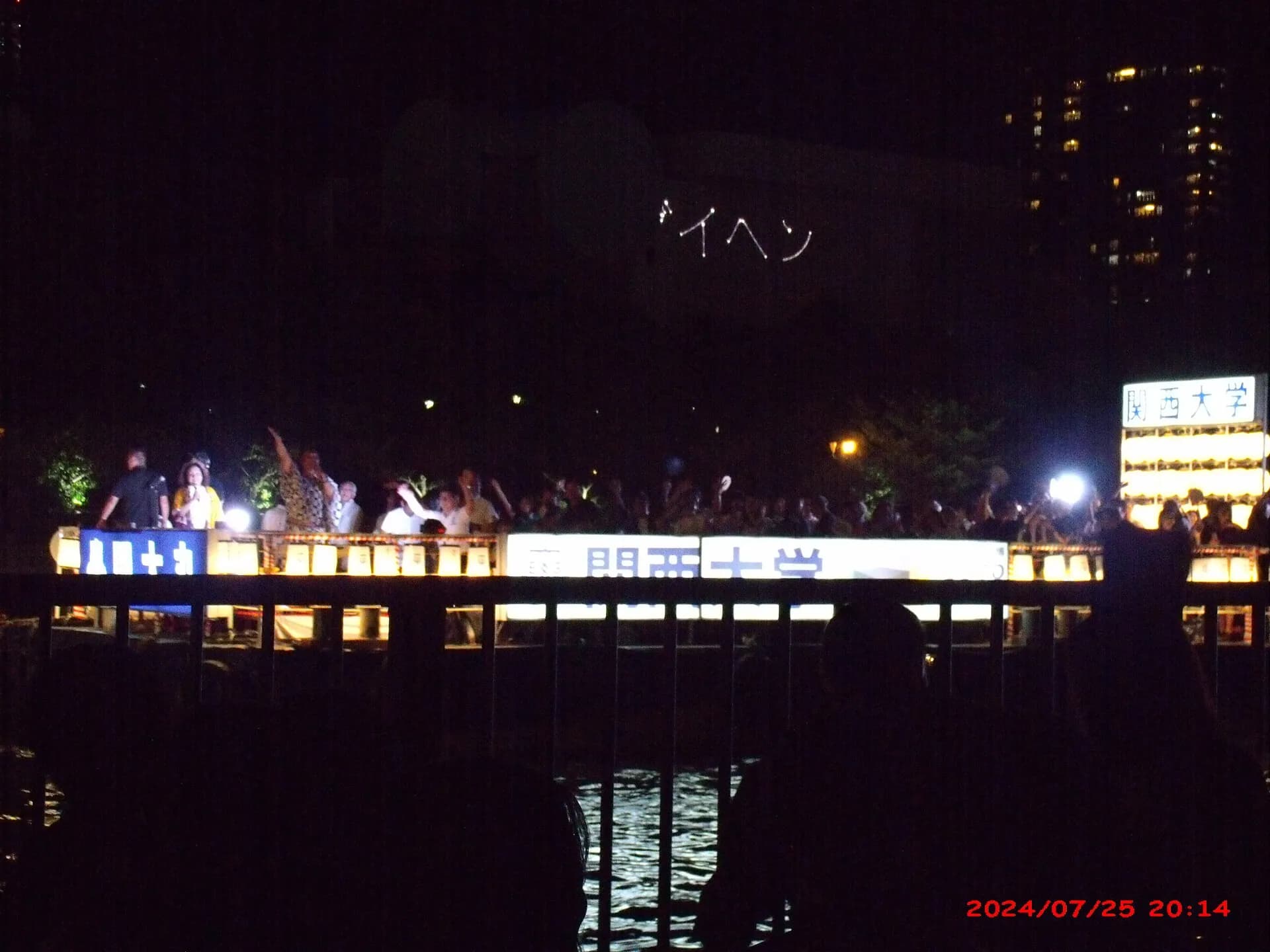
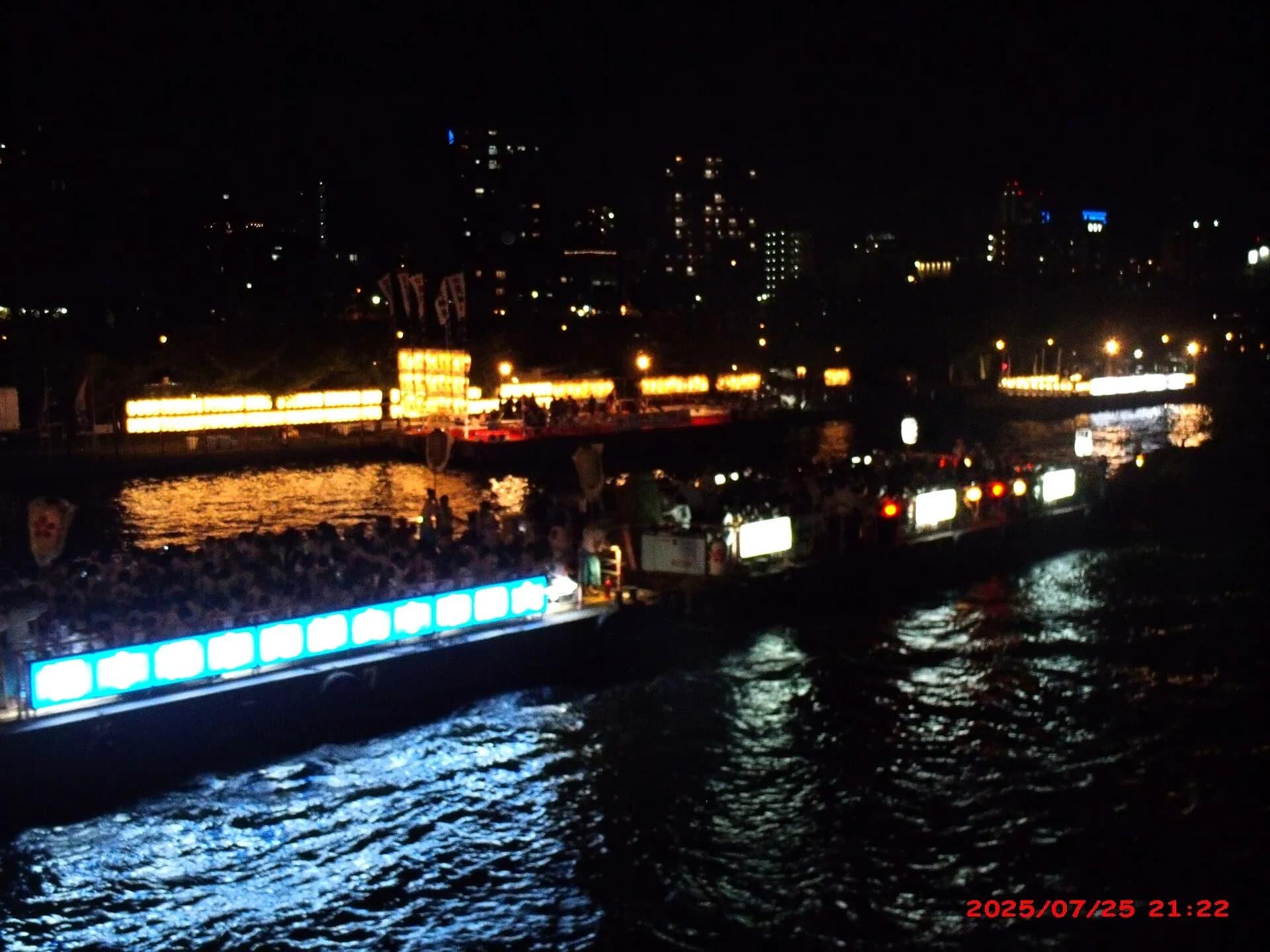
Wide night shot of the Okawa River with the funatogyo boats and fireworks above Sakuranomiya Bridge
The Rikutogyo land procession passing along Tenjinbashisuji Shopping Street with drummers
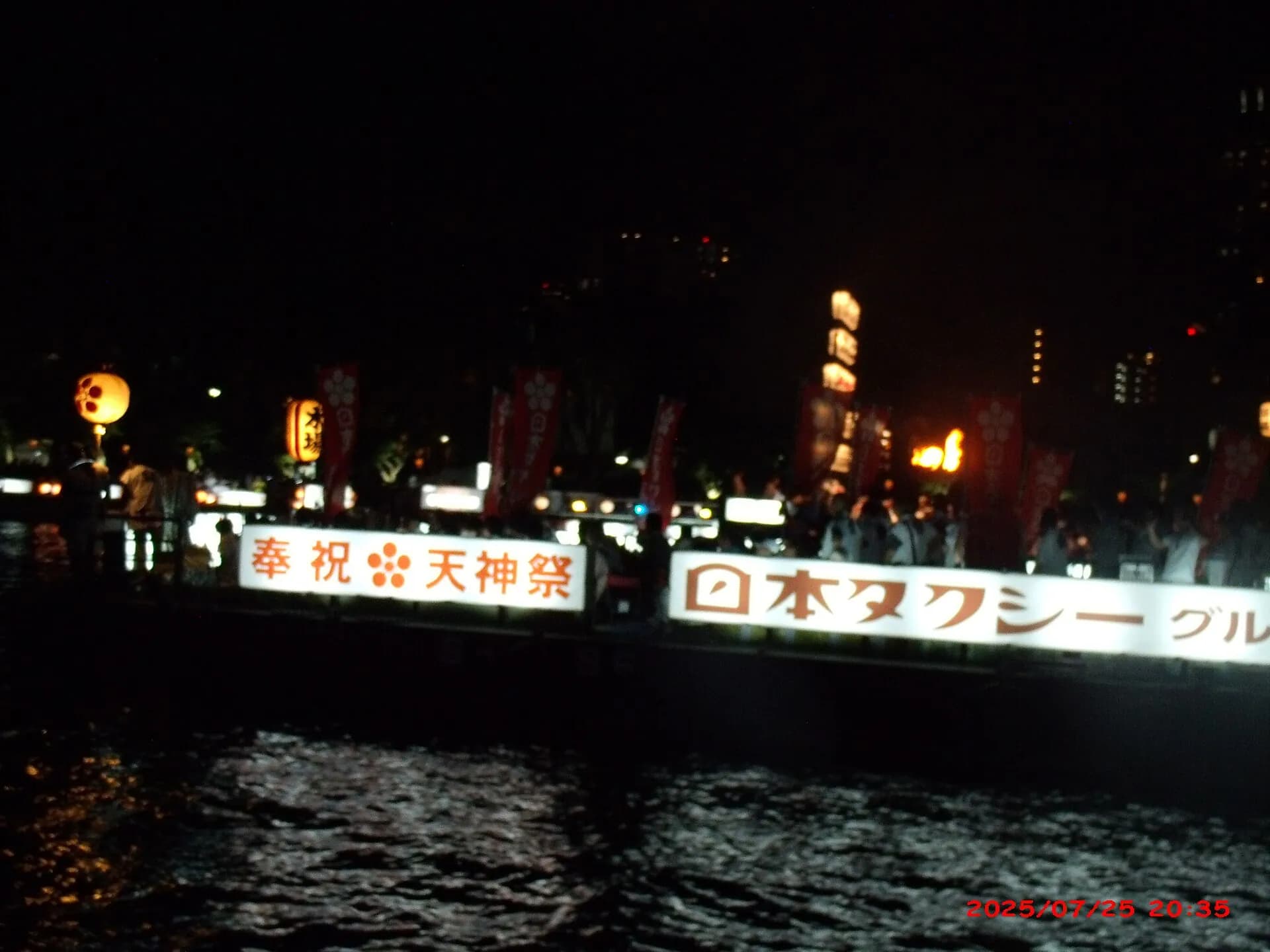
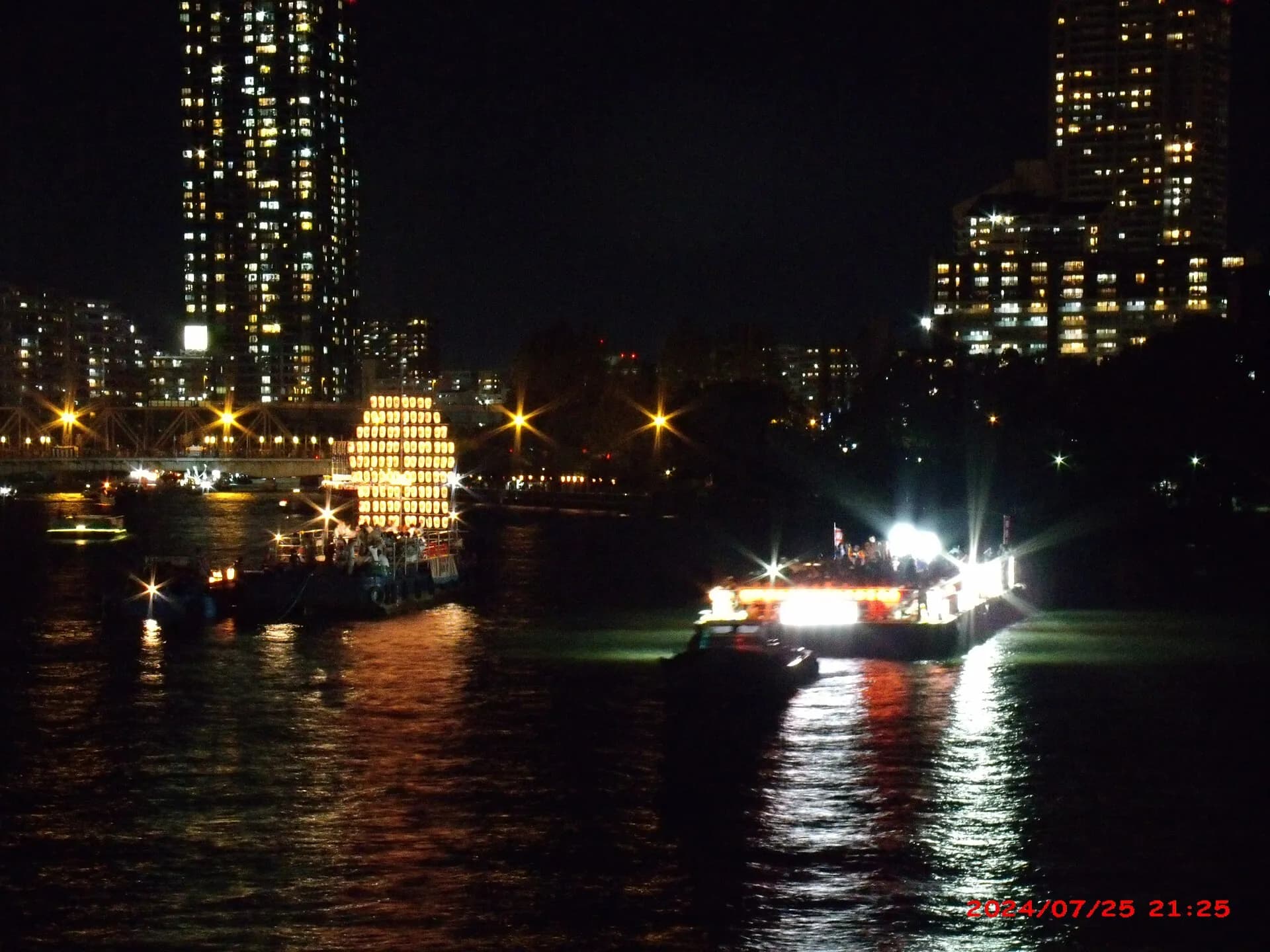
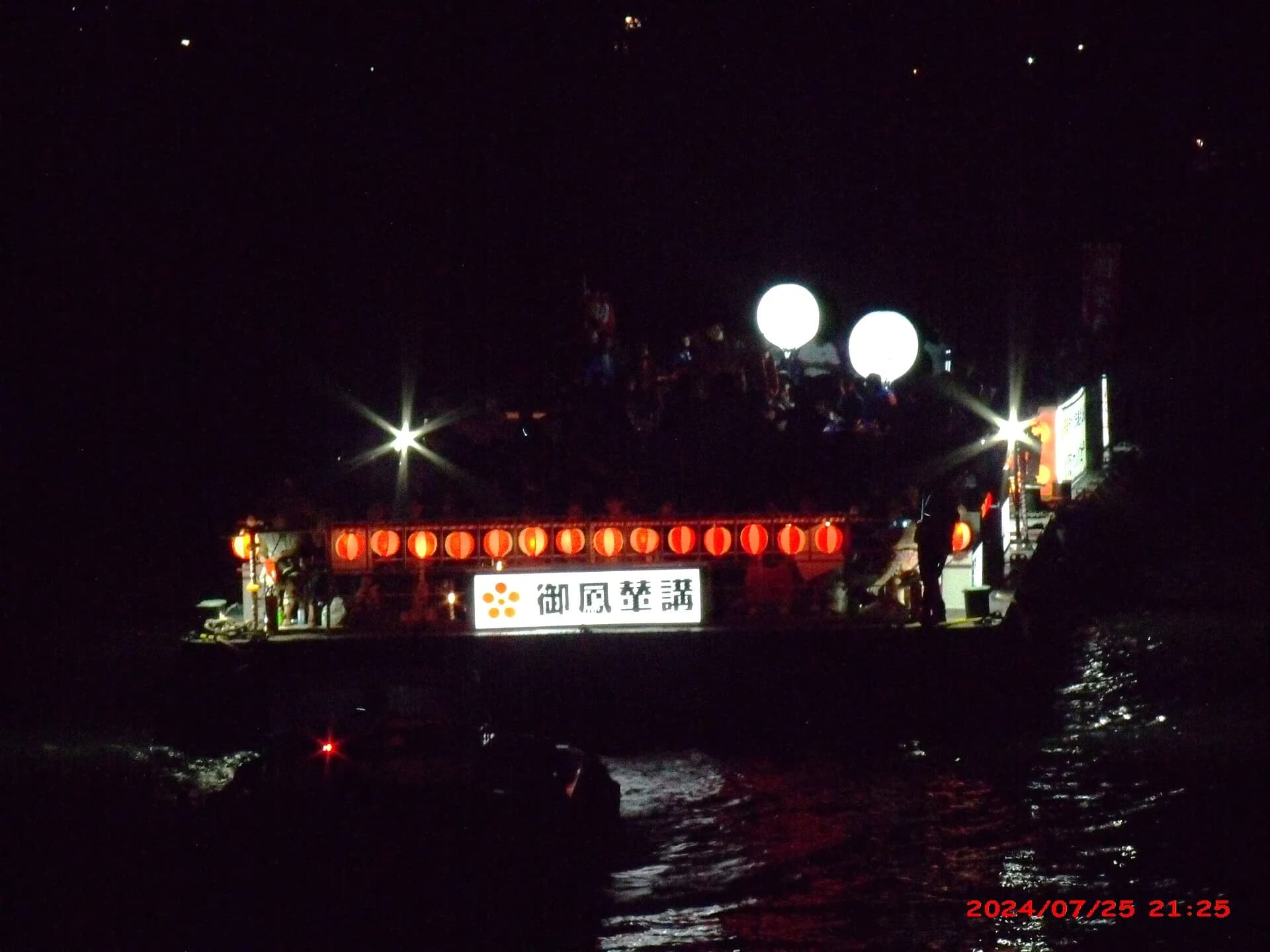
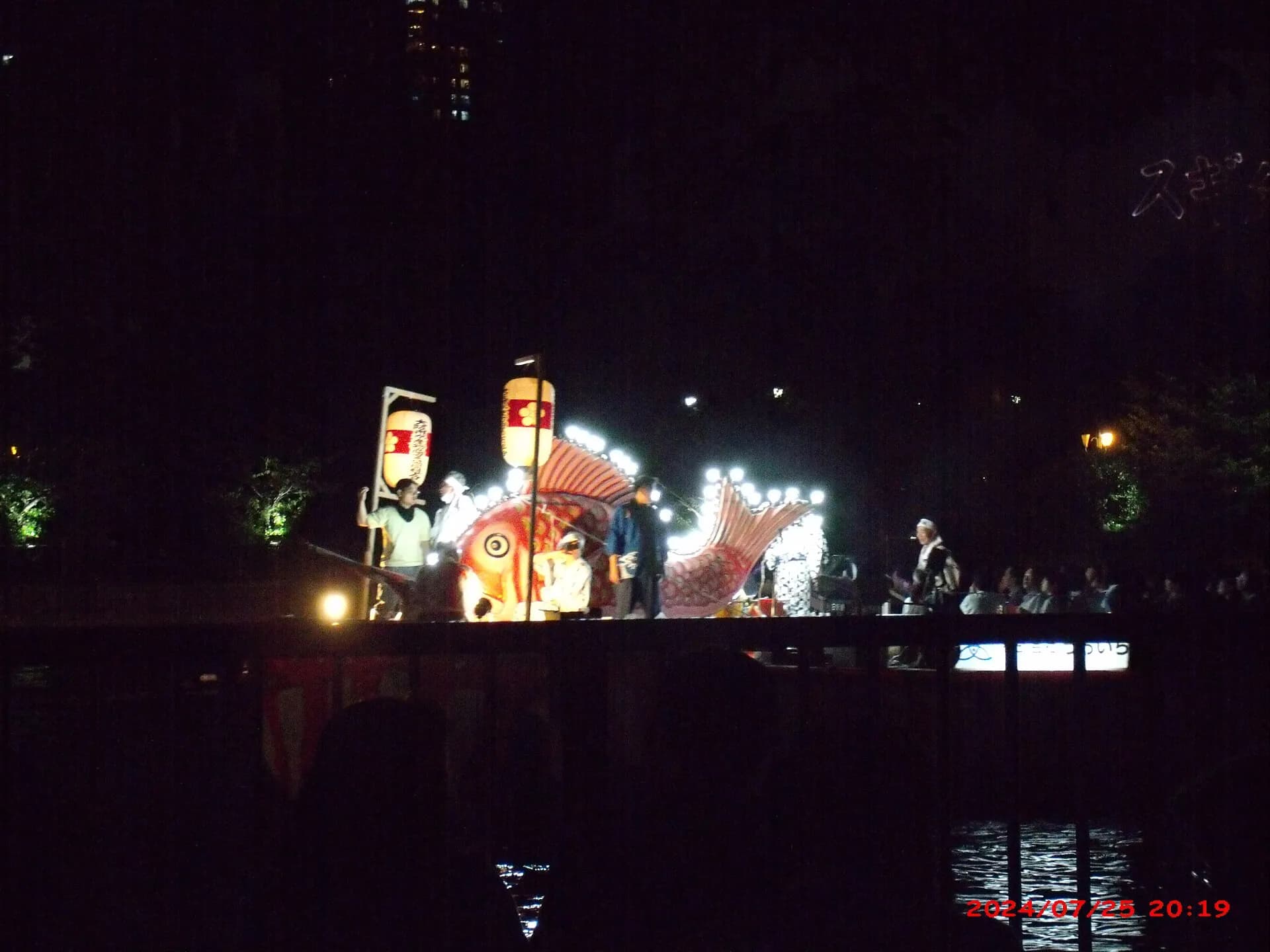
Boats lit by lanterns carrying portable shrines on the Okawa River at dusk
The child priest and boat at the Hokonagashi ritual at the old Wakamatsu shore
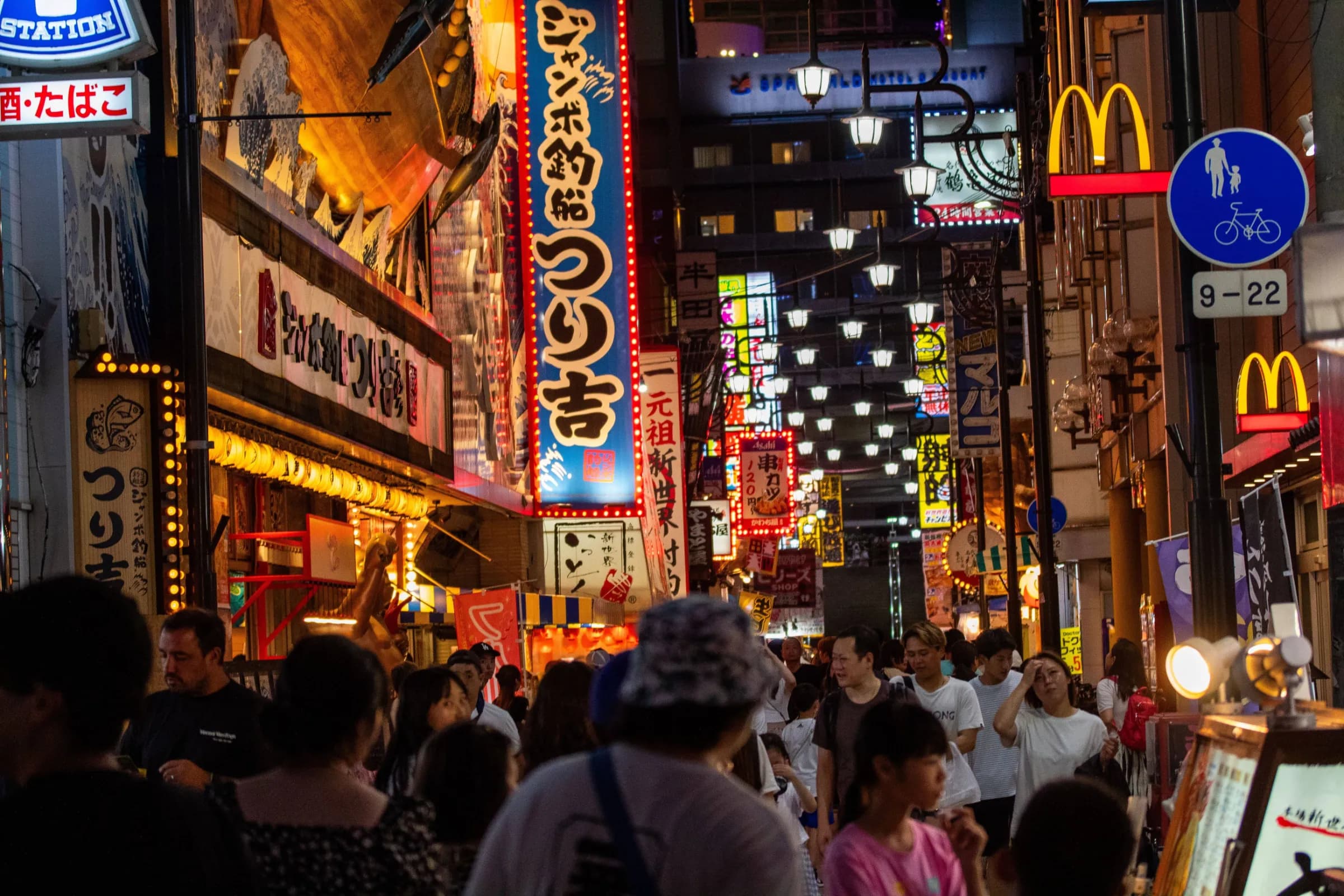
Food stalls at night on Tenjinbashisuji with takoyaki and crowds

Overview

Tenjin Matsuri is expected on July 24 and 25, 2027, in Osaka, centred on Osaka Tenmangu shrine and the Okawa River 1. The eve brings a dawn spear ritual, and the main night brings a land procession, a boat procession and fireworks 1. Watching from the riverbank is free; boat berths and riverside seats cost extra 2. Dates await the shrine's announcement.

Highlights

  • Hokonagashi spear ritual at the old Wakamatsu shore at dawn on the eve
  • Land procession of about 3,000 people from Osaka Tenmangu 7
  • About 100 boats sail upstream on the Okawa River in the evening 8
  • Dedicated fireworks launched near Sakuranomiya Bridge 9
  • Free riverbank viewing, plus paid seats, tables and boat berths
  • Roughly 300 food stalls between Tenjinbashisuji and the river 9

Good to know

Dates
Expected July 24-25, 2027, Saturday and Sunday; the main night is the 25th 1
Opening hours
Boat procession about 18:00 to 21:00; fireworks from about 19:30 8
Venue
Osaka Tenmangu, 2-1-8 Tenjinbashi, Kita-ku; coordinates 34.6960576, 135.5126556 11
Entry
Free from public riverbanks; boat berth 35,000 yen in 2026 2
Getting there
Minamimorimachi or JR Osakatemmangu Station, then Sakuranomiya Station for the river 3
Recommended eSIM
Japan

Why does a flat battery hurt most on the Okawa riverbank?

On the night of July 25, the Okawa River between Tenmabashi and Sakuranomiya Bridge carries about 100 boats and, once the fireworks start, a very large crowd 8. Everything you will want to do there runs through a phone: the closure times for Sakuranomiya Bridge, the map that shows which station gate is open, the message to the friend who went to buy beer, and the weather page that says whether the display is still on. Mobile networks in Kita-ku and Miyakojima-ku get congested when a crowd of this size packs the embankments, so a plan that relies on one overloaded signal and a half-charged phone is fragile. A private guide advises bringing a power bank of at least 10,000 mAh 8. Send your meeting point and a backup point before you leave your hotel, save offline maps of the Tenjinbashisuji and Okawa area, and keep a data plan that works without searching for Wi-Fi at the exact moment the first shell opens.

Finding your group when Sakuranomiya Bridge closes to traffic

Vehicles are blocked on roads such as Sakuranomiya Bridge from around 18:00 on the main day, and pedestrian restrictions begin around 17:00 8. Once you cross to one side you may not get back, so share a live location with your group before the bridge becomes one-way foot traffic and agree on which bank you are on.

Learning whether a downpour has cancelled the fireworks

Light rain does not stop the programme, but one guide notes that heavy weather cancels the fireworks 10. The shrine and the city post updates online, so a working connection at 17:00 tells you whether to head for the river or wait in an arcade.

Calling a taxi when the last shell has gone off

Taxis are close to impossible to flag down between 21:00 and 22:30 around the river, according to a private guide 9. A taxi app or a map showing the walk to Kitahama or Tenjinbashi Station beats standing on Sakuranomiya Bridge hoping for a gap.

Install your eSIM before you fly and be online when you land — see matching plansSee eSIM plans

The complete guide

When Is Tenjin Matsuri in 2027?

Tenjin Matsuri 2027 is expected to run on Saturday July 24 and Sunday July 25, 2027, with the main night on the 25th, although the shrine had not published the 2027 programme at the time of writing (accessed 2026-10-15) 1 11.

The reason the dates barely move is that the festival is tied to the shrine's own calendar rather than to a lunar date or a weekend. Osaka Tenmangu names the 24th as the eve festival (Yoimiya) and the 25th as the main festival (Honmiya), and the whole festival cycle runs for about a month, from a ritual day in late June until July 25 1. Because the date is fixed, the weekday changes: in 2026 the eve fell on Friday, July 24 and the main night on Saturday, July 25 7. In 2027 the same dates fall on a weekend, so expect people with a day off on both evenings.

For readers searching for the Tenjin Matsuri 2026 edition, it took place on July 24 and 25, 2026, with the main events of the 25th being the land procession, the boat procession and fireworks from about 19:30 6 7 8.

What each date means in practice:

  • July 23: the Gal Mikoshi, a portable shrine carried by women aged 15 to 30, about 4 km from the shopping district to the shrine 7.

  • July 24, the eve: the Hokonagashi ritual in the morning, small processions and stalls, no fireworks and no boat procession 1 8.

  • July 25, the main day: the shrine rites, land procession, boat procession and dedicated fireworks 1 4.

The festival in Osaka also produces a long lead-up. Late June brings the first ceremonies, and the shrine's notices appear about three months before the days themselves; the 2025 notice was published on April 30, 2025 4.

Tip: Treat the dates as expected until Osaka Tenmangu posts its notice, and check 5 before booking non-refundable hotels. The shrine office answers questions on 06-6353-0025 2.
Osaka Tenmangu shrine's main gate on the morning of the eve festival with worshippers and lanterns
Photo: Mr.ちゅらさん · CC BY 4.0 · Wikimedia Commons

Which Tenjin Matsuri seats are free and which cost money?

Tenjin Matsuri has no entrance fee: the Osaka Tenmangu precinct, the stalls and the public riverbanks are free to enter, and only reserved seats and boat berths are sold 9.

If you pay, the choices are wider than most visitors expect. The shrine itself sold a sponsorship-association boat berth for the 2026 boat procession at 35,000 yen per seat, including a boxed lunch and tea 2. Sales began on Sunday, July 5, 2026 at the shrine's service counter, were cash only, required a name and contact details and did not allow holds 2. Riverside seating comes from several organisers: a Japanese ticketing guide lists general or standing areas at about 3,000 to 8,000 yen and reserved seats with bento or table plans at about 18,000 to 68,000 yen in 2026 10.

Not every paid area sees the same thing, and this is the single most common mistake. The Fureai no Mizube area shows only the fireworks, while the Sakuranomiya, Enkeijo Square, Senfukan East, Mint Bureau opposite bank and Tenmabashi areas show fireworks and the boat procession, although even some of these spots have partial views 10.

Free options that people actually use:

  • the bank opposite the Mint Bureau near Kawasaki Bridge, with a diagonal view of the fireworks 9

  • the promenade in front of OAP (Osaka Ameniti Park), where the towers frame the display 9

  • the riverbank near Miyakojima Bridge, one bridge upstream of Sakuranomiya Bridge 9

  • the northern part of Kema Sakuranomiya Park, which is far away but good for a picnic sheet 9

A boat berth is the only option that makes you part of the Funatogyo rather than a spectator of it. Passengers board before the procession starts, so the gathering times in 2026 ran from 17:00 to 17:20, well before the first firework 9. If you buy a seat on the riverbank instead, you gain a fixed spot, which removes the hours of waiting that free spots demand, but you lose the movement of the boats.

Reserved table plans with bento are the middle option for families and older relatives, because they provide a seat and food in one booking. One tracker reported a bento-and-tea terrace seat at 19,990 yen sold out by late June 2026, which shows how early these go 9. Because the 2027 sales dates are unknown, watch the shrine's news page and the ticketing agencies from late spring.

Note: A guide that tracked 2026 sales reported the boat berth with a French bento at 35,000 yen with a 17:20 gathering time, and a sake-association boat at 45,000 yen with a 17:00 gathering time 9. Prices for 2027 had not been announced.

People on the Okawa River embankment near the Mint Bureau waiting for fireworks on a sheet
Photo: Mr.ちゅらさん · CC0 · Wikimedia Commons
Need a steady connection for transit and maps?See eSIM plans

Minamimorimachi, Tenma or Sakuranomiya: which station should you use?

For the shrine, use Minamimorimachi Station or JR Osakatemmangu Station, both about 50 m from Tenjinbashisuji Shopping Street's turn to the shrine gate; for the river, use Sakuranomiya Station on the JR Osaka Loop Line 3 8.

The shrine's own directions: from Osaka Metro Minamimorimachi Station on the Tanimachi and Sakaisuji lines take Exit 4, turn right onto Tenjinbashisuji, head south and turn left at the second corner; from JR Tozai Line Osakatemmangu Station take Exit 7, turn left and then left again at the second corner 3. The shrine is at 2-1-8 Tenjinbashi, Kita-ku, Osaka 3.

The JR Osaka Loop Line matters on the main night. Tenma Station (JR-O10) and Sakuranomiya Station (JR-O09) are both on the Loop Line, and Tenma links to the Sakaisuji Line at Ogimachi 14 15. From Osaka Station it is about 15 minutes by train to Osaka Tenmangu or Tenmabashi and about 5 minutes to Sakuranomiya 10. A private guide puts Sakuranomiya Station at 5 to 8 minutes' walk from the river and Tenjinbashi or Miyakojima at about 10 minutes, and suggests the last two to spread the crowd 8.

From Kansai International Airport, the Haruka limited express runs about 30 round trips a day 13. It does not call at Osaka Station itself, so travellers typically change to a local train at Shin-Osaka 13.

After the fireworks, Minamimorimachi Station may restrict its gates, and the same guide recommends walking to Kitahama or Tenjinbashi Station instead 8.

  • Shrine and land procession: Minamimorimachi or JR Osakatemmangu

  • Fireworks and boats: Sakuranomiya, Tenjinbashi or Miyakojima

  • Going home: Tenmabashi or Kitahama, avoid Minamimorimachi

Tip: A Loop Line ride between Tenma and Sakuranomiya is short, but after the fireworks the platform can close for crowd control, so walk one station onward before you board.

Crowd walking along Tenjinbashisuji shopping street toward Osaka Tenmangu in the afternoon

What happens from the Hokonagashi spear at dawn to the last firework?

The programme runs from a morning river ritual on July 24 to the fireworks of July 25, and it is the only major festival day in Osaka where a child sets a wooden spear adrift to choose a site 1.

On July 24 the eve ceremony is held at 7:45, followed at about 8:30 by a procession of roughly 200 people led by a child carrying an unpainted wooden spear from the main gate to the old Wakamatsu-cho shore, and at about 8:50 by the Hokonagashi ritual 1. A boat moves to the middle of the river, and the child priest, traditionally chosen from Nishi-Temma Elementary School, sets the spear adrift 1. The ritual was held in front of Tenma Police Station 4.

The main day, July 25, begins with the shrine ceremony and the transfer of the deity's spirit, followed by the Rikutogyo land procession of about 3,000 people 4 7. Boats on the Okawa begin to move at about 18:00, with about 100 boats sailing until about 21:00 and the most atmospheric part after 19:30 9. The boats sail upstream; since 1953 land subsidence has lowered the bridges, so travel downstream is no longer possible 1.

The dedicated fireworks start at about 19:30 on the main night and last until about 21:00, with a launch count of about 3,000 10. The programme ends with the procession returning to the shrine and a return ceremony in the main hall 4.

Key points about the timing:

  • Food stalls open around 11:00 and are quietest until about 16:30 8
  • The Rikutogyo and Funatogyo are separate events; seeing both means moving from Tenjinbashisuji to the river 1
  • Rites inside the main hall are for priests only; the land procession can be seen along its route 4

Food is part of the programme rather than an afterthought. A private guide counts about 300 stalls and quotes takoyaki of eight pieces at 500 to 600 yen, yakisoba at 500 to 700 yen and draft beer at 500 to 700 yen, with a food budget of about 2,000 to 3,000 yen per person in 2026 9. Many stalls take only cash, so carry small notes and coins 8. Shops inside the Tenjinbashisuji arcade are often cheaper than the street stalls 9.

Historically, the boat procession was revived in 1949 after the war, and the festival is counted among Japan's three great festivals with Kyoto's Gion Matsuri and Tokyo's Kanda Matsuri 1.

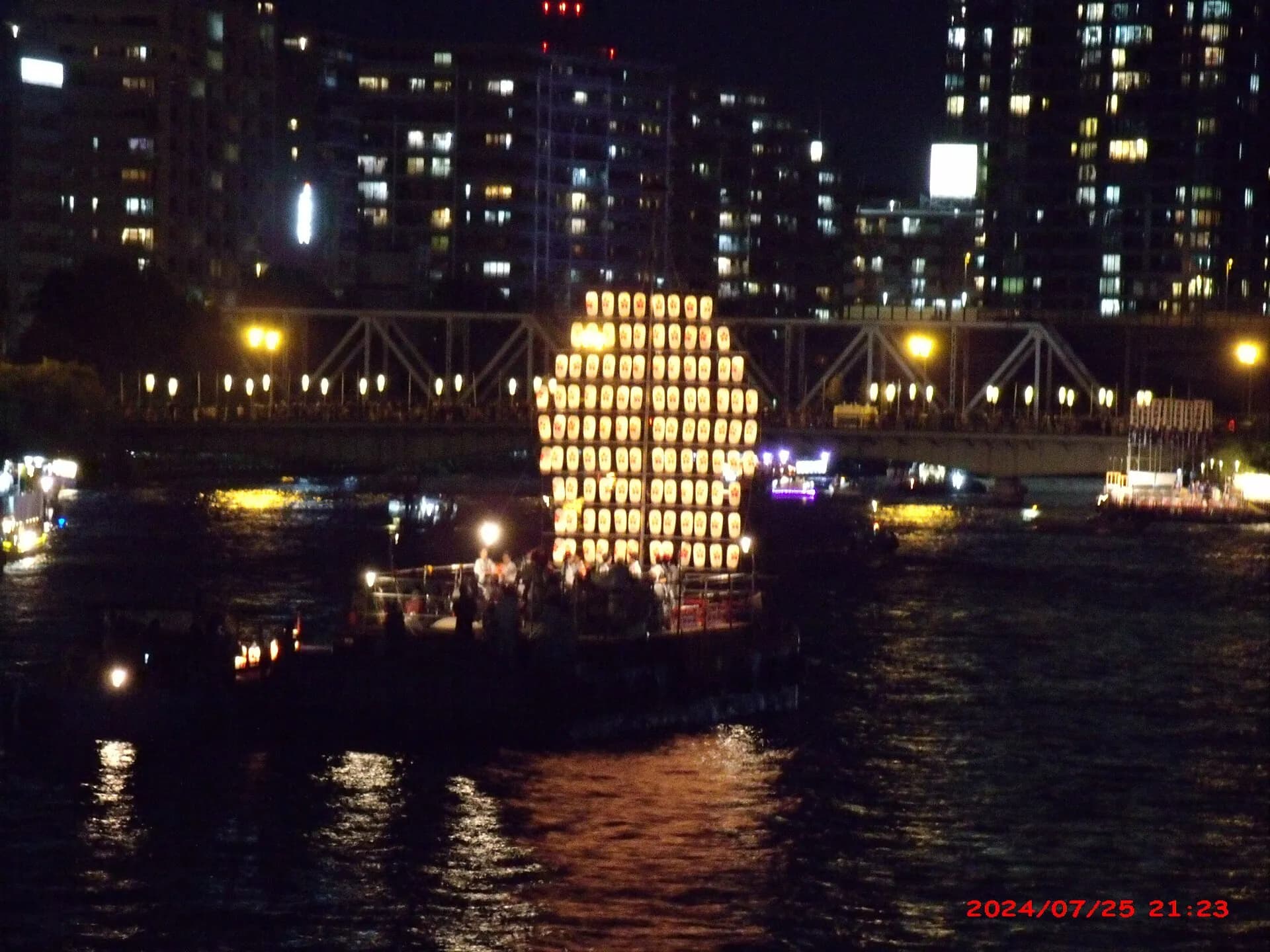
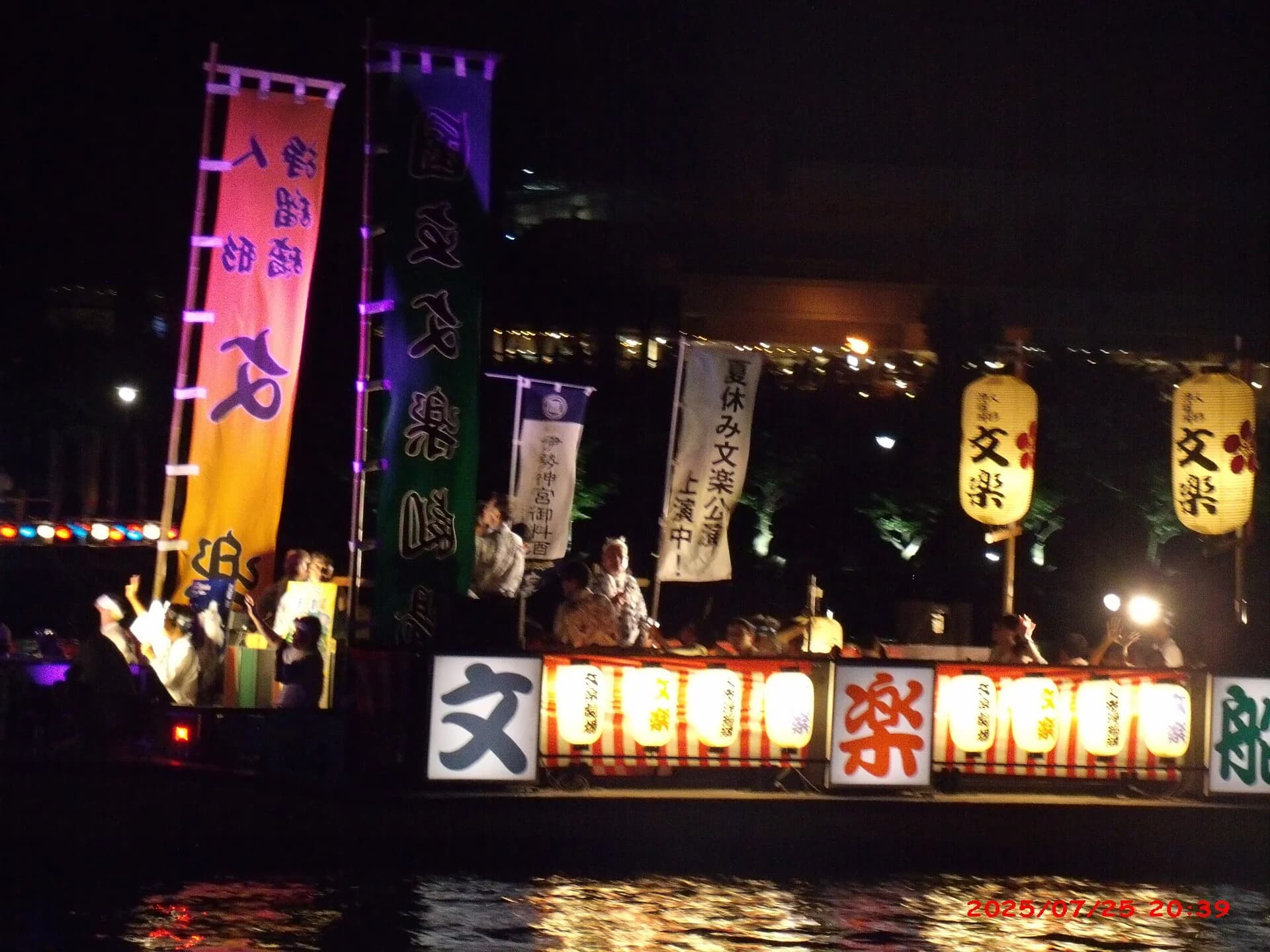
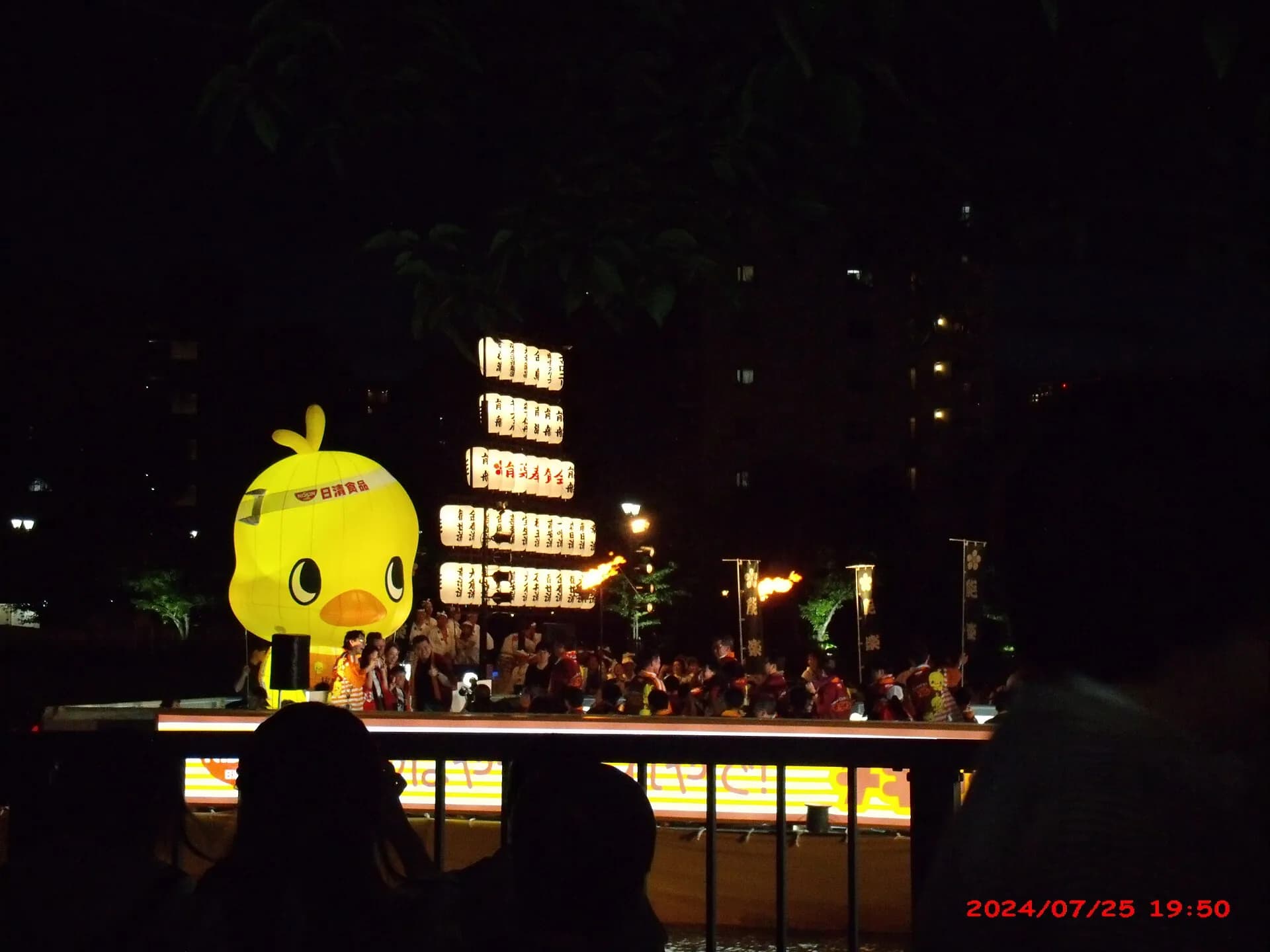
Boats carrying lanterns and portable shrines on the Okawa River at dusk during the funatogyo
Photo: Mr.ちゅらさん · CC0 · Wikimedia Commons

How hot does the Okawa riverbank get on Tenjin Matsuri night?

Osaka in late July is hot and humid: historical records for July 28 give an average high of 33 C and low of 26 C 12, and a private guide quotes 33 to 35 C with humidity above 70 percent 9.

Rain falls on roughly 15 to 27 percent of July dates in the historical record for Osaka, so a wet evening is possible but not the norm 12. Light rain does not stop the programme; a downpour can shorten or cancel the fireworks 9 10. Umbrellas annoy people packed around you, so a rain jacket works better 9.

Crowds follow a predictable curve. A private guide counts about 1.3 million visitors across the two days, most of them on July 25 8. Attendance peaks between 18:00 and 22:00, and the same guide recommends waiting 15 to 20 minutes after the fireworks before leaving 8.

How early to arrive:

  • Arrive around 16:00 to see the stalls before they fill 8

  • To stand on Sakuranomiya Bridge, secure a spot by 17:30, because the bridge is closed to traffic from around 18:00 9

  • For a free bank spot with a clear view, arrive by mid-afternoon

What to carry through the heat:

  • a power bank of at least 10,000 mAh, two towels, a frozen drink bottle 8 9

  • a folding sheet, insect repellent, a trash bag, oral rehydration salts 8

  • comfortable shoes and cash in small bills

A sensible pace for the main day is to stay in the air-conditioned arcades of Tenjinbashisuji through the early afternoon, watch the land procession, eat, and only then walk to the river with a drink in hand. The wait on a riverbank sheet between 16:00 and 19:30 is three and a half hours in full summer heat, which is why families with children or older relatives often choose a shaded table seat or a rooftop restaurant in the Tenmabashi buildings, booked in advance 9.

Tip: Heat stroke is the real hazard here, not the crowd. Drink before you feel thirsty and treat the afternoon wait as the hardest part of the day.

Spectators with uchiwa fans and towels on the hot riverside promenade before the fireworks

Which Osaka neighbourhood puts you closest to the Okawa fireworks?

Staying near Tenjinbashi or Tenmabashi puts you within a short walk of both the shrine and the Okawa riverbank, which matters because roads around the river are closed on July 25 8.

The main areas to choose from:

  • Tenjinbashi and Minamimorimachi: the shrine side, with arcade restaurants and the land procession on your doorstep

  • Tenmabashi and Kyobashi: close to the river and the boat procession, with the Loop Line at Kyobashi (JR-O08) 15

  • Umeda and Osaka Station: more hotels and a quick connection of about 15 minutes by train to Osaka Tenmangu or Tenmabashi 10

  • Sakuranomiya: about 5 minutes from Osaka Station by train, handy for the fireworks but quieter for food 10

Because the festival has no fixed ticket, there is no sell-out date to track; the pressure comes from hotels. A private guide warns that hotels around Umeda and Tenjinbashi may fill early 8. With the 24th and 25th expected to fall on a Saturday and Sunday in 2027, book as soon as the dates are confirmed and pick a free-cancellation room.

Driving is not a plan: vehicles are effectively unusable on July 25 because of closures and there is no dedicated parking 8. A guide suggests parking near Umeda or Keihanbashi and taking a train, or cycling 8.

Bicycles are a realistic alternative for confident riders: a guide suggests leaving a bike in a parking area around Tenmabashi and cycling home after the crowd clears, since the roads near the river are closed to cars 9. Taxis are scarce between 21:00 and 22:30, so a hotel within walking distance saves the most stress 9.

If you can, take two nights, the eve for the quieter procession, stalls and the dawn ritual, then the main night 8.

Tip: Choose a hotel within one station of Kitahama, Tenmabashi or Tenjinbashi; they are the stations that stay usable after the display.

Evening view of the Tenmabashi area and Okawa River bridges from a riverside hotel window
Photo: Mr.ちゅらさん · CC BY 4.0 · Wikimedia Commons

Can your phone survive the Sakuranomiya Bridge crowd?

Yes, if you prepare: at Tenjin Matsuri, signal on the Okawa embankments between Tenmabashi and Sakuranomiya Bridge gets crowded on July 25, so install mobile data before you travel and carry a power bank 8.

The tasks that use data at this festival are specific. You will check which bridge is closed (Sakuranomiya Bridge from around 18:00) 9, which gate at Minamimorimachi is restricted 8, and whether the weather has cancelled the display 10. You will read a map to reach Kitahama or Tenjinbashi when the closest station is jammed 8. You will probably also translate a stall sign or a boat-seat notice; the shrine's own boat-seat page is in Japanese 2.

A Japan eSIM can be installed at home and switched on when you land at Kansai International Airport, so you are online before the Haruka train reaches Shin-Osaka 13. Public Wi-Fi in the middle of a crowd of this size is unreliable, so do not plan around it.

Practical steps:

  • download an offline map of Kita-ku and Miyakojima-ku before you leave the hotel

  • share live location with your group before the bridge restrictions begin

  • keep brightness low and a power bank of 10,000 mAh or more 8

  • for an emergency, the Osaka Call Center number is 06-6131-4550, open daily 9:00 to 17:30 16

Tip: Stalls generally take cash only, so mobile payments will not help you at the food lines; use data for navigation and keep coins for takoyaki 8.

Crowd on Sakuranomiya Bridge looking at fireworks above the Okawa River at night
Photo: Mr.ちゅらさん · CC BY 4.0 · Wikimedia Commons

Suggested itinerary

Day 1 · The eve at Osaka Tenmangu

  1. Early morning
    Hokonagashi at the old Wakamatsu shoreWatch the child priest set the spear adrift; arrive before the procession leaves the main gate 1
  2. Late morning
    Osaka Tenmangu precinctLook at the shrine, the lion dance and the quiet land procession 1
  3. Afternoon
    Tenjinbashisuji Shopping StreetEat at the arcade shops, which are often cheaper than stalls 9
  4. Around 18:00
    Evening stallsTry takoyaki and yakisoba without the main-night crowd 8

Day 2 · The main night on the Okawa

  1. Late morning
    Food stalls and Osaka TenmanguStalls open around 11:00 and are quiet until about 16:30 8
  2. Around 15:00
    Land procession on TenjinbashisujiStand on the arcade route and watch the Rikutogyo 7
  3. Around 17:00
    Walk to the riverbankChoose the bank opposite the Mint Bureau or the OAP promenade 9
  4. Around 19:30
    Boats and fireworks on the OkawaWatch the boats and the fireworks from Sakuranomiya Bridge's area 9
  5. After 21:00
    Wait, then walk to Kitahama or TenjinbashiLet the crowd thin for 15 to 20 minutes before leaving 8

Tip: Keep the afternoon of July 25 free for the walk to the river; roads close from around 18:00.

Recommended eSIM plans

Pick by trip length. Visiting several countries? Choose a regional plan.

Selected: eSIM Japan Unlimited 100Mbps 05 Day(s)
Japonya için daha fazla paketDaha fazla veri mi lazım? Tüm Japonya paketlerini keşfedinDaha fazla GB, sınırsız ve uzun seyahatlerTümünü gör

Set up your eSIM in 3 steps

  1. Order and get your QR codeThe QR code arrives by email right after payment.
  2. Scan before you flySettings → Cellular → Add eSIM, while you still have Wi-Fi.
  3. Turn on data when you landSet the eSIM as your data line and enable data roaming.

Frequently asked questions

Tenjin Matsuri 2026 ran on Friday, July 24 and Saturday, July 25, 2026. The eve had the Hokonagashi ritual and a small procession, and the main day had the land procession, a boat procession of about 100 boats and fireworks from about 19:30 8. For 2027 the dates are expected to repeat on July 24 and 25.

Yes, you can watch the Funatogyo boat procession for free from the public banks of the Okawa River, although paid areas like Sakuranomiya or Tenmabashi give guaranteed viewing space 10. Boat berths on the procession itself cost 35,000 yen per seat in 2026, sold in person at the shrine counter, cash only, with no holds 2. Free bank spots fill early on the main day.

The Sakuranomiya, Enkeijo Square, Senfukan East, Mint Bureau opposite bank and Tenmabashi areas show both the boat procession and the fireworks, while the Fureai no Mizube area shows only the fireworks 10. The same guide warns that some seats do not see the boats, so check the area's description before you pay.

Tenma Station (JR-O10) and Sakuranomiya Station (JR-O09) are both on the JR Osaka Loop Line 14 15. Sakuranomiya is the closest to the fireworks, about 5 to 8 minutes' walk from the river, and Tenjinbashi and Miyakojima are about 10 minutes away 8. Tenma is useful as an alternative to crowded Minamimorimachi, and it links to the Sakaisuji Line at Ogimachi 14.

Light rain does not stop the festival, but heavy weather cancels the fireworks and the display can be shortened 9 10. Rain jackets are better than umbrellas in the dense crowd, and the official shrine site and social media carry cancellation notices 8. Check them in the late afternoon before you commit to the riverbank.

Plan for maps, messages, rain updates and a taxi or train app rather than for video, and you will use a modest amount; no source gives a figure for this festival. The bigger risk is signal rather than volume, because the Okawa embankments are packed on July 25 8. Install a Japan eSIM at home and carry a power bank.

Sources

Figures on this page come from the sources below — the small number next to each figure points to its source.

  1. 1Osaka Tenmangu, Tenjin Matsuri (accessed 2026-10-15)
  2. 2Osaka Tenmangu, boat seat notice, 2026 (accessed 2026-10-15)
  3. 3Osaka Tenmangu, Access (accessed 2026-10-15)
  4. 4Osaka Tenmangu, 2025 festival notice (accessed 2026-10-15)
  5. 5Osaka Tenmangu, official home page (accessed 2026-10-15)
  6. 7Magical Trip, Tenjin Matsuri 2026 guide (accessed 2026-10-15)
  7. 8Vegcale, Tenjin Matsuri 2026 (accessed 2026-10-15)
  8. 9Expo2025.fun, Tenjin Matsuri guide 2026 (accessed 2026-10-15)
  9. 10Bus Torippu, Tenjin Matsuri fireworks 2026 (accessed 2026-10-15)
  10. 11Japan Travel, Tenjin Matsuri 2027 listing (accessed 2026-10-15)
  11. 12Weather on This Day, Osaka July 28 (accessed 2026-10-15)
  12. 13Ekitan, Haruka limited express (accessed 2026-10-15)
  13. 14Wikipedia, Temma Station (accessed 2026-10-15)
  14. 15Wikipedia, Sakuranomiya Station (accessed 2026-10-15)
  15. 16Osaka Convention and Tourism Bureau, osaka-info.jp (accessed 2026-10-15)
  16. 6Metronine Osaka, Tenjin Matsuri (accessed 2026-10-15)