App Store'da indirDownload Gohub App on the App Store
AsiaJapan eSIM

Sanja Matsuri 2027: Best Time to Visit, Tickets and Travel Tips

  • May 21 – 23, 2027 (expected)
  • Japan (Tokyo, Asakusa)
  • Last updated: 7 Eki 2026

Sanja Matsuri 2027

Overview

Sanja Matsuri is Asakusa Shrine's annual festival and one of Tokyo's three great festivals, held over the third weekend of May; in 2027 it is expected on Friday 21 to Sunday 23 May. Friday brings the Daigyoretsu costume parade, Saturday about 100 neighbourhood mikoshi, and Sunday the three great shrine mikoshi carried from dawn to dark. It is free, loud, crowded and the most Edo thing left in Tokyo.

Highlights

  • Expected 21 to 23 May 2027, the third Friday to Sunday of May
  • Free to watch from every street and the shrine grounds
  • Saturday: about 100 mikoshi from Asakusa's 44 neighbourhoods paraded through town
  • Sunday: the three great mikoshi leave the shrine at dawn, return after dark
  • Around 1.8 million visitors over three days; Sunday morning is the crush
  • Mild May weather, around 23°C by day, with a chance of showers

Good to know

Dates
Expected Fri 21 to Sun 23 May 2027 (2026 edition: 15 to 17 May); confirmed by Asakusa Shrine in spring
Opening hours
Fri parade around 13:00; Sat mikoshi from about 12:30; Sun main mikoshi leave the shrine from about 6:00 to 7:00 and return after dark
Venue
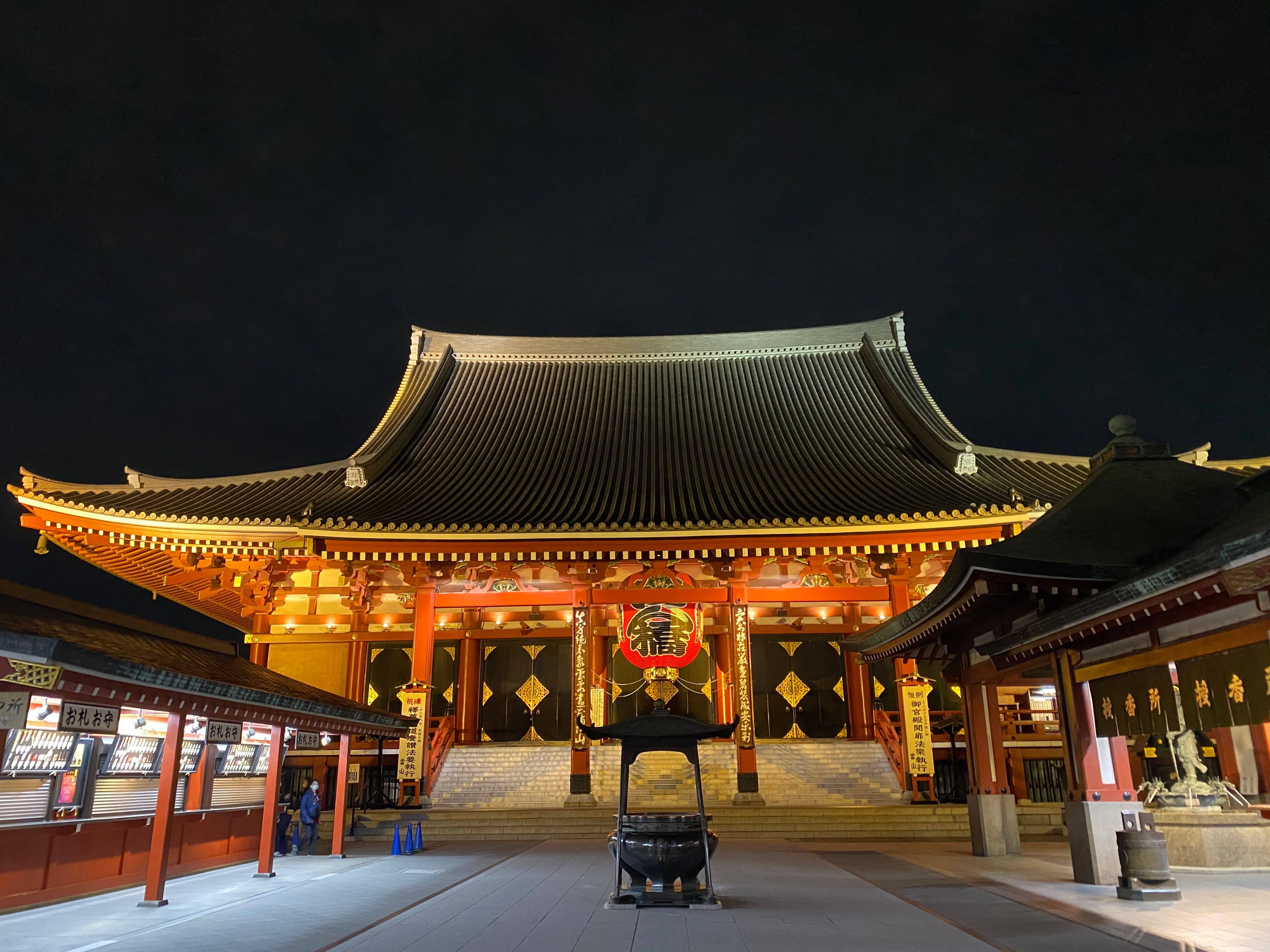
Asakusa Shrine beside Senso-ji, 2-3-1 Asakusa, Taito City, Tokyo (about 35.715 N, 139.797 E)
Entry
Free; no tickets or reserved seats
Getting there
Asakusa Station on the Ginza, Toei Asakusa, Tobu Skytree and Tsukuba Express lines; Ginza Line Exit 1 is 60 m from Kaminarimon
Recommended eSIM
Japan eSIM

Two million people and a hundred shrines in a few small streets

Sanja Matsuri honours the three men who founded Senso-ji in the seventh century after two fishermen pulled a statue of Kannon from the Sumida River, and it has run in its present form since the Edo period. For three days in May the neighbourhoods of Asakusa carry their mikoshi, portable shrines weighing up to a ton, through the streets on the shoulders of chanting, sweating teams, bouncing them to wake the gods inside. On Sunday the three great mikoshi of Asakusa Shrine come out at dawn and do not return until after dark. Tattooed carriers, geisha dances, Edo-period costumes, taiko and street stalls fill every lane around Senso-ji, and around 1.8 million people come to watch.

That density is why your phone matters. The mikoshi routes change by neighbourhood and by hour, the police close streets and funnel crowds one way, the four Asakusa stations each serve a different line with different exits, and the best viewing spots are published in Japanese on the shrine's and the neighbourhood associations' pages. Hotel Wi-Fi stays in the hotel; free station Wi-Fi collapses on Sunday morning. A Japan eSIM installed at home before you fly keeps the route map, the group chat and the transit app working when you need them most.

Following the mikoshi through the neighbourhoods

On Saturday about 100 mikoshi fan out to their own districts after the blessing at Senso-ji, and on Sunday the three great mikoshi each take a different route through the 44 neighbourhoods. The route maps and timing updates are posted online in Japanese on the day. With data and a translation app you follow the shrine you want; without them you stand on a corner hoping.

Station exits and one-way crowd control

Asakusa has four stations on four lines, and on Sunday morning the police close Nakamise-dori and set one-way pedestrian flows around Kaminarimon. A transit app tells you which station and exit is open and how to leave by the Tsukuba Express when the Ginza Line entrance is shut.

Regrouping in the crush

When a mikoshi comes down a lane, the crowd parts and closes again in seconds, and anyone who stopped to photograph it is thirty metres behind. Live location sharing in a group chat is how a family finds each other, and it needs every phone to have its own data.

Reading stalls, rules and the day's notices

Food stall menus, the neighbourhood association notices and the signs saying which streets are closed are all in Japanese. Camera translation reads them instantly with a connection, including the warning not to touch the mikoshi.

Install your eSIM before you fly and be online when you land — see matching plans

The complete guide

When Is Sanja Matsuri in 2027?

Sanja Matsuri 2027 is expected on Friday 21, Saturday 22 and Sunday 23 May 2027. The festival is held every year over the third weekend of May, running from the third Friday to the third Sunday of the month, which is how Sanja Matsuri 2026 fell on 15 to 17 May and why 2027 shifts to the weekend built around 21 May. While primary resources and festival schedules project these dates based on the calendar alignment, Asakusa Shrine explicitly notes that the definitive official schedule is formally released every spring (usually around March or April); therefore, these dates remain tentative projections until that official shrine announcement is made

Sanja Matsuri is not a lunar festival, so the dates move only with the calendar. The historical anchor is the shrine's grand festival rite on 17 and 18 May, and the modern festival is pinned to the nearest full weekend so that the neighbourhood teams can carry their mikoshi without taking days off work. Rare exceptions have happened: in 2016 the festival moved a week earlier because of a summit meeting, and in pandemic years it was reduced or postponed. Nothing of the kind is expected for 2027.

The three days, and the Thursday before them:

  • Thursday evening, 20 May 2027: the ceremony that installs the deities into the three great mikoshi at Asakusa Shrine; quiet, atmospheric and open to watch from the grounds

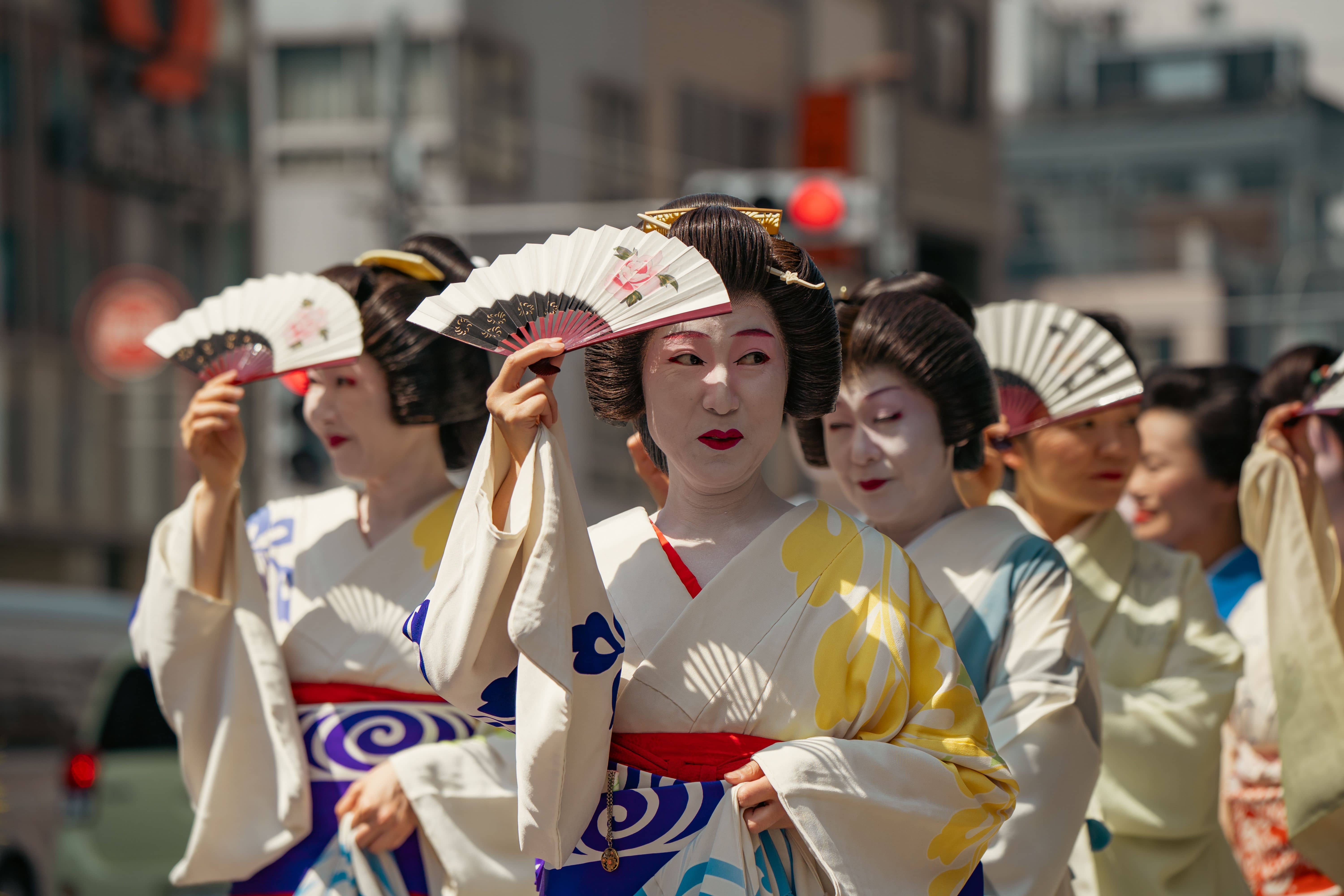
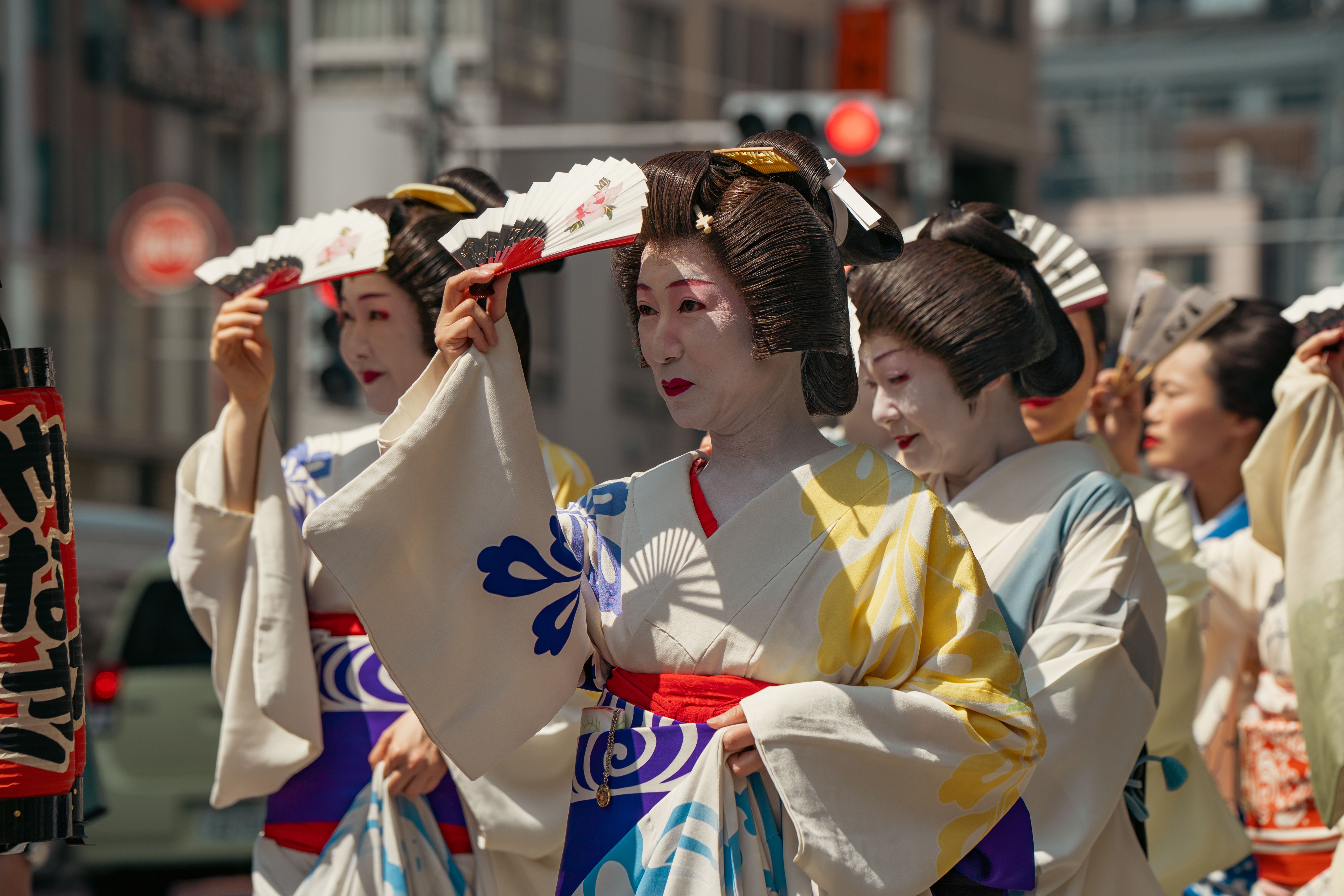
  • Friday 21 May: the Daigyoretsu grand parade of priests, officials, geisha, musicians and dancers in Edo-period dress through Asakusa from about 13:00, followed by the Binzasara dance dedicated at the shrine; from late afternoon, the Yoimiya, when the main mikoshi can be seen at the shrine

  • Saturday 22 May: the grand festival rite, then about 100 neighbourhood mikoshi gathering at Kaminarimon from around noon, paraded up Nakamise-dori to be blessed, then carried back to their own streets until evening

  • Sunday 23 May: the climax, when the three great mikoshi leave the shrine at dawn (miya-dashi) and are carried through all of Asakusa before returning after dark (miya-iri)

Geisha from the Asakusa district perform dances at the Asakusa Kenban on Saturday and Sunday afternoons, a quieter counterpoint to the mikoshi.

Tip: If you have one day, make it Sunday and be at the shrine before 6:00 for the miya-dashi; if you want the colour without the crush, Saturday's hundred mikoshi are the easier day.
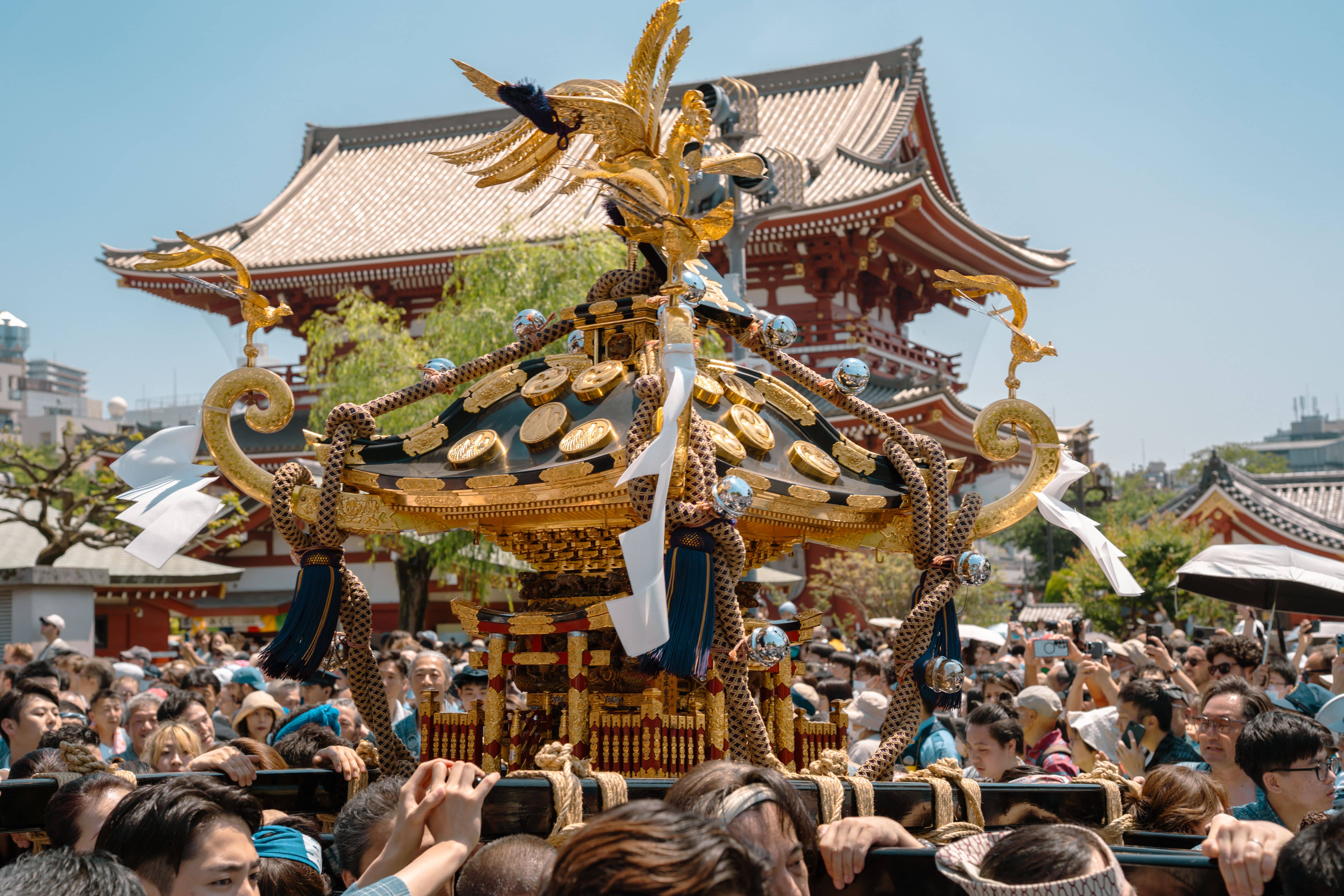
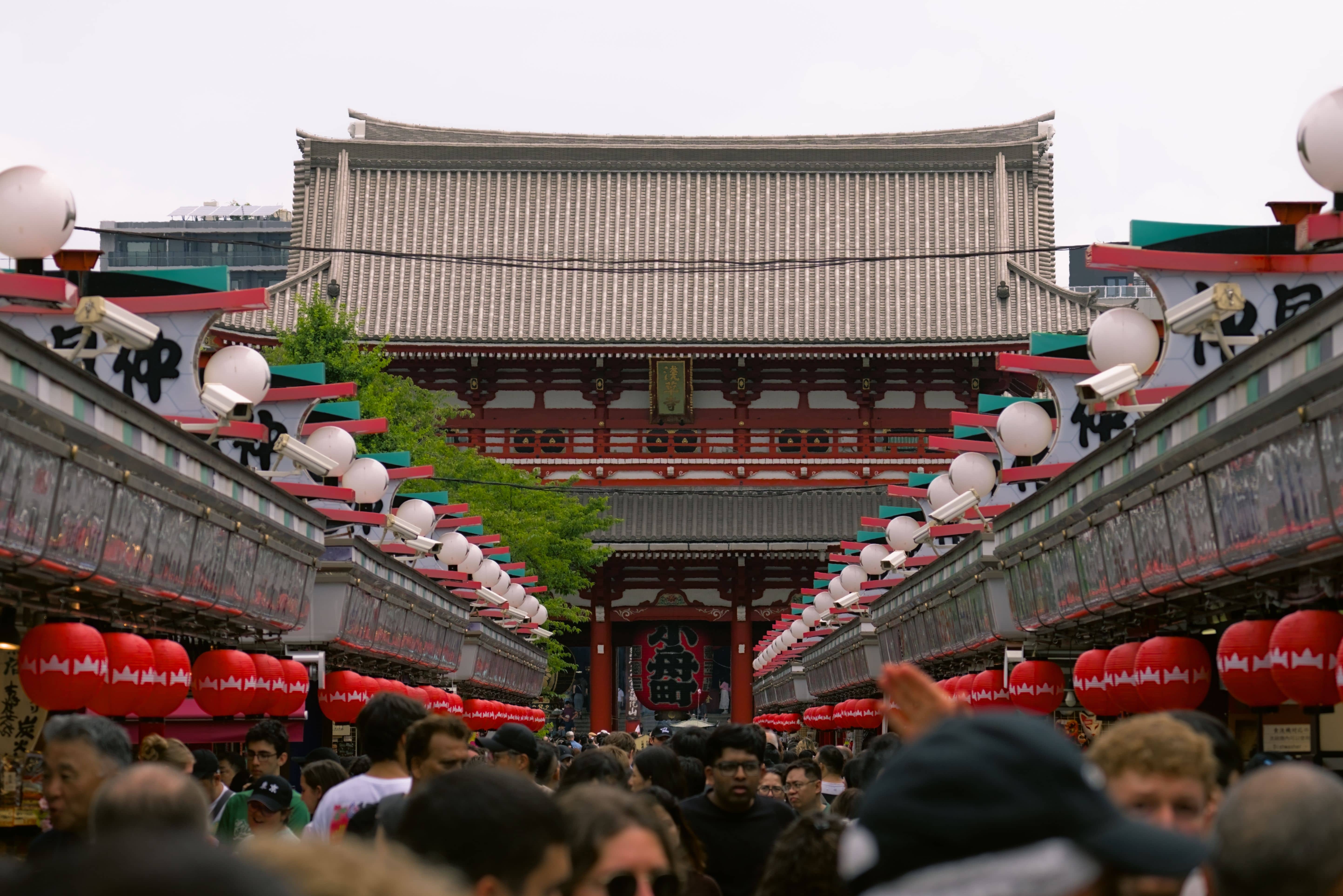
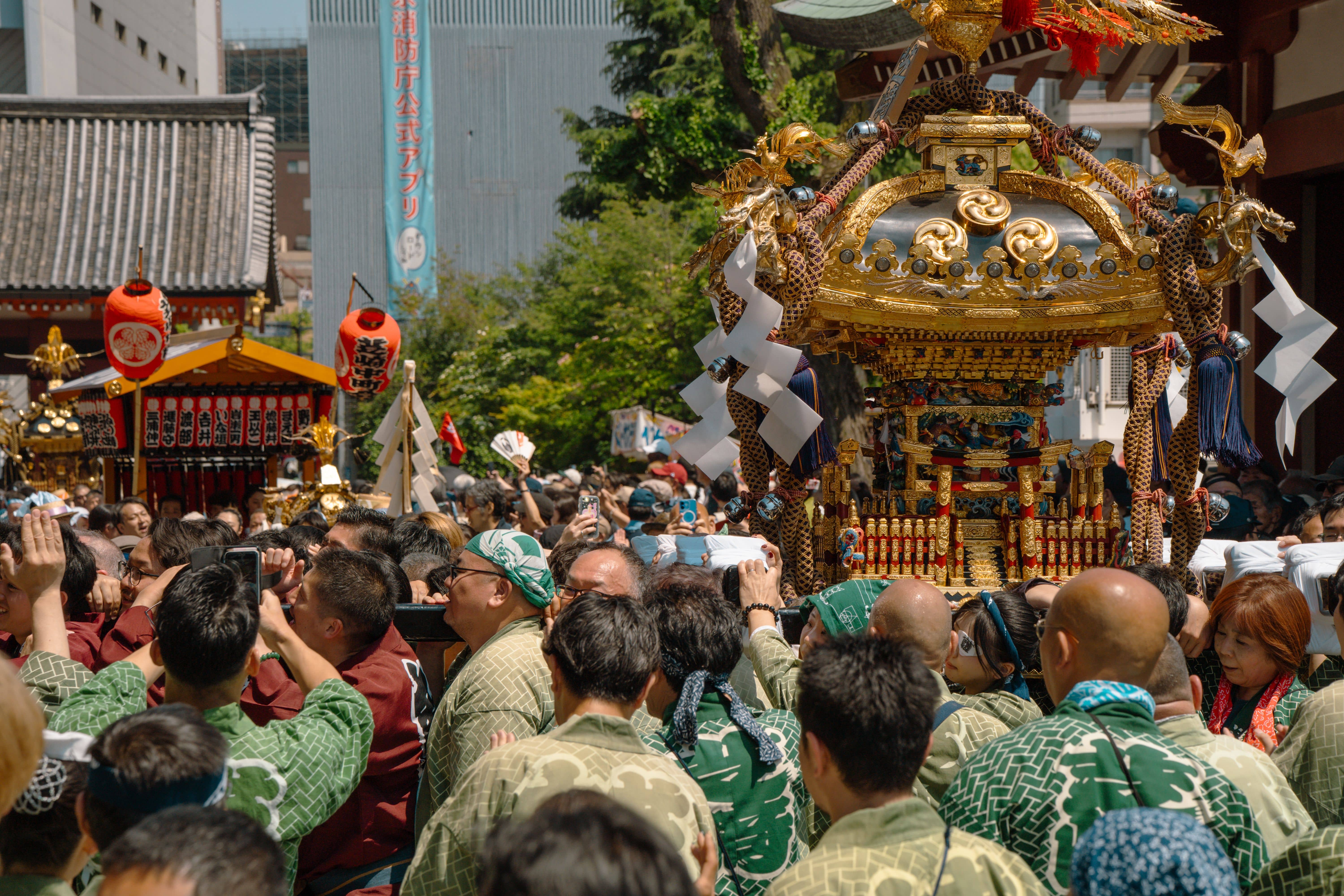
A crowd of festival carriers in matching happi coats hoisting a large golden mikoshi in front of the Hozomon gate at Senso-ji during Sanja Matsuri

Do You Need a Ticket, and What Does It Cost?

No ticket is needed for Sanja Matsuri. The parades, the mikoshi processions, the dawn departure on Sunday and the return after dark all happen in public streets and in the open grounds of Asakusa Shrine and Senso-ji, and there is no admission, wristband or reserved seating sold by the shrine. Visitors who search for Sanja Matsuri tickets find nothing because there is nothing to buy.

What does cost money:

  • Food and drink from the yatai stalls that line the streets around Senso-ji and Asakusa Shrine for all three days, almost all cash only

  • Shopping on Nakamise-dori and the side streets, which stay open through the festival

  • Optional viewing from private spaces: Premium packages from upscale venues overlooking the parade routes, such as the indoor lounge or outdoor terrace at The Gate Hotel Asakusa Kaminarimon, require advanced reservations and are priced based on custom dining/drinks menus. Alternatively, visitors can access the 8th-floor observation deck and café at the Asakusa Culture Tourist Information Center directly across from Kaminarimon Gate for panoramic views completely free of charge.

  • Guided festival walks from local tour operators, useful for the history and for finding the neighbourhood mikoshi, not required

  • Happi coats and festival goods from shops near the shrine if you want to dress the part (wearing one as a spectator is fine; joining a carrying team is not, unless a neighbourhood invites you)

Where the free viewing is best, and what it costs you in time:

  • The shrine grounds for Sunday's dawn departure: free, but the grounds fill by 5:00 and the police close them when full

  • Kaminarimon and Nakamise-dori: free, iconic and the most crowded; the police run one-way systems on Sunday

  • Side streets west of Senso-ji (Nishi-Sando, the Rokku entertainment district, Hoppy Street): free, far less crowded, and the mikoshi pass within arm's reach

  • The riverside on Sumida Park: free, open space, mikoshi from the eastern neighbourhoods and views of Skytree

Note: Touts occasionally sell "VIP viewing passes" online for Sanja Matsuri. There is no such thing issued by the shrine. Only a restaurant or hotel selling its own window seats is legitimate, and it will take the booking directly.

Donations to the shrine and the neighbourhood associations are welcome and go into the boxes at the shrine; they do not buy access to anything.

Spectators lining a narrow Asakusa shopping street as a neighbourhood mikoshi passes, with no barriers or ticket gates in sight
Need a steady connection for transit and maps?See eSIM plans

Where It Happens and How to Get There

Sanja Matsuri happens in Asakusa, in Taito City in eastern Tokyo, centred on Asakusa Shrine, which stands beside the main hall of Senso-ji Temple at 2-3-1 Asakusa; the shrine is at about 35.715 N, 139.797 E. The festival spreads through the 44 neighbourhoods of the shrine's parish, roughly the area between the Sumida River to the east, Kappabashi to the west, Kototoi-dori to the north and Asakusa-dori to the south.

Getting to Asakusa: four stations on four lines, all within a few minutes of Kaminarimon:

  • Tokyo Metro Ginza Line, Asakusa Station: the most central; Exit 1 is 60 metres from Kaminarimon. The Ginza Line runs from Shibuya, Ginza and Ueno

  • Toei Asakusa Line, Asakusa Station: two blocks south, connected underground; direct trains to and from both Haneda and Narita airports, which makes it the airport line for the festival

  • Tobu Skytree Line, Asakusa Station: in the EKIMISE building beside the Ginza Line station, with ramps and lifts for step-free access

  • Tsukuba Express, Asakusa Station: on the west side of the district near the Rokku entertainment area, five minutes to Akihabara and the quietest station on festival days

From the airports: the Toei Asakusa Line through-service from Haneda takes about 34 to 41 minutes and from Narita (via the Keisei Line) about 56 to 65minutes, with no change. Tokyo Station to Asakusa is about 15 to 20 minutes via the Ginza Line from Ueno or the Toei Asakusa Line from Nihombashi.

Getting around during the festival: everything is on foot. On Saturday afternoon and all of Sunday the streets around Senso-ji close to vehicles, buses are diverted and taxis cannot enter; the Sumida River water bus from Asakusa pier keeps running and is a pleasant way to arrive from Hamarikyu or Odaiba.

Tip: On Sunday, arrive and leave by the Tsukuba Express station on the west side. The Ginza Line entrances by Kaminarimon are the most congested points in Tokyo that morning, and the police close exits without notice.

Getting back late: Sunday's miya-iri finishes after 20:00 and the stalls run on; trains from all four stations continue until around midnight with the last local trains departing Asakusa Station between 23:50 and 00:15 depending on the line (e.g., the final Ginza Line train bound for Shibuya departs at 23:55), and the crowds thin steadily after the mikoshi return.

What Actually Happens, Hour by Hour

Each of the three days has its own rhythm, and the festival builds from a dignified parade to a dawn-to-dark street party. The times below follow the pattern of recent editions; while these time slots reflect the traditional flow of the festival, Asakusa Shrine explicitly notes that the final, definitive 2027 timetable is formally released every spring (typically around March or April) on their official platform, meaning these exact hours remain projected until that official announcement

  • Around 13:00: the Daigyoretsu grand parade sets off, a line some 300 metres long of musicians on floats, priests, city officials, tekomai dancers, steeplejacks singing work songs, heron-costumed dancers and Asakusa geisha, along Rokku Broadway and Nakamise-dori to the shrine

  • Afternoon: the Binzasara dance, a rice-planting dance with wooden clappers, performed at the shrine; the quietest ritual moment of the weekend

  • Late afternoon to evening: Yoimiya, when the three great mikoshi stand lit at the shrine and the stalls open

Saturday, 22 May:

  • Morning: the grand festival rite inside Asakusa Shrine

  • Around 12:00 to 12:30: about 100 neighbourhood mikoshi, including children's and women's mikoshi, gather at Kaminarimon, come up Nakamise-dori to the Hozomon to pay respects to Kannon, and are blessed at the shrine

  • Afternoon to evening: each mikoshi returns to its own streets and is carried around the neighbourhood, with sake, chanting and bouncing at every corner; this is the day to wander the side streets

  • 13:00 to 15:00: geisha dances at the Asakusa Kenban

Sunday, 23 May:

  • Before 6:00: the shrine grounds fill with carriers in matching happi coats; by 7:00 the three great mikoshi are lifted and fought over in the miya-dashi, the most intense two hours of the festival

  • Around 9:00: the three mikoshi head off in three directions, each to cover a third of the parish through the day

  • Through the day: follow one mikoshi through its neighbourhoods, or wait at Kaminarimon and Sumida Park where routes converge

  • 13:00 to 15:00: geisha dances again at the Kenban

  • After dark: the mikoshi return to the shrine in the miya-iri, lit by lanterns, and the deities are returned in a closing ceremony that ends the festival

Best viewing spots: the Hozomon steps for Saturday's blessings, the shrine courtyard railings before 5:30 on Sunday if you can bear the crush, and the corners of Hoppy Street and Nishi-Sando on both weekend days, where the mikoshi bounce and the crowd is thinner.

Tip: The sound tells you where to go. Listen for the "seiya, soiya" chant and the clack of the mikoshi bells; the streets around them are packed, the streets one block over are nearly empty.

Hundreds of carriers in happi coats crowding the courtyard of Asakusa Shrine at dawn as one of the three great mikoshi is lifted during the Sunday miya-dashi

Best Time to Arrive and What the Weather Is Like

Arrive in Tokyo by Thursday 20 May 2027 and stay through Sunday night, with Monday as a buffer; that gives you the Thursday evening ceremony as a quiet introduction, all three festival days, and no rush for a flight on the busiest evening. If you only have a weekend, Saturday and Sunday are the festival; Friday is the overture.

Crowd levels on a scale of 1 to 5:

  • Thursday evening: level 2; the ceremony at the shrine draws locals and photographers
  • Friday afternoon: level 3 along the parade route, level 2 elsewhere
  • Saturday from noon: level 4 around Kaminarimon and Nakamise-dori, level 3 in the neighbourhoods
  • Sunday 5:00 to 9:00: level 5 at the shrine and Senso-ji, the single most crowded hour of the year in Asakusa
  • Sunday daytime: level 4 wherever a great mikoshi is, level 2 a block away
  • Sunday evening miya-iri: level 4 at the shrine, with crowds thinning after 21:00

The weather in the third week of May is Tokyo's most comfortable: average highs around 23°C and lows around 17°C, with the plum rains not due until June. Rain falls on roughly a third of days, usually as passing showers rather than washouts, and the festival goes ahead regardless; mikoshi are carried in the rain and the carriers like it. Humidity is lower than in summer, mornings are cool, and the sun on the shrine courtyard at midday is strong.

Planning around it:

  • Layers: a light jacket for the dawn miya-dashi, a T-shirt by noon
  • A hat and sunscreen for the open courtyards and the riverside; umbrellas are useless in the crowd, so bring a light rain jacket instead
  • Comfortable shoes with closed toes; you will be stepped on
  • Water, since the stalls are a queue and the carriers have priority at the taps

Note: Sunrise is before 5:00 in late May, so the Sunday miya-dashi starts in daylight. Be in the shrine grounds by 5:00 or watch from the Hozomon side; after about 5:30 the police close the grounds when full.

Late May is also Tokyo's dry, bright shoulder season outside the festival, so the days around Sanja Matsuri are a good time for everything else the city offers.

Where to Stay and When to Book

Stay in Asakusa itself, and the dawn start on Sunday becomes a short walk instead of a pre-dawn train; the second-best choice is anywhere on the Ginza or Toei Asakusa lines within four stops. Asakusa has one of Tokyo's densest clusters of small hotels and ryokan, and for three nights a year all of them are full.

Areas to consider:

  • Around Senso-ji and the shrine (Asakusa 1 and 2 chome): ryokan, hostels, business hotels and a few boutique places within five minutes of the mikoshi; noisy on festival nights and the first to sell out

  • Kaminarimon and the riverside (Kaminarimon, Hanakawado): larger hotels with Skytree views, the water bus pier, the Toei Asakusa Line airport trains; close enough to walk to everything

  • Kappabashi and the west side near the Tsukuba Express: quieter, kitchen-town cafés, the easy station on Sunday; 10 to 15 minutes on foot to the shrine

  • Ueno: four minutes by Ginza Line, big hotel choice, Ueno Park; the sensible fallback

  • Kuramae and Oshiage: one or two stops away, newer hotels and hostels, Skytree next door

When to book: Asakusa's small hotels start taking festival-weekend bookings up to a year ahead, and regulars rebook as they check out. Rooms in Asakusa itself are largely gone by November 2026 for the 2027 festival; Ueno and Kuramae hold out until about February. Book by October 2026 for a room in the district, and by January for a convenient one nearby. During the peak festival weekend, reference rates typically range from 5,000 to 9,000 JPY per night for a capsule hotel, hostel, or simple ryokan dormitory bed; 15,000 to 28,000 JPY for a standard business hotel room near Kaminarimon; and from 35,000 to over 60,000 JPY for a premium riverside hotel with an unobstructed Tokyo Skytree view, with Tokyo's accommodation tax added per night.

Tip: Ask the hotel which neighbourhood association it belongs to. Many Asakusa ryokan and shops host their own mikoshi on Saturday, and guests get a front-row view, a cup of sake and sometimes a happi coat for the afternoon.

Check that the hotel has a luggage room and an early breakfast on Sunday; the dawn departure waits for no one, and the stalls do not open until later.

A quiet street of small hotels and ryokan in Asakusa at dusk with Senso-ji's five-storey pagoda visible behind the rooftops

Staying Connected During the Festival

Public Wi-Fi in Asakusa is everywhere and useless on the festival weekend. The station and city networks need registration and time out, the shrine grounds and the shopping streets have no network for the crowd, and when 1.8 million people pass through a few streets over three days, every hotspot stalls. Hotel Wi-Fi stays in the hotel. Your phone needs its own data, and a Japan eSIM installed before you fly is the simplest way to get it.

What you use data for at Sanja Matsuri:

  • The shrine's and the neighbourhood associations' route maps and timing updates, posted in Japanese on the day and read through a translation app
  • The transit app for which of the four stations and which exits are open, and the last trains
  • A group chat with live location for regrouping after a mikoshi splits the crowd
  • Camera translation of stall menus, closure notices and the signs around the shrine
  • Mobile payment where it is accepted, and finding a convenience-store ATM when the stalls want cash
  • Weather radar for the afternoon shower
  • Photos, video and calls home from under a bouncing mikoshi, which is the point

Set-up: check that your phone is unlocked and eSIM-capable (most phones from the last five years are), buy the plan, scan the QR code while you still have a reliable connection at home, and switch the line on when you land at Haneda or Narita. Japanese networks are excellent across Tokyo and on the airport trains; the only slowdown is the shrine courtyard on Sunday morning, when uploads crawl for an hour.

How much data: 1 to 2 GB a day covers maps, transit, messaging, translation and payments. Video is the variable; three days of filming mikoshi and sending clips home can double it. For a five-day Tokyo trip around the festival, 10 GB is comfortable, and 20 GB suits heavy social media use or a longer Japan itinerary. GoHub's Japan plans are listed on the eSIM for Japan page.

Tip: Download an offline map of Asakusa and screenshot the route maps each morning before you leave the hotel; carry a power bank, because a dawn-to-dark Sunday with the camera running empties a phone by lunchtime.

Keep your home SIM active for SMS so bank verification codes arrive, set the eSIM as your data line, and turn off data roaming on the home SIM.

Suggested itinerary

Day 1 · Friday, the Daigyoretsu parade

  1. Morning
    Senso-ji before the crowdsKaminarimon, Nakamise-dori and the main hall in the quiet hours; check in or drop bags nearby
  2. Around 12:30
    Rokku BroadwayClaim a spot on the parade route; the procession passes from about 13:00
  3. Afternoon
    Asakusa ShrineThe Binzasara rice-planting dance after the parade arrives
  4. Around 17:00
    Yoimiya at the shrineThe three great mikoshi lit at the shrine; stalls opening around the grounds
  5. Evening
    Hoppy StreetStewed offal and a hoppy beer at the open-front bars with the festival crowd

Day 2 · Saturday, a hundred mikoshi

  1. Morning
    Kappabashi kitchen streetA calm hour of knife and crockery shops before noon
  2. Around 12:00
    KaminarimonAbout 100 neighbourhood mikoshi gather and head up Nakamise-dori
  3. Around 13:00
    Hozomon stepsWatch the mikoshi pay respects to Kannon and receive their blessing
  4. Afternoon
    The side streets west of Senso-jiFollow a neighbourhood mikoshi home; the bouncing at corners is the show
  5. Around 14:00
    Asakusa KenbanGeisha dances, 13:00 to 15:00, a quiet counterpoint
  6. Evening
    Sumida Park riversideMikoshi from the eastern neighbourhoods and Skytree lit across the river

Day 3 · Sunday, the three great mikoshi

  1. Before 5:00
    Asakusa Shrine groundsThe courtyard fills with carriers; the police close it when full
  2. Around 7:00
    Miya-dashiThe three mikoshi lifted and fought over; the most intense hour of the festival
  3. Around 9:00
    Follow one mikoshiPick a direction and go with it through the neighbourhoods; eat at the stalls
  4. Early afternoon
    Hotel restThe mikoshi are out all day; take a break before the evening
  5. Around 18:30
    Kaminarimon approachesPosition for the return of the mikoshi by lantern light
  6. After dark
    Miya-iri at the shrineThe mikoshi return and the deities go home; leave via the Tsukuba Express
Tip: Stay in Asakusa, use the Tsukuba Express station on Sunday, and be inside the shrine grounds before 5:00 for the miya-dashi.

Recommended eSIM plans

Pick by trip length. Visiting several countries? Choose a regional plan.

Selected: eSIM Japan 10GB 10 Day(s)

Set up your eSIM in 3 steps

  1. Order and get your QR codeThe QR code arrives by email right after payment.
  2. Scan before you flySettings → Cellular → Add eSIM, while you still have Wi-Fi.
  3. Turn on data when you landSet the eSIM as your data line and enable data roaming.

Frequently asked questions

Yes. Sanja Matsuri happens entirely in public streets and in the open grounds of Asakusa Shrine and Senso-ji, with no admission, wristbands or reserved seats. The only costs are food and drink from the stalls, which take cash, and optional window or rooftop seats sold by individual restaurants and hotels on the parade route.

Sunday is the climax, when the three great mikoshi leave the shrine at dawn and return after dark, but it is also the most crowded day of the year in Asakusa. Saturday, with about 100 neighbourhood mikoshi carried through the streets from noon, has most of the colour and far more room. Friday's costume parade is the gentle introduction.

Not without an invitation. The mikoshi belong to Asakusa Shrine and the 44 neighbourhood associations, and carriers are members or their guests in registered happi coats. Some ryokan and shops that host a neighbourhood mikoshi invite guests to take a turn on Saturday; ask your hotel. Spectators must not touch a mikoshi.

It depends on your passport. Many nationalities enter Japan visa-free for short tourist stays, while others must apply in advance; the list and any online pre-registration requirements change, so check the Japanese embassy or consulate site for your country before travel [TO VERIFY current rules]. Carry your passport in Tokyo; hotels must see it at check-in.

Plan on 1 to 2 GB a day for route maps, transit apps, group chat with live location, translation and payments, and more if you film and upload a lot of mikoshi video. A 10 GB eSIM covers a five-day Tokyo trip; take 20 GB for heavy social media use or a longer Japan itinerary. Install it before you fly.

Light, comfortable clothes and closed shoes you can stand in for hours; a light jacket for the dawn start on Sunday and a hat for the midday sun. Bring a thin rain jacket rather than an umbrella, which is unusable in the crowd. A happi coat bought near the shrine is welcome festival wear for spectators.