App Store'da indirDownload Gohub App on the App Store
AsiaChina eSIM

Harbin Ice Festival 2027: Best Time to Visit, Tickets and Travel Tips

  • Late Dec 2026 – late Feb 2027 (official opening Jan 5)
  • China (Harbin, Heilongjiang)
  • Last updated: 7 Eki 2026

Harbin Ice Festival 2027

Overview

The Harbin International Ice and Snow Sculpture Festival is the largest ice festival in the world, held every winter in Harbin, north-east China. The official opening is 5 January 2027; the main venue, Harbin Ice and Snow World, is expected to open around 20 December 2026 and run to late February. Expect ice palaces up to 50 metres tall, lit in colour after dark, snow sculpture art on Sun Island and temperatures around -20°C.

Highlights

  • Official festival opening: 5 January 2027, the same date every year
  • Ice and Snow World expected to open around 20 December 2026 (date not yet official)
  • Ice buildings up to 50 metres tall, lit after dark, with a super ice slide
  • Standard adult ticket was 328 RMB in the 2026 season; VIP fast-track much higher
  • Metro Line 2 runs straight to Harbin Ice and Snow World station
  • January averages about -18°C; nights can reach -30°C

Good to know

Dates
Official opening Tue 5 Jan 2027; Ice and Snow World expected late Dec 2026 to late Feb 2027 (2026 season: 17 Dec to 21 Feb)
Opening hours
Ice and Snow World 10:00 to 22:00, last entry 21:30 (2026 season); Sun Island Snow Expo daytime only
Venue
Ice and Snow World and Sun Island, north bank of the Songhua River, Harbin; Zhaolin Park in the city centre
Entry
Ice and Snow World 328 RMB standard in 2026 (298 RMB opening week); Sun Island about 198 RMB; Zhaolin Park cheaper or free
Getting there
Harbin Taiping Airport, then taxi (45 min) or shuttle bus; Metro Line 2 to Harbin Ice and Snow World station
Recommended eSIM
China eSIM

A city of ice that only exists for two months

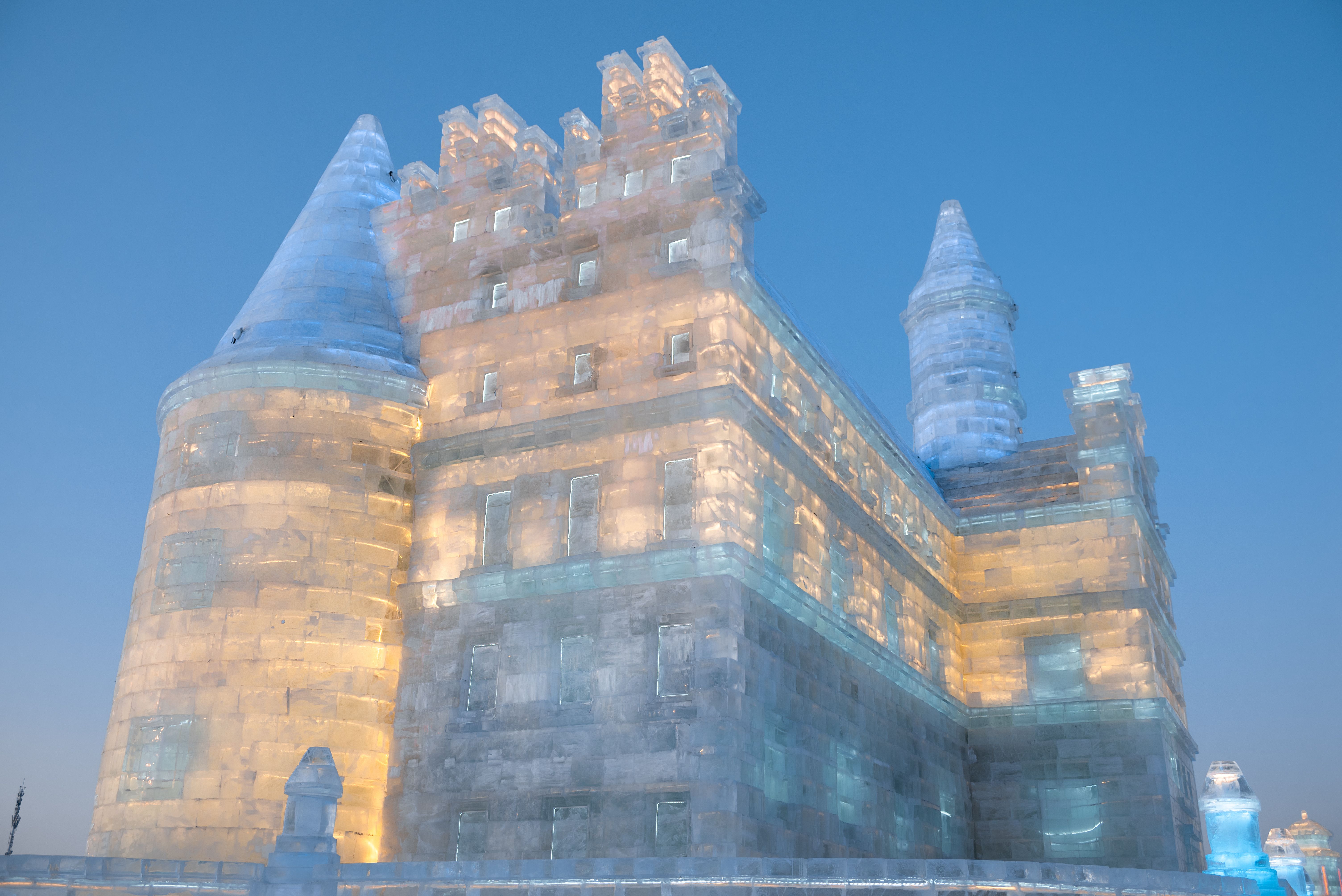
Every December, workers cut hundreds of thousands of blocks from the frozen Songhua River and build a city out of them: castles, towers, bridges and a cathedral-sized hall, all carved from clear ice and lit from inside in colour. Harbin Ice and Snow World is the main event of the Harbin International Ice and Snow Sculpture Festival, which has run since 1985 and officially opens on 5 January each year. Add the monumental snow carvings on Sun Island, the ice lanterns in Zhaolin Park, Russian-era architecture on Central Street and a food culture built for -20°C, and you have the most extraordinary winter trip in Asia.

It is also the trip where your phone works hardest. Everything is a timed e-ticket with a QR code, the venues are across the river from the city on a metro line that did not exist a few years ago, the cold kills batteries, and the signs, menus and warnings are in Chinese. Hotel Wi-Fi stays behind when you leave for the ice, and even when you find a hotspot, China's filters stop Google Maps, WhatsApp and Instagram from loading. A China eSIM installed at home before you fly means the QR code is on your screen, the map is live and the group chat works when the fireworks start.

Timed tickets on your phone

Ice and Snow World sells dated, timed tickets online, and the opening fortnight sells out early. The combined ticket with Sun Island must be used at the ice park first on the printed date. All of this lives in a Chinese app or a QR code in your email. Without data you cannot buy, cannot pull up the code at the gate and cannot fix a ticket that shows as expired.

Getting across the river and back

The ice venues sit on the north bank of the Songhua, 20 to 30 minutes from Central Street by car and one metro ride on Line 2. After 21:00, when tens of thousands of people leave at once, taxis vanish and the ride-hailing queue is the only way home. The metro app, a live map and a ride-hailing app all need a connection.

Staying together at -25°C

The park is huge, dark and dazzling, and the crowd in front of the main castle during the fireworks is dense. If a child or a grandparent drifts off, you need live location sharing in the group chat, not a plan to meet at a landmark everyone describes differently. Each phone needs its own data, and each phone needs to stay warm enough to work.

Reading menus, warnings and the slide queue

Food stalls, the slide queue boards, frostbite warnings and the metro ticket machines are in Chinese. Camera translation reads them instantly with data. It also tells you that the dish you are about to order is frozen pears, which is exactly what you want in Harbin.

Install your eSIM before you fly and be online when you land — see matching plans

The complete guide

When Is Harbin Ice Festival in 2027?

The Harbin International Ice and Snow Sculpture Festival officially opens on Tuesday 5 January 2027 and runs until late February. That 5 January date is fixed by tradition; every edition, including the 42nd in 2026, has opened on it. What moves from year to year is when the venues actually open and close, and that depends on the cold.

Harbin Ice and Snow World, the venue most people mean when they say "Harbin Ice Festival", opens as soon as the ice is thick enough on the Songhua River to harvest and the builders have finished. In the 2026 season it opened on 17 December 2025, well before the ceremonial 5 January date, and closed on 21 February 2026 when the thaw made the structures unsafe. For the 2027 season (the 28th Ice and Snow World, the 43rd festival), travel sources expect an opening around 20 to 24 December 2026, but this is not official yet. The organiser's pattern is to announce the scale and the ticket price in mid-October (the 2026 season's announcement came on 13 October 2025) and the opening date separately, nearer the season.

What is fixed and what is not:

  • Fixed: the official opening ceremony on 5 January 2027, with fireworks and a lit-up Ice and Snow World that night

  • Expected: Ice and Snow World open from around 20 December 2026

  • Expected: Sun Island Snow Sculpture Expo and the Zhaolin Park ice lanterns open from late December

  • Not guaranteed: the closing date. Late February is typical, but a warm spell can close the ice park earlier, and nobody will promise a date in advance

Dates worth noting inside the season:

  • 1 to 3 January 2027: China's New Year holiday, very crowded

  • 6 to 20 January: the sweet spot of deep cold, finished sculptures and ordinary crowds

  • 5 to 11 February 2027: Chinese New Year holiday week (New Year's Day is 6 February), the most crowded week of the season and the hardest for trains and hotels

  • Mid to late February: thaw risk rises, the ice loses its clarity, and the park can close with little notice

Tip: If you want certainty, travel between 6 and 25 January 2027. You get the official opening behind you, the ice at its clearest and a safe margin before Chinese New Year.

Check the Harbin Ice and Snow World official account and the Harbin tourism bureau for the 2027 announcement from October 2026 onwards before you book flights around the opening week.
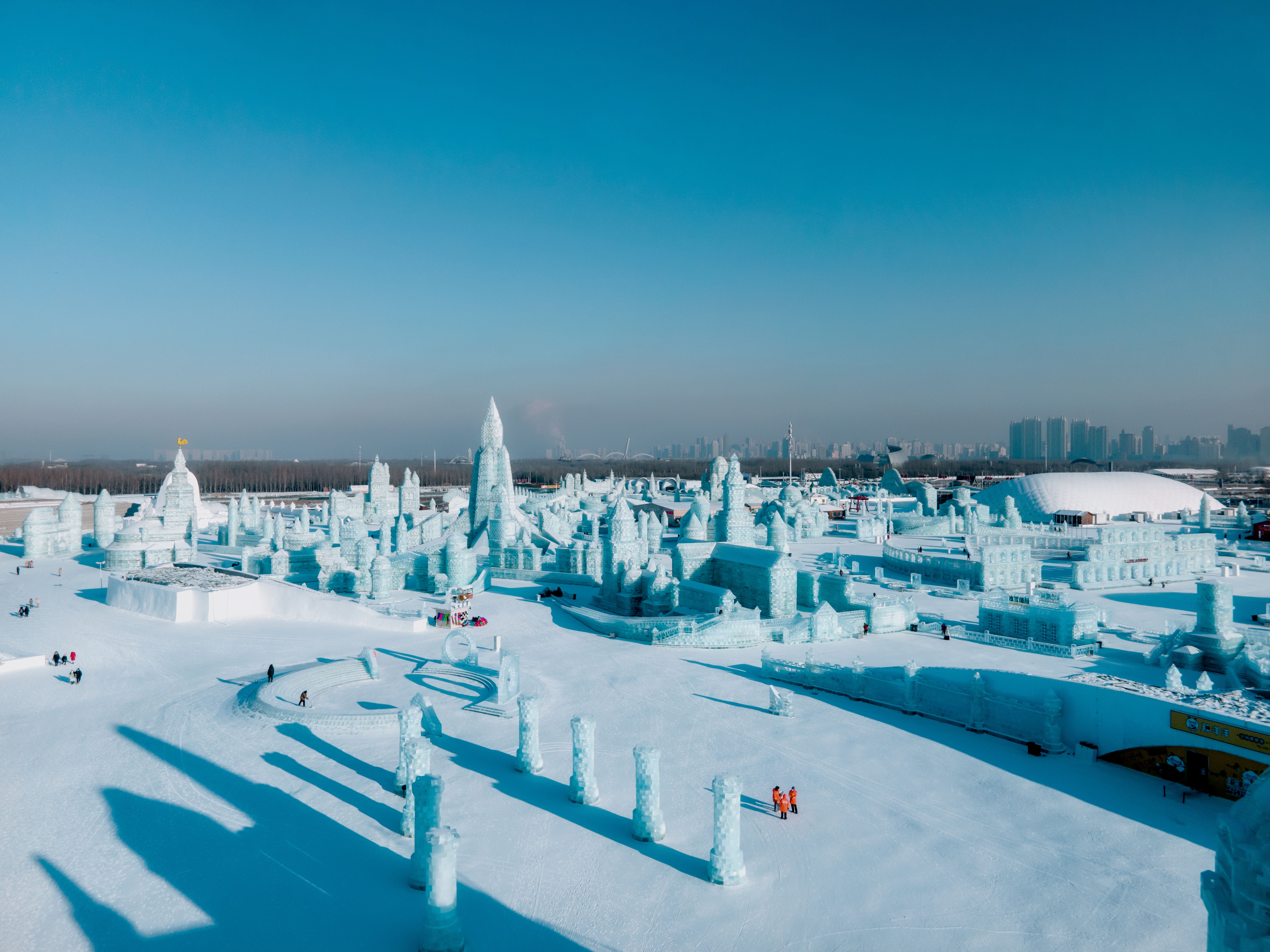
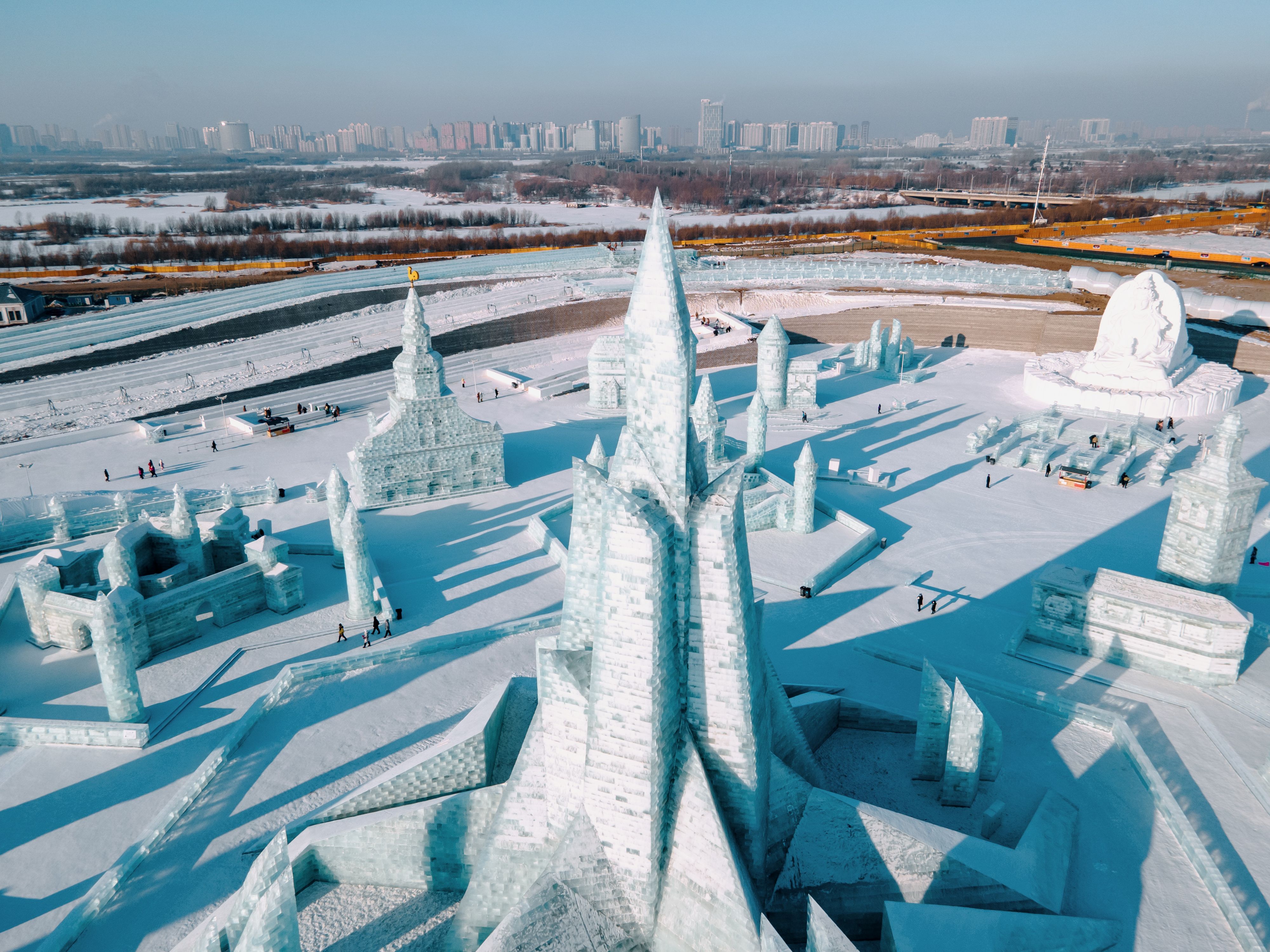
The main ice castle of Harbin Ice and Snow World lit in blue and purple at dusk with the crowd on the central plaza

Do You Need a Ticket, and What Does It Cost?

Yes, the two main venues are ticketed, and Ice and Snow World is the big cost of the trip. In the 2026 season a standard adult ticket was 328 RMB for most of the run, with a 298 RMB price in the opening week. The organiser confirmed in its October announcement that the fare was unchanged from the year before, so expect a similar figure for 2027 [TO VERIFY in the October 2026 announcement]. VIP packages have run up to about 988 RMB and bundle fast passes for the super ice slide and the Snowflake Ferris Wheel, reserved seating for the shows and the indoor ice exhibition.

The other venues and what they cost:

  • Sun Island International Snow Sculpture Art Expo: about 198 RMB in 2026 (some sources list up to 240 RMB) daytime only, no lighting

  • Zhaolin Park Ice Lantern Fair in the city centre: cheaper, sometimes free, and small enough for a first evening

  • Combined Ice and Snow World plus Sun Island ticket: saves a little, but it is directional. It is dated to the ice park, so you must use it there on the printed date, and the Sun Island half may be used the following day. Use it the other way round and the system reports the ticket as expired

  • Inside Ice and Snow World, most slides and viewing areas are included; fast passes, some rides and the indoor exhibition are extras

Where to buy: tickets are sold through the venue's official WeChat account and app and through the Harbin tourism bureau's platform, with dated, timed entry. Since the 2026 season, overseas bank cards have been accepted for ticket purchases and there are multilingual guides at the park. The opening fortnight and the Chinese New Year week sell out in advance; the rest of January is usually available a few days ahead. Reputable tour operators and the big Chinese travel apps resell the same tickets at a small markup, which is worth it if you cannot register on the Chinese platforms.

Note: Entry is timed. Book an afternoon slot around 15:00: one ticket then covers the ice in daylight, at dusk and fully lit after dark, which is the whole point.

Free things: Central Street's ice sculptures and the lit-up Russian façades, the frozen Songhua River itself (walk on it, watch the swimmers, rent a sled), the Flood Control Monument square, and the exterior of St Sophia Cathedral. You can have a spectacular Harbin evening without a ticket; you just cannot have Ice and Snow World.

Need a steady connection for transit and maps?See eSIM plans

Where It Happens and How to Get There

The festival's two ticketed venues sit side by side on the north bank of the Songhua River in Songbei District, across the water from Harbin's historic centre. Ice and Snow World is at coordinates about 45.78 N, 126.60 E, and the Sun Island Snow Expo is a short ride away on the same island. Zhaolin Park, with the ice lanterns, is in the city centre near Central Street.

Getting to Harbin:

  • Harbin Taiping International Airport (HRB) has direct flights from Beijing (about 2 hours), Shanghai (about 2.5 hours) and many other Chinese cities, plus some international routes. From the airport, a taxi to the city centre takes about 45 minutes and costs around 100 to 150 RMB; airport shuttle buses cost about 20 RMB; a rail link to the city also operates route and timing]

  • High-speed trains from Beijing take 5 to 6 hours to Harbin West or Harbin North; Harbin Station has the best city-centre access. Return trains fill fast around Chinese New Year, so book both directions together on the official 12306 platform

Getting to Ice and Snow World:

  • Metro Line 2 runs directly from Harbin Railway Station, Central Street and Harbin North Railway Station to Harbin Ice and Snow World station. From the Central Street area allow about 10 to 12 minutes

  • Taxi or ride-hailing from Central Street takes 20 to 30 minutes outside peak hours; fares around 25 to 40 RMB. In the evening rush after closing, expect a long wait

  • Many hotels and tour operators run shuttle buses to the park in the afternoon and back after the fireworks

Getting to Sun Island Snow Expo: Line 2 also serves Sun Island; alternatively a short taxi from Ice and Snow World, or the cable car across the river from Stalin Park in the city centre when it runs .

Getting back late: the park closes at 22:00 and the last metro trains leave soon after 22:30 last train]. Walk to the metro rather than joining the taxi scrum, or pre-book a return transfer. At -25°C, standing in a taxi queue for 40 minutes is a real risk, not an inconvenience.

Tip: Buy a metro card or load the Harbin transit code into Alipay or WeChat Pay before the evening so you are not fumbling with a ticket machine in gloves at 22:00.

The city centre itself is walkable in daylight: Central Street, St Sophia Cathedral, Zhaolin Park and the riverfront are within 20 minutes of each other, with warm cafés and the Central Street underground mall in between.

What Actually Happens, Hour by Hour

A Harbin festival day runs on daylight for snow and darkness for ice. Here is a day that works, with the main moments at Ice and Snow World; show times for 2027 will be posted by the park in December.

Morning, around 9:00 to 13:00: Sun Island Snow Sculpture Expo. The snow carvings have no lighting, so this is a daylight venue; the low morning sun gives the best shadows on the carvings and the glare is lower than at midday. Allow two to three hours, then eat lunch somewhere warm on the island or back in the city.

Around 15:00: enter Ice and Snow World on an afternoon-slot ticket. In daylight the ice is clear and you can see the blocks, the scale and the carving; this is also the quietest hour for the super ice slide and the ice bikes, go-karts and tubing lanes. The slide queue can reach 30 to 60 minutes later in the evening.

Around 16:00: dusk. The lights come on inside the ice and the whole park turns to colour; the 20 minutes around sunset are the best photographs of the trip, so be somewhere with a wide view, such as the main plaza in front of the central castle or the top of a tower stair.

Evening: the park's programme runs on the main stage and across the ice structures:

  • Projection-mapped animations on the ice surfaces, in rotation through the evening

  • Live shows and the King's Chariot parade on the central avenue

  • Fireworks over the park on peak nights and on the official opening night, 5 January 2027

  • The Snowflake Ferris Wheel for the overhead view of the lit city

  • Ice bars, hot drinks and the frozen-food stalls along the main avenues

Around 20:30: leave or warm up. Four hours is the sensible maximum outdoors; the indoor ice exhibition, the restaurants and the heated rest halls are where you recover. Last entry is 21:30 and closing is 22:00.

Tip: Arrive at the super ice slide within an hour of your entry time, before the evening crowd, or buy the fast pass; it is the one queue in the park that regularly exceeds an hour.

On your first evening in the city, Zhaolin Park's ice lantern fair is a one- to two-hour walk-through, an easy introduction before the main event the next day.

Visitors sliding down the long super ice slide at Harbin Ice and Snow World with the lit ice towers in the background

Best Time to Arrive and What the Weather Is Like

Arrive between 6 and 20 January 2027 for the best balance of cold, finished sculptures and manageable crowds. The ice is at its clearest and thickest in January, the official opening on 5 January is done, and you are still three weeks clear of the Chinese New Year rush.

Crowd levels on a scale of 1 to 5:

  • 20 to 31 December 2026: level 3. Early-season prices and sculptures still being finished; some venues may not yet be open
  • 1 to 3 January 2027: level 5. New Year holiday
  • 4 to 5 January: level 4 to 5. Opening ceremony and fireworks on the 5th
  • 6 to 20 January: level 3. The sweet spot
  • 21 January to 4 February: level 3 to 4, rising
  • 5 to 11 February: level 5. Chinese New Year week; book everything months ahead or avoid
  • 12 to 28 February: level 2 to 3, with the park's closing date uncertain

The weather is the coldest you will have travelled in. January in Harbin averages around -18°C, with daytime highs near -13°C and nights of -25°C or colder; cold snaps push past -30°C. The air is dry and it snows little in January; the ice and snow you see are harvested and built, not fallen. Wind along the river makes the venues feel colder than the city streets, and the ice park has nowhere to hide from it except the heated halls.

How to work with it:

  • Keep outdoor sessions to two to four hours, with heated breaks: the Sun Island halls in the morning, cafés on Central Street in the afternoon, the rest halls inside Ice and Snow World at night
  • Enter the ice park in the afternoon, not at opening; evening is the point and four hours is enough
  • Cover every piece of skin at night; frostbite on cheeks and fingers happens to visitors every year
  • Phone batteries drain in minutes at -25°C; keep the phone inside your coat and carry a power bank in an inside pocket

Note: Sunrise is around 7:00 and sunset around 16:00 in January, so the ice park is fully lit from late afternoon and you lose nothing by sleeping in.

If you are combining Harbin with Beijing or Shanghai, do Harbin first: the cold is easier to face fresh, and a 5 to 15°C city afterwards feels like spring.

Where to Stay and When to Book

Stay around Central Street (Zhongyang Dajie) in Daoli District, and you have the historic city, Zhaolin Park, the riverfront, restaurants and Metro Line 2 to the ice park all within walking distance. It is roughly half the price of staying next to Ice and Snow World on the north bank, and it is where you want to be in the evenings you are not at the park.

Areas to consider:

  • Central Street and the riverfront: the obvious base, with hotels from budget to high-end along the pedestrian street and the side streets; walk to St Sophia, the frozen river and the ice lanterns

  • Around Harbin Railway Station and Nangang District: good for train arrivals, big business hotels, 10 to 15 minutes by metro to Central Street

  • Songbei District near Ice and Snow World: a few resort-style hotels with views of the ice park; convenient for the evening, isolated and pricier the rest of the time, and you will still travel into the city for everything else

  • Near Harbin West Station: only for a late arrival or early departure by high-speed train

When to book: hotels around Central Street for the January peak begin filling in October, and the opening week and Chinese New Year week sell out by late November. Book by early November 2026 for choice and sane rates; after mid-December you will be choosing from what is left. Reference rates for mid-January nights: a budget hotel near Central Street about 250 to 400 RMB, a mid-range hotel about 500 to 800] RMB, an international chain or a Songbei resort hotel from 1,000 to 2,000 RMB. Expect surcharges for 1 to 5 January and 5 to 11 February.

Tip: Confirm that the hotel is registered to host foreign guests before you book; Harbin has many domestic-only budget hotels, and the police registration rule is enforced. Also ask whether the room has a humidifier; the heated air in Harbin is desert-dry.

Pick a hotel with a luggage room and an early breakfast if you plan the Sun Island morning, and check the cancellation policy against the risk of a flight delay in a snowstorm.

Staying Connected During the Festival

Wi-Fi is not something to plan around in Harbin. The ice park has no usable public network for the crowd, the cafés on Central Street ask for a Chinese mobile number to log in, and hotel Wi-Fi goes through China's filters, so Google Maps, Gmail, WhatsApp, Instagram and most Western apps will not load on it. A VPN over hotel Wi-Fi is slow and unreliable, and it is no use at all when you are standing at the gate trying to open a ticket QR code.

What you use data for during the festival:

  • Buying and showing timed e-tickets for Ice and Snow World and Sun Island
  • Metro Line 2 directions, the transit code in Alipay or WeChat Pay, and ride-hailing after closing
  • Camera translation of menus, slide queue boards and cold-weather warnings
  • A group chat with live location for regrouping in the dark, crowded park
  • Alipay and WeChat Pay for stall food, hot drinks, sleds on the river and taxis; every payment needs a live connection
  • Weather alerts and the park's official account for closing notices in a cold snap or a thaw
  • Video calls home from inside an ice castle, which is the call everyone wants to make

The fix is a China travel eSIM that routes data so your usual apps work, installed at home before you fly. Check your phone is unlocked and supports eSIM, buy the plan, scan the QR code while you still have a good connection, and turn the line on when you land. 4G and 5G coverage at Ice and Snow World, Sun Island and along Line 2 is strong; it slows briefly during the fireworks when everyone uploads at once.

How much data: 1 to 2 GB a day covers maps, translation, tickets, payments and messaging. Video is the variable; a night of filming the lit castles and sending clips home can double it. For a four-day Harbin trip, 10 GB is comfortable, and 20 GB suits heavy social media use or a longer China itinerary. GoHub's China plans are listed on the eSIM for China page.

Tip: The cold is the real connectivity problem. A phone at -25°C can shut down with 40 percent battery left. Keep it against your body, use a power bank from an inside pocket, and screenshot your tickets and hotel address in case it dies at the gate.

Keep your home SIM active for SMS so bank verification codes arrive, set the eSIM as your data line, and turn off data roaming on the home SIM.

What to Eat and Buy

Harbin eats like a cold Russian border city, which is what it is. The food is heavy, hot and often shared, and the frozen street snacks are a local joke on the climate that you should take part in.

What to try:

  • Guobaorou: crispy sweet-and-sour pork, Harbin's signature dish, on every menu
  • Hongchang: Harbin red sausage, a Russian-style smoked sausage sold by the stick on Central Street and in delis; take some home vacuum-packed
  • Dalieba: the huge round Russian bread from the old Central Street bakery, eaten with sausage and pickles
  • Dongbei stew: pork and sauerkraut, chicken with mushrooms, or a lamb hotpot, the right dinner after four hours in the ice park
  • Frozen pears and frozen persimmons: eaten half-thawed, sweet and slushy; sold from street carts
  • Tanghulu: candied hawthorn skewers, frozen solid outdoors in Harbin
  • Madieer ice cream: the Central Street ice cream brick eaten outside at -20°C, a rite of passage
  • Russian cuisine in the restaurants of the old quarter: borscht, stroganoff, blini and vodka

Where: Central Street and the lanes off it have the widest choice and English picture menus; Daoli's side streets have the Dongbei family restaurants locals prefer; the ice park has food halls and stalls but at park prices, so eat a proper lunch beforehand and treat the park food as snacks and hot drinks. Sun Island has a few heated restaurants near the expo. Most places take Alipay and WeChat Pay; carry some cash for street carts.

Tip: Do not drink alcohol before or inside the ice park. It feels warming and it is the opposite; combined with -25°C it is the easiest way to end up in the first-aid room.

What to buy: red sausage and Russian bread for the journey home, Russian nesting dolls and chocolate on Central Street, fur and down clothing from the winter markets at prices far below home, Harbin beer merchandise, and ice-festival souvenirs from the official shop at the park.

A street vendor's cart on Central Street in Harbin stacked with frozen candied hawthorn skewers (tanghulu) in the snow

Packing, Money, Etiquette and Safety

Pack for -25°C with wind, and assume you will stand still outdoors for long stretches.

  • A long down parka rated well below -20°C, over a fleece and a merino or thermal base layer

  • Insulated, waterproof winter boots with thick soles and grip; the ground inside the park is ice

  • Thermal leggings under snow pants or lined trousers

  • A hat that covers the ears, a balaclava or face mask, and a scarf over the top

  • Ski gloves over thin liner gloves that work with a touchscreen

  • Thick wool socks and foot warmers; hand warmers for every pocket (sold on Central Street if you forget)

  • Sunglasses or goggles for Sun Island's snow glare and the wind at the ice park

  • Moisturiser, lip balm and a nasal spray; the indoor heating is brutally dry

  • Two power banks kept inside your coat, and a phone case with a lanyard

  • Passport (carry it daily), your eSIM already installed, tickets screenshotted

Money: mobile payment is universal, and both Alipay and WeChat Pay accept foreign Visa, Mastercard and other international cards. Set one up before you leave and test it. Ice and Snow World accepts overseas bank cards at the ticket office. Carry cash for street carts and sled rentals on the river; the big bank ATMs accept foreign cards. Budget per day excluding flights: a tight day with a hostel, street food and the metro about 250 to 350 RMB; a comfortable day with a mid-range hotel, two restaurant meals, both main venues and a taxi about 800 to 1,200 RMB. Over a four-day trip, plan on 1,500 to 2,500 RMB plus tickets and accommodation. Tipping is not customary.

Etiquette and things to avoid:

  • Do not climb on or carve into the sculptures; the ice is thinner than it looks and the fines are real

  • Queue for the slides and the Ferris wheel; pushing in front of families causes trouble

  • Do not touch metal railings with bare skin; wet skin freezes to it instantly

  • Ask before photographing the winter swimmers and the sled drivers on the river

  • Do not walk on the river outside the marked areas

Safety and health: frostbite and falls are the main risks. Check each other's cheeks and noses for white patches every half hour, keep moving, and go indoors at the first numbness. Walk with short steps on ice and use the handrails. Emergency numbers are 110 for police, 120 for ambulance and 119 for fire; the park has first-aid stations and heated halls. Keep your hotel address in Chinese on paper in case your phone dies.

Note: If you have heart or circulation problems or asthma, talk to your doctor before the trip; -25°C with wind is a real physiological stress, and children and older relatives feel it fastest.

Families, Older Relatives and Side Trips

Harbin is a brilliant trip for children if you keep the sessions short, and a demanding one for anyone with limited mobility or circulation.

With young children:

  • Snowsuits, mittens on strings, balaclavas and foot warmers are not optional; buy them on Central Street if you arrive without

  • Do the Sun Island snow expo in the morning when the light is good and the cold is lightest, and spend one to two hours, not three

  • Enter Ice and Snow World around 15:00 and plan to leave by 19:30, with a heated break every 45 minutes; the slides and the ice bikes are the highlights for kids

  • The frozen Songhua River by the Flood Control Monument has sleds, ice bikes and dog carts at low prices and is a better second afternoon than another ticketed venue

  • Harbin Polarland and the indoor ice exhibition are warm-weather fallbacks for a cold snap

With older relatives: the ice park involves a lot of walking on ice in the dark, with stairs on the towers and long distances between warm halls. A folding stool, a hotel-arranged car to the gate, an afternoon entry for the lights at dusk and a 19:00 exit make it workable; the Snowflake Ferris Wheel gives the whole park from a heated cabin. Skip Sun Island if time and stamina are short, and spend the extra morning on Central Street, St Sophia and the old Russian quarter, all with warm cafés at hand.

Tip: Pick one ticketed venue per day and never both on the same day with children or grandparents. The cold accumulates.

Side trips if you have more days:

  • China Snow Town (Xuexiang), about 5 to 6 hours by road, for deep-snow village scenery; book a tour, as independent access is awkward

  • Yabuli ski resort, about 2.5 to 3 hours away, for skiing or snow play

  • Volga Manor, a Russian-style estate outside the city, half a day with its own ice and snow park

  • Siberian Tiger Park on the north bank, a morning with children

  • Beijing or Shanghai afterwards, by high-speed train or a two-hour flight; Harbin Taiping Airport is also an entry point for China's transit visa exemption, which suits a Harbin-then-elsewhere itinerary (for eligible passport holders holding onward tickets to a third country/region)

Suggested itinerary

Day 1 · Arrival and the city centre

  1. Around midday
    Harbin Taiping Airport to Central StreetTaxi takes about 45 minutes; buy hand warmers and a face mask at the first shop you pass
  2. Afternoon
    Central Street (Zhongyang Dajie)Russian façades, red sausage, the Madieer ice cream rite of passage and a feel for the cold
  3. Late afternoon
    St Sophia CathedralThe classic Harbin photo; the square is lit after dark
  4. Around 17:30
    Zhaolin Park ice lanternsA small, walkable introduction to carved ice before the main event tomorrow
  5. Evening
    Dongbei dinner near Central StreetGuobaorou and a sauerkraut stew; eat early and sleep, tomorrow is long

Day 2 · Sun Island and Ice and Snow World

  1. Around 9:30
    Sun Island Snow Sculpture ExpoMetro Line 2; morning light is best for the snow carvings and the glare is lower
  2. Around 12:30
    Lunch on Sun Island or back on Central StreetWarm up fully before the afternoon
  3. Around 15:00
    Enter Ice and Snow WorldAfternoon-slot ticket; see the ice in daylight and hit the super ice slide before the evening queue
  4. Around 16:00
    Main plaza at duskThe lights come on inside the ice; stay in one wide spot for the 20 minutes around sunset
  5. Evening
    Shows, projection mapping and the Ferris wheelWarm up in the heated halls every 45 minutes; fireworks on peak nights
  6. Around 20:30
    Metro Line 2 back to the cityLeave before closing to beat the 22:00 exodus and the taxi scrum

Day 3 · The frozen river and the old city

  1. Morning
    Flood Control Monument and the frozen SonghuaSledding, ice bikes and winter swimmers; pay the sled drivers in cash
  2. Late morning
    Stalin Park riverfront walkCross to the north bank by cable car if it is running, or stay on the south bank
  3. Around 13:00
    Russian lunch in the old quarterBorscht and blini in one of the heritage restaurants
  4. Afternoon
    Harbin old Jewish quarter and Daoli backstreetsWarm museums and cafés between short outdoor stretches
  5. Evening
    Central Street one last timeLit ice sculptures along the pedestrian street, red sausage and bread for the journey
Tip: Arrive in mid-January, do the ice lanterns the first evening, Sun Island in the morning and Ice and Snow World from mid-afternoon on day two, and keep day three for the river and the old city.

Recommended eSIM plans

Pick by trip length. Visiting several countries? Choose a regional plan.

Selected: eSIM China 20GB 30 Day(s)

Set up your eSIM in 3 steps

  1. Order and get your QR codeThe QR code arrives by email right after payment.
  2. Scan before you flySettings → Cellular → Add eSIM, while you still have Wi-Fi.
  3. Turn on data when you landSet the eSIM as your data line and enable data roaming.

Frequently asked questions

Yes, if you can handle the cold. Nothing else on earth looks like a lit city of carved ice at -20°C, and the scale of Harbin Ice and Snow World is hard to believe until you walk through it. The trip is expensive for China, with a standard ticket around 328 RMB in 2026 and winter-peak hotel rates, and it is physically demanding. Go for two to four days, dress properly, and it is one of the great winter trips.

Plan three days in Harbin. One day covers Ice and Snow World from mid-afternoon into the evening, which is the main event and needs three to four hours. A second morning covers the Sun Island Snow Sculpture Expo. A third day gives you the frozen Songhua River, Central Street, St Sophia Cathedral and the Zhaolin Park ice lanterns. Add days for China Snow Town or Yabuli, both of which need an overnight trip.

Very cold. January averages around -18°C, with daytime highs near -13°C and nights of -25°C or lower, and cold snaps below -30°C. The air is dry and it rarely snows in January. Inside Ice and Snow World in the evening, wind off the river makes it feel colder still. Dress in a long down parka, thermal layers, insulated boots, a balaclava and ski gloves, and keep outdoor sessions to two to four hours with heated breaks.

It depends on your passport. China has expanded visa-free entry for many nationalities and offers a transit visa exemption for which Harbin Taiping Airport is an eligible entry point, but the rules and durations change frequently [TO VERIFY current rules for your nationality]. Check with the Chinese embassy or consulate in your country at least two months before travel. Carry your passport daily in Harbin; it is required for hotel check-in and train tickets.

Plan on 1 to 2 GB a day for e-tickets, maps, translation, mobile payments and messaging, and more if you film and upload a lot of video from the lit ice castles. A 10 GB eSIM plan comfortably covers a four-day Harbin trip; take 20 GB for heavy social media use or a longer China itinerary. Buy and install the eSIM before you fly so your usual apps work from the moment you land, and keep the phone warm or the battery will die before the data runs out.

Usually, yes. Harbin Ice and Snow World typically opens around 20 December once the ice is thick enough, and in the 2026 season it opened on 17 December, well before the official festival opening on 5 January. December has cheaper opening-week tickets (298 RMB in 2026) and smaller crowds, but some sculptures may still be unfinished and the opening date is only announced shortly beforehand, so book a flexible trip and confirm with the organiser first [TO VERIFY 2026 opening date].