App Store'da indirDownload Gohub App on the App Store
AsiaJapan eSIM

How to Visit Awa Odori in 2027: Dates, Access and Where to Stay

  • Aug 11 – 15, 2027 (street dances Aug 12 – 15)
  • Japan (Tokushima, Shikoku)
  • Last updated: 9 Eki 2026

Awa Odori 2027

Overview

Awa Odori is a 400-year-old Obon dance festival held in Tokushima City on Shikoku every mid-August, and the largest dance festival in Japan: around a thousand dance groups and more than a million people fill the city centre for four nights. The 2027 edition is expected on 11 to 15 August, with an indoor opening on the 11th and the street dances from 18:00 on 12 to 15 August. Watching from the street is free.

Highlights

  • Expected 11 to 15 August 2027; street dances 12 to 15 August from 18:00
  • Around 1,000 dance groups and over a million visitors across four nights
  • Free from the pavement; reserved stage seats from about 2,800 JPY
  • Join the dance yourself in the open niwaka-ren groups
  • Tokushima is 2.5 hours from Osaka by highway bus, 75 minutes from Tokyo by air
  • Hot and humid Obon weather: around 30°C by day, mid-20s at night

Good to know

Dates
Expected Wed 11 to Sun 15 Aug 2027 (indoor opening on the 11th, streets 12 to 15); 2026 ran the same dates; confirmation in spring
Opening hours
Street stages 18:00 to about 22:00 or 22:30 in two evening blocks; daytime stage shows from early afternoon
Venue
Tokushima City centre, 10 to 15 minutes on foot from JR Tokushima Station; about 34.07 N, 134.55 E
Entry
Free from the streets; reserved enbujo seats about 2,800 to 4,500 JPY standard, premium blocks to about 15,000 JPY and above (recent editions)
Getting there
Highway bus from Osaka or Kobe in about 2.5 hours; Tokushima Awaodori Airport 30 minutes from the station by limousine bus; flights from Haneda about 75 minutes
Recommended eSIM
Japan eSIM

A whole city dancing for four nights

Awa Odori began in the 1580s, by the usual story, when the lord of Tokushima Castle gave the townspeople sake to celebrate its completion and they danced through the streets. Four centuries on, the dance is the same loose-limbed, two-beat strut to shamisen, flutes, drums and bells, and the chant that goes with it says the fools who dance and the fools who watch are both fools, so you may as well dance. Every mid-August, during Obon, around a thousand ren dance groups parade down the lit streets of Tokushima City in straw hats and yukata, the men low and comic, the women tall and precise on their geta, and more than a million people come to watch and, at the marked points, to join in.

That crowd, in a small city, on the hottest nights of the year, is why your phone matters. Seats at the street stages are e-tickets sold months ahead; the stage map, the schedule and the rain notices are in Japanese; the highway buses from Osaka sell out and run late; hotels in Tokushima are gone by spring, so many visitors commute from Naruto, Takamatsu or Osaka and depend on a last bus or train. Hotel Wi-Fi stays where you slept, and public hotspots in the festival zone collapse at 20:00. A Japan eSIM installed before you fly keeps the tickets, the maps, the bus timetable and the group chat working through all four nights.

Reserved seats, stage maps and the two-block timetable

Each street stage sells dated seats for two evening blocks, with different stages hosting different groups on different nights. The e-ticket, the seat map and the nightly line-up live in Japanese booking platforms and the organiser's site, and you need a connection to open them at the entrance and to decide which stage to watch tomorrow.

Buses that sell out and trains that stop early

The Awa Express from Osaka and the trains to Naruto and Takamatsu are the lifeline for anyone sleeping outside Tokushima, and they fill on festival nights. The bus booking site, the JR timetable and a taxi app on your phone are what get you back to a bed after the 22:00 finish.

Finding each other between stages

The four outdoor stages and the free streets are spread across the city centre, and the crowd between them moves in one direction. Live location sharing in a group chat is how a family that stopped to join a niwaka-ren finds the others, and it needs every phone to have its own data.

Reading the rain call and the stall menus

Storms are common in August and the organiser posts delays and cancellations in Japanese; so are the stall menus, the stage rules and the signs at the open-dance meeting points. Camera translation reads them in seconds with a connection, which matters when the notice says tonight's second block has moved indoors.

Install your eSIM before you fly and be online when you land — see matching plans

The complete guide

When Is Awa Odori in 2027?

Awa Odori 2027 is expected on Wednesday 11 to Sunday 15 August 2027, with the indoor opening performances on the 11th and the main street dances on the evenings of 12 to 15 August. The dates do not move: the Tokushima festival is fixed to the Obon season, and the organiser describes it as the five days from 11 to 15 August every year. Awa Odori 2026 ran on exactly those dates, and the 2027 programme will be confirmed by the Tokushima City organising body in spring with the official confirmation and ticket application guidelines scheduled to be released by the Tokushima Awa Odori Executive Committee in early April 2027.

The festival is not lunar. Obon in most of Japan is observed on the fixed dates of 13 to 16 August, and Awa Odori sits across the start of it, which is why the city is at its fullest on the 13th and 14th, when the country is on holiday too.

The shape of the five days:

  • 11 August: the indoor opening, with the famous ren performing on stage at the city's halls; ticketed, and the only chance to see the top groups seated and up close

  • 12 to 15 August: the main event, with daytime stage shows from early afternoon and the street dances on the outdoor enbujo stages from 18:00, in two evening blocks, until about 22:00 or 22:30

  • Final night, 15 August: the so-odori grand finale, when hundreds of dancers fill a stage at once, is the moment the whole festival builds to

Around the dates: the Obon travel peak runs from about 8 to 16 August, with the outbound crush on 11 to 13 August and the return on 15 and 16; the Koenji Awa Odori in Tokyo, the biggest offshoot, follows at the end of August, and the Awa Odori Kaikan museum in Tokushima stages the dance year-round for anyone who misses the dates.

Tip: Travel on 10 or 11 August, before the Obon outbound peak, and leave on the morning of the 16th; the buses and trains out of Tokushima on the night of the 15th are the most crowded hour of the festival.
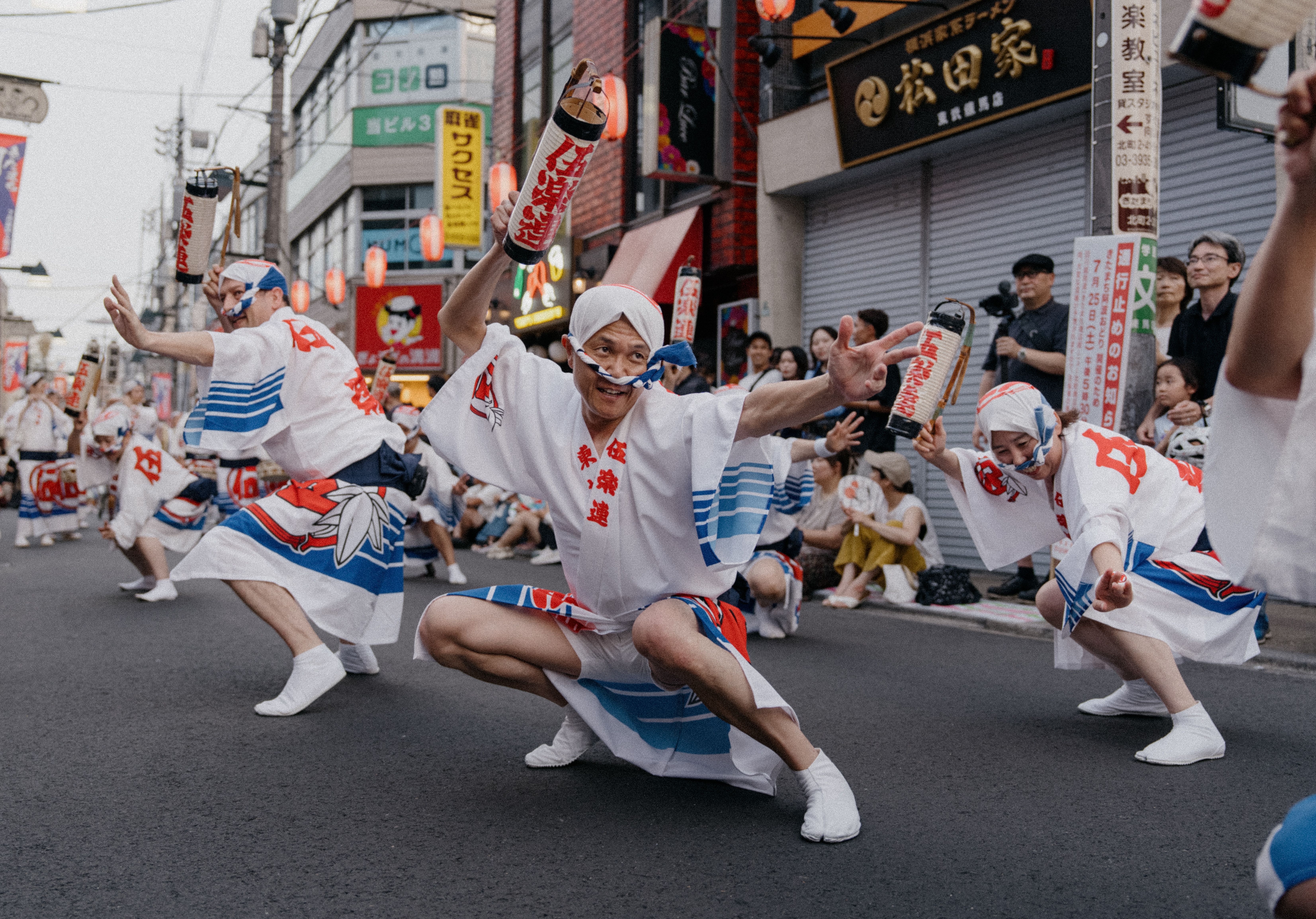
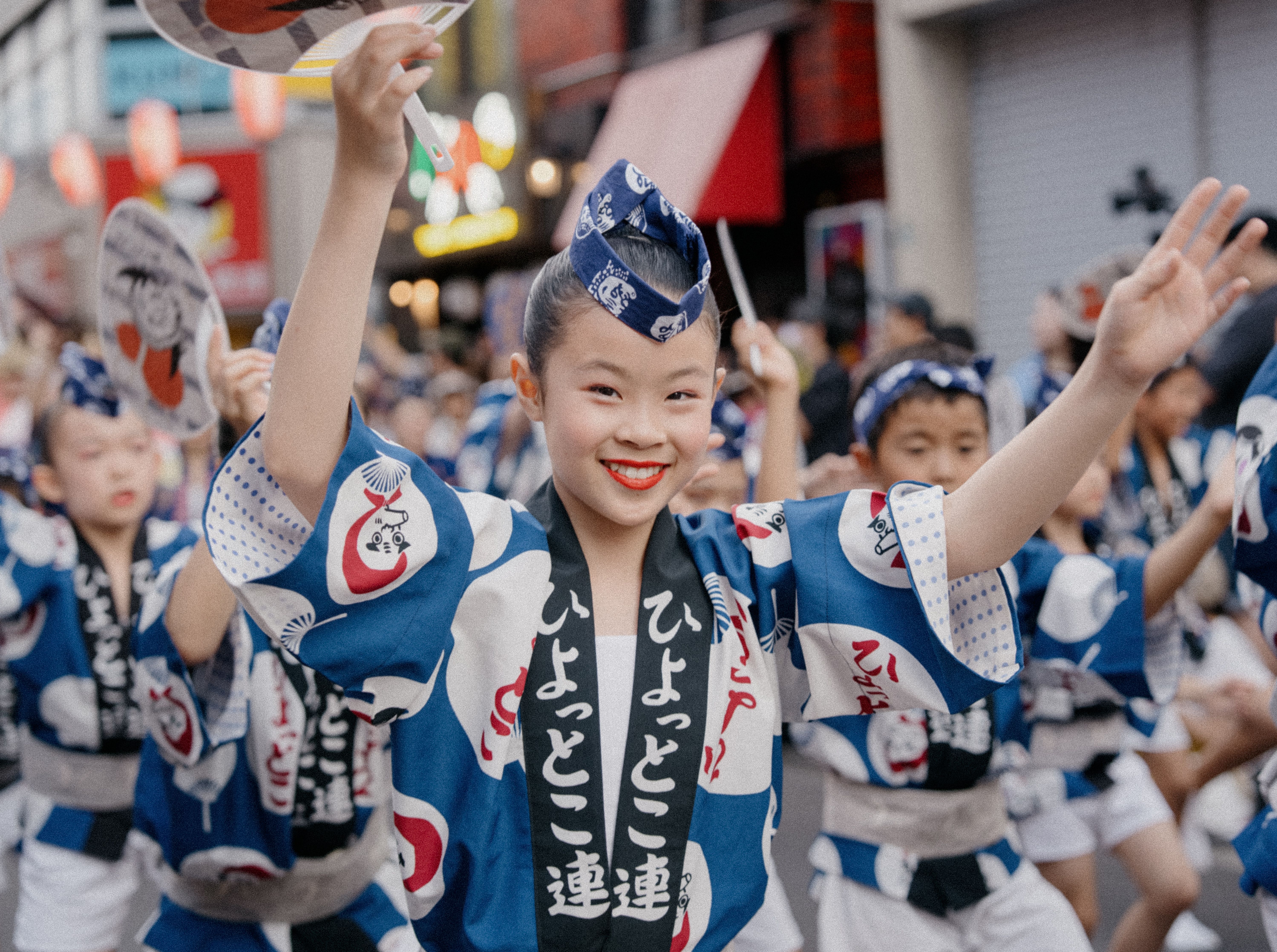
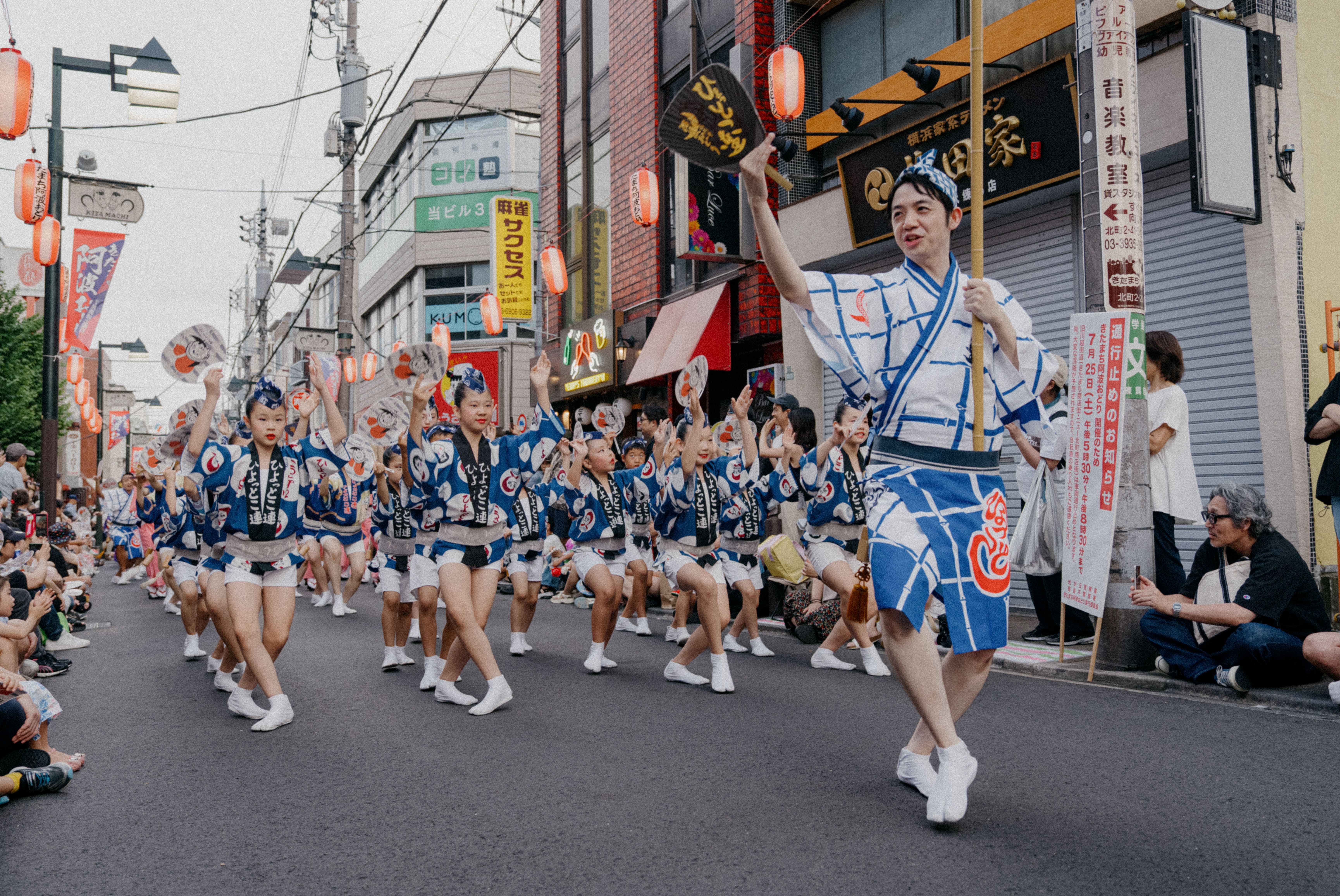
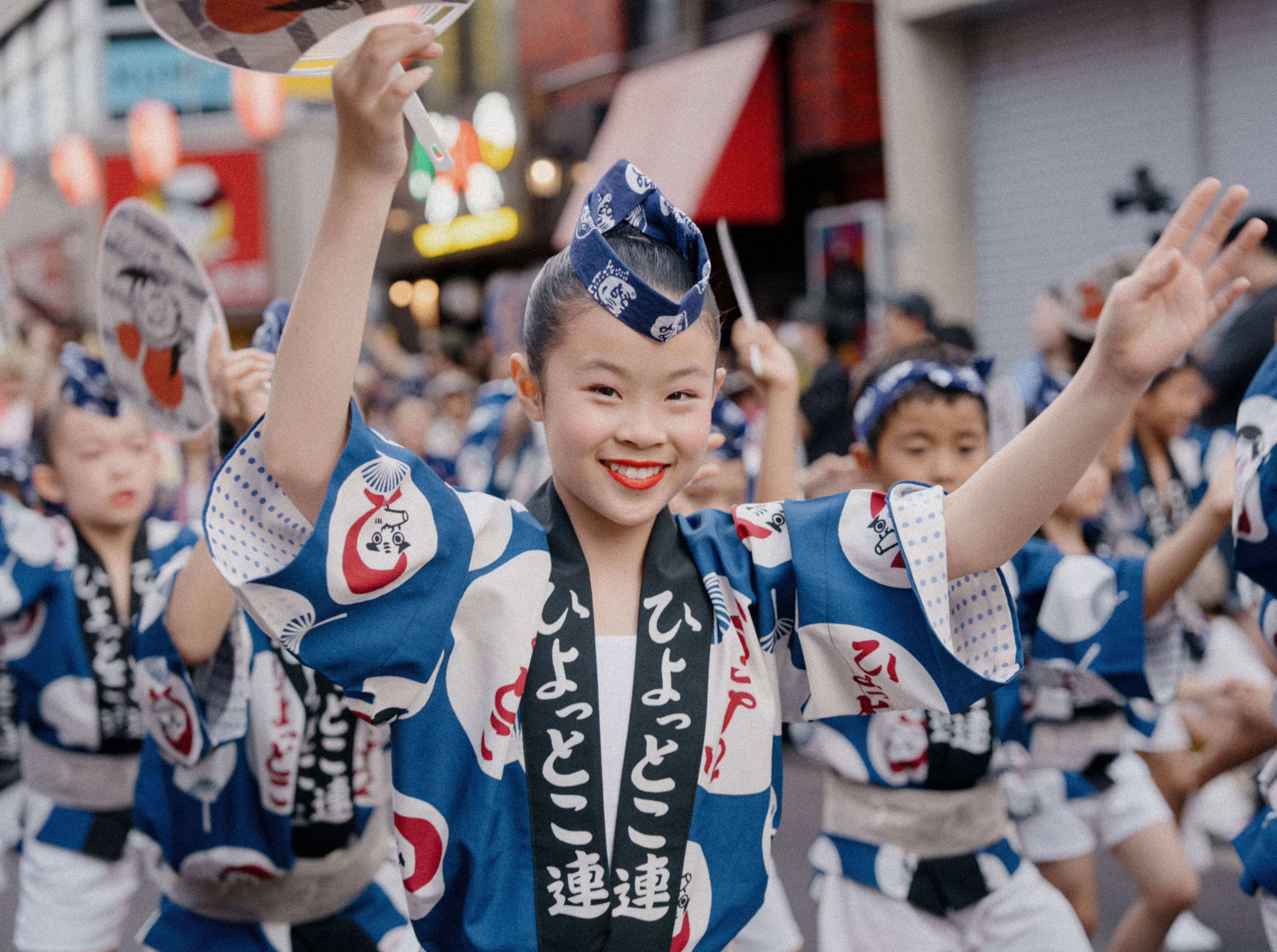
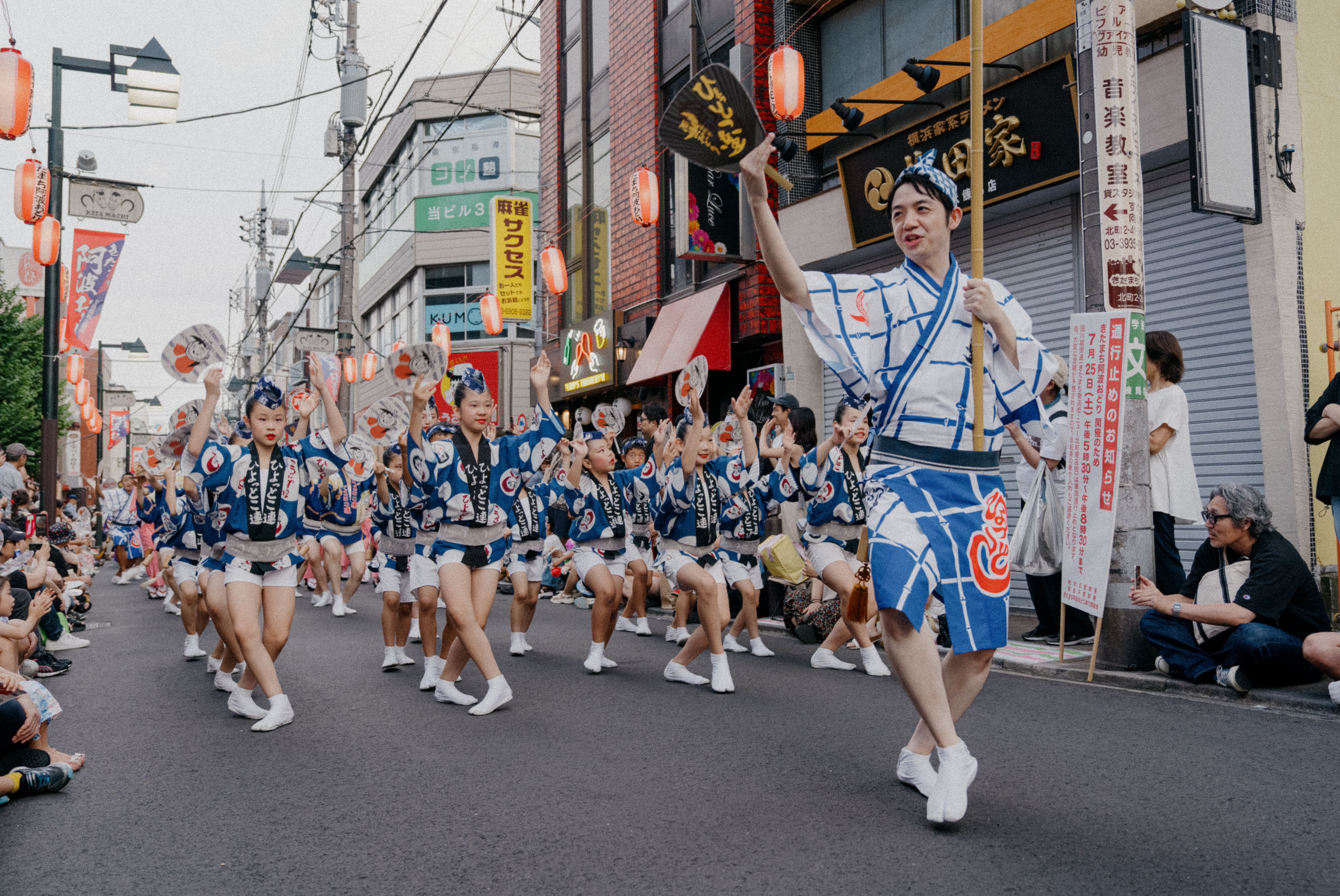
Female Awa Odori dancers in straw amigasa hats and yukata dancing in formation on their geta down a lit Tokushima street

Do You Need a Ticket, and What Does It Cost?

No ticket is needed to see Awa Odori. The dances pass through the streets of central Tokushima, and the pavements, the free stages and the lanes where groups wait their turn are open to everyone. Awa Odori tickets exist for the reserved seats at the outdoor street stages, where you sit in tiered stands as group after group dances the length of the street towards you, and for the indoor shows.

Reserved seats, at recent published prices [TO VERIFY 2027]:

  • Standard seats at the enbujo street stages (Aibahama, Minami-Uchimachi, Ryogokuhonmachi and Shinmachibashi): about 2,800 to 4,500 JPY depending on stage and row, sold per evening block; the first block at Aibahama has run from 18:00 to 19:40, with a second block after
  • Premium and sponsor seats in the best blocks: into the 15,000 JPY range and above; in 2023 the organiser sold premium seats at 200,000 JPY per person, which drew national debate
  • Indoor opening and daytime shows on 11 August and the festival days: ticketed by hall, typically a few thousand yen
  • Awa Odori Kaikan, the year-round museum and stage: about 1,000 JPY for a reserved seat at an evening show, the fallback outside the dates

Where to buy: through the festival's official ticketing in Japan, with English routes on the main Japanese ticket platforms, and through travel marketplaces that bundle a seat with a bento. Sales open in spring; the best seats for the 13th and 14th go first. Hotels and tour operators also hold allocations.

Free viewing that is as good as a seat:

  • The side streets where ren line up before entering a stage, close enough to hear the shamisen tuned
  • Shinmachi Bridge and the riverside, where groups cross between stages
  • The free stage near the station and the shopping arcades, with dances through the evening
  • The niwaka-ren meeting points, where you do not watch at all; you join

Note: Nobody sells "Awa Odori admission". A seat at a named stage for a named block, or a hall ticket, is a real purchase; anything else is resale or nothing.

The real cost is the bed. Tokushima's hotels book out months ahead and spike for the week, which is why many visitors sleep in Naruto, Takamatsu or Osaka.

Reserved tiered seating along a Tokushima street stage filled with spectators watching Awa Odori dancers pass at night
Need a steady connection for transit and maps?See eSIM plans

Where It Happens and How to Get There

Awa Odori happens in the centre of Tokushima City, the capital of Tokushima Prefecture on the north-east corner of Shikoku, with the street stages and free streets spread across the downtown between JR Tokushima Station and the Shinmachi River, roughly 10 to 15 minutes on foot from the station; the festival zone is at about 34.07 N, 134.55 E (specifically spanning the major viewing stages around the Awa Odori Kaikan and the Shinmachi River banks)

. How to get to Awa Odori is really a question of how to reach Tokushima, which has no Shinkansen.

From Osaka and Kobe, the usual way:

  • Highway buses from Osaka (OCAT in Namba, and the terminals near Osaka Station) and Kobe Sannomiya cross the Akashi Kaikyo and Naruto bridges to Tokushima Station in about 2.5 hours; one way costs roughly 2,100 to 4,100 JPY depending on operator and fare type, with 3,800 JPY a typical full fare. Buses run frequently through the day and sell out in festival week, so book at least a week ahead

  • By rail, the long way: Shinkansen from Shin-Osaka to Okayama in about 40 minutes, then the Seto Ohashi line and a limited express to Tokushima, about 2 to 3 hours in all and around 10,000 JPY

From Tokyo:

  • Fly from Haneda to Tokushima Awaodori Airport in about 75 minutes; the airport is about 8 km north of the city and the limousine bus reaches Tokushima Station in about 30 minutes for about 500 JPY. Discount fares disappear in festival week

  • Or Shinkansen to Okayama and the Shikoku trains, a long day

From Kansai International Airport: about 2 hours 15 minutes by car over the bridges, or a bus into Osaka and the Awa Express.

Alternative airports: Takamatsu Airport, about 1 hour 40 minutes by road, if Tokushima flights are full.

Getting around the festival: everything is on foot inside the zone, which is closed to traffic in the evenings. The Mount Bizan ropeway at the Awa Odori Kaikan gives the daytime view over the city.

Tip: If you sleep in Naruto or Takamatsu, check the last train from Tokushima before the second block; it leaves not long after the dancing ends, and the station is a 15-minute walk through the crowd.

Getting back late: the streets reopen around 22:30, and the Osaka-bound night buses and the last trains fill at once. Book the return bus with the outbound, or stay a night in the city if you can find one.

What Actually Happens, Hour by Hour

Awa Odori's day has a quiet afternoon and a loud evening, and the evening is split into two blocks that run on every outdoor stage at once. The exact 2027 timetable will be published by the organiser; the pattern below follows recent editions.

Afternoon, from about 13:00:

  • Daytime stage shows in the halls and at the free stage near the station, with the famous ren performing seated-style sets

  • The Awa Odori Kaikan's hourly shows for anyone who wants to learn the steps before the evening

  • Food stalls open around the stages; the heat is at its worst and the streets are not yet closed

Evening, from 18:00:

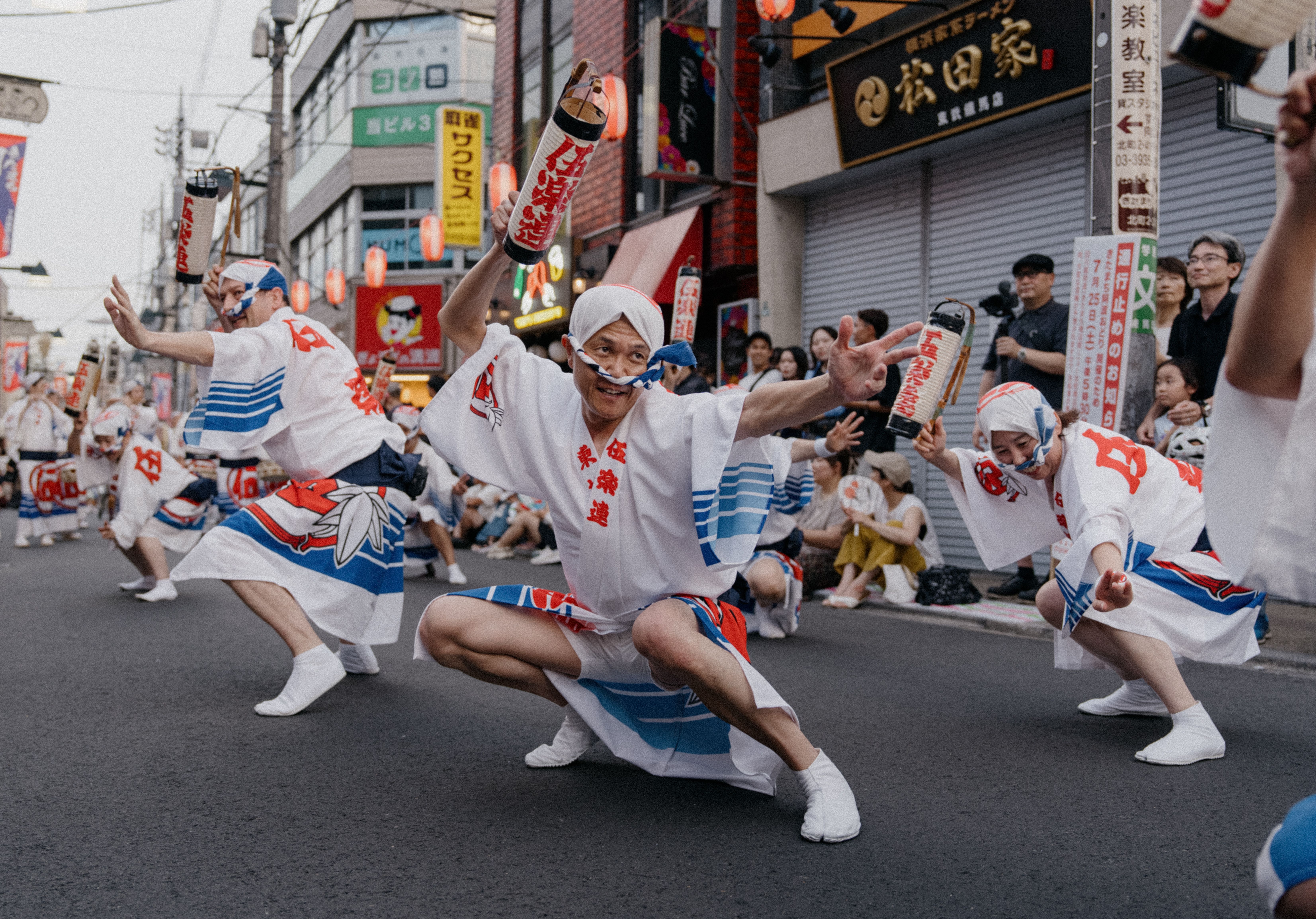
  • 18:00: the first block begins on the four enbujo street stages, with reserved stands either side of a long straight street. Groups enter at one end in formation and dance the length of the stage: the women's lines first, tall and precise in amigasa hats and geta, the men behind in a low, comic stance with fans and lanterns, the musicians last with drums, shamisen and flutes

  • Around 19:40: the first block ends and the stands turn over; the second block runs from 20:20 to 22:00 (with some free street performances and open dance plazas extending until around 22:30 or 23:00)

  • Through the evening: the famous ren rotate between stages, so each night's line-up at each stage is different; the schedule is posted on the day

  • At set points and times: the niwaka-ren, open groups led by experienced dancers, gather spectators and teach the steps on the spot, then dance them down a free street; anyone may join, in any clothes

  • 15 August, final block: the so-odori grand finale, when several famous ren and hundreds of dancers fill one stage together

Best viewing: a reserved seat at Aibahama or Minami-Uchimachi for the full-length choreography; the entry end of any stage from the free pavement for the moment a group starts; the side lanes for the warm-ups; Shinmachi Bridge for groups crossing the river in costume.

Tip: Buy a seat for one block on one night and spend the rest in the free streets; the seat shows you the dance done properly, the streets show you the festival.

Best Time to Arrive and What the Weather Is Like

Arrive in Tokushima on 11 or 12 August 2027 and stay for at least two of the street nights, ideally 13 and 14 or 14 and 15; the best time to visit Awa Odori is the final night for the grand finale, with the night before for a calmer first look. Leave on the morning of the 16th rather than the night of the 15th.

Crowd levels on a scale of 1 to 5:

  • 11 August: level 3; the indoor opening, the city filling, buses already busy

  • 12 August: level 4 from 18:00 in the festival zone

  • 13 and 14 August: level 5; the Obon holiday and the festival together, stages full, free streets shoulder to shoulder

  • 15 August: level 5 for the finale, then level 5 again at the station and the bus terminal as everyone leaves at once

  • 16 August: level 3, easing through the morning

The weather is high summer on the Pacific coast of Shikoku. Tokushima in August averages about 27°C across the day and night, with daily highs near 30°C and often higher, high humidity, afternoon thunderstorms and a real typhoon risk; mid-August is inside the season, and a storm can cancel a night of dancing or, worse, the buses in and out. The dancing happens after sunset, which takes the edge off, but a reserved stand holds the day's heat into the evening.

How to handle it:

  • Keep the afternoons indoors: the Kaikan, the halls, the shopping arcades, the hotel

  • Drink constantly and carry a folding fan; the stalls sell cold drinks but the queues are long between blocks

  • Light clothes or a yukata, a hat for the afternoon, a thin rain layer for the evening; umbrellas are banned in the stands

  • Watch the typhoon forecast from a week out and keep the bus and hotel bookings cancellable

Note: The organiser cancels or shortens street dancing in heavy rain or wind and posts the decision in the late afternoon; the indoor shows usually go ahead, and the Kaikan is the rainy-night fallback.

Spectators in yukata fanning themselves and holding cold drinks on a hot August evening at Awa Odori in Tokushima

Where to Stay and When to Book

Stay in Tokushima City within walking distance of the station and the stages, and the four nights become a stroll; the catch is that the city's hotel stock is small and sells out months ahead for festival week, so most visitors need a plan B.

In Tokushima:

  • Around JR Tokushima Station and the Shinmachi River: business hotels and a few larger ones within 15 minutes of every stage; the first rooms to go, often as soon as the previous festival ends

  • The streets west towards Mount Bizan: small hotels and guesthouses, five to ten minutes further, slightly cheaper

  • Minshuku and temple lodgings on the city's edges, reachable by city bus in daylight, less so after 22:30

Plan B, by last train:

  • Naruto: 40 minutes by train, whirlpool town, a modest hotel stock; check the last train back from Tokushima

  • Takamatsu: about an hour by train, a proper city with plenty of hotels, the best fallback for a two-night visit

  • Osaka or Kobe: 2.5 hours by bus, treating the festival as a long day trip; workable for one night with a pre-booked late bus, or a night bus back

  • Kansai Airport hotels, for a flight the next morning

When to book: Tokushima's festival-week rooms begin filling as soon as the dates are confirmed and are gone by spring; Naruto and Takamatsu hold out until early summer. Book Tokushima by February 2027 if you want it, Takamatsu by May, and buses as soon as they open. Reference rates for the festival nights: a business hotel in Tokushima about 14,000 to 25,000 JPY, a Takamatsu hotel about 8,000 to 15,000 JPY, with minimum stays and festival surcharges common, and the accommodation tax added at check-in.

Tip: Book the hotel and the bus on the same day, in that order. A Tokushima room without a bus seat is a problem; a bus seat with a Takamatsu room is a plan.

Ask the hotel whether it holds seat allocations for the stages; several do, and a bundled seat is sometimes the easiest way to get one.

Staying Connected During the Festival

Public Wi-Fi in Tokushima is not built for a million people. The station and city networks need registration and time out, the stages have no network for the crowd, and at 20:00 on 14 August every public hotspot in the centre stalls. Hotel Wi-Fi stays where you slept, which for many visitors is Takamatsu or Osaka. Your phone needs its own data, and a Japan eSIM installed before you fly is the simplest way to get it.

What you use data for at Awa Odori:

  • Reserved-seat e-tickets, the stage map and the nightly line-up on the organiser's site
  • The rain call and any schedule changes, posted in Japanese in the late afternoon
  • Highway bus bookings and the JR timetable for the last train to Naruto or Takamatsu
  • A group chat with live location for regrouping after a niwaka-ren pulls someone into the dance
  • Camera translation of stall menus, stage rules and the meeting-point signs
  • Mobile payment and cards at stalls and shops, and finding an ATM at the station
  • Photos, video and calls home from the stands, which is what everyone does when the first ren enters

Set-up: check that your phone is unlocked and eSIM-capable (most phones from the last five years are), buy the plan, scan the QR code while you still have a reliable connection at home, and switch the line on when you land at Kansai, Haneda or Tokushima. Japanese networks are strong in Tokushima, on the bridges to Osaka and on the Shikoku trains; the only slowdown is the festival zone during the second block.

How much data: 1 to 2 GB a day covers tickets, maps, transit, messaging, translation and payments. Video is the variable; four nights of filming dancers and sending clips home can double it. For a week-long trip with Osaka or Kyoto either side, 10 GB is comfortable, and 20 GB suits heavy social media use or a longer Japan itinerary. GoHub's Japan plans are listed on the eSIM for Japan page.

Tip: Screenshot your seat ticket, the stage map and the last-train time before you leave the hotel, and carry a power bank; a hot evening of video in the stands drains a phone before the second block.

Keep your home SIM active for SMS so bank verification codes arrive, set the eSIM as your data line, and turn off data roaming on the home SIM.

Suggested itinerary

Day 1 · 12 August, arrival and first night

  1. Morning
    Osaka OCAT to Tokushima StationAwa Express highway bus, about 2.5 hours; pre-booked
  2. Around midday
    Check in near the stationDrop bags; the stages are 10 to 15 minutes on foot
  3. Early afternoon
    Awa Odori KaikanLearn the steps and the history at the daytime show
  4. Late afternoon
    Mount Bizan ropewayThe view over the city and the river before the heat eases
  5. 18:00
    Free streets and the station stageFirst night from the pavement; find the lanes where ren line up
  6. Late evening
    Shinmachi BridgeWatch groups cross between stages in costume

Day 2 · 13 August, the Obon crowd

  1. Morning
    Tokushima Castle ruins and gardensA quiet walk before the heat; the city sleeps late
  2. Around 12:00
    Tokushima ramen lunchThe dark, rich local bowl with a raw egg on top
  3. Afternoon
    Hotel rest or the shopping arcadesThe hottest hours are for air conditioning
  4. 18:00
    Reserved seat, first block at AibahamaThe full choreography from the stands
  5. Around 20:30
    Second block from the free pavementStand at the entry end of a stage for each group's first steps
  6. Late evening
    Join a niwaka-renThe open groups; only fools do not dance

Day 3 · 14 August, Naruto and the finale eve

  1. Morning
    Express bus to NarutoAbout 60 minutes; the whirlpools from the bridge walkway
  2. Around 13:00
    Back to TokushimaLunch near the station and a rest
  3. Around 17:00
    Food stalls around the stagesEat before the streets close and the queues build
  4. 18:00
    Minami-Uchimachi stage from the pavementA different stage, a different line-up
  5. Evening
    Riverside and the arcadesThe festival spills into every street; follow the drums

Day 4 · 15 August, the grand finale

  1. Morning
    Slow startSave energy for the last night
  2. Afternoon
    Indigo dyeing workshopAwa indigo is the region's craft; a cool indoor hour
  3. 18:00
    Free streets, then a stage for the finalePosition early for the so-odori; hundreds of dancers fill one stage
  4. After 22:30
    Night bus to Osaka or hotelPre-booked; the station is the most crowded place in Shikoku tonight
Tip: Book the bus and the hotel together months ahead, learn the steps at the Kaikan in daylight, take one reserved seat and spend the other nights in the free streets.

Recommended eSIM plans

Pick by trip length. Visiting several countries? Choose a regional plan.

Selected: eSIM Japan 10GB 10 Day(s)

Set up your eSIM in 3 steps

  1. Order and get your QR codeThe QR code arrives by email right after payment.
  2. Scan before you flySettings → Cellular → Add eSIM, while you still have Wi-Fi.
  3. Turn on data when you landSet the eSIM as your data line and enable data roaming.

Frequently asked questions

Yes. It is Japan's largest dance festival, four nights of a thousand groups dancing through a small city to live shamisen and drums, and the only big festival where spectators are expected to join in. The trade-offs are heat, Obon crowds and hotels that sell out months ahead. Plan the bed and the bus early.

Yes, in the niwaka-ren, the open groups that gather spectators at marked meeting points each evening, teach the steps on the spot and dance them down a free street. No costume, booking or experience is needed, and children are welcome. The organised ren on the stages are closed groups, so watch those and dance in the open ones.

Two street nights is the minimum that feels like the festival, and three is comfortable: one night in a reserved seat for the choreography, the others in the free streets and the open groups, with the final night's grand finale on 15 August if you can. Daytime fits the Kaikan, Mount Bizan, the castle and a Naruto whirlpool trip.

It depends on your passport. Many nationalities enter Japan visa-free for short tourist stays, while others must apply in advance; the list and any online pre-registration requirements change, so check the Japanese embassy or consulate site for your country before travel [TO VERIFY current rules]. Carry your passport; hotels must see it at check-in.

Plan on 1 to 2 GB a day for e-tickets, the stage line-up, bus and train apps, group chat and payments, and more if you upload a lot of dance video over four nights. A 10 GB eSIM covers a week with Osaka or Kyoto; take 20 GB for heavy social media use. Install it before you fly.

Tokushima's is the original, held in the dance's home city on Shikoku on 11 to 15 August, with around a thousand groups and reserved street stages. Koenji's in Tokyo is the largest offshoot, held on a late-August weekend (29 to 30 August in 2026) around Koenji Station, free, with no reserved seating and a denser crowd.