

Things to Do in Cusco Peru: 12 Best Places for First-Time Visitors

Cusco is often treated as the place you pass through before visiting Machu Picchu.
But honestly? That is a little unfair.
If you are searching for the best things to do in Cusco Peru, this high-altitude city deserves more than a quick overnight stop. You get ancient Inca walls, Spanish colonial churches, colorful markets, mountain views, cozy cafés, local food, and some of the best day trips in the Andes.
Cusco is also a UNESCO-listed historic city, officially recognized as the City of Cuzco World Heritage Site thanks to its Inca and colonial heritage. It sits around 3,399 meters / 11,152 feet above sea level, so it is smart to spend your first day slowly before jumping into hikes or long tours.
Quick Answer: Best Things to Do in Cusco Peru
The best things to do in Cusco Peru include exploring Plaza de Armas, visiting Qorikancha, walking through San Blas, shopping at San Pedro Market, seeing the Inca walls, touring Sacsayhuamán, trying Peruvian food, and taking day trips to the Sacred Valley, Machu Picchu, and Rainbow Mountain.
For most first-time visitors, I recommend spending at least 2 to 3 days in Cusco. That gives you enough time to enjoy the city, adjust to the altitude, and plan one or two nearby day trips.
Best Things to Do in Cusco Peru for First-Time Visitors
Before heading straight to Machu Picchu, spend time exploring Cusco itself. The historic center is walkable, beautiful, and packed with cultural stops that help you understand why this city was once the heart of the Inca Empire.
1. Start at Plaza de Armas
Plaza de Armas is the best place to begin your Cusco trip.
This main square is surrounded by colonial buildings, restaurants, cafés, tour offices, and two of the city’s most important religious landmarks: Cusco Cathedral and the Church of the Society of Jesus.
It is also a great place to sit for a while, people-watch, take photos, and get your bearings before exploring the nearby streets.
Come in the morning for a calmer feel, or visit near sunset when the lights make the square look especially beautiful.
2. Visit Qorikancha, the Temple of the Sun
Qorikancha is one of the most important historic sites in Cusco.
This was once a major Inca temple dedicated to the sun. Later, the Spanish built the Santo Domingo Convent on top of the original Inca foundations.
That contrast is what makes Qorikancha so interesting. In one place, you can see smooth Inca stonework, colonial architecture, and the layered history of Cusco.
It is also easy to visit because it sits close to the historic center. For extra historical context, UNESCO notes that Cusco preserves both pre-Columbian urban fabric and colonial constructions within its historic core as part of the World Heritage-listed City of Cuzco.
3. Walk Through San Blas
San Blas is Cusco’s artsy neighborhood.
The streets are narrow, steep, and full of character. You will find small galleries, handmade jewelry shops, cafés, boutique hotels, and quiet viewpoints over the city.
This is a great area if you like slow travel, photography, or finding souvenirs that feel more personal than typical tourist items.
Just remember that San Blas sits uphill. If you are still adjusting to the altitude, walk slowly and take breaks.
4. Shop and Eat at San Pedro Market
San Pedro Market is one of the best local experiences in Cusco.
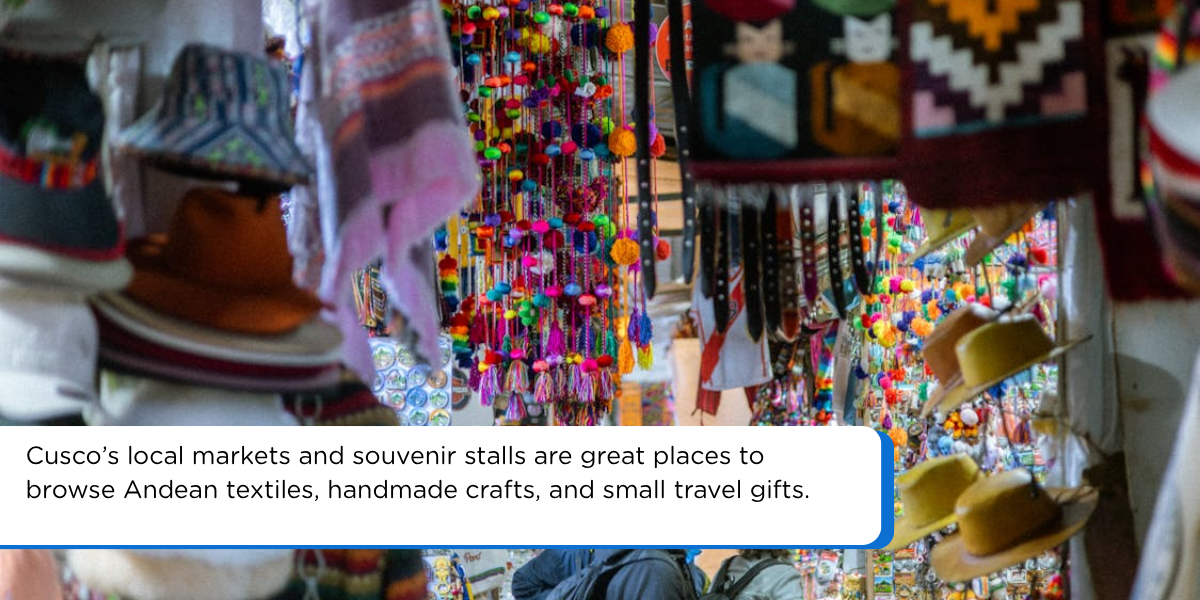
Inside, you will find fresh fruit, juices, bread, cheese, chocolate, local snacks, textiles, souvenirs, and simple food stalls. It is busy, colorful, and a nice break from the more polished tourist areas.
This is also a good place to try fresh juice or pick up budget-friendly snacks for day trips.
Go during the daytime, keep your belongings close, and bring cash because many small vendors may not accept cards.
5. See the Inca Walls and the Twelve-Angled Stone
One of the easiest free things to do in Cusco is to walk around the old Inca walls near the historic center.
The most famous spot is the Twelve-Angled Stone, a perfectly fitted stone that shows the skill of Inca masonry.
It is a quick stop, but it is worth seeing because it explains why Cusco feels so different from many other colonial cities in South America. The Spanish buildings often sit on top of older Inca foundations.
6. Tour Sacsayhuamán
Sacsayhuamán is one of the most impressive Inca sites near Cusco.
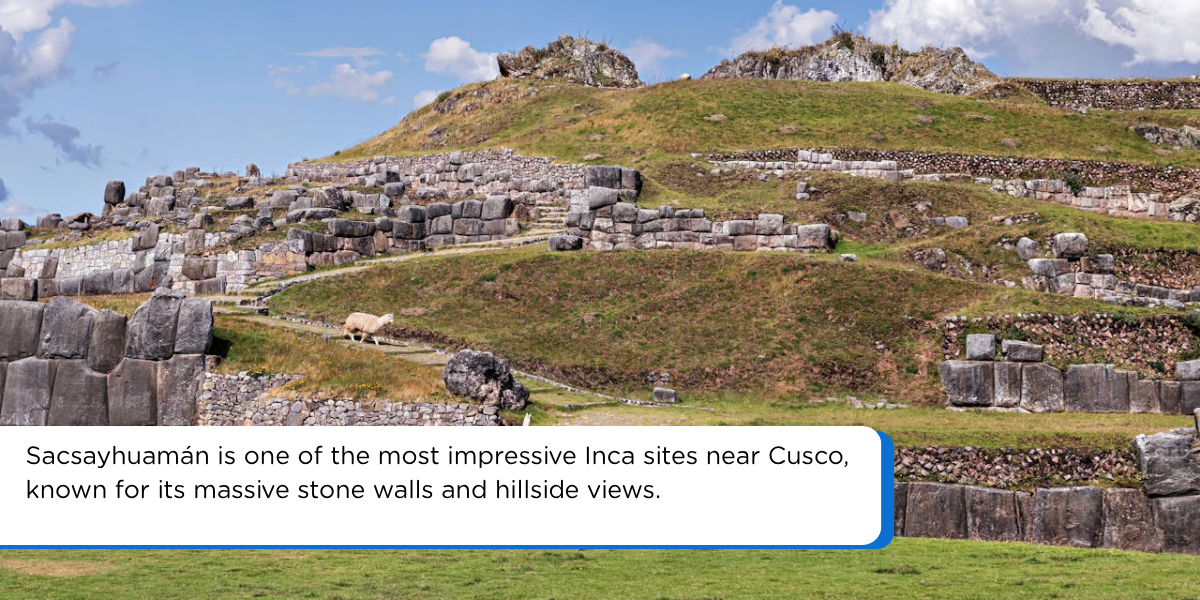
Located above the city, this archaeological site is known for its massive stone walls and wide views over the valley. Some stones are so large and carefully fitted that it is hard not to stop and stare.
You can visit Sacsayhuamán by taxi, guided tour, or on foot if you are already acclimatized.
For first-time visitors, this is one of the best half-day activities in Cusco because it combines history, scenery, and easy access from the city center.
Best Day Trips from Cusco
Once your body has adjusted to the altitude, Cusco becomes one of the best bases in Peru for day trips. From here, you can visit famous ruins, mountain landscapes, traditional villages, and of course, Machu Picchu.
7. Visit the Sacred Valley
The Sacred Valley is one of the best day trips from Cusco.
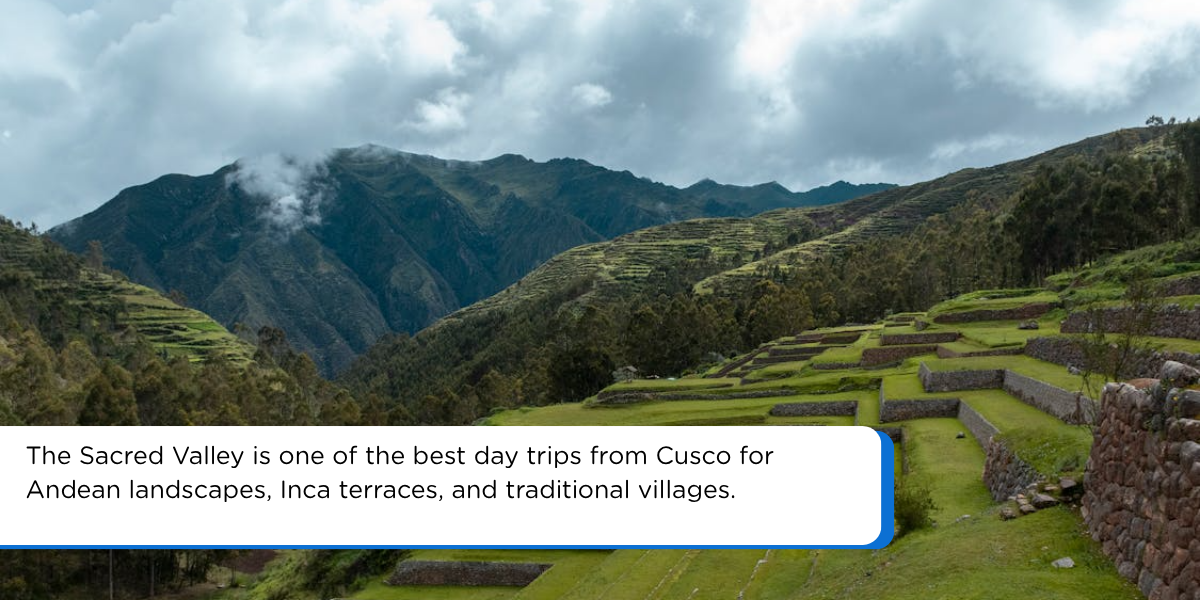
Popular stops include Pisac, Ollantaytambo, Chinchero, and the Maras salt mines. Each place gives you a different mix of Inca history, local culture, mountain scenery, and small-town life.
If you have time, do not rush this area. The Sacred Valley is lower than Cusco in many places, so some travelers find it more comfortable for adjusting to the altitude.
A full-day tour is easy to arrange, but staying overnight in Ollantaytambo can make your trip feel much more relaxed. You can also use Peru’s official tourism website to explore broader Peru travel inspiration and destination ideas.
8. Take a Trip to Machu Picchu
For many travelers, Machu Picchu is the main reason they come to Cusco.
Although it is not inside Cusco city, it is usually visited from Cusco by train and bus, often through Ollantaytambo or Poroy depending on the route and season.
You can visit Machu Picchu as a long day trip, but if your schedule allows, spending one night near Aguas Calientes can make the experience smoother.
Also, book your entrance ticket in advance. Official Machu Picchu tickets are sold through Peru’s state visitor platform, so it is best to check availability before finalizing your travel dates.
9. Hike Rainbow Mountain
Rainbow Mountain is one of the most popular adventure trips from Cusco.
The colorful mountain landscape is beautiful, but this is not the easiest day trip. The altitude is very high, and the hike can feel tough even for fit travelers.
Do not do Rainbow Mountain on your first day in Cusco. Give yourself time to acclimatize first.
If you want a gentler alternative, look into Palcoyo Rainbow Mountain. It is often considered easier and less crowded than the classic Rainbow Mountain route.
More Fun Things to Do in Cusco
Cusco is not only about ruins and day trips. Some of the best moments happen when you slow down, eat well, and enjoy the city between bigger adventures.
10. Try Peruvian Food and Coca Tea
Cusco is a great place to try Peruvian food.
Look for dishes like lomo saltado, quinoa soup, trout, alpaca, causa, and fresh ceviche if you are eating at a trusted restaurant. You will also see coca tea everywhere, especially in hotels and cafés.
Many travelers drink coca tea to help with altitude adjustment, although you should still rest, hydrate, and avoid overpacking your first day.
11. Join a Walking Tour
A walking tour is one of the easiest ways to understand Cusco quickly.
A good guide can explain the city’s Inca history, colonial architecture, local legends, and hidden details you might miss on your own.
This is especially useful on your first full day, as long as the pace is not too intense.
Choose a short walking tour, wear comfortable shoes, and bring water.
12. Watch Sunset from a Viewpoint
Cusco looks beautiful from above.
For sunset, head toward San Blas, Cristo Blanco, or the area near Sacsayhuamán. From these viewpoints, you can see the red rooftops, church towers, and mountains around the city.
Bring a jacket because evenings in Cusco can get cold quickly.
This is a simple but memorable way to end your final night in the city.
Cusco Travel Tips Before You Go
Cusco is easy to love, but it is also a place where you should travel smart.
First, take altitude seriously. Many travelers fly from Lima, which is near sea level, straight into Cusco at over 3,000 meters. That change can feel intense. Plan a slow first day, drink water, avoid heavy alcohol, and save hikes for later.
Second, stay near the historic center if this is your first visit. It makes sightseeing, restaurants, tour pickups, and short walks much easier.
Third, bring layers. Cusco can feel warm in the sun but cold in the shade or at night.
Finally, keep mobile data ready. You will use it for maps, translation, tour confirmations, restaurant searches, and transport. If you do not want to buy a physical SIM after landing, a Peru travel eSIM can help you stay connected from Lima to Cusco, the Sacred Valley, and Machu Picchu.
How Many Days Do You Need in Cusco?
For a short trip, 2 days in Cusco is enough to see the historic center, Plaza de Armas, Qorikancha, San Pedro Market, San Blas, and Sacsayhuamán.
With 3 days, you can add a Sacred Valley day trip.
With 4 to 5 days, you can include Machu Picchu and possibly Rainbow Mountain, depending on your pace and how well you handle the altitude.
If this is your first Peru trip, I would avoid rushing. Cusco is much better when you give yourself time to breathe, wander, and enjoy the city between big tours.
Is Cusco Worth Visiting?
Yes, Cusco is absolutely worth visiting.
It is one of the best cities in Peru for history, food, architecture, local markets, mountain views, and access to world-famous day trips. While Machu Picchu gets most of the attention, Cusco itself is a major highlight.
If you are planning a Peru itinerary, give Cusco at least a few days. The best things to do in Cusco Peru are not just about checking off attractions. They are about slowing down, adjusting to the Andes, and letting the city’s history and energy sink in.
FAQs About Things to Do in Cusco Peru
What is Cusco Peru best known for?
Cusco is best known for its Inca history, colonial architecture, high-altitude setting in the Andes, and its role as the main gateway to Machu Picchu.
Is Cusco worth visiting without Machu Picchu?
Yes. Cusco is worth visiting even without Machu Picchu because it has markets, ruins, churches, viewpoints, restaurants, museums, and a beautiful historic center.
How many days are enough in Cusco?
Two to three days are enough for Cusco city and nearby ruins. Four to five days are better if you want to add the Sacred Valley, Machu Picchu, or Rainbow Mountain.
Can you walk around Cusco?
Yes, the historic center is very walkable. However, Cusco is hilly and sits at high altitude, so walk slowly on your first day.
What should I do first in Cusco?
Start with Plaza de Armas, Qorikancha, San Pedro Market, and a gentle walk through the historic center. Save harder hikes and long day trips for later.

Hi! Mình là Lala Wren, một content creator yêu xê dịch và đam mê chia sẻ trải nghiệm thực tế cho cộng đồng Gohub. Trong nhiều năm qua, mình đã đặt chân đến Thái Lan, Hàn Quốc, Nhật Bản, Singapore, Malaysia, Bali và nhiều điểm đến thú vị khác trên khắp châu Á. Cùng mình tìm hiểu tất tần tật từ khâu chuẩn bị eSIM, Visa, lịch trình và địa điểm nổi bật cho chuyến đi sắp tới của bạn nhé!
Vedi tutti gli articoli →Related articles

eSIM all'aeroporto O'Hare di Chicago (ORD): Guida all'arrivo 2026
Atterra connesso a O'Hare. Dove acquistare effettivamente una SIM al Terminal 5, come funziona il WiFi gratuito di Boingo e perché una eSIM Gohub supera entrambi nel 2026.

eSIM all'Aeroporto di Cancun (CUN): Salta le Code e Rimani Connesso 2026
I primi stand di SIM all'Aeroporto di Cancun sono costantemente i più costosi nel terminal. Scopri dove si trovano effettivamente i banchi degli operatori di CUN, come funziona il WiFi gratuito e perché una eSIM per il Messico batte entrambi nel 2026.
eSIM all'Aeroporto di Abu Dhabi (AUH): Configurazione, Costo e Migliori Piani 2026
L'Aeroporto Internazionale di Zayed ora distribuisce una SIM gratuita da 10GB per 24 ore. Come funziona, dove presenta delle lacune e quando un piano eSIM per gli Emirati Arabi Uniti è ancora conveniente.

Internet in Thailandia per Turisti: La Guida Completa 2026
Stai pianificando un viaggio in Thailandia? Confronta eSIM vs SIM turistica, AIS vs True vs dtac e la copertura isola per isola per scegliere il modo giusto per rimanere connesso.
Internet in Corea del Sud per Turisti: La Guida Completa 2026
Stai andando in Corea? Confronta eSIM, schede SIM turistiche e noleggio di Pocket WiFi, in più, scopri perché il KTX e la metropolitana di Seoul hanno alcune delle connessioni più veloci al mondo.
Internet in Vietnam per Turisti: La Guida Completa 2026
Confronta le opzioni eSIM, schede SIM e WiFi per il Vietnam. Scopri quale operatore funziona meglio a Sapa e nel Delta del Mekong, le tue esigenze di dati e consigli per la configurazione per il 2026.